Panang Curry
If you haven’t experienced the rich, creamy delight of Panang Curry, then you’re in for a treat. This Thai dish is a perfect balance of sweet, spicy, and savory flavors that will transform your dinner routine. With tender chicken pieces simmered in luscious coconut milk, vibrant bell peppers, and a hint of aromatic basil, this recipe is as satisfying as it is simple to prepare. Whether you’re a seasoned cook or just starting out, this Panang Curry will impress your family and friends, making it a staple in your recipe collection.
Why This Recipe Belongs in Your Rotation
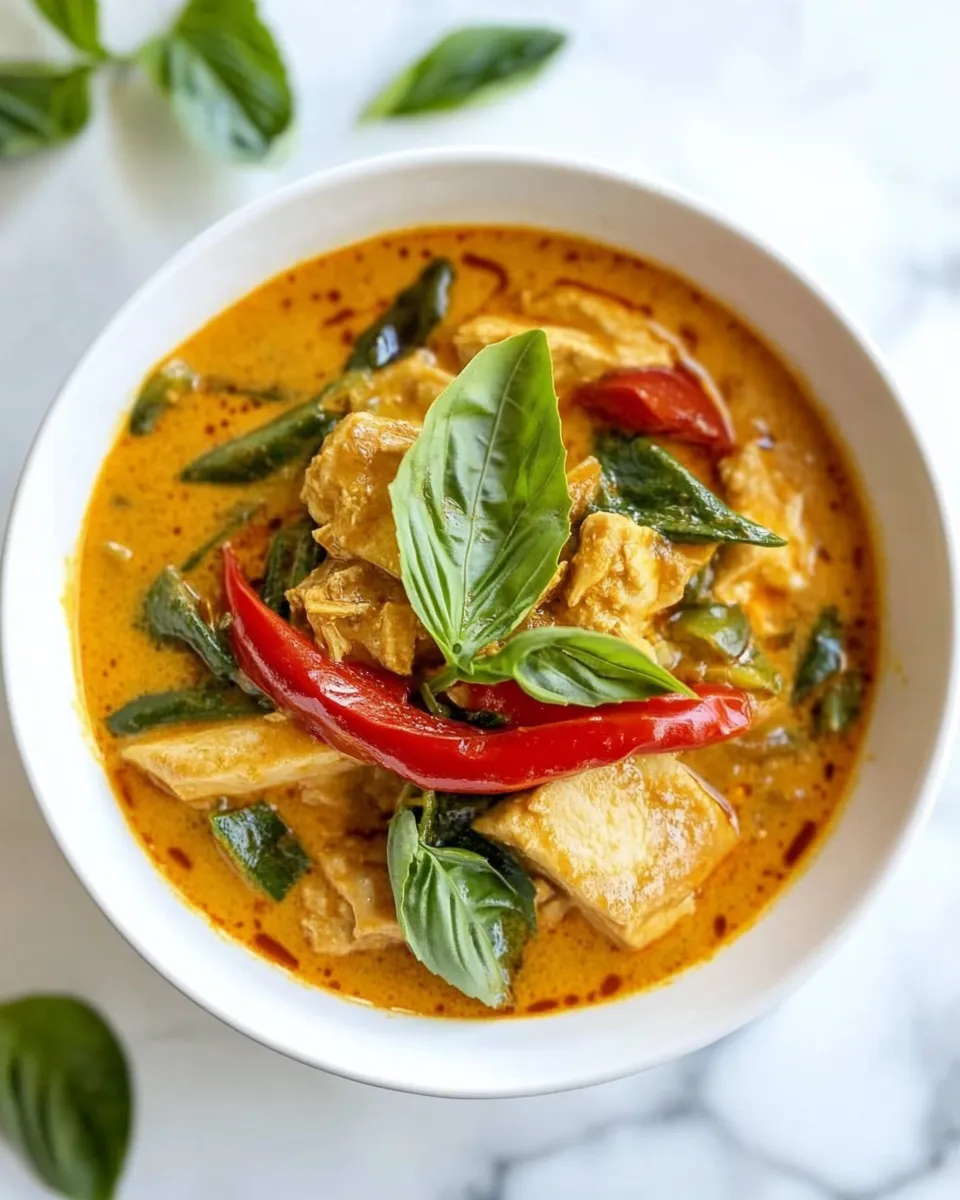
Panang Curry is a standout dish for many reasons. First, the use of coconut milk provides a creamy texture that pairs beautifully with the spices in the curry paste. The addition of peanut butter adds a subtle nutty flavor, making it unique among other curries. Plus, it’s a one-pot meal that’s perfect for busy weeknights. You can easily customize it with your favorite vegetables or proteins, and it’s sure to please even the pickiest eaters. With just a handful of ingredients, this recipe is not only easy to make but also incredibly delicious.
Ingredient Checklist
- 1 tablespoon oil – For sautéing and enhancing flavors.
- 2 tablespoons Panang curry paste – This is the heart of the dish, providing the essential flavor profile.
- 1 tablespoon peanut butter – Adds creaminess and depth to the curry.
- 2 pounds chicken breasts, cut into pieces against the grain – The main protein source that absorbs all the flavors.
- 1 small onion, sliced – For aromatic sweetness.
- 1 green bell pepper, thinly sliced – Adds color and crunch.
- 1 red bell pepper, thinly sliced – For sweetness and visual appeal.
- 2 teaspoons freshly grated ginger – Enhances the dish with a fresh, zesty flavor.
- 4 garlic cloves, minced – For depth and richness.
- 2 (14 oz) cans coconut milk (Chaokoh brand is my favorite) – The creamy base of the curry.
- 2 teaspoons cornstarch – To thicken the curry if desired.
- 1/4 cup light brown sugar, packed – Balances the flavors with a touch of sweetness.
- 1 tablespoon fish sauce – Adds umami depth to the dish.
- 1 tablespoon lime juice – Brightens the flavors and adds acidity.
- 1 cup loosely packed basil leaves, roughly chopped – For a fresh herb finish.
- Hot cooked rice (white, brown, or jasmine) – To serve alongside the curry.
What’s in the Gear List
- Large skillet or wok – Ideal for cooking and mixing the ingredients evenly.
- Wooden spoon or spatula – For stirring and sautéing.
- Measuring cups and spoons – To ensure accurate ingredient quantities.
- Knife and cutting board – For prepping your veggies and chicken.
Cooking Panang Curry: The Process
Step 1: Sauté the Aromatics
In a large skillet or wok, heat the oil over medium heat. Add the sliced onion, green bell pepper, and red bell pepper. Sauté for about 5 minutes, or until the vegetables are tender and the onions are translucent.
Step 2: Add the Chicken
Increase the heat to medium-high and add the chicken pieces to the skillet. Cook for about 5-7 minutes, stirring occasionally, until the chicken is no longer pink and starts to brown slightly.
Step 3: Stir in the Aromatics
Add the minced garlic, grated ginger, and Panang curry paste to the chicken mixture. Stir well to coat the chicken and vegetables with the paste, cooking for another 2-3 minutes until fragrant.
Step 4: Pour in the Coconut Milk
Reduce the heat to medium and pour in the coconut milk. Stir in the peanut butter until well combined. Bring the mixture to a gentle simmer.
Step 5: Sweeten and Season
Stir in the light brown sugar, fish sauce, and lime juice. Taste and adjust the seasoning as needed. If you want a thicker curry, mix the cornstarch with a tablespoon of water to create a slurry, then add it to the skillet, stirring until the sauce thickens.
Step 6: Finish with Basil
Once the curry has thickened to your liking, remove it from the heat and stir in the chopped basil leaves. They will wilt slightly, releasing their aromatic scent.
Step 7: Serve and Enjoy
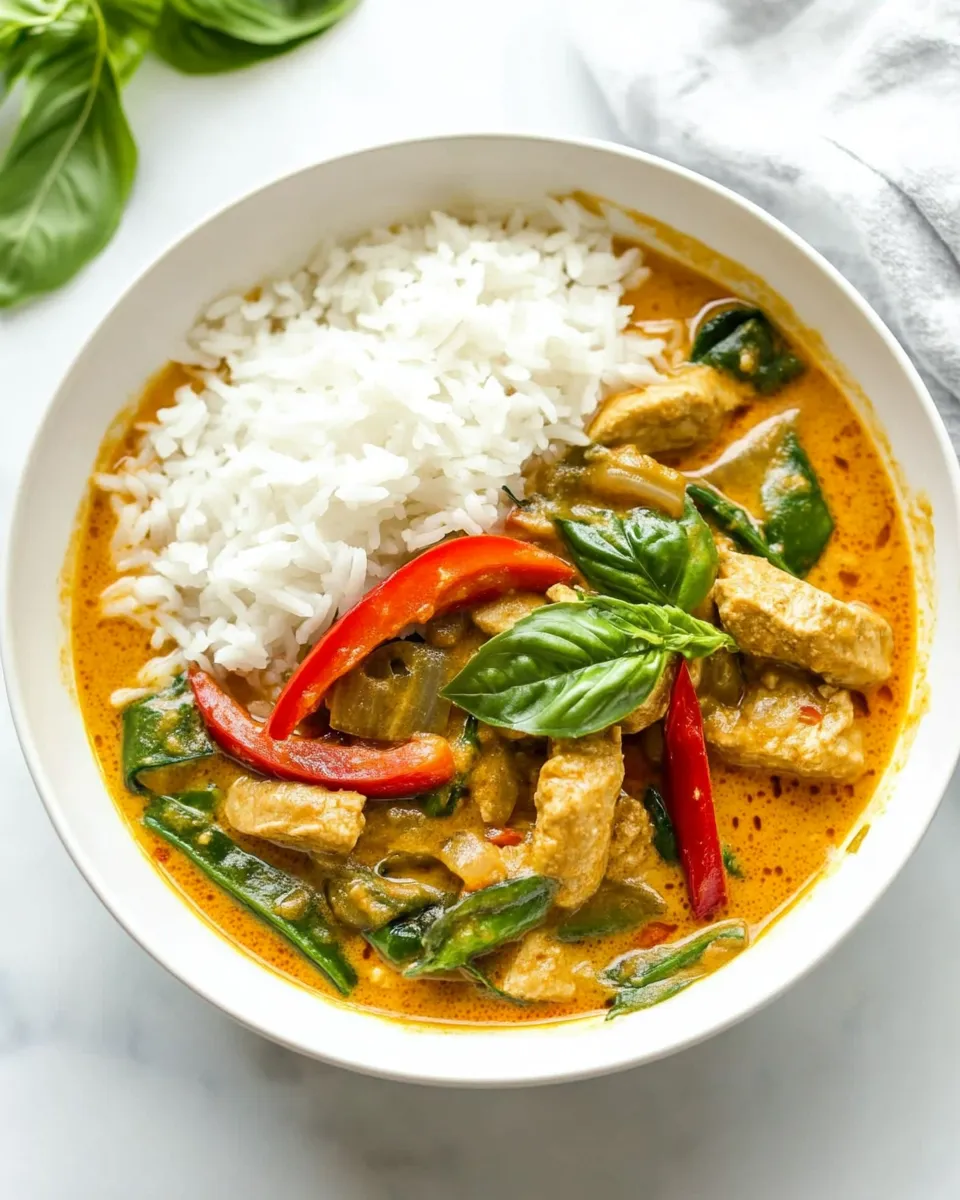
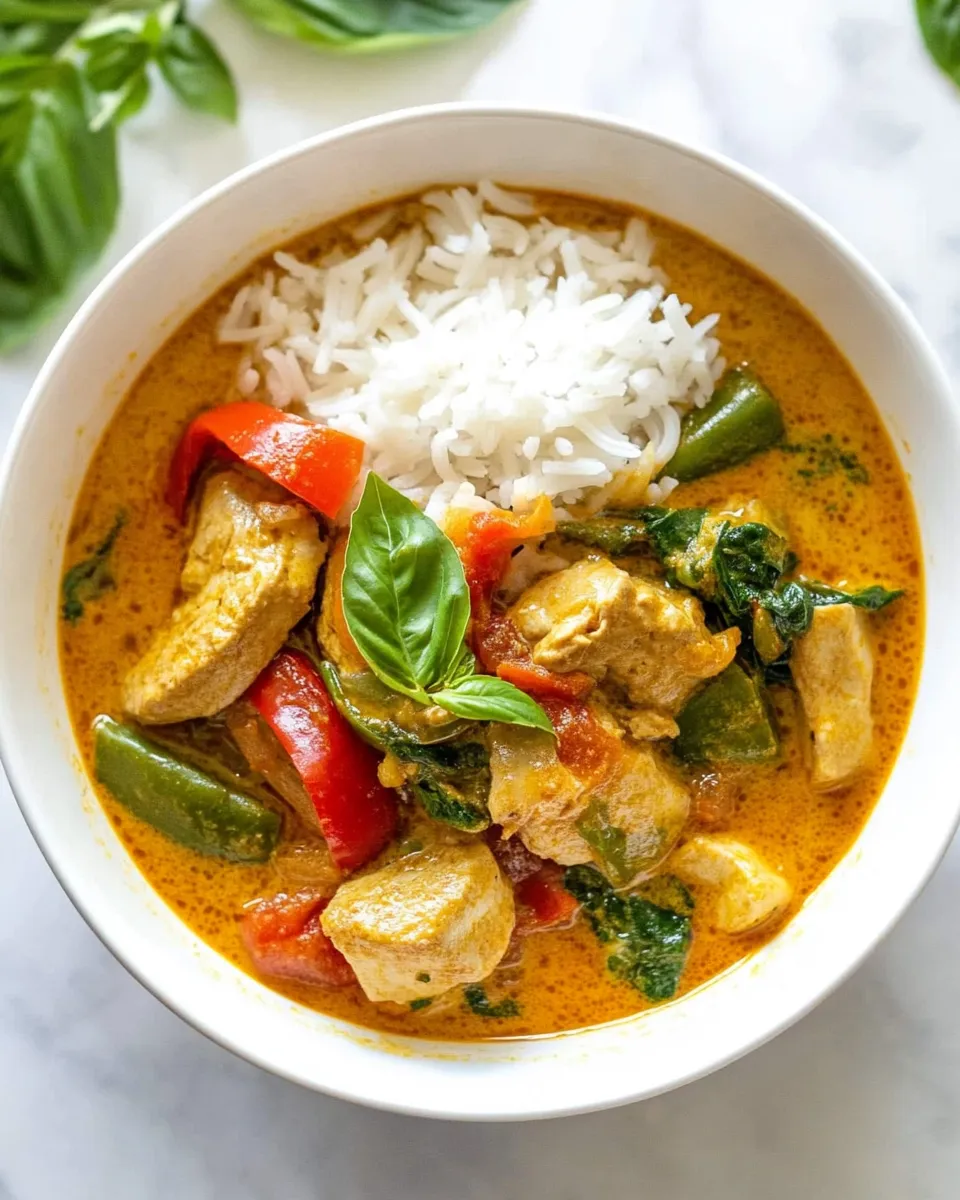
Serve the Panang Curry hot over a bed of your favorite rice. Enjoy the creamy, flavorful dish that will transport you straight to Thailand with every bite!
Smart Substitutions
- Chicken – Substitute with tofu, shrimp, or beef for different protein options.
- Peanut Butter – Use almond butter or cashew butter for a different nutty flavor.
- Bell Peppers – Experiment with other veggies like zucchini, snap peas, or carrots.
- Fish Sauce – Use soy sauce or tamari for a vegetarian-friendly option.
Don’t Do This
- Don’t skip the browning step for the chicken. It adds depth of flavor.
- Avoid using low-quality curry paste; it can significantly alter the taste.
- Don’t let the coconut milk boil vigorously, as it can separate and affect the texture.
- Do not forget to taste and adjust the seasonings before serving.
Cooling, Storing & Rewarming
Leftover Panang Curry can be stored in an airtight container in the refrigerator for up to 3 days. To cool it down, allow it to reach room temperature before sealing. For longer storage, consider freezing it for up to 3 months. When you’re ready to enjoy it again, reheat gently on the stove over low heat, adding a splash of coconut milk or water if it’s too thick.
Questions People Ask
Can I make Panang Curry vegetarian?
Absolutely! You can replace the chicken with tofu or your choice of vegetables, and use vegetable broth instead of fish sauce for added flavor.
What can I serve with Panang Curry?
Panang Curry pairs perfectly with steamed rice, but you can also serve it with quinoa, rice noodles, or even cauliflower rice for a low-carb option.
How spicy is Panang Curry?
Panang Curry typically has a mild to medium spice level. If you prefer it spicier, feel free to add more curry paste or fresh chili peppers according to your taste.
Can I use homemade Panang curry paste?
Yes! If you have a homemade version, feel free to use it. Just adjust the quantity to match your taste preferences, as homemade pastes can vary in strength.
Try These Next
- Thai Red Curry – Another rich and flavorful Thai dish.
- Easy Thai Coconut Curry – A quick and easy option for busy nights.
- Vegan Thai Green Curry – A plant-based twist on classic Thai flavors.
See You at the Table
This Panang Curry is not just a meal; it’s an experience filled with flavors that dance on your palate. The combination of tender chicken, creamy coconut milk, and vibrant vegetables makes it a dish you’ll want to make again and again. So gather your ingredients, roll up your sleeves, and let’s get cooking! You’ll soon find that this Panang Curry will become a beloved fixture in your kitchen, bringing joy and warmth to your dining table. Enjoy!
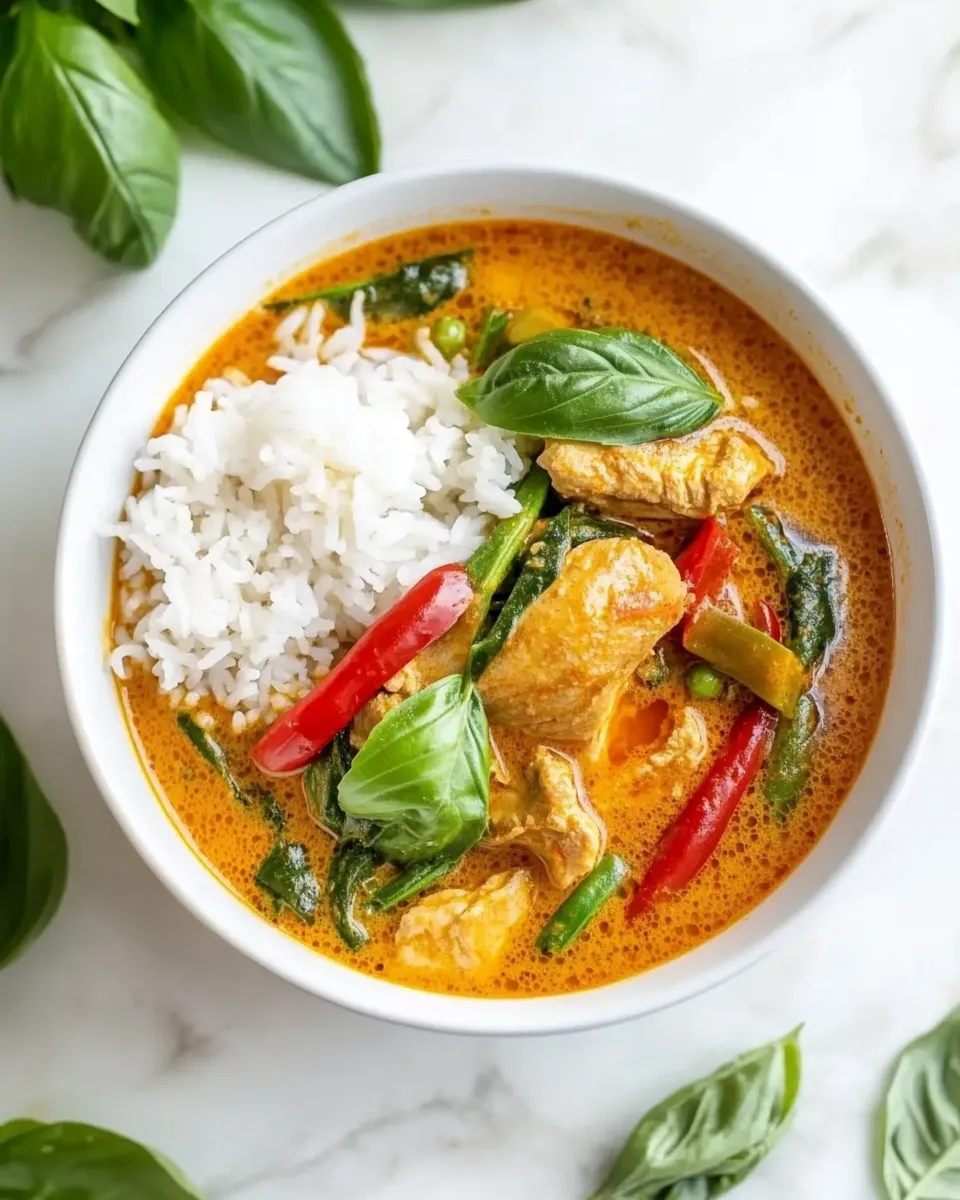
Panang Curry
Ingredients
Equipment
Method
- In a large skillet or wok, heat the oil over medium heat. Add the sliced onion, green bell pepper, and red bell pepper. Sauté for about 5 minutes, or until the vegetables are tender and the onions are translucent.
- Increase the heat to medium-high and add the chicken pieces to the skillet. Cook for about 5-7 minutes, stirring occasionally, until the chicken is no longer pink and starts to brown slightly.
- Add the minced garlic, grated ginger, and Panang curry paste to the chicken mixture. Stir well to coat the chicken and vegetables with the paste, cooking for another 2-3 minutes until fragrant.
- Reduce the heat to medium and pour in the coconut milk. Stir in the peanut butter until well combined. Bring the mixture to a gentle simmer.
- Stir in the light brown sugar, fish sauce, and lime juice. Taste and adjust the seasoning as needed. If you want a thicker curry, mix the cornstarch with a tablespoon of water to create a slurry, then add it to the skillet, stirring until the sauce thickens.
- Once the curry has thickened to your liking, remove it from the heat and stir in the chopped basil leaves. They will wilt slightly, releasing their aromatic scent.
- Serve the Panang Curry hot over a bed of your favorite rice. Enjoy the creamy, flavorful dish that will transport you straight to Thailand with every bite!
Notes
- Leftover Panang Curry can be stored in an airtight container in the refrigerator for up to 3 days.
- Consider freezing it for up to 3 months for longer storage.
- Reheat gently on the stove over low heat, adding a splash of coconut milk or water if it’s too thick.