Baked French Toast Sticks
I make these Baked French Toast Sticks when mornings need to move fast but everyone wants something homemade. They are thick, buttery, and just sweet enough thanks to a quick cinnamon-sugar finish. The method is straightforward: dip, brush, and bake. No standing at the stove flipping a dozen sticks, and no deep frying—just an oven doing the heavy lifting.
This version uses Texas toast for structure and a simple custard of whole milk, eggs, and vanilla for a rich interior. A light brush of melted butter and two passes with cinnamon sugar give you crisp, caramelized edges without excess oil. They hold together well for dipping and travel nicely if you pack them for a picnic or a school lunch.
Below you’ll find a precise shopping list, the exact steps I use every time, quick swaps if you need them, troubleshooting tips, and storage advice so leftovers reheat like fresh. Read the recipe through once, then follow the step-by-step—it’s dependable and repeatable.
What to Buy

Before you start, gather everything so the assembly moves quickly. Freeze or chilled ingredients don’t work as well for the custard; bring milk and eggs to refrigerator temperature but not warmed. Use quality maple syrup for serving—it makes a difference.
Ingredients
- 2Tbsp granulated sugar — provides sweetness for the cinnamon coating.
- 1tsp ground cinnamon — the warm spice that pairs with the sugar for the crunchy finish.
- 1cup whole milk — gives the custard richness and helps the eggs set.
- 4large eggs — build the custard structure and add protein for a satisfying texture.
- 1tsp vanilla extract — brightens the custard flavor; use pure vanilla if you have it.
- 1pinch salt — balances sweetness and rounds out flavors.
- 8slices Texas toast bread — thick slices hold up to soaking and give a substantial stick when cut.
- 2Tbsp butter, melted, plus more for serving if desired — brushes the tops to help the cinnamon-sugar caramelize and add richness.
- Maple syrup, for serving — classic dipping partner; real maple brings depth.
Make Baked French Toast Sticks: A Simple Method
- Preheat the oven to 350°F (175°C). Line an 18×13-inch baking sheet with parchment paper.
- In a small bowl, whisk together 2 tablespoons granulated sugar and 1 teaspoon ground cinnamon; set the cinnamon-sugar mixture aside.
- In a medium bowl, vigorously whisk 1 cup whole milk, 4 large eggs, 1 teaspoon vanilla extract, and 1 pinch salt until very well blended.
- Cut each of the 8 slices of Texas toast into three even strips. You may layer slices to cut several at a time.
- Working a few sticks at a time, dip each bread strip into the egg mixture, turning to coat both sides. Lift each strip and let excess drip back into the bowl.
- Arrange the coated sticks on the prepared baking sheet in a single layer, fitting them closely but leaving a little space between each stick.
- Using a basting brush, brush the tops of the french toast sticks lightly with 1 tablespoon of the melted butter.
- Evenly sprinkle half of the reserved cinnamon-sugar mixture over the brushed tops.
- Bake in the preheated oven for 13 minutes.
- Remove the baking sheet from the oven, flip each french toast stick to the opposite side, and brush the now-top sides lightly with the remaining 1 tablespoon melted butter.
- Evenly sprinkle the remaining half of the cinnamon-sugar mixture over the sticks, return the pan to the oven, and continue baking until cooked through and lightly golden, about 13–18 minutes longer.
- Let the french toast sticks cool on the baking sheet for a few minutes. Brush lightly with a little more melted butter if desired, and serve warm with maple syrup for dipping.
Why This Baked French Toast Sticks Stands Out
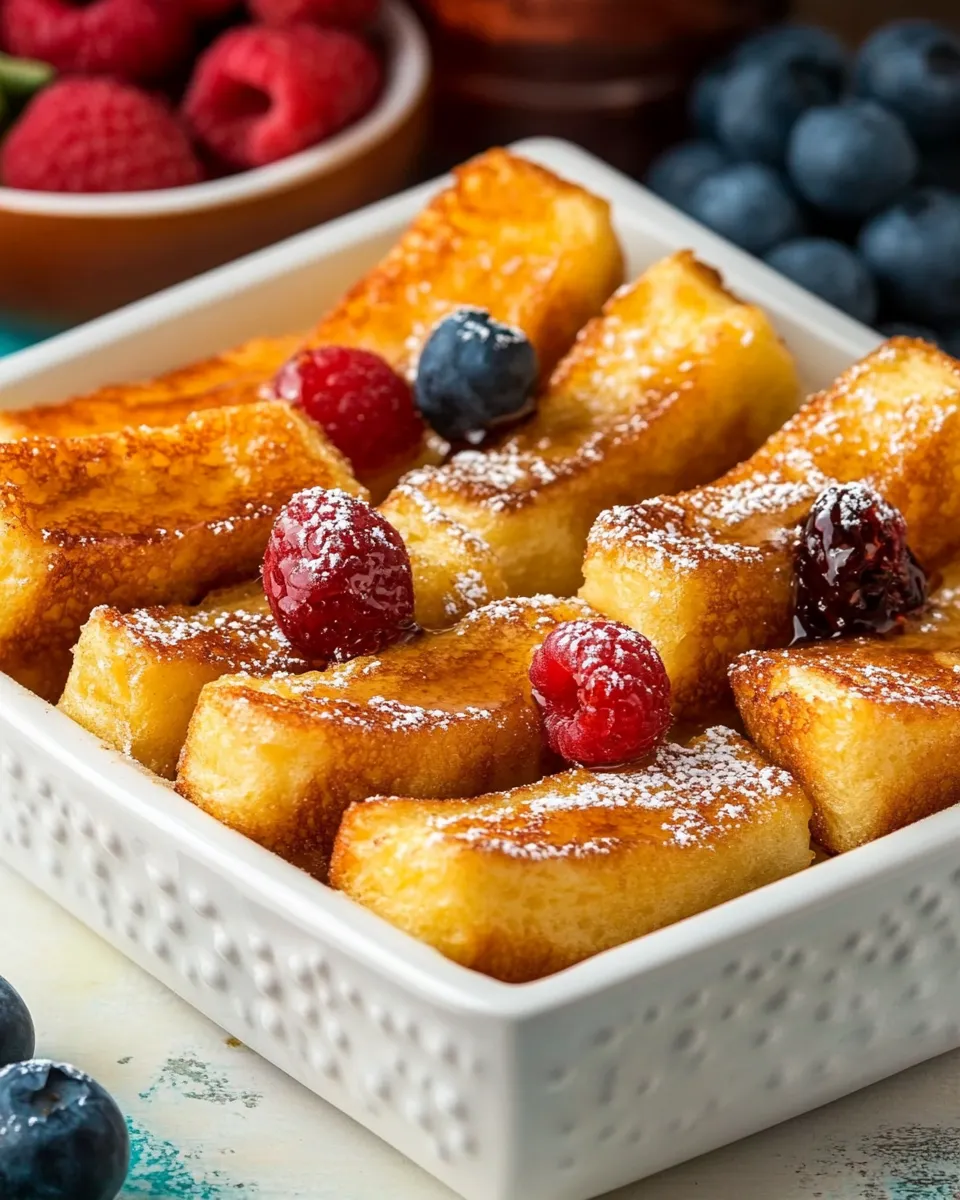
This recipe strikes a balance between convenience and texture. Baking rather than pan-frying means you can make a larger batch at once, and the oven provides even heat for consistent browning. Using Texas toast gives a sturdy interior that soaks enough custard to be tender without collapsing.
The two-step cinnamon-sugar application is purposeful: brush and top, bake, flip and repeat. That second dusting finishes the exterior and yields small, crunchy pockets of sweet spice. The result is a stick with a tender, custardy center and lightly caramelized edges that hold maple syrup without getting soggy immediately.
Swap Guide
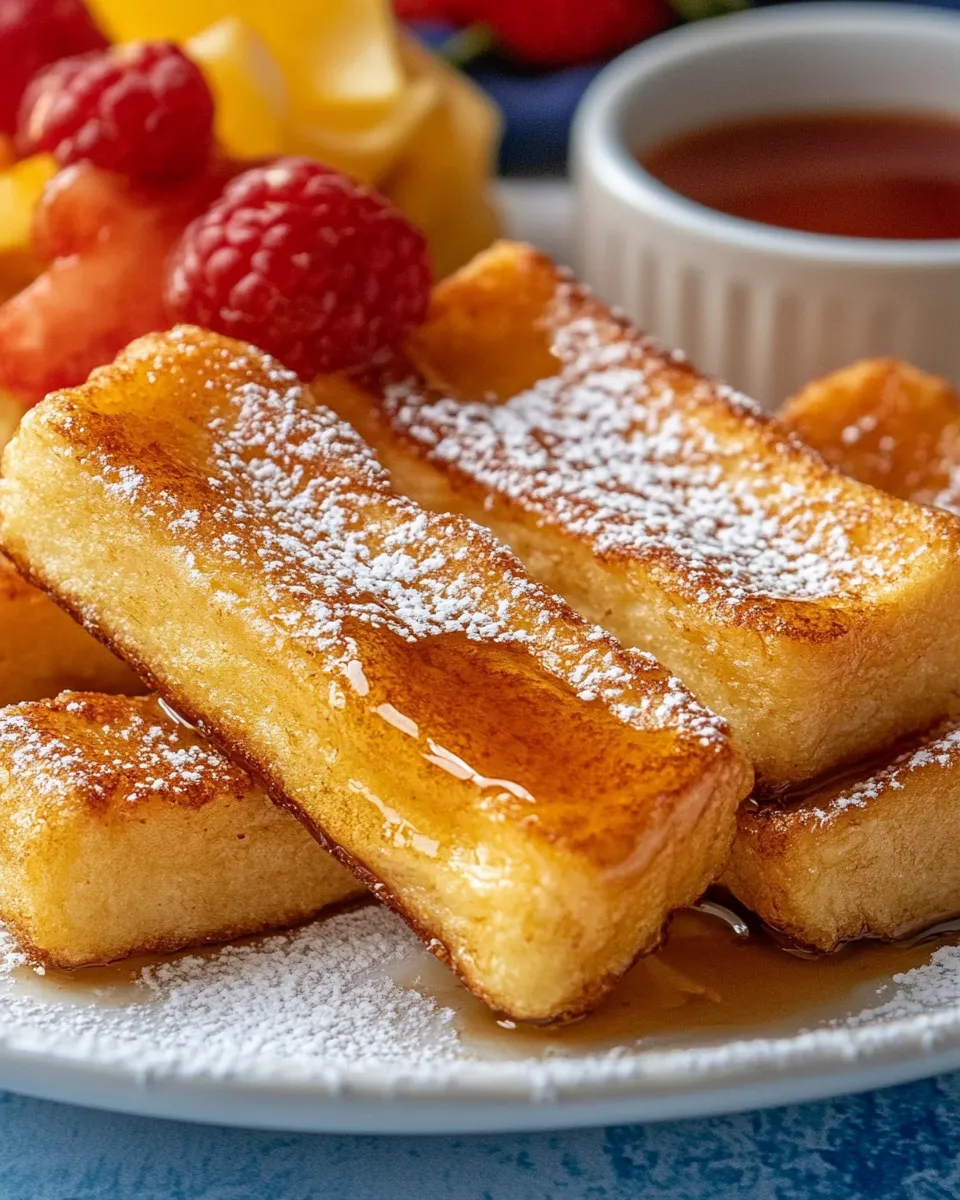
Need to swap something? Here are practical one-to-one or near swaps that keep the method intact.
- Milk — Use any unsweetened plant milk (soy, oat, almond) in the same volume for dairy-free. Whole milk gives the richest flavor; lighter milks will produce a slightly looser custard.
- Eggs — For an egg-free option, use a well-tested vegan custard mix or a commercial egg replacer designed for baking; expect a different texture. Flax “eggs” (1 Tbsp ground flax + 3 Tbsp water per egg) can work but make the custard denser.
- Bread — Texas toast is ideal, but thick-sliced brioche or challah will give a richer, more buttery result. For a lighter option, use standard sliced bread but reduce soaking time.
- Butter — Swap melted butter with melted coconut oil or a vegan butter if you’re avoiding dairy; these still help the sugar stick and brown.
- Syrup — Pure maple is best, but honey or fruit compotes make good alternatives for serving.
Equipment Breakdown
Minimal equipment keeps this recipe approachable. Here’s what I use and why it matters.
- 18×13-inch baking sheet — Provides enough surface to lay sticks in a single layer. Crowding leads to steaming and soggy edges.
- Parchment paper — Prevents sticking and makes cleanup quick; it also helps with even browning on the bottom.
- Medium and small bowls — One for the custard, one for the cinnamon-sugar so you can dip and coat without cross-contamination.
- Basting brush — Essential for applying the melted butter evenly so the sugar adheres and caramelizes.
- Whisk — Use a whisk or fork to fully blend eggs and milk for a uniform custard.
- Sharp knife and cutting board — For clean, even strips; a serrated knife helps slice through thick bread without tearing.
Watch Outs & How to Fix
Common issues are easy to correct when you know the visual and timing cues.
- Soggy sticks: Usually from too much custard or overcrowding. Reduce dunk time and spread sticks with space between them. Bake an extra few minutes if they look wet in the center.
- Burnt cinnamon-sugar: Sugar can darken quickly. If the sugar is browning too fast, tent the sheet loosely with foil during the last few minutes of baking.
- Undercooked center: Thick bread can hide an undercooked middle. Test by pressing a stick gently—if it feels very soft and unstable, return to the oven for a few more minutes. An instant-read thermometer inserted into a thicker piece should read about 160°F when done.
- Rubbery texture: Overmixing the eggs and milk doesn’t cause rubberiness, but overbaking will. Pull the sticks when they’re set and lightly golden; carryover heat finishes them on the sheet.
Variations for Dietary Needs
With a few ingredient swaps, this method adapts nicely for common dietary restrictions.
- Gluten-free: Use thick-cut gluten-free bread. Texture varies by brand—some will be more delicate; handle strips gently.
- Dairy-free: Replace whole milk with an unsweetened plant milk and butter with melted coconut oil or plant-based butter.
- Vegan: Combine plant milk with a commercial vegan egg replacer or a tested mix specifically designed for custard-style recipes. Use vegan bread and vegan butter substitutes.
- Lower sugar: Reduce the cinnamon-sugar to taste or omit the sugar and brush with plain melted butter; serve with fruit for natural sweetness.
Cook’s Notes
Small habits make the difference between a so-so batch and a dependable one:
- Cut multiple slices stacked to save time, and use a serrated knife for clean edges.
- Let excess custard drip back into the bowl but don’t squeeze the bread—too much pressure compacts it and removes air that creates a tender crumb.
- If your oven runs hot, use an oven thermometer and lower the temperature by 10–15°F to prevent over-browning.
- Brush butter thinly. A heavy coating will pool and make the bottom greasy instead of crisp.
Storage Pro Tips
These sticks store and reheat well if you keep humidity in mind.
- Short-term: Cool completely, then store in an airtight container in the refrigerator for up to 3 days. To refresh, reheat in a 350°F oven directly on a rack for 6–8 minutes or in a 350°F air fryer for 3–4 minutes to crisp the edges.
- Freezing: Flash-freeze on a sheet until solid, then transfer to a freezer bag for up to 1 month. Reheat from frozen in a 375°F oven for about 12–15 minutes, flipping once.
- Syrup: Store extra maple syrup in the fridge after opening for best quality; warm slightly before serving if it thickens.
Baked French Toast Sticks FAQs
Q: Can I make these ahead for guests? A: Yes. Bake, cool, then reheat in the oven just before serving. For a brunch crowd, keep warm on a low oven rack (about 200°F) for up to 20–30 minutes, but avoid extended holding or they’ll dry.
Q: Will stale bread work? A: Slightly stale bread actually soaks custard better without falling apart. If bread is crumbly, use fresher slices.
Q: How do I get the sticks evenly golden? A: Rotate the pan once during baking and make sure the sticks are arranged in a single layer with a little space between them.
Q: Can I double the recipe? A: Yes—use two pans and rotate them front to back and top to bottom halfway through baking to ensure even heat exposure.
See You at the Table
This is a practical, repeatable recipe that rewards attention to small details: the thickness of the bread, the light brush of butter, and the two-stage cinnamon-sugar finish. It makes weekday mornings easier and weekend breakfasts more relaxed because you’re not stuck at the stove. Try one tray exactly as written the first time—then adjust sugar or spice levels to make it yours.
Serve with warm maple syrup, fresh fruit, or a smear of yogurt for a quick, crowd-pleasing breakfast. I’ll see you at the table—forks ready and syrup on standby.
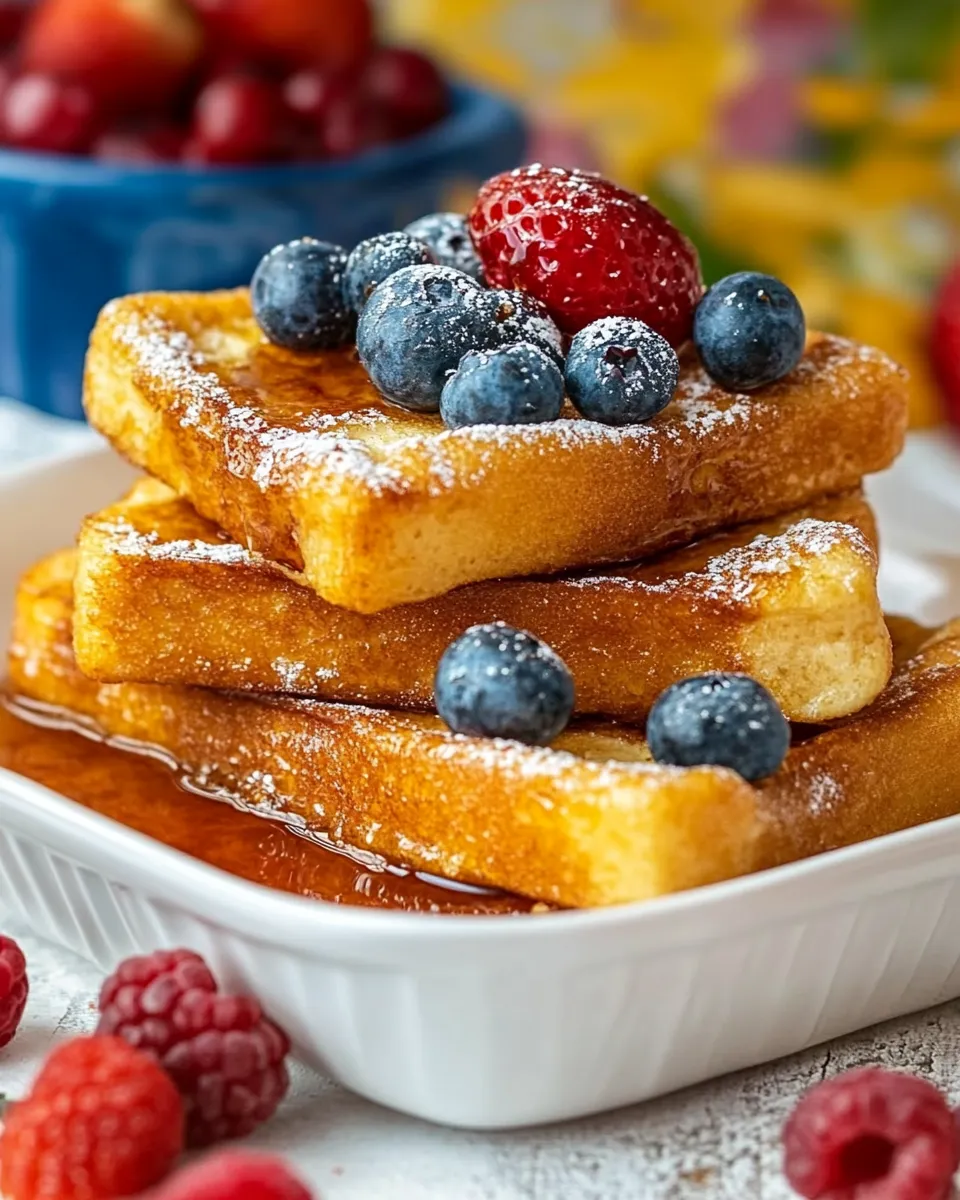
Baked French Toast Sticks
Ingredients
Equipment
Method
- Preheat the oven to 350°F (175°C). Line an 18x13-inch baking sheet with parchment paper.
- In a small bowl, whisk together 2 tablespoons granulated sugar and 1 teaspoon ground cinnamon; set the cinnamon-sugar mixture aside.
- In a medium bowl, vigorously whisk 1 cup whole milk, 4 large eggs, 1 teaspoon vanilla extract, and 1 pinch salt until very well blended.
- Cut each of the 8 slices of Texas toast into three even strips. You may layer slices to cut several at a time.
- Working a few sticks at a time, dip each bread strip into the egg mixture, turning to coat both sides. Lift each strip and let excess drip back into the bowl.
- Arrange the coated sticks on the prepared baking sheet in a single layer, fitting them closely but leaving a little space between each stick.
- Using a basting brush, brush the tops of the french toast sticks lightly with 1 tablespoon of the melted butter.
- Evenly sprinkle half of the reserved cinnamon-sugar mixture over the brushed tops.
- Bake in the preheated oven for 13 minutes.
- Remove the baking sheet from the oven, flip each french toast stick to the opposite side, and brush the now-top sides lightly with the remaining 1 tablespoon melted butter.
- Evenly sprinkle the remaining half of the cinnamon-sugar mixture over the sticks, return the pan to the oven, and continue baking until cooked through and lightly golden, about 13–18 minutes longer.
- Let the french toast sticks cool on the baking sheet for a few minutes. Brush lightly with a little more melted butter if desired, and serve warm with maple syrup for dipping.
Notes
Recipe source: inspired byfood.com