Baklava
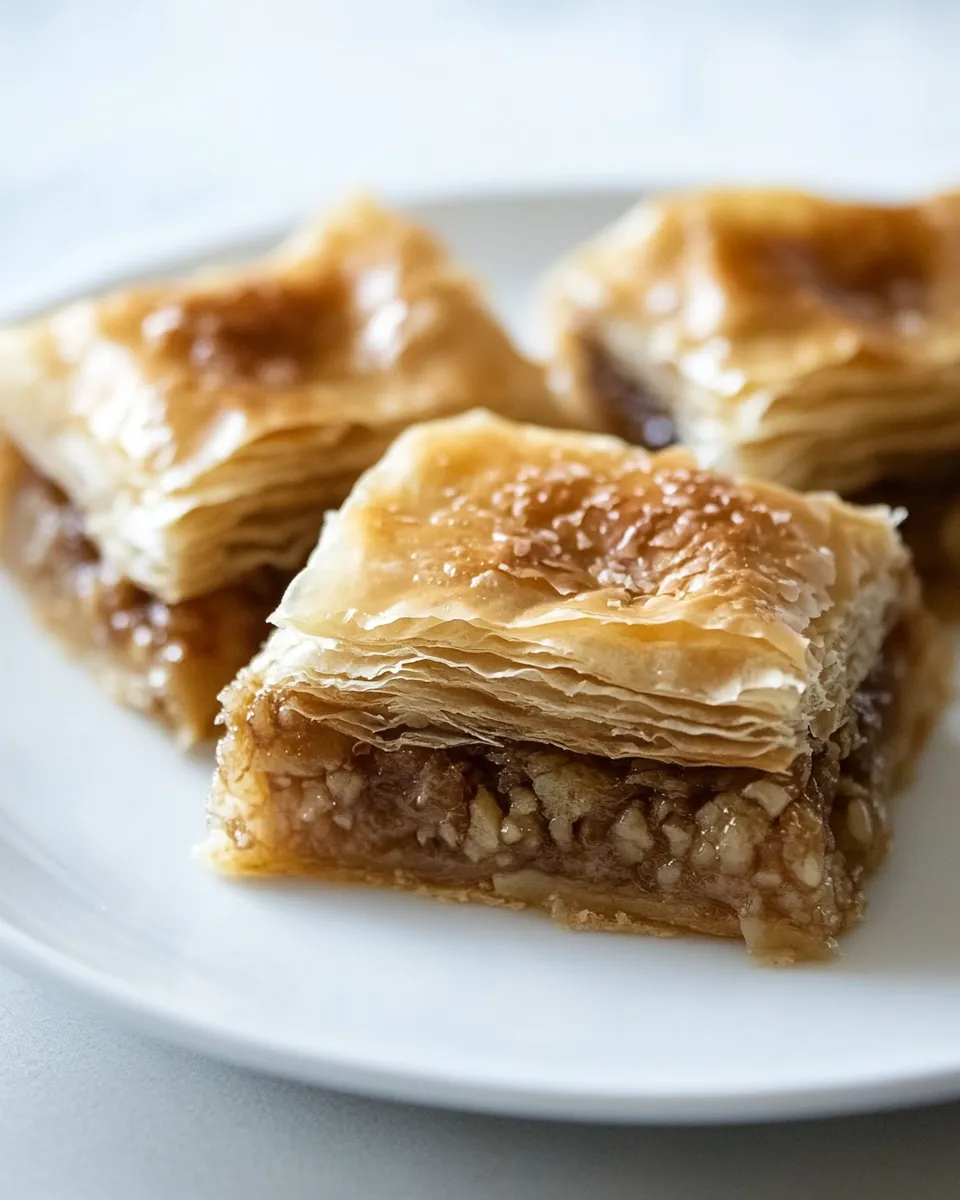
Baklava is one of those desserts that makes the room pause. Layers of paper-thin phyllo, a warmly spiced walnut filling, and a bright, honeyed syrup—taken together they create a crisp, sticky, impressive sweet that’s genuinely worth the time it takes to assemble. I’ll show you how to manage each stage so the result comes out reliably every time.
This recipe is practical and forgiving if you follow a few habits: keep the phyllo covered, toast the nuts for real flavor, and let the syrup cool before you pour it. I’ll include the exact steps and the ingredient list you need, plus tips to avoid common traps.
Read through the instructions first. Then get your work surface ready and gather everything close at hand. Baklava is mostly about careful assembly; once it’s in the oven and the syrup is made, it all comes together.
Ingredient Notes
Below I list the exact ingredients used in the recipe and a short note for each so you know why it’s there and how to handle it. The quantities are the ones used in the instructions, so work from that list when you shop or prep.
Ingredients
- 4 cups walnuts — the main texture and flavor in the filling; toasting concentrates their flavor.
- ½ cup sugar — used in the walnut filling for balance and a touch of sweetness.
- 1 tablespoon ground cinnamon — warms the filling; cinnamon pairs beautifully with walnuts.
- ½ teaspoon ground nutmeg — adds depth; a little goes a long way.
- 1 cup sugar — used in the syrup to build sweetness and body.
- ½ cup water — the syrup’s base; helps dissolve the sugar evenly.
- ½ cup honey — brings the characteristic baklava flavor and sticky sheen.
- 1 tablespoon fresh lemon juice, from 1 lemon — brightens the syrup and prevents crystallization.
- Big pinch salt — enhances sweetness and rounds flavors.
- 1 cinnamon stick (optional) — for an aromatic lift in the syrup; remove before pouring.
- 2 strips orange rind (optional) — adds a citrus note if you like a lighter syrup; remove before pouring.
- 1 cup (2 sticks) unsalted butter, melted — brushed between phyllo layers for crisp, golden sheets and flavor.
- 1 to 2 (16-oz) packages store-bought phyllo dough, thawed (see note) — the layers that make baklava special; keep covered while you work to prevent drying.
Baklava Cooking Guide
- Preheat the oven to 350°F (175°C) and place a rack in the middle position. Line a baking sheet with parchment paper.
- Toast the walnuts: Spread the 4 cups walnuts in a single layer on the prepared baking sheet and bake 7 to 10 minutes, until fragrant. Leave the oven on for baking the baklava. Let the walnuts cool until just warm to the touch.
- Make the filling: In a food processor, combine the toasted walnuts, ½ cup sugar, 1 tablespoon ground cinnamon, and ½ teaspoon ground nutmeg. Pulse/process until the mixture resembles coarse sand and small pebbles. Transfer the mixture to a medium bowl and set aside.
- Make the syrup: In a small saucepan, combine 1 cup sugar, ½ cup water, ½ cup honey, 1 tablespoon fresh lemon juice, a big pinch salt, and, if using, 1 cinnamon stick and 2 strips orange rind. Bring to a boil over medium heat, then reduce the heat to low and simmer uncovered for 5 minutes. Remove and discard the cinnamon stick and orange rind (if used), or strain the syrup, then let the syrup cool until ready to use.
- Prepare to assemble: Place a 9 x 13-inch (23 x 33-cm) baking dish, a pastry brush, and the melted butter (1 cup) near a flat, clean work surface. Unroll the thawed phyllo dough and, using a sharp knife, trim each sheet to 8 x 12 inches (20 x 30 cm) to fit the baking dish. Discard trimmed scraps. Keep the phyllo sheets covered with plastic wrap and a kitchen towel while you work to prevent them from drying out.
- Butter the pan: Lightly brush the bottom and sides of the baking dish with melted butter.
- Begin layering phyllo: Working with two phyllo sheets at a time, place 2 sheets in the pan, then drizzle 2 to 3 teaspoons melted butter over them. Continue adding 2 sheets and drizzling 2 to 3 teaspoons butter after every 2 sheets until you have placed 14 sheets total on the bottom (i.e., seven times of 2-sheet units).
- Add the first layer of filling: Spread one-third of the walnut filling (about 1¼ cups) evenly over the phyllo layers.
- Middle layers and filling: Add 6 more phyllo sheets, continuing to drizzle 2 to 3 teaspoons melted butter after every 2 sheets. After those 6 sheets, spread the second third of the filling evenly. Add another 6 phyllo sheets (drizzling butter after every 2), then spread the final third of the filling.
- Top layers: Finish by adding 14 more phyllo sheets, drizzling 2 to 3 teaspoons melted butter after every 2 sheets. Do not brush butter on the very top final sheet.
- Score the baklava: Using a very sharp knife, cut all the way through the layers to score the baklava into your desired shapes—24 squares or diamonds are common. If any melted butter remains, spoon or brush it into the cut lines.
- Bake: Bake the baklava for 40 to 45 minutes, until the top is golden brown and you hear it bubbling.
- Add the syrup: Let the baklava cool 5 minutes in the pan, then spoon or slowly drizzle the cooled syrup into every cut and evenly over the top so it can soak into the layers.
- Cool and serve: Allow the baklava to cool completely and absorb the syrup before serving—at least a few hours or overnight for best texture.
Why This Recipe Belongs in Your Rotation
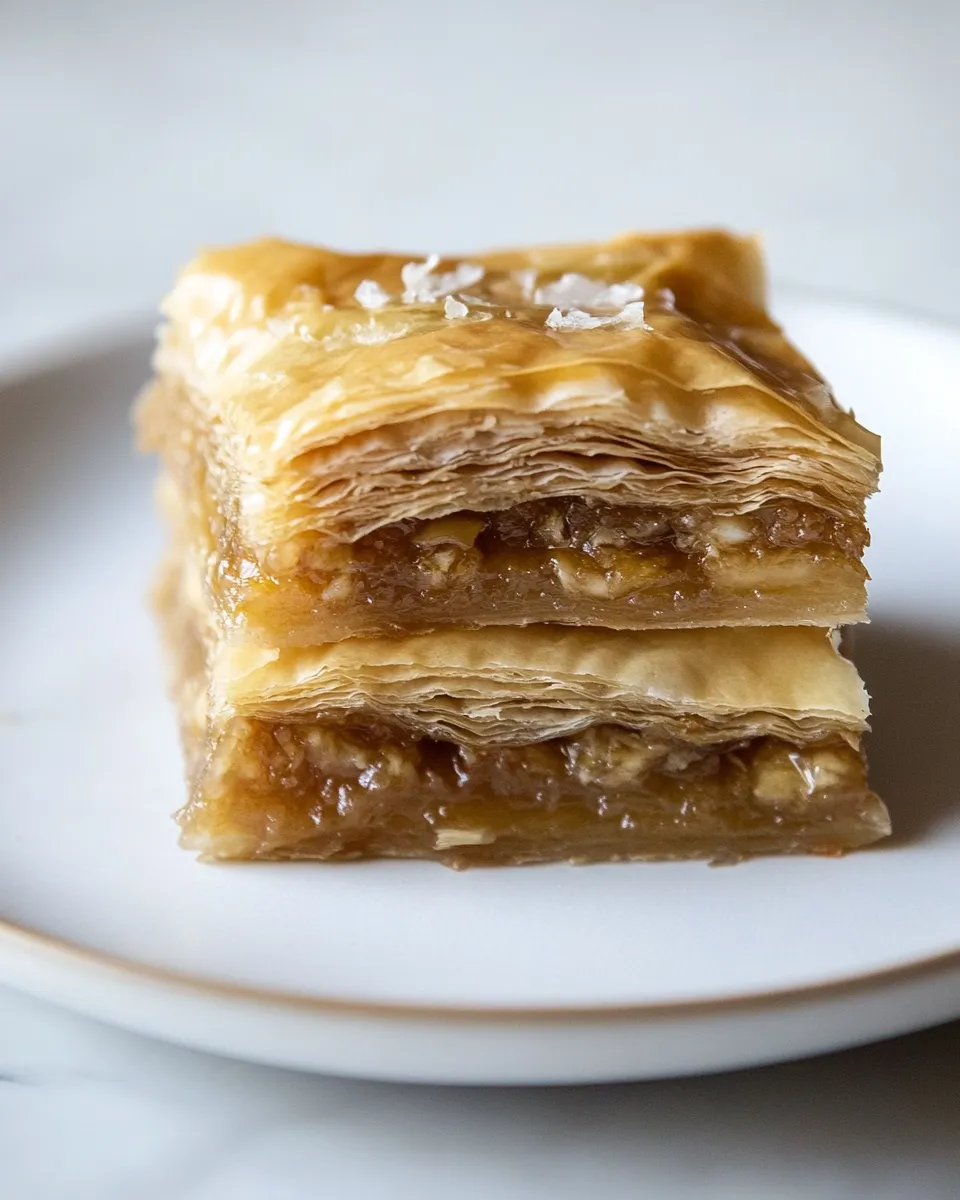
This version of Baklava is straightforward and built from reliable steps. The toast-then-process method for the nuts gives a firmer texture and more pronounced flavor than raw nuts folded in. The syrup is simple: sugar, water, honey, and lemon keep it balanced while the optional cinnamon or orange peel add aromatics without fuss.
Make it when you want a dessert that scales well and keeps. It holds for days and actually tastes better after the flavors settle. It’s a great recipe for entertaining: assemble ahead, bake the day of, and syrup in the cooling window. The hands-on assembly time is the main investment; the payoff is an elegant dessert that looks like you spent hours more than you did.
Flavor-Forward Alternatives
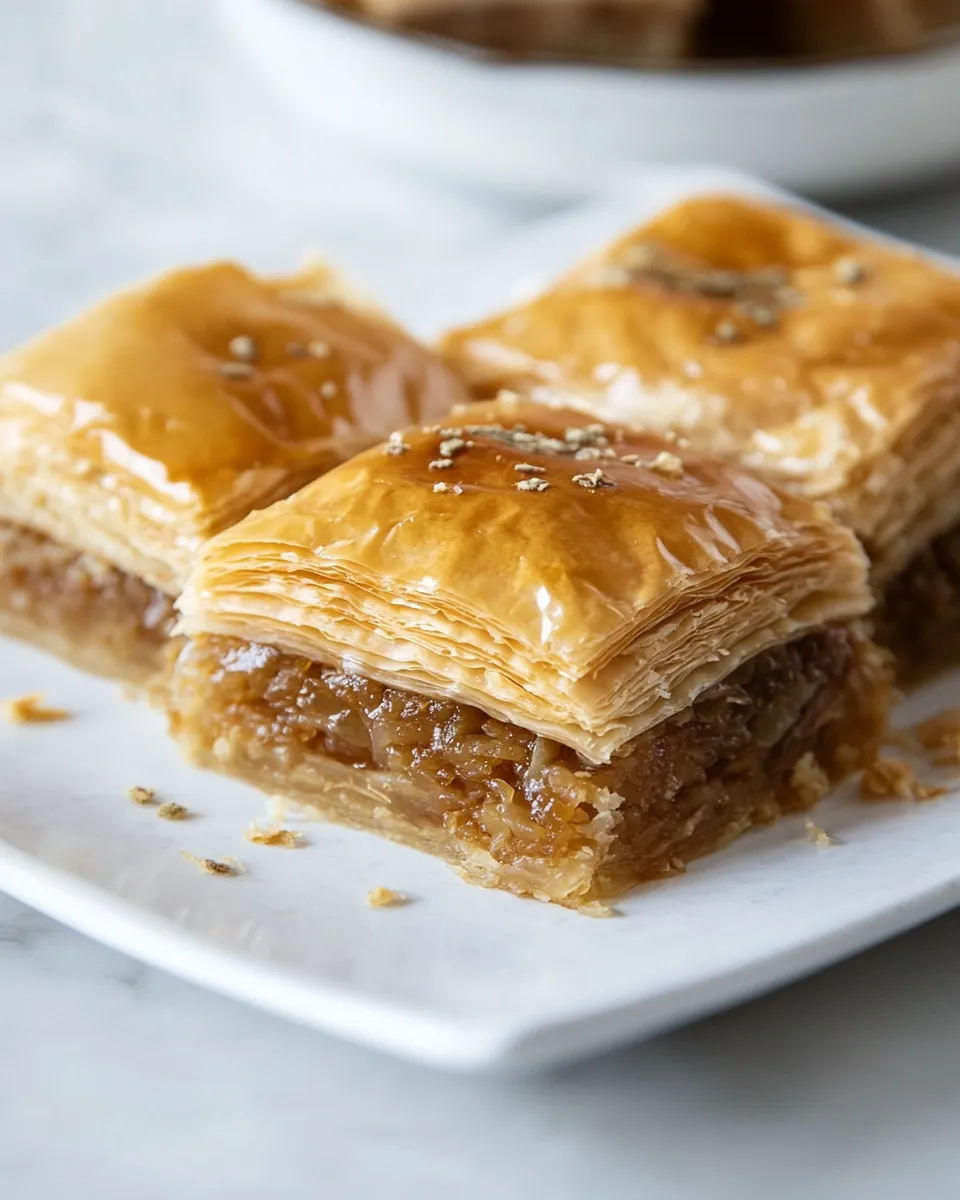
- Nut swaps: Pistachios or a 50/50 mix of walnuts and pistachios bring a different color and flavor profile—use the same total volume.
- Spiced syrup: Add a star anise or two during the syrup simmer (remove before pouring) for a licorice note.
- Citrus brightness: Increase orange rind in the syrup or finish with a light sprinkle of finely grated orange zest after the syrup has soaked in.
- Maple-honey blend: For a deeper sweetness swap half the honey for pure maple syrup; keep the total liquid the same.
What’s in the Gear List
- Baking sheet (for toasting the walnuts).
- Parchment paper.
- Food processor (for the filling).
- Small saucepan (for the syrup).
- 9 x 13-inch (23 x 33-cm) baking dish.
- Pastry brush and a small spoon.
- Sharp knife (very important for clean scoring).
- Plastic wrap and a kitchen towel (to keep phyllo from drying).
- Mixing bowl(s) and measuring tools.
Common Errors (and Fixes)
- Phyllo drying out: Keep the stack covered with plastic wrap and a towel. Work quickly and re-cover any sheets you’re not using immediately.
- Soggy bottom: Make sure you’ve toasted the nuts and that the syrup is cooled before pouring—hot syrup can make the phyllo collapse. Also, avoid over-buttering the final top sheet (the recipe specifies not to brush butter on the very top final sheet).
- Syrup too thick or grainy: Simmer for the instructed 5 minutes and stir so sugar dissolves completely. Lemon juice helps stop crystallization.
- Uneven cutting: Use a very sharp knife and score all the way through before baking; spoon any remaining butter into the cut lines to ensure clean separation.
- Burning edges: Use middle rack positioning and check at the lower end of the bake time; if edges brown too quickly, tent loosely with foil for the remaining time.
Make It Fit Your Plan
Make ahead: You can assemble the baklava up to the scoring stage and keep it covered in the refrigerator for a day before baking. Bake as directed and add the syrup once it has cooled slightly.
Feeding a crowd: The recipe in a 9 x 13 pan makes about 24 pieces. For more, use additional pans and stagger baking so they finish as you need them. Baklava stores well and travels—wrap individual pieces if you’ll move them.
Dietary notes: This is a rich, butter-and-honey dessert. For lower-sugar options, reduce the syrup slightly and rely more on honey, but expect a different texture. For vegan swaps, use a plant butter alternative, though flavor and texture will differ from the original.
If You’re Curious
Yes, you can change nuts without altering the method. Pistachios will give a bright, green color and a distinctive flavor; almonds work too, usually sliced or roughly chopped. The key is to keep the total nut volume the same and pulse to similar consistency: coarse sand and small pebbles.
Do you have to use honey? Honey is traditional and gives baklava its characteristic finish, but you can adjust the sweetness balance with more sugar if you prefer. Lemon juice is essential in the syrup for structure and shelf stability.
Storage & Reheat Guide
Storage: Keep baklava at room temperature, covered, for up to a week. If you want to extend life, refrigerate it in an airtight container for up to two weeks—note refrigeration can slightly soften the crisp top.
Reheating: If you want to revive crispness, warm pieces in a 300°F (150°C) oven for 5–7 minutes on a baking sheet. Let them cool a minute before serving. Do not microwave for more than a short burst; it will make the layers chewy rather than crisp.
Quick Questions
- Can I freeze baklava? Yes. Freeze in a single layer on a tray until solid, then transfer to a freezer-safe container with parchment between layers. Thaw at room temperature, then warm briefly in a low oven to refresh.
- How long does it take to assemble? Plan 30–45 minutes for assembly if you have phyllo trimmed and butter melted. Toasting nuts and making syrup add short extra steps.
- Does the syrup need to be cold? The syrup should be cooled to room temperature before you pour it onto the hot baklava so it soaks in without over-softening the top layers.
The Last Word
Baklava feels ornate but it’s really a series of small, manageable steps. Toast the nuts, keep the phyllo moist, be deliberate with the butter, and don’t rush the syrup. Follow the guide and you’ll end up with a dessert that slices neatly, holds its syrup, and tastes layered with spice and honey. Make it for a special occasion or when you want guests to remember dessert—either way, it rewards the care you give it.
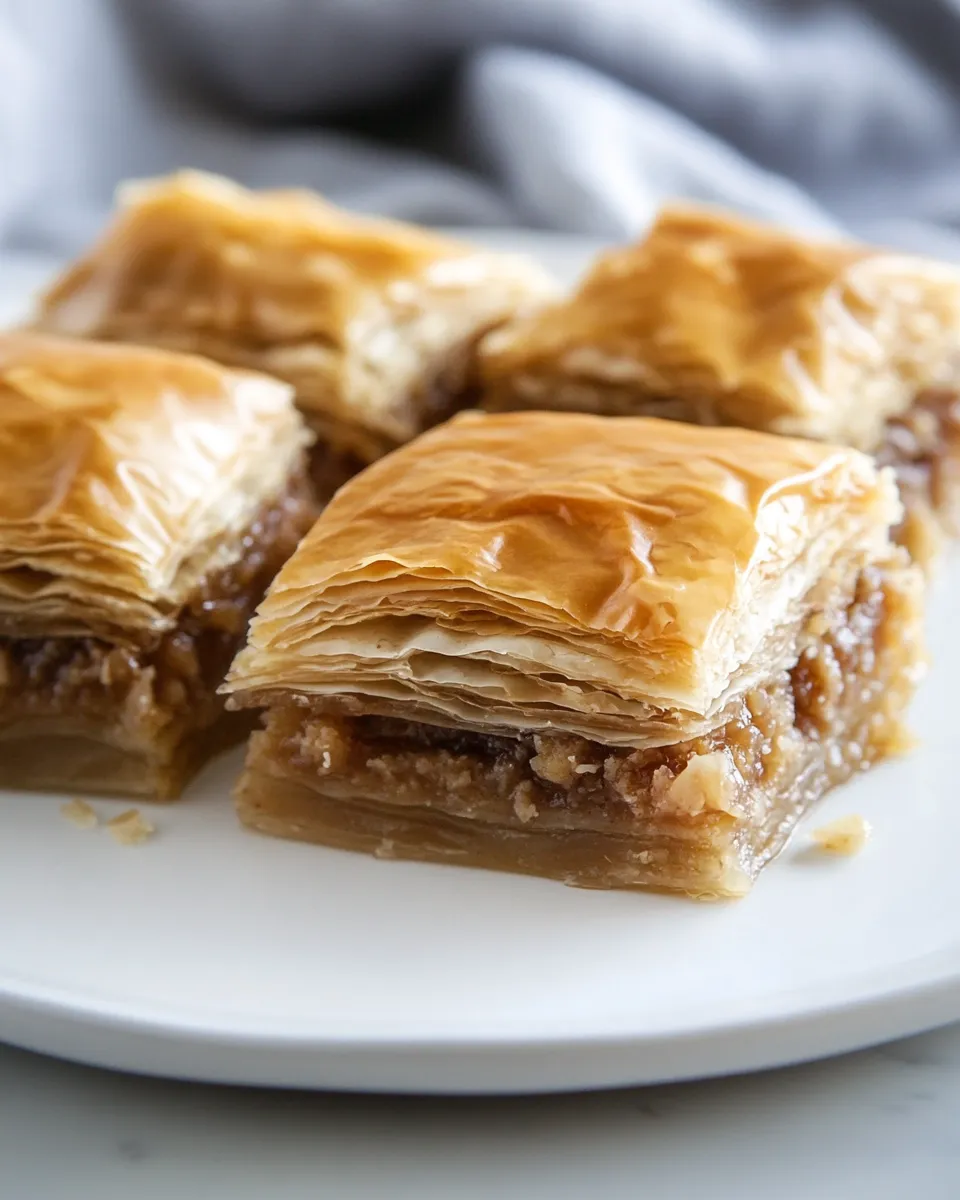
Baklava
Ingredients
Equipment
Method
- Preheat the oven to 350°F (175°C) and place a rack in the middle position. Line a baking sheet with parchment paper.
- Toast the walnuts: Spread the 4 cups walnuts in a single layer on the prepared baking sheet and bake 7 to 10 minutes, until fragrant. Leave the oven on for baking the baklava. Let the walnuts cool until just warm to the touch.
- Make the filling: In a food processor, combine the toasted walnuts, ½ cup sugar, 1 tablespoon ground cinnamon, and ½ teaspoon ground nutmeg. Pulse/process until the mixture resembles coarse sand and small pebbles. Transfer the mixture to a medium bowl and set aside.
- Make the syrup: In a small saucepan, combine 1 cup sugar, ½ cup water, ½ cup honey, 1 tablespoon fresh lemon juice, a big pinch salt, and, if using, 1 cinnamon stick and 2 strips orange rind. Bring to a boil over medium heat, then reduce the heat to low and simmer uncovered for 5 minutes. Remove and discard the cinnamon stick and orange rind (if used), or strain the syrup, then let the syrup cool until ready to use.
- Prepare to assemble: Place a 9 x 13-inch (23 x 33-cm) baking dish, a pastry brush, and the melted butter (1 cup) near a flat, clean work surface. Unroll the thawed phyllo dough and, using a sharp knife, trim each sheet to 8 x 12 inches (20 x 30 cm) to fit the baking dish. Discard trimmed scraps. Keep the phyllo sheets covered with plastic wrap and a kitchen towel while you work to prevent them from drying out.
- Butter the pan: Lightly brush the bottom and sides of the baking dish with melted butter.
- Begin layering phyllo: Working with two phyllo sheets at a time, place 2 sheets in the pan, then drizzle 2 to 3 teaspoons melted butter over them. Continue adding 2 sheets and drizzling 2 to 3 teaspoons butter after every 2 sheets until you have placed 14 sheets total on the bottom (i.e., seven times of 2-sheet units).
- Add the first layer of filling: Spread one-third of the walnut filling (about 1¼ cups) evenly over the phyllo layers.
- Middle layers and filling: Add 6 more phyllo sheets, continuing to drizzle 2 to 3 teaspoons melted butter after every 2 sheets. After those 6 sheets, spread the second third of the filling evenly. Add another 6 phyllo sheets (drizzling butter after every 2), then spread the final third of the filling.
- Top layers: Finish by adding 14 more phyllo sheets, drizzling 2 to 3 teaspoons melted butter after every 2 sheets. Do not brush butter on the very top final sheet.
- Score the baklava: Using a very sharp knife, cut all the way through the layers to score the baklava into your desired shapes—24 squares or diamonds are common. If any melted butter remains, spoon or brush it into the cut lines.
- Bake: Bake the baklava for 40 to 45 minutes, until the top is golden brown and you hear it bubbling.
- Add the syrup: Let the baklava cool 5 minutes in the pan, then spoon or slowly drizzle the cooled syrup into every cut and evenly over the top so it can soak into the layers.
- Cool and serve: Allow the baklava to cool completely and absorb the syrup before serving—at least a few hours or overnight for best texture.
Notes
The number of sheets of phyllo dough in each package varies by brand (and even by box). You will need a total of 40 sheets of phyllo dough for this recipe. Frozen phyllo dough should be thawed in the refrigerator 12 to 24 hours before using.
Make-Ahead Instructions:
The baklava can be stored in an airtight container at room temperature for up to 5 days. For longer storage, the baklava can be refrigerated for up to 2 weeks, or frozen for up to 2 months. Thaw at room temperature before serving.