Boston Cream Donuts
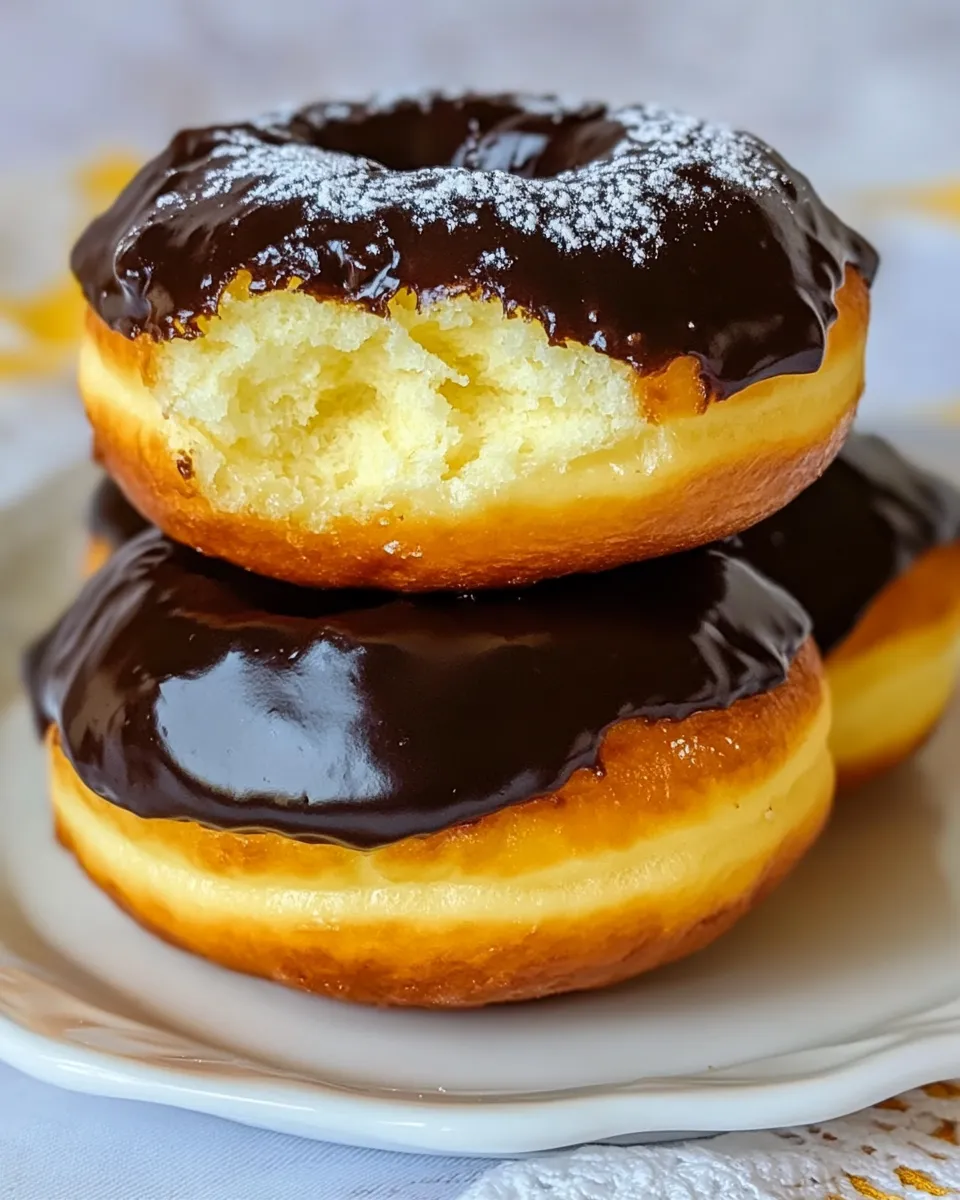
These Boston Cream Donuts are the grown-up cousin of the classic Boston cream pie: pillowy yeast dough, silky pastry cream tucked inside, and a glossy chocolate ganache on top. If you’ve ever wanted a bakery-quality donut at home, this recipe walks you through the stages so you can get consistent results without unnecessary fuss.
I test this method repeatedly; the sequence and timing matter more than magic. With a few simple tools and a little patience for chilling the pastry cream, the payoff is enormous: tender, custardy centers and chocolate that snaps just enough. I’ll give practical tips for frying, filling, and finishing so you spend less time worrying and more time enjoying warm, cream-filled donuts.
Plan ahead for the pastry cream chill time and keep a candy thermometer handy when frying. Follow the steps below in order and you’ll be rewarded with classic Boston Cream Donuts that keep friends and family coming back for seconds.
What You’ll Gather
Below are the exact ingredients used in this recipe and why each matters. Read through the instructions before you begin so you can time the pastry cream chilling and dough rests to line up.
Ingredients
- 1/2 cup heavy cream — used in both the dough’s liquid component and for the ganache; adds richness and structure.
- 1/2 cup whole milk — part of the dough’s warm liquid; helps activate the yeast and build an enriched dough.
- 1/4 cup granulated sugar — sweetens the dough and feeds the yeast slightly; measure carefully.
- 1/4 cup unsalted butter — melts into the warm liquid to tenderize the dough and add flavor.
- 3 1/4 cups all-purpose flour — the main structure for the donuts; weigh or spoon-and-level for consistency.
- 2 packets rapid rise yeast — gives the dough its lift; bring liquids to the proper temperature (about 130°F) for best activation.
- 1 teaspoon salt — balances flavor; don’t skip.
- 2 egg yolks — enrich the dough and improve color and tenderness.
- Vegetable oil for frying — neutral-flavored oil with a high smoke point; monitor temperature carefully.
- 1/4 cup granulated sugar — used again for the pastry cream; separate from the dough sugar.
- 1 1/2 tablespoons cornstarch — thickening agent for the pastry cream; makes it stable for piping.
- 1 pinch salt — highlights the cream’s sweetness.
- 1 1/4 cups whole milk — the liquid base for the pastry cream; heat gently for even thickening.
- 1 large egg yolk — gives the pastry cream its custardy texture and color.
- 1 tablespoon unsalted butter — stirred into the finished pastry cream for silkiness.
- 1 teaspoon vanilla extract — essential flavor for the pastry cream; add after cooking.
- 4 ounces semi-sweet chocolate chips — the topping’s chocolate; melts smoothly when combined with hot cream.
- 1/3 cup heavy whipping cream — heated and poured over the chocolate to make a shiny ganache.
Boston Cream Donuts — Do This Next
- Combine 1/2 cup heavy cream, 1/2 cup whole milk, 1/4 cup granulated sugar and 1/4 cup unsalted butter in a heat-proof bowl or measuring cup. Heat in the microwave in 20-second intervals, stirring between intervals, until the mixture reaches 130°F. Set aside to cool slightly.
- In the bowl of a stand mixer, whisk together 3 1/4 cups all-purpose flour, 2 packets rapid rise yeast and 1 teaspoon salt.
- Pour the warm milk/cream/butter mixture into the dry ingredients and mix briefly with the dough hook until just combined. Add the 2 egg yolks and mix on low until incorporated.
- Knead the dough on low in the mixer with the dough hook for 5 minutes. Remove the dough, transfer to a lightly floured surface and knead by hand for 5–8 minutes, until the dough is smooth and springs back when you poke it.
- Form the dough into a ball, place it in a large greased bowl, cover, and let rest for 20 minutes.
- While the dough rests, make the pastry cream: Whisk together 1/4 cup granulated sugar, 1 1/2 tablespoons cornstarch and 1 pinch salt in a medium heavy-bottomed saucepan. Whisk in 1 1/4 cups whole milk and 1 large egg yolk until smooth.
- Heat the pastry cream mixture over medium heat, whisking constantly, until it thickens and begins to bubble (about 5–8 minutes). Once it bubbles, continue whisking and cook 1–2 more minutes.
- Remove the saucepan from the heat and whisk in 1 tablespoon unsalted butter and 1 teaspoon vanilla extract. Transfer the pastry cream to a heat-proof container, press plastic wrap directly onto the surface to prevent a skin, and chill in the refrigerator for at least 4 hours or overnight.
- After the dough has rested and the pastry cream is chilling, punch down the dough. Roll it out on a lightly floured surface to 1/2-inch thickness. Use a 3-inch round cutter to cut donuts and place them on a parchment-lined baking sheet. Cover with a clean kitchen towel and let rise about 1 hour, until nearly doubled in size.
- Pour vegetable oil into a large, heavy-bottomed pot to a depth of several inches. Heat the oil and monitor with a candy thermometer. Maintain the oil temperature between 350–375°F while frying (about 360°F is ideal).
- Fry the donuts, a few at a time without overcrowding, for 2–3 minutes per side until golden brown. Adjust heat to keep the oil in the 350–375°F range.
- Remove donuts with a slotted spoon or spider and transfer to a cooling rack set over paper towels to drain. Let the donuts cool until warm or room temperature before filling.
- Make the chocolate ganache: heat 1/3 cup heavy whipping cream in the microwave until just simmering (about 45 seconds), then pour over 4 ounces semi-sweet chocolate chips in a heat-proof bowl. Let sit 2–3 minutes, then stir until smooth.
- Fill the cooled donuts with the chilled pastry cream: transfer the pastry cream to a piping bag fitted with a small round tip (or use a pastry syringe). Insert the tip into the side or bottom of each donut and pipe in pastry cream until filled.
- Dip the tops of the filled donuts into the chocolate ganache, allow excess to drip off, then set the donuts on a rack until the chocolate sets.
Why You’ll Keep Making It
Because the texture is unmistakable: enriched yeast dough that’s tender, a dense but smooth pastry cream that never tastes eggy, and a chocolate topping that brings everything together. The method separates the tasks into manageable stages—dough, cream, fry, fill—so it’s easy to repeat and improve.
Once you learn to read the dough (smooth and springy) and the ganache (shiny, pourable), you’ll consistently get that bakery finish at home. They make a great weekend project—people forgive time spent when the outcome is this good.
Low-Carb/Keto Alternatives
Classic Boston Cream Donuts rely on flour and sugar, so a true keto version changes the recipe drastically. If you need lower-carb options:
- Consider using almond- or coconut-flour donut recipes for the shell, but expect a different crumb and frying behavior.
- For the cream, use a custard based on heavy cream plus a sugar substitute that tolerates cooking (e.g., allulose or erythritol blends), thickened with xanthan gum in place of cornstarch. Work in small test batches first—the texture will differ.
These swaps mean you won’t be making Boston Cream Donuts in the traditional sense, but you can capture similar flavors with adjusted techniques.
Prep & Cook Tools
- Stand mixer with dough hook — for consistent kneading.
- Heavy-bottomed pot and candy thermometer — to keep oil at 350–375°F.
- 3-inch round cutter and rolling pin — for even donut shapes.
- Parchment-lined baking sheet and clean towel — for proofing.
- Heat-proof bowls and measuring cups — for warm liquid and ganache.
- Piping bag with small round tip or pastry syringe — for filling with pastry cream.
- Cooling rack and slotted spoon or spider — to drain and cool fried donuts.
Errors to Dodge
- Overheating the liquid for the dough. If it’s much hotter than 130°F it can kill yeast or scramble eggs. Use a thermometer.
- Under-kneading. The dough should be smooth and spring back when poked; underworked dough tears and won’t hold shape well.
- Overcrowding the fryer. That lowers oil temperature and yields greasy donuts. Fry in small batches and let oil recover between batches.
- Filling warm cream into warm donuts. Always chill the pastry cream fully so it sets properly inside the donut and doesn’t leak.
- Skipping the plastic wrap on pastry cream. A skin forms quickly; pressing wrap on the surface prevents it.
Variations for Dietary Needs
If you need to adapt for specific diets, focus on conscious swaps rather than guessing:
- Gluten-free: try a tested gluten-free all-purpose blend and reduce handling—gluten-free dough behaves differently and may need xanthan or different hydration.
- Dairy-free: use unsalted dairy-free butter alternatives and full-fat plant milks for both dough and cream. Pastry cream needs a stabilizer (e.g., cornstarch works with many plant milks, but flavor and texture will vary).
- Egg-free: the recipe relies on yolks for richness; for strict egg-free diets, use an egg replacer and a different enriched dough formula designed for eggs omitted.
Behind the Recipe
This approach borrows from classic bakery technique: an enriched dough with egg yolks for tenderness and color, plus a custard-thickened pastry cream. Rapid-rise yeast shortens the proofing time while still giving a soft interior. The ganache is a simple, reliable glaze—heavy cream melts chocolate into a glossy coating that sets quickly on a warm donut.
When I developed this, the goal was to balance time and quality. Longer overnight fermentation can deepen flavor, but the given steps let you make these in a single day if you’re organized. The pastry cream needs chilling; that’s the longest passive step, and it’s worth the wait.
Refrigerate, Freeze, Reheat
- Refrigerate: Filled donuts are best eaten the day they’re filled, but you can refrigerate them in a single layer for up to 2 days. Keep them covered to prevent the glaze from drying.
- Freeze: Freeze unfilled, well-wrapped donuts for up to 1 month. Thaw and then fill and glaze when ready for best texture.
- Reheat: Donuts with pastry cream don’t reheat well in a microwave (cream can become grainy). If you must warm, a very brief 8–10 second zap can take the chill off, but serve immediately.
Quick Q&A
- Can I bake instead of fry? Yes—baked donuts will be less rich and won’t have the same deep-fried crust. Brush or spray them lightly with oil before baking for better color.
- Why did my pastry cream curdle? It’s usually from overheating or not whisking constantly. Cook over medium and whisk steadily; tempering the hot milk into yolks can help if you’re worried.
- How do I know when the oil is ready? Use a candy thermometer and stabilize at roughly 360°F. A small cube of dough dropped in should sizzle and brown in about 1 minute per side.
Let’s Eat
Fill a tray, pour coffee, and set out napkins—these Boston Cream Donuts are happiest warm and shared. If you’re making them for guests, do the frying and filling the same day and finish with the ganache shortly before serving so the top is glossy and inviting.
Store any leftovers carefully and enjoy the process. The first bite—cream bursting into a tender donut, a hit of chocolate—will tell you it was worth the hands-on time. Happy baking, and please tell me how they turn out when you try them.
Boston Cream Donuts
Ingredients
Equipment
Method
- Combine 1/2 cup heavy cream, 1/2 cup whole milk, 1/4 cup granulated sugar and 1/4 cup unsalted butter in a heat-proof bowl or measuring cup. Heat in the microwave in 20-second intervals, stirring between intervals, until the mixture reaches 130°F. Set aside to cool slightly.
- In the bowl of a stand mixer, whisk together 3 1/4 cups all-purpose flour, 2 packets rapid rise yeast and 1 teaspoon salt.
- Pour the warm milk/cream/butter mixture into the dry ingredients and mix briefly with the dough hook until just combined. Add the 2 egg yolks and mix on low until incorporated.
- Knead the dough on low in the mixer with the dough hook for 5 minutes. Remove the dough, transfer to a lightly floured surface and knead by hand for 5–8 minutes, until the dough is smooth and springs back when you poke it.
- Form the dough into a ball, place it in a large greased bowl, cover, and let rest for 20 minutes.
- While the dough rests, make the pastry cream: Whisk together 1/4 cup granulated sugar, 1 1/2 tablespoons cornstarch and 1 pinch salt in a medium heavy-bottomed saucepan. Whisk in 1 1/4 cups whole milk and 1 large egg yolk until smooth.
- Heat the pastry cream mixture over medium heat, whisking constantly, until it thickens and begins to bubble (about 5–8 minutes). Once it bubbles, continue whisking and cook 1–2 more minutes.
- Remove the saucepan from the heat and whisk in 1 tablespoon unsalted butter and 1 teaspoon vanilla extract. Transfer the pastry cream to a heat-proof container, press plastic wrap directly onto the surface to prevent a skin, and chill in the refrigerator for at least 4 hours or overnight.
- After the dough has rested and the pastry cream is chilling, punch down the dough. Roll it out on a lightly floured surface to 1/2-inch thickness. Use a 3-inch round cutter to cut donuts and place them on a parchment-lined baking sheet. Cover with a clean kitchen towel and let rise about 1 hour, until nearly doubled in size.
- Pour vegetable oil into a large, heavy-bottomed pot to a depth of several inches. Heat the oil and monitor with a candy thermometer. Maintain the oil temperature between 350–375°F while frying (about 360°F is ideal).
- Fry the donuts, a few at a time without overcrowding, for 2–3 minutes per side until golden brown. Adjust heat to keep the oil in the 350–375°F range.
- Remove donuts with a slotted spoon or spider and transfer to a cooling rack set over paper towels to drain. Let the donuts cool until warm or room temperature before filling.
- Make the chocolate ganache: heat 1/3 cup heavy whipping cream in the microwave until just simmering (about 45 seconds), then pour over 4 ounces semi-sweet chocolate chips in a heat-proof bowl. Let sit 2–3 minutes, then stir until smooth.
- Fill the cooled donuts with the chilled pastry cream: transfer the pastry cream to a piping bag fitted with a small round tip (or use a pastry syringe). Insert the tip into the side or bottom of each donut and pipe in pastry cream until filled.
- Dip the tops of the filled donuts into the chocolate ganache, allow excess to drip off, then set the donuts on a rack until the chocolate sets.
Notes
Maintain oil temperature between 350–375°F while frying for best results.