Butterflied Lemon Roast Chicken
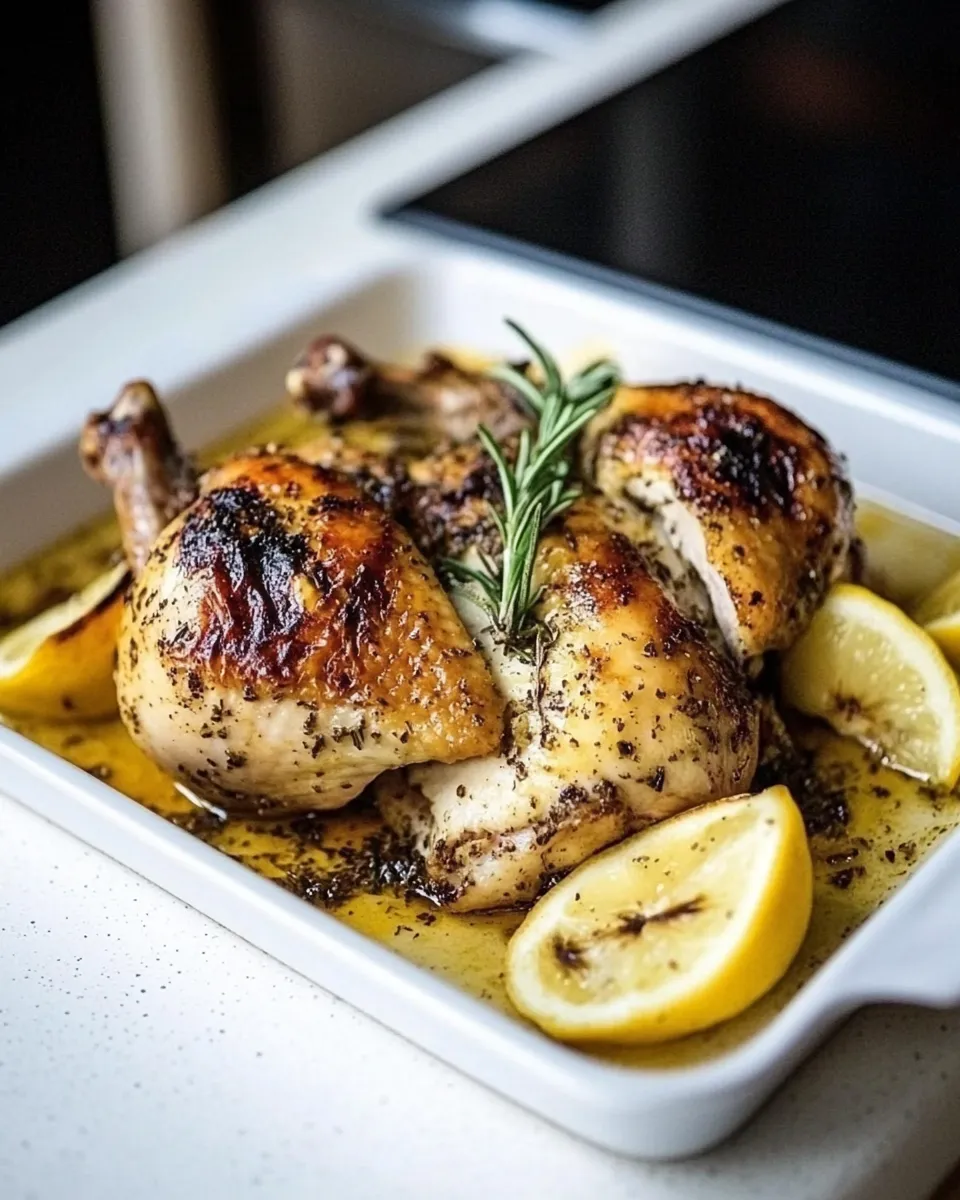
This butterflied lemon roast chicken is one of those weeknight-to-weekend recipes I turn to when I want great flavor with minimal fuss. Spatchcocking the bird flattens it so it roasts quickly and evenly; the skin gets crisp, the meat stays juicy, and the lemon-rosemary-garlic combo is reliably bright and comforting. I like that the technique lets the aromatics sit directly under the chicken, steaming the meat from below while the skin roasts on top.
There are no complicated steps here — a quick prep, a confident roast at a high temperature, and a short rest before carving. The rub gets tucked under the skin, which keeps the flavors close to the meat and prevents the garlic from burning on top. If you can butterfly a chicken and follow a thermometer, you can get restaurant-quality results at home.
Below you’ll find ingredient notes, exact steps to follow (I kept the method in the original order so you can jump right to the oven), troubleshooting tips, and practical swaps. Read once, then keep this open the first time you make it — the rest is habit.
Ingredient Notes
Short notes about the ingredients and why they matter, so you can understand what to focus on when buying or prepping.
- 4 pounds whole chicken — The recipe is built for a 4-pound bird; butterflying (spatchcocking) lets it cook faster and more evenly than a whole roast.
- 2 tablespoons extra virgin olive oil — Helps the rub glide under the skin, promotes browning, and carries flavor into the meat.
- 8 garlic cloves — 4 cloves minced and 4 peeled but left whole — Minced garlic goes into the rub for direct flavor under the skin; whole peeled cloves roast and mellow under the chicken.
- 1 teaspoon paprika — Adds color and a mild earthy note without changing the lemon-rosemary character.
- 1 tablespoon rosemary, minced — Fresh rosemary gives a piney, aromatic backbone that pairs with lemon; minced for easy distribution under the skin.
- 1 teaspoon kosher or sea salt — Seasoning foundation; kosher or sea salt gives better control and even coverage.
- 1/2 teaspoon black pepper — A touch of pepper to balance the citrus and herbs.
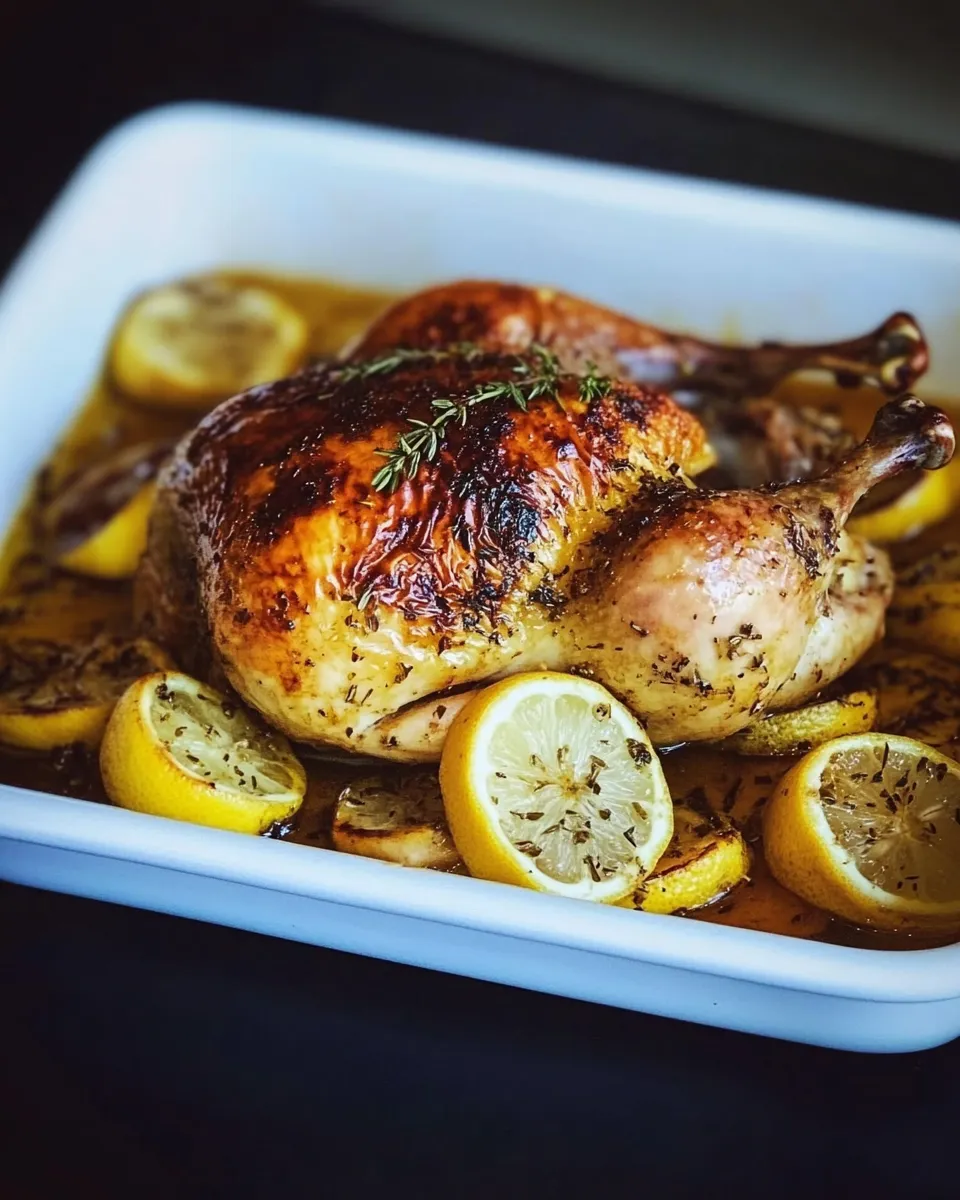
- 2 lemons cut into wedges — Placed under and around the chicken so they roast and steam the meat; they also add bright flavor as you carve.
- 2 whole rosemary sprigs — Aromatics on the sheet to fragrance the pan and the meat from underneath.
Ingredients
- 4 pounds whole chicken — The central ingredient; butterflying reduces cooking time and evens browning.
- 2 tablespoons extra virgin olive oil — Binds the rub and helps crisp the skin.
- 8 garlic cloves — 4 cloves minced and 4 peeled but left whole — Minced for the rub; whole cloves roast underneath to add gentle garlic aroma.
- 1 teaspoon paprika — Adds color and warmth to the rub.
- 1 tablespoon rosemary, minced — Fresh is best; minced allows it to distribute under the skin.
- 1 teaspoon kosher or sea salt — Season the meat thoroughly for flavor.
- 1/2 teaspoon black pepper — Freshly ground if possible for brightness.
- 2 lemons cut into wedges — Wedges placed under the bird steam and flavor as the chicken roasts.
- 2 whole rosemary sprigs — Aromatic bed for the chicken that infuses the cavity and pan.
Make Butterflied Lemon Roast Chicken: A Simple Method
- Position an oven rack in the middle of the oven and preheat to 425°F (220°C).
- Prepare the chicken for butterflying (spatchcock): place the 4-pound whole chicken breast-side down on a cutting board. Using sharp kitchen scissors, cut along both sides of the backbone from one end to the other. Remove and discard the backbone. Flip the chicken over and press down on the breastbone to open and flatten it so the skin side is facing up.
- Separate the 8 garlic cloves: mince 4 cloves and leave the other 4 cloves peeled and whole.
- Make the rub: in a small bowl combine 2 tablespoons extra virgin olive oil, the 4 minced garlic cloves, 1 teaspoon paprika, 1 tablespoon minced rosemary, 1 teaspoon kosher or sea salt, and 1/2 teaspoon black pepper. Stir until evenly combined.
- Loosen the skin of the chicken a little at a time with your fingers, creating pockets over the breasts and thighs. Use your hands to spread the rub between the meat and the skin, distributing it evenly under the skin and rubbing any remaining on top of the skin.
- Line a baking sheet with parchment paper or use a nonstick baking sheet. Arrange the 4 peeled whole garlic cloves, the lemon wedges (from the 2 lemons cut into wedges), and the 2 whole rosemary sprigs on the sheet. Place the butterflied chicken skin-side up on top of the lemons, garlic, and rosemary so they sit under the chicken. Tuck any additional lemon wedges between the legs and the body.
- Roast the chicken in the preheated oven for 50 to 60 minutes, until the juices run clear and a meat thermometer inserted between the breast and thigh (avoiding bone) reads at least 175°F.
- Remove the chicken from the oven and let it rest for about 10 minutes. Carve into pieces and serve.
Why This Recipe is a Keeper
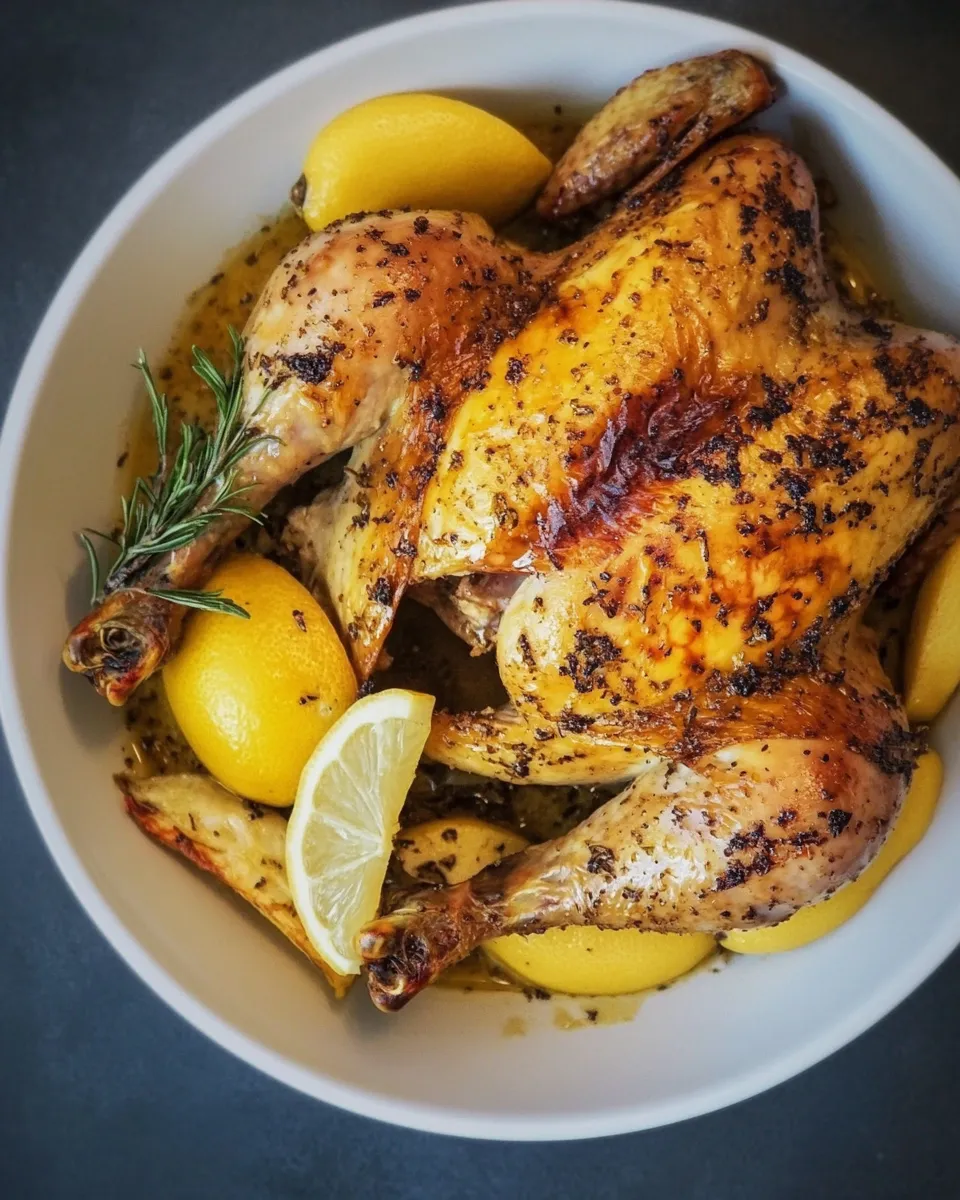
It hits the sweet spot between simplicity and spectacular flavor. Butterflying reduces roast time while improving texture: skin crisps evenly and breasts don’t overcook before the thighs are done. The combination of minced rosemary and garlic under the skin means the seasonings penetrate the meat instead of simply sitting on top. Lemon wedges tucked beneath the bird steam and perfume the chicken from the inside out.
You also get very consistent results. The method relies on a single hot-roast temperature and a straightforward thermometer target (175°F between breast and thigh), so there’s little guesswork. Once you learn to loosen the skin and distribute the rub, the basic routine is fast and repeatable.
Dairy-Free/Gluten-Free Swaps
This recipe is naturally dairy-free and gluten-free as written — no dairy or wheat-based ingredients are required. If you need to adjust for dietary preferences:
- Lower sodium: Reduce the 1 teaspoon of salt slightly and finish with flaky sea salt at the table to taste.
- Oil alternative: If you prefer a different cooking oil, choose a neutral oil with a high smoke point in place of the 2 tablespoons extra virgin olive oil; keep the same amount.
Setup & Equipment
Preparation is half the win. Lay everything out before you start so the butterflying goes smoothly.
- Sharp kitchen scissors or poultry shears — Essential for cutting the backbone cleanly.
- Cutting board and a good chef’s knife — For trimming and pressing the breastbone flat.
- Small bowl and spoon — To mix the rub.
- Baking sheet (lined with parchment or nonstick) — The recipe uses a sheet pan; the lemons and garlic act as a little rack to keep the chicken off direct contact with the pan.
- Meat thermometer — Insert between breast and thigh, avoiding bone; read at least 175°F per the method.
- Tongs and carving knife — For transfer and carving after resting.
Avoid These Mistakes
Common missteps and how to prevent them.
- Skipping the spatchcock: If you don’t butterfly the bird you’ll need a different cook time and risk uneven cooking. Follow the spatchcock step for the given time and temp.
- Not loosening the skin enough: If you don’t create pockets, the rub won’t sit against the meat and you’ll lose depth of flavor. Go slow and use fingers to separate carefully.
- Overcrowding the pan: Don’t pile extra vegetables or too many lemons under the chicken; they should create a thin aromatic bed, not a dense barrier that traps steam and prevents browning.
- Relying on visual cues only: The roast time (50–60 minutes) varies by oven and bird. Use the thermometer target (175°F between breast and thigh) to be sure.
- Skipping the rest: Cutting too soon lets the juices run out. Rest about 10 minutes so the meat firms and retains moisture.
Seasonal Ingredient Swaps
The base method is flexible. Small seasonal swaps change the profile without breaking the technique.
- Other citrus: If you want a different brightness, try blood orange or tangerine wedges in cooler months; they’ll roast sweeter and add a different aroma.
- Herb variations: Thyme or oregano can stand in for rosemary if you prefer their flavor; use the same approach of mincing and tucking under the skin.
- Root vegetables: In fall and winter, scatter halved baby potatoes or thick-cut carrots around the chicken (but not piled under it) to roast in the pan juices.
Recipe Notes & Chef’s Commentary
A few professional notes to make the cook smoother and the results better.
When loosening the skin, work little by little from the cavity toward the breast and thighs to avoid tearing. If the skin tears, don’t panic — press the rub into the tear and smooth what’s left; the bird will still roast beautifully. Tucking the whole peeled garlic cloves and rosemary sprigs under the chicken keeps them from charring too quickly while still infusing flavor.
Thermometer placement matters. Insert the probe between the breast and thigh where the two meet and avoid touching bone, which reads hotter. The recipe’s 175°F target accounts for the darker thigh meat; breast will be tender and juicy at that temperature when the bird is roasted whole and rested properly. Resting for about 10 minutes lets carryover cooking finish and the juices redistribute; carve after resting for clean slices and better texture.
Save It for Later
Leftovers are simple to store and reheat.
- Refrigerating: Cool chicken to room temperature (no more than two hours), then store in an airtight container for up to 3–4 days.
- Freezing: Slice or portion the meat and freeze in airtight containers or vacuum bags for up to 3 months. Freeze lemon wedges separately if you want them later.
- Reheating: For best texture, reheat slices in a 350°F oven covered with foil for 10–15 minutes until warmed through, or briefly in a hot skillet with a splash of oil to re-crisp skin. Microwaving works for convenience but will soften the skin.
Handy Q&A
Quick answers to questions I get most often.
- Can I brine the chicken first? Yes, but not required. If you brine, reduce added salt in the rub. Brining will increase juiciness but adds time.
- Why roast at 425°F? The high temperature encourages quick browning and a crisp skin while keeping the meat juicy because the overall cook time is shorter.
- What if my thermometer reads 160°F? Keep roasting and recheck after a few minutes; you’re aiming for at least 175°F between breast and thigh per the method. Temperature continues to rise slightly while the chicken rests.
- Can I use dried rosemary? Yes, but use a smaller amount (dried is more concentrated). Fresh gives a brighter result.
- Do I need to flip the chicken? No. Place skin-side up and roast as directed; flipping isn’t necessary with the spatchcock method.
Make It Tonight
If you have a whole chicken, garlic, lemons, rosemary, olive oil, paprika, salt, and pepper — you’ve got everything you need. The hands-on time is short: cut out the backbone, mix the rub, slide it under the skin, and into a hot oven. In under an hour you’ll have a roast that feels special but doesn’t demand a day in the kitchen. Try it tonight: set the oven to 425°F, follow the steps above, and let the pan aromatics do the rest. Carve after the 10-minute rest and serve with a simple green salad or roasted vegetables for a complete, satisfying meal.
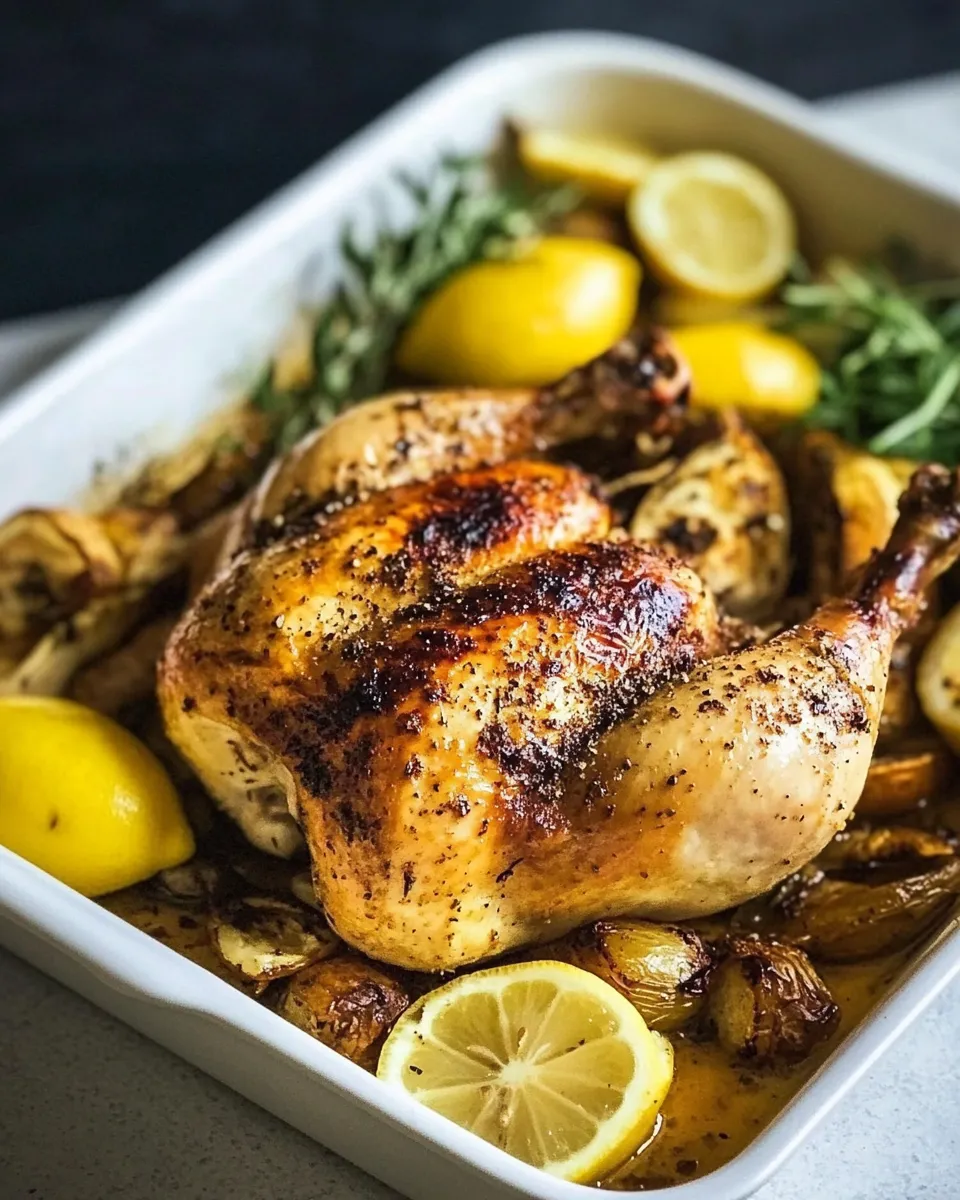
Butterflied Lemon Roast Chicken
Ingredients
Equipment
Method
- Position an oven rack in the middle of the oven and preheat to 425°F (220°C).
- Prepare the chicken for butterflying (spatchcock): place the 4-pound whole chicken breast-side down on a cutting board. Using sharp kitchen scissors, cut along both sides of the backbone from one end to the other. Remove and discard the backbone. Flip the chicken over and press down on the breastbone to open and flatten it so the skin side is facing up.
- Separate the 8 garlic cloves: mince 4 cloves and leave the other 4 cloves peeled and whole.
- Make the rub: in a small bowl combine 2 tablespoons extra virgin olive oil, the 4 minced garlic cloves, 1 teaspoon paprika, 1 tablespoon minced rosemary, 1 teaspoon kosher or sea salt, and 1/2 teaspoon black pepper. Stir until evenly combined.
- Loosen the skin of the chicken a little at a time with your fingers, creating pockets over the breasts and thighs. Use your hands to spread the rub between the meat and the skin, distributing it evenly under the skin and rubbing any remaining on top of the skin.
- Line a baking sheet with parchment paper or use a nonstick baking sheet. Arrange the 4 peeled whole garlic cloves, the lemon wedges (from the 2 lemons cut into wedges), and the 2 whole rosemary sprigs on the sheet. Place the butterflied chicken skin-side up on top of the lemons, garlic, and rosemary so they sit under the chicken. Tuck any additional lemon wedges between the legs and the body.
- Roast the chicken in the preheated oven for 50 to 60 minutes, until the juices run clear and a meat thermometer inserted between the breast and thigh (avoiding bone) reads at least 175°F.
- Remove the chicken from the oven and let it rest for about 10 minutes. Carve into pieces and serve.