Buttermilk Chess Bars
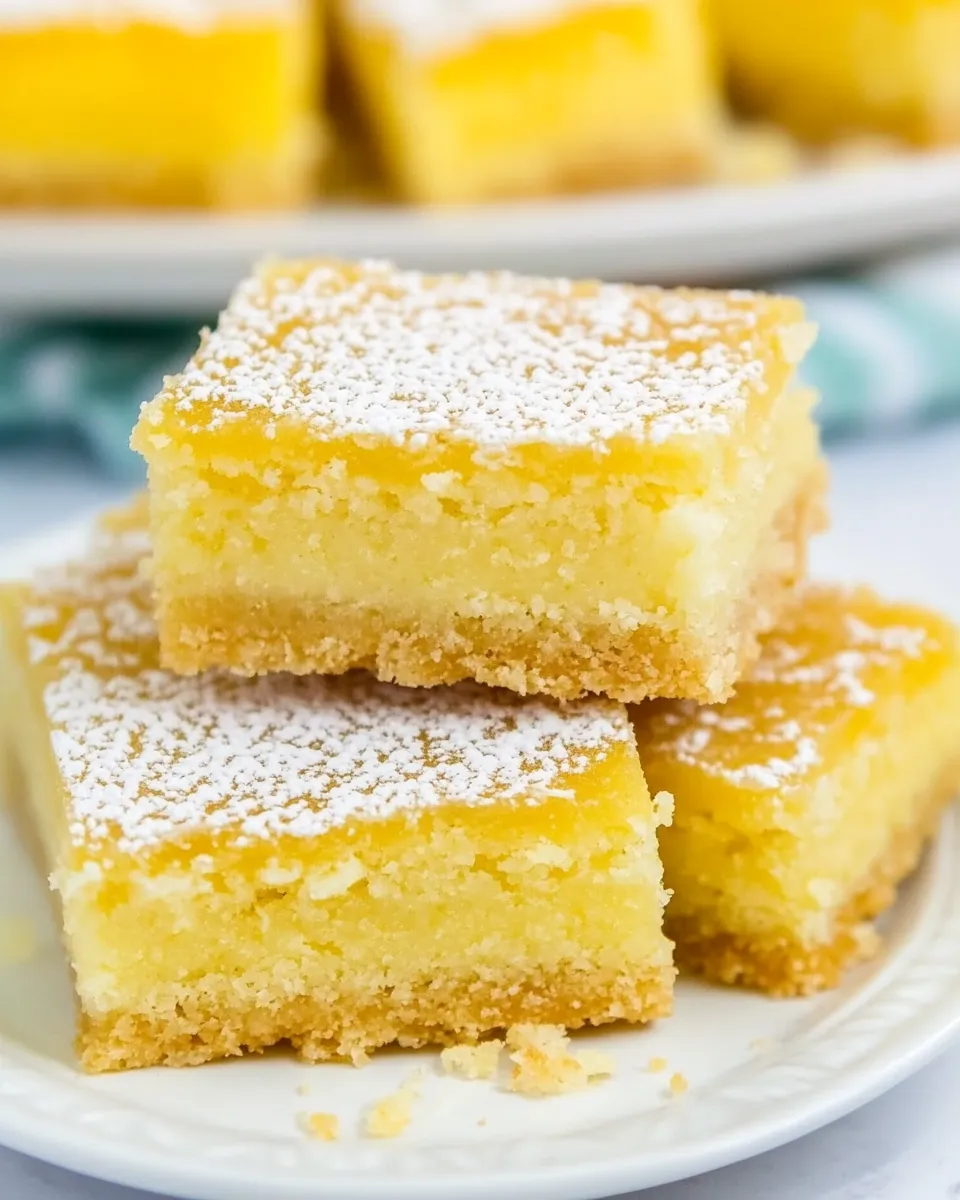
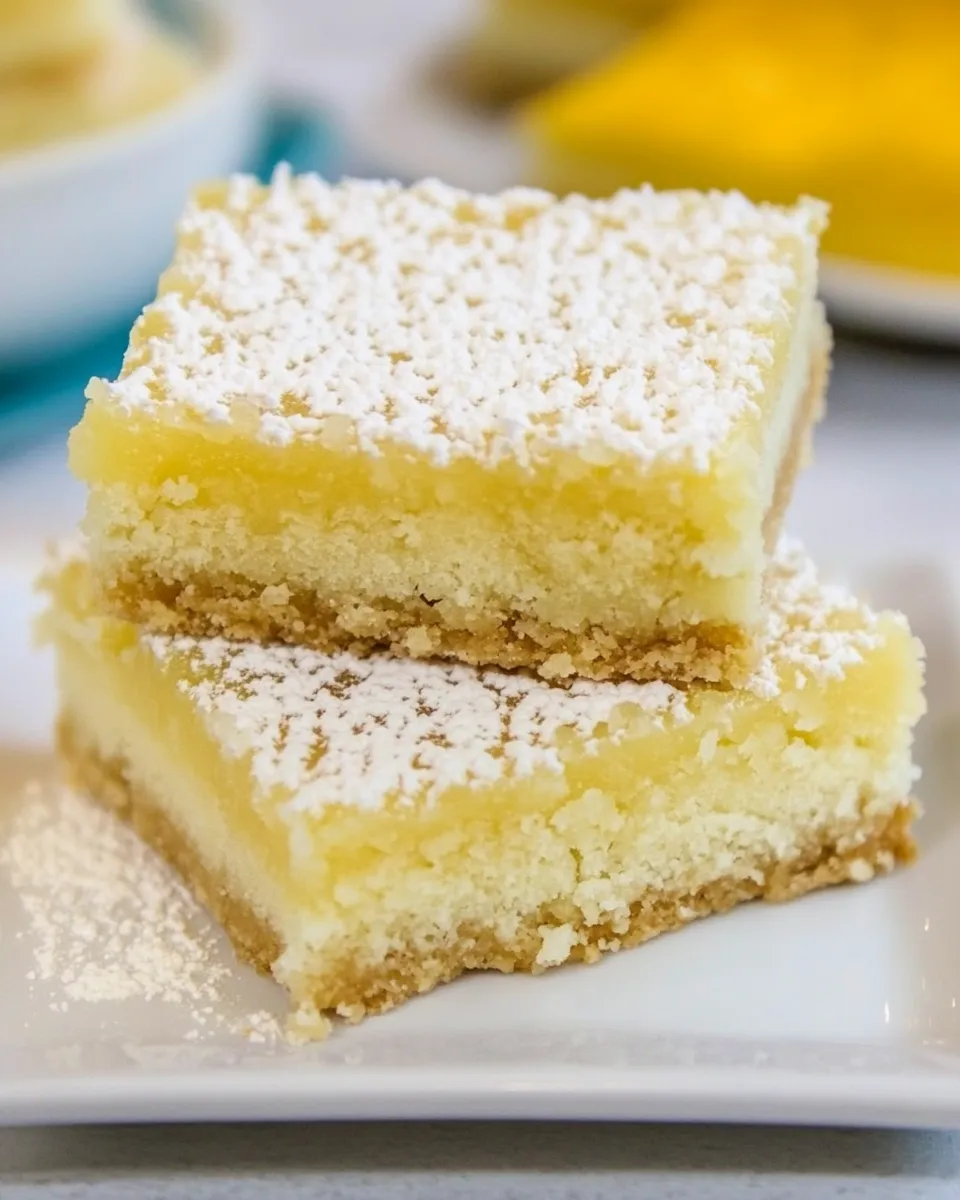
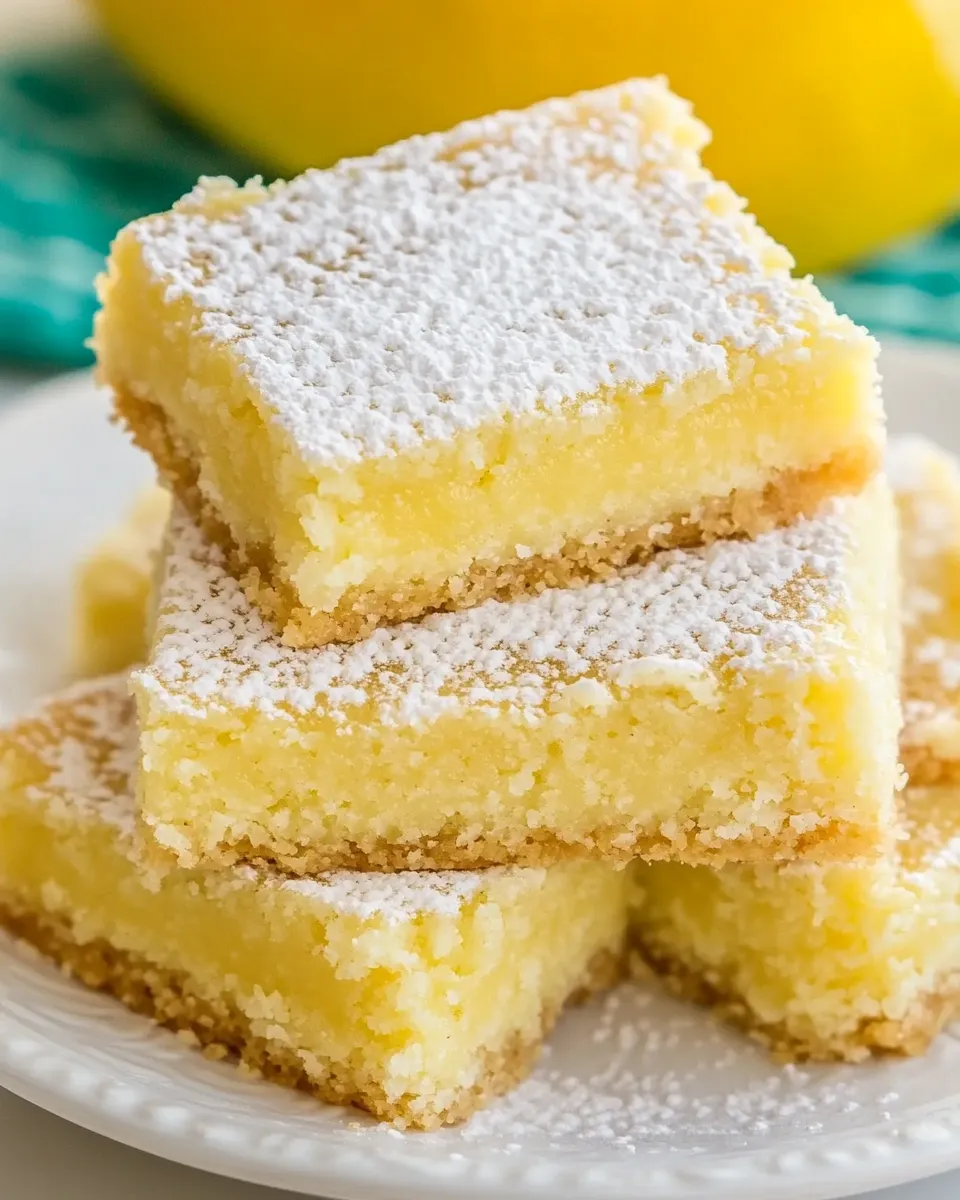
These bars strike a perfect balance between a tender, buttery crust and a lemony, custard-like filling made with buttermilk. They arrive at the table with a thin, glossy top and a soft, slightly tangy interior that holds its shape when sliced. I make these when I want something simple that still feels a little special.
The recipe has two straightforward parts: a pressed shortbread crust and a lemony buttermilk custard. Both come together with basic pantry staples and a little attention during assembly. No complicated folding or fancy techniques—just measured ingredients and the oven doing its work.
I’ll walk you through the grocery items, the exact ingredient list, the step-by-step bake, and the practical tips I use to get clean slices and consistent results. Keep the parchment overhang—it’s the easiest trick for neat squares and quick cleanup.
Shopping List
- All-purpose flour — pantry staple, buy a medium-protein flour for structure.
- Confectioners’ sugar — for the crust and optional dusting; look for a fine texture.
- Salt — balances the sweetness; use table or fine sea salt.
- Cold salted butter — for the crust; buy good-quality butter for better flavor.
- Granulated sugar — sweetens the filling; regular cane or beet sugar is fine.
- Whole buttermilk — provides tang and moisture; do not substitute with plain milk here.
- Salted butter (melted) — for the filling; keep one portion cold and cubed for the crust.
- Large eggs — bind and enrich the filling; use room temperature for best incorporation.
- Lemons — for fresh zest and juice; fresh gives brightness you can’t mimic with bottled juice.
- Plain yellow cornmeal — adds texture and structure to the filling.
- Vanilla extract — rounds out the lemon and buttermilk flavors.
Ingredients
- 2 1/2 cups all-purpose flour — forms the base of the crust; provides structure.
- 1/2 cup confectioners’ sugar — sweetens and tenderizes the crust.
- 3/4 teaspoon salt — balances sweetness in the crust.
- 1 cup cold salted butter, cubed — cut into the flour for a flaky, shortbread-like base.
- 1 1/2 cups granulated sugar — sweetens the filling and helps set it.
- 1 cup whole buttermilk — the acid and moisture carrier that gives the filling its tang and creaminess.
- 1/2 cup salted butter, melted — incorporated into the filling for richness.
- 3 large eggs — add structure and help the filling set as it bakes.
- 2 teaspoons lemon zest — concentrated lemon flavor; zest, not extract.
- 3 tablespoons fresh lemon juice — brightens and slightly firms the filling.
- 2 tablespoons plain yellow cornmeal — gives subtle texture and helps thicken the filling.
- 1 tablespoon all-purpose flour — small amount to stabilize the filling.
- 1 1/2 teaspoons vanilla extract — mellows the lemon and complements the buttermilk.
Buttermilk Chess Bars Made Stepwise
- Preheat oven to 350°F. Lightly spray a 9×13-inch baking dish with cooking spray and line it with parchment paper, leaving an overhang on two opposite sides to lift the bars out later.
- In a large bowl, whisk together 2 1/2 cups all-purpose flour, 1/2 cup confectioners’ sugar, and 3/4 teaspoon salt.
- Add 1 cup cold salted butter (cubed) to the dry mixture. Use a pastry blender or two forks to cut the butter in until the mixture is crumbly and resembles coarse crumbs.
- Press the crumb mixture evenly into the bottom of the prepared baking dish, compacting it firmly.
- Bake the crust for 25 minutes, or until the edges are golden. Remove from the oven.
- While the crust bakes, whisk the filling in a large bowl: 1 1/2 cups granulated sugar, 1 cup whole buttermilk, 1/2 cup melted salted butter, 3 large eggs, 2 teaspoons lemon zest, 3 tablespoons fresh lemon juice, 2 tablespoons plain yellow cornmeal, 1 tablespoon all-purpose flour, and 1 1/2 teaspoons vanilla extract until smooth and fully combined.
- Let the crust cool for about 5 minutes so it is not piping hot, then pour the filling evenly over the crust.
- Return the pan to the oven and bake for 30 minutes, or until the filling is set (the edges should be set and the center should no longer jiggle).
- Remove from the oven and cool completely in the pan. Use the parchment overhang to lift the bars out of the pan, place on a cutting board, and cut into squares.
- Store the bars covered in the refrigerator. Optional: sift additional confectioners’ sugar over the bars before serving.
Reasons to Love Buttermilk Chess Bars
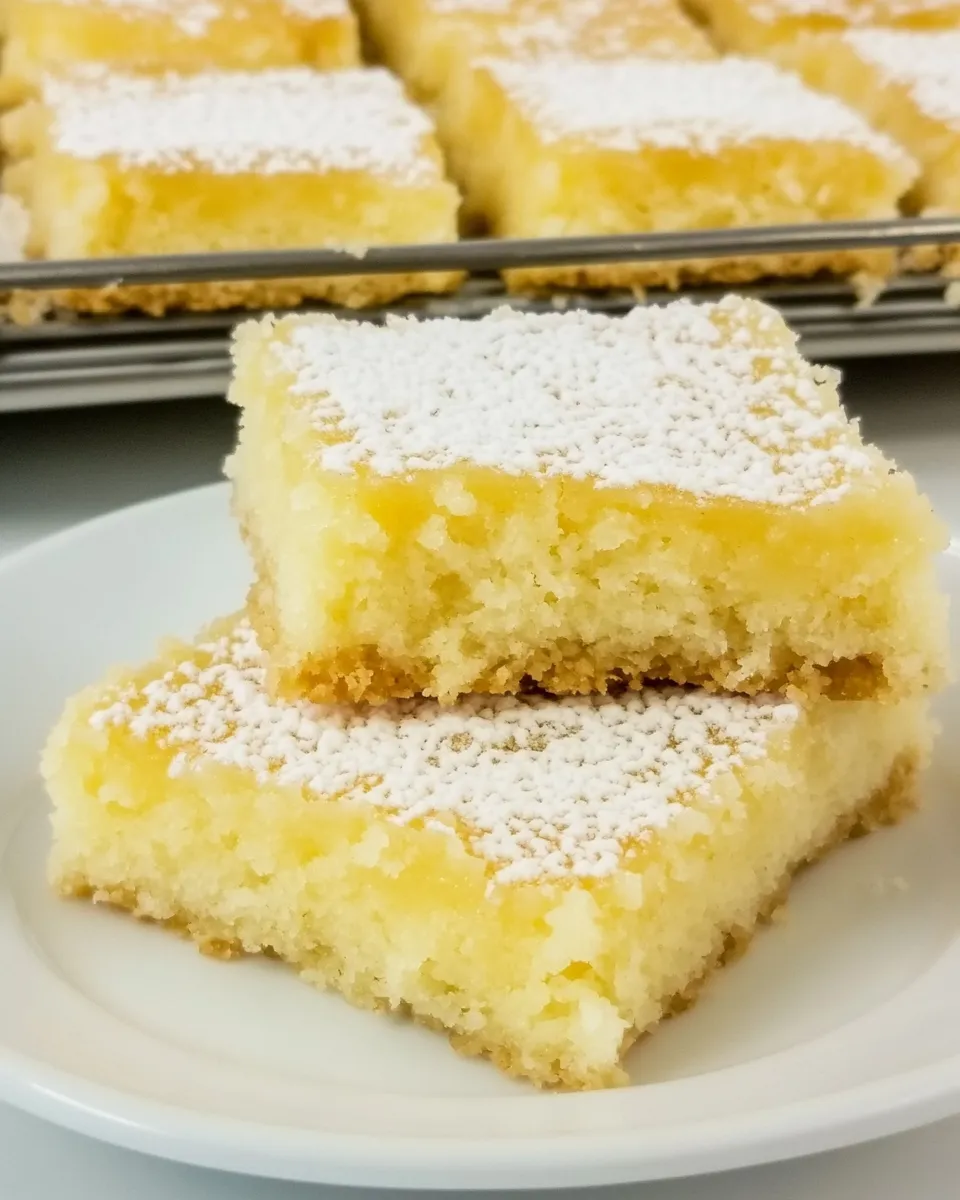
First, the texture: a dense shortbread crust paired with a custard-like filling is comfort food in bar form. The buttermilk keeps the filling tender and gives it a subtle tang that cuts through the sugar.
Second, they’re straightforward and reliable. There’s no rolling or layering multiple components that need separate baking times—just press, bake, pour, and bake again. That makes them ideal for making ahead for a potluck or dessert tray.
Third, the flavor profile is clean and bright. Lemon zest and juice shine without being cloying, and vanilla smooths the whole thing out. The cornmeal adds a whisper of texture and helps the filling hold together when sliced.
Dairy-Free/Gluten-Free Swaps
If you need to adapt these bars, here are practical options to try. Keep in mind swaps will change texture and flavor slightly, so I suggest testing a small batch first.
- For dairy-free: use a plant-based butter that is firm when cold for the crust and a neutral-flavored oil or melted dairy-free butter for the filling. Replace whole buttermilk with cultured plant-based buttermilk or a mixture of unsweetened plant milk plus 1 tablespoon vinegar or lemon juice (let sit 5 minutes).
- For gluten-free: replace the all-purpose flour in both crust and filling with a 1:1 gluten-free baking flour blend that contains xanthan gum. Press the crust firmly—gluten-free flours sometimes need extra compaction to hold together.
- Notes: salted butter is used in both parts; if your swaps are unsalted, add a pinch more salt to compensate to keep the balance right.
What You’ll Need (Gear)
- 9×13-inch baking dish — the correct size gives the right bar thickness.
- Parchment paper — for the overhang trick to lift bars cleanly.
- Pastry blender or two forks — to cut cold butter into the dry mix for the crust.
- Large mixing bowls — one for the crust dry mix and one for the filling.
- Whisk and measuring cups/spoons — for accurate mixing and measurements.
- Rubber spatula — to spread the crumb crust and scrape the filling bowl.
Avoid These Traps
Trap: pouring the filling onto a piping-hot crust. If the crust is too hot the filling can start to cook unevenly and create lumps. Wait about 5 minutes so it’s warm, not scalding.
Trap: underbaking the filling. The center should be set and not jiggle. It will firm a touch as it cools, but take it out only when the center looks nearly set; otherwise you’ll end up with a runny middle.
Trap: skipping the parchment overhang. Trying to invert or remove the bars straight from the pan without it makes cutting messy and fragile. The overhang is the single best time-saver for neat squares.
Seasonal Adaptations
Spring/Summer: emphasize bright citrus. Increase fresh lemon zest by 1 teaspoon or swap a tablespoon of lemon juice for orange if you want a softer citrus note. Serve chilled or at cool room temperature.
Fall/Winter: add warm spice. A light dusting of nutmeg or 1/4 teaspoon ground ginger in the filling complements the buttermilk and butter without overpowering the lemon. Serve slightly warmed with a dollop of whipped cream.
Fruit twist: fold 1/2 to 3/4 cup diced, firm berries or macerated fruit into the filling if you want bursts of fruit—pat them dry so they don’t add excess moisture.
Chef’s Notes
Use cold butter for the crust. Cold butter creates discrete flakes that make the crust tender rather than oily. When cutting, aim for pea-sized pieces before pressing; too small and the crust becomes dense, too large and it can crumble.
Room temperature eggs incorporate more evenly into the filling. If you forget to bring them to room temp, put them in a bowl of warm water for 5–10 minutes.
Let the pan cool completely before slicing. The filling firms up as it cools, and cutting while warm will yield ragged edges. For the cleanest slices, chill the pan for 30–60 minutes before cutting.
Refrigerate, Freeze, Reheat
Refrigerate: store the bars covered in an airtight container or wrapped tightly with plastic wrap. They keep well for 4–5 days in the fridge.
Freeze: you can freeze individual squares. First, flash-freeze them on a tray until firm, then wrap each piece in plastic and place in a freezer bag. Freeze up to 2 months. Thaw overnight in the refrigerator before serving.
Reheat: these are best served cold or at room temperature. If you prefer them warm, reheat in a 300°F oven for 6–8 minutes from chilled, just until warm—don’t overdo it or the filling will overcook.
Your Top Questions
Q: Can I reduce the sugar? A: You can reduce the granulated sugar slightly, but these bars rely on that amount to set properly and maintain the right texture. If you cut the sugar, expect a softer set and less browning.
Q: Why cornmeal? A: The cornmeal adds body and a subtle, pleasant texture to the filling. It also absorbs a bit of moisture, helping the filling hold together when sliced.
Q: Can I make the crust ahead of time? A: Yes. Bake the crust and let it cool, then keep it wrapped at room temperature for a day or in the fridge for up to 2 days. Pour the filling and bake when ready.
Q: My bars cracked on top—what happened? A: Small surface cracks are normal as the filling firms. Large cracks typically mean the oven temperature was too high or the bars were overbaked. Use an oven thermometer to verify accuracy.
Final Bite
Buttermilk Chess Bars are one of those recipes that deliver maximum flavor with minimal fuss. The combination of a crisp shortbread base and a tangy, custardy filling is reliable and crowd-pleasing. Keep the pan chilled before slicing, use the parchment overhang, and don’t rush the cooling—you’ll end up with tidy squares and the best texture.
Make them for gatherings, pack them in lunchboxes, or keep them in the fridge for a ready dessert. They travel well and taste even better the next day once the flavors settle. Happy baking—and if you try a variation, I’d love to hear what worked for you.
Buttermilk Chess Bars
Ingredients
Equipment
Method
- Preheat oven to 350°F. Lightly spray a 9x13-inch baking dish with cooking spray and line it with parchment paper, leaving an overhang on two opposite sides to lift the bars out later.
- In a large bowl, whisk together 2 1/2 cups all-purpose flour, 1/2 cup confectioners' sugar, and 3/4 teaspoon salt.
- Add 1 cup cold salted butter (cubed) to the dry mixture. Use a pastry blender or two forks to cut the butter in until the mixture is crumbly and resembles coarse crumbs.
- Press the crumb mixture evenly into the bottom of the prepared baking dish, compacting it firmly.
- Bake the crust for 25 minutes, or until the edges are golden. Remove from the oven.
- While the crust bakes, whisk the filling in a large bowl: 1 1/2 cups granulated sugar, 1 cup whole buttermilk, 1/2 cup melted salted butter, 3 large eggs, 2 teaspoons lemon zest, 3 tablespoons fresh lemon juice, 2 tablespoons plain yellow cornmeal, 1 tablespoon all-purpose flour, and 1 1/2 teaspoons vanilla extract until smooth and fully combined.
- Let the crust cool for about 5 minutes so it is not piping hot, then pour the filling evenly over the crust.
- Return the pan to the oven and bake for 30 minutes, or until the filling is set (the edges should be set and the center should no longer jiggle).
- Remove from the oven and cool completely in the pan. Use the parchment overhang to lift the bars out of the pan, place on a cutting board, and cut into squares.
- Store the bars covered in the refrigerator. Optional: sift additional confectioners' sugar over the bars before serving.
Notes
You can use unsalted butter and add an extra pinch of salt.