Candied Ginger
There’s something quietly satisfying about turning a familiar pantry staple into a small jar of sunshine: spicy, sweet, and unexpectedly versatile. Candied ginger is one of those projects that rewards patience more than skill. A short stretch of hands-on time, followed by a long cooldown, yields chewy, sugary slices that brighten tea, baking, cocktails, or a mid-afternoon nibble.
I like to make a batch when ginger is young and fragrant — the slices are juicier and the final texture is tender without becoming fibrous. This recipe is straightforward: a gentle simmer to soften the root, a sugar bath to marry flavor and preservation, and a patient drying phase that delivers the classic crystallized finish.
Below you’ll find my practical notes, the exact steps to follow, and answers to the questions readers ask most often. I keep the method faithful and simple so the ginger’s flavor stays front and center. Let’s get to it.
What We’re Using
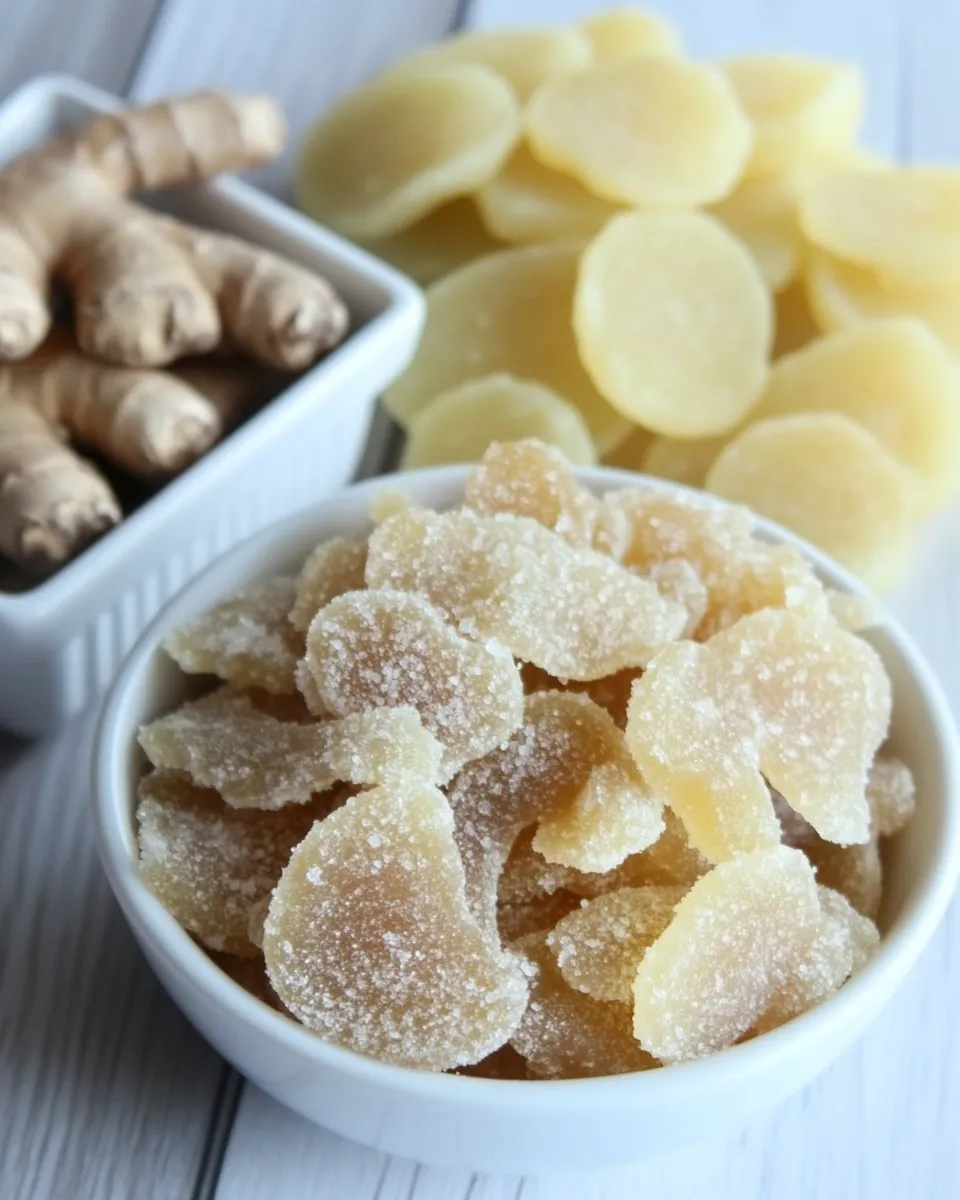
This recipe centers on fresh ginger and regular granulated sugar. Everything else is about technique: boiling to soften, cooking to the right syrup temperature, and drying to the right tackiness before coating. The reserved syrup can become a sorely missed extra for tea or cocktails later, so don’t throw it away unless you hate options.
Ingredients
- 1 pound fresh ginger root — preferably young/smaller roots; slices about 1/8 inch thick (slice by hand or use a mandolin for even pieces).
- pinch of salt — rounds flavor and brings out brightness in the ginger.
- 2 cups white granulated sugar — forms the candy syrup and gives the crystallized finish.
- extra sugar for coating — used to coat the cooled slices so they don’t stick together and to add crunch.
Candied Ginger: Step-by-Step Guide
- Peel (optional) and slice 1 pound fresh ginger about 1/8 inch thick.
- Place the sliced ginger in a medium pot and add enough water to cover the ginger. Bring to a boil, reduce heat to a simmer, and cook for 30 minutes.
- Reserve 1/2 cup of the ginger cooking water, then drain the ginger in a colander.
- Return the drained ginger to the pot. Add the reserved 1/2 cup ginger water, 2 cups white granulated sugar, and a pinch of salt.
- Bring the mixture to a boil, then reduce heat to medium and simmer uncovered, stirring occasionally, for 35–40 minutes or until a candy thermometer reads 225°F.
- Drain the ginger in a colander set over a bowl to catch the syrup. (Reserve the syrup if you like.)
- Arrange the ginger slices in a single layer on a cooling rack set over a baking sheet, separating the slices as much as possible. Let them cool for about 2 hours, until sticky but not wet.
- Toss the cooled, sticky ginger slices in the extra sugar so they are coated all over.
- Place the sugared ginger back on the cooling rack and let sit overnight to dry. If you are in a very humid area, dry the candied ginger in a food dehydrator or in an oven set to the lowest temperature (you may need to crack the oven door).
- Store the finished candied ginger in an airtight container in a cool, dark place; it will keep for several months and can be frozen for at least 6 months.
What Makes This Recipe Special
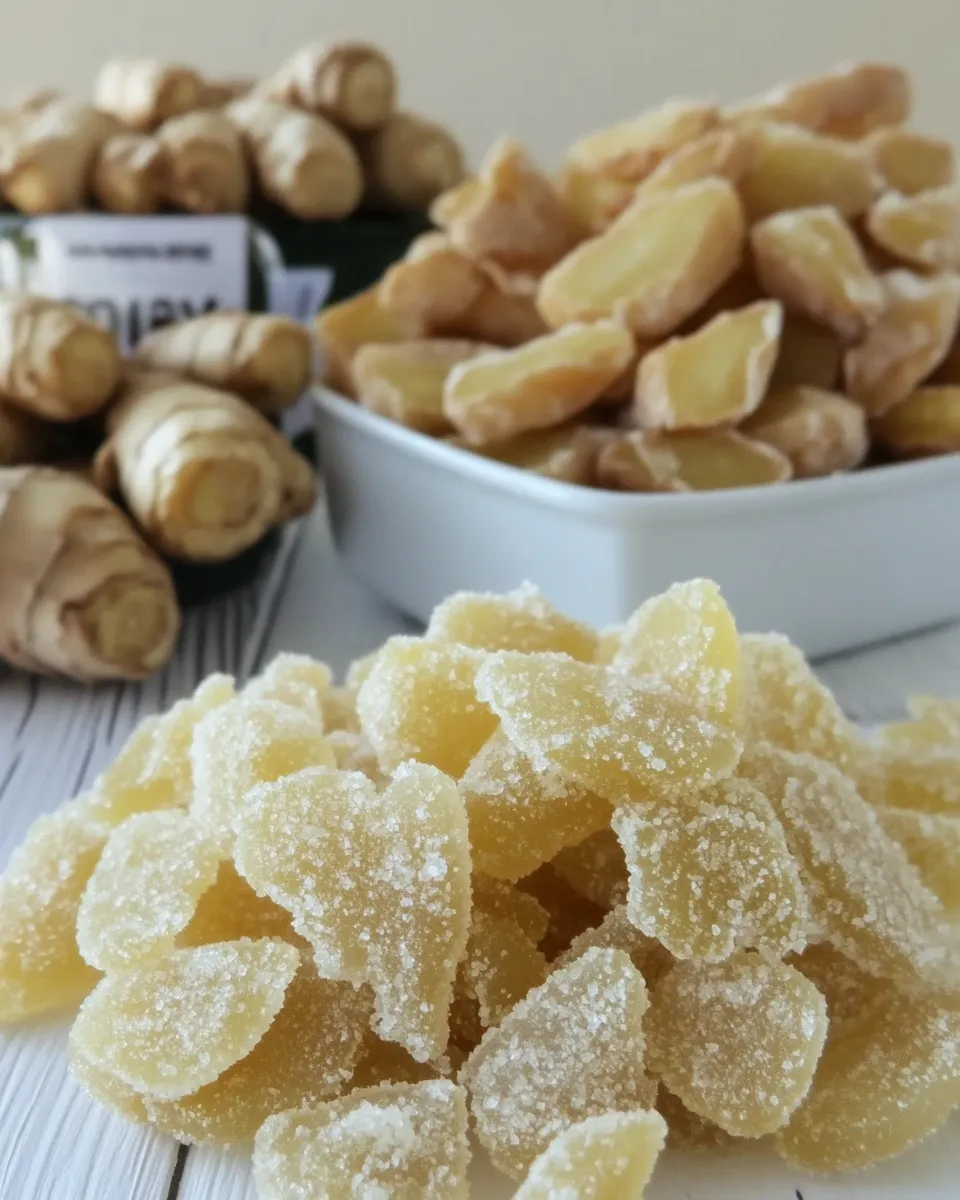
This method keeps the process uncluttered so the ginger itself remains the star. A couple of small choices make a big difference:
- Blanching (the 30-minute simmer) softens the fibrous root and removes some of the raw heat so the candy is pleasantly spicy rather than aggressively hot.
- Reserving 1/2 cup of cooking water preserves ginger flavor in the syrup and helps dissolve the sugar evenly when you make the candy bath.
- Cooking to a specific temperature (225°F) gives predictable chewiness and prevents excessive crystallization during the syrup stage.
- Finishing on a rack and letting the pieces dry overnight yields that classic sugar crust and prevents clumps in storage.
Flavor-Forward Alternatives
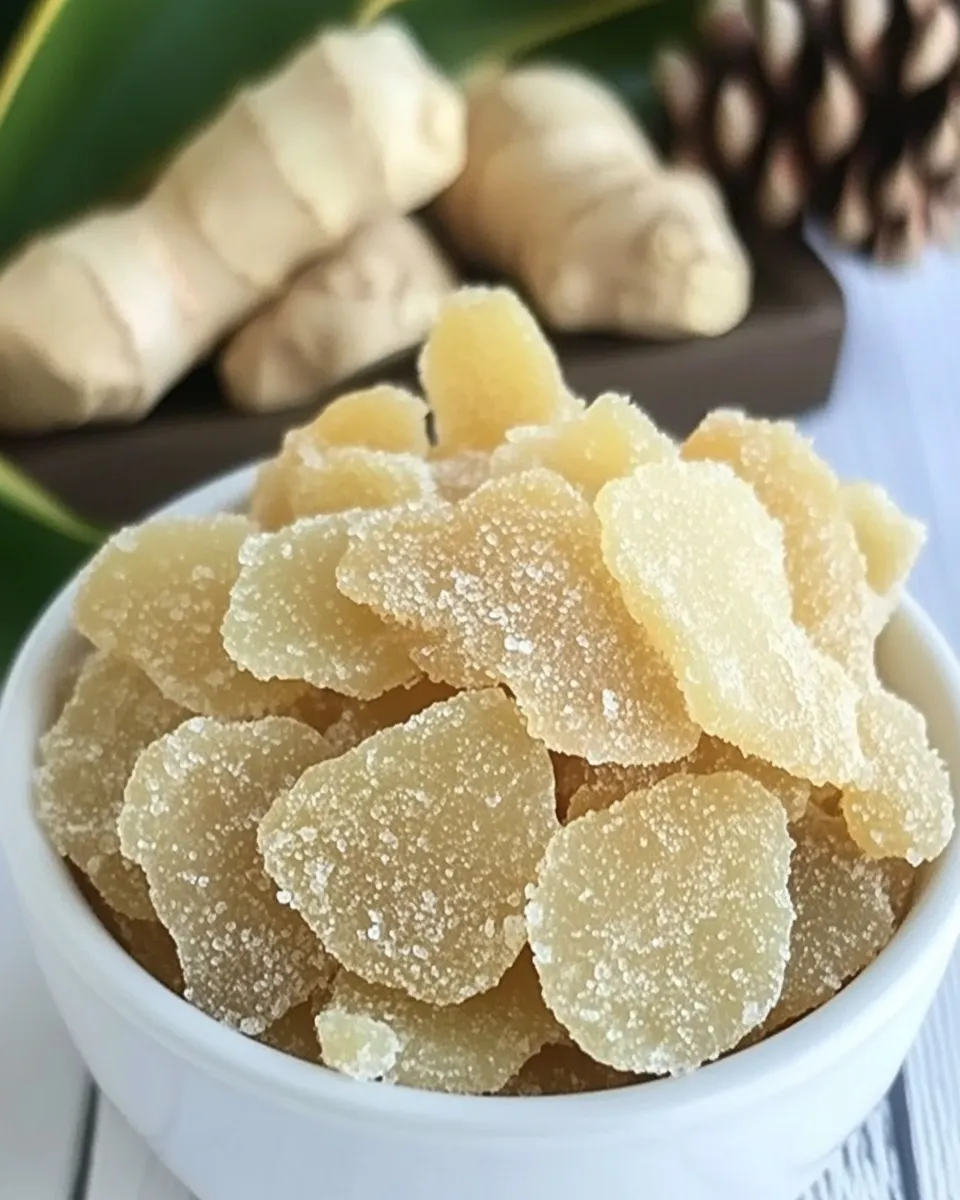
Once you’re comfortable with the base technique, you can nudge the flavor in several directions:
- Add citrus: Toss a teaspoon of finely grated orange or lemon zest into the syrup in the last few minutes of simmering to add bright, fragrant notes.
- Play with spice: A pinch of ground cinnamon or a small split vanilla bean added during the syrup stage complements the heat of the ginger.
- Use flavored sugars: After drying, coat the slices in a mix of granulated sugar and a little ground cardamom or finely chopped crystallized citrus peel for gourmet touches.
- Syrup variations: Reserve the syrup and stir in a splash of rum or bourbon for cocktails, or reduce it further into a glaze for roasted fruit.
Prep & Cook Tools
- Medium pot — for blanching and making the sugar syrup.
- Colander — to drain the ginger and to drain the syrup from cooked pieces.
- Candy thermometer — helps hit the 225°F target for consistent texture.
- Cooling rack and baking sheet — elevates the slices so they dry evenly and the sheet catches drips.
- Mandolin or sharp knife — for uniform 1/8 inch slices; a mandolin speeds the task and improves consistency.
- Mixing bowl — to catch reserved syrup or toss slices with sugar.
- Air-tight container or jar — for long-term storage.
- Optional: food dehydrator or low-temperature oven — useful in humid climates to finish drying.
Things That Go Wrong
Common issues are usually easy to diagnose and fix. Here’s what to watch for:
- Sticky, wet pieces after overnight drying — likely due to high humidity or insufficient air circulation. Move to a dehydrator or lowest oven setting with the door ajar.
- Ginger too hard or brittle — syrup was cooked too long or to too high a temperature. Watch the candy thermometer and remove from heat when it approaches 225°F.
- Syrup crystallizes prematurely — stir gently and don’t disturb the pot with sugar crystals from the sides. If crystals form, a splash of water and gentle reheating can dissolve them, but avoid overboiling.
- Slices stick together in storage — ensure pieces are fully dry before packing; layer with parchment or coat generously with sugar.
- Flavor too mild — use younger, fresher roots next time or reduce blanching time slightly to retain more heat; remember blanching temp/time affects final bite.
Warm & Cool Weather Spins
Climate affects drying and storage. Adjust the finish based on your environment:
- Warm, dry climates: The rack-and-air method will usually work fine; keep the slices out of direct sun to avoid color darkening.
- Humid climates: Use a food dehydrator or a very low oven (with the door cracked) to ensure thorough drying; otherwise the pieces can remain tacky and spoil faster.
- Cold climates: Store candied ginger in a cool, dark pantry; if your home is very dry and cold, pieces can be slightly firmer — a short rest at room temperature softens them before use.
- High-altitude adjustments: Syrup temperatures boil at lower temperatures at altitude; judge texture by time and feel as well as thermometer, and consider a slightly shorter simmer to prevent overcooking.
Insider Tips
Timing and Texture
The texture you want sits between chewy and tender. If you prefer softer pieces, err toward the lower end of the 35–40 minute simmer and keep slices slightly thicker. For chewier, longer-lasting pieces, cook closer to 40 minutes and slice uniformly thinner.
Syrup and Sugar
Reserve and use the syrup — it’s concentrated ginger and sugar and will elevate drinks and desserts. If you like a stronger ginger note, reduce the syrup a bit after you’ve strained it to intensify the flavor.
Handling and Coating
Be generous when tossing with extra sugar. The sugar layer not only prevents sticking, it also builds that pleasant crystalline bite. Roll the slices in sugar while they are tacky but not dripping wet.
Cooling, Storing & Rewarming
Cool on a rack so air can circulate around each slice. A baking sheet beneath catches drips and keeps counters clean. Let the ginger rest at least two hours before sugaring, then overnight to finish drying.
Store fully dry candied ginger in an airtight jar in a cool, dark place. It keeps for several months; frozen, it will last at least six months. If the pieces clump slightly after storage, toss them in a bit more granulated sugar and separate with parchment.
“Rewarming” candied ginger isn’t common, but if you want soft slices for an immediate recipe, briefly warm the reserved syrup and dip the pieces for a minute to rehydrate, then drain and use right away.
Reader Q&A
Do I need to peel the ginger? Peeling is optional. Young ginger often has tender skins that soften with blanching and are fine to keep on. If the skin is thick or dirty, peel it with a spoon or paring knife.
Can I use brown sugar or honey instead of white sugar? You can experiment, but brown sugar will change color and flavor (richer, molasses notes). Honey can work but behaves differently in candying and can lead to stickier, less crystalline pieces.
What can I do with the reserved syrup? It’s excellent in tea, sparkling water, cocktails, over pancakes, or reduced into a glaze for roast carrots or fruit. Store in the fridge for several weeks.
How long does candied ginger keep? Stored airtight in a cool dark place it will keep for several months; in the freezer at least six months. Keep moisture and humidity out to prevent stickiness and mold.
Are there safety concerns? Follow basic food-safety practices: use clean tools, fully dry the ginger before storing, and discard anything that smells off or shows mold.
The Last Word
Candied ginger is an approachable preserve with long payoff. The technique improves with practice, but the baseline method here is forgiving: blanch, sugar, simmer to 225°F, dry, and store. Make a jar. Keep some syrup. Share a slice with someone who loves a little heat and a little sweet.
If you try this, tell me how you used the syrup or what twist you added. Small adjustments — a different zest, a spice, a new way to dry — are how simple recipes become favorites.
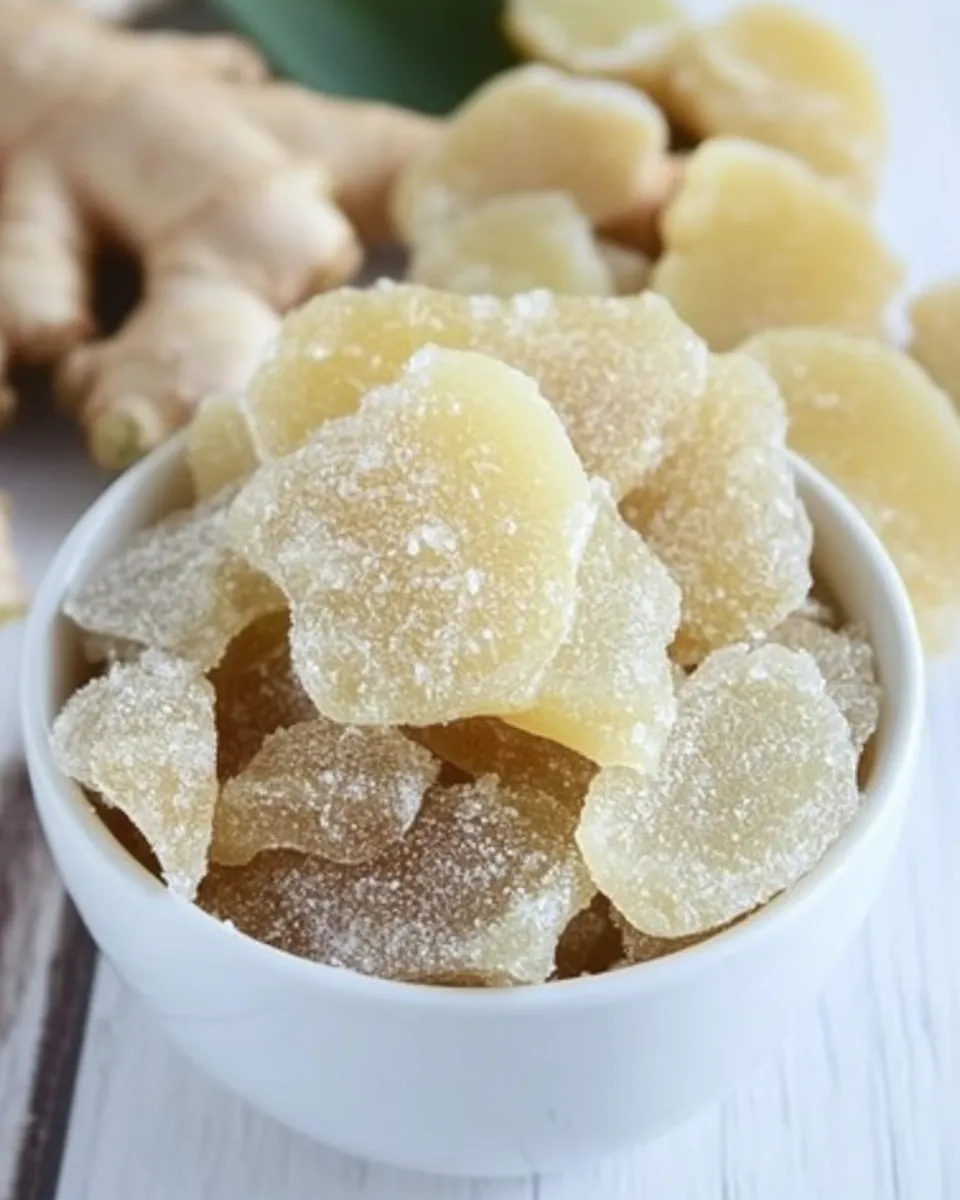
Candied Ginger
Ingredients
Equipment
Method
- Peel (optional) and slice 1 pound fresh ginger about 1/8 inch thick.
- Place the sliced ginger in a medium pot and add enough water to cover the ginger. Bring to a boil, reduce heat to a simmer, and cook for 30 minutes.
- Reserve 1/2 cup of the ginger cooking water, then drain the ginger in a colander.
- Return the drained ginger to the pot. Add the reserved 1/2 cup ginger water, 2 cups white granulated sugar, and a pinch of salt.
- Bring the mixture to a boil, then reduce heat to medium and simmer uncovered, stirring occasionally, for 35–40 minutes or until a candy thermometer reads 225°F.
- Drain the ginger in a colander set over a bowl to catch the syrup. (Reserve the syrup if you like.)
- Arrange the ginger slices in a single layer on a cooling rack set over a baking sheet, separating the slices as much as possible. Let them cool for about 2 hours, until sticky but not wet.
- Toss the cooled, sticky ginger slices in the extra sugar so they are coated all over.
- Place the sugared ginger back on the cooling rack and let sit overnight to dry. If you are in a very humid area, dry the candied ginger in a food dehydrator or in an oven set to the lowest temperature (you may need to crack the oven door).
- Store the finished candied ginger in an airtight container in a cool, dark place; it will keep for several months and can be frozen for at least 6 months.
Notes
This recipe makes a delicious byproduct: Ginger Simple Syrup! Add a teaspoon or two to your drinks for a refreshing ZING!