
Cantucci (Italian Almond Cookies)
I fell in love with cantucci the first time I bit into one beside a small café in Tuscany — that dry, snap-and-melt texture paired with vin santo felt like a private rite. These almond cookies are deceptively simple: a handful of pantry ingredients, a little shaping, and two oven passes that give them their irresistible crunch.
In my kitchen I make a batch whenever I want something crisp and comforting to dip into coffee or dessert wine. The recipe below is straightforward and forgiving. It focuses on technique more than fuss, so you get reliably even logs, neat slices, and perfectly dried cookies every time.
I’ll walk you through the exact ingredient lineup, follow the step-by-step baking directions, and share practical tips for shaping, slicing, and storing. If you like a slightly softer interior or want to swap a few items, there are easy, tested options later on.
The Ingredient Lineup
- 300 g flour — the structure of the dough; start with this amount and use the extra flour only if the dough is sticky.
- extra for sprinkling — for dusting your work surface so the dough doesn’t stick while shaping and kneading.
- 3 eggs — used in the dough to bind and provide moisture and richness.
- +1 egg for glazing — reserve this single egg to brush on the logs for a glossy, golden finish.
- 100 g almonds — whole almonds are roasted first for flavor and crunch; they get folded into the dough.
- 1/2 sachet baking powder — a small lift so the cookies aren’t too dense; keep the amount exact.
- 150 g sugar — sweetens and helps the crust color during baking.
- 1 tsp orange powder (dried, ground orange peel) — a concentrated citrus note that pairs beautifully with almonds.
- 1 tsp vanilla essence — rounds and deepens the flavor; added to the egg-sugar mix.
- 1 tsp amaretto — almond-liqueur flavor; if you skip it, the cookies lose a bit of their signature almond perfume.
- 1/2 tsp salt — balances sweetness and enhances the almond flavor; don’t omit.
Directions: Cantucci (Italian Almond Cookies)
- Preheat the oven to 180°C. Spread the 100 g whole almonds in a single layer on a non-stick or lined baking tray and roast for 10 minutes. Remove the tray and set the almonds aside to cool.
- Separate the eggs: set aside 1 egg for glazing and use the other 3 eggs for the dough.
- In a large bowl, beat the 3 eggs with the 150 g sugar until the mixture is pale and slightly thickened.
- Stir in 1 tsp vanilla essence and 1 tsp amaretto into the egg-and-sugar mixture.
- In a separate bowl, combine 300 g flour, 1/2 sachet baking powder, 1 tsp orange powder, and 1/2 tsp salt.
- Add the dry ingredients to the egg mixture and mix (by spoon or by hand) until a soft dough forms.
- Turn the dough onto a well-floured work surface (use the extra flour as needed) and knead briefly until the dough is smooth and not sticky, adding small amounts of the extra flour only if necessary.
- Fold the cooled whole almonds into the dough, distributing them evenly.
- Divide the dough into 4 equal pieces. Shape each piece into a log about 10–15 cm long.
- Place the 4 logs on a baking tray lined with baking paper, leaving space between them.
- Beat the reserved egg and brush it over the top of each log.
- Increase the oven temperature to 200°C and bake the logs for 15 minutes, until lightly golden and set.
- Remove the tray from the oven, turn the oven off, and close the oven door to allow the logs to firm slightly as the oven cools.
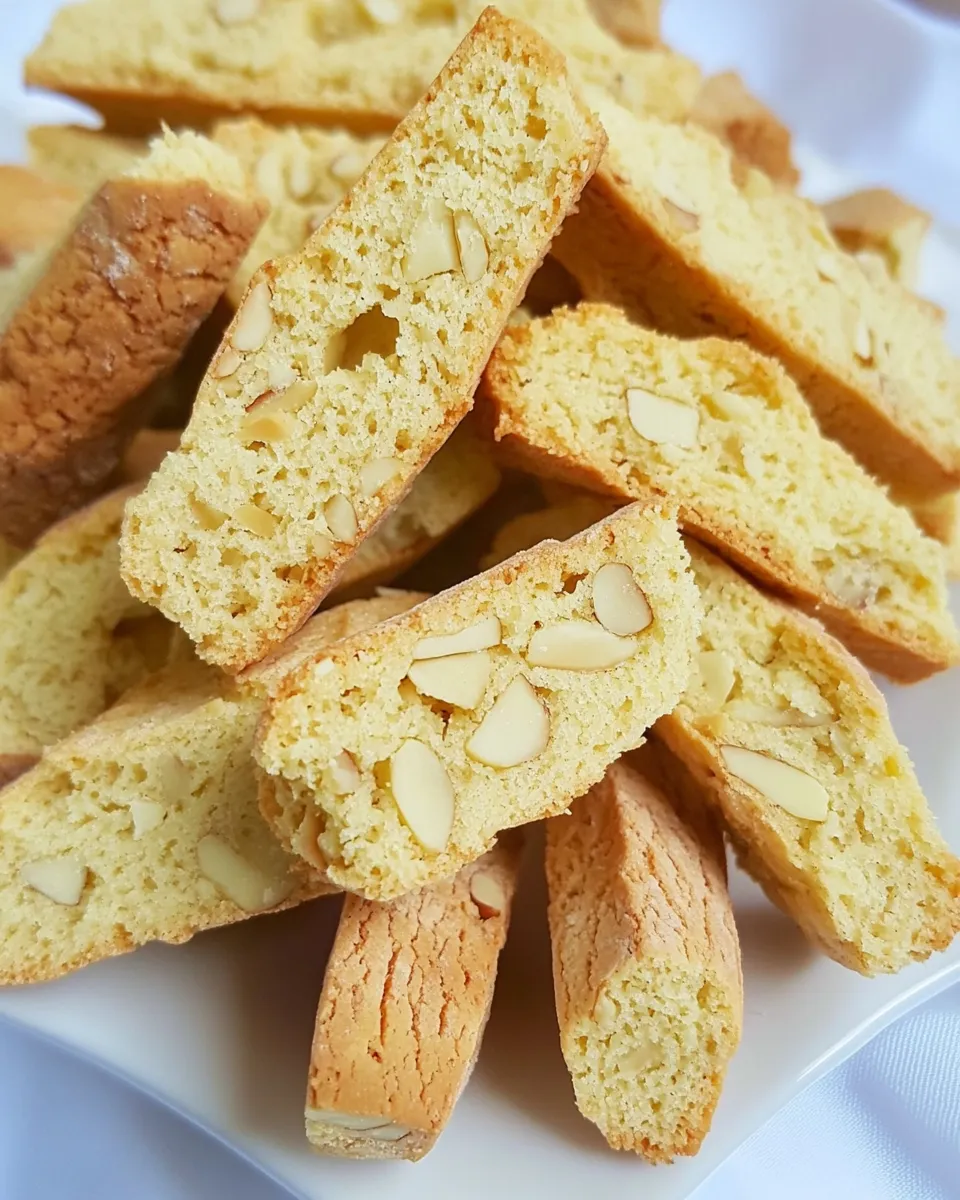
- When the logs are cool enough to handle, transfer them to a cutting board and slice each log diagonally into slices about 2 cm thick (a serrated knife works well).
- Arrange the slices cut-side down on the same baking tray (or a clean lined tray), return the tray to the closed, still-warm oven without turning the oven on, and leave for 10 minutes to dry the cookies.
- Remove the cookies from the tray and let them cool completely before serving or storing.
Why I Love This Recipe
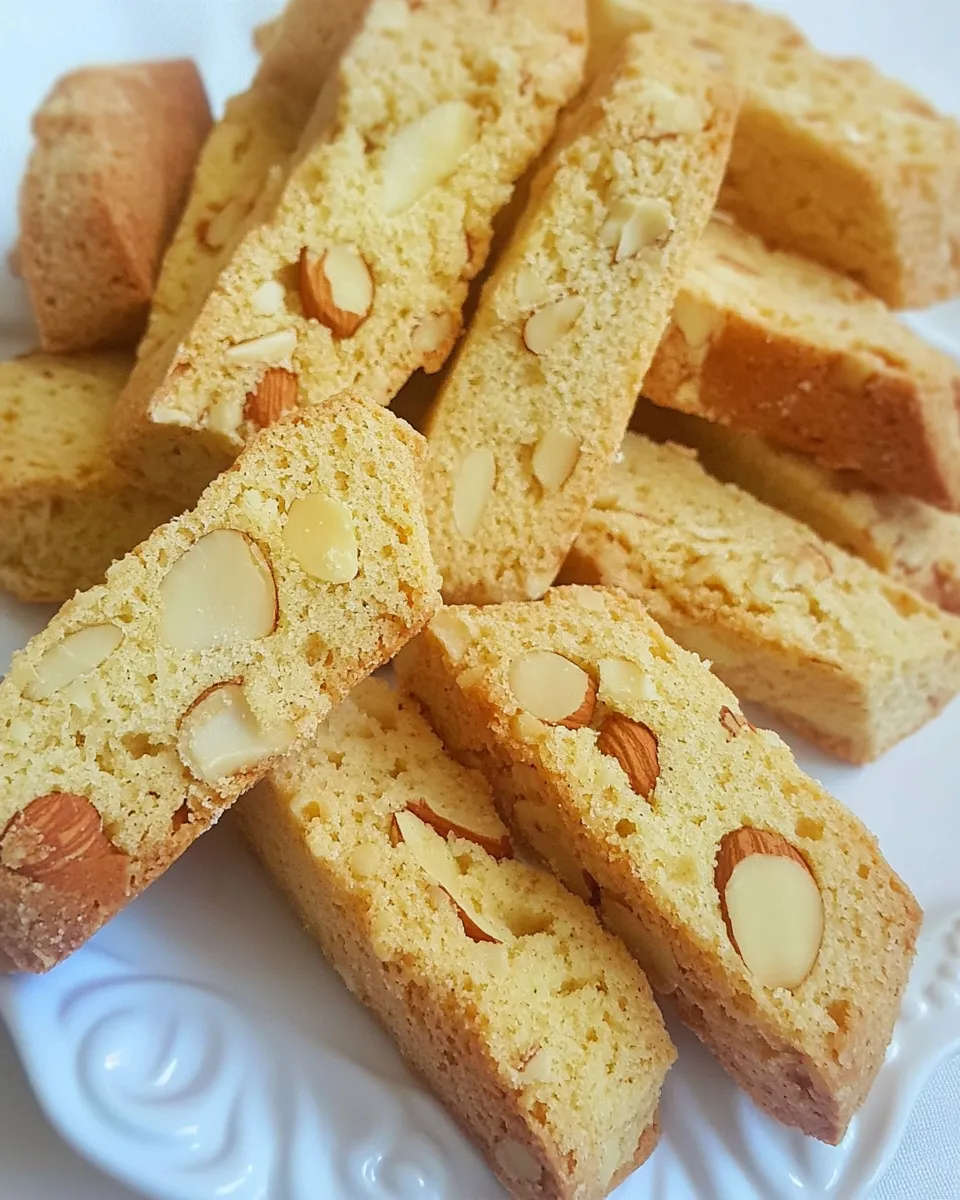
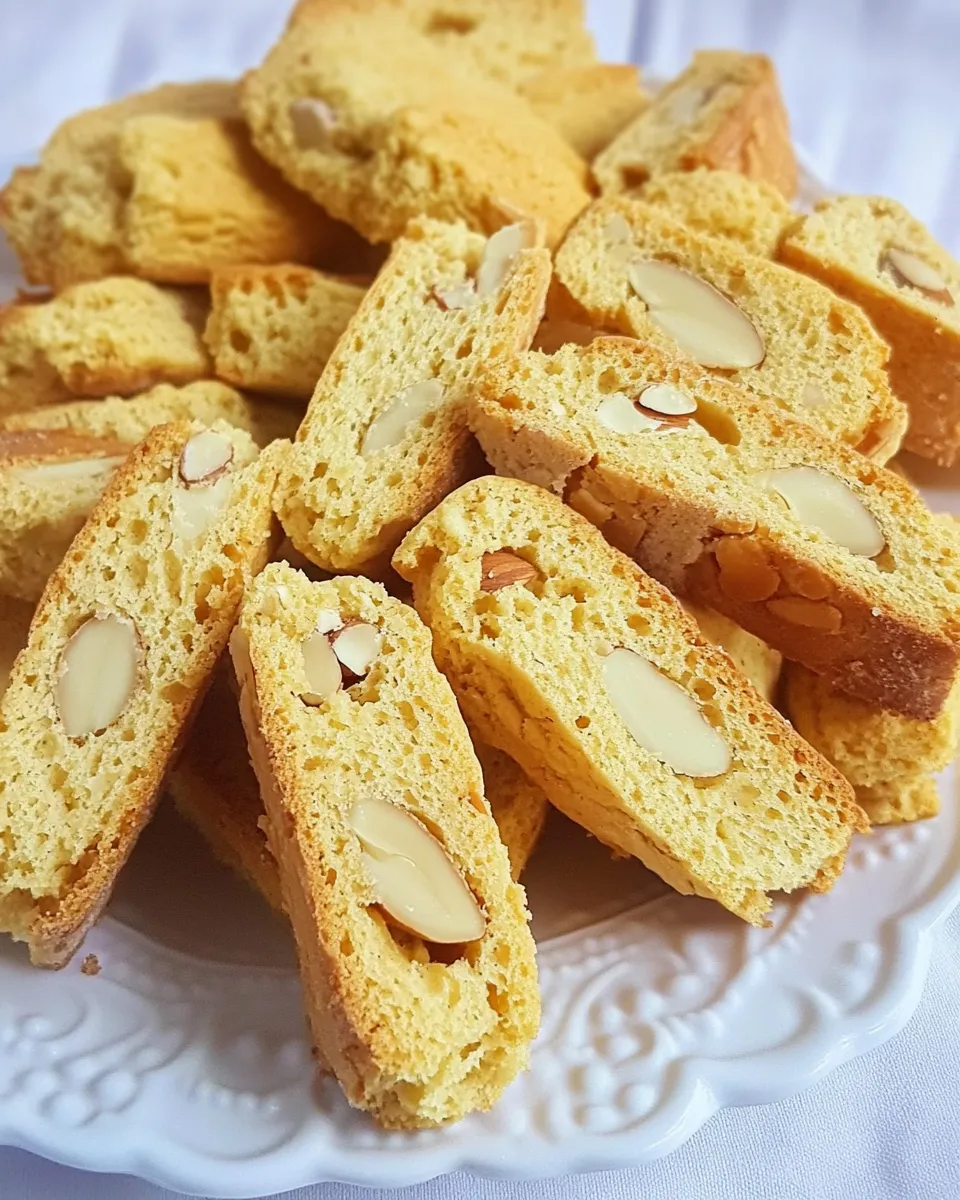
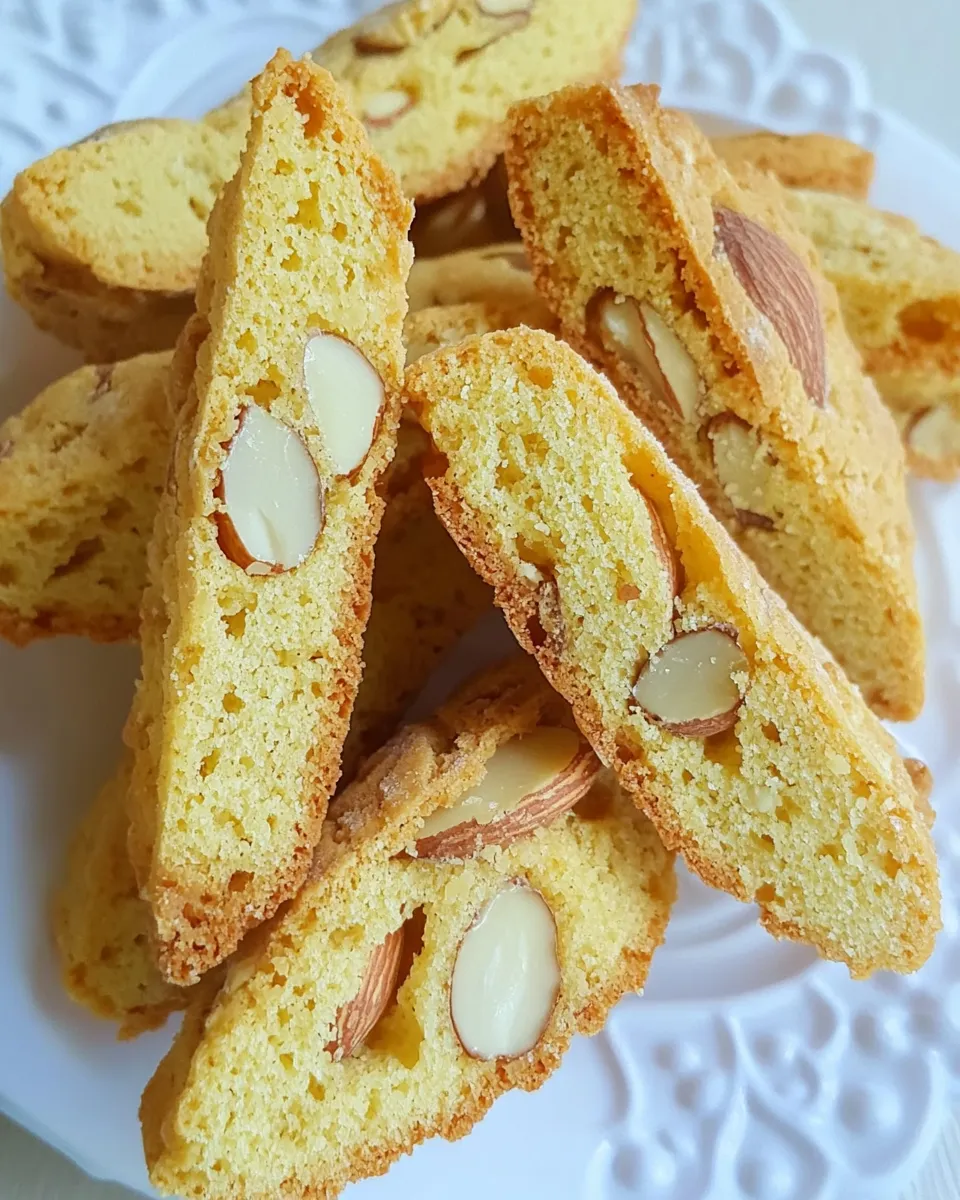
This recipe does exactly what cantucci should do: produce a crisp cookie with a tender crumb inside and bright almond flavor. Roasting the almonds first adds a toasted depth you notice immediately. The dough is straightforward — the first bake sets the logs, the rest is patience and a second gentle drying that creates that signature snap.
It’s also a recipe that rewards small, deliberate choices. Use a serrated knife for clean diagonal slices. Don’t skip the cooling step before slicing; warm logs will crumble and smear. And the aroma? Orange powder and amaretto lift the profile beyond plain almond cookies.
Easy Ingredient Swaps
- Almonds — you can use blanched or unblanched almonds depending on the texture you prefer; the original calls for whole almonds, so keep that in mind.
- Amaretto — replace with a teaspoon of almond extract if you need a non-alcoholic option; use sparingly as it’s potent.
- Orange powder — swap for 1 tsp finely grated orange zest if you don’t have dried powder; the fresh zest adds brightness but slightly more moisture.
- Sugar — white granulated sugar gives the best crust; you can try a mix with a little caster sugar for a finer crumb, but keep the total weight the same.
Kitchen Gear Checklist
- Mixing bowls — at least two: one for wet, one for dry.
- Baking trays — you’ll need one for roasting almonds and one for the logs; lined with baking paper for easy transfer.
- Serrated knife — essential for clean diagonal slices without crushing the logs.
- Pastry brush — to glaze the logs with the reserved egg.
- Measuring scale — I prefer grams for consistency, especially with flour and sugar.
- Oven thermometer (optional) — useful if your oven runs hot or cool and you want precise temperatures.
Slip-Ups to Skip
Common mistakes are easy to avoid. Don’t over-knead — cantucci dough should be smooth but not tough. Overworking makes dense cookies. Use extra flour sparingly; adding too much will dry the dough and make the finished cookies brittle rather than pleasantly crunchy.
Another frequent error is slicing while the logs are still hot. Warm logs are fragile and the almonds can be pushed out of place. Let them cool until you can handle them comfortably, then slice with a steady hand. Lastly, don’t rush the drying step. That 10 minutes in the warming oven is what converts the slightly soft biscotti into the crisp cantucci you want.
Make It Fit Your Plan
Serve these with espresso, a sweet dessert wine, or alongside scoops of gelato. They’re portable, so they travel well for picnics or as gifts. If you want a softer cookie for afternoon tea, shorten the second drying time by a few minutes; you’ll keep a slightly chewier interior.
If you’re baking for a crowd, the recipe scales well. Multiply ingredients as needed and bake the logs in batches to avoid overcrowding the tray. For a smaller household, the dough freezes well at the log stage; I include storage details below.
Insider Tips
Shaping and slicing
- Consistent logs — weigh the dough and divide it into four equal portions for even baking. Aim for 10–15 cm long logs so slices are uniform.
- Diagonal slice trick — tilt the knife at 45 degrees and use a gentle sawing motion. This creates more surface area for crispness and a better presentation.
Baking notes
- Roast almonds first — it intensifies flavor and keeps the nuts crisp after baking.
- Oven temperature — the recipe steps use two temperatures: 180°C to roast the almonds and 200°C for baking the logs. Increase only when instructed to get that golden exterior.
Prep Ahead & Store
Prep ahead
- Dough logs — form the logs, wrap tightly in plastic, and refrigerate up to 24 hours before baking the first time. This can improve shaping and flavor.
- Freeze raw logs — for longer storage, freeze the logs (wrapped) up to 1 month. Thaw in the fridge before egg-washing and baking.
Storage
- Short term — store cooled cantucci in an airtight container at room temperature for up to 2 weeks; they keep their crunch well.
- Long term — freeze in an airtight container for up to 3 months. Thaw at room temperature; if they lose some crispness, pop them in a warm oven for a few minutes to re-dry.
Popular Questions
- Can I use other nuts? — Yes. Hazelnuts or pistachios work; roast them first like the almonds and fold them in whole for texture.
- Why roast the almonds before adding them? — Roasting develops oils and deepens flavor. It also gives a toasted crunch that raw almonds lack after baking.
- My logs cracked while baking. What happened? — Minor cracks are normal and won’t affect flavor. If they split badly, the dough may have been too dry or over-kneaded. Keep the dough slightly soft.
- Can I skip the amaretto? — You can, but it contributes an authentic almond-liqueur note. Replace with 1 tsp almond extract if you prefer a non-alcoholic option, but reduce to avoid overpowering.
Next Steps
Make the dough, roast the almonds, and follow the two-step bake for crisp, classic cantucci. Take your time with the cooling and slicing — the texture hangs on those small pauses. Once you’ve tried this version, experiment with nut swaps or a hint more orange powder. Share a batch with friends; they travel well and pair perfectly with coffee or dessert wine.
If you have questions about oven timing, shaping, or storage, tell me what happened in your bake and I’ll help troubleshoot. Happy baking — and don’t forget to save a few for dipping.
Cantucci (Italian Almond Cookies)
Ingredients
Equipment
Method
- Preheat the oven to 180°C. Spread the 100 g whole almonds in a single layer on a non-stick or lined baking tray and roast for 10 minutes. Remove the tray and set the almonds aside to cool.
- Separate the eggs: set aside 1 egg for glazing and use the other 3 eggs for the dough.
- In a large bowl, beat the 3 eggs with the 150 g sugar until the mixture is pale and slightly thickened.
- Stir in 1 tsp vanilla essence and 1 tsp amaretto into the egg-and-sugar mixture.
- In a separate bowl, combine 300 g flour, 1/2 sachet baking powder, 1 tsp orange powder, and 1/2 tsp salt.
- Add the dry ingredients to the egg mixture and mix (by spoon or by hand) until a soft dough forms.
- Turn the dough onto a well-floured work surface (use the extra flour as needed) and knead briefly until the dough is smooth and not sticky, adding small amounts of the extra flour only if necessary.
- Fold the cooled whole almonds into the dough, distributing them evenly.
- Divide the dough into 4 equal pieces. Shape each piece into a log about 10–15 cm long.
- Place the 4 logs on a baking tray lined with baking paper, leaving space between them.
- Beat the reserved egg and brush it over the top of each log.
- Increase the oven temperature to 200°C and bake the logs for 15 minutes, until lightly golden and set.
- Remove the tray from the oven, turn the oven off, and close the oven door to allow the logs to firm slightly as the oven cools.
- When the logs are cool enough to handle, transfer them to a cutting board and slice each log diagonally into slices about 2 cm thick (a serrated knife works well).
- Arrange the slices cut-side down on the same baking tray (or a clean lined tray), return the tray to the closed, still-warm oven without turning the oven on, and leave for 10 minutes to dry the cookies.
- Remove the cookies from the tray and let them cool completely before serving or storing.