Cantuccini AKA Almond Biscotti
I make these cantuccini the way my grandmother taught me to—sturdy, nutty, and built to dunk. They’re classic twice-baked Italian biscotti: first you shape and bake logs, then you slice and toast until crisp. No fuss, no special tools, just a good knife and patience while the cookies cool and brown.
These biscotti are firm but not rock-hard, with whole almonds that give a satisfying crunch. The recipe is straightforward and forgiving; the rhythm of mixing, shaping, cooling, and toasting becomes mechanical after the first batch. Once you taste them with coffee or Vin Santo, you’ll see why they survive in cookie tins for days.
Below you’ll find the exact ingredients and step-by-step method, followed by practical tips for equipment, common errors and fixes, storage, and simple substitutes that keep the results reliable. Read the steps through once before you begin, then follow them in order.
What You’ll Need

Ingredients
- 2 cups flour — the structure of the biscotti; use all-purpose flour.
- 3/4 cup sugar — sweetens and helps with browning during baking.
- 1 1/2 teaspoons baking powder — gives a modest rise to the logs so they split and bake evenly.
- 1/2 teaspoon cinnamon — adds a warm background note; mild is best so almonds remain the star.
- 6 ounces (about 1 1/2 cups) whole unblanched almonds — toasted or raw, they provide the signature crunch and flavor.
- 3 eggs — bind the dough and add richness; they’re the primary liquid in this recipe.
- 2 teaspoons vanilla — flavor enhancer; use pure vanilla for the cleanest taste.
Cantuccini AKA Almond Biscotti in Steps
- Preheat the oven to 350°F (175°C). Line a baking sheet with parchment paper or lightly grease it.
- In a large bowl, whisk together 2 cups flour, 3/4 cup sugar, 1 1/2 teaspoons baking powder, and 1/2 teaspoon cinnamon. Stir in the 6 ounces whole unblanched almonds.
- In a separate bowl, whisk the 3 eggs with 2 teaspoons vanilla until combined.
- Pour the egg mixture into the dry ingredients and use a rubber spatula to stir until a stiff dough forms.
- Lightly flour a work surface. Turn the dough out onto the surface, divide it in half, and shape each half into a cylinder (log) a little shorter than your baking sheet and about 1 1/2 inches to 2 inches thick.
- Place the two logs on the prepared baking sheet, leaving space between them and from the edges of the pan.
- Bake for 25 to 30 minutes, until the logs have risen, are nearly doubled in size, and feel firm to the touch. Remove the pan and transfer the logs to a wire rack to cool completely.
- When the logs are completely cool, place one log on a cutting board and, using a sharp serrated knife, cut it diagonally into slices about 1/3 inch thick. Repeat with the second log.
- Arrange the slices cut side down on the prepared baking sheet in a single layer with space between pieces. Bake for 15 to 20 minutes, turning the biscotti once halfway through, until they are well toasted and golden.
- Transfer the biscotti to a wire rack to cool completely.
- Store the cooled biscotti between sheets of parchment in a covered, airtight container.
What You’ll Love About This Recipe
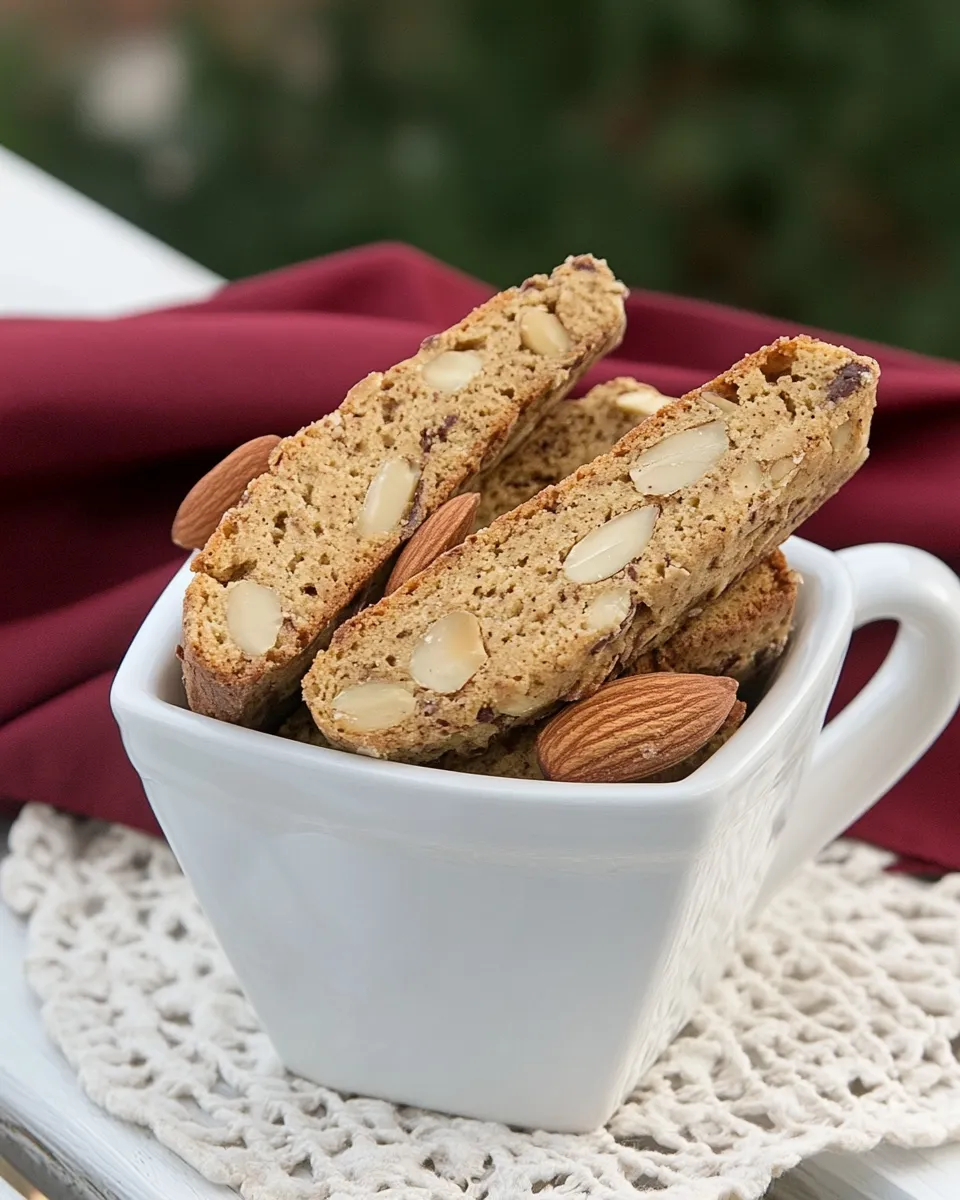
These cantuccini are reliable. The dough is simple to make by hand—no stand mixer required—and the steps are repeatable. You get a crisp finish on the second bake and a nice almond bite every time.
They hold up well to dunking. If you like coffee or dessert wine, these are made to be dipped. They don’t disintegrate quickly; instead they soften just enough to release flavor without falling apart.
The texture is consistent: a slightly dense interior with a crunchy exterior. The cinnamon and vanilla are gentle partners to the toasted almond flavor rather than loud spices that steal the show.
What to Use Instead
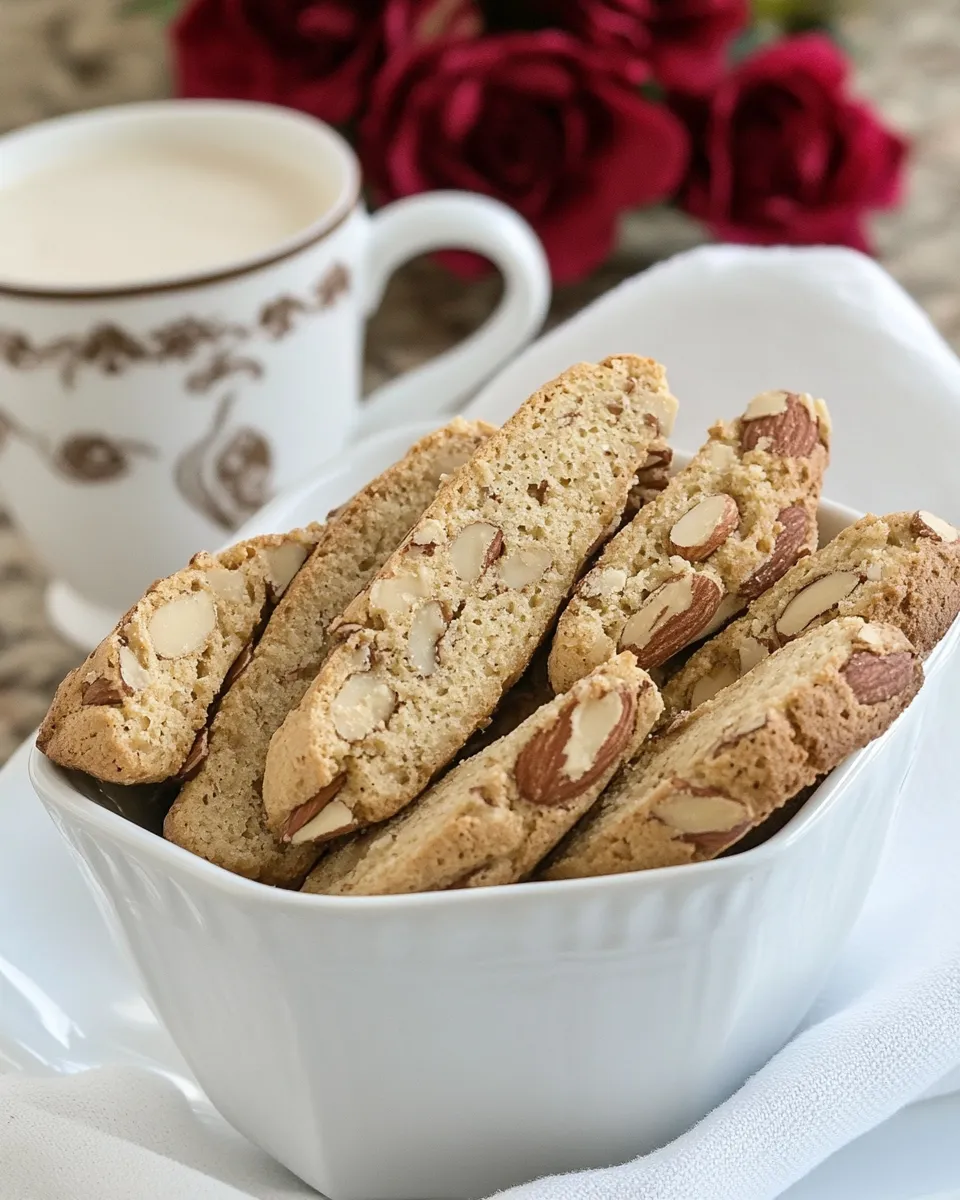
- Whole unblanched almonds — you can use blanched almonds (skins removed) if you prefer a cleaner look and a milder flavor.
- Almond form — if whole nuts are too big for your liking, feel free to roughly chop the almonds before folding them in; the recipe and method remain the same.
- Cinnamon — omit the cinnamon entirely if you want a purer almond profile; the dough will still bake and toast normally.
- Sugar — granulated sugar is expected; if you only have finer sugar (caster), it will dissolve faster but won’t change the method.
Before You Start: Equipment
- Baking sheet — a rimmed half-sheet pan or similar size works best so the logs fit comfortably.
- Parchment paper — prevents sticking and makes cleanup simple.
- Mixing bowls — one large for dry ingredients, one for eggs and vanilla.
- Rubber spatula — for folding the dough without overworking it.
- Serrated knife — critical for clean diagonal slices once the logs have cooled.
- Wire rack — for cooling the logs and finished biscotti so they crisp evenly.
Common Errors (and Fixes)
Dough too sticky or too dry
- If the dough is overly sticky and impossible to shape, sprinkle a little flour on the work surface and on your hands. Don’t add large amounts of flour—just enough to manage shaping. The dough should be stiff, not wet.
- If the dough is crumbly and won’t hold together, check that the eggs were fully combined into the mixture; pressing and folding can help hydrate the flour. You can also press the mixture together firmly to encourage cohesion.
Logs spread too much in the oven
- Make sure the logs are the recommended thickness (about 1 1/2–2 inches). If they’re much flatter, they’ll spread and bake thin. The oven temperature should be accurate—use an oven thermometer if you suspect variances.
Biscotti too hard after toasting
- If slices become excessively hard, reduce the second baking time by a few minutes next time or watch closely during the second bake. Turn early and remove when golden rather than deeply brown.
In-Season Flavor Ideas
When almonds are at their best, keep the recipe as written so their flavor shines. If you want to play with seasonal accents without changing the base ingredients, consider these approaches:
- Serve the plain biscotti with a seasonal coffee or tea—e.g., a lightly spiced latte in the fall or a bright citrus-infused tea in winter.
- Pair with seasonal dipping liquids rather than altering the dough—fresh fruit compote, chocolate sauce, or spiced wine complement cantuccini depending on the time of year.
Behind-the-Scenes Notes
Cantuccini are traditionally twice-baked to dry them out so they keep. The first bake sets the shape; the second creates the crunch and deepens color. Cooling the logs completely before slicing is not optional—the structure needs to firm up so slices hold their shape.
The recipe uses whole unblanched almonds because the skins contribute a slightly rustic, bitter edge that contrasts with the sweet dough. Toasted in the oven briefly before mixing, almonds will become more aromatic; if you toast them, let them cool before folding into the dough.
Keep-It-Fresh Plan
Store fully cooled biscotti between sheets of parchment in an airtight container at room temperature. They will stay crisp for at least two weeks, often longer. If they soften from humidity, re-toast them briefly in a 300°F oven for 5–10 minutes to revive the crunch.
For longer storage, freeze in a sealed bag or container with layers separated by parchment. Thaw at room temperature and refresh in a low oven if needed.
Questions People Ask
- Can I make the dough ahead? — Yes. Shape the logs, wrap them tightly, and refrigerate overnight. Bring them to room temperature a bit before baking to ensure even rise.
- Do the almonds need to be toasted first? — No, they can be used raw. Toasting concentrates their flavor; if you toast them, allow them to cool before adding to the dough.
- Why must the logs cool completely before slicing? — Cooling firms the crumb. Warm logs will crumble and smear under the knife, producing uneven slices.
- How thick should I slice? — About 1/3 inch thick, cut on the diagonal for the classic long, crisp shape.
- Can I use a food processor to mix? — You can, but the dough is simple to combine by hand. If using a processor, pulse just until combined to avoid overworking.
Next Steps
Make the recipe once exactly as written to learn the dough’s feel and how your oven behaves. After that, experiment with the shape (shorter logs give shorter biscotti), almond form (chopped vs. whole), or pairing liquids for dunking.
Keep a small jar of these biscotti on your countertop or in the pantry for a dependable snack that travels well and pairs beautifully with coffee, tea, or dessert wine. Bake a double batch and share—these are meant to be enjoyed and passed around.
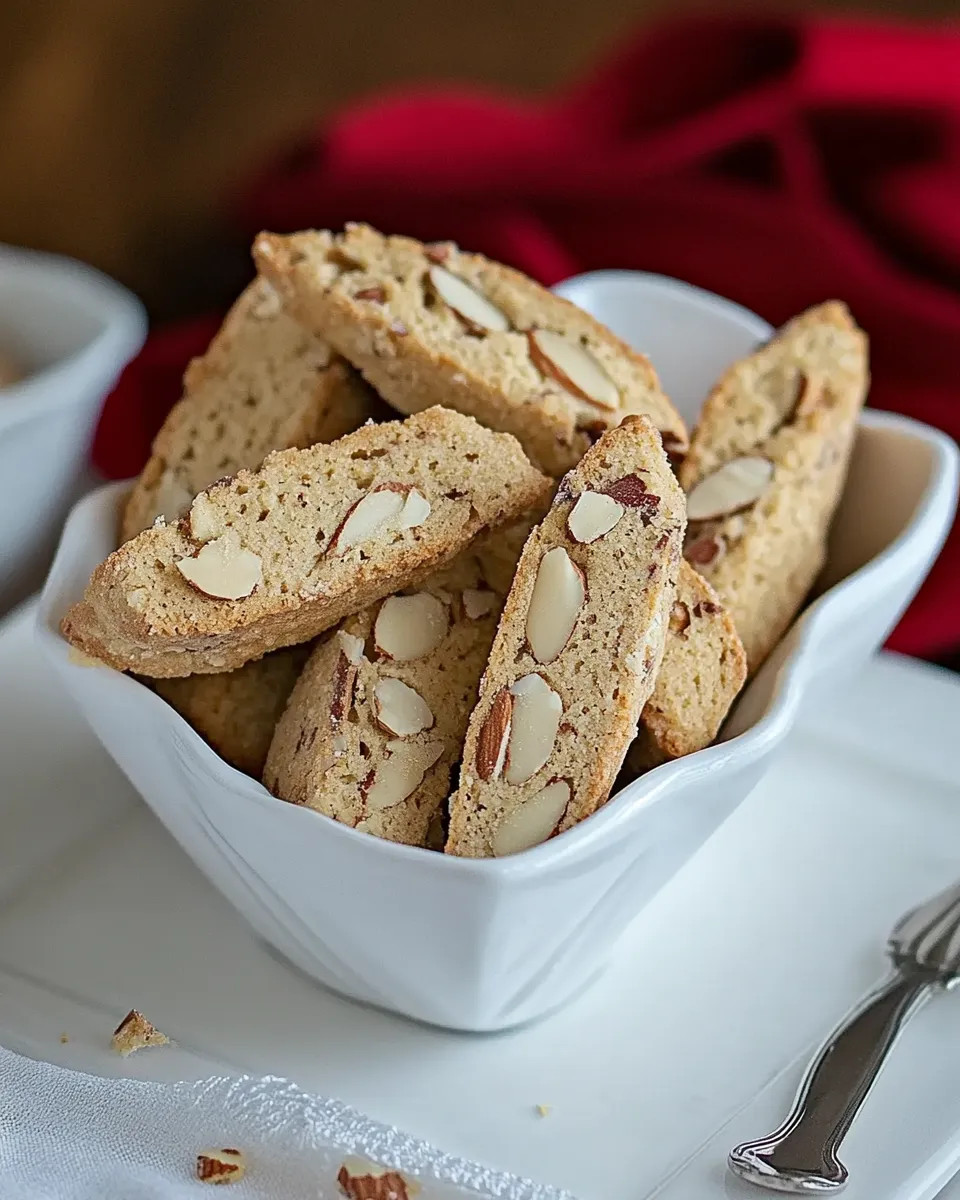
Cantuccini AKA Almond Biscotti
Ingredients
Equipment
Method
- Preheat the oven to 350°F (175°C). Line a baking sheet with parchment paper or lightly grease it.
- In a large bowl, whisk together 2 cups flour, 3/4 cup sugar, 1 1/2 teaspoons baking powder, and 1/2 teaspoon cinnamon. Stir in the 6 ounces whole unblanched almonds.
- In a separate bowl, whisk the 3 eggs with 2 teaspoons vanilla until combined.
- Pour the egg mixture into the dry ingredients and use a rubber spatula to stir until a stiff dough forms.
- Lightly flour a work surface. Turn the dough out onto the surface, divide it in half, and shape each half into a cylinder (log) a little shorter than your baking sheet and about 1 1/2 inches to 2 inches thick.
- Place the two logs on the prepared baking sheet, leaving space between them and from the edges of the pan.
- Bake for 25 to 30 minutes, until the logs have risen, are nearly doubled in size, and feel firm to the touch. Remove the pan and transfer the logs to a wire rack to cool completely.
- When the logs are completely cool, place one log on a cutting board and, using a sharp serrated knife, cut it diagonally into slices about 1/3 inch thick. Repeat with the second log.
- Arrange the slices cut side down on the prepared baking sheet in a single layer with space between pieces. Bake for 15 to 20 minutes, turning the biscotti once halfway through, until they are well toasted and golden.
- Transfer the biscotti to a wire rack to cool completely.
- Store the cooled biscotti between sheets of parchment in a covered, airtight container.