Cauliflower Coconut Masala
This Cauliflower Coconut Masala is one of those weeknight dinners that manages to be both comforting and reliably vibrant. It’s a tomato-forward curry base spiked with garam masala and fresh aromatics, finished with full-fat coconut milk so the sauce is silky and rich. The cauliflower soaks up the flavors and becomes tender without falling apart, and the greens on the side make it a complete plate when served with rice and peas.
I test recipes the way I live: practical, with an eye for shortcuts that don’t shortchange flavor. The ingredient list is straightforward and pantry-friendly, and the method is forgiving. You don’t need elaborate equipment—just a roomy pan and a lid. I’ll walk you through exactly what to gather, the step-by-step process, and the small adjustments that rescue the dish if something goes sideways.
Read straight through for the core recipe, or jump to the sections on flavor logic, storage, and common mistakes if you’re already comfortable in the kitchen. This post keeps things warm and useful—no fluff—so you can get dinner on the table confidently.
What You’ll Gather
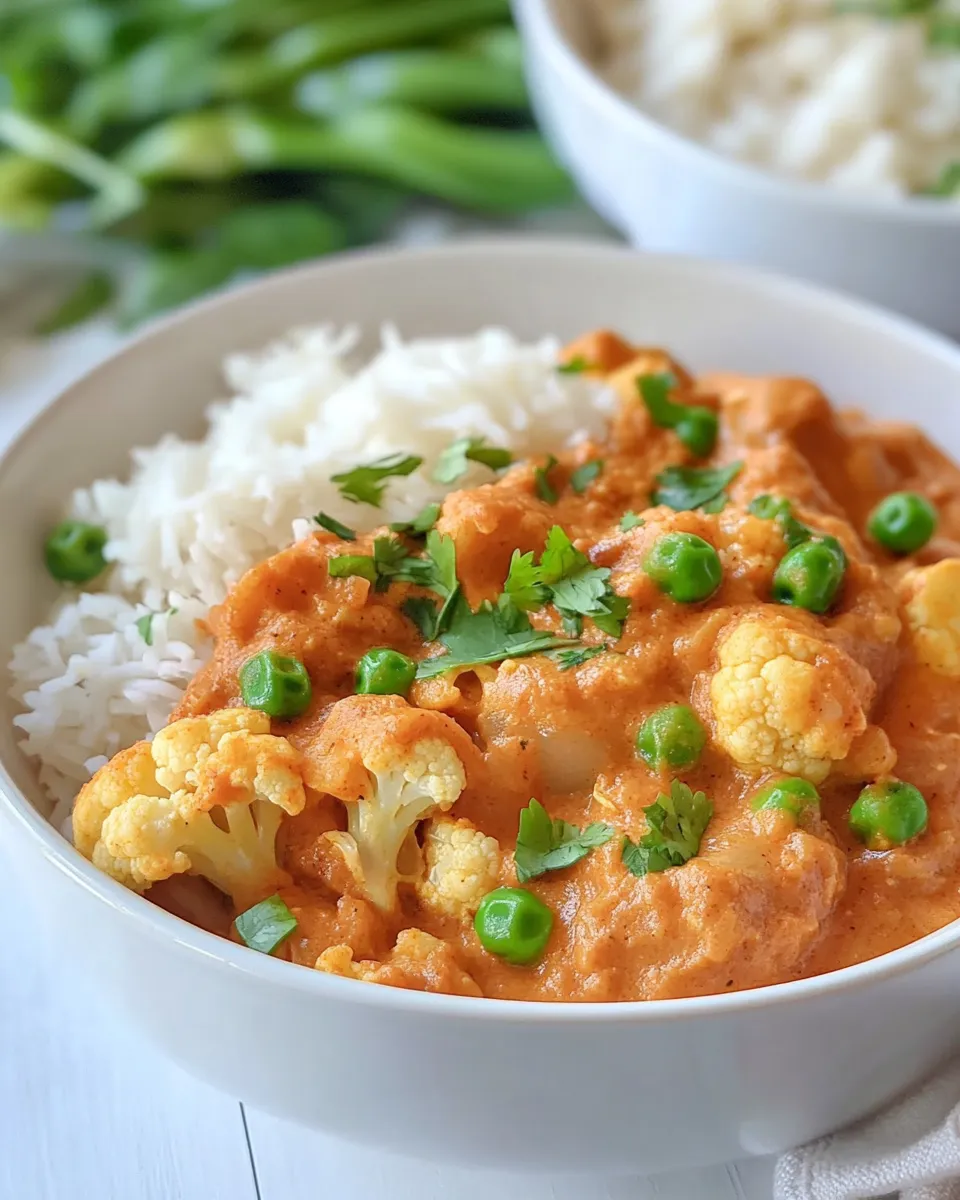
Here I’ll orient you to the essentials: aromatics, spices, a sturdy canned tomato base, and a large can of coconut milk that gives the curry its lush finish. You’ll want a head of cauliflower and simple sides—basmati and peas—so the plate comes together quickly. Below are the ingredients exactly as used in the recipe; each line has a quick note so you know the role of that item.
Ingredients
- 2Tbsp butter — provides initial fat for sautéing; use Earth Balance or coconut oil for vegan.
- 1yellow onion — chopped; builds the sweet, savory base.
- 4clovesgarlic — minced; adds depth and aromatics.
- 1jalapenofinely chopped — brings gentle heat and freshness; seed it if you want milder spice.
- 2-inchpiece fresh ginger — peeled and minced; adds warmth and brightness.
- 3Tbspgaram masala — the core spice blend; gives the curry its signature profile.
- 1tspkosher salt — seasons the whole dish; adjust to taste.
- 128-oz can crushed tomatoes — the acidic body of the sauce; simmered to concentrate flavor.
- 1Tbspsugar — balances acidity from the tomatoes.
- 1head cauliflower — chopped into bite-sized pieces; the star vegetable that soaks up the sauce.
- 114-oz can full-fat coconut milk — enriches and softens the curry at the end.
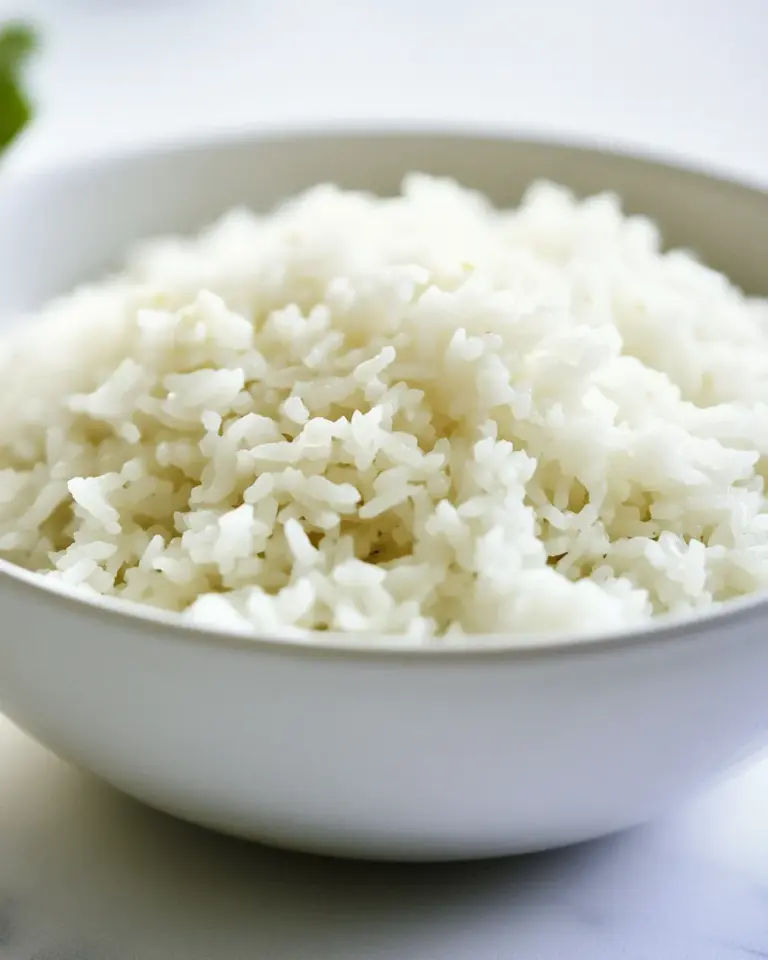
- basmati rice — to serve; cooks separately according to package directions.
- frozen peas — heated and served on the side for bright color and a sweet pop.
- chopped cilantro — finishing herb; adds freshness at the end.
Cooking (Cauliflower Coconut Masala): The Process
- Cook basmati rice according to package instructions and heat frozen peas according to package instructions; keep warm.
- In a large pan over medium-low heat, melt 2 Tbsp butter (use Earth Balance or coconut oil for vegan).
- Add 1 yellow onion (chopped), 4 cloves garlic (minced), and 1 jalapeño (finely chopped). Sauté, stirring occasionally, until the onion is translucent and begins to brown around the edges, about 6–7 minutes.
- Add the minced 2-inch piece of fresh ginger, 3 Tbsp garam masala, and 1 tsp kosher salt. Sauté, stirring constantly, for 30–60 seconds until fragrant.
- Stir in the 128-oz can crushed tomatoes and 1 Tbsp sugar. Increase heat to bring the mixture to a simmer, then reduce heat to maintain a gentle simmer and cover.
- Stir in 1 head cauliflower (chopped into bite-sized pieces). It may seem thick at first; the cauliflower will release liquid as it cooks.
- Cover and simmer until the cauliflower is tender, about 30 minutes, stirring occasionally to prevent sticking.
- Remove the pan from the heat and stir in the 114-oz can full-fat coconut milk until fully combined.
- Serve the cauliflower coconut masala over the cooked basmati rice with the heated frozen peas on the side, and top with plenty of chopped cilantro.
What Sets This Recipe Apart
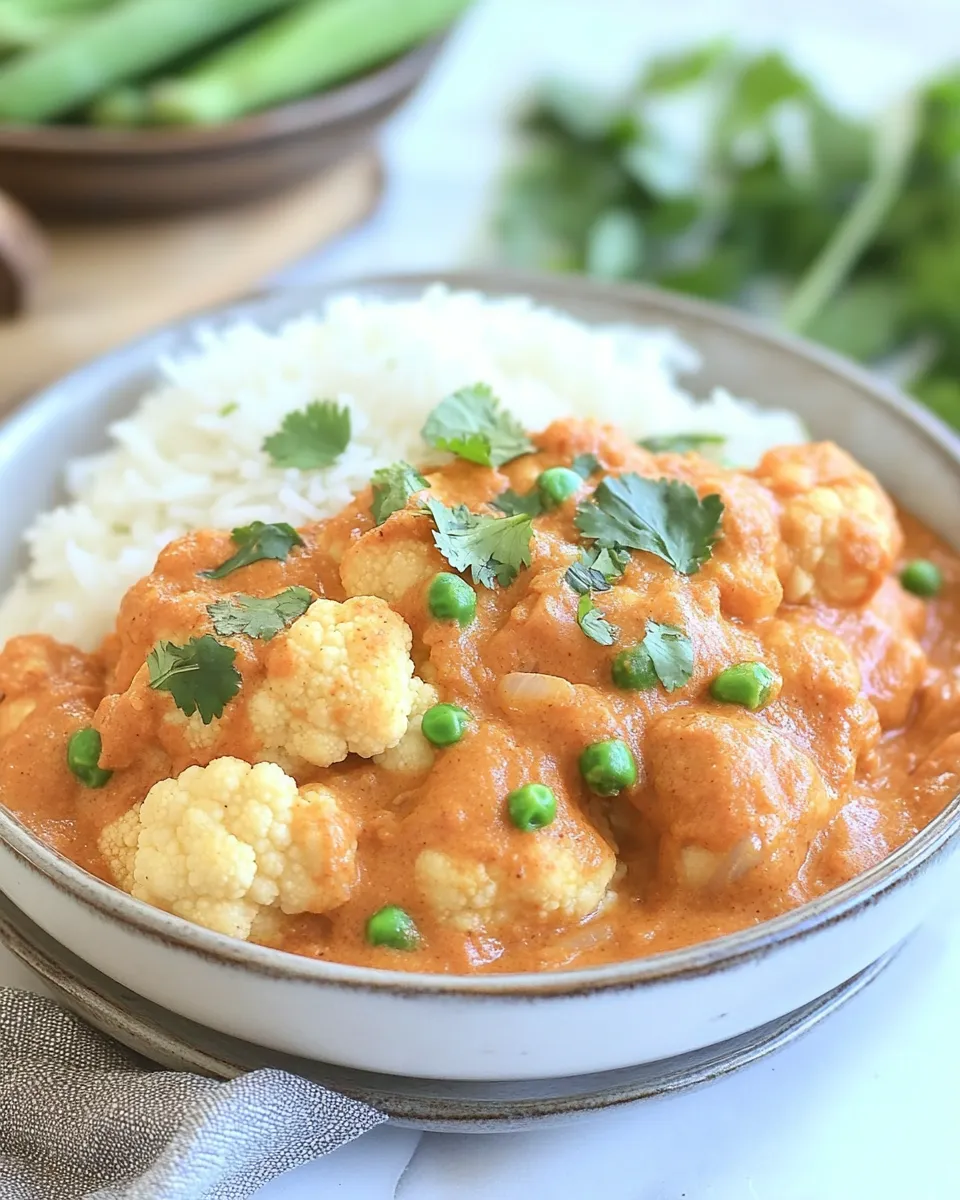
At first glance this is a classic vegetable masala, but there are a few thoughtful choices that change the outcome. The very large cans of crushed tomatoes and coconut milk create a generous amount of sauce; the cauliflower cooks directly in that sauce and releases starches and water, which thicken and meld the flavors over the 30-minute simmer. Using garam masala in a larger quantity—three tablespoons—gives the dish a rounded warmth rather than fleeting spice. Finally, finishing off the heat with full-fat coconut milk (stirred in off the heat) keeps the texture silky and prevents the coconut from breaking or becoming grainy.
No-Store Runs Needed
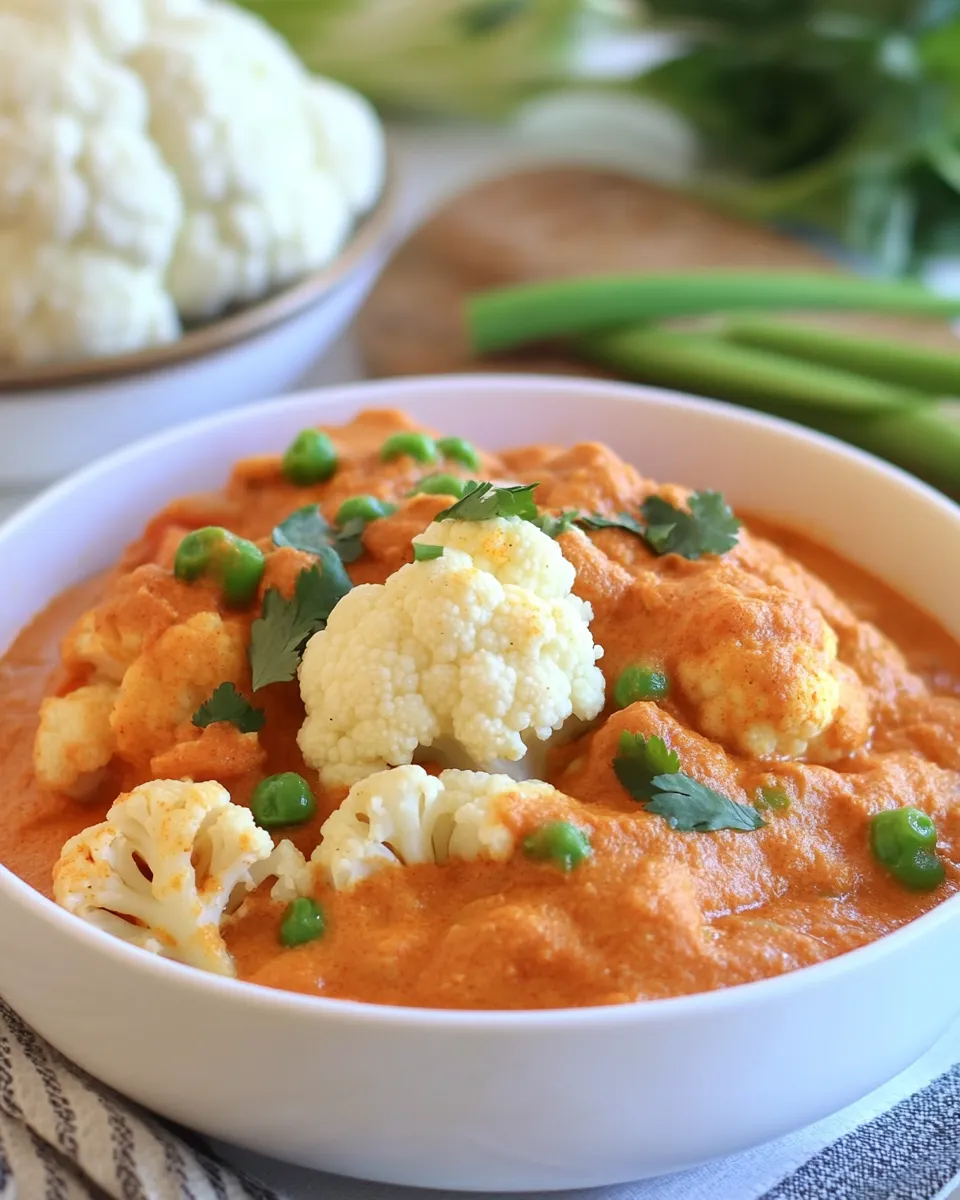
This is a great recipe for when you don’t want to run back to the store. The core pantry items—crushed tomatoes, coconut milk, garam masala, salt—store for a long time. A single head of cauliflower is inexpensive and lasts several days in the fridge. Basmati and frozen peas are shelf-stable or frozen staples we usually have on hand. If you already keep an onion, garlic, and ginger around (or frozen ginger paste), you can start this dish from scratch with what’s in your kitchen right now.
Appliances & Accessories
You don’t need fancy gear. A large, heavy-bottomed pan with a lid is ideal: it gives even heat and enough surface area so the cauliflower cooks through without overcrowding. Use a wooden spoon or silicone spatula to stir. A fine-mesh sieve or colander is handy if you want to rinse the rice or drain excess liquid from the cauliflower at the end, but it isn’t necessary. If you like precise timing, a kitchen timer helps you keep the 30-minute simmer consistent while you prep sides.
Avoid These Mistakes
Most problems here come from rushing the simmer or overcooking the cauliflower. If you increase heat to speed up the process, the sauce will reduce too aggressively and can stick and scorch. Stick to a gentle simmer and check every 8–10 minutes, stirring the pan’s bottom. Another mistake is adding the coconut milk to a boiling pan: it can break or separate and won’t have the glossy finish you want. Remove the pan from the heat first, then stir in the coconut milk. Finally, under-seasoning is common—use the teaspoon of kosher salt as a starting point and taste once the curry has warmed through; the tomatoes and coconut can both mute seasoning, so adjust lightly if needed.
Make It Diet-Friendly
You can make this dish more calorie-conscious without changing the structure. Serve smaller portions of rice and bulk up the plate with extra cauliflower or another steamed vegetable if you have it. The recipe calls for full-fat coconut milk to get that silky texture; if you want fewer calories, serve the masala over a larger bed of cauliflower rice or greens and use a smaller amount of the coconut milk—stir it in off heat and consider reducing the final amount by a third, keeping in mind the sauce will be a bit less rich. Also, control added salt and serve with extra cilantro and lemon if you like brightness without extra fat.
Flavor Logic
Understanding the role of each component will help you personalize the dish without guessing. The butter (or vegan fat) carries flavors and helps the aromatics bloom; the onion, garlic, jalapeño, and ginger build the aromatic base and add layers of sweetness, heat, and zing. Garam masala is used in a higher measure—this isn’t a faint background note here; it’s the backbone. Crushed tomatoes bring acidity and body, while the sugar tempers that acidity and rounds the taste. Cauliflower acts as an absorbent sponge, picking up the spice and tomato notes. Coconut milk heals the edges: it calms the acidity, rounds the mouthfeel, and leaves a smooth finish that makes each bite comforting rather than sharp.
How to Store & Reheat
Cool the curry to room temperature within an hour and transfer to an airtight container. It keeps well in the refrigerator for up to 4 days. The texture of cauliflower will continue to soften with time, so if you prefer firmer florets, plan to eat it within 1–2 days. For longer storage, freeze in labeled containers for up to 3 months—portion it for easy thawing.
To reheat, thaw overnight in the fridge if frozen, then warm gently in a saucepan over low heat until just simmering. If the sauce has thickened in the fridge, add a splash of water and stir while reheating to bring it back to the right consistency. Avoid high heat; coconut milk can separate if boiled aggressively.
Reader Q&A
Q: Can I add protein? A: Yes, but keep in mind the recipe’s structure uses cauliflower as the main vegetable and the sauce quantity is tuned for that volume. If you add cooked chickpeas or a pre-cooked protein, fold them in just before serving so textures stay pleasant. If you plan to cook raw proteins in the sauce (not recommended as the recipe stands), you’ll need to adjust cooking times and possibly sear or cook them first.
Q: Is the jalapeño optional? A: Absolutely. The jalapeño contributes fresh heat and a vegetal note. If you prefer no heat, omit it; if you want more, include seeds or add another small chili, but watch the overall balance—garam masala and jalapeño together provide both warmth and spice.
Q: Can I use light coconut milk? A: You can, but the final texture will be less rich. The recipe calls for full-fat coconut milk to create a silky finish; using light coconut milk will result in a thinner sauce and a different mouthfeel.
Before You Go
This Cauliflower Coconut Masala is dependable, forgiving, and full of character. It’s the sort of recipe you can scale up to feed a crowd or keep cozy for two with generous leftovers. The biggest levers are time and heat: patient simmering and gentle finishing with coconut milk. If you take just two things away from this post, let them be these: don’t rush the simmer, and always stir in coconut milk off the heat. Make a pot this week, serve it with warm basmati and peas, and top it with cilantro—the contrast of bright herb and silky curry is the kind of simple pleasure that makes weeknight cooking feel like a small celebration.
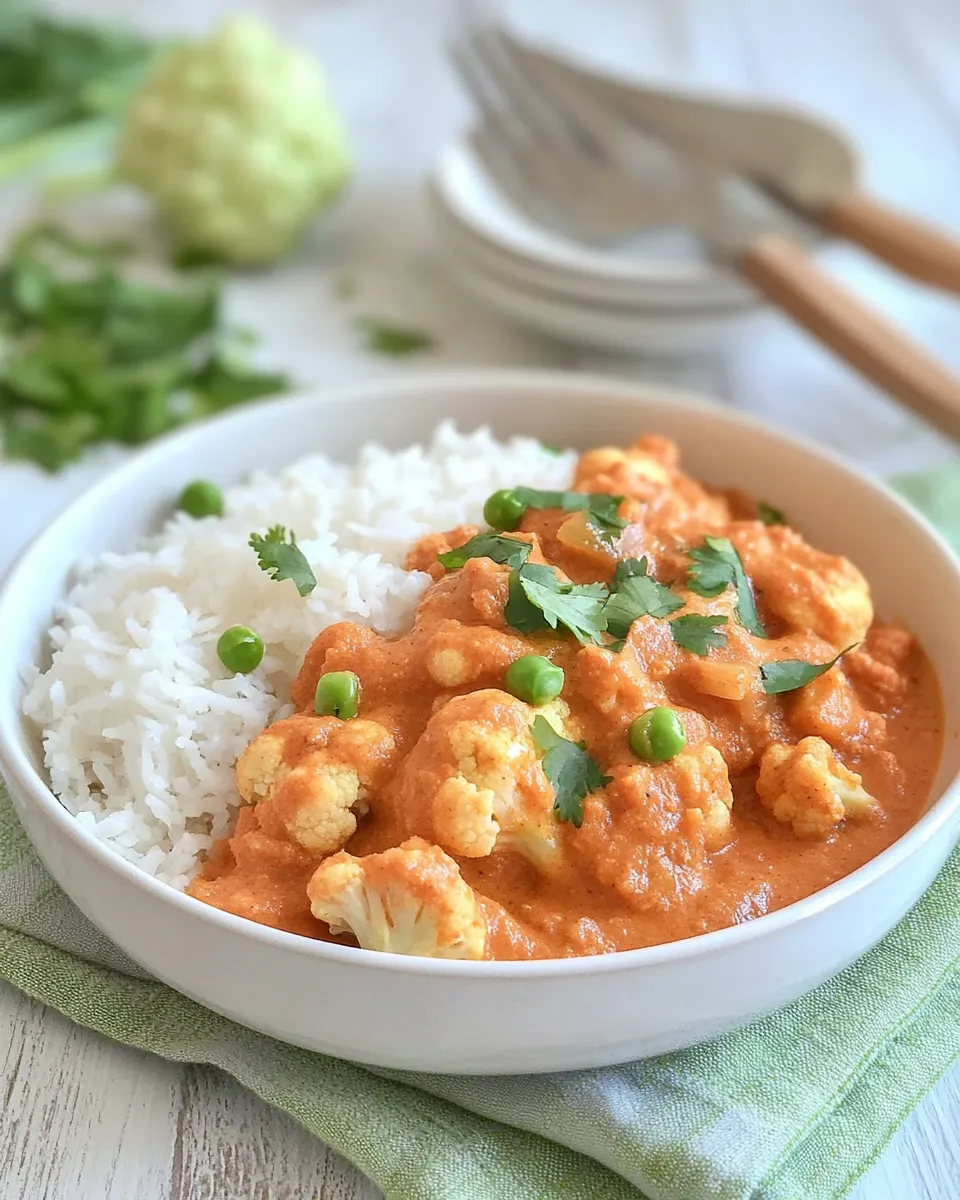
Cauliflower Coconut Masala
Ingredients
Method
- Cook basmati rice according to package instructions and heat frozen peas according to package instructions; keep warm.
- In a large pan over medium-low heat, melt 2 Tbsp butter (use Earth Balance or coconut oil for vegan).
- Add 1 yellow onion (chopped), 4 cloves garlic (minced), and 1 jalapeño (finely chopped). Sauté, stirring occasionally, until the onion is translucent and begins to brown around the edges, about 6–7 minutes.
- Add the minced 2-inch piece of fresh ginger, 3 Tbsp garam masala, and 1 tsp kosher salt. Sauté, stirring constantly, for 30–60 seconds until fragrant.
- Stir in the 128-oz can crushed tomatoes and 1 Tbsp sugar. Increase heat to bring the mixture to a simmer, then reduce heat to maintain a gentle simmer and cover.
- Stir in 1 head cauliflower (chopped into bite-sized pieces). It may seem thick at first; the cauliflower will release liquid as it cooks.
- Cover and simmer until the cauliflower is tender, about 30 minutes, stirring occasionally to prevent sticking.
- Remove the pan from the heat and stir in the 114-oz can full-fat coconut milk until fully combined.
- Serve the cauliflower coconut masala over the cooked basmati rice with the heated frozen peas on the side, and top with plenty of chopped cilantro.