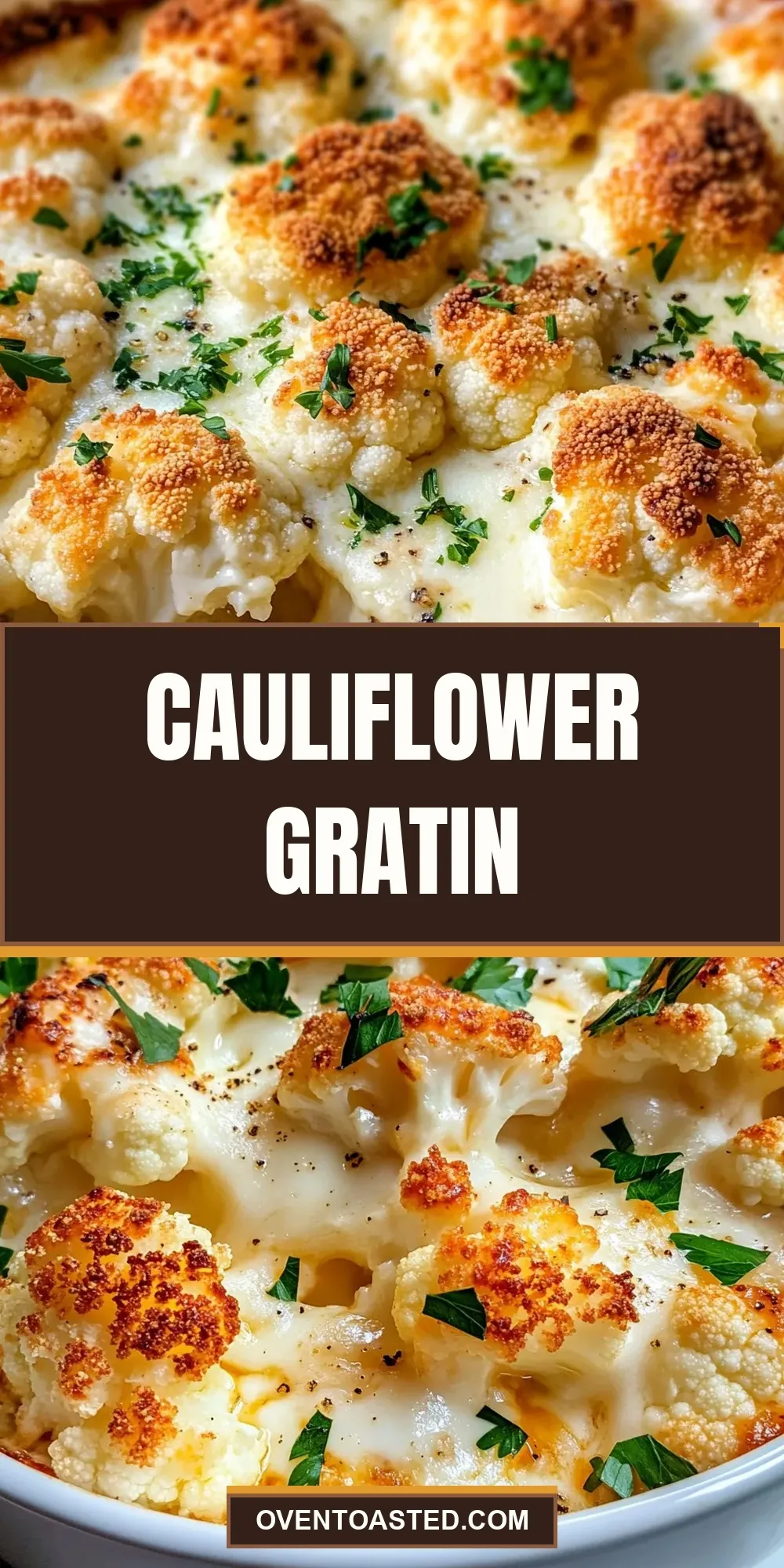
Cauliflower Gratin
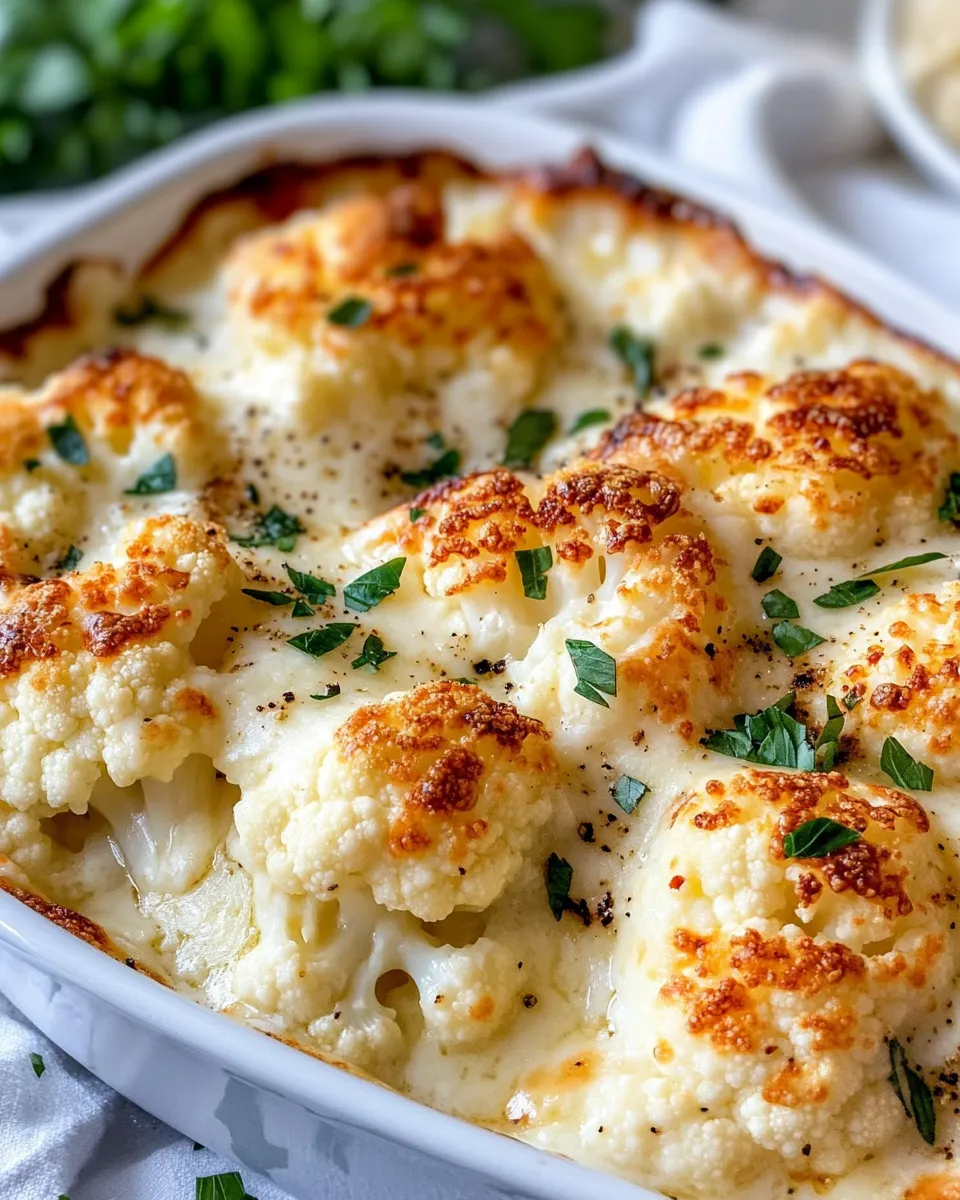
Comfort food doesn’t have to be complicated. This Cauliflower Gratin is one of those recipes I reach for when I want something cozy, cheesy, and reliably impressive with minimal fuss. It relies on a simple béchamel, a couple of good cheeses, and a crunchy breadcrumb topping to turn humble cauliflower into a dish people ask to take home.
I like to think of it as weekday-friendly company food: straightforward steps, forgiving timing, and a texture that hits the best parts of creamy and crisp. A short rest after baking lets the sauce settle, so slices hold together without being gluey. That small patience makes a big difference.
Below you’ll find a clear ingredient breakdown, the tested step-by-step instructions, and practical tips drawn from the many times I’ve made and refined this recipe. Read through once, prep mindfully, and you’ll have a gratin that looks like you spent more time on it than you did.
Ingredient Breakdown

Ingredients
- 1 medium head cauliflower (about 2½ lbs/1.1kg), cut into medium florets — the main vegetable; par-cooking keeps the florets tender but intact after baking.
- 3 tablespoons unsalted butter — fat for the roux and a clean, controllable flavor base for the sauce.
- ¼ cup all-purpose flour — thickens the milk into a smooth béchamel; cook briefly so it loses its raw taste.
- 2 cups whole milk, warmed (see note) — warm milk incorporates into the roux without creating lumps and helps the sauce come together quickly.
- Salt — essential for seasoning at multiple stages; taste the sauce before assembling.
- Freshly ground black pepper — brightens the béchamel; grind fresh for the best aromatic lift.
- Pinch of ground nutmeg — small but important; adds a subtle warmth that complements the cheese and milk.
- 1 cup shredded Gruyère, divided — primary melting cheese; part goes into the sauce for silkiness, and part gratinates on top.
- ¼ cup grated Pecorino Romano or Parmigiano Reggiano, divided — adds savory depth; split between sauce and topping for balance.
- ½ cup panko breadcrumbs — gives the gratin its golden, crunchy finish; toss with oil to brown evenly.
- 1 tablespoon extra-virgin olive oil — helps the breadcrumbs brown and prevents them from drying out in the oven.
- 2 teaspoons fresh thyme (or ¾ teaspoon dried) — aromatic herb in the topping; fresh adds a brighter flavor, dried is an acceptable shortcut.
Mastering Cauliflower Gratin: How-To
Step-by-step
- Preheat the oven to 400°F (205°C) and place a rack in the middle position.
- Bring a large pot of salted water to a boil. Add the cauliflower florets and cook 5 minutes — they should be very al dente. Drain thoroughly and transfer to a colander or clean towel to let excess moisture drain; set aside.
- Warm the 2 cups whole milk until hot to the touch but not boiling (microwave briefly or heat gently in a small saucepan).
- Make the sauce: Melt the 3 tablespoons unsalted butter in a medium saucepan over medium heat. Whisk in the 1/4 cup all-purpose flour and cook 1 to 2 minutes, stirring, until bubbling but not browned.
- Gradually whisk in the warm milk until smooth. Bring the mixture to a gentle boil, whisking often and scraping the pan edges to prevent lumps. Reduce the heat and simmer, whisking frequently, until the sauce thickens and coats the back of a spoon, about 3 to 5 minutes.
- Remove the saucepan from the heat and stir in salt and freshly ground black pepper to taste, a pinch of ground nutmeg, 1/2 cup shredded Gruyère, and 2 tablespoons grated Pecorino Romano or Parmigiano Reggiano. Whisk until smooth.
- Spoon about one-third of the sauce into the bottom of a 2-qt (or 8-inch/20-cm) square baking dish and spread to cover. Arrange the par-cooked cauliflower evenly over the sauce, then spoon the remaining sauce over the florets so they are well coated. Sprinkle the top with the remaining 1/2 cup shredded Gruyère.
- In a small bowl, toss the 1/2 cup panko breadcrumbs with the 1 tablespoon extra-virgin olive oil, the remaining 2 tablespoons grated Pecorino Romano or Parmigiano Reggiano, the 2 teaspoons fresh thyme (or 3/4 teaspoon dried), and salt and freshly ground black pepper to taste. Sprinkle this breadcrumb mixture evenly over the cauliflower.
- Bake uncovered for 25 to 30 minutes, until the topping is golden brown and the sauce is bubbling around the edges. Let the gratin rest at least 10 minutes before serving to allow the sauce to set.
Why Cooks Rave About It
This gratin hits several satisfying notes at once: a silky béchamel that clings to the cauliflower, the nutty, melty pull of Gruyère, and a bright, salty finish from grated Pecorino or Parmigiano. The contrast between the creamy interior and the crisp, herbed breadcrumb top is what turns a simple vegetable into a centerpiece.
It’s also forgiving. The par-cook keeps the florets from collapsing into mush, and the sauce is straightforward—no tempering of eggs or fiddly steps. For a weeknight or a holiday table, it performs reliably and looks like effort paid off.
Swap Guide
Keep swaps conservative and flavorful. The recipe already allows Pecorino or Parmigiano — use whichever you prefer. If you must trim richness, reduce the shredded Gruyère by a small amount rather than replace it entirely; the cheese’s melt quality is central to the texture.
For the herb, dried thyme is explicitly included as an option—use 3/4 teaspoon if that’s what you have. If you want a lighter topping without adding new ingredients, simply use fewer breadcrumbs or omit them; the gratin will still be delicious, though less texturally contrasted.
Equipment Breakdown

Only a few reliable tools are essential. A medium saucepan for the béchamel, a whisk to keep the sauce smooth, and a 2-qt (or 8-inch/20-cm) square baking dish are the core pieces. A good, tight-fitting box grater makes quick work of shredding Gruyère and grating the hard cheese, and a colander or clean kitchen towel helps drain the cauliflower after par-cooking.
Extras that help: an instant-read thermometer for confidence (though not required), a microplane for the nutmeg if you prefer freshly grated, and an oven rack set in the middle position to ensure even browning of the topping.
Avoid These Traps
Trap: under-draining the cauliflower. Too much surface moisture makes the sauce thin and prevents the topping from browning properly. After boiling, let the florets sit in a colander or on a towel while you finish the sauce.
Trap: overheating the milk. If the milk is boiling when added to the roux it can scald or create lumps. Warm the milk until hot to the touch but not boiling, and add it gradually while whisking.
Trap: skipping the rest. Serving immediately may leave the sauce too loose. Letting the gratin rest at least 10 minutes after baking allows it to set and makes serving cleaner.
Variations by Season
Spring: keep it light by using the minimum breadcrumbs or none at all; let the natural sweetness of cauliflower shine. The recipe’s thyme is bright enough for spring tables.
Autumn and winter: the richness of the béchamel and cheeses is especially welcome on cooler nights. Follow the recipe closely for those warm, comforting results that pair well with roasted mains and braises.
If You’re Curious
Why warm the milk? Warm milk joins the roux smoothly and reduces the chance of lumps—cold milk into hot fat forms clumps that are hard to break down. Why par-cook? It ensures the cauliflower finishes tender without turning to mush in the oven. Each step targets texture: smooth sauce, intact florets, and a golden top.
Save It for Later
Cool the gratin to near room temperature, then cover and refrigerate for up to 3 days. Reheat covered in a 350°F (175°C) oven until warmed through; remove the cover for the last few minutes to refresh the breadcrumb crispness. The sauce will firm up when cold, so a gentle oven reheat works better than a microwave.
To freeze: allow to cool completely, wrap tightly, and freeze for up to 1 month. Thaw overnight in the refrigerator before reheating as above. Note that the topping won’t be quite as crisp after freezing, but the dish will still be comforting and flavorful.
Your Questions, Answered
How do I know the cauliflower is the right tenderness after boiling? It should be very al dente—soft enough to pierce with a fork but still offering resistance at the core. That way it finishes perfectly in the oven without collapsing.
Can I make the sauce ahead? Yes. You can make the béchamel up to a day ahead, cool it, and refrigerate. Rewarm gently and whisk before assembling. If it thickens in the fridge, whisk in a splash of warm milk to loosen it.
Is the breadcrumb topping necessary? No, but it provides a textural counterpoint. If you skip it, consider a final sprinkling of the reserved cheese to get more of that browned flavor on top.
Ready to Cook?
Preheat your oven to 400°F (205°C), get a pot of salted water on to par-cook the cauliflower, and warm the milk. Follow the steps in the How-To section above and give the gratin the recommended rest time after baking. A simple salad or roasted protein makes a complete meal, but honestly, this version is happy to be the star.
Make it once, and you’ll find reasons to make it again. It’s practical, forgiving, and reliably delicious.

Cauliflower Gratin
Ingredients
Equipment
Method
- Preheat the oven to 400°F (205°C) and place a rack in the middle position.
- Bring a large pot of salted water to a boil. Add the cauliflower florets and cook 5 minutes — they should be very al dente. Drain thoroughly and transfer to a colander or clean towel to let excess moisture drain; set aside.
- Warm the 2 cups whole milk until hot to the touch but not boiling (microwave briefly or heat gently in a small saucepan).
- Make the sauce: Melt the 3 tablespoons unsalted butter in a medium saucepan over medium heat. Whisk in the 1/4 cup all-purpose flour and cook 1 to 2 minutes, stirring, until bubbling but not browned.
- Gradually whisk in the warm milk until smooth. Bring the mixture to a gentle boil, whisking often and scraping the pan edges to prevent lumps. Reduce the heat and simmer, whisking frequently, until the sauce thickens and coats the back of a spoon, about 3 to 5 minutes.
- Remove the saucepan from the heat and stir in salt and freshly ground black pepper to taste, a pinch of ground nutmeg, 1/2 cup shredded Gruyère, and 2 tablespoons grated Pecorino Romano or Parmigiano Reggiano. Whisk until smooth.
- Spoon about one-third of the sauce into the bottom of a 2-qt (or 8-inch/20-cm) square baking dish and spread to cover. Arrange the par-cooked cauliflower evenly over the sauce, then spoon the remaining sauce over the florets so they are well coated. Sprinkle the top with the remaining 1/2 cup shredded Gruyère.
- In a small bowl, toss the 1/2 cup panko breadcrumbs with the 1 tablespoon extra-virgin olive oil, the remaining 2 tablespoons grated Pecorino Romano or Parmigiano Reggiano, the 2 teaspoons fresh thyme (or 3/4 teaspoon dried), and salt and freshly ground black pepper to taste. Sprinkle this breadcrumb mixture evenly over the cauliflower.
- Bake uncovered for 25 to 30 minutes, until the topping is golden brown and the sauce is bubbling around the edges. Let the gratin rest at least 10 minutes before serving to allow the sauce to set.
Notes
Make-Ahead Instructions:The gratin can be assembled up to 1 day ahead. Prepare the recipe through the step of topping it with the cheese and panko mixture, but don’t bake. Cover tightly and refrigerate. When you’re ready to bake, let it sit at room temperature for 20 to 30 minutes to take the chill off, then bake as directed, adding a few extra minutes if needed to ensure it’s heated through and the top is golden.