Chicken Broccoli Pasta
This is the kind of weeknight recipe I reach for when I want something satisfying but not fussy. It comes together quickly, uses pantry basics plus a few fresh items, and finishes with a glossy, cheesy sauce that clings to every piece of penne. The broccoli blanched first keeps its color and snap, and the chicken browns up nicely for texture.
There’s nothing trendy here—just straightforward technique: blanch, boil, brown, whisk, and toss. Small steps, clear timing, and one pan for the sauce make cleanup easier. I’ll walk you through the exact order I use so the sauce is creamy and the pasta is perfectly coated.
If you want variations or storage tips, I’ve included them below. Read the steps once, then follow them in order. The results are dependable every time.
What Goes Into Chicken Broccoli Pasta
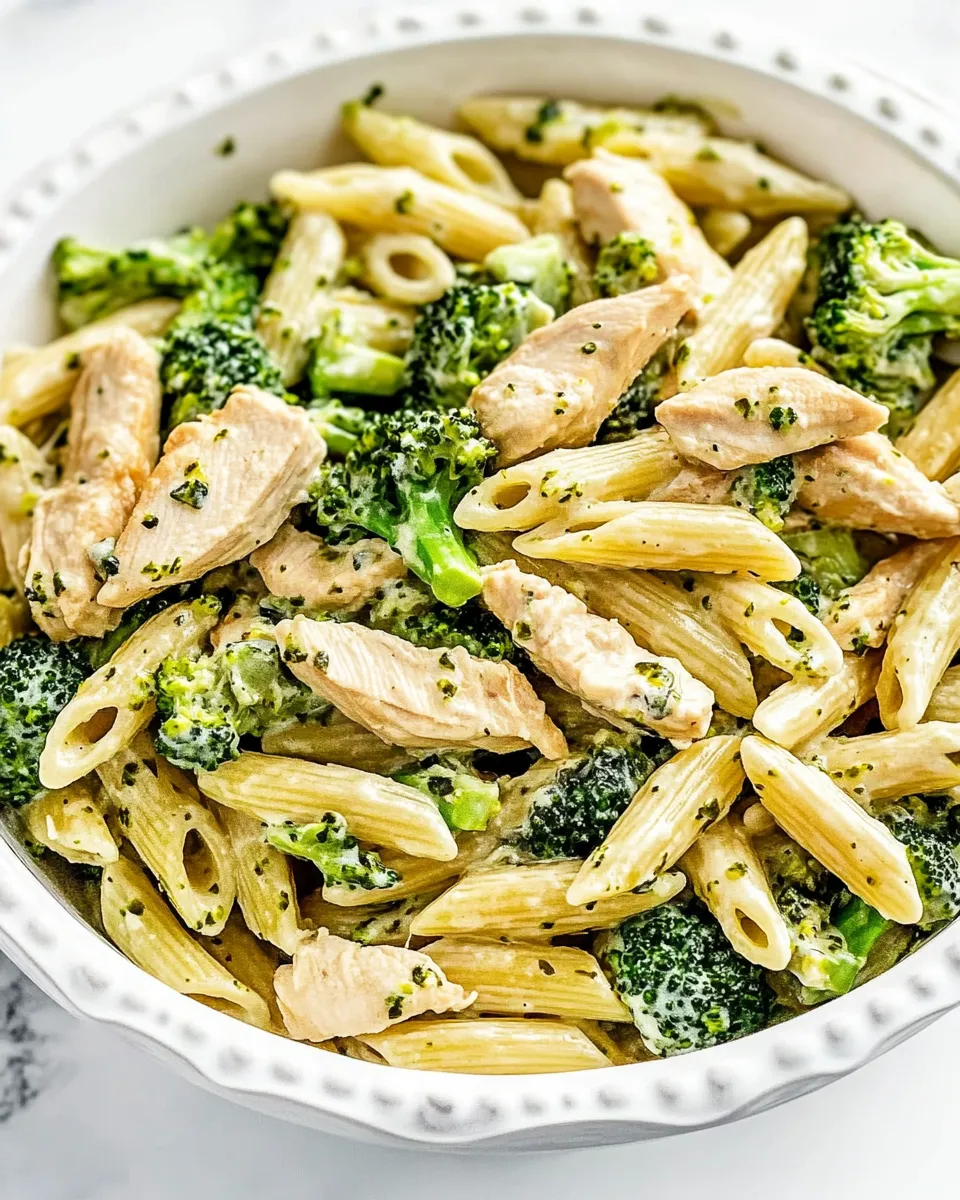
Before you start, lay everything out. The recipe relies on simple, familiar ingredients but timing matters—especially blanching the broccoli and reserving pasta water. Below are the exact components called for and a quick note about what each one does in the dish.
Ingredients
- 1 pound chicken breasts, chopped into large bite size pieces — the main protein; bite-size pieces cook quickly and mix evenly with pasta.
- 1/2 tsp EACH paprika, salt, pepper — basic seasoning for the chicken to add depth and balance.
- 2 tablespoons olive oil — for browning the chicken and carrying flavor into the pan.
- 1 pound penne — a short pasta with tubes that hold the creamy sauce.
- 5 cups broccoli florets (uncooked) — blanched briefly so they stay bright and tender-crisp.
- 2 tablespoons unsalted butter — carries the garlic and builds the sauce base with richness.
- 6 cloves garlic, minced (1 ½ TBS) (may sub 1 tsp ground) — aromatic backbone; use fresh for the best flavor.
- 1/4 teaspoon red pepper flakes — adds a subtle lift; adjust to taste.
- 2 cups low sodium chicken broth — thins the sauce and adds savory depth without overwhelming salt.
- 2 tablespoons cornstarch — paired with the broth to create a smooth, stable slurry that thickens the sauce.
- 2 cups heavy cream (or half and half or evaporated milk + 1 TBS cornstarch) — creates the creamy body of the sauce; substitutions noted in parentheses are allowed by the original directions.
- 2 ounces cream cheese, very soft — gives the sauce silkiness and a slight tang that rounds the cream.
- 1 teaspoon chicken bouillon or Better Than Bouillon — concentrated savory boost; start with this amount and taste before adding more salt.
- 1 tsp EACH dried basil, dried parsley — dried herbs add classic Italian-ish flavor without freshness required.
- 1/2 tsp EACH onion powder, dried oregano, salt, pepper — layered seasoning so the sauce isn’t one-note.
- 1 1/2 cups FRESHLY grated Parmesan cheese (like powder) — the finishing cheese that melts into the sauce and thickens it; grate fresh for best texture.
Chicken Broccoli Pasta in Steps
- Bring a large pot of salted water to a boil. Add the broccoli florets and cook for 2 minutes. Remove the broccoli with a slotted spoon or sieve and plunge into an ice bath or run under cold water until cooled; set aside.
- Return the same pot of water to a boil. Add the penne and cook until al dente according to package directions. Before draining, reserve ½ cup pasta water. Drain the pasta and set aside (toss with a small drizzle of olive oil if you will not add it to the sauce immediately).
- Pat the chopped chicken breasts dry on the cutting board. Season with ½ teaspoon paprika, ½ teaspoon salt, and ½ teaspoon pepper; toss to coat.
- Heat 2 tablespoons olive oil in a large skillet or braiser over medium-high heat. Add the seasoned chicken and cook, stirring occasionally, until golden and just cooked through; transfer the chicken to a plate with a slotted spoon and set aside.
- In a liquid measuring cup or small bowl, whisk the 2 cups low-sodium chicken broth with the 2 tablespoons cornstarch until completely smooth; set aside. (If you are substituting half-and-half or evaporated milk for the heavy cream, whisk the extra 1 tablespoon cornstarch into that milk before using.)
- Reduce the pan heat to medium. Add the 2 tablespoons unsalted butter to the same pan (with any browned bits and oil), then add the minced garlic and ¼ teaspoon red pepper flakes; sauté about 30 seconds until fragrant.
- Whisk the broth/cornstarch mixture into the pan, then add the 2 cups heavy cream (or your chosen substitute), the very soft 2 ounces cream cheese, 1 teaspoon chicken bouillon (or Better Than Bouillon), 1 teaspoon dried basil, 1 teaspoon dried parsley, and ½ teaspoon each onion powder, dried oregano, salt, and pepper. Reduce heat to medium-low and cook, whisking often, until the cream cheese is melted and the sauce begins to thicken.
- Add the 1½ cups freshly grated Parmesan a handful at a time, whisking until smooth between additions. Bring the sauce to a gentle simmer and continue to cook 3–5 minutes more, until the sauce has thickened to a creamy consistency (it will thicken further when mixed with pasta).
- Stir the cooked chicken and blanched broccoli into the sauce. Add the cooked pasta and toss to coat. If the sauce becomes too thick, loosen it with reserved pasta water, a tablespoon at a time, until you reach the desired consistency.
- Taste and adjust seasoning with additional freshly cracked salt and pepper if needed. Serve immediately.
Why It’s Crowd-Pleasing
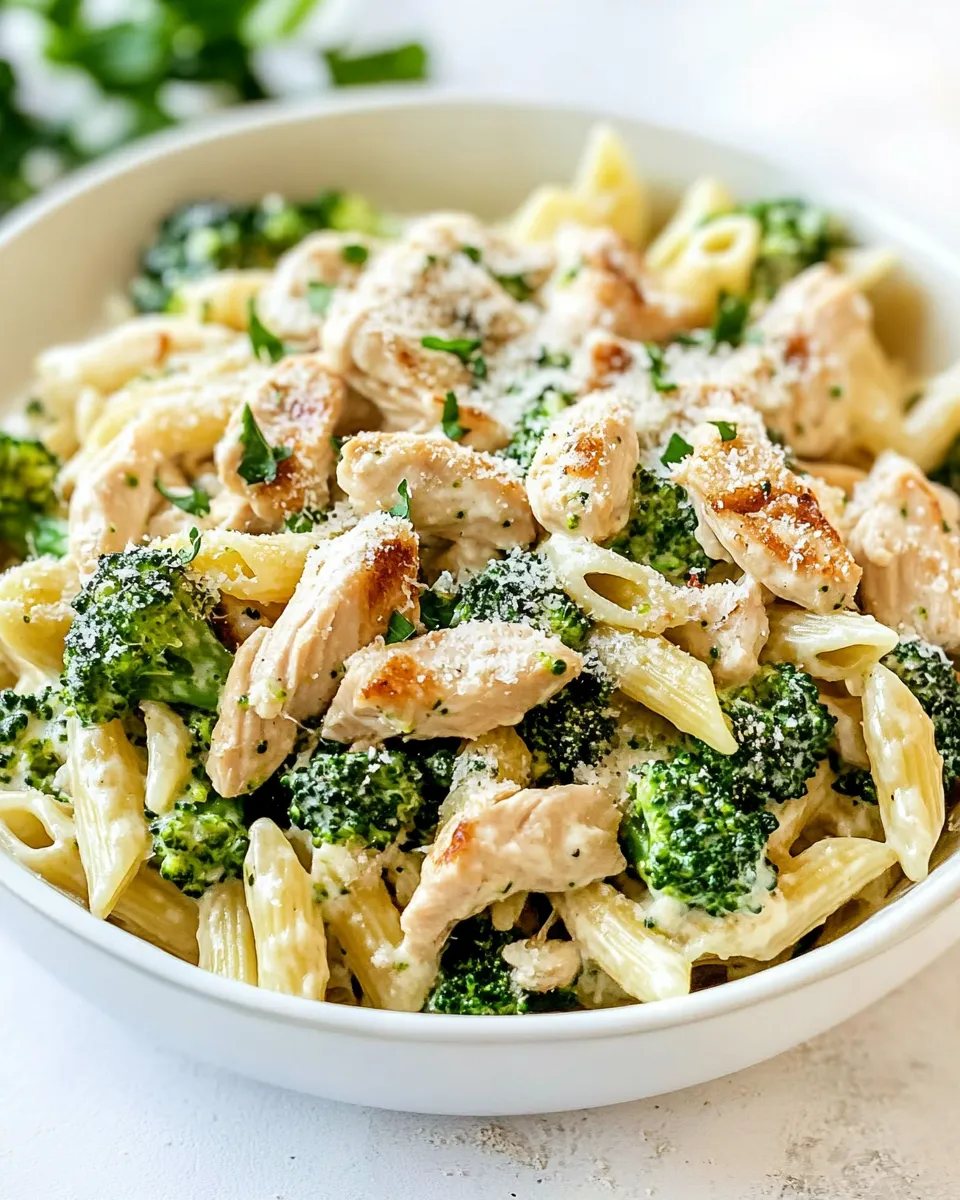
There are a few reliable reasons this dish goes over well: creamy texture, familiar flavors, and satisfying protein-to-vegetable ratio. The sauce is rich but balanced by bright broccoli and a restrained amount of seasoning so it appeals to many palates. Texturally, the contrast between al dente pasta, tender chicken, and crisp-tender broccoli keeps every bite interesting.
Practicality matters too. Penne holds onto sauce and is friendly for picky eaters. The method is flexible—if you need a one-pan midweek meal, this format scales and adapts without losing what makes it comforting.
International Equivalents
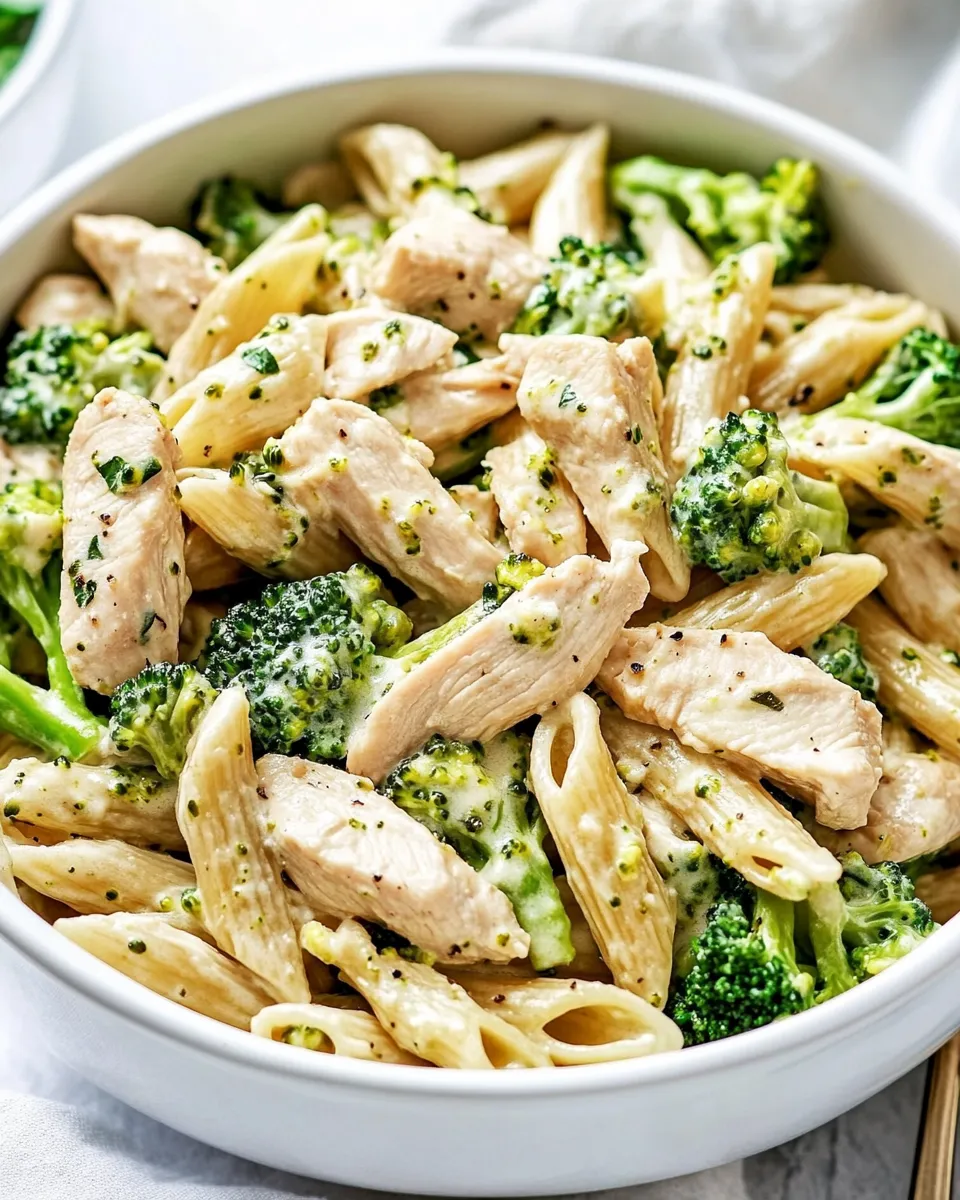
This style of creamy chicken and pasta appears in many cuisines under different names and techniques. Think of it as comfort-food pasta with a cream-based sauce—similar in spirit to Italian-American chicken Alfredo or French creamy gratins that combine protein, vegetable, and sauce. Swap the dried herbs for fresh parsley or basil at the end, and it bridges to a lighter Mediterranean version.
In places where heavy cream is less common, thickened milk sauces with a roux or starch are used. The principle stays the same: a flavored liquid thickened and enriched with cheese or dairy to coat starch (pasta) and protein.
What’s in the Gear List
- Large pot — for boiling broccoli and pasta; using the same pot saves time and dishes.
- Ice bath or bowl of cold water — to stop the broccoli’s cooking and lock in color.
- Slotted spoon or sieve — for lifting the broccoli without excess water.
- Large skillet or braiser — for browning chicken and making the sauce; wide pan helps with tossing pasta.
- Whisk — necessary to smooth the broth/cornstarch and to integrate cheese into the sauce.
- Measuring cups and spoons — for accurate liquids and seasonings.
- Box grater — for freshly grating Parmesan so it melts evenly.
Mistakes That Ruin Chicken Broccoli Pasta
Timing errors and skipping small steps are the usual culprits. The biggest mistakes I see:
- Overcooking the broccoli — it turns mushy and loses that fresh pop; stick to the 2-minute blanch and ice bath.
- Not reserving pasta water — that starchy water is the rescue fluid for a sauce that tightens up too much.
- Adding cheese too fast — dump in all the Parmesan at once and you risk clumping; add gradually and whisk between additions.
- Cooking the chicken overcrowded — crowding the pan causes steaming instead of browning; cook in a hot pan with enough space so pieces color.
Year-Round Variations
Adjustments by season keep this dish feeling fresh. In spring or summer, finish with a squeeze of lemon and a handful of chopped fresh herbs to brighten the cream. In fall and winter, stir in a spoonful of grainy mustard or a few sautéed mushrooms for earthier notes. Swap broccoli for other quick-cooking greens when needed—just follow the blanch-and-ice method so texture holds.
For lighter warm-weather meals, use the suggested half-and-half or evaporated milk substitution to cut richness while keeping the sauce emulsion stable.
If You’re Curious
Small technique differences make a big impact. For a silkier sauce, temper the cream with a little hot broth before adding it back to the pan. If you prefer more pronounced garlic, add half at the start and the rest right at the end for a fresher bite. And if the sauce seems thin after cooling a touch, a quick simmer will reduce it to the right consistency.
Make-Ahead & Storage
Refrigerator
Cool the pasta slightly, then transfer to an airtight container. It will keep 3–4 days. The sauce firms up when chilled; reheat gently on the stovetop with a splash of water or reserved pasta water to loosen it and keep the texture creamy.
Freezer
Freezing is possible but not ideal for texture—cream sauces can separate. If you must freeze, cool completely, portion into freezer-safe containers, and use within 1–2 months. Thaw overnight in the fridge and reheat slowly, whisking in a little liquid to bring it back together.
Handy Q&A
- Can I use a different pasta? Yes. Any short, ridged or tubular pasta works; just adjust cooking time to reach al dente.
- Can I substitute chicken thighs? Yes. Thighs are slightly more forgiving and stay juicy; cut into similar-sized pieces so they cook evenly.
- How do I prevent the sauce from splitting? Keep heat moderate and add cheese gradually. If using a milk substitute, ensure the starch is whisked in first as directed.
- Is there a vegetarian option? You can omit the chicken and use a vegetable broth base and extra vegetables, but this departs from the original ingredient list.
Hungry for More?
If you like this style of straightforward, saucy pasta, try keeping a jar of good-quality broth and freshly grated Parmesan on hand. They’ll take many quick meals from bland to memorable. When you make this Chicken Broccoli Pasta the first time, follow the steps precisely. After that, small tweaks—more herbs, a sprinkle of lemon zest, or different pasta shapes—make it your own without losing what works.
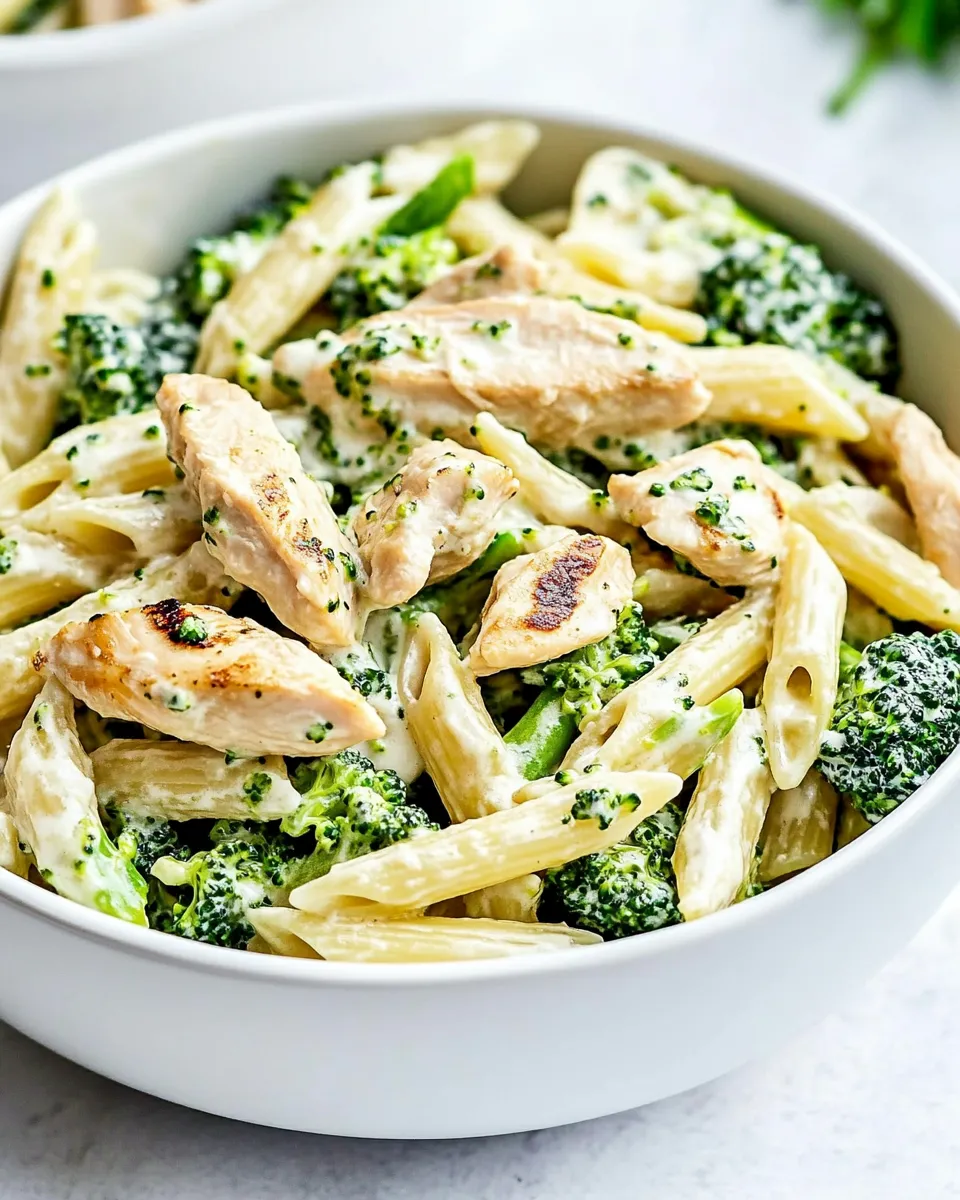
Chicken Broccoli Pasta
Ingredients
Equipment
Method
- Bring a large pot of salted water to a boil. Add the broccoli florets and cook for 2 minutes. Remove the broccoli with a slotted spoon or sieve and plunge into an ice bath or run under cold water until cooled; set aside.
- Return the same pot of water to a boil. Add the penne and cook until al dente according to package directions. Before draining, reserve ½ cup pasta water. Drain the pasta and set aside (toss with a small drizzle of olive oil if you will not add it to the sauce immediately).
- Pat the chopped chicken breasts dry on the cutting board. Season with ½ teaspoon paprika, ½ teaspoon salt, and ½ teaspoon pepper; toss to coat.
- Heat 2 tablespoons olive oil in a large skillet or braiser over medium-high heat. Add the seasoned chicken and cook, stirring occasionally, until golden and just cooked through; transfer the chicken to a plate with a slotted spoon and set aside.
- In a liquid measuring cup or small bowl, whisk the 2 cups low-sodium chicken broth with the 2 tablespoons cornstarch until completely smooth; set aside. (If you are substituting half-and-half or evaporated milk for the heavy cream, whisk the extra 1 tablespoon cornstarch into that milk before using.)
- Reduce the pan heat to medium. Add the 2 tablespoons unsalted butter to the same pan (with any browned bits and oil), then add the minced garlic and ¼ teaspoon red pepper flakes; sauté about 30 seconds until fragrant.
- Whisk the broth/cornstarch mixture into the pan, then add the 2 cups heavy cream (or your chosen substitute), the very soft 2 ounces cream cheese, 1 teaspoon chicken bouillon (or Better Than Bouillon), 1 teaspoon dried basil, 1 teaspoon dried parsley, and ½ teaspoon each onion powder, dried oregano, salt, and pepper. Reduce heat to medium-low and cook, whisking often, until the cream cheese is melted and the sauce begins to thicken.
- Add the 1½ cups freshly grated Parmesan a handful at a time, whisking until smooth between additions. Bring the sauce to a gentle simmer and continue to cook 3–5 minutes more, until the sauce has thickened to a creamy consistency (it will thicken further when mixed with pasta).
- Stir the cooked chicken and blanched broccoli into the sauce. Add the cooked pasta and toss to coat. If the sauce becomes too thick, loosen it with reserved pasta water, a tablespoon at a time, until you reach the desired consistency.
- Taste and adjust seasoning with additional freshly cracked salt and pepper if needed. Serve immediately.
Notes
Chicken bouillon:Use granulatedchicken bouillon, bouillon cubes, or better than bouillon. Add the bouillon to the sauce dry, do not dissolve it into water first. If using a cube, crush before adding to the sauce.
Alfredo lumps:If you think your Alfredo has lumps but it’s been simmering for 5 minutes, it’s probably just the fresh garlic!
Recipe variations:See post for all sorts of ideas to mix up this recipe.
Storage:Transfer to an airtight container and store in the refrigerator for 4-5 five days.
To reheat the pasta:Reheat in the microwave for 1-2 minutes or over medium-low heat on the stove, stirring frequently. You may want to add a splash of milk if the pasta seems dry.
Make ahead:You can make all of the elements ahead of time and refrigerate separately, or combine the Alfredo sauce, chicken and broccoli (not the pasta) and refrigerate until ready to serve. When ready, gently rewarm in a skillet, stir in the penne, then a splash of milk if needed to thin.