Chicken Pesto Spaghetti Squash (Paleo, Keto, Whole30)
This is my go-to weeknight dinner when I want something bright, filling, and low-carb without fuss. Spaghetti squash gives you the satisfying “pasta” feel while keeping the plate paleo- and keto-friendly, and when you toss those strands with a vibrant basil-pumpkin-seed pesto and juicy chicken thighs, it feels indulgent without being heavy.
There’s no complicated mise en place here: roast the squash if it isn’t already, blitz a quick pesto, brown the chicken, and toss everything together. It’s one of those recipes that scales well for leftovers and travels nicely for lunches, too.
Below you’ll find the ingredients exactly as used, a step-by-step method taken straight from my tried-and-true process, and practical tips so you can get consistent results every time.
What’s in the Bowl
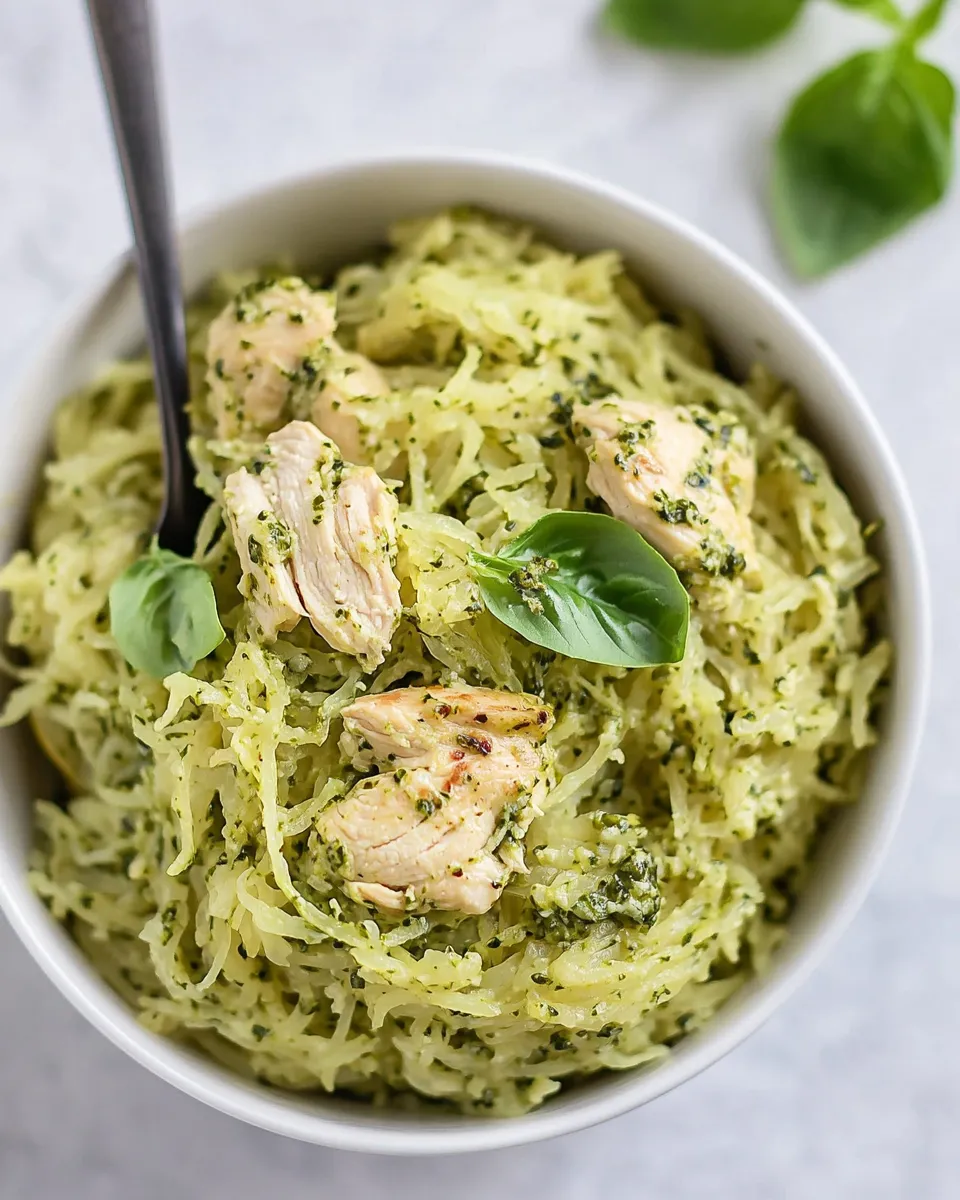
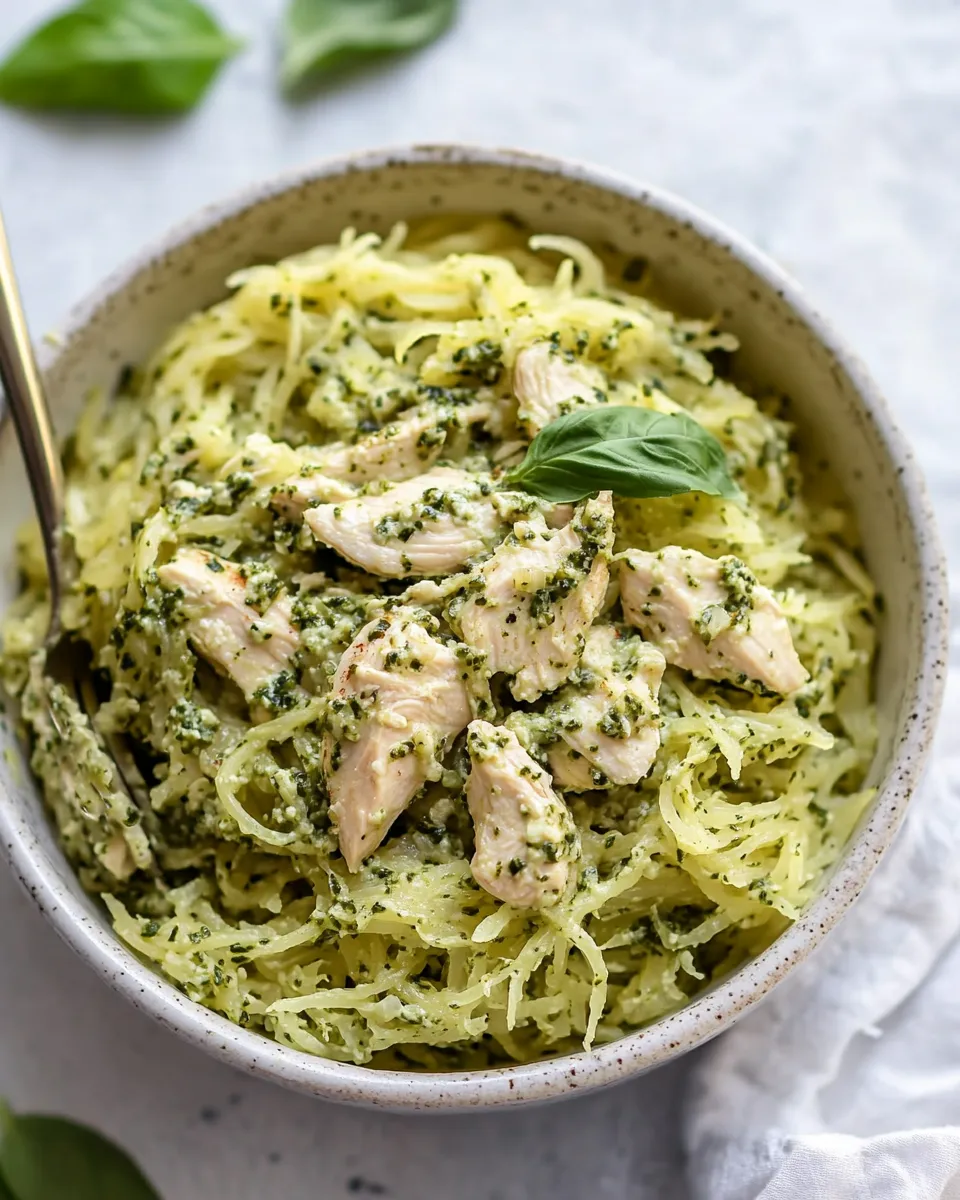
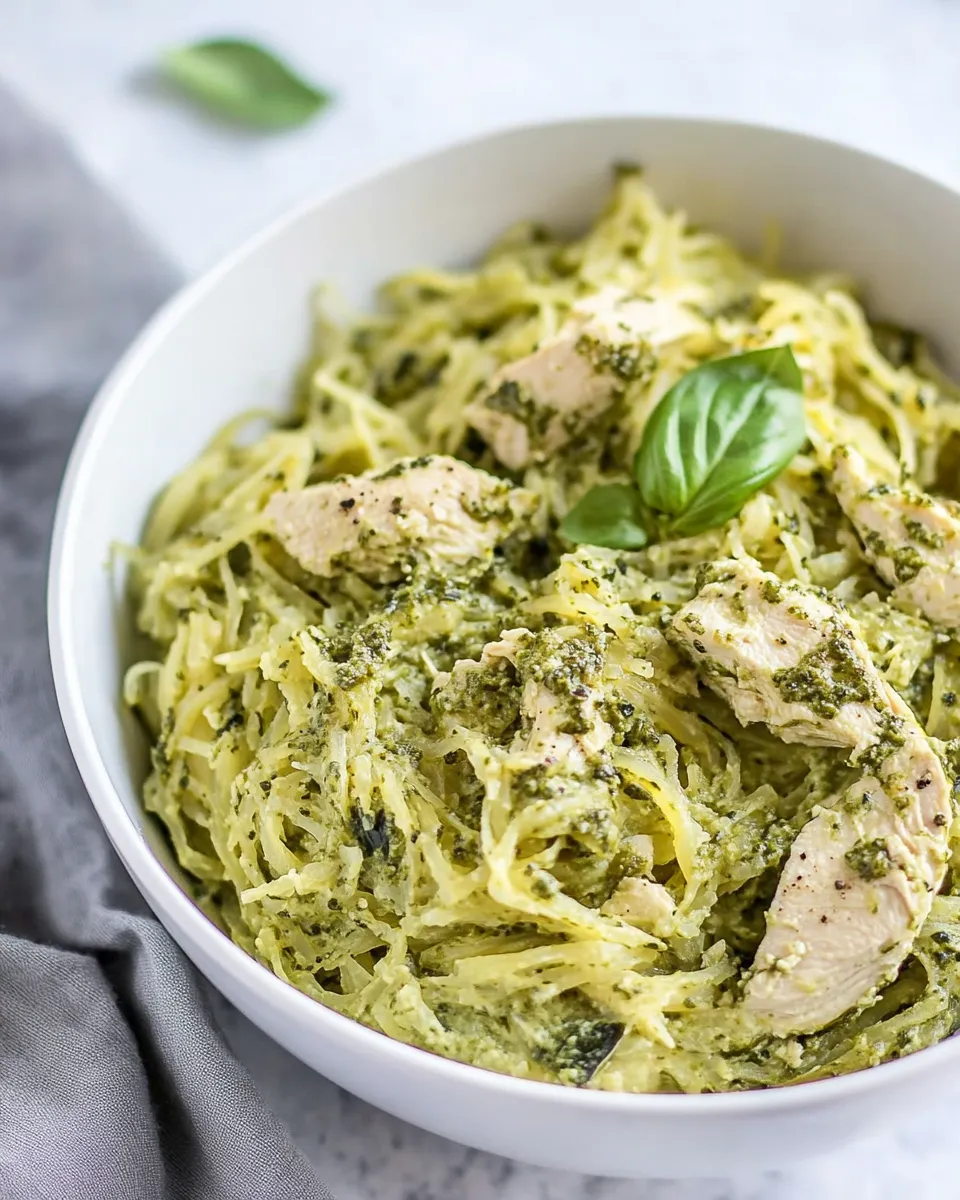
The finished plate is a simple trio: tender spaghetti squash strands, a green, slightly nutty basil pesto, and well-seasoned, browned chicken thighs. Texturally you get the twang of fresh basil and garlic in the pesto, the bite and slight chew of the roasted squash strands, and the rich, savory pockets of chicken and pan juices that tie everything together.
Flavor-wise this leans bright from basil and garlic, earthy from the pumpkin seeds, and savory from the chicken and optional Parmesan. It’s built to be flexible for Paleo, Keto, or Whole30 with minimal adjustments.
Ingredients
- 1 large roasted spaghetti squash — the “noodles” of the dish; roast until tender so it pulls into strands easily.
- 2 Tbsp avocado oil — for brushing the cut squash and promoting caramelization while roasting.
- 1 pinch sea salt — a basic seasoning for the squash surface before roasting to enhance flavor.
- 1 Tbsp avocado oil — for the skillet to brown the chicken; avocado oil tolerates high heat well.
- 1 1/2 lbs boneless chicken thighs chopped — dark-meat chicken stays juicy and adds savory depth.
- 1 tsp paprika — for mild smokiness and color on the chicken.
- 1 tsp garlic powder — simple, even seasoning that layers with the garlic in the pesto.
- 1/4 tsp sea salt to taste — additional seasoning for the chicken; adjust as needed after tasting.
- 2 cup fresh basil leaves — the aromatic backbone of the pesto; use fresh for the brightest flavor.
- 2/3 cup pumpkin seeds see note — the pesto “nuts”; toasted lightly for more flavor if you like.
- 2/3 cup avocado oil — emulsifies the pesto and keeps it paleo/keto-friendly.
- 1 large clove garlic — a single clove gives garlic presence without overpowering the basil.
- 1 cup Parmesan optional, omit for whole30 — adds umami and creaminess to the pesto; leave it out for Whole30 compliance.
Make Chicken Pesto Spaghetti Squash: A Simple Method
- If your spaghetti squash is not already roasted: preheat the oven to 400°F (200°C). Cut the squash in half lengthwise, scoop out the seeds, brush the cut surfaces with the 2 Tbsp avocado oil and sprinkle with the 1 pinch sea salt. Place cut-side down on a baking sheet and roast until the flesh is tender and pulls into strands, about 35–45 minutes. Let the roasted squash cool enough to handle. If your squash is already roasted, skip this step.
- Make the pesto: in a food processor add 2 cups fresh basil leaves, 2/3 cup pumpkin seeds, 1 large clove garlic, and 1 cup Parmesan (omit the Parmesan for Whole30). Pulse a few times to chop the ingredients. With the processor running, stream in the 2/3 cup avocado oil through the feed until the pesto reaches your desired texture. Scrape down the sides and pulse once more if needed.
- Cook the chicken: heat a skillet over medium-high heat and add the 1 Tbsp avocado oil. Add the 1 1/2 lbs chopped boneless chicken thighs, 1/4 tsp sea salt (or to taste), 1 tsp paprika, and 1 tsp garlic powder. Let the chicken brown undisturbed for 3 minutes, stir, brown another 3 minutes undisturbed, then stir, cover, and continue cooking until the chicken is cooked through, about 2–5 more minutes. Transfer the cooked chicken and any pan juices to a bowl.
- Prepare the spaghetti squash strands: when the squash is cool enough to handle, use a fork to scrape the flesh into strands and transfer all the strands to a large mixing bowl.
- Assemble the dish: add the pesto to the spaghetti squash strands and toss well to coat.
- Add the cooked chicken (including any pan juices) to the bowl and toss until the squash, pesto, and chicken are combined.
- Taste and adjust seasoning, adding additional sea salt as needed. Serve immediately.
Why It Works Every Time
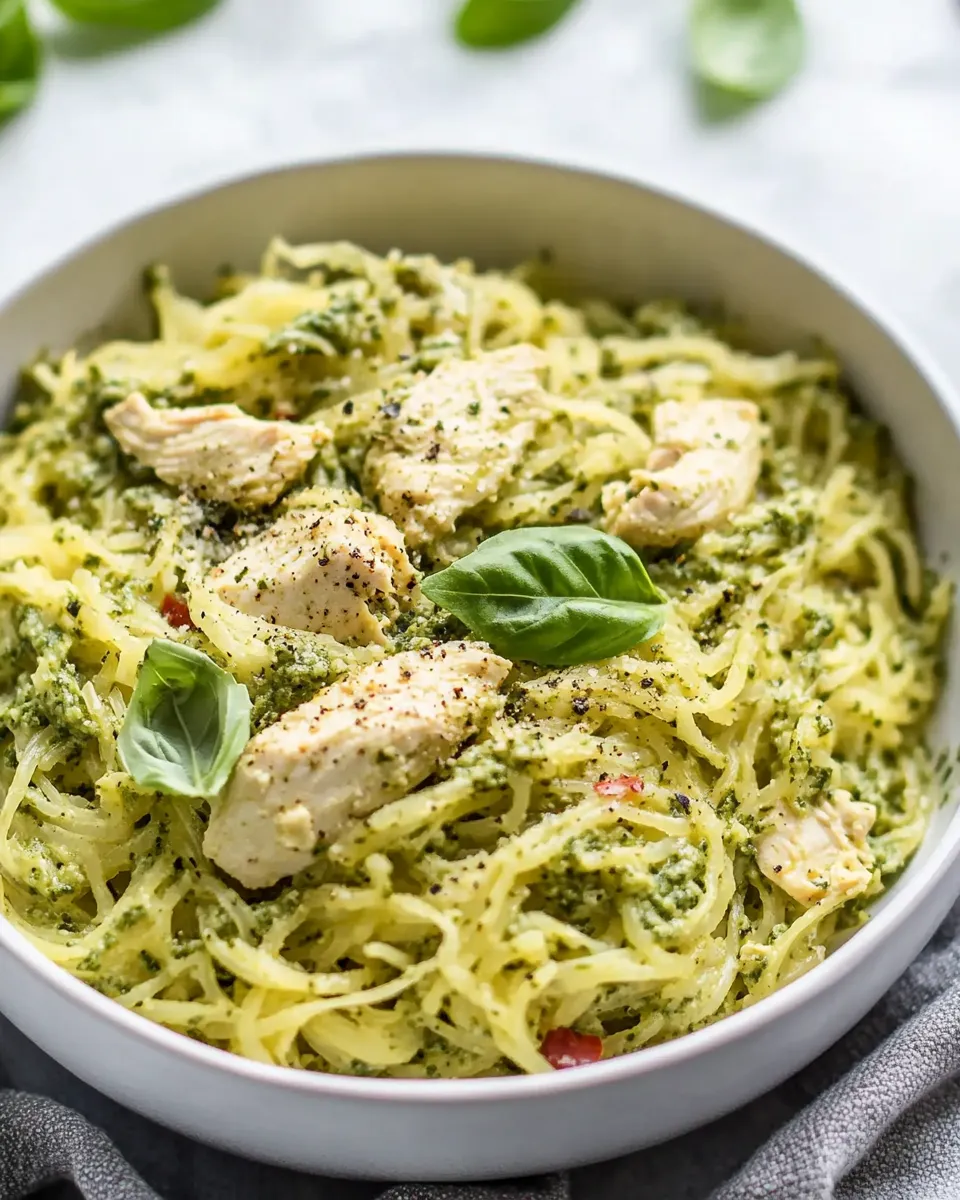
This recipe is built on simple, predictable chemistry. Spaghetti squash roasted to tenderness separates into long strands that mimic the mouthfeel of pasta without soaking up too much sauce; that prevents a soggy result. The pesto is oil-forward, which clings to the strands and chicken instead of pooling at the bottom of the bowl.
Chicken thighs bring forgiving fat and flavor—because they’re less prone to drying out than breast meat, they stay juicy even when reheated. Browning the chicken undisturbed for a few minutes creates the Maillard reaction that boosts savory flavor and gives you nice color.
Finally, swapping pumpkin seeds for traditional pine nuts gives you that nutty backbone at lower cost and better allergy flexibility; the avocado oil in the pesto helps emulsify the mixture so the sauce sticks.
Healthier Substitutions
- Parmesan: Omit for Whole30 compliance (this is already noted in the ingredients). If you want a dairy-free alternative, consider a compliant nut-based “cheese” or nutritional yeast, but be mindful of the flavor change.
- Pumpkin seeds: If you prefer, sunflower seeds or toasted almonds can work in pesto; they will change the flavor but keep it nutty.
- Avocado oil: Olive oil is an easy swap for a slightly fruitier pesto; keep avocado oil for high-heat chicken sautéing if you want the higher smoke point.
- Chicken thighs: For leaner protein, use chopped chicken breast—watch cooking time to avoid dryness.
Tools of the Trade
- Baking sheet: For roasting the squash cut-side down so it steams a bit and doesn’t dry out.
- Sharp chef’s knife: For safely halving the squash—start with a sturdy blade and take your time.
- Food processor: The fastest way to make a smooth, well-emulsified pesto; a blender on pulse can work in a pinch.
- Skillet (medium to large): For browning the chicken; cast iron or stainless steel gives the best sear.
- Fork and large mixing bowl: For scraping the squash into strands and tossing everything together.
Don’t Do This
- Don’t under-roast the squash: If it’s still firm, it won’t separate into strands cleanly and the texture will be disappointing.
- Don’t overcrowd the pan when cooking chicken: Crowding traps steam and prevents browning—work in batches if needed.
- Don’t over-process the pesto: If you blend it into a paste, you’ll lose the pleasant grain and texture; pulse to keep some bite unless you prefer silky sauce.
- Don’t skip tasting at the end: The pesto and squash both benefit from a final seasoning adjustment—salt to taste.
Variations for Dietary Needs
This recipe already maps well to Paleo, Keto, and Whole30 with minimal changes. A couple of easy swaps:
- Whole30: Omit the Parmesan in the pesto—it’s called out in the ingredient list and directions.
- Keto: Keep everything as written; spaghetti squash is lower carb than pasta and the avocado oil and chicken fat help keep it satiating.
- Paleo: The recipe is paleo-friendly as long as you omit the Parmesan; use compliant cheese alternatives only if your version of paleo allows them.
- Vegetarian: Omit the chicken and add oven-roasted mushrooms, crumbled tempeh, or roasted chickpeas if your diet allows legumes—note that tempeh/legumes are not paleo.
Method to the Madness
Roasting the squash
Place the squash cut-side down on a rimmed baking sheet to help steam the interior while allowing the edges to brown. Bake 35–45 minutes depending on the size—test with a fork in the center; it should pull away in long strands easily. Let it rest until cool enough to handle so you don’t lose the juices when scraping.
Building the pesto
Pulse the basil, seeds, garlic, and (optional) Parmesan first to break everything down evenly. Streaming in the avocado oil while the processor runs helps you control texture; stop early for a chunkier pesto, longer for a smoother one. Scraping the sides prevents dry pockets and a gritty texture.
Browning the chicken
Heat the skillet until hot, add oil, and place the seasoned chicken in a single layer. Let it sit undisturbed to form a crust—then stir and repeat. Covering late in cooking helps finish the interior without burning the exterior.
Storing Tips & Timelines
- Fridge: Store the combined dish in an airtight container for 3–4 days. The squash will soften a bit over time but stays pleasant for lunches.
- Pesto keep: Fresh pesto (with Parmesan) keeps 4–7 days refrigerated; if you make extra, cover the surface with a thin film of oil to reduce browning.
- Freezing: You can freeze pesto in ice cube trays for 2–3 months; transfer frozen cubes to a bag for easy single-serve portions. Fully assembled squash and chicken can be frozen, but texture will change—freeze only if necessary and expect softer squash after thawing.
- Reheating: Gently reheat portions in a skillet over low heat, adding a splash of water or oil if the squash seems dry. Microwaving is fine for quick lunches—stir halfway through.
FAQ
- Can I use store-bought pesto? Yes. If you use store-bought pesto, check ingredients for compliance with your diet (Whole30, etc.) and adjust salt because some brands are saltier.
- Can I prep this ahead? Yes. Roast the squash and make the pesto a day ahead. Cook the chicken the day you plan to serve for the best texture, or fully cook it earlier and reheat gently.
- What if I don’t have pumpkin seeds? Sunflower seeds or toasted almonds can sub in; the flavor will shift slightly but remain delicious.
- How do I know when the chicken is done? Chicken thighs should reach 165°F (74°C) internal temperature and be firm; chopping into uniform pieces helps them cook evenly in the time listed.
Wrap-Up
This Chicken Pesto Spaghetti Squash is a dependable, flavorful weeknight meal that feels like a treat without a lot of work. It’s flexible for dietary needs, stores well, and scales up easily if you want to batch-cook for the week. Follow the roasting and browning tips, respect the seasoning checks, and you’ll have a bright, satisfying bowl on the table fast.
If you make it, tell me how you adjusted it—did you omit the Parmesan, swap seeds, or use breasts instead of thighs? I love hearing what works for you and how you make a recipe your own.
Chicken Pesto Spaghetti Squash (Paleo, Keto, Whole30)
Ingredients
Equipment
Method
- If your spaghetti squash is not already roasted: preheat the oven to 400°F (200°C). Cut the squash in half lengthwise, scoop out the seeds, brush the cut surfaces with the 2 Tbsp avocado oil and sprinkle with the 1 pinch sea salt. Place cut-side down on a baking sheet and roast until the flesh is tender and pulls into strands, about 35–45 minutes. Let the roasted squash cool enough to handle. If your squash is already roasted, skip this step.
- Make the pesto: in a food processor add 2 cups fresh basil leaves, 2/3 cup pumpkin seeds, 1 large clove garlic, and 1 cup Parmesan (omit the Parmesan for Whole30). Pulse a few times to chop the ingredients. With the processor running, stream in the 2/3 cup avocado oil through the feed until the pesto reaches your desired texture. Scrape down the sides and pulse once more if needed.
- Cook the chicken: heat a skillet over medium-high heat and add the 1 Tbsp avocado oil. Add the 1 1/2 lbs chopped boneless chicken thighs, 1/4 tsp sea salt (or to taste), 1 tsp paprika, and 1 tsp garlic powder. Let the chicken brown undisturbed for 3 minutes, stir, brown another 3 minutes undisturbed, then stir, cover, and continue cooking until the chicken is cooked through, about 2–5 more minutes. Transfer the cooked chicken and any pan juices to a bowl.
- Prepare the spaghetti squash strands: when the squash is cool enough to handle, use a fork to scrape the flesh into strands and transfer all the strands to a large mixing bowl.
- Assemble the dish: add the pesto to the spaghetti squash strands and toss well to coat.
- Add the cooked chicken (including any pan juices) to the bowl and toss until the squash, pesto, and chicken are combined.
- Taste and adjust seasoning, adding additional sea salt as needed. Serve immediately.
Notes
Replace the pumpkin seeds with pine nuts, almond, walnuts, or pecans