Classic Coconut Macaroons Recipe
I love a simple cookie that feels like a treat—textured, sweet, and forgiving in the best ways. These coconut macaroons are exactly that: five straightforward ingredients, a little patience, and a reliably chewy result with crisp edges. They work for afternoon tea, holiday trays, or whenever you want something sweet that doesn’t demand a pastry degree.
The technique is honest: warm the mixture gently, let it rest, scoop, and bake. You’ll watch the coconut and egg whites turn from translucent to opaque as they thicken over a double boiler. That step is the difference between soggy clumps and macaroons with structure and shine.
Read through the steps before you start, set out your pans and tools, and give the mixture the thirty-minute cooldown it asks for. A little organization up front saves time later—and yields a batch you’ll be proud to share.
What’s in the Bowl
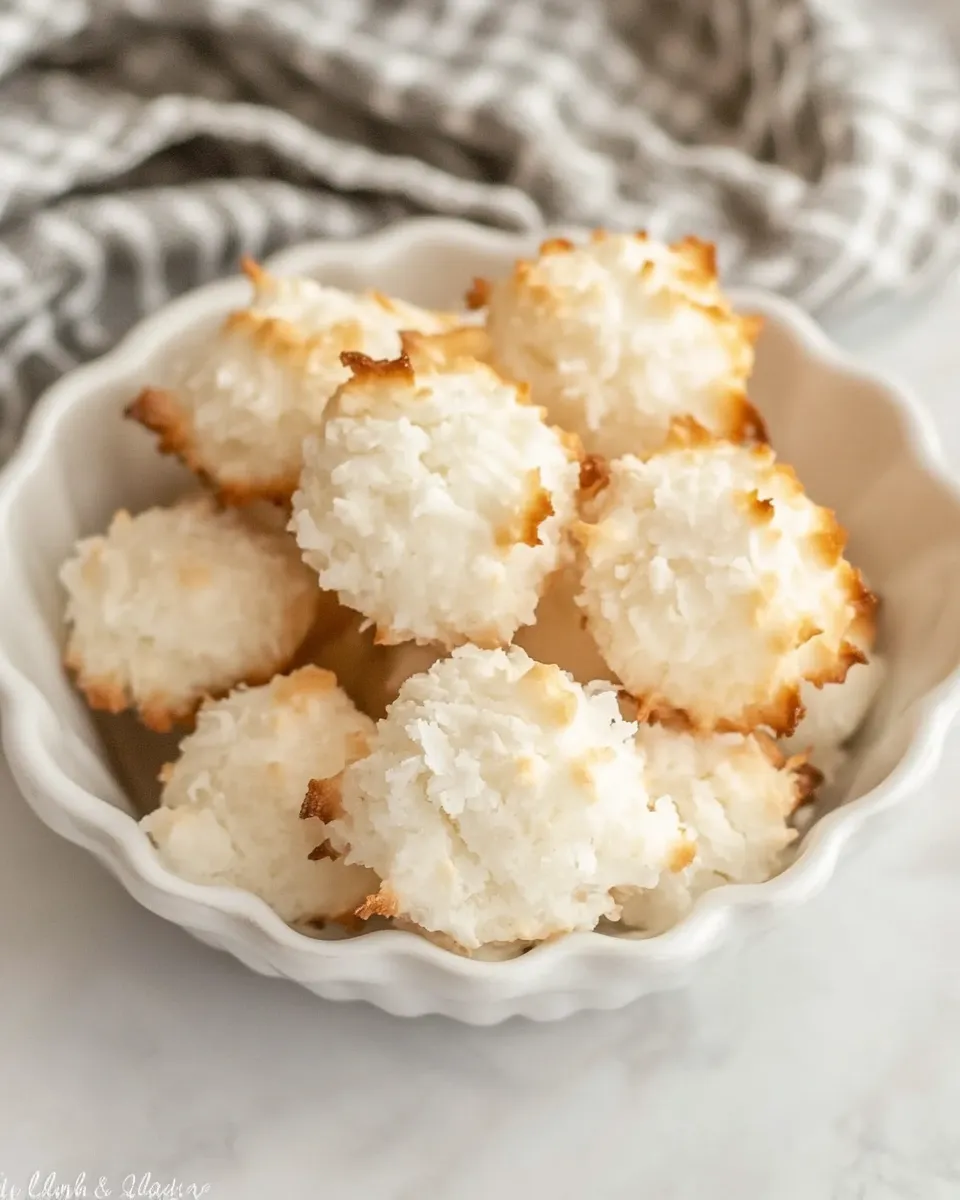
Here’s everything you’ll put together. I list each item with a quick note on its role so you know why it matters.
- 4 egg whites — the binder and lift; they create the chewy interior when gently warmed and folded with the coconut.
- 3 cups sweetened coconut (like Baker’s Angel Flake) — the bulk of the cookie; sweetened flakes give chew and structure.
- ¾ cup sugar — sweetens and helps with the glossy texture when dissolved into the egg whites.
- 2 teaspoons vanilla — flavor anchor; even in small amounts vanilla makes the coconut taste round and more complex.
- ¼ teaspoon salt — balances sweetness and brightens the overall flavor.
Coconut Macaroons in Steps
- Preheat the oven to 350ºF. Line two baking sheets with parchment paper and set them aside.
- Fill a large skillet about halfway with water and bring it to a simmer over medium heat.
- In a heatproof bowl, combine the egg whites, sweetened coconut, sugar, vanilla, and salt. Place the bowl on top of the skillet so the bottom of the bowl does not touch the water (double boiler).
- Cook the mixture over the simmering water, stirring frequently, until it thickens and becomes opaque, about 5 minutes.
- Remove the bowl from the skillet and let the mixture cool until warm or near room temperature, about 30 minutes.
- Using about 2 tablespoons of the mixture for each macaroon (a medium cookie scoop works well), scoop mounds onto the prepared baking sheets, spacing them about 2 inches apart.
- Bake at 350ºF for about 5 minutes.
- Without removing the baking sheets from the oven, reduce the oven temperature to 325ºF and continue baking the macaroons until they are lightly browned with some darker edges, 10–15 more minutes.
- Remove the baking sheets from the oven and let the macaroons cool on the sheets for a few minutes, then transfer them to a wire rack to cool completely.
Why Coconut Macaroons is Worth Your Time
These macaroons are a small investment for a high return. You get a crisp exterior, a moist, tender interior, and a coconut-forward flavor that feels indulgent without complex techniques. The recipe scales well and won’t monopolize your day—most work happens while the oven does the rest.
They’re forgiving, too. Slight variations in oven temperature or scoop size only change final color and baking time. The double-boiler step is quick and makes a big difference in texture; it gently denatures the egg whites and melts the sugar so the mixture holds together when scooped.
If you want a cookie that travels well for a party or a week in a cookie jar, these hold up. They don’t require chilling the dough, no rolling pin, and no fancy decorating—just good results from modest effort.
Ingredient Flex Options
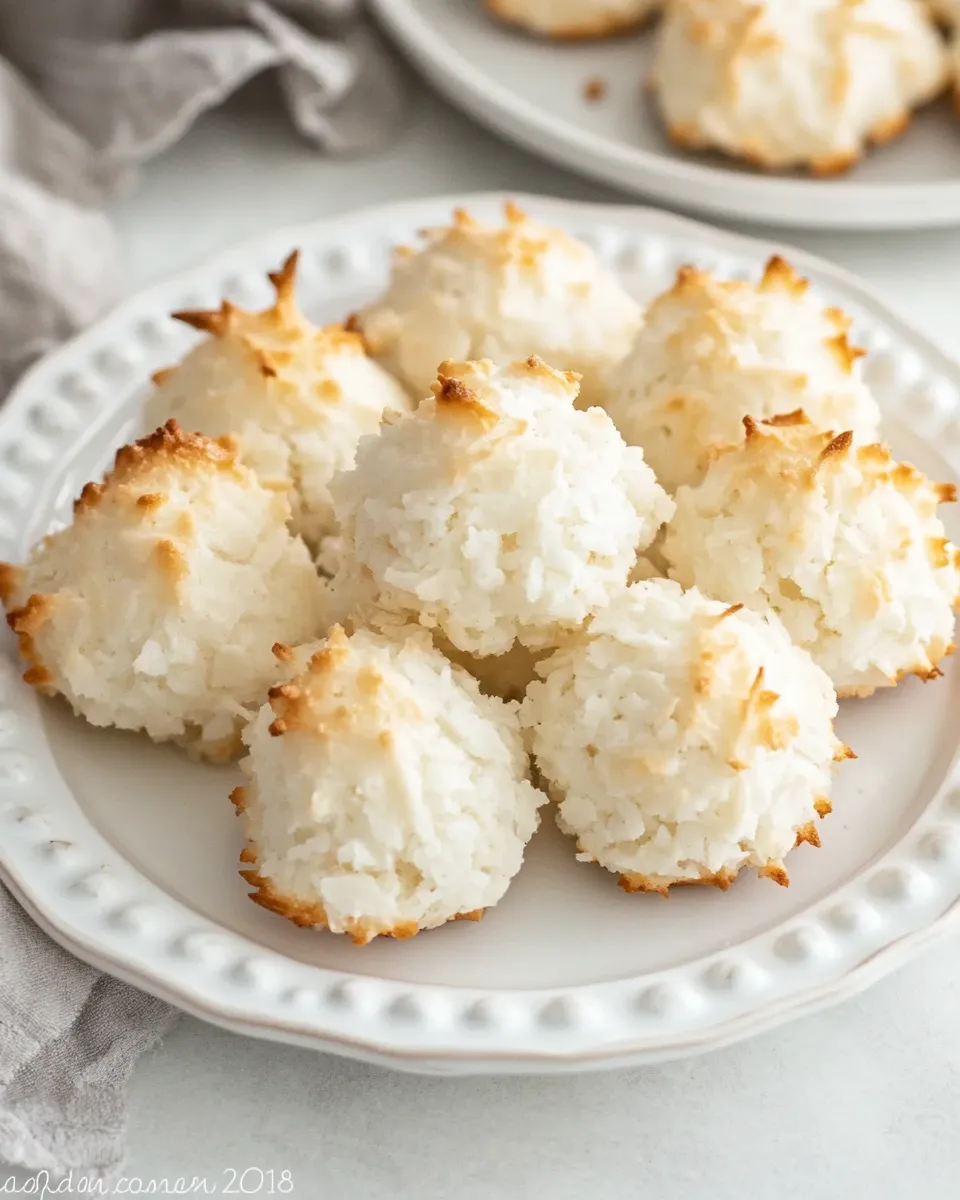
Stick to the ingredient list for the base; the amounts in the recipe produce the best texture. That said, you can tweak a few small things without inventing new ingredients or changing quantities:
- If your sweetened coconut is particularly fine or coarse, be aware it changes chewiness. Finer flakes compact more; larger flakes keep more texture.
- Vanilla quality shows up in a simple cookie. Use what you have—pure vanilla is noticeable but the two teaspoons listed are all you need.
- If you’re sensitive to sweetness, you can reduce the sugar slightly, but do this only in small increments and expect a subtle change in texture because sugar helps set the final chew.
Essential Tools for Success
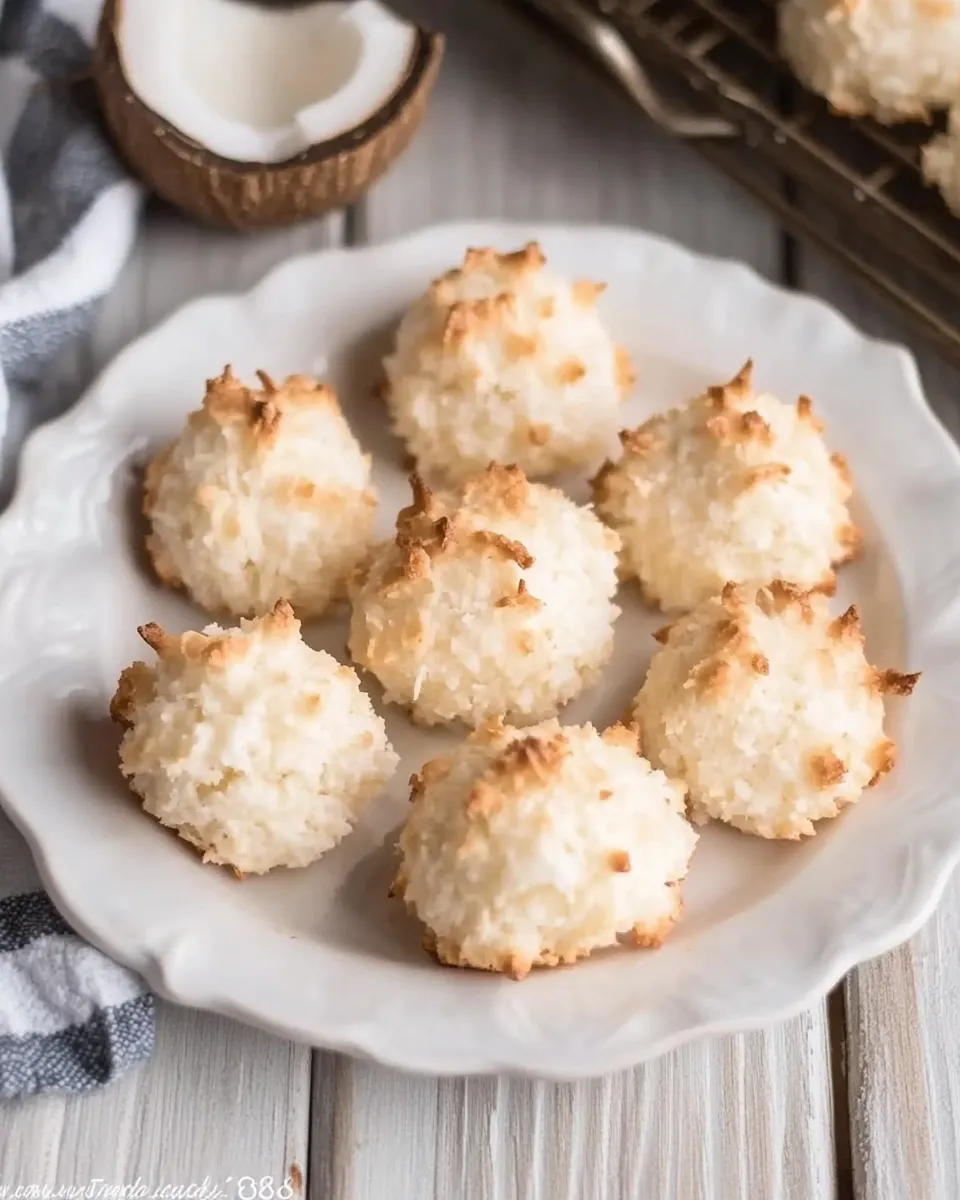
There are no exotic tools required—just a few basics that make the recipe easy and consistent:
- Large heatproof bowl that seats securely over your skillet for a proper double boiler.
- Large skillet or saucepan with enough water to simmer without touching the bowl bottom.
- Parchment-lined baking sheets to prevent sticking and encourage even browning.
- Medium cookie scoop or two-tablespoon measuring spoon for consistent mounds.
- Wire rack for cooling so air circulates and bottoms don’t steam.
- Oven thermometer if your oven runs hot or cold—accurate temperature matters during the two-stage bake.
Avoid These Mistakes
Learn from the common missteps so your first batch comes out great.
- Skipping the cool-down after the double boiler. The 30-minute rest lets the mixture set; if you skip it the macaroons may spread or collapse.
- Letting the double boiler scorch the mixture. The bowl should steam, not touch the water. Stir frequently for even thickening.
- Overcrowding the baking sheet. Give each mound about 2 inches of space so edges crisp and heat circulates evenly.
- Removing pans immediately after the first 5-minute bake and lowering the temperature outside the oven. The recipe lowers the temp with the sheets inside—this gradual drop helps the cookies set without sudden shock.
- Using wet or damp coconut. Make sure the coconut you measure is free-flowing; clumps can change the bake time and texture.
Warm & Cool Weather Spins
Weather affects baking more than most home cooks expect. Here’s how to adapt without changing the recipe itself.
- Warm or humid kitchens: the mixture can take longer to cool. Extend the cooling period so it reaches near room temperature before scooping. Humidity also makes coconut absorb moisture; if the kitchen feels sticky, check that the coconut flakes aren’t clumping before you start.
- Cool kitchens: the mixture may set faster during the 30-minute rest. If it feels firm, scoop immediately; if still warm, proceed as directed. A cooler kitchen can also brown more slowly, so watch the final 10–15 minutes and look for light golden edges.
- High-altitude baking: ovens run hotter and dry out more quickly. Keep a closer eye on the final 10–15 minutes and remove macaroons when they reach a light golden color rather than a deep brown.
Cook’s Notes
Little adjustments and observations that matter:
- Texture: aim for a lightly browned exterior with a chewy center. If they come out too soft, bake an extra 2–3 minutes at 325ºF but watch closely.
- Consistency: the mixture should be moist enough to hold a mound but not runny. The 5 minutes over the double boiler usually gets you there; if your mixture still looks glossy and liquid, cook it another minute or two while stirring.
- Scooping: a medium cookie scoop keeps sizes consistent so baking times remain predictable. If you make larger mounds, add a few extra minutes to the final bake.
- Cooling: let them rest on the sheet for a few minutes before transferring to a wire rack. This step prevents breakage and lets the bottoms set slightly.
Shelf Life & Storage
Store cooled macaroons at room temperature in an airtight container for best texture. They stay fresh for about 3–4 days that way. If you need longer storage, freeze them in a single layer on a sheet tray until firm, then stack with parchment between layers in a sealed container or freezer bag—frozen macaroons will keep for up to 1 month. Thaw at room temperature before serving.
Questions People Ask
Quick answers to the things readers commonly ask.
- Can I make them ahead? Yes. Bake, cool completely, then store in an airtight container for a few days, or freeze for longer storage.
- Can I brown them more? You can, but watch them closely—the sugar in the coconut can darken quickly. Aim for light golden tops and slightly darker edges for the best balance.
- Are they difficult to make? Not at all. The trickiest part is the double boiler step and allowing the mixture to cool. Otherwise, it’s mostly scooping and baking.
- How do I get them consistent? Use a cookie scoop and a reliable oven temperature. Consistent mound size is the big factor in uniform results.
Bring It Home
These coconut macaroons are a dependable recipe to keep in your repertoire. They’re quick to assemble, forgiving, and satisfying in texture and flavor. Make a batch, pay attention to the double boiler and the cool-down, and you’ll end up with cookies that look like you spent more time on them than you did.
Want to share? Pack them in a simple box with parchment, add a ribbon, and you’ve got an approachable homemade gift. And if you bake a batch and tweak a small detail that works for you, jot it down for the next go—baking is both recipe and personal rhythm.
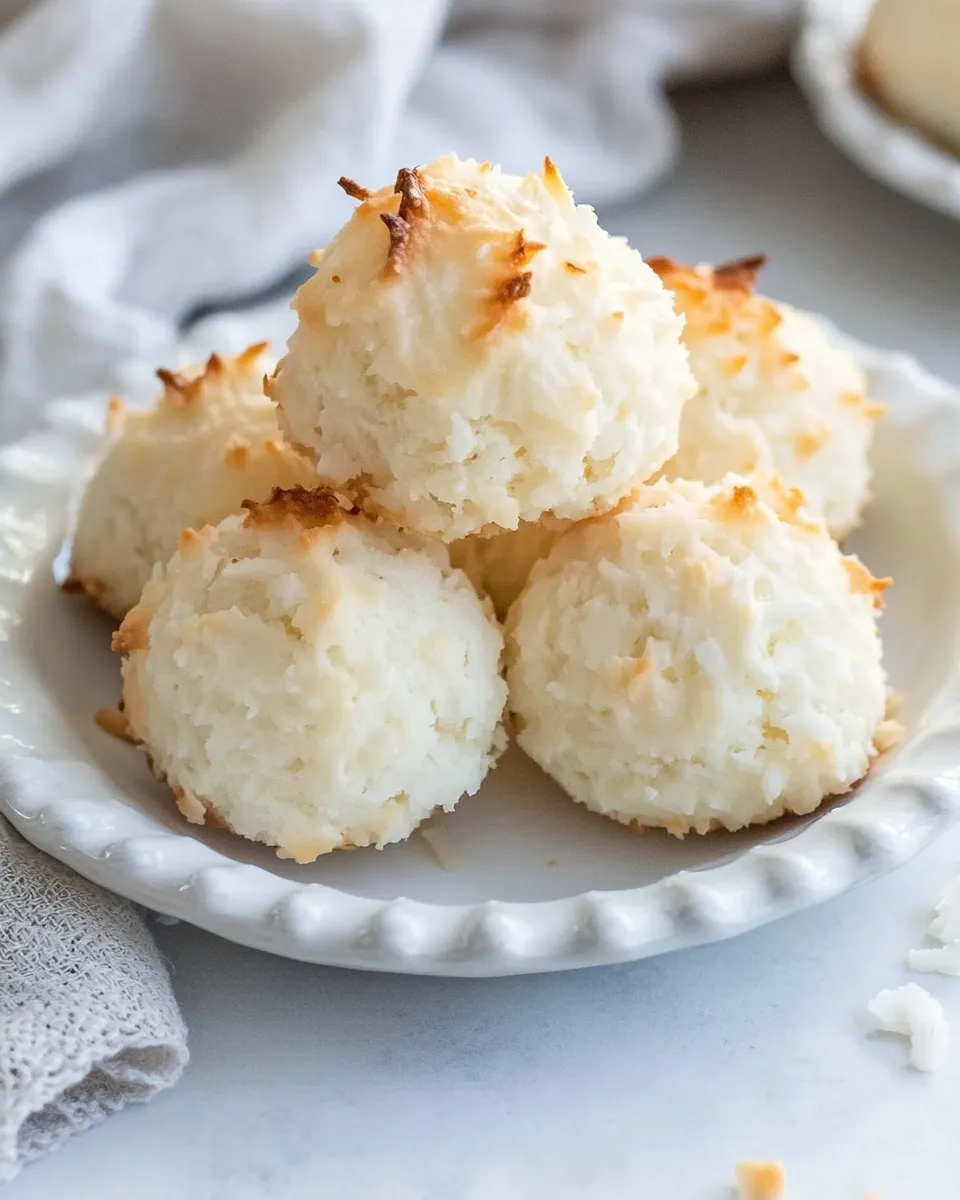
Classic Coconut Macaroons Recipe
Ingredients
Equipment
Method
- Preheat the oven to 350ºF. Line two baking sheets with parchment paper and set them aside.
- Fill a large skillet about halfway with water and bring it to a simmer over medium heat.
- In a heatproof bowl, combine the egg whites, sweetened coconut, sugar, vanilla, and salt. Place the bowl on top of the skillet so the bottom of the bowl does not touch the water (double boiler).
- Cook the mixture over the simmering water, stirring frequently, until it thickens and becomes opaque, about 5 minutes.
- Remove the bowl from the skillet and let the mixture cool until warm or near room temperature, about 30 minutes.
- Using about 2 tablespoons of the mixture for each macaroon (a medium cookie scoop works well), scoop mounds onto the prepared baking sheets, spacing them about 2 inches apart.
- Bake at 350ºF for about 5 minutes.
- Without removing the baking sheets from the oven, reduce the oven temperature to 325ºF and continue baking the macaroons until they are lightly browned with some darker edges, 10–15 more minutes.
- Remove the baking sheets from the oven and let the macaroons cool on the sheets for a few minutes, then transfer them to a wire rack to cool completely.