Classic Pineapple Upside-Down Cake
I love this cake for how it delivers big, friendly flavor with very little fuss. The sticky-sweet brown sugar glaze, the bright pineapple rings, and that butter-forward cake crumb make it a crowd-pleaser every time. It feels nostalgic and special without asking for advanced technique.
This recipe walks you through every step in plain terms: melt the butter, sprinkle the brown sugar, arrange the pineapple, make a straightforward batter, bake, rest, and invert. There’s nothing mysterious here—just a dependable method that produces a glossy, caramelized top and a tender cake beneath.
Read through the ingredients and the method once before you begin so everything moves smoothly. Prep is quick, and the result is worth the small effort: serve it warm with ice cream or let it cool and enjoy the clean, classic flavors on their own.
Gather These Ingredients

Ingredients
- 6 tablespoons unsalted butter — melted; this becomes the caramel base that browns with the brown sugar.
- 2/3 cup light brown sugar — provides the caramelized topping and balances pineapple acidity.
- 8 pineapple rings — canned or fresh; they create the signature decorative top and keep the cake moist.
- Maraschino cherries — for the ring centers and any gaps; they add color and a little extra sweetness.
- 1 3/4 cups all-purpose flour — sifted; forms the structure of the cake.
- 1 1/2 teaspoons baking powder — the leavening that gives the cake lift.
- 1/4 teaspoon Kosher salt — balances sweetness and enhances flavor.
- 3/4 cup unsalted butter — 1 1/2 sticks, softened; creamed with sugar to give the cake a tender crumb.
- 1 cup sugar — sweetens the cake and helps with browning of the crumb.
- 2 large eggs — provide structure, moisture, and richness.
- 1/4 cup pineapple juice — adds pineapple flavor to the batter and a touch of acidity.
- 1 tablespoon vanilla extract — rounds and enhances the overall flavor.
- 1/2 cup whole milk — loosens the batter and contributes to a tender crumb.
Stepwise Method: Classic Pineapple Upside-Down Cake
- Preheat the oven to 350°F.
- Melt 6 tablespoons unsalted butter and pour the melted butter into a cake pan or oven-safe skillet, tilting to coat the bottom evenly.
- Sprinkle 2/3 cup light brown sugar evenly over the melted butter.
- Arrange 8 pineapple rings in a single layer over the brown sugar. Place maraschino cherries in the centers of the rings and in any open spaces.
- In a medium bowl, sift and whisk together 1 3/4 cups all-purpose flour, 1 1/2 teaspoons baking powder, and 1/4 teaspoon Kosher salt. Set aside.
- In a large bowl or the bowl of a stand mixer, cream 3/4 cup softened unsalted butter with 1 cup sugar on medium speed until the mixture is pale and slightly fluffy, about 3–4 minutes, scraping down the bowl once or twice.
- Add 2 large eggs, 1/4 cup pineapple juice, and 1 tablespoon vanilla extract to the creamed mixture and beat until combined.
- With the mixer running on low, add half of the flour mixture and mix until incorporated. Add half of the 1/2 cup whole milk and mix until incorporated. Repeat with the remaining flour mixture and then the remaining milk, mixing just until the batter is fully combined; the batter will be somewhat thick.
- Use a spatula to transfer the batter over the arranged pineapple and cherries, spreading it gently and evenly so you do not displace the fruit.
- Bake for 45 minutes, or until a toothpick inserted into the center of the cake comes out clean.
- Remove the cake from the oven and let it rest in the pan for 10 minutes. If needed, run a knife around the edge to loosen.
- Place a cake stand or serving plate over the pan and carefully invert the cake onto it. Lift the pan away gently; if any fruit sticks to the pan, loosen it gently before serving.
- Slice and serve warm or at room temperature. Great with ice cream or whipped cream if desired.
Why Classic Pineapple Upside-Down Cake is Worth Your Time
This cake rewards you with contrast: sticky caramelized fruit on top and a tender, buttery crumb beneath. It’s visually striking—those glossy pineapple rings and cherry centers make a simple pan of batter look celebratory.
The method is straightforward and forgiving. Even if the fruit shifts a bit when you spread the batter, the flavor remains the same. The ingredients are pantry-friendly and familiar, so you can pull this together without a trip to the store.
It’s versatile. Serve it warm with a scoop of vanilla ice cream for dessert, or slice it for brunch with coffee. The flavors are universally appealing, which makes it great for potlucks and family gatherings.
Ingredient Flex Options

- Brown sugar — light brown is called for; if you prefer deeper molasses notes, try dark brown sugar, but expect a stronger caramel flavor.
- Pineapple — canned pineapple rings are reliable and consistent; fresh rings work well if they’re ripe and slightly firm.
- Cherries — maraschino is traditional; glace cherries or fresh cherries (pitted) will change texture but still work.
- Milk — whole milk gives the best texture. If you only have lower-fat milk, the cake will still bake but might be slightly less tender.
- Butter — the recipe relies on unsalted butter for control. If you only have salted butter, omit any additional salt or reduce slightly.
What You’ll Need (Gear)

- 9-inch cake pan or oven-safe skillet — to arrange the pineapple and create the classic look.
- Mixing bowls — one medium for dry ingredients, one large for creaming.
- Stand mixer or hand mixer — makes creaming the butter and sugar easier, but you can do it by hand with a sturdy wooden spoon.
- Sifter or fine-mesh sieve — for the flour mixture; sifting helps ensure an even crumb.
- Spatula — to transfer batter over the fruit without disturbing it.
- Toothpick — for testing doneness.
- Cake stand or serving plate — for the inversion step.
Things That Go Wrong
Even simple recipes can throw a curveball. Here are common problems and how to fix or prevent them:
- Fruit sticks to the pan when inverted — let the cake rest for the full 10 minutes to let the caramel set. If it still sticks, run a thin knife around the edge before inverting and warm the pan slightly (a warm towel or a few seconds in the oven) to loosen the caramel.
- Cake sinks in the middle — underbaking or opening the oven too early can cause collapse. Use the toothpick test and only open the oven when close to the end of the bake time.
- Batter displaces the pineapple — transfer the batter gently with a spatula, starting in the center and smoothing outward. Don’t pour directly onto the fruit.
- Top (caramel) is too runny — let the cake cool slightly before inverting; the caramel firms as it cools. If you prefer a thicker glaze, reduce the pineapple juice you add to the batter by a tablespoon, but follow the recipe as written for the best balance.
Adaptations for Special Diets
Some adaptations are straightforward, others will change texture or flavor. I’ll note likely trade-offs.
- Dairy-free — replace the butter and milk with dairy-free margarine and an unsweetened plant milk of similar richness (full-fat canned coconut milk works well). Expect a slightly different mouthfeel and coconut undertones.
- Egg-free — replacing eggs will alter structure. Use a commercial egg replacer or 2 tablespoons of blended silken tofu per egg as a starting point; texture will be more cake-like and less airy.
- Lower-sugar — the brown sugar topping is essential for the characteristic caramel, so reducing it will change the finish. You can slightly reduce the 1 cup sugar in the batter, but do so cautiously to maintain structure.
- Gluten-free — use a 1:1 gluten-free flour blend that includes xanthan gum. Results are usually good, but texture will differ slightly from all-purpose flour.
Notes on Ingredients
Understanding each ingredient helps you manage small substitutions and know what matters most.
- Butter — two roles: the melted butter creates the caramel base with brown sugar; the creamed butter in the batter aerates and tenderizes the cake. Using unsalted butter gives you consistent seasoning control.
- Brown sugar — its molasses content creates a deep caramel. Light brown is traditional; it balances pineapple without overpowering.
- Pineapple and juice — the rings provide texture and visual appeal; the juice adds flavor to the batter. If using canned pineapple, reserve the juice to measure the 1/4 cup called for in the batter.
- Flour and baking powder — together they give structure and rise. Sifting prevents lumps and promotes an even crumb.
- Milk — contributes moisture and richness; whole milk yields the best tender crumb.
- Eggs — provide structure and lift; room temperature eggs combine more easily into the batter.
Best Ways to Store
Store the cake at room temperature, covered with a cake dome or loosely wrapped, for up to 2 days. If you want to keep it longer, wrap slices tightly and refrigerate for up to 5 days. Bring refrigerated slices to room temperature before serving for the best texture.
For freezing: wrap individual slices in plastic wrap and then foil, or place whole cooled cake in a freezer-safe container. Freeze up to 2 months. Thaw in the refrigerator overnight and then bring to room temperature or gently warm in a low oven before serving.
Classic Pineapple Upside-Down Cake FAQs
Q: Can I use a different pan size? A: This recipe is scaled for a standard 9-inch cake pan or similar oven-safe skillet. A much larger pan will make a thinner cake; a smaller, deeper pan may require longer baking time. Keep an eye on doneness with a toothpick.
Q: Do I have to use maraschino cherries? A: No. They’re traditional and add color, but you can skip them or use glacé cherries. Fresh cherries will work if pitted and halved.
Q: How do I know when the cake is done? A: A toothpick inserted in the center should come out clean or with a few moist crumbs. The top (which will become the bottom after inversion) should be set and pull slightly away from the pan edges.
Q: Can I make this ahead? A: Yes. Bake, cool, and store covered at room temperature for a day. For longer storage, refrigerate or freeze as described above. Rewarm gently in a low oven before serving if desired.
Bring It Home
This Classic Pineapple Upside-Down Cake is one of those recipes that looks like effort but delivers with straightforward steps. Follow the method exactly the first time—especially the caramel base and the careful spreading of batter over the fruit—and you’ll end up with a reliably beautiful and delicious cake.
Serve a warm slice with a scoop of vanilla ice cream or a dollop of lightly sweetened whipped cream. It’s a simple dessert that feels festive, and it’s worth the small amount of attention it asks for.
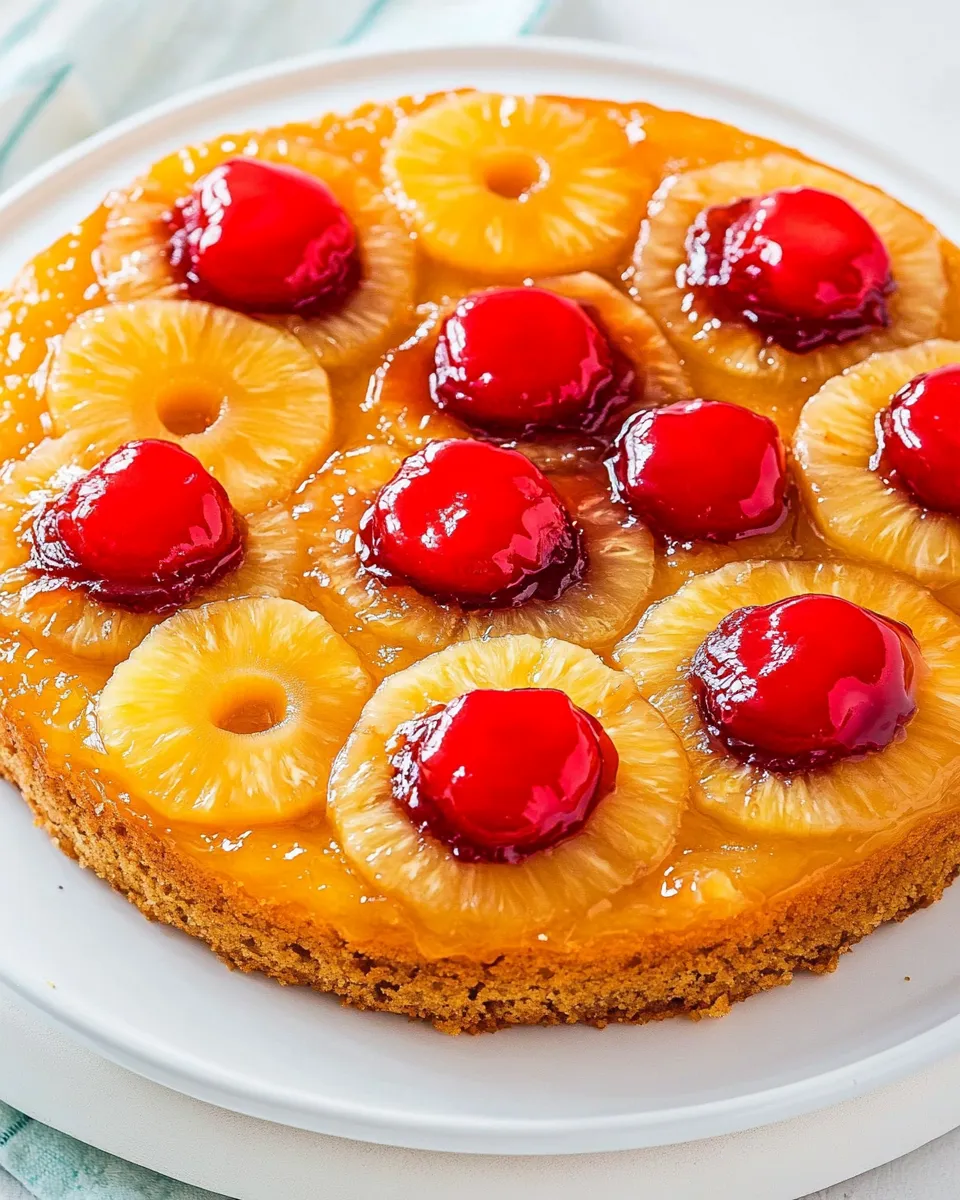
Classic Pineapple Upside-Down Cake
Ingredients
Equipment
Method
- Preheat the oven to 350°F.
- Melt 6 tablespoons unsalted butter and pour the melted butter into a cake pan or oven-safe skillet, tilting to coat the bottom evenly.
- Sprinkle 2/3 cup light brown sugar evenly over the melted butter.
- Arrange 8 pineapple rings in a single layer over the brown sugar. Place maraschino cherries in the centers of the rings and in any open spaces.
- In a medium bowl, sift and whisk together 1 3/4 cups all-purpose flour, 1 1/2 teaspoons baking powder, and 1/4 teaspoon Kosher salt. Set aside.
- In a large bowl or the bowl of a stand mixer, cream 3/4 cup softened unsalted butter with 1 cup sugar on medium speed until the mixture is pale and slightly fluffy, about 3–4 minutes, scraping down the bowl once or twice.
- Add 2 large eggs, 1/4 cup pineapple juice, and 1 tablespoon vanilla extract to the creamed mixture and beat until combined.
- With the mixer running on low, add half of the flour mixture and mix until incorporated. Add half of the 1/2 cup whole milk and mix until incorporated. Repeat with the remaining flour mixture and then the remaining milk, mixing just until the batter is fully combined; the batter will be somewhat thick.
- Use a spatula to transfer the batter over the arranged pineapple and cherries, spreading it gently and evenly so you do not displace the fruit.
- Bake for 45 minutes, or until a toothpick inserted into the center of the cake comes out clean.
- Remove the cake from the oven and let it rest in the pan for 10 minutes. If needed, run a knife around the edge to loosen.
- Place a cake stand or serving plate over the pan and carefully invert the cake onto it. Lift the pan away gently; if any fruit sticks to the pan, loosen it gently before serving.
- Slice and serve warm or at room temperature. Great with ice cream or whipped cream if desired.
Notes
If using fresh pineapple, you'll need to purchase extra pineapple juice. Most canned pineapple slices are filled with 100% pineapple juice.
A cast-iron skillet is traditional, but we find a 9-inch cake pan with 2-inch sides works just as well, and is much easier to invert and release the cake onto a platter.
The batter is fairly thick and will require a spatula or the back of a large spoon to help the batter out of the mixing bowl and to spread evenly over the pineapples and cherries.
Maraschino cherries can be found in the canned fruit section of your grocery store, or in the adult beverage condiment section.
Insert a toothpick into the cake when the baking time is finished. If no batter sticks to the toothpick when removed from the cake, it's ready. If there is wet batter (not cake crumbs), then bake for another 5 to 10 minutes, and re-try the toothpick check. Once no wet batter is stuck to the toothpick, the cake is ready.
We find the cake is best served warm, soon after baking. But can also easily be briefly reheated in the microwave when serving the next day. It's also delicious at room temperature.