Coconut Pound Cake
This coconut pound cake is the kind of recipe I keep coming back to when I want something unfussy but comforting. The batter is simple, the oven does the work, and a glossy coconut glaze plus toasted coconut on top turns plain loaf into something special. It’s reliable, fragrant, and the texture is satisfyingly dense without being heavy.
I love recipes that let you focus on timing and technique instead of juggling weird ingredients. This one uses pantry-friendly items and two extracts — vanilla and coconut — to amplify the flavor without adding complexity. The result is a tender, slightly springy loaf with a delicate coconut finish that’s equally good for afternoon coffee or a light dessert.
Below you’ll find clear notes on ingredients, step-by-step instructions kept exactly as the recipe intends, troubleshooting tips, and storage advice so you can make it anytime. No fluff. Just practical steps to a reliable tropical-style pound cake.
Ingredient Notes
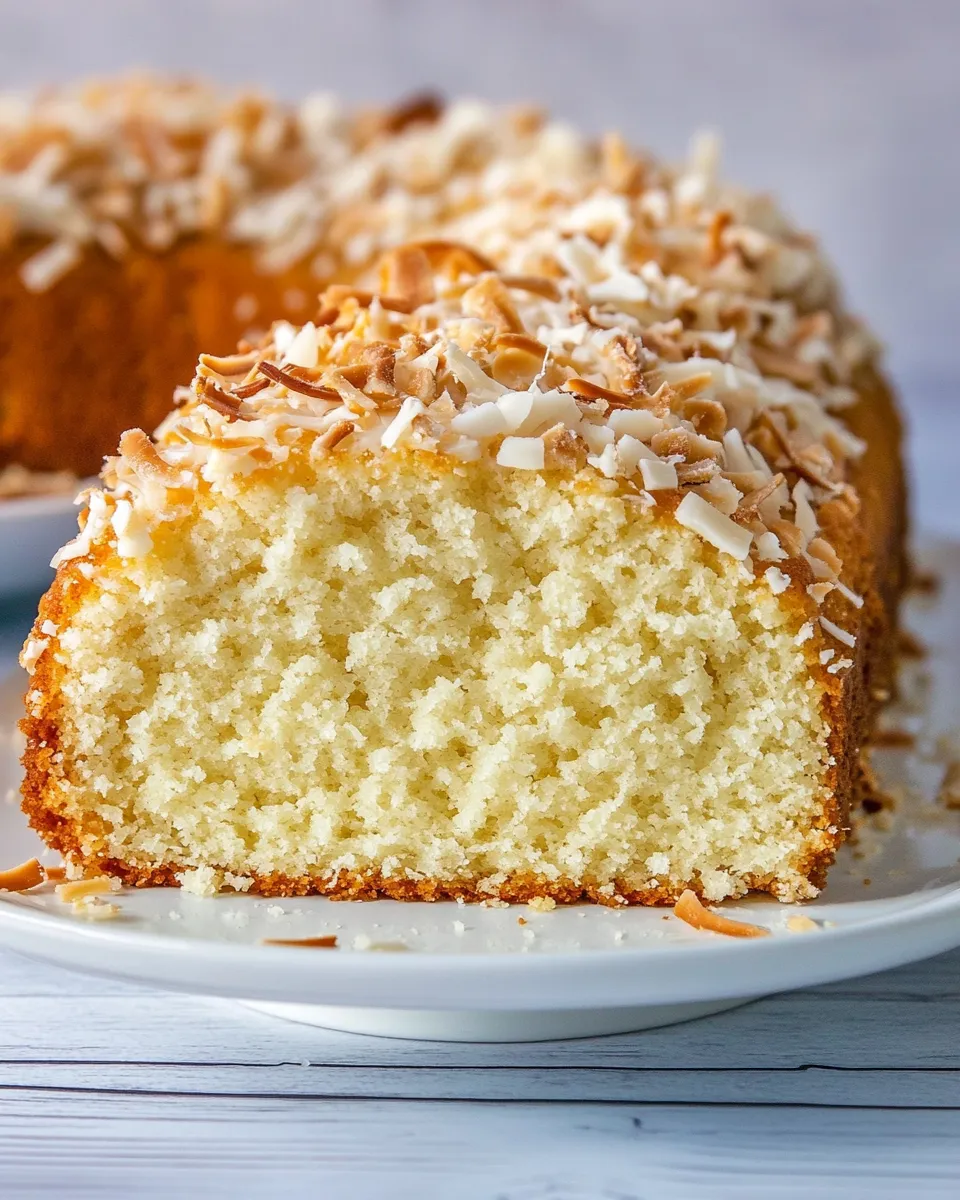
Before you measure, a few quick notes: stick to the amounts listed in the ingredient section for best results. The combination of oil (or melted butter), eggs, and coconut milk gives the crumb its moist, tender structure. Baking powder does the rising work here — no baking soda needed. The glaze is simple powdered sugar thinned with canned unsweetened coconut milk and flavored with extracts; it adheres best to a completely cooled loaf.
Ingredients
- ½ cup (119 ml) vegetable oil (or melted butter) — provides fat for moistness and tender crumb; melted butter adds flavor if you prefer it.
- 1 cup (200 g) granulated sugar — sweetens and helps with browning.
- 3 large eggs — structure and richness; add one at a time to incorporate evenly.
- 1 teaspoon (5 ml) vanilla extract — base flavor that supports the coconut notes.
- 1 teaspoon (5 ml) coconut extract — concentrated coconut aroma; a little goes a long way.
- 1 teaspoon baking powder — leavening agent for lift and lighter texture.
- ¼ teaspoon salt — balances sweetness and enhances flavor.
- ½ cup (119 ml) canned unsweetened coconut milk — adds coconut flavor and liquid to the batter; canned gives more body than carton milk.
- 1 ½ cups (186 g) all-purpose flour — the bulk of the structure; measure by weight for accuracy or spoon and level.
- 1 cup (113 g) powdered sugar — for the glaze; dissolves smoothly for a silky finish.
- ½ teaspoon vanilla extract — paired with powdered sugar for the glaze’s base flavor.
- ½ teaspoon coconut extract — boosts the coconut taste in the glaze.
- 2-4 tablespoons (30-60 ml) canned unsweetened coconut milk — used to thin the glaze to a pourable consistency; start with less and add as needed.
- 1 cup (64 g) toasted coconut — sprinkled over the glaze so it sticks and adds crunchy coconut note.
Coconut Pound Cake: From Prep to Plate
- Preheat the oven to 350°F. Spray an 8×4-inch loaf pan with nonstick cooking spray (use one with flour if you have it).
- In a large bowl, stir together ½ cup (119 ml) vegetable oil (or melted butter) and 1 cup (200 g) granulated sugar until combined.
- Add the 3 large eggs one at a time, stirring or beating after each until incorporated. Stir in 1 teaspoon (5 ml) vanilla extract and 1 teaspoon (5 ml) coconut extract.
- In a separate bowl, whisk together 1½ cups (186 g) all-purpose flour, 1 teaspoon baking powder, and ¼ teaspoon salt.
- Add the flour mixture and ½ cup (119 ml) canned unsweetened coconut milk to the wet ingredients. Stir gently just until no large streaks of flour remain (do not overmix).
- Pour the batter into the prepared loaf pan and smooth the top.
- Bake 50–60 minutes, or until a toothpick inserted into the center comes out with a few moist crumbs. Remove from oven.
- Cool the cake completely in the pan on a wire rack. Once completely cool, run a knife around the edges and remove the cake from the pan; transfer to a wire rack or serving plate.
- Make the frosting: in a medium bowl whisk together 1 cup (113 g) powdered sugar, ½ teaspoon vanilla extract, and ½ teaspoon coconut extract. Add 2 tablespoons (30 ml) canned unsweetened coconut milk and whisk until smooth. If needed for a pourable drizzle, add more coconut milk 1 tablespoon at a time, up to the 4 tablespoons (60 ml) total.
- Place the cooled cake on a rack over a sheet or plate to catch drips. Drizzle the frosting evenly over the top of the cake, then immediately sprinkle 1 cup (64 g) toasted coconut over the frosting so it adheres.
- Let the glaze set before slicing and serving.
Reasons to Love Coconut Pound Cake
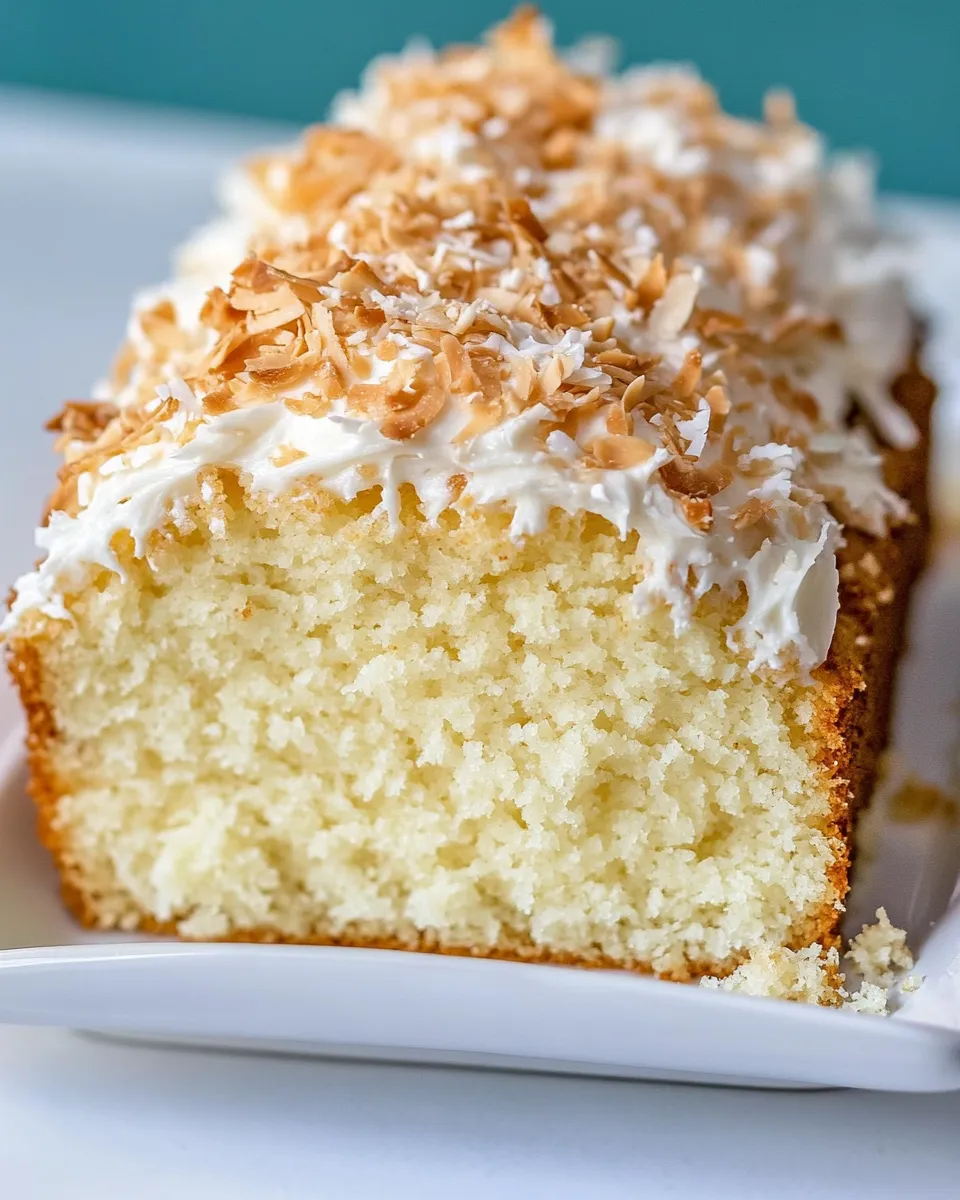
This cake nails the balance between cake and quick bread. It’s dense enough to hold up as a slice for coffee, yet moist and tender because of the oil and coconut milk. The coconut extract and toasted coconut give a pronounced, straightforward coconut profile without needing a dozen different components.
It’s also forgiving. The batter is forgiving to mix and doesn’t demand perfect folding technique. The glaze and toasted coconut finishing step elevates the loaf with minimal effort. Lastly, it’s versatile: serve it plain, with fresh fruit, or a scoop of ice cream.
What to Use Instead
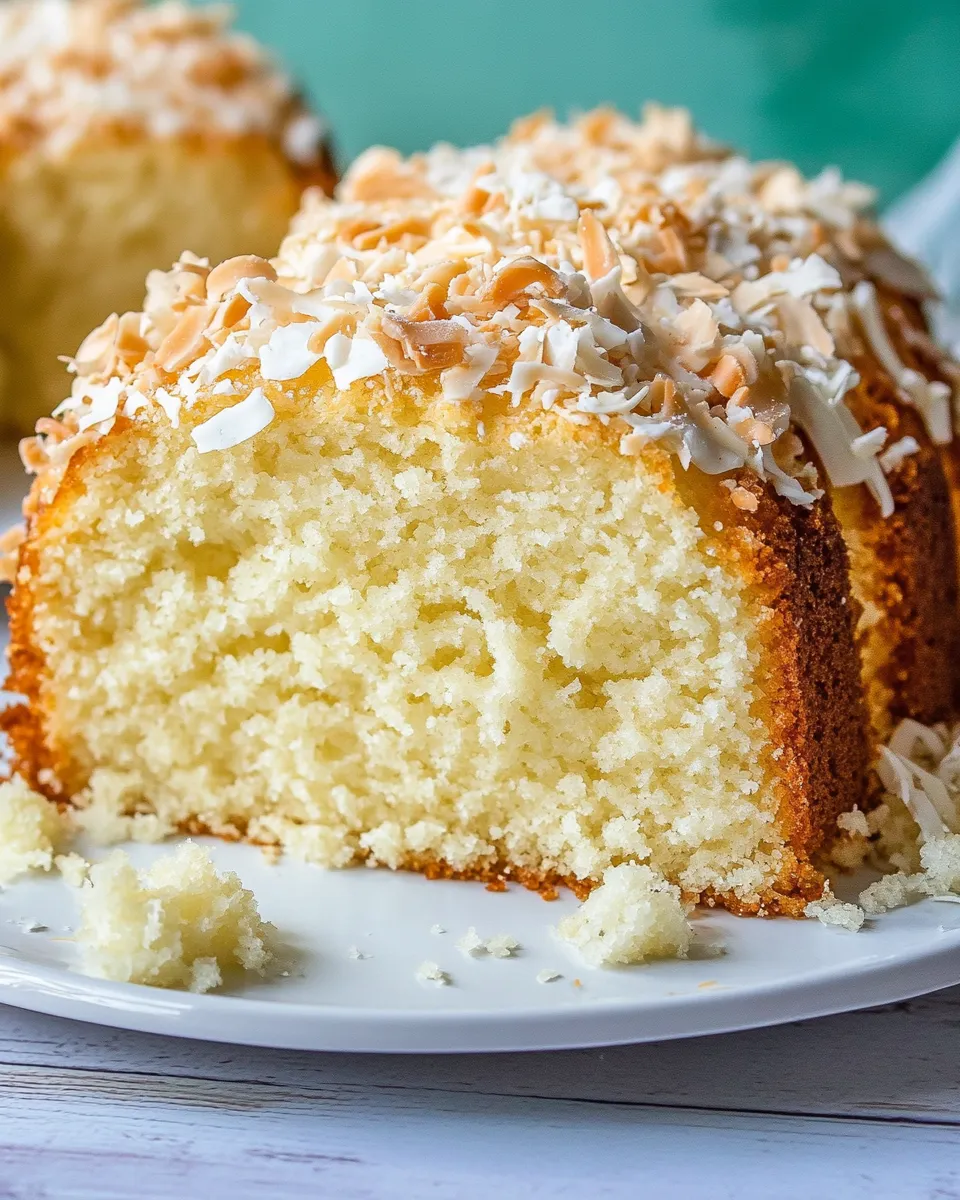
Substitutions can save a recipe when you’re missing an item. Use melted butter in place of the vegetable oil if you want a richer butter flavor — that option is already noted in the ingredient list. If you don’t have coconut extract, a bit more vanilla can help carry the sweetness, though you’ll lose some coconut punch.
If you don’t have toasted coconut on hand, the cake still works with a light dusting of extra powdered sugar after glazing. For the canned coconut milk in the batter and glaze, canned gives the best texture and flavor; if you must use another milk, expect a slight change in richness and texture.
Equipment at a Glance
- 8×4-inch loaf pan — the specified size keeps bake times accurate.
- Mixing bowls — one large for wet ingredients and one for dry.
- Whisk and spatula — whisk the dry ingredients and use a spatula to combine gently.
- Wire rack — essential for cooling the loaf completely before glazing.
- Small bowl for glaze — a whisk helps get a smooth, lump-free glaze.
Missteps & Fixes
Dense, undercooked center
If the center is gummy after the recommended baking time, return the cake to the oven and check every 5–7 minutes. Oven temperatures vary; the toothpick should come out with a few moist crumbs, not wet batter. Tent with foil if the top is browning too fast.
Glaze too runny or too thick
If the glaze pours off the cake, it’s likely too thin. Add powdered sugar 1 tablespoon at a time to thicken. If the glaze is too thick, add extra canned unsweetened coconut milk 1 teaspoon at a time up to the stated limit to reach a pourable consistency.
Cake sticks to the pan
Be sure to use nonstick spray, ideally one with flour, and allow the cake to cool fully before attempting to remove it. Running a thin knife around the edges helps release it cleanly.
Make It Year-Round
In summer, serve slices with fresh mango or pineapple for a tropical plate. In cooler months, pair a warm slice with spiced tea or a drizzle of warmed caramel. The cake’s simple coconut profile means it pairs well with both bright fruit and richer accompaniments like whipped cream or crème fraîche.
The loaf travels well and keeps its texture, so it’s a good choice for picnics, brunches, or a casual dessert to bring to someone’s home.
Behind the Recipe
This is a straightforward riff on traditional pound cake. Classic pound cakes used equal weights of butter, sugar, eggs, and flour, producing a very dense loaf. Here, a bit of oil and canned coconut milk lighten the crumb and add coconut flavor without overcomplicating the method. The glaze and toasted coconut are finishing touches that showcase the coconut without masking the cake’s texture.
I stick with simple extracts rather than fresh grated coconut in the batter to keep preparation fast and consistent. Toasted coconut on top gives the crunch and aroma that makes each slice feel complete.
Meal Prep & Storage Notes
Store the glazed cake at room temperature for up to 2 days in an airtight container. If your kitchen is warm or humid, refrigerate the loaf covered; bring to room temperature before serving to restore tenderness.
To freeze, wrap the cooled, unglazed loaf tightly in plastic, then foil; freeze up to 3 months. Thaw overnight in the refrigerator or at room temperature. Add the glaze and toasted coconut after thawing for best texture and appearance.
FAQ
- Can I use light coconut milk or the carton variety? Canned unsweetened coconut milk is preferred for richness. Carton coconut beverages are thinner and will change the texture slightly.
- Can I make this into cupcakes? Yes. Reduce baking time; start checking at 18–22 minutes. Use the same batter and adjust bake time until a toothpick comes out with a few moist crumbs.
- How do I toast coconut? Spread coconut in an even layer on a baking sheet and bake at 325°F, stirring every few minutes, until golden. Watch closely — coconut goes from golden to burnt quickly.
- Does the coconut extract make the cake taste artificial? A properly measured 1 teaspoon gives a clear coconut note without tasting artificial. Taste the glaze and adjust only slightly if needed.
Make It Tonight
This is a weeknight-friendly bake: preheat, mix in one bowl, and pop it in the oven. While it bakes you can clean up and toast the coconut so it’s ready when the glaze goes on. Let it cool fully, whisk the glaze, drizzle, and sprinkle the toasted coconut. Slice after the glaze sets and serve. Simple steps, predictable results, and a loaf that feels a little bit special.
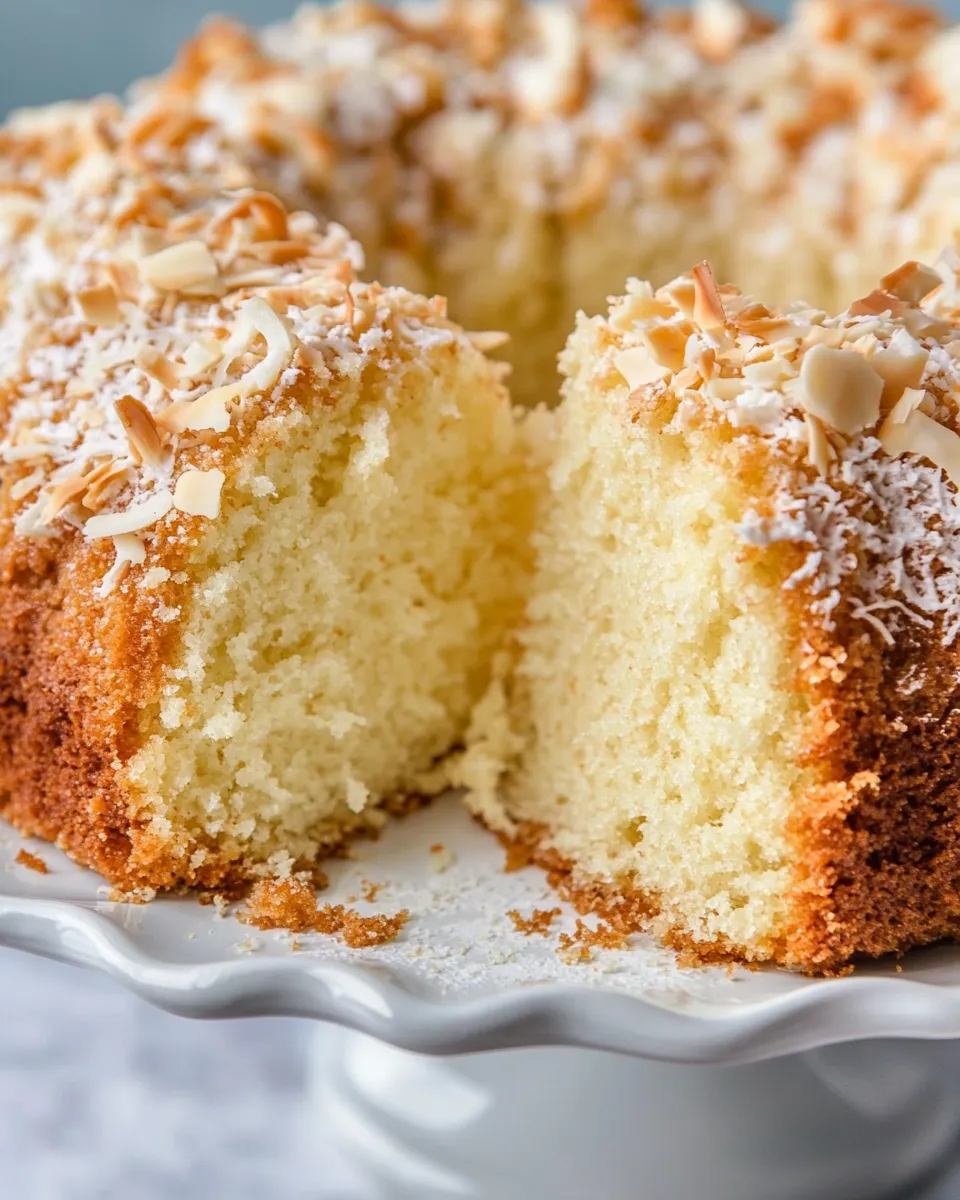
Coconut Pound Cake
Ingredients
Equipment
Method
- Preheat the oven to 350°F. Spray an 8×4-inch loaf pan with nonstick cooking spray (use one with flour if you have it).
- In a large bowl, stir together ½ cup (119 ml) vegetable oil (or melted butter) and 1 cup (200 g) granulated sugar until combined.
- Add the 3 large eggs one at a time, stirring or beating after each until incorporated. Stir in 1 teaspoon (5 ml) vanilla extract and 1 teaspoon (5 ml) coconut extract.
- In a separate bowl, whisk together 1½ cups (186 g) all-purpose flour, 1 teaspoon baking powder, and ¼ teaspoon salt.
- Add the flour mixture and ½ cup (119 ml) canned unsweetened coconut milk to the wet ingredients. Stir gently just until no large streaks of flour remain (do not overmix).
- Pour the batter into the prepared loaf pan and smooth the top.
- Bake 50–60 minutes, or until a toothpick inserted into the center comes out with a few moist crumbs. Remove from oven.
- Cool the cake completely in the pan on a wire rack. Once completely cool, run a knife around the edges and remove the cake from the pan; transfer to a wire rack or serving plate.
- Make the frosting: in a medium bowl whisk together 1 cup (113 g) powdered sugar, ½ teaspoon vanilla extract, and ½ teaspoon coconut extract. Add 2 tablespoons (30 ml) canned unsweetened coconut milk and whisk until smooth. If needed for a pourable drizzle, add more coconut milk 1 tablespoon at a time, up to the 4 tablespoons (60 ml) total.
- Place the cooled cake on a rack over a sheet or plate to catch drips. Drizzle the frosting evenly over the top of the cake, then immediately sprinkle 1 cup (64 g) toasted coconut over the frosting so it adheres.
- Let the glaze set before slicing and serving.
Notes
Coconut milk in a can is found in the Asian foods aisle. Be sure to shake before opening.
I like to use vegetable oil because it gives the coconut pound cake a lovely light texture. You can also use melted butter if that’s what you have on hand.
I like to use vegetable oil because it gives the coconut pound cake a lovely light texture. You can also use melted butter if that’s what you have on hand.
The key to the best coconut flavor is to use coconut extract in the batter and the frosting. Please don’t skip it!
The key to the best coconut flavor is to use coconut extract in the batter and the frosting. Please don’t skip it!
I love to top the cake with tons of toasted coconut. It adds color, texture, and flavor! Learn how to toast coconut – it’s really easy.
I love to top the cake with tons of toasted coconut. It adds color, texture, and flavor! Learn how to toast coconut – it’s really easy.