Curry Vegetable Latkes
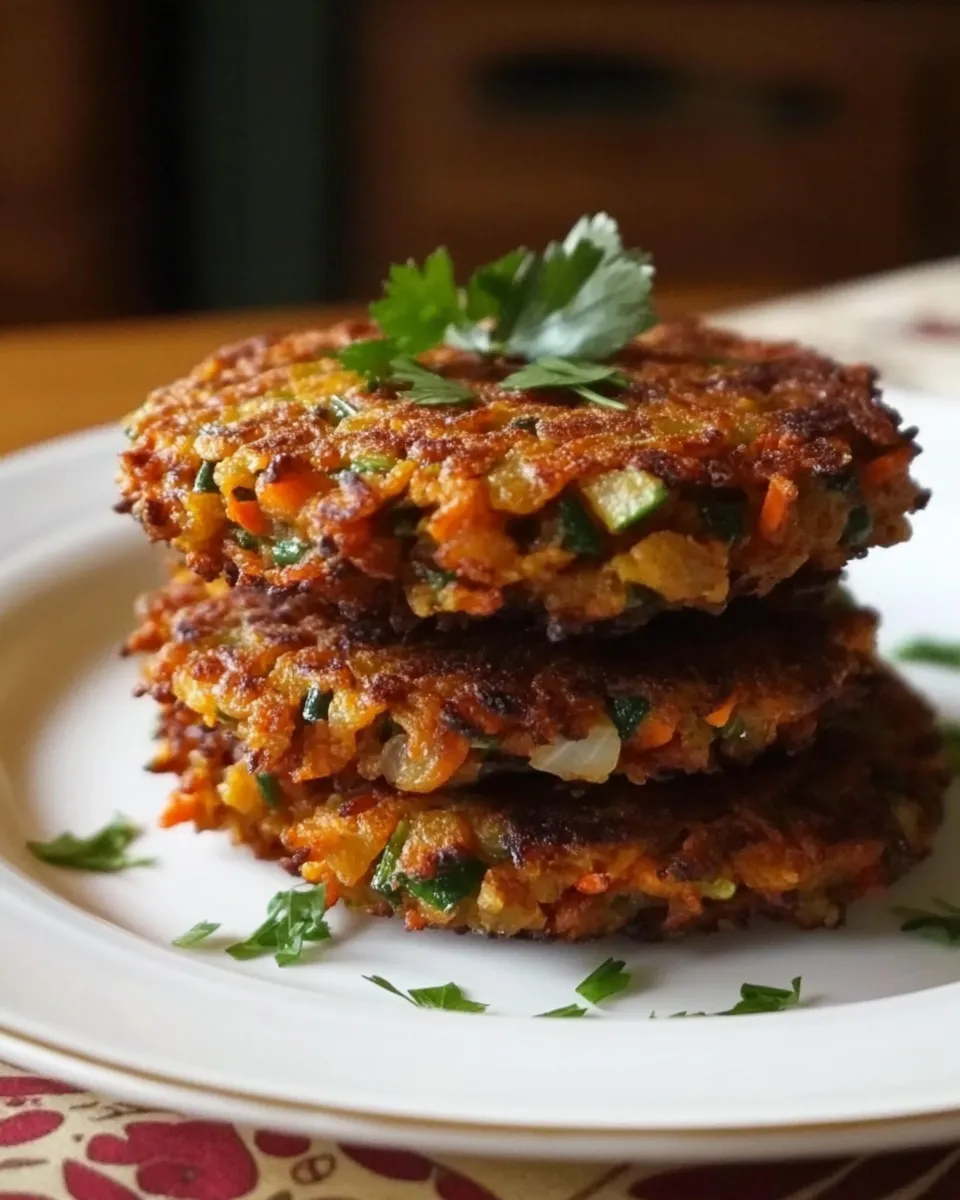
These curry-spiked vegetable latkes are the kind of recipe I reach for when I want something crisp, bright, and a little unexpected. They bridge the familiar comfort of a golden pancake with a simple spice profile that lifts zucchini, carrot, and onion into savory, crunchy bites. They brown up fast and feed a small crowd without a lot of fuss.
I like to keep the process practical: grate, squeeze, bind, and fry. Small technique points — removing liquid from the vegetables and testing the oil temperature — make the difference between a limp fritter and a perfect latke. The recipe below is straightforward and forgiving, and it rewards a careful hand at the grater and a steady eye at the skillet.
Serve them plain, with a smear of labaneh, or with Greek yogurt and a squeeze of lemon. They’re at home on a casual brunch table or as part of a larger mezze spread. Read on for the exact ingredient breakdown, step-by-step instructions, troubleshooting, and serving ideas.
Gather These Ingredients
Ingredients
- 3 medium zucchini — grated and squeezed dry so the latkes crisp instead of steaming.
- 2 large carrots — add color, sweetness, and structure.
- 1 onion — grated fine; draining helps control moisture and bite.
- 1 cup Manischewitz Matzo Meal — the primary binder and texture base.
- 2 large eggs, beaten — bind the shreds so patties hold their shape.
- 1 1/2 tablespoons Manischewitz potato starch — extra binding power for a sturdy latke.
- 1 3/4 teaspoons curry powder — the defining flavor note; balance to taste if desired.
- 1 1/4 teaspoons salt (or more to taste) — seasons throughout; add more at the end if needed.
- 1/2 teaspoon allspice — warm background spice that complements the curry.
- 1/2 teaspoon cumin — earthy depth that plays well with the vegetables.
- 1/4 teaspoon cayenne (optional – adds spice) — for heat; omit if you prefer mild.
- 1/4 teaspoon pepper — finishes the seasoning.
- Peanut or grapeseed oil for frying — neutral oils with a high smoke point for even frying.
- Labaneh, tzatziki, Greek yogurt or dairy-free sour cream for topping (optional) — cooling contrasts for the warm, spiced latkes.
Curry Vegetable Latkes: From Prep to Plate
- Place a wire cooling rack over a layer of paper towels near the stove so cooked latkes can drain while you fry.
- Wash the zucchini and remove the ends. Peel the carrots and the onion.
- Using a box grater or the shredding attachment of a food processor, grate the zucchini (fine shred), carrots (fine shred), and onion (fine shred). (A food processor saves time and helps avoid onion tears.)
- Put the zucchini shreds and the grated onion in the center of a clean tea towel or several layers of cheesecloth. Wrap the cloth around the shreds, twist to secure, and squeeze firmly to remove as much liquid as possible. Transfer the drained zucchini and onion to a large dry bowl.
- Put the carrot shreds in the towel or cloth, wrap, and squeeze firmly to remove excess liquid. Add the drained carrot shreds to the same large bowl with the zucchini and onion.
- Stir the shredded vegetables with a fork to distribute them evenly in the bowl.
- Add to the bowl: 1 cup Manischewitz Matzo Meal, the 2 large eggs (beaten), 1 1/2 tablespoons Manischewitz potato starch, 1 3/4 teaspoons curry powder, 1 1/4 teaspoons salt, 1/2 teaspoon allspice, 1/2 teaspoon cumin, 1/4 teaspoon cayenne (optional), and 1/4 teaspoon pepper. Mix thoroughly with a fork or spatula so the eggs and seasonings are evenly distributed and the mixture is cohesive.
- If the mixture seems too loose to hold together when pressed, stir in additional Matzo Meal 2 teaspoons at a time until the mixture binds enough to form a patty.
- Pour peanut or grapeseed oil into a large skillet to reach a depth of about 1/8 inch. Heat the oil slowly over medium heat until it reaches about 325°F (or until a test latke sizzles steadily without smoking).
- Using a 1/4-cup measure, scoop up some of the vegetable mixture and press it into a compact, flat disc with your hands or the back of the scoop.
- Test the oil temperature with the first latke: carefully slide it into the oil. If the oil smokes or spits violently, lower the heat; if the latke bubbles only weakly, raise the heat. Adjust until the oil sizzles but does not smoke.
- Fry the latkes in batches of 4–5 (do not crowd the pan). Fry 2–3 minutes per side, flipping gently, until each side is golden brown and crispy.
- Remove cooked latkes with a metal spatula and transfer them to the wire cooling rack to drain. Sprinkle additional salt to taste, if desired.
- Serve the latkes hot, ideally within 10 minutes of frying. If you must make them ahead (up to 4 hours), after draining place them on an ungreased, unlined cookie sheet and leave in a cool area until ready to reheat.
- To reheat prepared latkes, place them in a 375°F oven for about 10 minutes (about 7 minutes if using a convection oven) until heated through.
- Serve plain or top with Labaneh, tzatziki, Greek yogurt, or dairy-free sour cream, if desired.
Top Reasons to Make Curry Vegetable Latkes
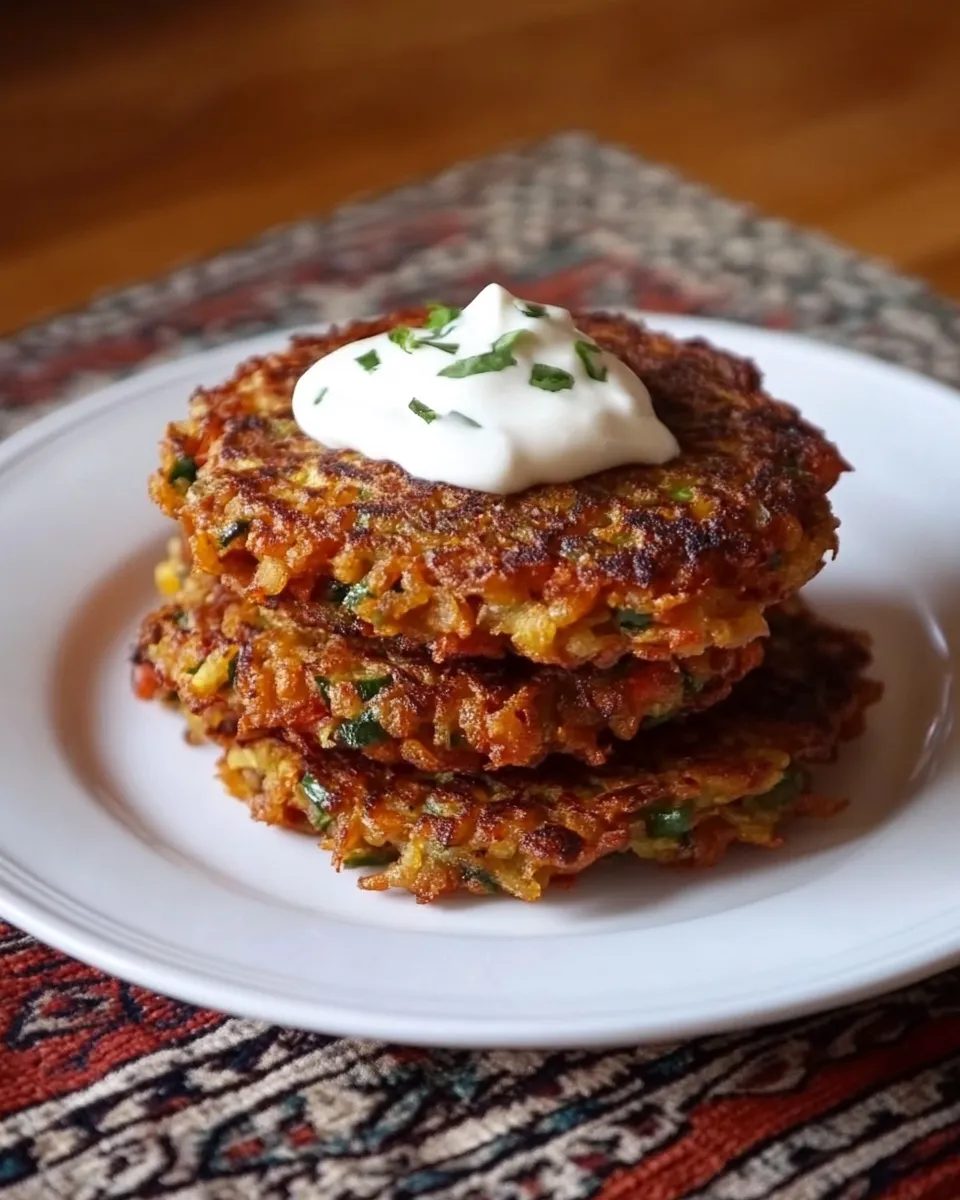
- Crisp and comforting — they brown up beautifully and satisfy the craving for something crunchy and warm.
- Vegetable-forward — zucchini and carrot give volume and nutrition without masking the spices.
- Busy-kitchen friendly — most of the work is grating and squeezing; then the pan does the rest.
- Flexible toppings — from labaneh to dairy-free sour cream, you can match the latkes to many menus or dietary needs.
- Great for gatherings — fry in batches and keep warm, or make ahead a few hours and refresh in the oven.
International Equivalents
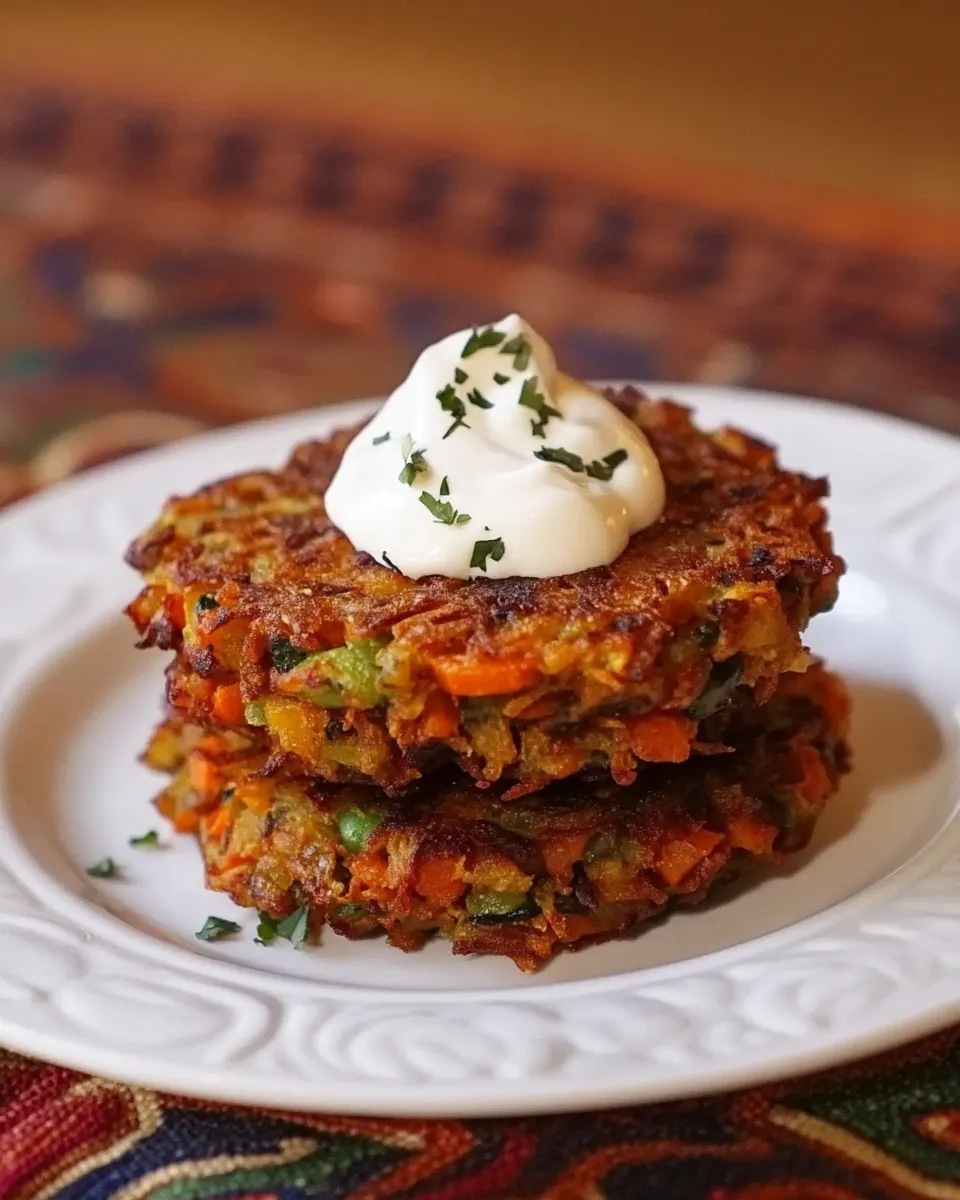
These latkes are part of a global family of vegetable fritters. Think potato latkes from Eastern Europe in texture and technique, Indian pakoras in spirit because of the spice-forward batter, and zucchini or courgette fritters common in Mediterranean kitchens. Each culture adapts the basic idea — shredded or sliced vegetables bound with a starch and fried — to local spices and toppings.
Where Eastern European versions lean on potato and onion, this recipe tilts toward mixed vegetables with curry powder to nod to South Asian flavors. You can frame them among mezze or serve them alongside a curry as a crunchy counterpoint.
Gear Checklist
- Wire cooling rack and paper towels — for draining and keeping crisp.
- Box grater or food processor with shredding attachment — the processor saves time and tears.
- Clean tea towel or several layers of cheesecloth — essential for wringing out moisture.
- Large dry mixing bowl — roomy enough to mix without spilling.
- 1/4-cup measuring scoop — makes uniform patties for even frying.
- Large skillet — wide enough for batches of 4–5 latkes.
- Instant-read thermometer (optional) — helps hit the ~325°F range for steady frying.
- Metal spatula — thin and sturdy for flipping crispy edges.
- Unlined cookie sheet — for resting cooked latkes if making ahead.
Avoid These Traps
- Skipping the squeeze: excess liquid in zucchini and onion will steam the latkes instead of crisping them. Squeeze firmly until mostly dry.
- Wrong oil temperature: oil that’s too cool creates greasy, soggy latkes; oil that’s too hot burns the exterior before the center cooks. Aim for a steady sizzle without smoking.
- Crowding the pan: too many patties lowers the oil temperature and prevents even browning. Fry in batches of 4–5.
- Under-binding: if the mixture feels loose, add Matzo Meal in 2-teaspoon increments until it holds when pressed.
- Over-flattening: press to shape, but avoid making patties paper-thin; a compact, slightly thick disc fries to a crisp exterior and tender interior.
Warm & Cool Weather Spins
Warm-weather: serve the latkes with a bright cucumber-tomato salad, tzatziki, and fresh herbs. A squeeze of lemon and chopped mint or dill keeps the plate light and refreshing.
Cool-weather: pair them with warm labaneh or Greek yogurt studded with roasted garlic, and add pickled onions or a spiced chutney. The warming spices in the latkes (curry, cumin, allspice) match well with hearty sides like roasted root vegetables or a simple lentil stew.
Testing Timeline
From start to finish, expect about 35–50 minutes depending on prep speed and batch frying. Plan roughly 10–15 minutes to wash, peel, and grate; another 5–10 minutes to squeeze out moisture and mix. Each batch takes 4–6 minutes to fry (2–3 minutes per side), so total frying time depends on the number of batches.
If you must make them ahead, the recipe allows a 4-hour window: drain, place on an ungreased cookie sheet, and hold in a cool area until reheating in a 375°F oven for about 10 minutes (7 minutes for convection) to refresh crispness.
Storing, Freezing & Reheating
Short-term: cool latkes completely on the wire rack, then stack with parchment between layers and refrigerate up to 3 days.
Make-ahead (source method): after frying and draining, leave latkes on an ungreased, unlined cookie sheet in a cool area for up to 4 hours before reheating. This is ideal for party service when you want to finish in the oven.
Reheat: place latkes in a preheated 375°F oven for about 10 minutes until heated through (about 7 minutes if using a convection oven). This returns crispness better than microwaving.
Freezing (sensible approach): cool fully, flash-freeze single layers on a baking sheet, then transfer to a sealed bag. Reheat from frozen in a 375°F oven until hot and crisp — timing will vary by oven and thickness. Thawing first can make them soggy, so I usually reheat from frozen.
Troubleshooting Q&A
Why are my latkes soggy?
Most often because the zucchini and onion weren’t squeezed enough, or the oil was too cool. Return to step 4 and 5: wrap and twist the towel to extract as much liquid as possible. Also check the oil temperature; a steady sizzle (but not smoking) is key.
They fall apart when I try to flip — what went wrong?
Either under-binding or the patties were too loose. Add Matzo Meal 2 teaspoons at a time as in step 8 until the mixture holds when pressed. Also press patties compactly with a 1/4-cup measure so they have structure before hitting the pan.
The outside burns before the inside is done — help.
Reduce the heat slightly so the latkes fry at about 325°F. If the oil is too hot, the exterior will darken quickly while the center remains undercooked. Test and adjust with the first latke as described in the instructions.
Can I use a different binder?
The recipe calls for Matzo Meal and potato starch. If you must swap, understand the texture will change; Matzo Meal provides a particular crumb and structure. If substituting, do small tests and adjust binding quantities slowly.
Bring It to the Table
Plate a stack of Curry Vegetable Latkes on a warm platter with small bowls of labaneh, tzatziki, or Greek yogurt for guests to choose from. Scatter chopped herbs — cilantro, mint, or dill — over the top for freshness. A wedge of lemon or a drizzle of chili oil lets people customize heat and brightness at the table.
These latkes are great alongside a leafy salad and some roasted vegetables for a vegetarian main, or serve them as part of a brunch spread with smoked fish, pickles, and soft-boiled eggs. They travel well for potlucks: fry ahead and reheat quickly in a hot oven to restore crispness.
One last note: keep a small bowl of flaky salt nearby. A quick sprinkle as they come off the rack highlights the curry and vegetable flavors and elevates every golden bite.
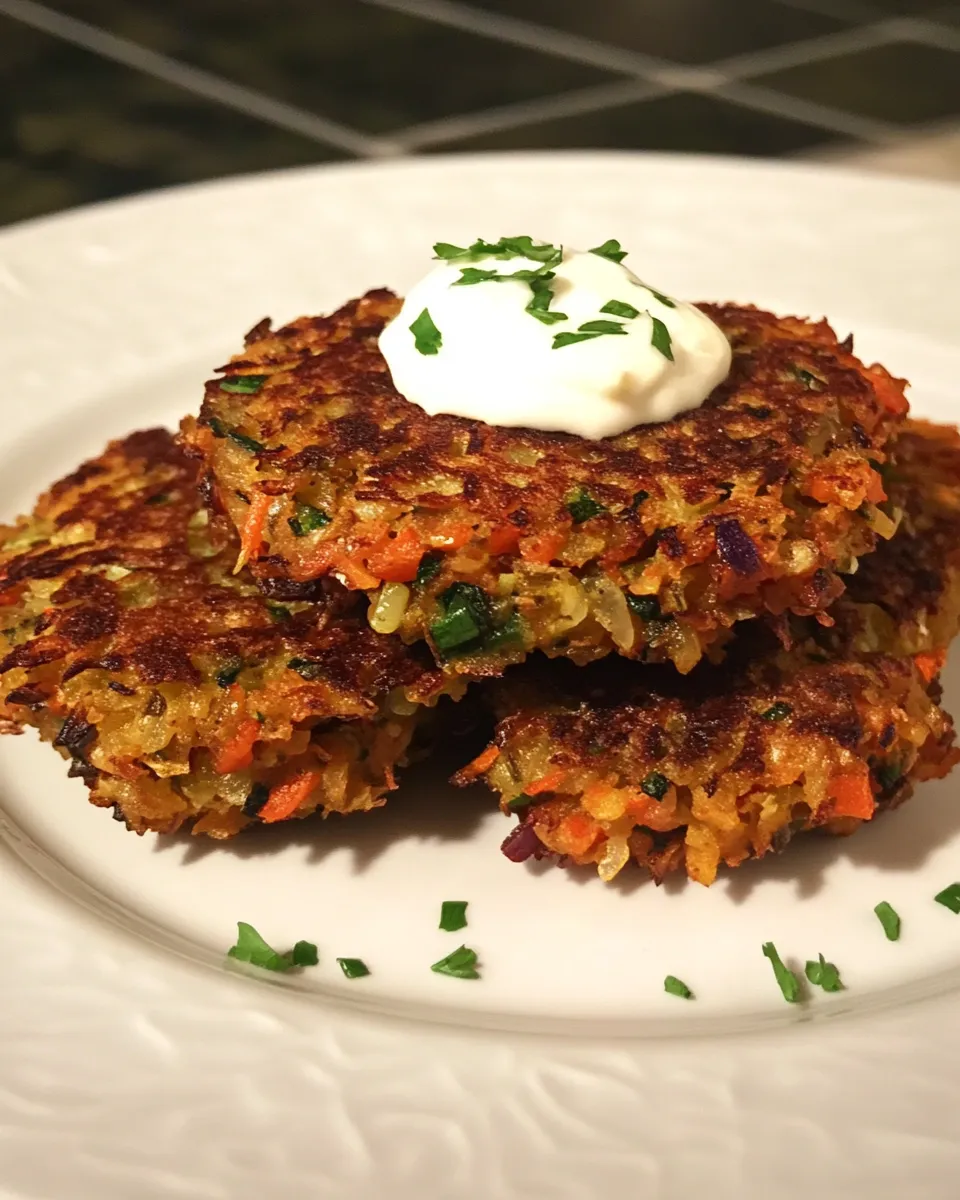
Curry Vegetable Latkes
Ingredients
Equipment
Method
- Place a wire cooling rack over a layer of paper towels near the stove so cooked latkes can drain while you fry.
- Wash the zucchini and remove the ends. Peel the carrots and the onion.
- Using a box grater or the shredding attachment of a food processor, grate the zucchini (fine shred), carrots (fine shred), and onion (fine shred). (A food processor saves time and helps avoid onion tears.)
- Put the zucchini shreds and the grated onion in the center of a clean tea towel or several layers of cheesecloth. Wrap the cloth around the shreds, twist to secure, and squeeze firmly to remove as much liquid as possible. Transfer the drained zucchini and onion to a large dry bowl.
- Put the carrot shreds in the towel or cloth, wrap, and squeeze firmly to remove excess liquid. Add the drained carrot shreds to the same large bowl with the zucchini and onion.
- Stir the shredded vegetables with a fork to distribute them evenly in the bowl.
- Add to the bowl: 1 cup Manischewitz Matzo Meal, the 2 large eggs (beaten), 1 1/2 tablespoons Manischewitz potato starch, 1 3/4 teaspoons curry powder, 1 1/4 teaspoons salt, 1/2 teaspoon allspice, 1/2 teaspoon cumin, 1/4 teaspoon cayenne (optional), and 1/4 teaspoon pepper. Mix thoroughly with a fork or spatula so the eggs and seasonings are evenly distributed and the mixture is cohesive.
- If the mixture seems too loose to hold together when pressed, stir in additional Matzo Meal 2 teaspoons at a time until the mixture binds enough to form a patty.
- Pour peanut or grapeseed oil into a large skillet to reach a depth of about 1/8 inch. Heat the oil slowly over medium heat until it reaches about 325°F (or until a test latke sizzles steadily without smoking).
- Using a 1/4-cup measure, scoop up some of the vegetable mixture and press it into a compact, flat disc with your hands or the back of the scoop.
- Test the oil temperature with the first latke: carefully slide it into the oil. If the oil smokes or spits violently, lower the heat; if the latke bubbles only weakly, raise the heat. Adjust until the oil sizzles but does not smoke.
- Fry the latkes in batches of 4–5 (do not crowd the pan). Fry 2–3 minutes per side, flipping gently, until each side is golden brown and crispy.
- Remove cooked latkes with a metal spatula and transfer them to the wire cooling rack to drain. Sprinkle additional salt to taste, if desired.
- Serve the latkes hot, ideally within 10 minutes of frying. If you must make them ahead (up to 4 hours), after draining place them on an ungreased, unlined cookie sheet and leave in a cool area until ready to reheat.
- To reheat prepared latkes, place them in a 375°F oven for about 10 minutes (about 7 minutes if using a convection oven) until heated through.
- Serve plain or top with Labaneh, tzatziki, Greek yogurt, or dairy-free sour cream, if desired.
Notes
You will also need: hand grater or food processor with shredding disc attachment with fine holes, clean tea towel or layers of cheesecloth, skillet or electric skillet for frying, mixing bowls, metal spatula, wire cooling rack
Serve them on their own or with labaneh cheese, tzatiki, Greek yogurt or dairy-free sour cream to top.