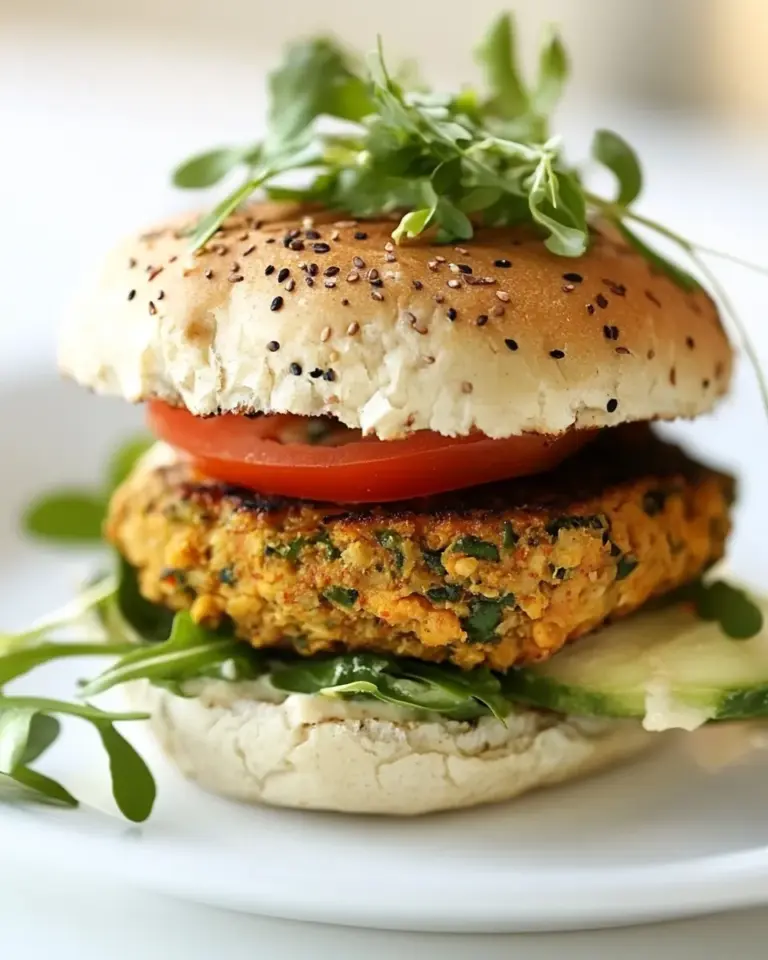
Easy Chicken Alfredo Recipe
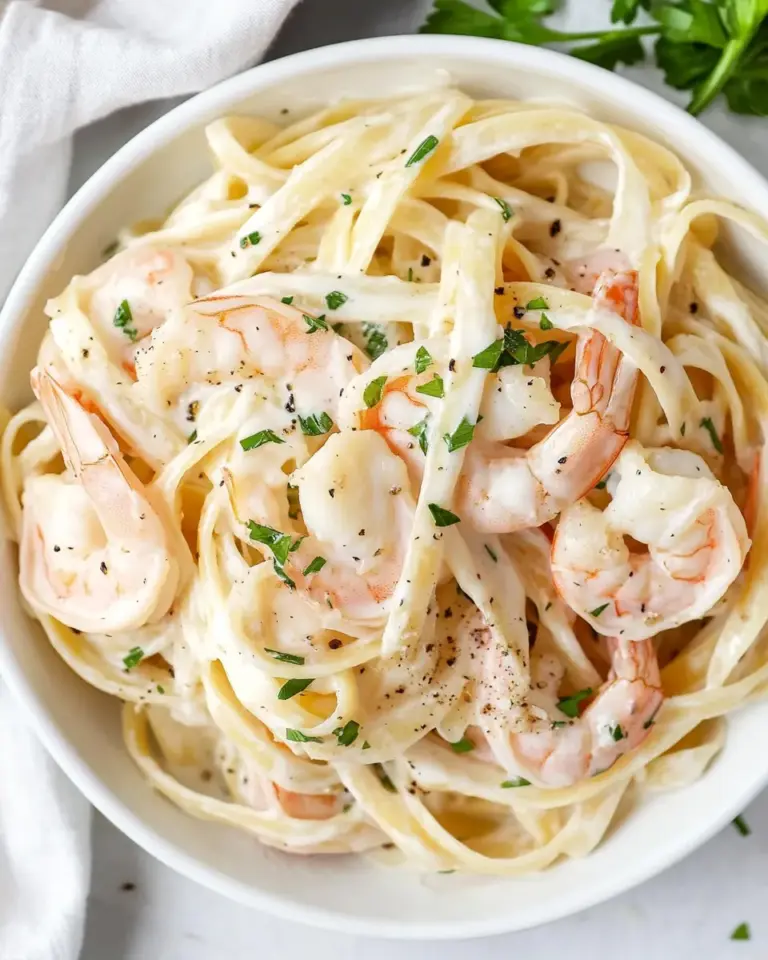
This one-pan Chicken Alfredo is the sort of weeknight meal that feels special without asking for extra time or fuss. It cooks in one wide pan, builds a simple creamy sauce as the pasta finishes, and finishes with tender cooked chicken and fresh parsley. I like it for the balance: rich but not heavy, familiar but reliably satisfying.
You’ll find the technique forgiving. The pasta absorbs the sauce as it cooks, so a little attention and a few stirs replace long waits for water to boil and separate sauce-making steps. The result is an almost-instant Alfredo with fewer dishes and more flavor locked right into the noodles.
Below I walk you through exact ingredients, the step-by-step pan method, sensible substitutions, and troubleshooting tips I rely on when I want consistent results. Keep a scoop of grated Parmesan nearby and your favorite salad on hand — dinner lands on the table fast and everyone eats it up.
The Ingredient Lineup
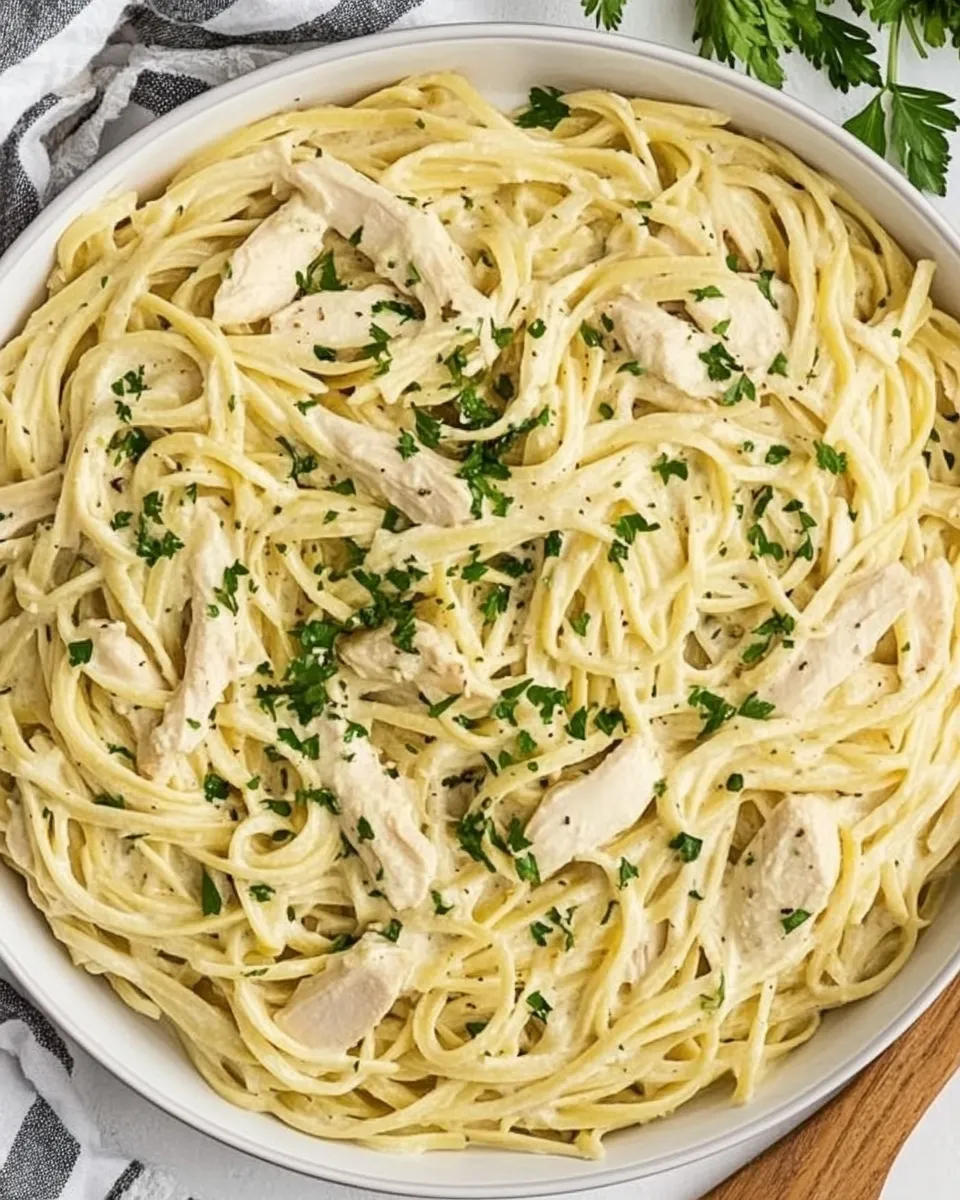
Ingredients
- 8 oz thin spaghetti — pasta that cooks quickly and soaks up the sauce; thin spaghetti lays flat for the one-pan method.
- 1½ – 2 cups cubed chicken (already cooked) — pre-cooked chicken heats through without overcooking; rotisserie or leftover chicken works great.
- 2 ½ – 3 cups chicken broth (I prefer reduced sodium) — forms the bulk of the cooking liquid and adds savory flavor; use reduced sodium to control salt.
- ½ cup heavy cream — gives the sauce its richness and silky texture; adds body without needing a roux.
- ⅔ cup whole milk — lightens the cream slightly and helps adjust sauce consistency later.
- 3 Tbsp fresh parsley, chopped — brightens the finished dish and adds color and freshness.
- 3–4 garlic cloves, minced — aromatic base; don’t skip or underdo it.
- 1 Tbsp butter — builds flavor and helps the sauce finish with a glossy sheen.
- ½ tsp cracked pepper — gentle heat and aromatics; adjust to taste.
- ½ tsp sea salt — seasons the cooking liquid; if your broth is salty, hold back and taste at the end.
- ⅓ cup grated Parmesan cheese — melts into the sauce for the classic Alfredo flavor and creamy finish.
Chicken Alfredo: How It’s Done
- In a large deep skillet or wide pan, pour 2½ cups chicken broth, then add ½ cup heavy cream, ⅔ cup whole milk, 1 tablespoon butter, and 3–4 cloves garlic (minced). Season with ½ teaspoon sea salt and ½ teaspoon cracked pepper. Heat over medium until the liquid comes to a light boil.
- Add 8 oz thin spaghetti to the pan, pushing the strands down so they are mostly submerged (break the strands if necessary to fit). Increase heat briefly as needed to bring the liquid back to a gentle boil.
- As soon as the liquid begins to boil, reduce heat to medium-low (a gentle simmer). Cook the pasta, stirring frequently and turning the strands so they cook evenly, until the spaghetti is al dente, about 8–10 minutes.
- If the liquid is absorbing too quickly and the pasta is not yet al dente, add up to an additional ½ cup chicken broth (for a total of up to 3 cups), a splash at a time, to keep the pasta moist.
- When the pasta has about 2–3 minutes left, stir in 1½–2 cups cubed cooked chicken so it can heat through with the pasta.
- Once the pasta is al dente and the chicken is heated, remove the pan from the heat. Stir in ⅓ cup grated Parmesan until the sauce becomes creamy. If the sauce is too thick, add small tablespoons of the ⅔ cup whole milk until you reach the desired consistency.
- Taste and adjust seasoning if needed. Serve immediately, sprinkled with the 3 tablespoons chopped fresh parsley.
Why It’s Crowd-Pleasing
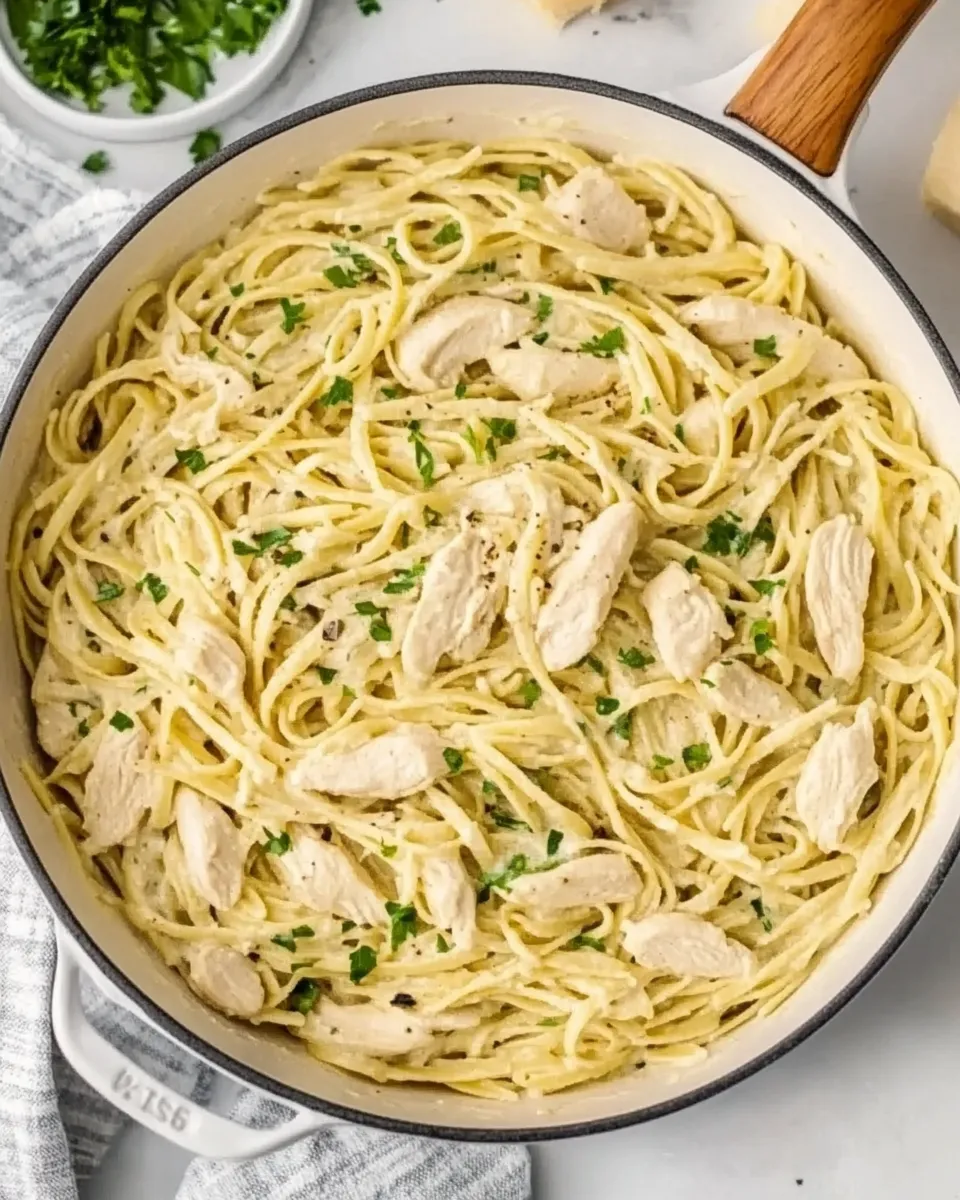
There are a few practical reasons this version of Chicken Alfredo always wins: familiarity, texture, and speed. Most people already love creamy pasta and tender chicken; this recipe simply delivers those things in a tidy, no-fuss package. The spaghetti cooks directly in the sauce, which means every strand picks up flavor instead of being rinsed away in a pot of water.
The balance of cream, milk, and Parmesan creates a sauce that clings without feeling gluey. A single tablespoon of butter and a measured sprinkle of salt and cracked pepper bring out savory depth without masking the chicken or garlic. Finally, finishing with fresh parsley gives a lift that makes the dish feel lighter and fresh.
Substitutions by Category
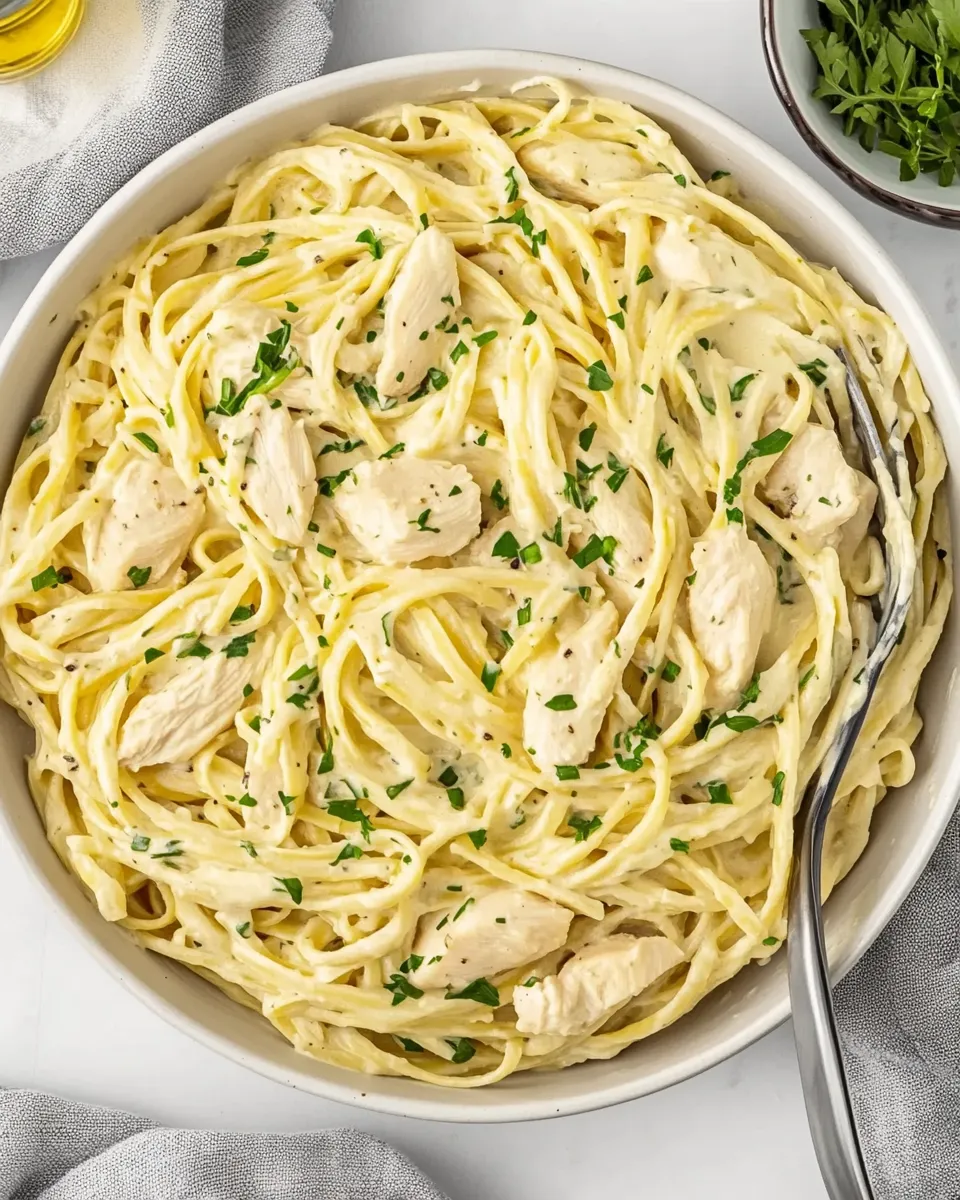
- Pasta: Use fettuccine or linguine if you prefer wider noodles; penne or rigatoni work too, but cooking times may vary.
- Chicken: Swap rotisserie, poached breast, or leftover grilled chicken; shredded works as well as cubed.
- Broth: Low-sodium or homemade chicken broth keeps control of the salt level; vegetable broth is okay if you want a milder base.
- Dairy: If heavy cream feels too rich, use half-and-half plus a tiny knob of butter, but expect a slightly lighter mouthfeel.
- Cheese: Freshly grated Parmesan yields the best melt and flavor; pecorino Romano will be saltier and tangier if you want a sharper finish.
- Herbs & aromatics: Swap parsley for basil or chives for a different herb note; add a pinch of red pepper flakes for heat.
What’s in the Gear List
- Large deep skillet or wide pan — the recipe depends on a wide surface so the pasta lays flat and cooks evenly.
- Wooden spoon or heatproof spatula — for stirring and turning the pasta strands without scratching the pan.
- Measuring cups and spoons — accurate liquid and seasoning amounts keep the sauce balanced.
- Knife and board — for mincing garlic and chopping parsley.
- Cheese grater — fresh-grated Parmesan integrates best into the sauce.
Problems & Prevention
- Issue: Pasta sticking or uneven cooking. Prevention: Stir frequently and turn the strands so they all touch the liquid. Break long pasta if necessary to help it submerge.
- Issue: Sauce becomes too thick. Prevention: Keep the reserved whole milk handy and add it tablespoon by tablespoon until you reach the consistency you want.
- Issue: Sauce separates or looks greasy. Prevention: Remove the pan from heat before adding the Parmesan and stir it in off the heat; avoid high heat during final stages.
- Issue: Too salty. Prevention: Use reduced-sodium broth and taste before adding more salt; Parmesan and broth can add more salt than expected.
Better Choices & Swaps
If you want a lighter plate without losing comfort, choose whole-grain or legume-based pasta for extra fiber and protein. Pick reduced-fat dairy options sparingly; they change mouthfeel but can work when balanced with a little extra butter or cheese.
For a fresher protein, shredded rotisserie chicken shortens prep time and adds a roast-chicken flavor. If sodium is a concern, make your own broth or dilute store-bought stock with a splash of water and adjust salt at the end. Small swaps like fresh garlic instead of garlic powder and freshly grated Parmesan instead of pre-grated will pay off in aroma and texture.
Behind the Recipe
This one-pan approach borrows the idea of cooking starch directly in liquid so the pasta and sauce become inseparable. It’s a technique often used in risottos and some Italian pasta dishes. Using a mix of cream and milk keeps the sauce rich but fluid enough to cook the pasta without binding too early.
I choose thin spaghetti because it softens quickly and fits flat in a wide pan. Pre-cooked chicken is intentional — the goal is to warm the protein through without drying it. The Parmesan at the end melts into a glossy emulsion rather than forming clumps, especially when you pull the pan off the heat first.
Keep-It-Fresh Plan
- Refrigerating: Cool leftovers to room temperature, then store in an airtight container for up to 3 days. The sauce will thicken as it chills.
- Freezing: I don’t recommend freezing creamy pasta; the texture changes. If you must, freeze in a shallow container for up to 1 month and expect some separation on thawing.
- Reheating: Reheat gently on the stovetop over low heat with small splashes of milk or broth, stirring until the sauce re-emulsifies. Avoid high heat to prevent curdling.
Troubleshooting Q&A
- Q: My sauce got grainy after adding Parmesan. What happened? A: If the pan is too hot, cheese can clump. Remove from heat first and stir until it melts into the sauce. Use finely grated, fresh Parmesan for the smoothest result.
- Q: The pasta is undercooked but the liquid is gone. A: Add up to the extra ½ cup of chicken broth in splashes and continue cooking until al dente. Keep the heat at a gentle simmer.
- Q: The finished dish tastes bland. A: Taste and adjust with a pinch more sea salt and cracked pepper. A squeeze of lemon or a sprinkle of extra Parmesan lifts the flavors if needed.
- Q: Can I make this gluten-free? A: Yes. Swap for a gluten-free thin spaghetti and watch cooking time — it may differ slightly.
Serve & Enjoy
Serve this Chicken Alfredo straight from the pan for the creamiest experience. Finish with another light dusting of grated Parmesan and the chopped fresh parsley for color and brightness. A simple green salad dressed with lemon vinaigrette or steamed greens balances the richness on the plate.
Leftovers reheat well when loosened with a splash of milk or broth. For company, plate the pasta, garnish with cracked pepper and parsley, and pass extra Parmesan at the table. Small touches like that keep a weeknight dinner feeling a little elevated without adding time or stress.
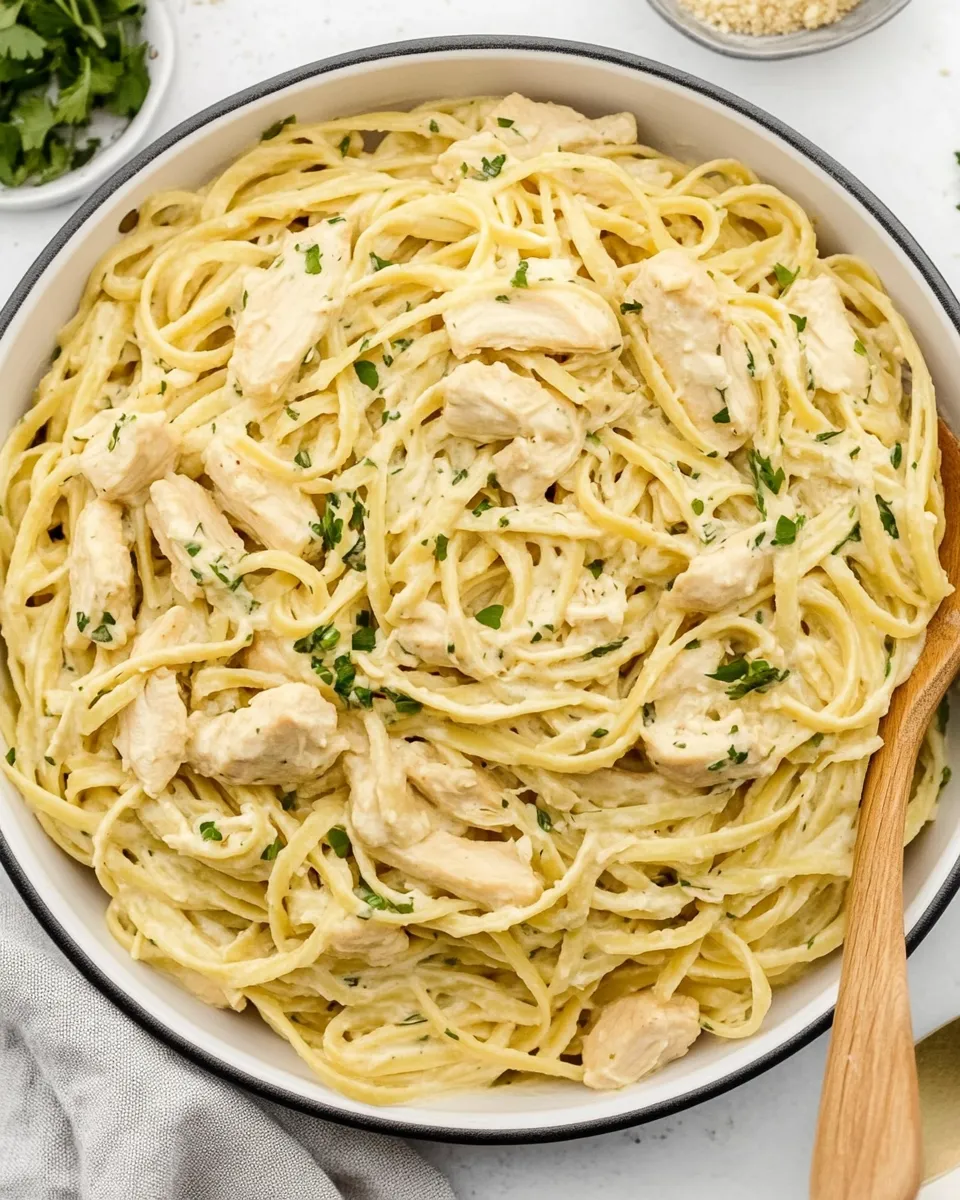
Easy Chicken Alfredo Recipe
Ingredients
Equipment
Method
- In a large deep skillet or wide pan, pour 2½ cups chicken broth, then add ½ cup heavy cream, ⅔ cup whole milk, 1 tablespoon butter, and 3–4 cloves garlic (minced). Season with ½ teaspoon sea salt and ½ teaspoon cracked pepper. Heat over medium until the liquid comes to a light boil.
- Add 8 oz thin spaghetti to the pan, pushing the strands down so they are mostly submerged (break the strands if necessary to fit). Increase heat briefly as needed to bring the liquid back to a gentle boil.
- As soon as the liquid begins to boil, reduce heat to medium-low (a gentle simmer). Cook the pasta, stirring frequently and turning the strands so they cook evenly, until the spaghetti is al dente, about 8–10 minutes.
- If the liquid is absorbing too quickly and the pasta is not yet al dente, add up to an additional ½ cup chicken broth (for a total of up to 3 cups), a splash at a time, to keep the pasta moist.
- When the pasta has about 2–3 minutes left, stir in 1½–2 cups cubed cooked chicken so it can heat through with the pasta.
- Once the pasta is al dente and the chicken is heated, remove the pan from the heat. Stir in ⅓ cup grated Parmesan until the sauce becomes creamy. If the sauce is too thick, add small tablespoons of the ⅔ cup whole milk until you reach the desired consistency.
- Taste and adjust seasoning if needed. Serve immediately, sprinkled with the 3 tablespoons chopped fresh parsley.
Notes
Storage:
Store leftovers in an airtight container in the refrigerator for about 3-4 days. Reheat with an extra splash of broth or cream if the sauce seems too thick after refrigeration. I do not recommend freezing this dish. The pasta texture does not hold up well after freezing.
You don’t want this chicken alfredo to ever get above at a low, gentle boil.
The liquid will be absorbed too quickly into the pasta and cause the pasta to turn mushy. Plus it will scald the cream. Keep it low and slow when cooking. It is still a super quick recipe regardless!
Make this meatless simply by skipping the chicken
. Parmesan cheese technically does contain animal products so if you want the recipe completely vegetarian, find a vegetarian parmesan.
I strongly urge you to use the heavy cream
for the richest, most flavorful alfredo. I also prefer the whole milk, but if it is a matter of what you have, 2% or another milk should still be fine.