Easy Frosted Sugar Cookies
These cookies are exactly what you want when you need sweet, soft sugar cookies with a classic buttercream finish. The dough comes together quickly, and the bake time is short, which means you’ll have a tray of cookies cooled and ready to frost in under an hour. No complicated chilling or complicated shaping required.
I developed this version to be forgiving: a touch of oil keeps the cookies tender, and rolling them in sugar before flattening gives that slightly crackled, pretty top. The frosting is straightforward Swiss-style buttercream simplicity—rich, smooth, and flavored with vanilla and almond so you get a warm, bakery-like finish.
Below you’ll find the ingredients listed exactly as called for, step-by-step directions straight from the recipe, plus practical notes for substitutions, tools, common problems, and storage. Follow the steps, and you’ll get consistent cookies that hold their shape and look great when decorated.
What We’re Using

Ingredients
- 2 3/4 cups all-purpose flour — Provides structure; measure by spooning into your cup and leveling for accuracy.
- 1/2 teaspoon baking soda — Leavening agent to give a light lift.
- 1/2 teaspoon cream of tartar — Adds chew and helps with slight tang and lift.
- 1/2 teaspoon kosher salt — Balances sweetness; use measured kosher salt, not flaky finishing salt.
- 1/2 cup (1 stick) unsalted butter, at room temperature — Adds flavor and tenderness in the dough.
- 1/2 cup vegetable or canola oil — Keeps cookies soft and extends shelf life.
- 3/4 cup granulated white sugar, divided — Sweetens the dough; part of it gets used to coat the tops for texture.
- 1/2 cup powdered sugar — Adds a little softness and chew to the dough.
- 1 large egg — Binds the dough and contributes to structure and color.
- 1 teaspoon vanilla extract — Base flavor in the cookie dough.
- 1/2 teaspoon almond extract — Provides that classic bakery note; use sparingly.
- nonstick cooking spray — Keeps your glass from sticking when you flatten the cookies into shape.
- 3/4 cup (1 1/2 sticks) unsalted butter, at room temperature — For the frosting; beat until silky before adding sugar.
- 3 cups powdered sugar, sifted — The bulk of the frosting; sifted for a smooth texture.
- 3 tablespoons heavy cream or milk — Adjusts frosting consistency; use cream for extra richness.
- 1 1/2 teaspoons pure vanilla extract — Frosting flavor base; pure extract is best for clean flavor.
- 3/4 teaspoon almond extract — Adds warmth to the buttercream; small amount goes a long way.
- sprinkles for decorating, optional — For finishing; choose fine or medium sprinkles so frosting stays neat.
Frosted Sugar Cookies in Steps
- Preheat oven to 350°F (175°C). Line a large baking sheet with parchment paper or a silicone baking mat.
- In a large bowl, whisk together 2 3/4 cups all-purpose flour, 1/2 teaspoon baking soda, 1/2 teaspoon cream of tartar, and 1/2 teaspoon kosher salt. Set the dry mixture aside.
- In a separate large bowl, use an electric mixer to beat 1/2 cup (1 stick) unsalted butter (room temperature), 1/2 cup vegetable or canola oil, 1/2 cup of the granulated white sugar, and 1/2 cup powdered sugar until smooth and combined.
- Add 1 large egg, 1 teaspoon vanilla extract, and 1/2 teaspoon almond extract to the butter mixture. Mix until incorporated.
- With the mixer on low speed, add the dry ingredient mixture to the wet ingredients and mix just until the dough comes together. Do not overmix.
- Scoop or roll the dough into about 24 balls (about 2 tablespoons of dough per cookie). Place the dough balls on the prepared baking sheet about 2 inches apart. (Not all cookies will fit on the sheet at once—bake in batches.)
- Pour the remaining 1/4 cup granulated white sugar onto a small plate. Spray the bottom of a drinking glass lightly with nonstick cooking spray and press the glass bottom into the sugar so it is coated.
- Press the sugared glass bottom gently onto the top of each dough ball to flatten to a cookie shape. Re-coat the glass with sugar as needed between cookies to prevent sticking and to keep an even sugared top.
- Bake cookies in the preheated 350°F oven for 8 minutes. Do not overbake: cookies will still look light in color and soft in the center—this is correct.
- Remove the baking sheet from the oven and let the cookies cool on the sheet for 5 minutes. Transfer the cookies to a wire cooling rack to cool completely. Allow the baking sheet to cool completely before reusing for the next batch.
- For the frosting: in a large bowl, use a mixer to beat 3/4 cup (1 1/2 sticks) unsalted butter (room temperature) until smooth. Add 3 cups sifted powdered sugar and mix until combined.
- With the mixer running, stream in 3 tablespoons heavy cream or milk, 1 1/2 teaspoons pure vanilla extract, and 3/4 teaspoon almond extract. Beat until the frosting is smooth. If the frosting is too thick, add a little more cream; if it is too thin, add a little more powdered sugar.
- Use a butter knife to spread the frosting over the tops of the cooled cookies. Decorate with sprinkles, if desired.
- Store frosted cookies in an airtight container at room temperature for up to 3 days.
Reasons to Love Frosted Sugar Cookies
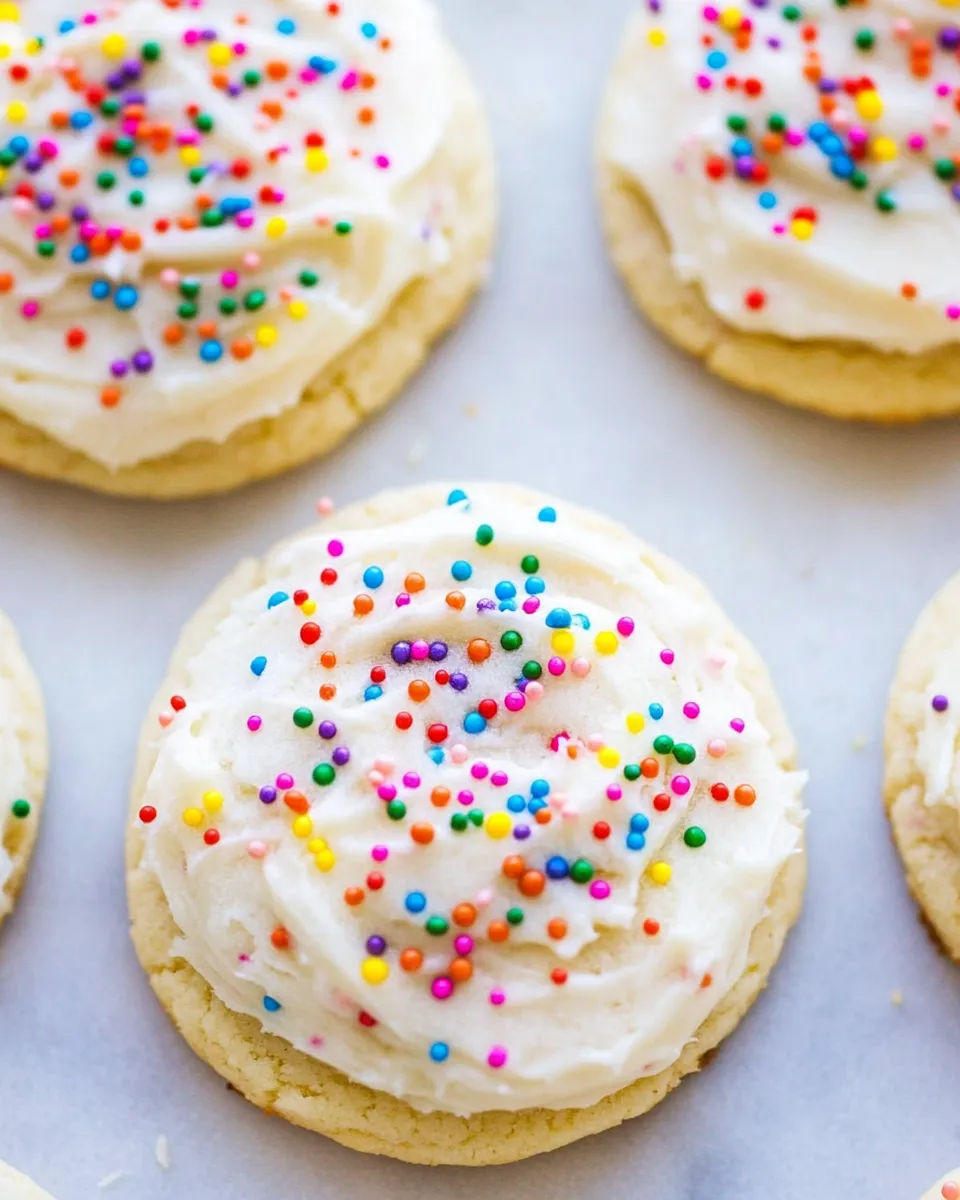
These cookies hit a few happy notes at once: they’re soft, lightly sweet, and decorated-ready. The texture is forgiving—chewy inside with a tender crumb—thanks to a combination of butter and oil in the dough. The sugared top gives a subtle sparkle without overpowering the vanilla-almond flavors.
They’re also practical. The dough requires no extensive chilling, and you can bake in batches. The frosting is quick, and it spreads easily without tearing the cookie surface. If you bake for a crowd or need a last-minute batch, this recipe scales well and stays stable at room temperature for a couple of days.
Smart Substitutions

Need to swap something out? Here are safe changes that keep the result close to the original.
- Butter in dough — You can use all butter (instead of butter + oil) for more butter flavor, but texture will be a bit crisper. The original uses both for tenderness.
- Oil — Use any neutral oil (vegetable or canola) as listed. Light olive oil will change flavor, so avoid it unless you enjoy that profile.
- Heavy cream or milk in frosting — Use milk to thin the frosting; cream will make it richer. Start with the listed 3 tablespoons and adjust slowly.
- Almond extract — If you don’t like almond flavor, omit it and add an extra 1/2 teaspoon vanilla to the dough and 1/2 teaspoon to the frosting to keep balance.
- Granulated sugar coating — If you prefer a softer top, roll cookies only in powdered sugar instead of granulated, but the appearance will be different.
Tools of the Trade
Simple tools make this recipe smooth to execute:
- Electric mixer — for creaming butter and making a smooth frosting.
- Measuring cups and spoons — accuracy matters, especially for flour and leaveners.
- Scoop or tablespoon — for even cookie sizes (about 2 tablespoons per cookie).
- Baking sheet and parchment or silicone mat — prevents sticking and gives even browning.
- Wire cooling rack — essential for cooling and keeping cookies from steaming on the sheet.
- Drinking glass and nonstick spray — the classic method used to flatten cookies evenly and get that sugared top.
Common Errors (and Fixes)
Cookies spread too much
Likely causes: dough overworked or your oven runs hot. Fixes: mix just until the dough comes together (step 5). Chill the dough briefly for 10–15 minutes if your kitchen is very warm. Confirm oven temperature with an oven thermometer.
Cookies are dense or hard
If you overbake or use too much flour, cookies firm up. Bake exactly 8 minutes and remove while centers still look slightly soft. Measure flour properly—spoon it into the cup and level off instead of scooping.
Frosting is grainy or too thin
If you added liquid too quickly or didn’t sift the powdered sugar, the buttercream can be inconsistent. Use sifted powdered sugar (the recipe specifies it) and add cream slowly. If it’s too thin, add more powdered sugar; if too thick, add a little cream.
Dietary Swaps & Alternatives
These cookies are designed on traditional ingredients. If you need dietary adjustments, here are practical options and what to expect.
- Egg substitute — Use a commercial egg replacer or 1/4 cup applesauce per egg. Texture may be slightly different; applesauce will make cookies a touch denser and moister.
- Dairy-free — Use dairy-free butter alternatives and non-dairy milk or cream for the frosting. Flavor will be similar but slightly less rich.
- Gluten-free — Swap in a 1:1 gluten-free baking flour blend with xanthan gum. Texture can change; allow dough to rest 10–15 minutes before scooping to hydrate the flour.
Behind-the-Scenes Notes
This recipe balances butter and oil. Butter brings flavor; oil keeps the crumb soft and the cookie staying tender for days. Cream of tartar helps with chew and a subtle lift—it’s the reason these cookies keep that soft, slightly tangy bakery bite.
The sugared glass technique is old-school but effective: coating the glass bottom with sugar prevents sticking and gives the top a uniform finish. If you want perfectly smooth tops instead of sugared ones, skip the sugar and use a lightly floured or sprayed disk to press.
Meal Prep & Storage Notes
These cookies are friendly to batch-making. You can scoop dough and freeze the balls on a sheet tray, then transfer to a bag. Bake from frozen; add 1–2 minutes to the bake time and watch closely. Frosted cookies keep in an airtight container at room temperature for up to 3 days as the recipe states.
If you need longer storage: store unfrosted baked cookies in an airtight container for up to 1 week. Freeze unfrosted baked cookies for up to 3 months. Thaw at room temperature before frosting. For frosted cookies, freeze single-layer on a tray until firm, then stack with parchment between layers and store in an airtight container; thaw gently in the refrigerator or at room temperature.
Top Questions & Answers
Q: Can I make the dough ahead?
A: Yes. Refrigerate the dough for up to 24 hours. Let it warm slightly at room temperature if it’s too firm to scoop. You can also freeze scooped dough balls for later baking.
Q: My frosting tastes too oily—what happened?
A: That usually means the butter was too warm or the powdered sugar wasn’t enough. Chill the butter briefly before re-beating, or add a touch more powdered sugar to balance fat.
Q: Can I pipe the frosting?
A: This buttercream is spreadable and can be piped if you adjust consistency: add a touch less cream to thicken, and ensure it’s smooth with no air pockets. Use a wider tip for best results.
Ready, Set, Cook
Preheat your oven and line a sheet. Measure the flour and sift the powdered sugar for the frosting. Follow the steps in the order given and resist the urge to overmix. Bake for the short, exact time called for—8 minutes—and let the cookies rest briefly on the sheet before transferring to the rack.
When frosting, work with completely cooled cookies so the buttercream stays glossy and smooth. Add sprinkles right after frosting so they adhere. Enjoy the process; these cookies are forgiving and reward attention more than perfection.

Easy Frosted Sugar Cookies
Ingredients
Equipment
Method
- Preheat oven to 350°F (175°C). Line a large baking sheet with parchment paper or a silicone baking mat.
- In a large bowl, whisk together 2 3/4 cups all-purpose flour, 1/2 teaspoon baking soda, 1/2 teaspoon cream of tartar, and 1/2 teaspoon kosher salt. Set the dry mixture aside.
- In a separate large bowl, use an electric mixer to beat 1/2 cup (1 stick) unsalted butter (room temperature), 1/2 cup vegetable or canola oil, 1/2 cup of the granulated white sugar, and 1/2 cup powdered sugar until smooth and combined.
- Add 1 large egg, 1 teaspoon vanilla extract, and 1/2 teaspoon almond extract to the butter mixture. Mix until incorporated.
- With the mixer on low speed, add the dry ingredient mixture to the wet ingredients and mix just until the dough comes together. Do not overmix.
- Scoop or roll the dough into about 24 balls (about 2 tablespoons of dough per cookie). Place the dough balls on the prepared baking sheet about 2 inches apart. (Not all cookies will fit on the sheet at once—bake in batches.)
- Pour the remaining 1/4 cup granulated white sugar onto a small plate. Spray the bottom of a drinking glass lightly with nonstick cooking spray and press the glass bottom into the sugar so it is coated.
- Press the sugared glass bottom gently onto the top of each dough ball to flatten to a cookie shape. Re-coat the glass with sugar as needed between cookies to prevent sticking and to keep an even sugared top.
- Bake cookies in the preheated 350°F oven for 8 minutes. Do not overbake: cookies will still look light in color and soft in the center—this is correct.
- Remove the baking sheet from the oven and let the cookies cool on the sheet for 5 minutes. Transfer the cookies to a wire cooling rack to cool completely. Allow the baking sheet to cool completely before reusing for the next batch.
- For the frosting: in a large bowl, use a mixer to beat 3/4 cup (1 1/2 sticks) unsalted butter (room temperature) until smooth. Add 3 cups sifted powdered sugar and mix until combined.
- With the mixer running, stream in 3 tablespoons heavy cream or milk, 1 1/2 teaspoons pure vanilla extract, and 3/4 teaspoon almond extract. Beat until the frosting is smooth. If the frosting is too thick, add a little more cream; if it is too thin, add a little more powdered sugar.
- Use a butter knife to spread the frosting over the tops of the cooled cookies. Decorate with sprinkles, if desired.
- Store frosted cookies in an airtight container at room temperature for up to 3 days.