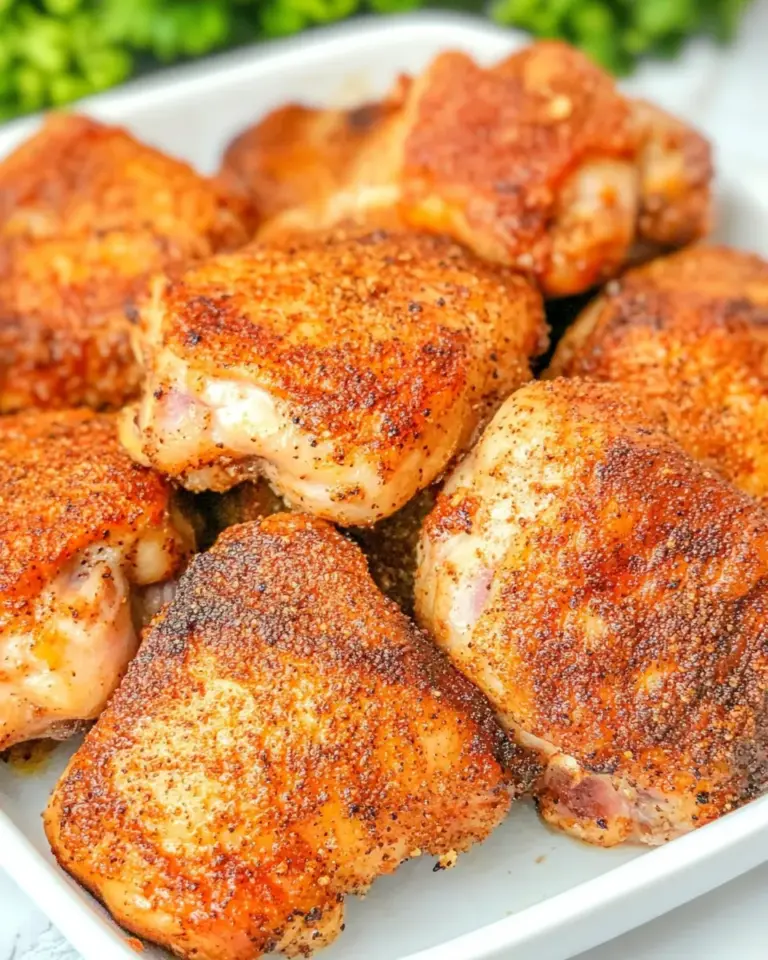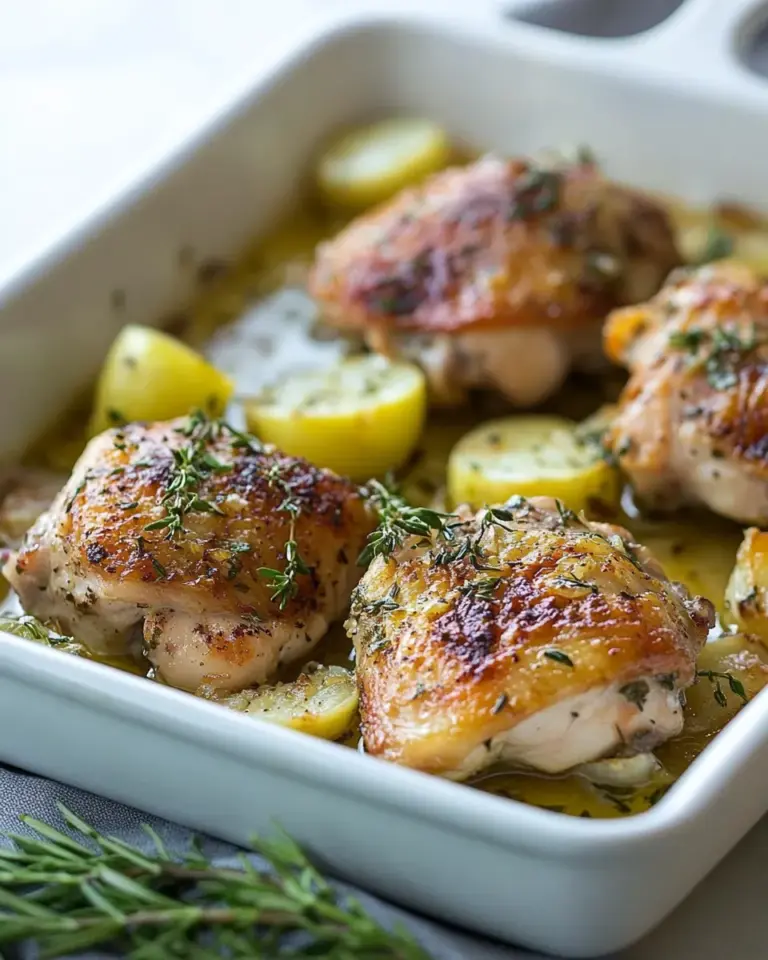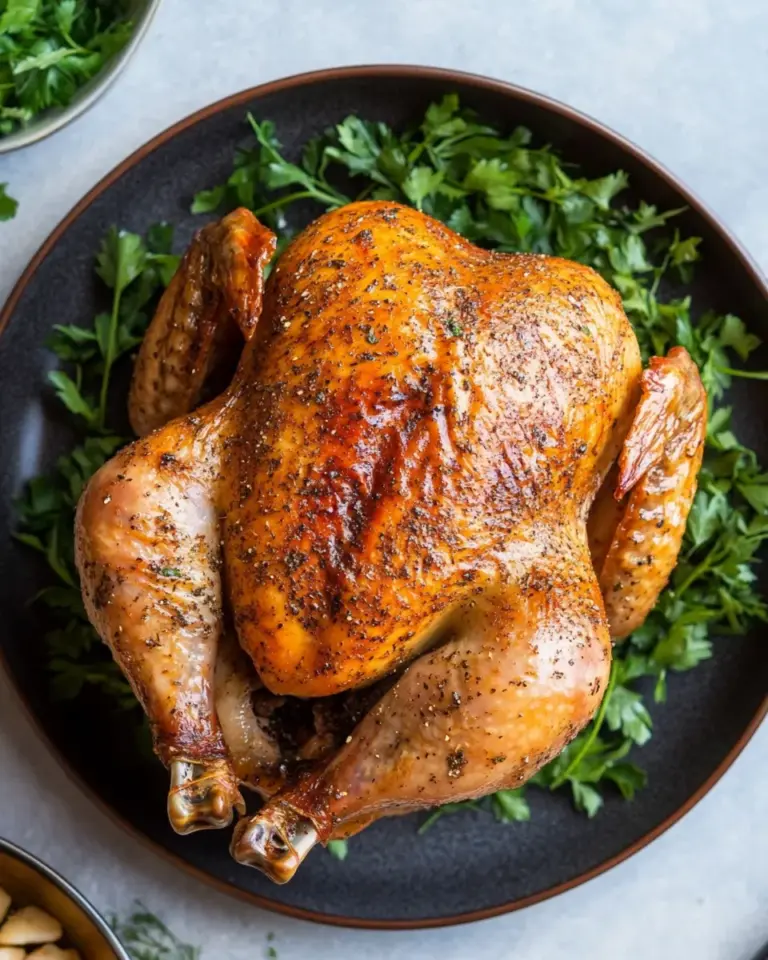
Everything Roasted Chicken
I test and cook whole chickens more than I probably should admit. There’s comfort in a simple method that consistently delivers crisp skin, juicy meat, and pan juices that pull a family together at the table. This Everything Roasted Chicken is exactly that: straightforward, forgiving, and built around one reliable roast technique.
No fancy brines and no marathon prep. In about an hour and a half of oven time and a few careful steps you get a roast that looks like it came from a Sunday kitchen—golden skin, well-seasoned cavity, and meat that stays tender. I’ll walk you through the shopping, the exact steps to follow, what to watch for, and smart swaps if you need them.
Read this once, then bookmark it. It’s the sort of roast you’ll return to when you want a good meal without drama. Practical notes live here too: gear, common mistakes, and how to rescue or reuse leftovers.
Ingredients
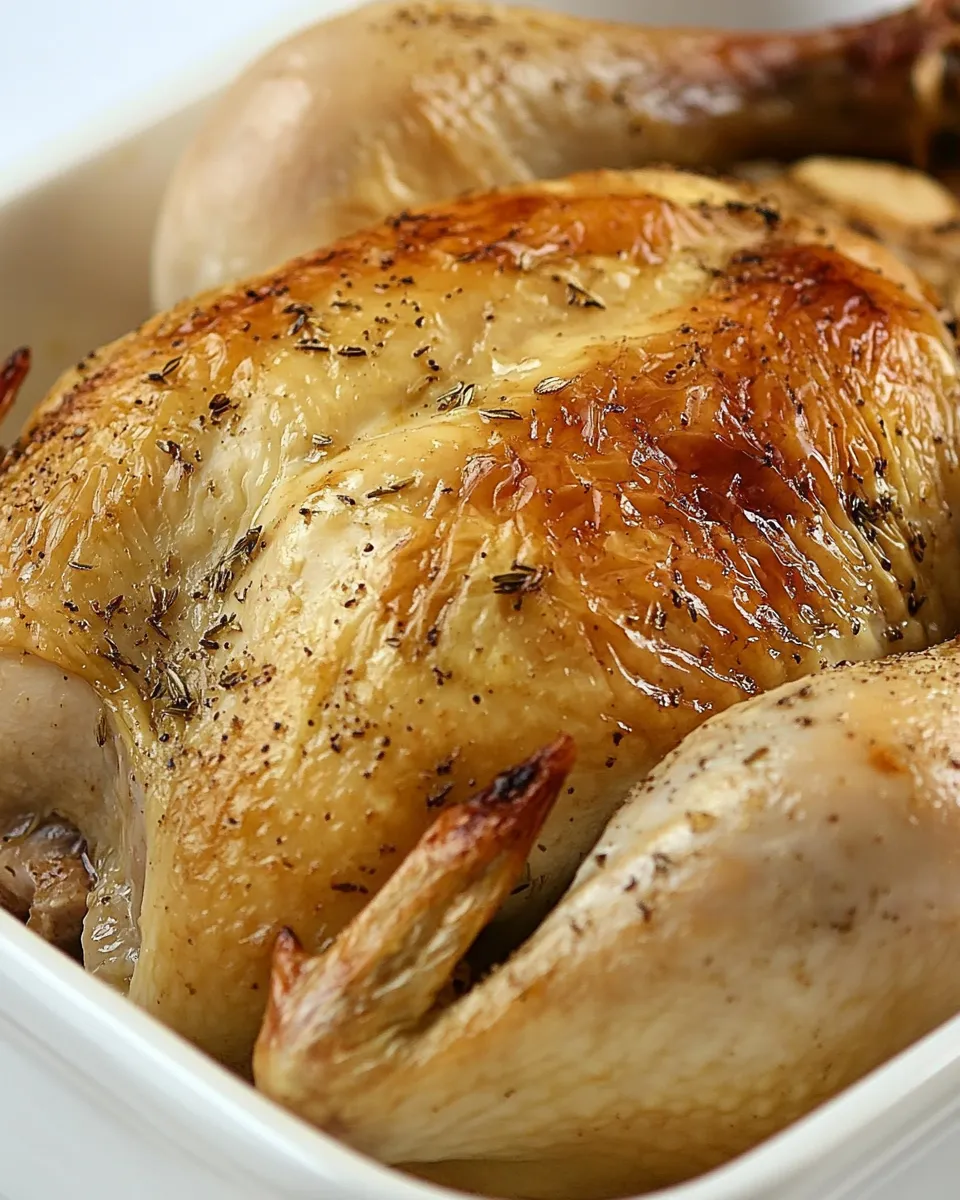
- 5 pound whole chicken — free-range organic recommended; the size and quality affect cooking time and flavor.
- 2 tablespoons extra virgin olive oil — helps the skin brown and carries the seasoning.
- 1 teaspoon black pepper — freshly ground; split between cavity and exterior for balanced seasoning.
- 1 teaspoon kosher or sea salt — split between cavity and exterior; salt is essential for flavor and skin texture.
Your Shopping Guide
Buy the best whole chicken your budget allows. A 5-pound (2.25 kg) bird is the target here; it fits the timing and oven space this recipe assumes. If you prefer labels—free-range or organic will likely give the most dependable flavor and texture, but a regular whole chicken works fine.
Salt matters. Kosher or sea salt provides predictable salting because of crystal size; table salt will be denser so use less if you switch. Freshly ground black pepper is worth the tiny extra effort—it tastes brighter than pre-ground in this simple preparation.
Pick a roast pan that’s large enough to let air circulate around the chicken but not so huge the pan juices are wasted. You’ll also want reliable kitchen twine, good paper towels, and an instant-read thermometer—non-negotiable if you want consistent doneness.
Everything Roasted Chicken, Made Easy
- Position an oven rack in the center and preheat the oven to 450°F (232°C).
- Confirm the 5‑pound whole chicken is completely thawed. Remove the neck and giblets bag from the cavity and discard or save for broth. Pat the chicken dry inside and out with paper towels.
- Sprinkle 1/2 teaspoon of the kosher/sea salt and 1/2 teaspoon of the black pepper into the chicken cavity.
- Rub the outside of the chicken all over with 2 tablespoons extra virgin olive oil.
- Sprinkle the outside of the chicken with the remaining 1/2 teaspoon kosher/sea salt and 1/2 teaspoon black pepper. If desired, tie the legs together with kitchen twine.
- Place the chicken breast‑side up in a roasting pan. Cover the pan loosely with a lid or aluminum foil.
- Roast, covered, at 450°F for 30 minutes. After 30 minutes, remove the cover (if using foil, fold it back) and reduce the oven temperature to 400°F (204°C).
- Continue roasting, uncovered, at 400°F for about 1 hour more, or until an instant‑read thermometer inserted into the thickest part of a thigh (not touching bone) reads 180°F.
- Remove the roasting pan from the oven and let the chicken rest in the pan for 10–15 minutes. Transfer the chicken to a serving platter and drizzle with the pan juices before serving.
Why This Recipe is a Keeper
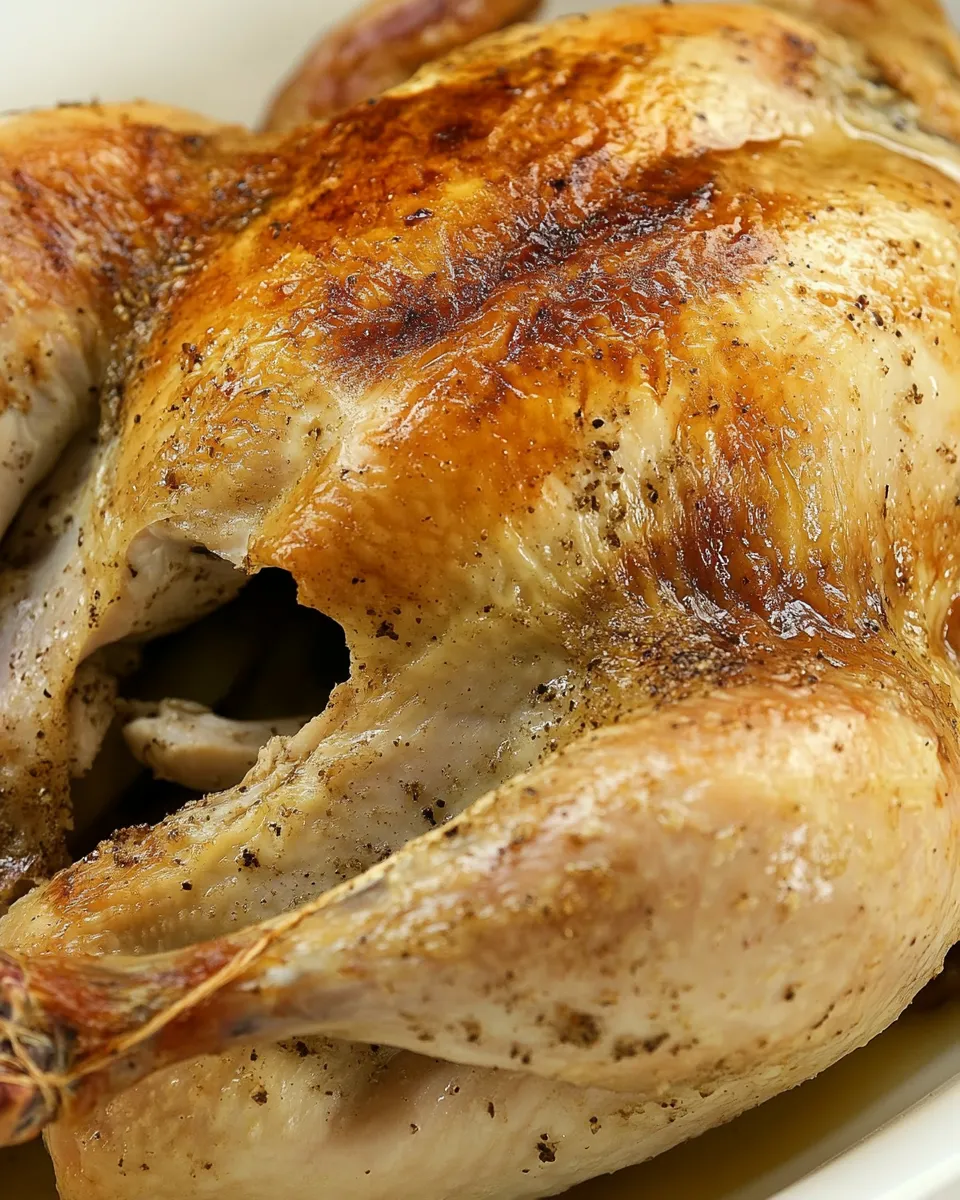
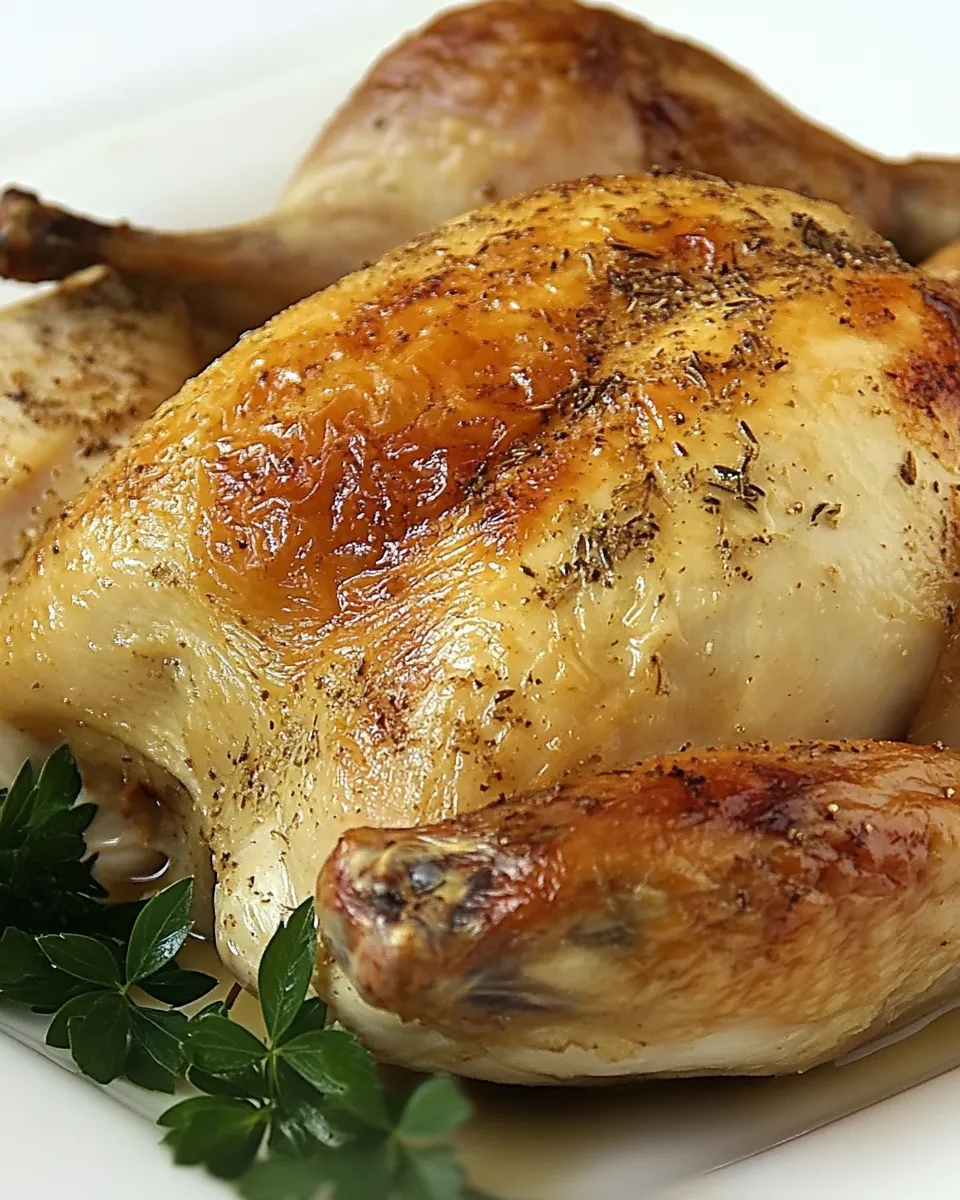
This roast strikes the right balance between speed and depth. High heat for the first 30 minutes gives the skin a jump-start—browning and rendering fat—while the rest period at a slightly lower temperature finishes the cook gently. That two-stage roast keeps the meat moist and develops a real roast flavor without constant attention.
I like that the seasoning is intentionally minimal: salt, pepper, and olive oil. With a whole bird, you don’t need a parade of seasonings to make great chicken. The cavity gets a little salt and pepper to season the interior meat, and the oil on the skin makes sure the outside crisps properly.
Finally, the resting period is just as important as the roast. Ten to fifteen minutes lets the juices redistribute. Carve too soon and you’ll lose them—wait and you’ll be rewarded with moister slices and flavor-packed pan juices to spoon over the meat.
Smart Substitutions
- Butter for olive oil — swap melted butter or ghee for a richer skin and subtle browning; use the same amount.
- Herbs and aromatics — tuck whole garlic cloves, lemon halves, or herb bunches in the cavity if you want aromatic notes; no change to cook time needed.
- Lower oven starting temp — if your oven runs hot, you can start at 425°F instead of 450°F but expect slightly longer overall roast time.
- Vegetarian option — not applicable here; if you want a similar roast technique for vegetables, use the same oil, salt, and high-then-moderate oven approach for sturdy veggies.
Gear Checklist
- Roasting pan — large enough for the chicken with a little room; a rimmed sheet pan with a rack also works.
- Instant-read thermometer — essential for checking thigh temperature without guesswork.
- Kitchen twine — optional, for tying legs if you like a neat presentation.
- Aluminum foil or pan lid — to cover for the first high-heat stage and keep the bird from drying out.
- Paper towels — for thorough drying; dryness equals crispiness.
Common Errors (and Fixes)
Under-seasoning: this recipe uses just 1 teaspoon salt total; if you prefer stronger seasoning, increase slowly and taste the leftovers before adjusting the next roast. Salt distributed between cavity and skin seasons the bird through and through.
Not drying the chicken: moisture on the skin steams rather than crisps. Pat inside and out until the skin feels dry. This single step makes a big difference.
Skipping the thermometer: visual cues lie. The thigh is the most reliable spot for an accurate temperature check. Aim for 180°F in the thigh to ensure safe, fully cooked dark meat without overcooking the breast.
Removing the bird too soon from the pan: let the chicken rest 10–15 minutes in the pan. Resting keeps juices inside the meat. Covering tightly during rest will soften the skin; leave it loosely tented only if you must keep it warm.
Substitutions by Diet
Low-sodium: reduce total salt and finish servings with a squeeze of lemon or a sprinkle of fresh herbs to add brightness without extra sodium.
Keto/Paleo: this recipe is already compliant—whole chicken, oil, salt, and pepper. Use ghee in place of olive oil if you prefer a dairy-based fat for paleo alignment (ghee is clarified butter).
Gluten-free: naturally gluten-free. Double-check any pan coatings or tools if you’re concerned about cross-contamination in a shared kitchen.
Little Things that Matter
Dry thoroughly and give the chicken a few minutes at room temperature before it goes in the oven so it cooks evenly. Trussing is optional—tying the legs keeps a neat shape and helps the thighs cook slightly more uniformly, but leaving the legs untied gives a slightly faster crisp on the skin between the legs.
Fold the foil back rather than tossing it; this traps heat during the first stage and then allows air to circulate when you remove it. Save the pan juices. They are concentrated flavor—either drizzle over the carved bird or strain and reduce slightly on the stovetop for a quick sauce.
Carving matters. Wait for those 10–15 minutes of rest before carving. Slice breast meat against the grain for tender pieces, and cut thighs from the bone to preserve juiciness.
Save It for Later
Storage: refrigerate leftovers within two hours of cooking in an airtight container. Consume within 3–4 days. For longer storage, remove meat from bones, place in freezer-safe bags, squeeze out excess air, and freeze up to 3 months for best quality.
Reheating: gentle is best. Warm slices on a baking sheet at 300°F until heated through to avoid drying. Alternatively, heat in a covered skillet with a splash of stock or water over medium-low heat to steam briefly, which keeps the meat moist.
Leftover ideas: shredded chicken works in salads, tacos, soups, and sandwiches. Use the carcass to make a basic broth—roast it a bit longer with aromatics, then simmer for several hours to extract flavor.
Everything Roasted Chicken Q&A
How long should a 5-pound chicken roast?
Follow the timing in the recipe: 30 minutes covered at 450°F, then about 1 hour uncovered at 400°F. Because ovens vary, the instant-read thermometer is your final say—180°F in the thigh.
Can I skip the high-heat start?
You can roast the chicken at a steady 400°F for longer, but the high-heat burst at the start accelerates browning and rendering of the skin fat. Skipping it may result in paler skin and slightly different texture.
My chicken skin wasn’t crispy—what went wrong?
Likely moisture on the skin or too-tight covering during the first stage. Pat the chicken thoroughly dry and cover loosely so steam can escape when instructed. Also check oven temperature accuracy; an oven thermometer helps.
Is 180°F in the thigh really necessary?
For dark meat and safety, 180°F ensures that the collagen has softened and the meat is fully cooked. White meat (breast) will be done earlier, but following the recipe’s temperature for the thigh preserves overall texture and safety.
What do I do with the giblets?
Save them for broth or discard. They’ll add depth to a stock if you choose to simmer them with vegetables and herbs for a couple of hours.
Next Steps
Make this roast a habit. Start with exactly what’s written here once or twice, then adapt: try a lemon and herb cavity one week, or butter under the skin the next. The method stays the same—high heat to start, finish at a moderate temperature, and rest before carving—and you’ll keep winning.
If you want a companion side, roast root vegetables in the same oven while the bird finishes. They’ll pick up flavor and require little babysitting. And if you end up with too much meat, freeze portions for quick weeknight meals. Tell your family you did something simple—and delicious.
Everything Roasted Chicken
Ingredients
Equipment
Method
- Position an oven rack in the center and preheat the oven to 450°F (232°C).
- Confirm the 5‑pound whole chicken is completely thawed. Remove the neck and giblets bag from the cavity and discard or save for broth. Pat the chicken dry inside and out with paper towels.
- Sprinkle 1/2 teaspoon of the kosher/sea salt and 1/2 teaspoon of the black pepper into the chicken cavity.
- Rub the outside of the chicken all over with 2 tablespoons extra virgin olive oil.
- Sprinkle the outside of the chicken with the remaining 1/2 teaspoon kosher/sea salt and 1/2 teaspoon black pepper. If desired, tie the legs together with kitchen twine.
- Place the chicken breast‑side up in a roasting pan. Cover the pan loosely with a lid or aluminum foil.
- Roast, covered, at 450°F for 30 minutes. After 30 minutes, remove the cover (if using foil, fold it back) and reduce the oven temperature to 400°F (204°C).
- Continue roasting, uncovered, at 400°F for about 1 hour more, or until an instant‑read thermometer inserted into the thickest part of a thigh (not touching bone) reads 180°F.
- Remove the roasting pan from the oven and let the chicken rest in the pan for 10–15 minutes. Transfer the chicken to a serving platter and drizzle with the pan juices before serving.
Notes
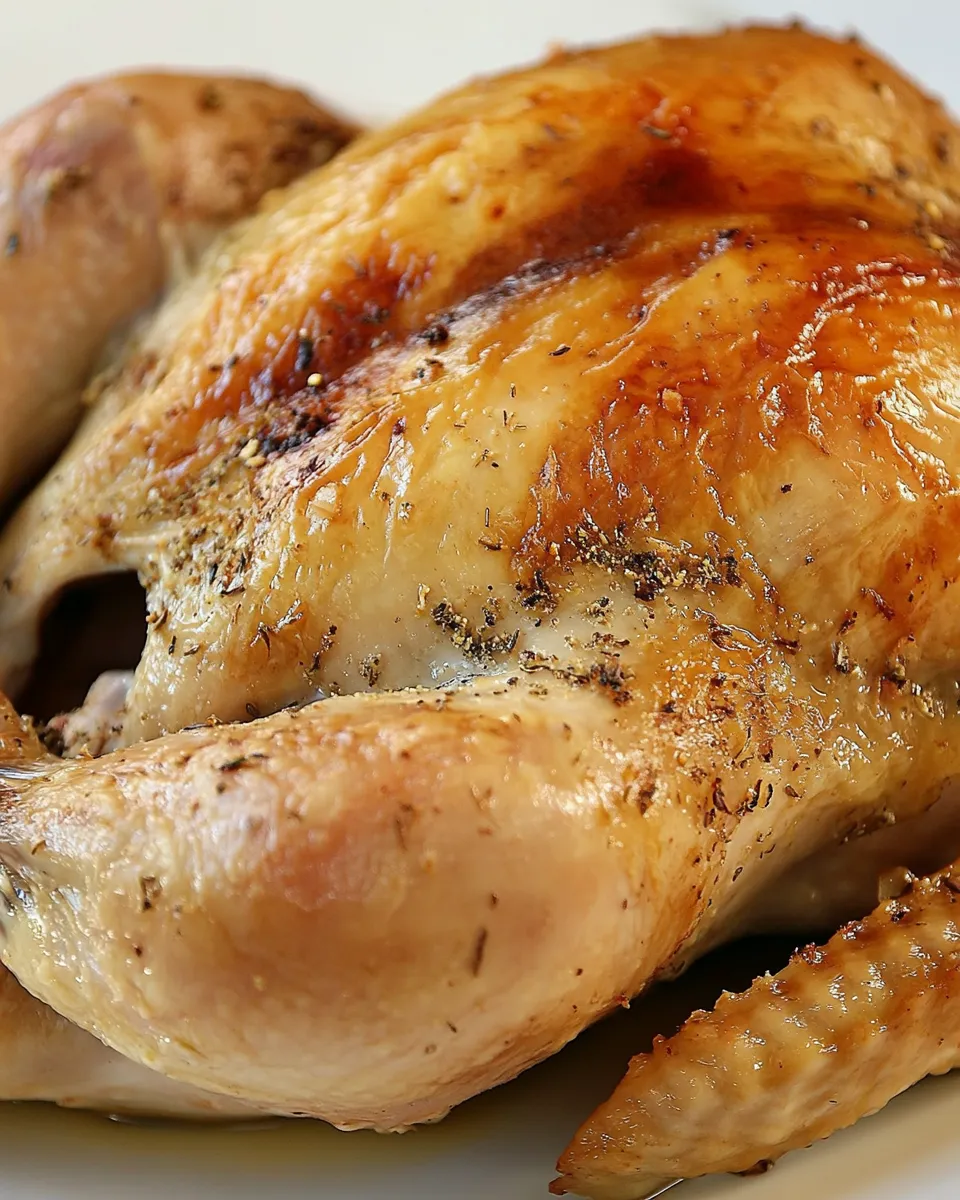
If you prefer, add additional herbs to the inside of the chicken. I love this chicken with just oil, salt, and pepper. It's super moist and fall off the bone delicious!