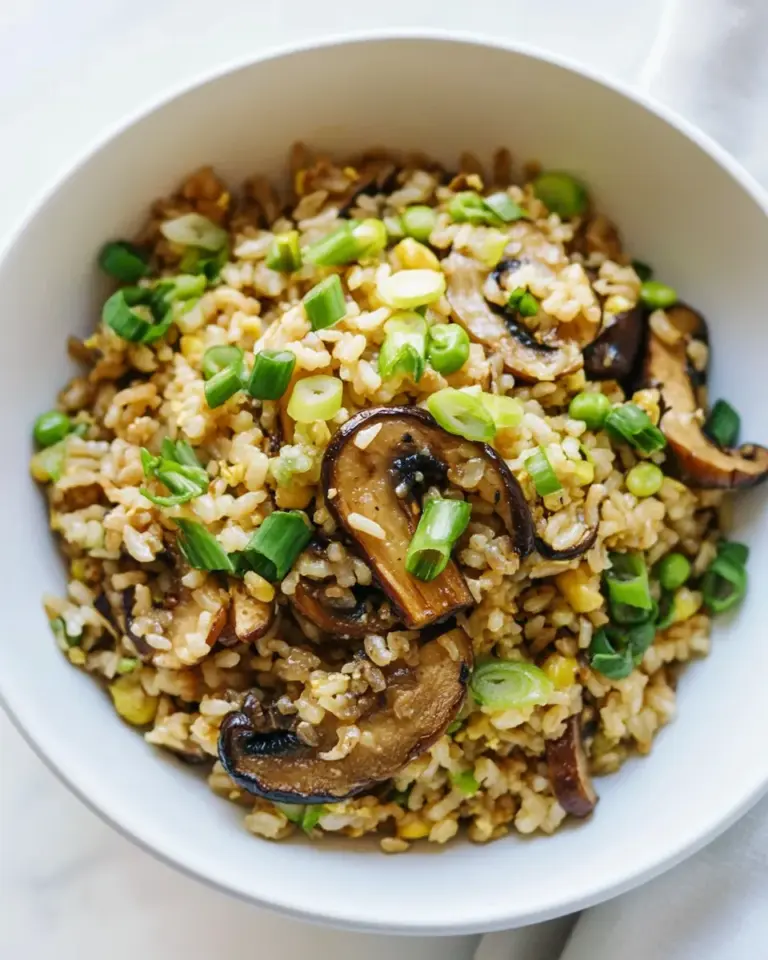
Frozen Seared Steak
I love recipes that solve a real problem: what to do when you want a restaurant-quality steak but didn’t get ahead of your schedule. This method gives you a deep, even crust with a gently finished interior without thawing the steak for hours. It’s straightforward, repeatable, and forgiving once you learn the timing cues.
No special marinades, no long brines, and no complicated temperature charts. You’ll briefly firm the steak in the freezer, sear hard on the stovetop, then finish in a low oven. The result is a steak that slices well, rests predictably, and tastes like you paid attention.
Below I walk through the exact ingredient list and step-by-step technique I tested in the blog kitchen. I include troubleshooting, substitutions, and storage notes so you can confidently make this any night of the week.
Gather These Ingredients
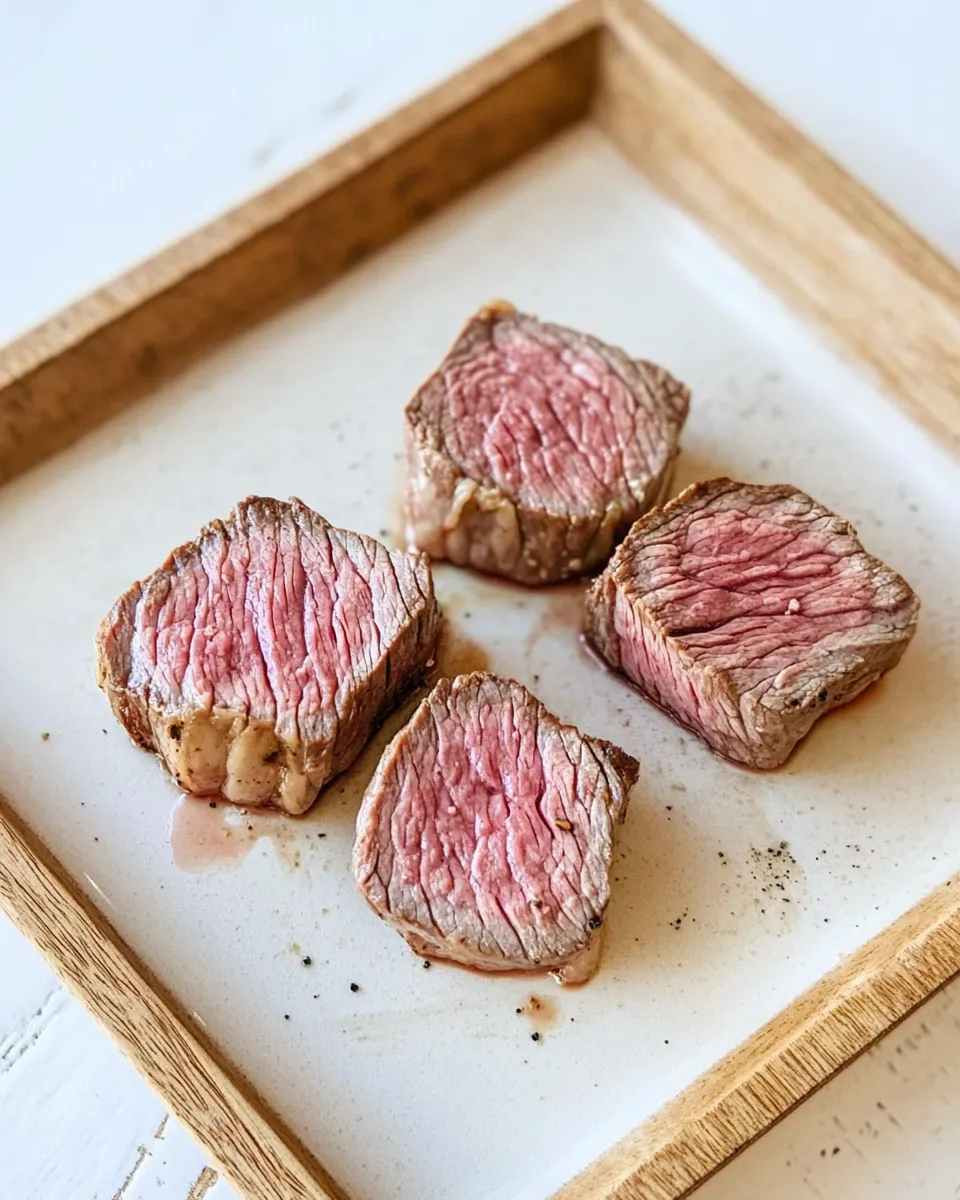
Ingredients
- 1bone-in porterhouse steak (about 1 ½- inch thick) — the bone helps carry heat and adds flavor; thickness is important for timing.
- Kosher salt — seasons surface and helps build a good crust; use generously.
- Freshly ground black pepper — adds aromatic heat; grind just before seasoning if possible.
- Safflower oil (or any oil with a high smoke point) — provides a stable hot surface for searing without burning.
Frozen Seared Steak Made Stepwise
- Wrap the porterhouse steak in plastic wrap or butcher paper and place it in the freezer for 1 hour. While the steak is freezing, preheat the oven to 200°F and position a rack in the center.
- Remove the steak from the freezer and unwrap it. Pat the steak dry with paper towels.
- Season both sides of the steak generously with kosher salt and freshly ground black pepper.
- Place a cast-iron skillet (or other heavy skillet) on the stovetop over high heat and heat until very hot — at least 10 minutes.
- Add a thin layer of safflower oil to the hot skillet. When the oil is shimmering, carefully set the steak in the skillet and sear one side only until a deep golden-brown crust forms, pressing the steak with tongs (or using a heavy-bottomed pot or press) to ensure even contact.
- Transfer the steak, seared side up, to a rimmed baking sheet and place it in the preheated oven. Cook until the internal temperature reaches your desired doneness: 125°F for rare, 145°F for medium, or 165°F for well done. (Expect roughly 30 minutes to 1 hour, depending on oven and steak.)
- Remove the steak from the oven, tent loosely with aluminum foil, and let it rest for 10 minutes.
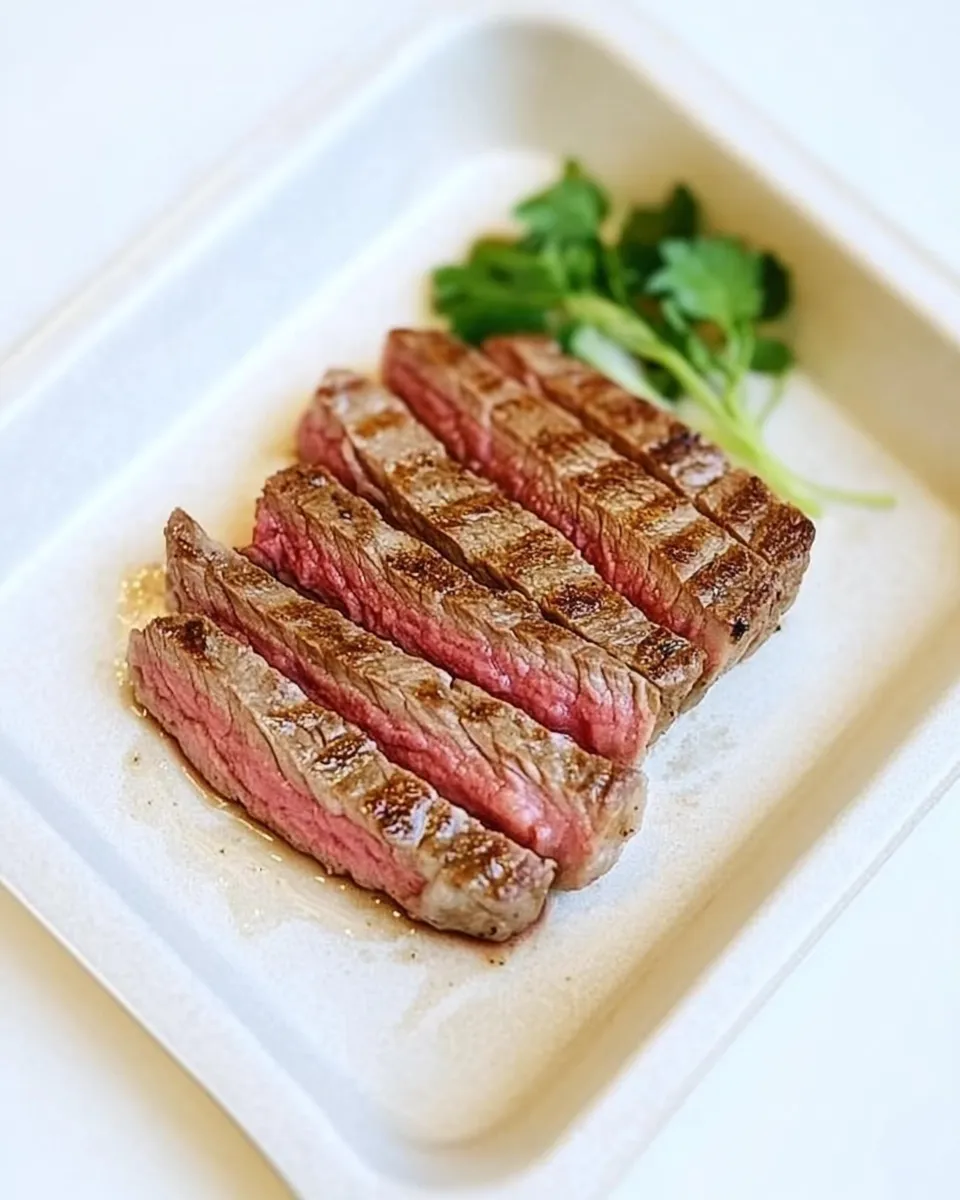
- Thinly slice the steak against the grain and finish with a final sprinkle of kosher salt if desired.
Why This Recipe Is Reliable
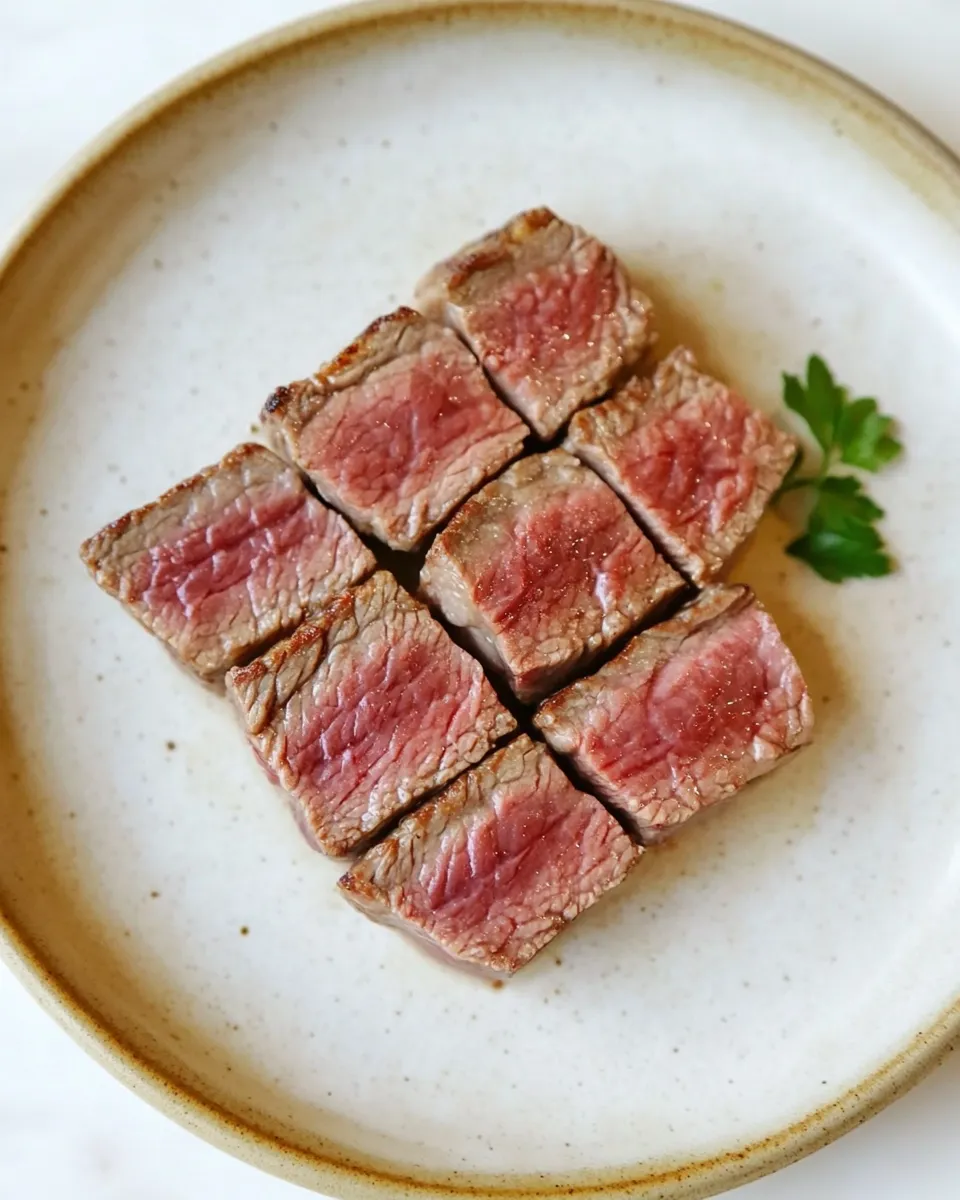
This technique controls two variables: surface temperature for the crust and low, steady heat for the interior. Briefly firming the steak in the freezer makes the center cold and slightly denser so the outer layer can form a deep crust before the core overcooks. Searing just one side concentrates Maillard reaction flavor without risking a scorched exterior on both faces.
Finishing in a low oven equalizes internal temperature gently. At 200°F the steak’s residual heat moves inward with minimal carryover, so you hit your target doneness without overshooting. The rest period locks the juices back into the fibers, making slicing cleaner and the final mouthfeel more consistent.
If You’re Out Of…
- Safflower oil: Use another high-smoke-point oil you have on hand—grapeseed, avocado, or refined peanut oil work well. Avoid extra-virgin olive oil for searing; its lower smoke point can burn.
- Kosher salt: If you only have table salt, use about half the volume, because table salt is denser. Taste and adjust after resting.
- Freshly ground black pepper: Pre-ground pepper is fine; add it after searing if it tends to darken quickly on your burner.
- Bone-in porterhouse: If you have a different thick steak cut, the method still applies, but adjust your expectations: very thin steaks won’t benefit as much from the freeze-and-sear approach.
Toolbox for This Recipe
- Cast-iron skillet or other heavy-bottomed skillet — for even, high-heat searing.
- Rimmed baking sheet — to catch juices and move steak into the oven easily.
- Instant-read thermometer — the single best tool to hit your preferred doneness precisely.
- Tongs and a sturdy press or heavy-bottomed pot (optional) — for even contact during sear.
- Plastic wrap or butcher paper and paper towels — for the initial brief freeze and drying.
Problems & Prevention
Crust isn’t deep enough
Cause: pan not hot enough or steak too wet. Prevention: heat the skillet for at least 10 minutes over high heat until it’s very hot, and pat the steak thoroughly dry before seasoning. Use a thin film of oil and wait until it shimmers before adding the steak.
Exterior burns before interior cooks
Cause: oil overheated or searing both sides for too long. Prevention: sear one side only as directed, and use an oil with a high smoke point. If your skillet starts to smoke excessively, pull it off the heat for a moment and reduce flame slightly before proceeding.
Steak is too tough or chewy
Cause: under-resting or slicing with the grain. Prevention: rest the steak loosely tented for the full 10 minutes, then slice thinly against the grain. Resting lets juices redistribute and fibers relax.
Temperature misses
Cause: inconsistent oven or thermometer inaccuracies. Prevention: position oven rack in the center, preheat to a stable 200°F, and use a calibrated instant-read thermometer to check doneness toward the end of the estimated oven time.
Variations for Dietary Needs
Although this is a beef-first recipe, the technique can be adapted to meet certain needs without changing the spirit of the method.
- Lower-sodium: Reduce the salt when seasoning or finish with salt at the table to control intake. Keep in mind salt influences crust formation and flavor.
- Smaller portions: Use a thinner or boneless steak if calorie control or portion size is a concern. The brief freeze still helps but reduce oven time accordingly; monitor with a thermometer.
- Allergy-aware: The recipe is naturally free from common allergens like dairy and nuts. Use neutral, high-smoke-point oil if you have oil allergies (avoid peanut if allergic).
Notes from the Test Kitchen
I ran this method on three separate steaks to lock timing and technique. The single-side sear produced the most consistent crust without charring both faces. The 1 ½-inch porterhouse hit target temps in roughly 35–50 minutes in my home oven; your oven’s recovery and the steak’s starting temperature will shift that window.
Key observations: pat drying matters. Even a little surface moisture turns to steam in the pan and prevents full crust formation. Also, the short freeze gives you a window where the exterior sears cleanly while the center stays cold enough to avoid overshoot. Finally, don’t skip the rest; slicing too early pushes juices out and leaves the meat drier.
Keep It Fresh: Storage Guide
Leftover sliced steak: cool to room temperature (no more than two hours), then transfer to an airtight container and refrigerate. Use within 3–4 days for best quality. Reheat gently — in a low oven (250–300°F) just until warmed through, or slice thin and reheat quickly in a hot pan for immediate service.
Freezing leftovers: wrap tightly in plastic wrap then foil, or vacuum-seal. Freeze up to 3 months. Thaw in the refrigerator overnight and reheat as above. Note: texture will change slightly after freezing and reheating; slices are best used in sandwiches, salads, or stir-ins.
Quick Q&A
Q: Why only sear one side?
A: Searing one side gives you a deep, controlled crust while keeping the other side from darkening too quickly. Finishing in the oven evens the internal temperature without overcooking the exterior.
Q: Can I skip the brief freezer step?
A: The freezer step firms the center slightly, helping the crust form before the interior warms. If you skip it, you may still get a good sear, but the interior will climb faster and may overcook before a deep crust develops.
Q: What if my steak is thicker or thinner than 1 ½ inches?
A: Thicker steaks will need more oven time; thinner steaks less. The method scales, but always rely on an instant-read thermometer rather than time alone.
Q: Is safflower oil necessary?
A: You need a neutral oil with a high smoke point. Safflower is recommended, but grapeseed or refined avocado oil are valid alternatives.
Q: How important is the rest time?
A: Very. The 10-minute rest lets juices redistribute and the steak relaxes, giving you cleaner slices and juicier bites.
That’s a Wrap
This Frozen Seared Steak approach is a practical, low-fuss way to get bold sear flavor and a controlled interior without hours of planning. It’s repeatable, adaptable, and ideal for nights when timing is tight but standards are not negotiable. Follow the steps, use an instant-read thermometer, and you’ll be slicing against the grain into a reliably good steak.
If you try it, tell me how your crust turned out and whether you went rare or medium. Small adjustments in pan heat or oven behavior make a surprisingly big difference, and I enjoy hearing what tweaks readers make in their kitchens.
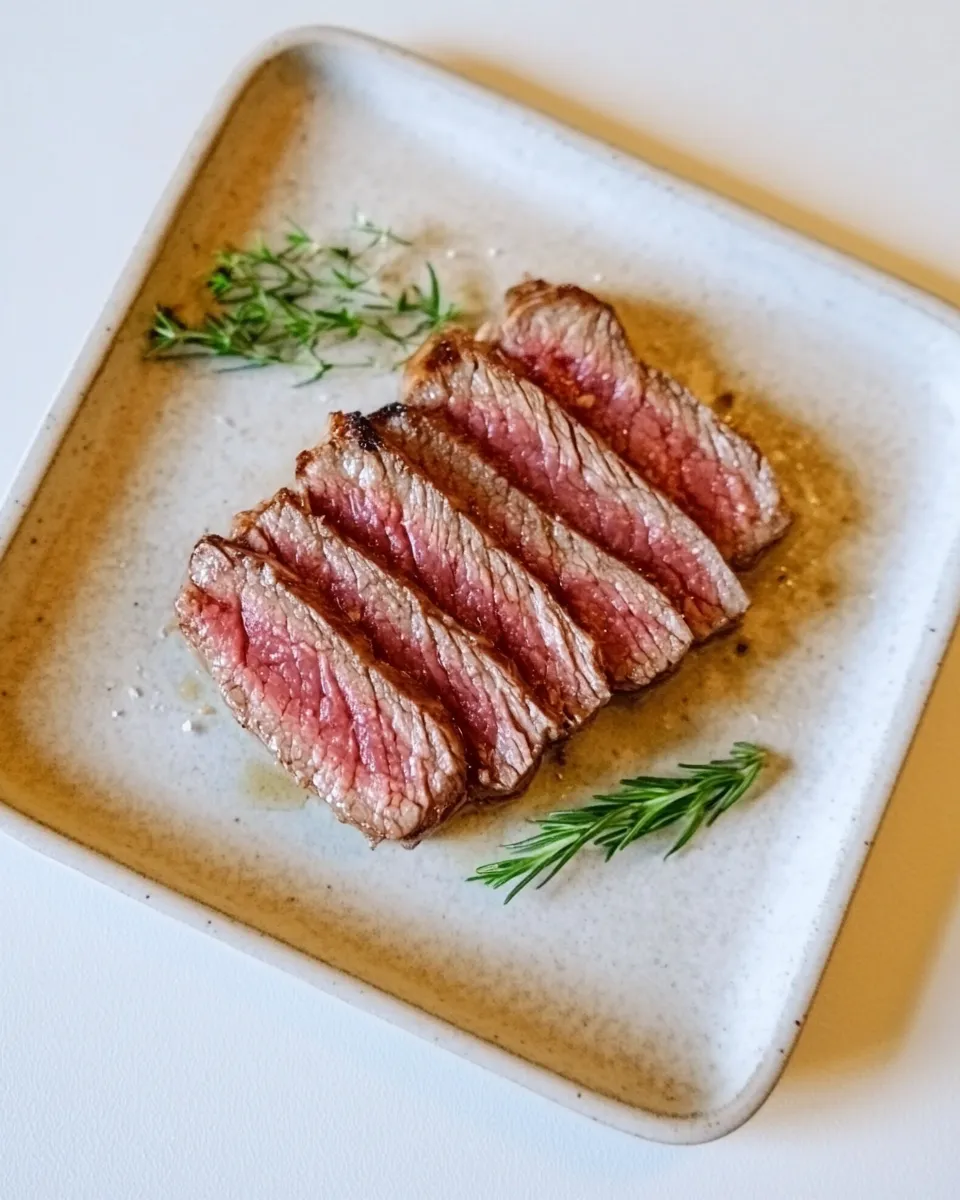
Frozen Seared Steak
Ingredients
Equipment
Method
- Wrap the porterhouse steak in plastic wrap or butcher paper and place it in the freezer for 1 hour. While the steak is freezing, preheat the oven to 200°F and position a rack in the center.
- Remove the steak from the freezer and unwrap it. Pat the steak dry with paper towels.
- Season both sides of the steak generously with kosher salt and freshly ground black pepper.
- Place a cast-iron skillet (or other heavy skillet) on the stovetop over high heat and heat until very hot — at least 10 minutes.
- Add a thin layer of safflower oil to the hot skillet. When the oil is shimmering, carefully set the steak in the skillet and sear one side only until a deep golden-brown crust forms, pressing the steak with tongs (or using a heavy-bottomed pot or press) to ensure even contact.
- Transfer the steak, seared side up, to a rimmed baking sheet and place it in the preheated oven. Cook until the internal temperature reaches your desired doneness: 125°F for rare, 145°F for medium, or 165°F for well done. (Expect roughly 30 minutes to 1 hour, depending on oven and steak.)
- Remove the steak from the oven, tent loosely with aluminum foil, and let it rest for 10 minutes.
- Thinly slice the steak against the grain and finish with a final sprinkle of kosher salt if desired.