Garlic Shrimp Stir-Fry
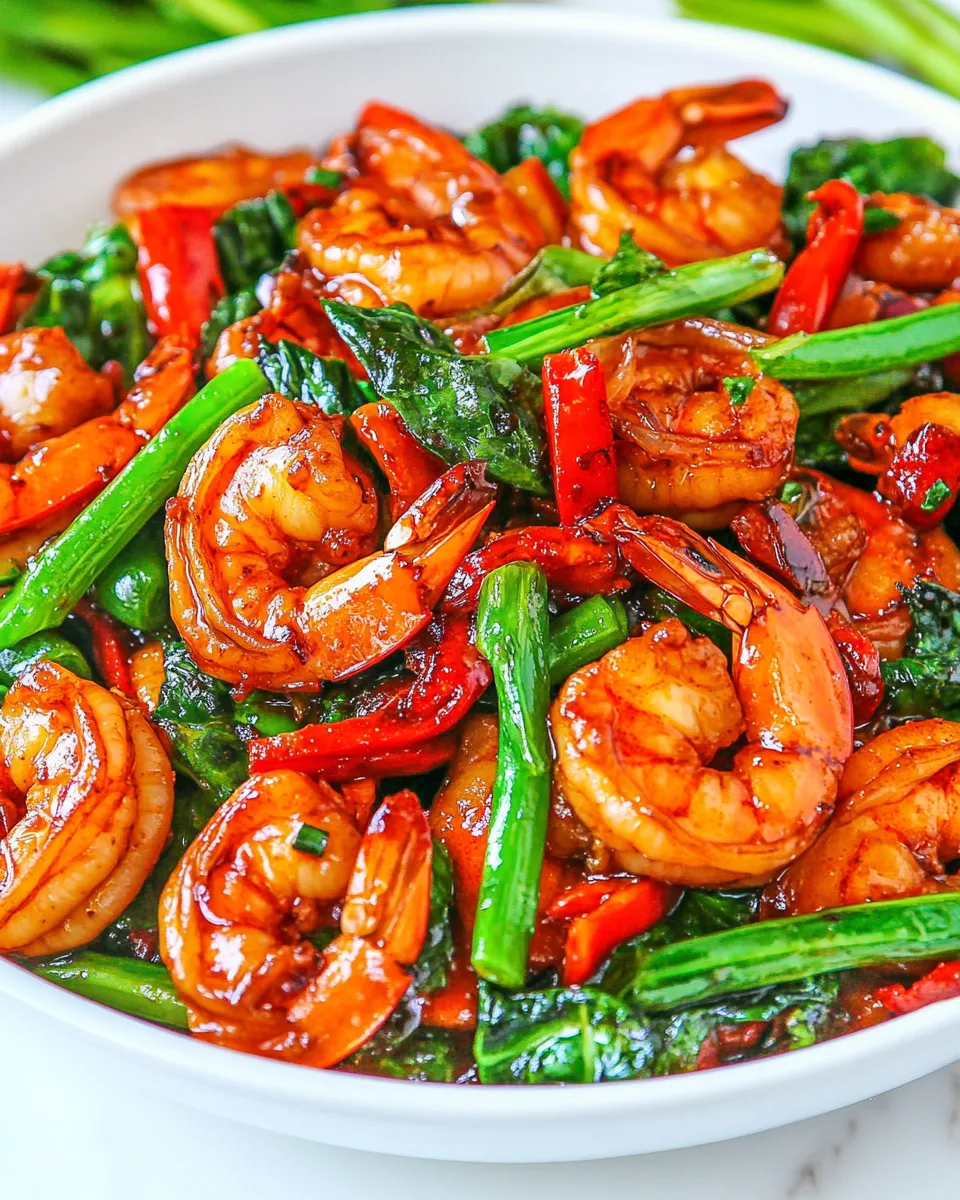
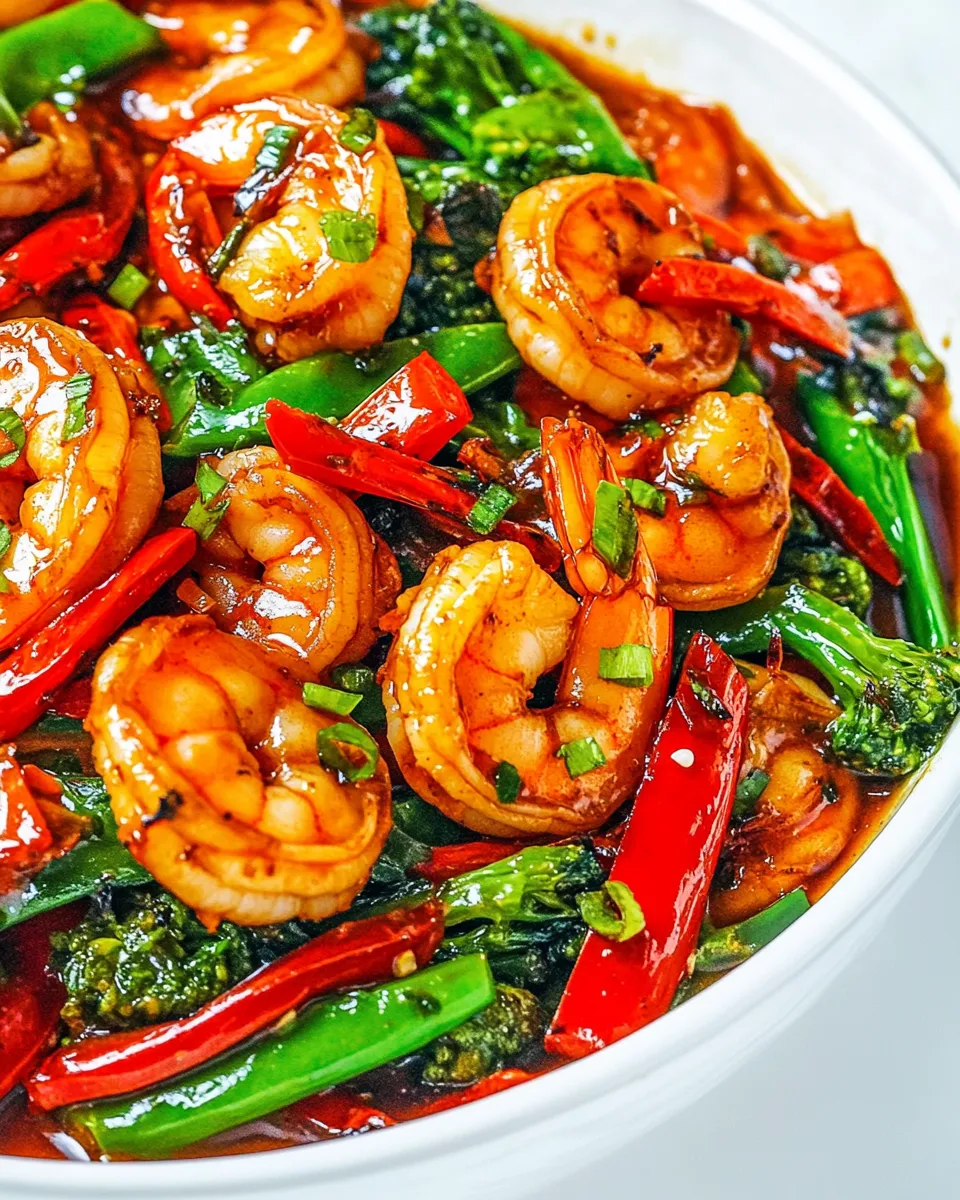
I rely on quick, dependable dinners most weeknights, and this Garlic Shrimp Stir-Fry is one I pull out when I want bright flavor without fuss. It’s one skillet, a handful of fresh vegetables, and a garlicky sauce that clings to shrimp and veg. The sauce is salty, slightly sweet, and just spicy enough if you follow the recipe’s suggestion for chili sauce.
The method is built around timing: the sauce is mixed first, vegetables cook until tender-crisp, then shrimp go in briefly so they finish in the sauce. That keeps the shrimp tender and the vegetables lively. I’ll walk you through each step, point out the small things that save time, and show which choices matter most for a fail-safe result.
This post is practical and pared down — prep tips, troubleshooting, and sensible swaps based only on the ingredients and instructions used in the recipe. If you’re ready, let’s get everything laid out so dinner comes together smoothly.
What Goes In
- 6 cloves garlic, peeled and very finely minced — the primary aromatic; mince finely so it blends into the sauce and won’t leave large bits.
- ⅓ cup lite soy sauce — provides the salty, savory backbone of the sauce; use lite for a cleaner salt level.
- ⅓ cup water — thins the sauce so it simmers into a glaze rather than a paste.
- 3 tablespoons light brown sugar, packed; or to taste — balances the soy; packed brown sugar adds a little molasses depth.
- 1 ½ tablespoons toasted sesame oil — nutty finishing flavor; stir it into the sauce for aroma and depth.
- 1 tablespoon chili sauce, or more to taste for more spiciness* — provides heat and a touch of sweetness; adjust to your tolerance.
- 1 tablespoon cornstarch — thickens the sauce as it simmers; dissolve fully when whisking the sauce.
- 3 tablespoons oil, peanut, vegetable or olive oil — the hot cooking oil for stir-frying; choose one of the three listed.
- 1 fresh red bell pepper, seeded and thinly sliced vertically — adds color, sweetness, and crunch; slice thin so it cooks quickly.
- 1 ½ cups raw broccoli florets, do not use frozen — provides heft and texture; raw florets hold up best in a quick stir-fry.
- 1 cup fresh snow peas — quick-cooking and sweet; keep them whole for snap.
- 1 small baby bok choy, sliced vertically into quarters — tender leaves plus crunchy stems; slice vertically so pieces cook evenly.
- 2 pounds large raw shrimp with tails on, peeled and deveined** — main protein; tails on help flavor and presentation, and large shrimp need only a short sear.
- Sesame seeds, green onions, cilantro, etc.; optional for garnishing — finishing touches that add texture, brightness, and visual appeal.
Stepwise Method: Garlic Shrimp Stir-Fry
- In a small bowl or 2-cup measuring cup, whisk together the minced garlic, 1/3 cup lite soy sauce, 1/3 cup water, 3 tablespoons light brown sugar (packed), 1 1/2 tablespoons toasted sesame oil, 1 tablespoon chili sauce (or more to taste), and 1 tablespoon cornstarch until smooth and the cornstarch is dissolved. Set the sauce aside.
- Heat a large, high-sided skillet or wok over medium-high heat. Add 3 tablespoons oil (peanut, vegetable, or olive) and heat until shimmering but not smoking.
- Add the sliced red bell pepper, 1 1/2 cups raw broccoli florets (do not use frozen), 1 cup snow peas, and 1 small baby bok choy (sliced vertically into quarters). Stir-fry, tossing frequently, about 4–5 minutes, until the vegetables are tender-crisp and beginning to soften.
- Push the vegetables to the edges of the skillet (or make space in the center) and add the 2 pounds large raw shrimp (tails on, peeled and deveined) in a single layer. Cook about 2 minutes per side, until the shrimp begin to turn pink and opaque but are not fully cooked through. Take care not to overcook the shrimp here.
- Slowly and evenly pour the reserved stir-fry sauce over the shrimp and vegetables. Stir to combine, reduce heat to medium or medium-low if needed, and maintain a gentle simmer.
- Simmer, stirring nearly constantly, for about 4–5 minutes, until the sauce has thickened and the shrimp are fully cooked (opaque and firm). The sauce may appear looser in the pan but will thicken as it cools.
- Remove from heat. Optionally garnish with sesame seeds, green onions, cilantro, etc., and serve immediately with rice or noodles.
What Sets This Recipe Apart
There are three simple things that make this version stand out: the garlic-first sauce, the timing of shrimp addition, and the balance between a glossy, cornstarch-thickened glaze and bright vegetables.
Whisking cornstarch directly into the sauce (rather than making a separate slurry) cuts steps and ensures the cornstarch is evenly distributed. Adding shrimp after the vegetables have softened partially means the shrimp finish cooking in the sauce — that short final simmer is what keeps them tender and lets them soak up flavor.
Ingredient Flex Options
- Oil choice — recipe lists peanut, vegetable, or olive oil; use whichever you have. Peanut gives the most traditional neutral frying flavor; olive will add a slight fruitiness.
- Heat level — the recipe already allows extra chili sauce “or more to taste”; increase or decrease that single ingredient to adjust spice without changing other components.
- Garnish options — sesame seeds, green onions, cilantro are listed as optional; use one or a combination for visual contrast and brightness.
Gear Checklist
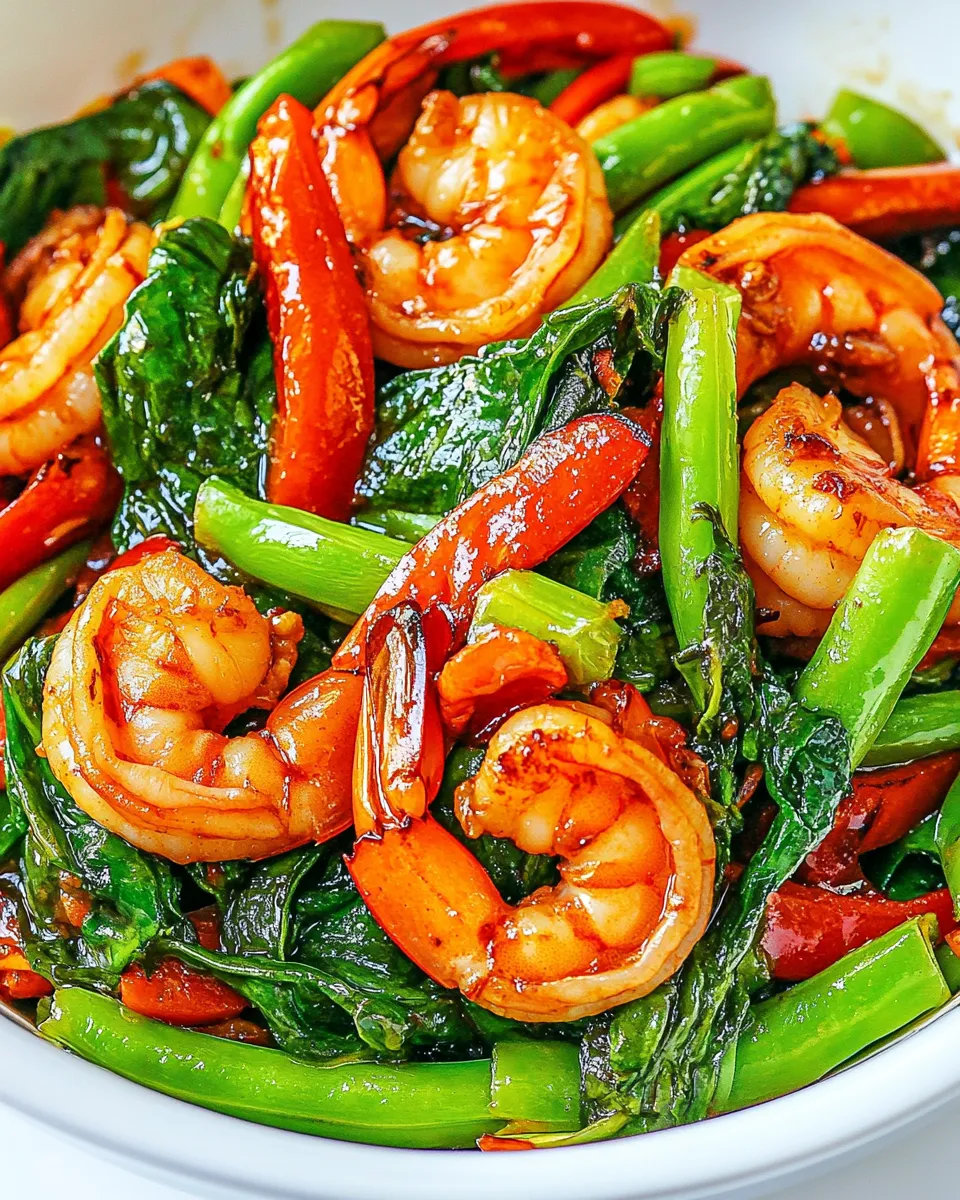
- Large, high-sided skillet or wok — required to hold shrimp and vegetables while allowing tossing and a final simmer.
- Small bowl or 2-cup measuring cup — to whisk and hold the sauce before adding it to the pan.
- Whisk or fork — to dissolve the cornstarch and combine the sauce smoothly.
- Tongs or a spatula — for pushing vegetables aside and turning shrimp.
- Sharp knife and cutting board — for prepping bell pepper, bok choy, and trimming shrimp if needed.
Things That Go Wrong
Overcooked shrimp: shrimp cook quickly. When they go in, they only need about 2 minutes per side before finishing in the sauce. If they’re stiff or rubbery, they were cooked too long. Prevent this by keeping heat high enough to sear but removing from heat the moment the sauce thickens and shrimp are opaque.
Watery sauce: if the sauce seems thin at the end, remember it will thicken slightly as it cools. If it’s still unsatisfyingly loose, raise the heat briefly to reduce it while stirring constantly. Avoid adding extra cornstarch mid-cook unless you dissolve it first — undissolved cornstarch can clump.
Soggy vegetables: stir-frying is fast. If vegetables are limp, the pan wasn’t hot enough or they were left in the pan too long. Use a hot skillet and aim to hit that 4–5 minute window for tender-crisp veg.
Dietary Customizations
Keep adjustments minimal and focused on the listed ingredients. If sodium or sugar is a concern, reduce the ⅓ cup lite soy sauce or the 3 tablespoons light brown sugar by small increments and taste. If you need more heat, add more of the included chili sauce; for milder results, use less.
For garnishes, stick to what’s listed: sesame seeds, green onions, and cilantro are optional and safe flavor boosters that don’t require changing the core recipe.
Testing Timeline
Prep (10–15 minutes)
Minced garlic takes a few minutes; slice the bell pepper, trim broccoli into florets, rinse snow peas, and quarter the baby bok choy. Peel and devein the shrimp if not already done. Having everything prepped and within reach is essential because the cooking stage moves quickly.
Cooking (10–12 minutes)
Heat pan and oil (1–2 minutes), stir-fry vegetables (4–5 minutes), sear shrimp (about 4 minutes total including both sides), then simmer with sauce (4–5 minutes). Total active stove time is roughly 10–12 minutes if you keep to the timeline in the directions.
Shelf Life & Storage
Leftovers should be cooled to room temperature and transferred to an airtight container. Store in the refrigerator and consume within 2 days for best texture and safety; shrimp-based dishes are best eaten within this time window. Reheat gently on the stovetop over low heat or in a microwave with a splash of water to loosen the sauce — avoid prolonged high heat which can overcook the shrimp and toughen vegetables.
Handy Q&A
Q: Can I use frozen broccoli? A: The recipe specifies raw broccoli florets and advises not to use frozen because frozen veg releases extra water and can make the stir-fry watery.
Q: Should shrimp be cooked through before adding sauce? A: No — the instructions call for shrimp to be started in the center of the pan until just turning pink, then finished in the simmering sauce. That prevents overcooking.
Q: What can I garnish with? A: Sesame seeds, green onions, cilantro are listed as optional garnishes. Use one or a combination for texture and freshness.
Q: Is cornstarch necessary? A: The cornstarch is the thickening agent that gives the sauce a glossy finish. It’s included in the exact amount in the sauce mixture so dissolve it fully when you whisk the sauce.
Ready, Set, Cook
Gather the ingredients, warm the pan, and have the sauce whisked before you turn on the heat. This is a one-skillet recipe that rewards good mise en place: all the chopping done, shrimp ready, and sauce mixed means you’ll move confidently from sizzling vegetables to glossy, flavorful shrimp in under 15 minutes.
Serve immediately with rice or noodles and a sprinkle of sesame seeds or sliced green onions if you like. The flavors come together fast and cleanly — garlic, a touch of sweetness, sesame aroma, and the snap of fresh vegetables. Once you’ve done it a couple of times, you’ll have the timing memorized and a reliable, weeknight go-to.
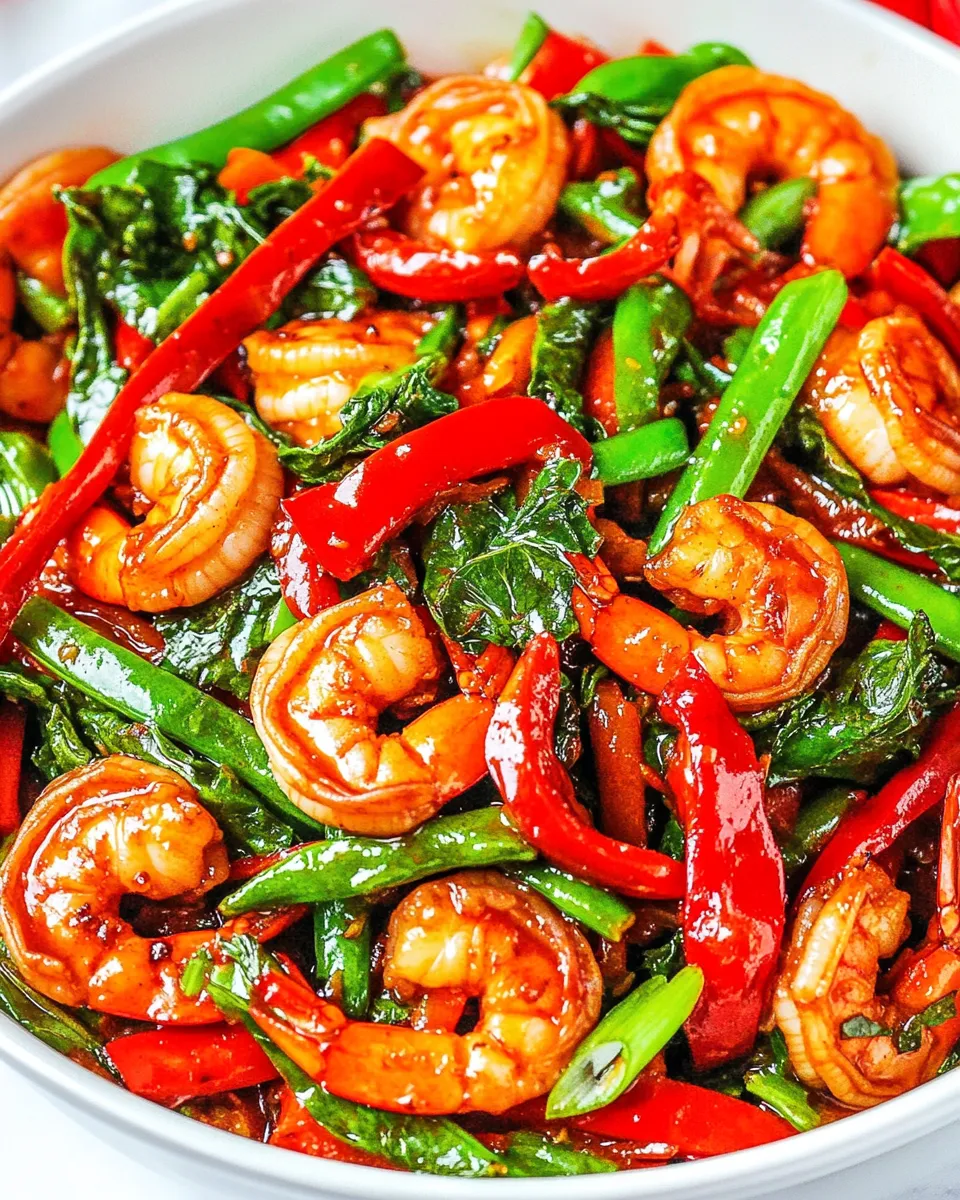
Garlic Shrimp Stir-Fry
Ingredients
Equipment
Method
- In a small bowl or 2-cup measuring cup, whisk together the minced garlic, 1/3 cup lite soy sauce, 1/3 cup water, 3 tablespoons light brown sugar (packed), 1 1/2 tablespoons toasted sesame oil, 1 tablespoon chili sauce (or more to taste), and 1 tablespoon cornstarch until smooth and the cornstarch is dissolved. Set the sauce aside.
- Heat a large, high-sided skillet or wok over medium-high heat. Add 3 tablespoons oil (peanut, vegetable, or olive) and heat until shimmering but not smoking.
- Add the sliced red bell pepper, 1 1/2 cups raw broccoli florets (do not use frozen), 1 cup snow peas, and 1 small baby bok choy (sliced vertically into quarters). Stir-fry, tossing frequently, about 4–5 minutes, until the vegetables are tender-crisp and beginning to soften.
- Push the vegetables to the edges of the skillet (or make space in the center) and add the 2 pounds large raw shrimp (tails on, peeled and deveined) in a single layer. Cook about 2 minutes per side, until the shrimp begin to turn pink and opaque but are not fully cooked through. Take care not to overcook the shrimp here.
- Slowly and evenly pour the reserved stir-fry sauce over the shrimp and vegetables. Stir to combine, reduce heat to medium or medium-low if needed, and maintain a gentle simmer.
- Simmer, stirring nearly constantly, for about 4–5 minutes, until the sauce has thickened and the shrimp are fully cooked (opaque and firm). The sauce may appear looser in the pan but will thicken as it cools.
- Remove from heat. Optionally garnish with sesame seeds, green onions, cilantro, etc., and serve immediately with rice or noodles.
Notes
*
There are two types of commonly found
chili garlic sauce
.
One is a more translucent sauce that’s got hints of orange and pink in it, and it’s often labeled as a
“
sweet
chili sauce”.
If you have a Trader Joe’s in your area, I use their
Sweet Chili Sauce
. The Thai Kitchen brand also makes a
Sweet Chili Sauce
which is easy to find in most grocery stores. Overall, this type of chili sauce is milder than the next type I discuss.
There’s also
chili
garlic
sauce.
It’s a much deeper, ruddier, and reddish color with visible chunks of chili pepper seeds. The most common and recognizable brand is
Huy Fong Chili Garlic Sauce
(buy it at your local grocer or big box retailer, link for packaging recognition) with a telltale grass green lid on the jar. Tablespoon for tablespoon, chili garlic sauce is spicier and bolder in flavor than the previously mentioned sauce.
Use whichever sauce you like.
For kids or spice-weary folks, I suggest the first. For those who like bold garlic flavor with heat, the second.
The Huy Fong brand is also famous for their sriracha, which is different and not exactly what this recipe calls for, although would work in a pinch.
**Shrimp
– When shrimp is the star of the show in any recipe, I always like to use
fresh shrimp
. Simply put, fresh is better and go with this option if you can. I use
peeled and deveined shrimp
, with the tails still on and intact for visual effect, that I purchase from the seafood counter at my local grocery store.
However, based on availability or your budget, you may use frozen shrimp. They are cheaper and available in nearly every grocery freezer case.
However, make sure you know are aware if they are uncooked frozen shrimp OR cooked frozen shrimp.
Important Frozen Shrimp Tips
– If using the former, thaw them and proceed with the recipe like you would if using fresh shrimp. If using the later (shrimp that have already been cooked, then frozen), I suggest not adding them until the very end of the recipe, after you add the sauce. You just want to warm them through and not actually cook them (again, since they’ve already been cooked once and then frozen).