German Chocolate Cake Recipe
This German Chocolate Cake is the kind of dessert that earns a second look every time it leaves the kitchen. It balances a tender chocolate crumb with a glossy, toasted coconut‑pecan filling that’s rich without being cloying. If you like layers, texture, and a little showmanship, this is for you.
I’ve tested this version so the steps feel practical and the timing stays reasonable. I’ll walk you through toasting the coconut and pecans, making the cooked coconut‑pecan filling, and assembling a four‑layer cake that holds up well whether you’re serving a crowd or simply treating yourself.
Read through once, gather the ingredients, and follow the order of steps. The technique is straightforward; the payoff is undeniably delicious.
Shopping List
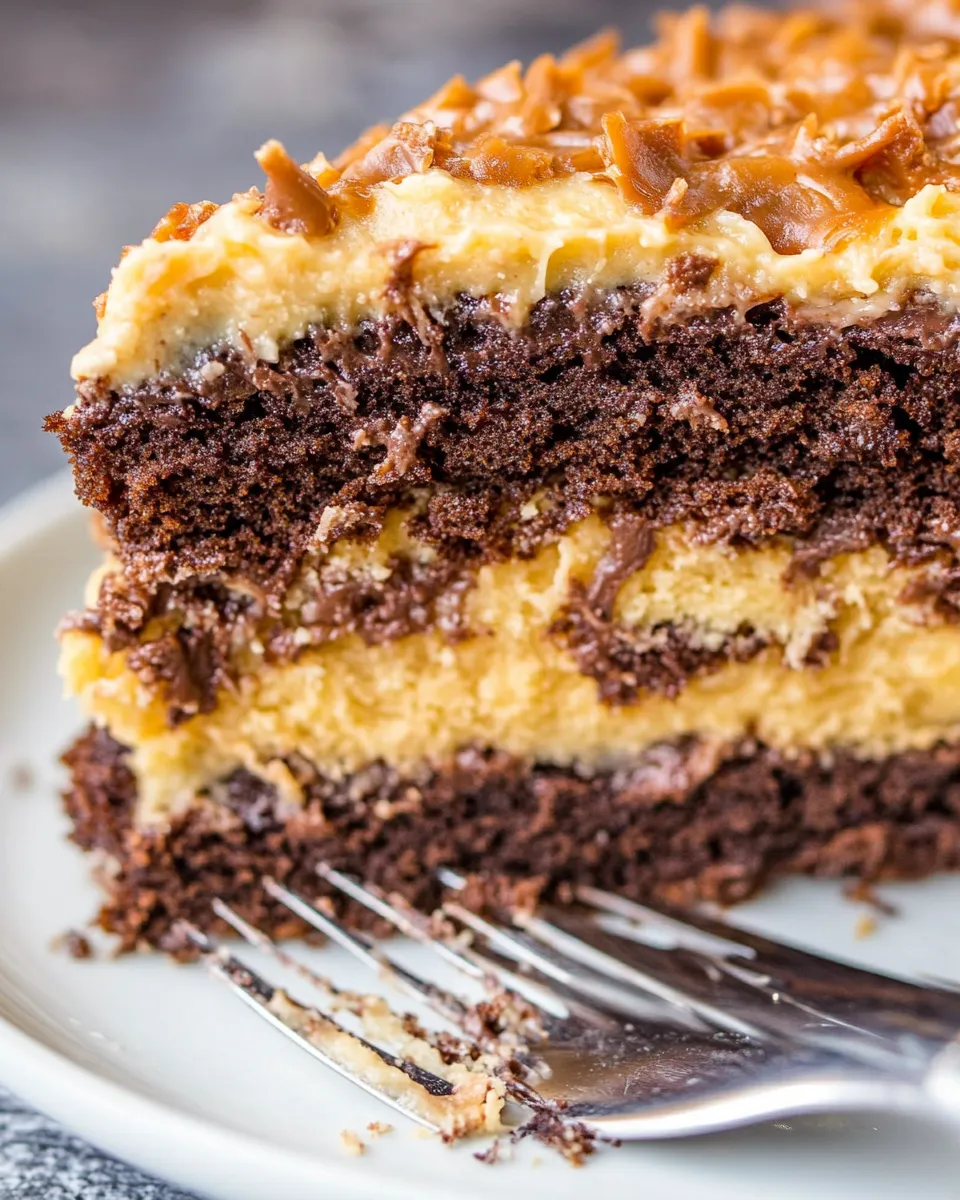
- Pantry basics: granulated sugar, brown sugar, all‑purpose flour, baking soda, kosher salt, vanilla extract.
- Dairy and refrigerated: unsalted butter, evaporated milk (full‑fat), buttermilk, sour cream or Greek yogurt, eggs.
- Special items: sweetened shredded coconut, chopped pecans, BAKER’S German’s Sweet Chocolate.
- Equipment to have on hand: two 8‑inch round cake pans, parchment (optional), stand mixer or hand mixer, saucepan, baking sheet.
Ingredients
- 4 egg yolks (200 grams, room temperature and lightly beaten) — they thicken the coconut‑pecan filling and add richness.
- 12 ounces full‑fat evaporated milk (340 grams, 1 can) — forms the body of the cooked filling; full‑fat gives the right mouthfeel.
- ½ teaspoon kosher salt — balances sweetness in both batter and filling.
- 2 teaspoons pure vanilla extract (8 grams) — adds depth to the filling.
- ¾ cup granulated sugar (150 grams) — sweetens the filling and helps it caramelize color and flavor.
- ½ cup brown sugar (107 grams) — brings caramel notes to the filling.
- 2 tablespoons unsalted butter (28 grams, room temperature, ¼ stick) — enriches and smooths the filling.
- 1½ teaspoons fresh‑squeezed lemon juice (7 grams) — brightens the cooked filling and stabilizes it slightly.
- 7 ounces sweetened shredded coconut (198 grams, lightly toasted) — texture and flavor; toasting brings out nuttiness.
- 1½ cups chopped pecans (171 grams, toasted) — crunch and flavor; toasting intensifies the pecan aroma.
- 4 ounces BAKER’S German’s Sweet Chocolate (113 grams, 1 package) — melted into the batter for the chocolate base.
- ½ cup water (114 grams, boiling, 212°F) — used to melt the chocolate smoothly.
- 4 large eggs (200 grams, room temperature and separated) — yolks go into the batter; whites are whipped for lift.
- 1 cup unsalted butter (226 grams, room temperature, 2 sticks) — creamed with sugar for the cake’s structure and flavor.
- 2 cups granulated sugar (400 grams) — sweetens the cake and helps with texture.
- 1 teaspoon pure vanilla extract (4 grams) — added to the batter for flavor depth.
- 2 cups all‑purpose flour (240 grams) — the cake’s framework; measure properly (spoon and level).
- 1 teaspoon baking soda (6 grams) — the leavener for this batter.
- ½ teaspoon kosher salt — balances the cake’s sweetness.
- ½ cup buttermilk (114 grams, room temperature) — adds tang and keeps the crumb tender.
- ½ cup sour cream or Greek yogurt (114 grams, room temperature) — adds richness and moisture to the batter.
Mastering German Chocolate Cake: How-To
- Preheat the oven to 350°F (adjust the rack to the middle position). Line two 8-inch round cake pans with parchment if desired and spray the pans with baking spray.
- Toast the coconut and pecans: spread the 7 ounces shredded coconut and 1½ cups chopped pecans in a single layer on a baking sheet and toast in the preheated oven, stirring once or twice, until lightly golden and fragrant (watch closely so they do not burn). Remove from oven and let cool.
- Make the coconut-pecan filling (frosting): in a medium heavy-bottom saucepan over medium heat, whisk together 4 egg yolks (200 g, lightly beaten), 12 ounces full-fat evaporated milk (340 g), ½ teaspoon kosher salt, 2 teaspoons pure vanilla extract (8 g), ¾ cup granulated sugar (150 g), ½ cup brown sugar (107 g), and 2 tablespoons unsalted butter (28 g). Cook, whisking constantly, for 10–12 minutes or until the mixture thickens and becomes golden brown.
- Remove the saucepan from the heat, stir in 1½ teaspoons fresh-squeezed lemon juice (7 g), then stir in the toasted coconut and toasted pecans. Transfer the mixture to a bowl and cool until it is thick enough to spread (room temperature; you may refrigerate briefly to speed cooling). Set aside.
- Chop the 4 ounces BAKER’S German’s Sweet Chocolate (113 g) into small pieces. Bring ½ cup water (114 g) to a boil, remove from heat, add the chopped chocolate, and stir until the chocolate is fully melted. Set the chocolate mixture aside to cool completely to room temperature.
- Separate the 4 large eggs (200 g total): place the whites in the bowl of a stand mixer fitted with the whisk attachment and keep the yolks for the cake batter.
- Whip the egg whites on medium-high speed until stiff peaks form. Transfer the whipped egg whites to a clean bowl and set aside.
- Using the same mixer bowl (no need to wash), switch to the paddle attachment and beat 1 cup unsalted butter (226 g) and 2 cups granulated sugar (400 g) on medium speed until the butter lightens in color and the mixture is smooth and fluffy, about 3–5 minutes.
- With the mixer on low, add the 4 reserved egg yolks (from the separated eggs) one at a time, beating after each addition until incorporated.
- Add the cooled chocolate mixture and 1 teaspoon pure vanilla extract (4 g) to the butter–egg yolk mixture and mix on low just until combined.
- In a medium bowl, whisk together 2 cups all-purpose flour (240 g), 1 teaspoon baking soda (6 g), and ½ teaspoon kosher salt.
- In a small bowl, whisk together ½ cup buttermilk (114 g) and ½ cup sour cream or Greek yogurt (114 g).
- With the mixer on low speed, add the flour mixture and the buttermilk/sour cream mixture to the batter alternately, beginning and ending with the flour mixture. Add a portion, mix just until incorporated, then add the next, continuing until all are combined. Do not overmix.
- Use a rubber spatula to gently fold the whipped egg whites into the batter in thirds, folding until no large streaks remain and the mixture is uniform.
- Divide the batter evenly between the two prepared 8-inch pans and smooth the tops.
- Bake the cakes at 350°F for 25–35 minutes, or until a toothpick inserted into the centers comes out clean. Rotate pans once if your oven bakes unevenly.
- Remove the cakes from the oven and let them cool on a wire rack for 15 minutes. Run a knife around the pan edges, invert the cakes out of the pans, remove parchment (if used), and cool completely on the wire rack.
- To assemble a 4-layer cake: using a long serrated knife or a cake leveler, cut each cooled cake layer horizontally in half to make four thin layers. Spread an even layer of the cooled coconut-pecan filling between each cake layer and spread the remaining filling on top of the cake. Store any extra filling refrigerated.
Why German Chocolate Cake is Worth Your Time
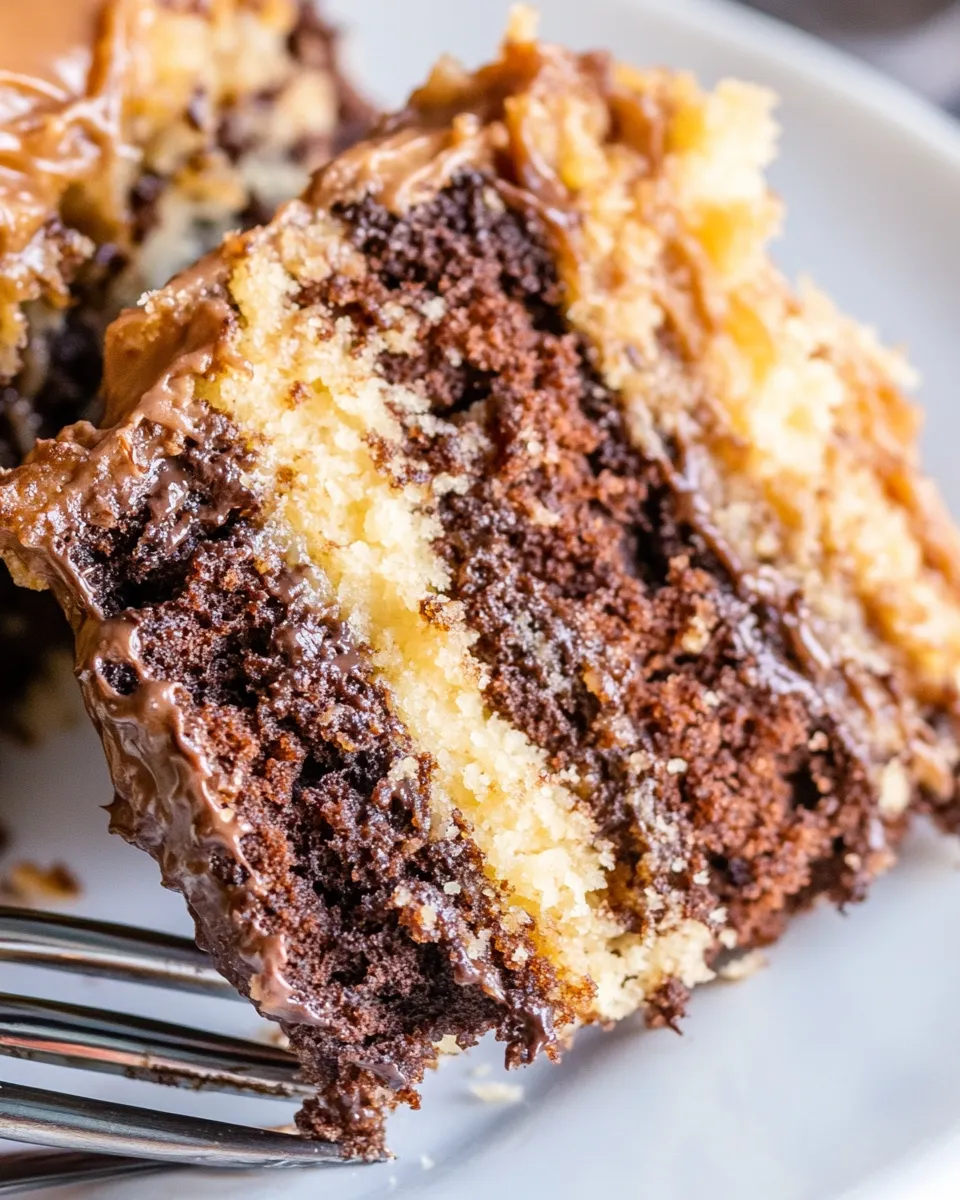
This cake rewards the few extra steps it asks for: toasting the coconut and pecans, tempering melted chocolate into the batter, and cooking a custard‑style filling. Those steps build layers of flavor—nutty, caramel, and deep chocolate—that belong together.
It’s also tactile. The toasted coconut and pecans add chew and crunch against a soft, tender crumb. The filling is cooked, so it doesn’t slide off the layers. For holidays, celebrations, or an elevated weekend dessert, this cake delivers presence and comfort in equal measure.
No-Store Runs Needed
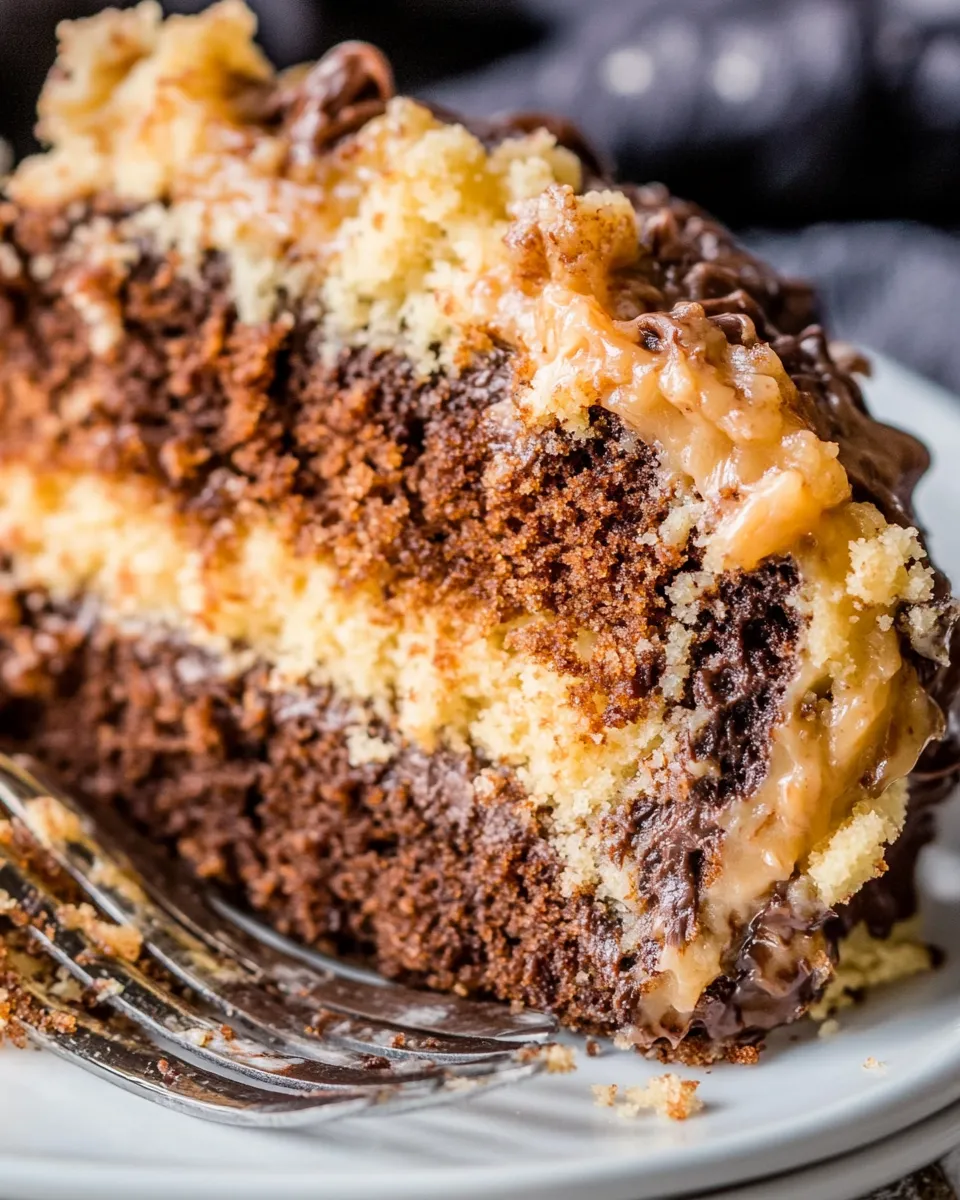
Before you start, check these items at home: eggs, flour, sugar, butter, and a can of evaporated milk. The recipe leans on standard pantry staples; if your pantry is stocked, you likely won’t need an extra trip.
If you’re missing buttermilk, you can use a simple substitute (1 tablespoon lemon juice or vinegar plus milk to make ½ cup) if you already have milk and an acid on hand. The recipe lists sour cream or Greek yogurt—either works depending on what’s in your fridge.
Equipment Breakdown
- Two 8‑inch round cake pans — for even layers; use parchment for easier release.
- Stand mixer (or hand mixer) with whisk and paddle attachments — for whipping whites and creaming butter.
- Medium heavy‑bottom saucepan — needed to cook the coconut‑pecan filling without scorching.
- Baking sheet — for toasting coconut and pecans in a single layer.
- Wire rack and serrated knife or cake leveler — for cooling and slicing layers evenly.
Troubles You Can Avoid
Common issues and quick fixes
- Burned or bitter toasted coconut/pecans — watch closely during toasting and stir once or twice; remove at the first golden aroma.
- Grainy cooked filling — whisk constantly and keep medium heat; if it cooks too fast it can scramble the yolks.
- Flat cake from overbeating whites or batter — fold egg whites gently and add them in thirds to preserve lift.
- Soggy layers from warm filling — cool the coconut‑pecan filling to room temperature (or briefly chill) before stacking to avoid steaming the cake.
- Difficulty slicing layers — chill cakes briefly to firm the crumb, then use a long serrated knife and a sawing motion.
Seasonal Adaptations
In warm months, keep the cake refrigerated until 30–60 minutes before serving so the filling stays set. Cold weather firms butter and chocolate nicely, making assembly cleaner.
For events, you can make the filling a day ahead and refrigerate it. Bring it back to room temperature before spreading. Toast the coconut and pecans and store them in an airtight container for several days to preserve crunch.
Recipe Notes & Chef’s Commentary
Small details matter: room‑temperature eggs and dairy create a smoother emulsion and better rise. When melting the chocolate, pour boiling water over chopped chocolate and stir—this quick method gives a glossy, smooth chocolate without direct heat.
Whipped egg whites incorporated in thirds give the cake a lighter structure while still allowing a denser, fudgier crumb from the butter and yolks. The cooked coconut‑pecan filling behaves more like a thick custard than a traditional buttercream—embrace that texture; it’s the cake’s signature.
Shelf Life & Storage
Store the assembled cake covered in the refrigerator for up to 3 days. The cooked coconut‑pecan filling contains eggs and dairy, so refrigeration is required. Bring the cake to room temperature for about 30–60 minutes before serving to soften the butter and improve flavor.
If you have leftover filling, refrigerate in an airtight container for up to 5 days. Rewarm gently at room temperature or give it a short stint at very low heat while stirring to restore spreadability.
Handy Q&A
- Q: Can I use a different chocolate? A: You can, but BAKER’S German’s Sweet Chocolate is specified for balance; if you swap, test melt a small amount for sweetness balance.
- Q: Can I skip toasting the coconut and pecans? A: Toasting deepens flavor. If you skip it, the filling will still work but will be less aromatic.
- Q: Why separate and whip the egg whites? A: Whipped whites add lift and a lighter crumb without changing the cake’s rich texture.
- Q: Can this be made into cupcakes? A: Yes. Reduce bake time; start checking at 15–18 minutes depending on size.
- Q: How do I fix a split or curdled filling? A: If the filling curdles, remove from heat immediately and whisk vigorously—if it stays broken, strain and refrigerate; it may still be usable as a rustic topping.
- Q: Can the cake layers be frozen? A: Yes. Wrap cooled layers tightly and freeze up to 2 months. Thaw in the fridge overnight before assembling.
The Last Word
This German Chocolate Cake feels like a small production with a big result: toasted nuts and coconut, a custardy filling, and a tender chocolate crumb. Follow the order, respect the resting and cooling steps, and you’ll be rewarded with a cake that looks impressive and tastes even better. Bake it for a crowd, for a holiday, or just because—this one holds up, tastes sophisticated, and keeps people coming back for more.
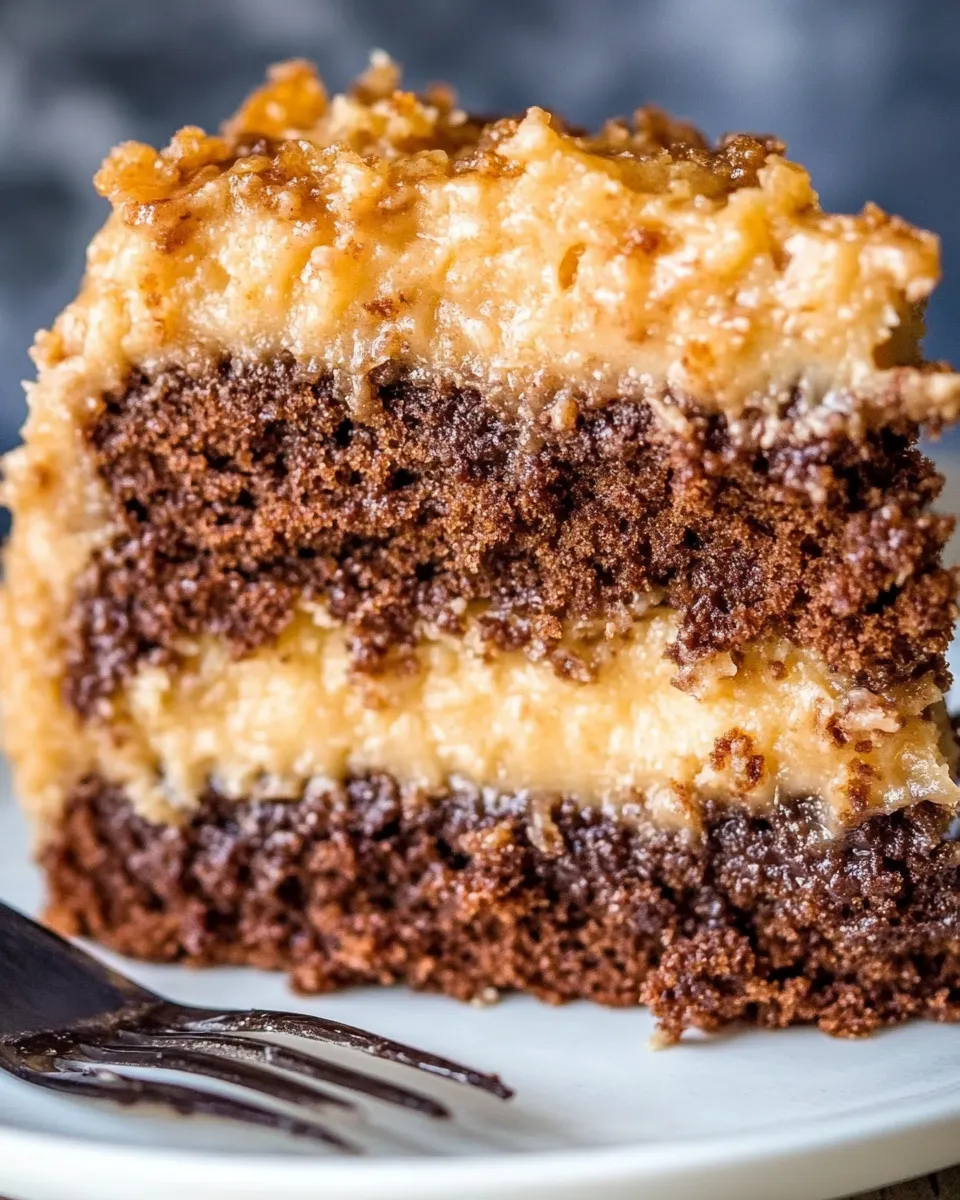
German Chocolate Cake Recipe
Ingredients
Equipment
Method
- Preheat the oven to 350°F (adjust the rack to the middle position). Line two 8-inch round cake pans with parchment if desired and spray the pans with baking spray.
- Toast the coconut and pecans: spread the 7 ounces shredded coconut and 1½ cups chopped pecans in a single layer on a baking sheet and toast in the preheated oven, stirring once or twice, until lightly golden and fragrant (watch closely so they do not burn). Remove from oven and let cool.
- Make the coconut-pecan filling (frosting): in a medium heavy-bottom saucepan over medium heat, whisk together 4 egg yolks (200 g, lightly beaten), 12 ounces full-fat evaporated milk (340 g), ½ teaspoon kosher salt, 2 teaspoons pure vanilla extract (8 g), ¾ cup granulated sugar (150 g), ½ cup brown sugar (107 g), and 2 tablespoons unsalted butter (28 g). Cook, whisking constantly, for 10–12 minutes or until the mixture thickens and becomes golden brown.
- Remove the saucepan from the heat, stir in 1½ teaspoons fresh-squeezed lemon juice (7 g), then stir in the toasted coconut and toasted pecans. Transfer the mixture to a bowl and cool until it is thick enough to spread (room temperature; you may refrigerate briefly to speed cooling). Set aside.
- Chop the 4 ounces BAKER’S German’s Sweet Chocolate (113 g) into small pieces. Bring ½ cup water (114 g) to a boil, remove from heat, add the chopped chocolate, and stir until the chocolate is fully melted. Set the chocolate mixture aside to cool completely to room temperature.
- Separate the 4 large eggs (200 g total): place the whites in the bowl of a stand mixer fitted with the whisk attachment and keep the yolks for the cake batter.
- Whip the egg whites on medium-high speed until stiff peaks form. Transfer the whipped egg whites to a clean bowl and set aside.
- Using the same mixer bowl (no need to wash), switch to the paddle attachment and beat 1 cup unsalted butter (226 g) and 2 cups granulated sugar (400 g) on medium speed until the butter lightens in color and the mixture is smooth and fluffy, about 3–5 minutes.
- With the mixer on low, add the 4 reserved egg yolks (from the separated eggs) one at a time, beating after each addition until incorporated.
- Add the cooled chocolate mixture and 1 teaspoon pure vanilla extract (4 g) to the butter–egg yolk mixture and mix on low just until combined.
- In a medium bowl, whisk together 2 cups all-purpose flour (240 g), 1 teaspoon baking soda (6 g), and ½ teaspoon kosher salt.
- In a small bowl, whisk together ½ cup buttermilk (114 g) and ½ cup sour cream or Greek yogurt (114 g).
- With the mixer on low speed, add the flour mixture and the buttermilk/sour cream mixture to the batter alternately, beginning and ending with the flour mixture. Add a portion, mix just until incorporated, then add the next, continuing until all are combined. Do not overmix.
- Use a rubber spatula to gently fold the whipped egg whites into the batter in thirds, folding until no large streaks remain and the mixture is uniform.
- Divide the batter evenly between the two prepared 8-inch pans and smooth the tops.
- Bake the cakes at 350°F for 25–35 minutes, or until a toothpick inserted into the centers comes out clean. Rotate pans once if your oven bakes unevenly.
- Remove the cakes from the oven and let them cool on a wire rack for 15 minutes. Run a knife around the pan edges, invert the cakes out of the pans, remove parchment (if used), and cool completely on the wire rack.
- To assemble a 4-layer cake: using a long serrated knife or a cake leveler, cut each cooled cake layer horizontally in half to make four thin layers. Spread an even layer of the cooled coconut-pecan filling between each cake layer and spread the remaining filling on top of the cake. Store any extra filling refrigerated.
Notes
Use a preheated oven.
Make sure to spray your pans with nonstick and – if you like – lay down parchment paper in the bases.
Use room temperature ingredients.
If you don’t have buttermilk, add 1 tablespoon white vinegar to 1-cup milk, stir and let stand 10 minutes.
Storage:Store German chocolate cake in an airtight container at room temperature for up to 5 days, in the refrigerator for up to 1 week, or in the freezer for up to 3 months.