Greek Yogurt Bagels
These Greek Yogurt Bagels are my go-to when I want fresh bread without the fuss of a long rise or a stand mixer. They’re dense, chewy, and come together with just a cup of yogurt and a cup of self-rising flour. If you want a weeknight baking win or a weekend project that still leaves time for coffee and reading, these bagels fit the bill.
The method is forgiving: the dough is sticky, a few kneads smooth it out, and four rounds of shaping later you’ve got breakfast-ready bagels. I like to finish them with an egg wash and a generous sprinkle of everything bagel seasoning for maximum crunch and flavor.
Below you’ll find a compact ingredient list, the exact steps I follow in the test kitchen, troubleshooting tips, sensible swaps for budgets and diets, and ideas for serving. No fluff — just practical notes so you’ll have repeatable results the first time you try them.
Gather These Ingredients
Ingredients
- 1 cup plain Greek yogurt — the base of the dough; provides moisture, tang, and structure.
- 1 cup self-rising flour — contains flour, baking powder, and salt; it leavens and firms the bagel without added yeast.
- 1 egg, beaten — used for brushing the tops to help browning and to hold the seasoning.
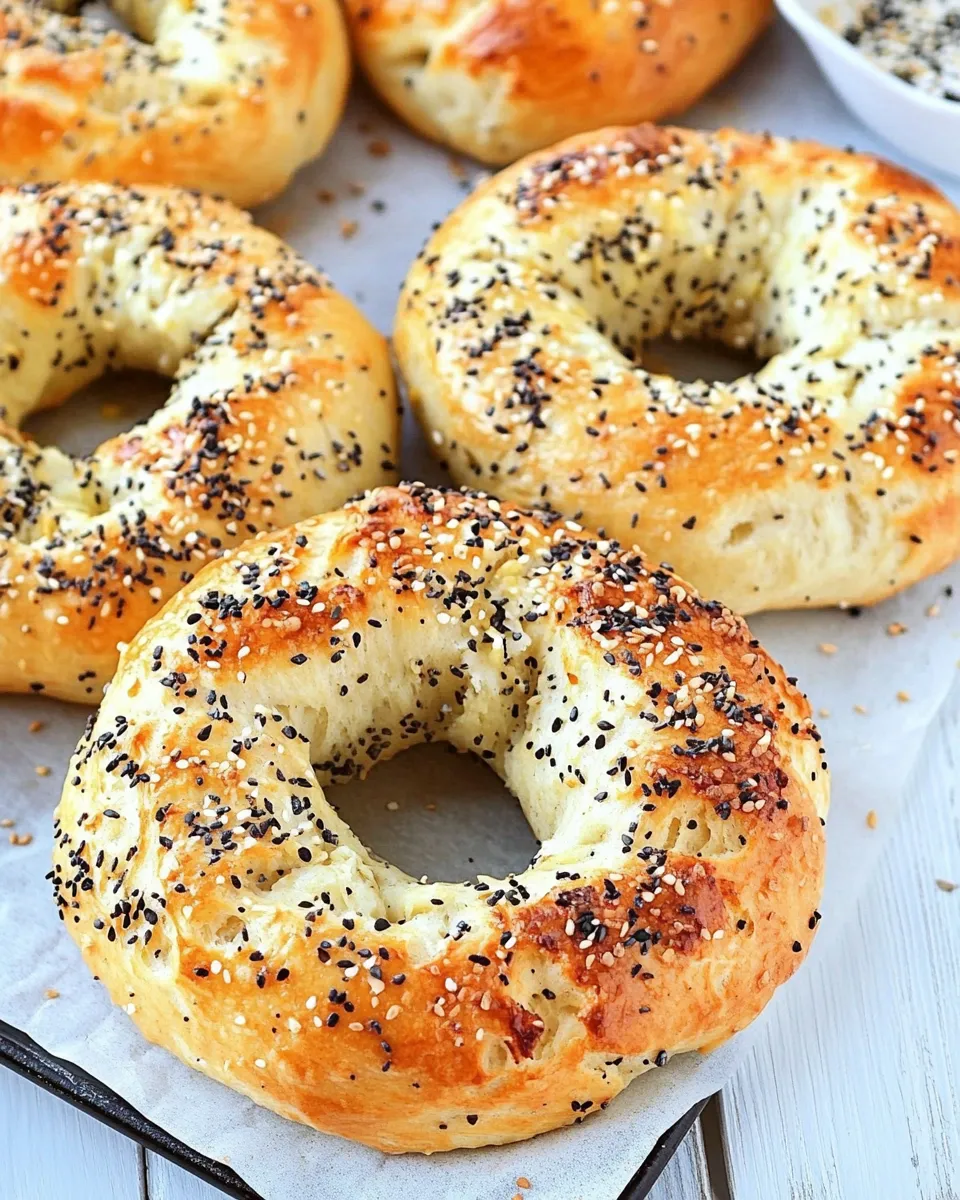
- Everything bagel seasoning — gives crunch and savory flavor on the crust; use as much as you like.
Make Greek Yogurt Bagels: A Simple Method
- Preheat oven to 350°F. Line a baking sheet with parchment paper. Crack the egg into a small bowl and beat it—set aside for brushing.
- Measure the 1 cup self-rising flour and set a small amount of it aside for dusting the work surface if needed. In a mixing bowl, add 1 cup plain Greek yogurt and the remaining self-rising flour.
- Stir the yogurt and flour together until just combined. The dough will be sticky.
- Lightly dust your hands and work surface with the reserved flour as needed. Transfer the dough to the surface and knead about 8–12 times, until the dough is no longer sticky and holds together in a smooth ball.
- Divide the dough into 4 equal pieces.
- For each piece, roll it into a rope about 7 inches long and 1 inch thick. Bring the ends together and press to seal, forming a bagel. Place each shaped bagel on the prepared parchment-lined baking sheet.
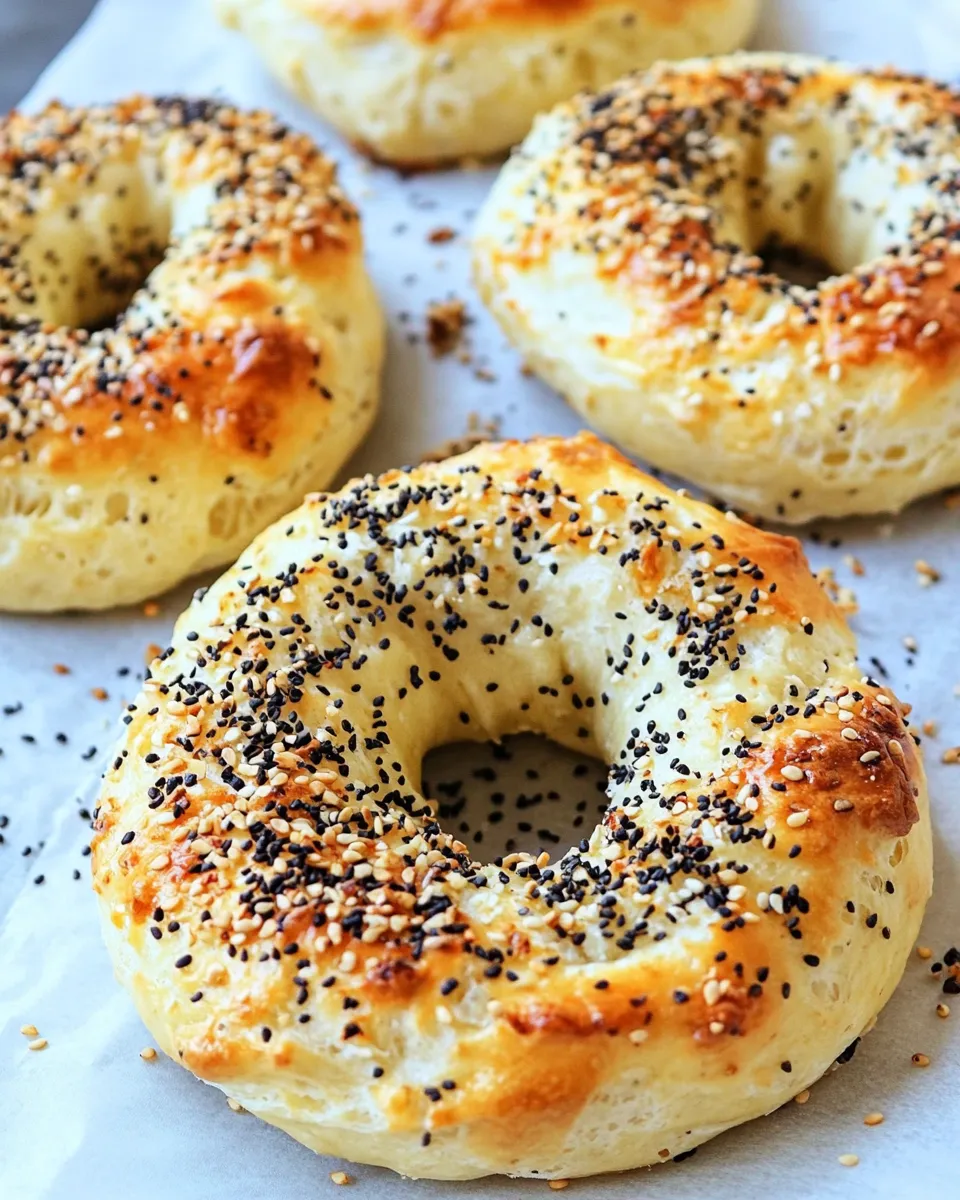
- Use a pastry brush or the back of a spoon to brush the tops of the bagels with the beaten egg. Generously sprinkle everything bagel seasoning over the tops.
- Bake the bagels at 350°F for 25 minutes, until golden.
- If you want a more browned top, switch the oven to low broil and broil the bagels 2–4 minutes—watch closely to prevent burning.
- Remove the baking sheet from the oven and let the bagels rest on the sheet for a few minutes before serving.
What You’ll Love About This Recipe
It’s fast. From bowl to oven in roughly 15 minutes. No waiting for yeast to proof, no multiple rises. That makes these bagels perfect for a same-day breakfast plan or last-minute brunch.
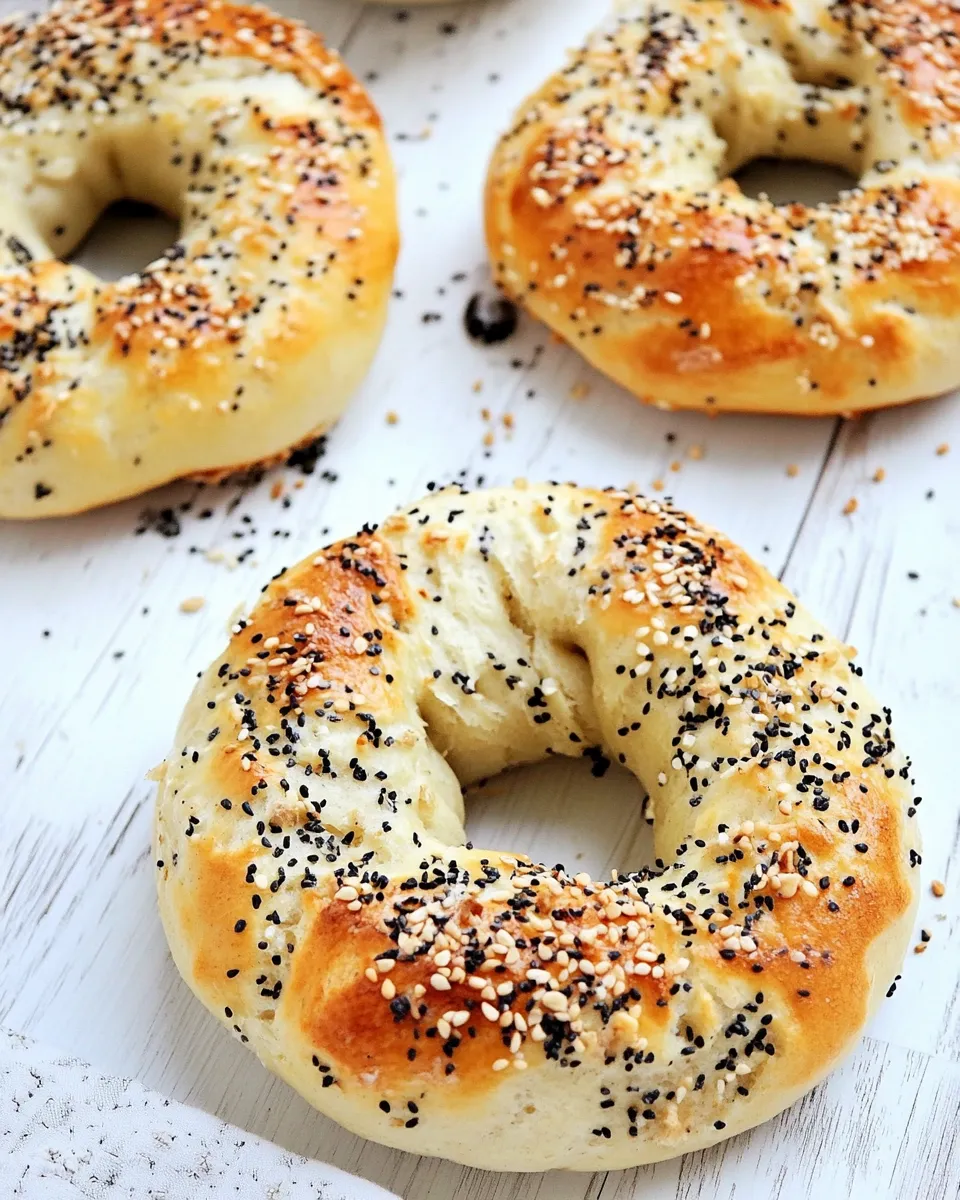
The texture is reliably chewy with a crisp top when you use the egg wash and broil briefly. Because the recipe uses Greek yogurt, you get a gentle tang that pairs beautifully with cream cheese, smoked salmon, or just a smear of butter and jam.
Finally, it’s forgiving. The dough tolerates a little overworking or a dustier surface. If your first batch isn’t textbook-perfect, the flavor will still be excellent and you’ll learn quick adjustments for the next try.
Budget & Availability Swaps
Self-rising flour is the key convenience in this recipe. If you can’t find it, you can make a small batch at home (but that technically invents an extra step). If you’re shopping on a budget, buy store-brand self-rising flour or look in the baking aisle near the flours — many stores keep it stocked or have it in bulk bins.
Greek yogurt can be pricey if you opt for single-serve specialty tubs. Use a larger plain tub and portion what you need; the rest keeps well in the fridge for several days. Plain regular yogurt will work in a pinch but expect a slightly softer, less tangy result.
Everything bagel seasoning is a nice-to-have. If you don’t have it, sprinkle kosher salt and sesame seeds or poppy seeds instead. They’re cheaper and still give that classic bagel finish.
Gear Checklist
- Mixing bowl — for combining yogurt and flour.
- Measuring cup — to measure 1 cup of yogurt and 1 cup of flour accurately.
- Parchment-lined baking sheet — prevents sticking and makes cleanup easy.
- Small bowl and pastry brush (or spoon) — to beat and apply the egg wash.
- Bench scraper or sharp knife — handy for dividing dough into equal pieces.
- Oven with broil setting — optional, for extra browning at the end.
Pitfalls & How to Prevent Them
Sticky dough that never comes together
If your dough remains excessively sticky after the 8–12 kneads, it usually means the yogurt was wetter than expected. Dust your hands and work surface with the reserved flour a little more, but add it sparingly. Over-dusting will dry the dough and result in a crumbly bagel. Aim for tacky but manageable.
Bagels that spread and lose shape
Shaping matters: roll each piece into a rope about 7 inches long and 1 inch thick, then press the ends together firmly. If the seal at the join is weak, the bagel can open during baking. Press for a few seconds with your fingers to create a good seam.
Uneven browning
If the tops brown unevenly, rotate the sheet halfway through the bake. For a deeper color, use the low broil step for 2–4 minutes but watch closely — one minute too long and they can burn.
Dense interior
These are not yeast-risen bagels, so expect a denser crumb. Don’t attempt to add more flour than the recipe calls for, as that makes them dry. The balance of yogurt to self-rising flour is deliberate for the right texture.
Substitutions by Diet
Gluten-free: Swap in a gluten-free self-rising blend made for 1:1 baking. Results will vary by blend; many will produce a softer, slightly crumbly bagel rather than the chewy texture of wheat-based ones. Consider chilling the dough briefly before shaping to help it hold together.
Dairy-free / Vegan: Use a plant-based yogurt (unsweetened and thick, like coconut or almond-based Greek-style yogurt) and a vegan egg replacer for the wash (aquafaba works well). The flavor will be different, and texture may be softer, but you’ll keep the quick method intact.
Lower-sodium: Choose a low-sodium or no-salt-added self-rising flour if you’re watching sodium. Skip the everything bagel seasoning or use a reduced-salt blend and boost flavor with toasted sesame and poppy seeds.
Egg-free: If you can’t use egg for the wash, brush the tops lightly with milk (dairy or plant) or a thin coating of olive oil to help the seasoning adhere.
Notes from the Test Kitchen
I tested these at different oven temperatures and found 350°F for 25 minutes gives the best even bake for my oven model — the crumb sets and the tops brown without drying out. When I bumped the oven higher, the crust browned faster than the interior could finish, so I stick with 350°F and finish with a short broil if needed.
On texture: the first time, people often expect a classic New York-style bagel. These are a good, quicker alternative: slightly denser, with a soft interior and a crisp, seasoned top. They shine when toasted the next day and make excellent sandwich bases.
Don’t skip the egg wash. It’s a small step that yields a shiny, attractive top and helps the seasoning adhere. If you’re using seeds instead of everything seasoning, toast them lightly beforehand for extra flavor.
How to Store & Reheat
Short term: Store cooled bagels in an airtight container or a zip-top bag at room temperature for up to 2 days. For best texture, slice and toast before serving.
Long term: Freeze leftover bagels individually wrapped in plastic and placed in a freezer bag for up to 3 months. Thaw at room temperature or toast from frozen — popcorn-style heat in a toaster works fine, or split them and warm in a 350°F oven for 5–7 minutes.
Reheating tips: For a crisp exterior and warm interior, slice and toast on medium heat or warm in a skillet with a touch of butter. If you want a near-oven-fresh finish, bake at 350°F for 6–8 minutes after thawing.
Top Questions & Answers
- Can I double the recipe? — Yes. Keep the same ratios: 1 cup Greek yogurt to 1 cup self-rising flour per batch of four bagels. Work in manageable portions when kneading so the dough doesn’t get over-handled.
- Why are my bagels crumbly? — Likely too much flour or overworking after dusting. Stick to the 8–12 kneads guideline and add reserved flour only as needed to prevent sticking.
- Can I make smaller or larger bagels? — Absolutely. Adjust shaping and bake time slightly. Smaller bagels may finish in under 25 minutes; larger ones may need a few more minutes. Watch for golden tops as your cue.
- Do these bagels need boiling like traditional bagels? — No. This recipe skips boiling and uses self-rising flour for leavening. Boiling develops a chewier crust in traditional bagels, but these are a quicker, oven-only version with a pleasant texture.
- Can I add mix-ins like cheese or herbs? — You can fold in add-ins lightly during shaping, but be cautious: heavy mix-ins can affect dough cohesion. Sprinkle cheese on top with the egg wash for a dependable result.
Bring It to the Table
Serve these bagels warm with softened butter, cream cheese, or a smear of labneh for a Mediterranean twist. Add smoked salmon, thinly sliced cucumber, dill, and capers for a classic bagel plate that’s both elegant and easy. For a casual brunch, set out toppings — sliced tomatoes, red onion, hard-boiled eggs, and a bowl of everything bagel seasoning — and let everyone build their own.
They also freeze and reheat beautifully, which makes them great for weekday breakfasts: toast, top, and go. The recipe is intentionally minimal, but with good technique and a few toppings, you’ll have a batch that disappears fast.
Greek Yogurt Bagels
Ingredients
Equipment
Method
- Preheat oven to 350°F. Line a baking sheet with parchment paper. Crack the egg into a small bowl and beat it—set aside for brushing.
- Measure the 1 cup self-rising flour and set a small amount of it aside for dusting the work surface if needed. In a mixing bowl, add 1 cup plain Greek yogurt and the remaining self-rising flour.
- Stir the yogurt and flour together until just combined. The dough will be sticky.
- Lightly dust your hands and work surface with the reserved flour as needed. Transfer the dough to the surface and knead about 8–12 times, until the dough is no longer sticky and holds together in a smooth ball.
- Divide the dough into 4 equal pieces.
- For each piece, roll it into a rope about 7 inches long and 1 inch thick. Bring the ends together and press to seal, forming a bagel. Place each shaped bagel on the prepared parchment-lined baking sheet.
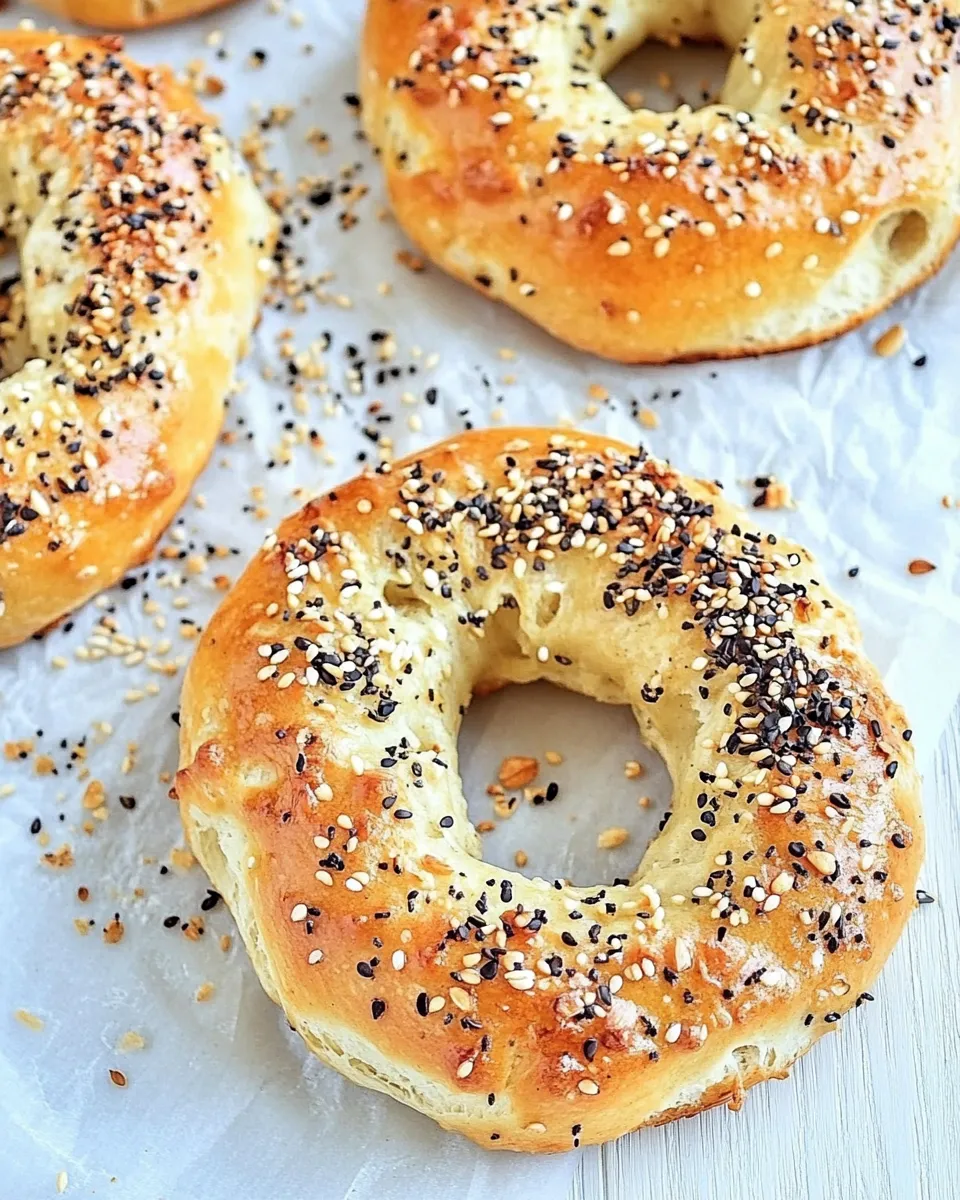
- Use a pastry brush or the back of a spoon to brush the tops of the bagels with the beaten egg. Generously sprinkle everything bagel seasoning over the tops.
- Bake the bagels at 350°F for 25 minutes, until golden.
- If you want a more browned top, switch the oven to low broil and broil the bagels 2–4 minutes—watch closely to prevent burning.
- Remove the baking sheet from the oven and let the bagels rest on the sheet for a few minutes before serving.
Notes
Make weight watchers friendly by using non-fat plain yogurt