Homemade Bagel Recipe
I make bagels at home because they deliver exactly the texture and flavor I want: a glossy, chewy crust and a tender, slightly dense crumb. It sounds technical, but once you break the process into steps—mix, proof, shape, boil, bake—it becomes straightforward. This recipe yields a dozen substantial bagels and leans on barley malt for that classic color and depth.
Expect hands-on time for mixing and shaping, and a bit of waiting while the dough proofs. Those waits are active patience: they let the yeast work so the bagels develop that characteristic chew. Follow the temperatures and the brief boil step, and you’ll notice a big difference from just baking a roll.
Below I walk you through the ingredients, the exact step-by-step method, helpful tools, common mistakes and fixes, and ideas for variations. Read the ingredients and the cooking guide carefully; the amounts and times here matter for a reliable result.
What Goes In
Ingredients
- 375 grams warm water (115° to 118° F or 1 3/4 cups) — brings the dough together and activates the yeast; keep it in the stated range for best fermentation.
- 16 grams barley malt syrup or brown sugar (1 tablespoon), plus 1/3 cup — the tablespoon is for the dough (adds flavor and color); the extra 1/3 cup is used in the poaching water to help the crust set and brown.
- 10 grams active yeast (1 tablespoon) — the leavening agent; ensure it’s fresh and proofed in the warm water until foamy.
- 660 grams bread flour (4 1/4 cups) — provides the higher gluten needed for that chewy bagel texture; weigh if you can for consistency.
- 6 grams sea salt (1 teaspoon) — balances flavor and tightens gluten; add after most of the flour is incorporated.
Homemade Bagel Recipe Cooking Guide
- In the bowl of a stand mixer, whisk together the 375 grams (1 3/4 cups) warm water (115–118°F), the 16 grams (1 tablespoon) barley malt syrup (or brown sugar) and the 10 grams (1 tablespoon) active yeast until combined. Let sit 5–7 minutes, until the mixture is foamy.
- Fit the mixer with the dough hook. With the mixer on low speed, add the 660 grams (4 1/4 cups) bread flour a little at a time until fully incorporated.
- Add the 6 grams (1 teaspoon) sea salt and continue mixing on low for 5 minutes, until the dough comes together and begins to feel smooth and elastic.
- Turn the dough out onto a lightly floured surface and knead by hand for 5–7 minutes, until smooth and elastic.
- Place the dough in a clean bowl, cover with a lid or plastic wrap, and proof in a warm place for 60–90 minutes, or until doubled in size.
- Punch the dough down and divide it into 12 equal pieces. Shape each piece into a smooth ball and place the balls on two parchment-lined sheet trays, leaving space between them.
- Dip your thumb in flour, press down into the center of each dough ball to make a ring, and gently stretch the ring into a bagel shape. Repeat for all 12. Cover the trays and let the shaped bagels rest for about 15 minutes.
- While the bagels rest, place about 2 gallons of water and the 1/3 cup barley malt syrup (from the ingredient list) in a large pot. Preheat your oven to 425°F (220°C) and bring the pot of water to a boil.
- Reduce the pot to a gentle boil. Poach 3–4 bagels at a time for 60–90 seconds per side, flipping once with a slotted spoon.
- Use the slotted spoon to transfer the poached bagels back to the parchment-lined trays. Add any desired toppings to the wet bagel surfaces.
- Bake the bagels in the preheated oven at 425°F (220°C) for 20–25 minutes, until golden brown.
- Transfer baked bagels to a cooling rack and cool to room temperature before serving.
The Upside of Homemade Bagel Recipe
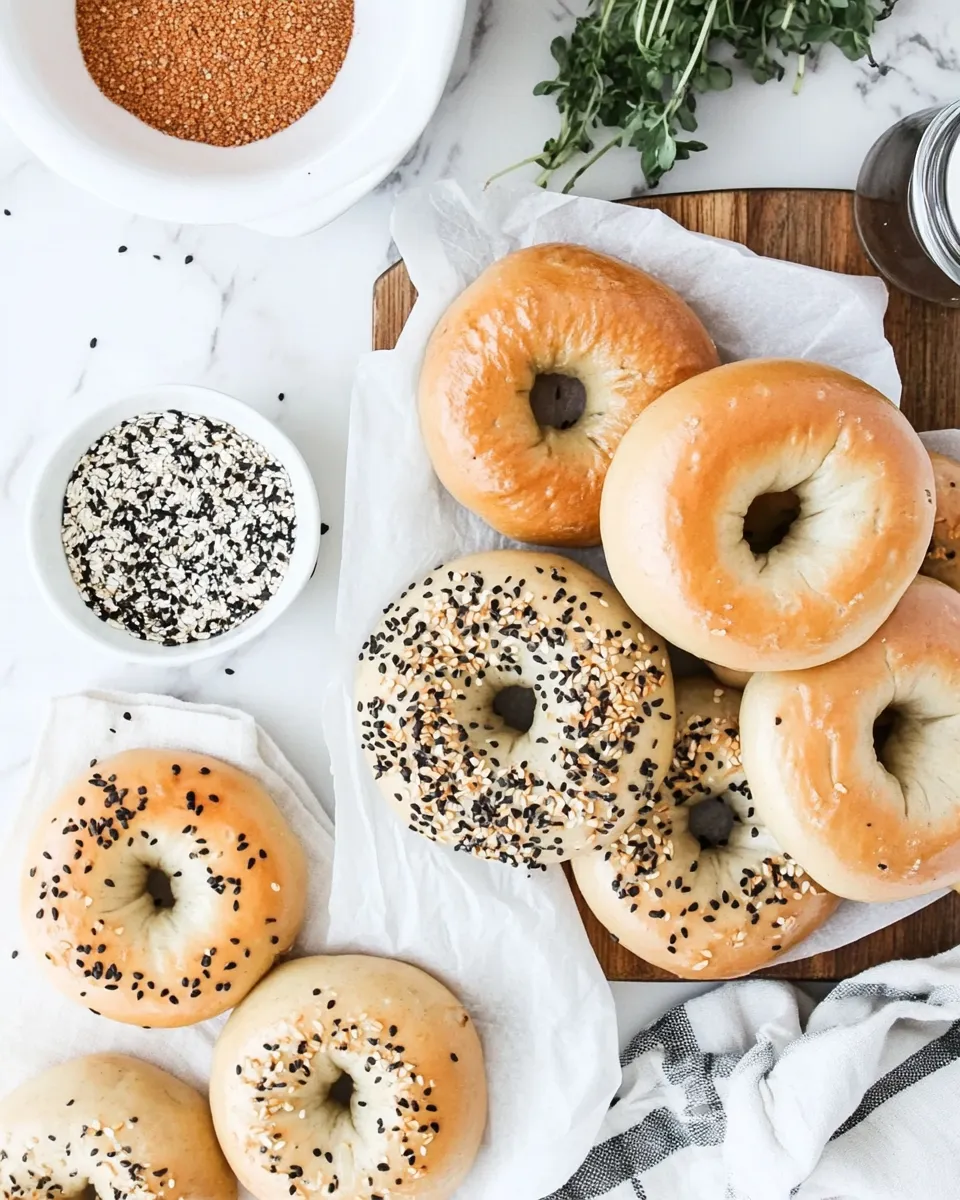
Making Homemade Bagel Recipe at home gives you control. You choose the crust color by adjusting the malt syrup and boil time, and you decide the chew by how long you knead and proof. Store-bought bagels often have preservatives or a softer crumb; these homemade ones hold up better after toasting and make excellent sandwiches.
Cost-wise, the ingredients are basic and scale-friendly. A dozen bagels from this recipe will often be cheaper than buying artisan bagels, and you’ll end up with fresher flavor and texture. You can also tailor them for dietary needs—use less sugar in the dough or experiment with heat-treated toppings—without losing the structure that the bread flour provides.
Flavor-Forward Alternatives
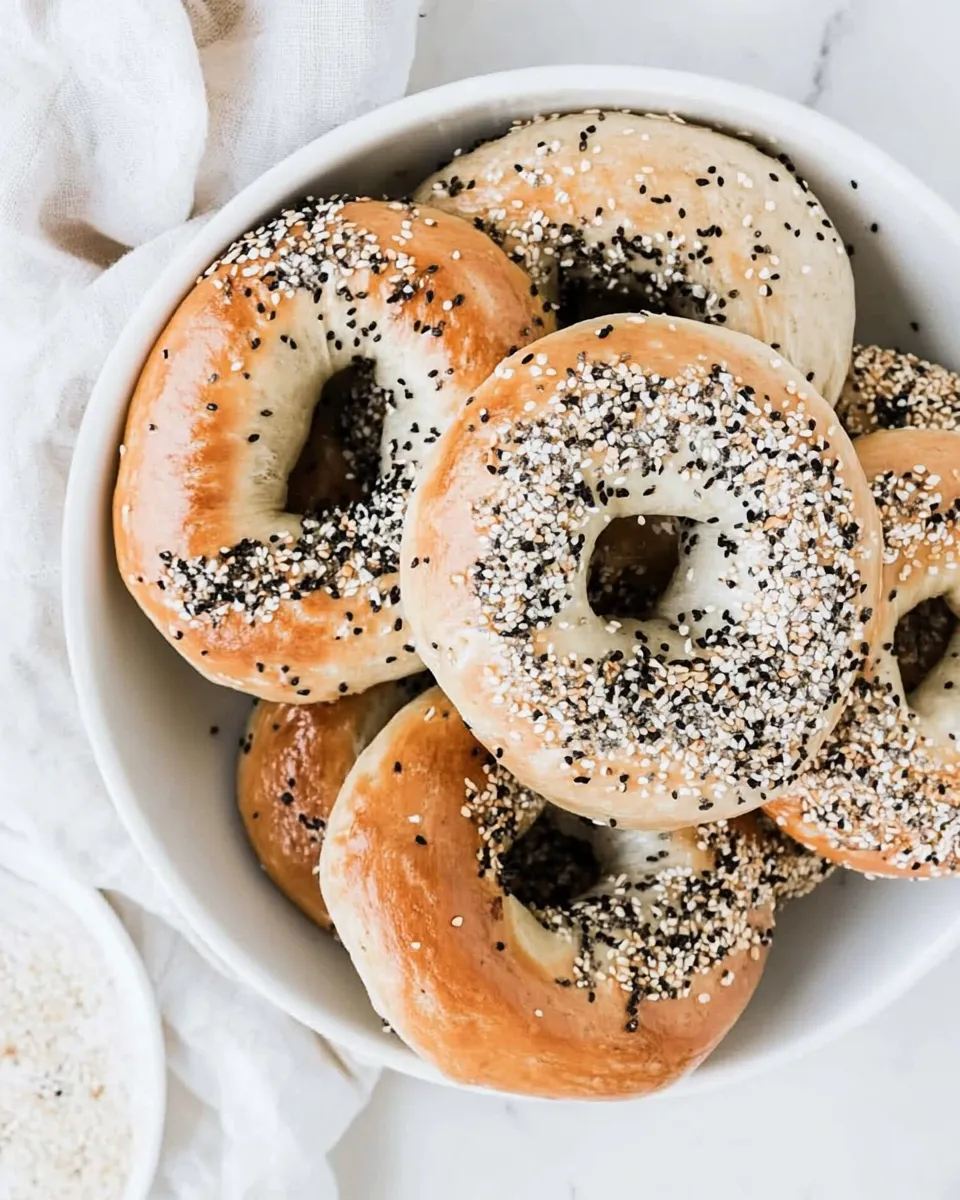
If you want to push the flavor, think in layers: mix-ins, toppings, and finishing touches. Fold-ins like small amounts of finely chopped onion or grated cheese can create savory loaves; sweeter variants can benefit from dried fruit and a cinnamon-sugar finish (add those after baking or on top before a light bake).
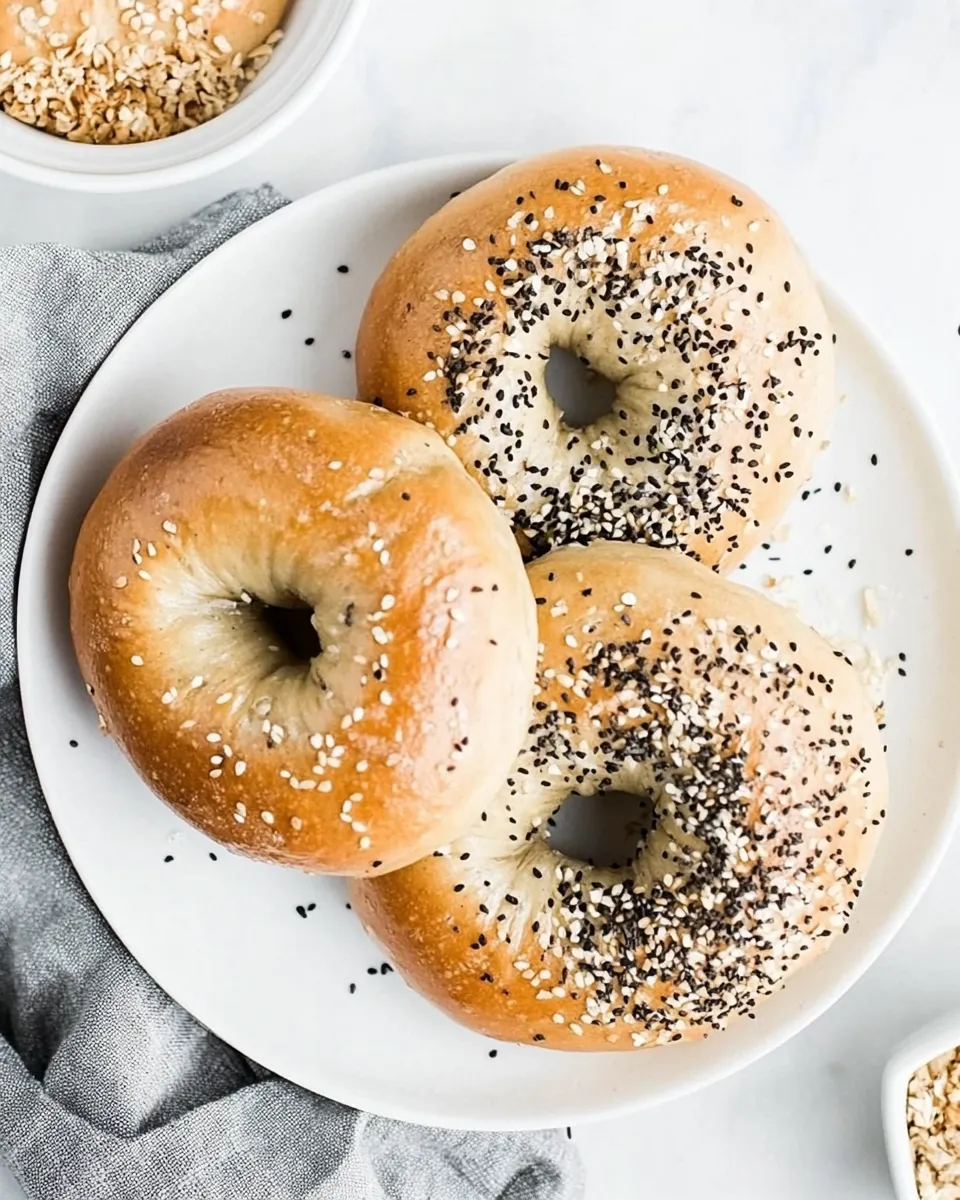
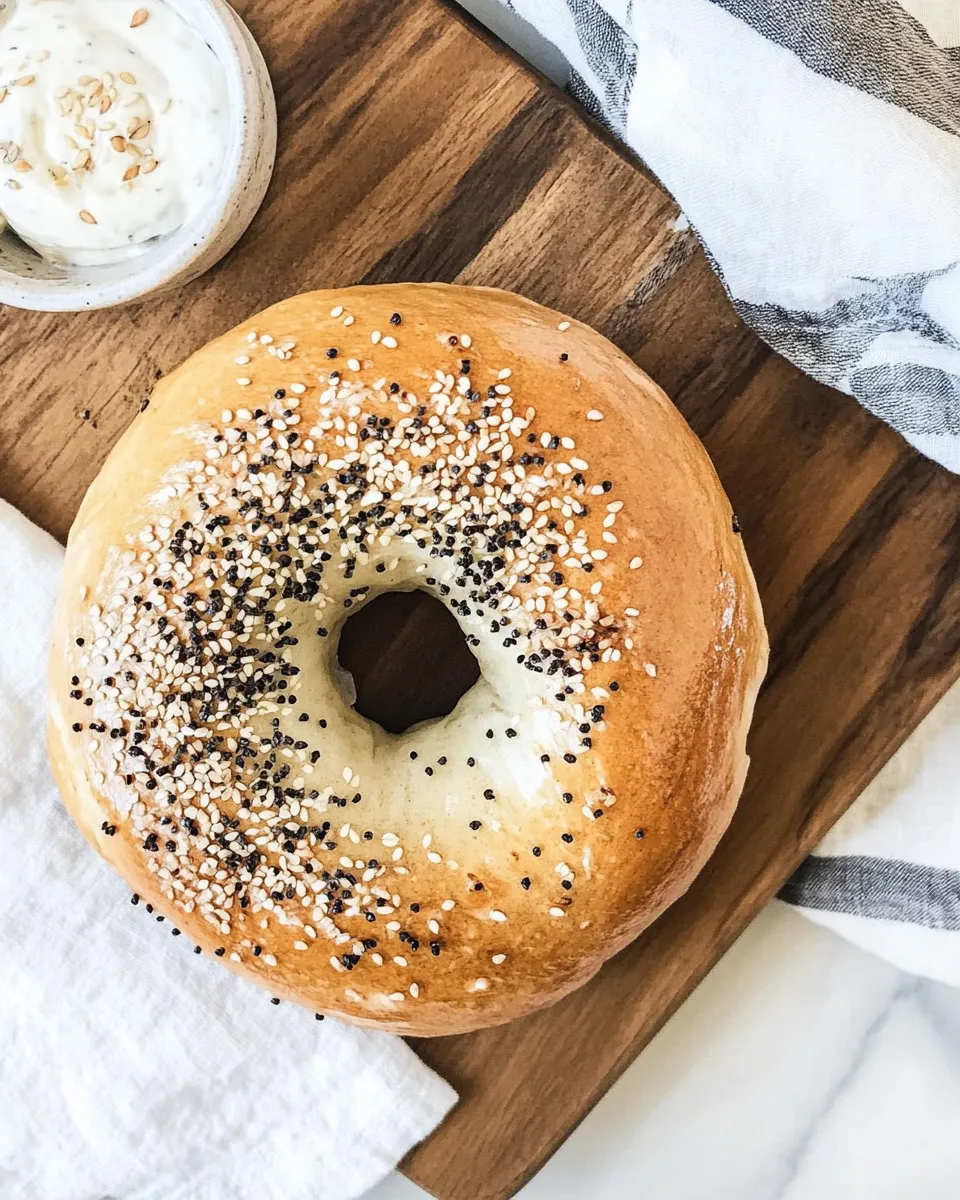
Toppings are where most people play: seeds (sesame, poppy), coarse salt, dried garlic or onion flakes, or an “everything” blend. Brush the boiled bagels with an egg wash if you want extra shine and a faster setting surface for toppings.
Toolbox for This Recipe
Essential
- Stand mixer with a dough hook — speeds mixing and gives consistent gluten development.
- Kitchen scale — for accurate measurements, especially flour and water.
- Large pot and slotted spoon — for the poaching step.
- Baking trays and parchment paper — prevents sticking and makes transfer simple.
Nice to Have
- Instant-read thermometer — to check water temperature when proofing yeast.
- Cooling rack — to avoid soggy bottoms as the bagels cool.
- Bowl with lid or plastic wrap — for clean proofing without drafts.
Pitfalls & How to Prevent Them
Dense bagels: This usually means under-kneading or under-proofing. Fix it by mixing until the dough feels smooth and elastic and allowing the full 60–90 minute first rise. If your dough still feels heavy, give it an additional 15–30 minutes in a slightly warmer spot.
Flat bagels: Overproofing after shaping will cause loss of oven spring. Shape gently, and stick to the brief 15-minute rest before boiling. If your kitchen is very warm, shorten the rest time slightly.
Exploding seams in the oven: This can happen if you stretched too thin when shaping or if the surface was tight but the interior underproofed. Keep the center hole moderate and handle the shaped rings gently.
Pale crust: Either the boiling time was too short, there wasn’t enough malt in the water, or the oven temperature is low. Ensure you poach for the recommended 60–90 seconds per side and use the 1/3 cup barley malt syrup in the poaching water.
Fresh Seasonal Changes
Autumn: Add warm spices and raisins for a cinnamon-raisin style. Fold-ins like grated apple or small dried cranberries pair well with a light honey glaze after baking.
Winter: Try savory add-ins like chopped rosemary and cracked pepper, or top with coarse sea salt and a little grated Parmesan right after poaching.
Spring/Summer: Bright toppings—like toasted sesame or a scatter of fresh herbs mixed with olive oil after baking—keep bagels feeling light. Fruit-forward bagels are best when additions are small and evenly distributed so they don’t disrupt the dough structure.
If You’re Curious
Can you use all-purpose flour? You can, but the texture will be softer and less chewy than with bread flour. Bread flour gives that classic bagel chew because of its higher protein content.
Can you skip the boil? Not if you want a traditional bagel. The brief poach sets the crust and creates the signature chew. Baking alone will give you a roll, not a bagel.
Can you make dough ahead? Yes. After shaping and briefly resting, you can refrigerate the shaped bagels overnight on a tray covered tightly. Bring them back to room temperature before poaching and baking, or poach straight from cold and add a minute to the bake time if needed.
Storing Tips & Timelines
Room temperature: Keep bagels in a paper bag inside a bread box or wrapped in a tea towel for up to 2 days. This preserves the crust better than plastic, which traps moisture and softens the crust.
Refrigeration: Avoid refrigerating bagels; the crumb will stale faster due to retrogradation.
Freezing: Slice and freeze within a day of baking for best results. Place parchment between slices and store in a freezer bag. Toast straight from frozen or let thaw at room temperature for 20–30 minutes before toasting.
Reader Q&A
Q: How do I get a shinier crust? A: Brushing with an egg wash before baking deepens the gloss and color. The malt in the dough and poaching water also contributes to sheen.
Q: My bagels are too chewy — is that bad? A: Chew is part of the charm, but if they’re overly gummy, the dough may be underbaked or under-proofed before boiling. Make sure your oven reaches 425°F (220°C) and that the interior has had time to set in the oven.
Q: Can I substitute the barley malt? A: You can use brown sugar as listed, but barley malt syrup offers that characteristic bagel flavor and deeper browning. Use brown sugar if needed, but expect a slight difference in color and flavor.
Time to Try It
Ready your scale and plan roughly two and a half hours from start to finish, depending on proofing time and your oven. The process is rhythmic: mix, rest, shape, rest briefly, boil, top, bake. The result is a dozen homemade bagels with a true bagel texture—crispy on the outside, chewy inside, and perfectly suited to everything from cream cheese to sandwiches.
Make notes as you go: oven differences, water temperature, and boil times matter. If a batch is slightly off, adjust kneading time or proofing next time rather than changing several variables at once. And when you nail it, save the date: fresh bagels are worth repeating.
Homemade Bagel Recipe
Ingredients
Equipment
Method
- In the bowl of a stand mixer, whisk together the 375 grams (1 3/4 cups) warm water (115–118°F), the 16 grams (1 tablespoon) barley malt syrup (or brown sugar) and the 10 grams (1 tablespoon) active yeast until combined. Let sit 5–7 minutes, until the mixture is foamy.
- Fit the mixer with the dough hook. With the mixer on low speed, add the 660 grams (4 1/4 cups) bread flour a little at a time until fully incorporated.
- Add the 6 grams (1 teaspoon) sea salt and continue mixing on low for 5 minutes, until the dough comes together and begins to feel smooth and elastic.
- Turn the dough out onto a lightly floured surface and knead by hand for 5–7 minutes, until smooth and elastic.
- Place the dough in a clean bowl, cover with a lid or plastic wrap, and proof in a warm place for 60–90 minutes, or until doubled in size.
- Punch the dough down and divide it into 12 equal pieces. Shape each piece into a smooth ball and place the balls on two parchment-lined sheet trays, leaving space between them.
- Dip your thumb in flour, press down into the center of each dough ball to make a ring, and gently stretch the ring into a bagel shape. Repeat for all 12. Cover the trays and let the shaped bagels rest for about 15 minutes.
- While the bagels rest, place about 2 gallons of water and the 1/3 cup barley malt syrup (from the ingredient list) in a large pot. Preheat your oven to 425°F (220°C) and bring the pot of water to a boil.
- Reduce the pot to a gentle boil. Poach 3–4 bagels at a time for 60–90 seconds per side, flipping once with a slotted spoon.
- Use the slotted spoon to transfer the poached bagels back to the parchment-lined trays. Add any desired toppings to the wet bagel surfaces.
- Bake the bagels in the preheated oven at 425°F (220°C) for 20–25 minutes, until golden brown.
- Transfer baked bagels to a cooling rack and cool to room temperature before serving.
Notes
How to Store:These will last covered at room temperature for up to 4 days and in the refrigerator for up to 60 days. These will freeze well covered for up to 3 months. Thaw in the refrigerator for 1 day or until softened before serving.
If you do nothave malt syrup when making the dough, please substitute with brown sugar.
You can definitely usea starter in this recipe and remember that you should always use 10% to 15% of the flour weight. Follow my sourdough recipe for folding up until final shape, and then from there follow this recipe.
If you only haveinstant yeast you can go right into mixing together the water, sugar, yeast, flour, and salt as there is no need to wait.
You will need ahigh gluten flour so bread flour is preferred, however, you can get away with using all-purpose flour, just reduce the amount of water by 7%.
No problem if youdon’t have the malt syrup to boil the bagels in, simply substitute with light molasses or honey.
For proofing add the dough in the covered bowl to an unused over with the door cracked and only the oven light on for a perfect proofing environment.