Homemade Chicken Alfredo
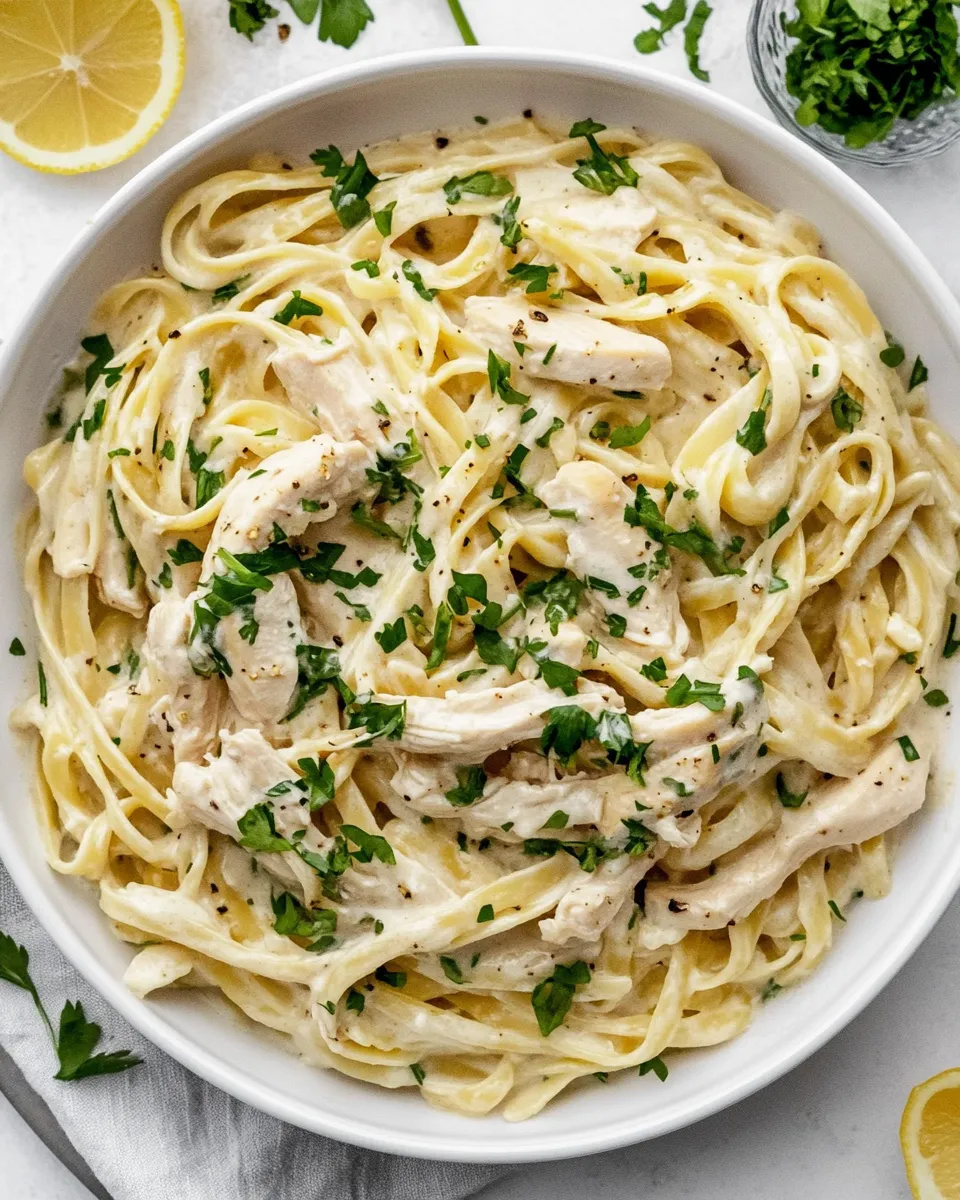
There’s something comforting about a bowl of creamy fettuccine and golden chicken that makes weeknights feel a little more special. This Homemade Chicken Alfredo is straightforward, forgiving, and built around good technique rather than tricks. You’ll get a sauce that clings to pasta, tender strips of chicken, and a steady rhythm to the cooking so nothing sits cold while the other component finishes.
I keep this recipe in regular rotation because it scales well and adapts to what’s in the fridge. It’s also a great base for small variations: swap herbs, add mushrooms, or finish with a squeeze of lemon to brighten it. The steps are practical and designed so each component finishes at the right time.
Read through the ingredient notes, follow the step-by-step section, and rely on the tips sprinkled through the post. You’ll finish with a restaurant-style plate of fettuccine that’s simple to pull together and reliably satisfying.
Ingredient Rundown
The list below uses the original ingredients and keeps quantities exact. Each line includes a short note so you understand what it does in the final dish.
- 1 boneless, skinless chicken breast — provides the main protein; slice thin so it cooks quickly and stays tender.
- 1 pound dry fettuccine noodles (1 box) — the wide noodles hold the sauce well; cook according to package directions for best texture.
- 3 tablespoons extra virgin olive oil — used to sear the chicken and capture the fond (browned bits) that flavor the sauce.
- 1 clove garlic (minced) — builds a fragrant base; add late and don’t let it brown to avoid bitterness.
- 1¼ cups slow-sodium chicken broth — keeps the sauce savory without overpowering saltiness; also helps deglaze the pan.
- 2 tablespoons fresh lemon juice (from 1 lemon) — brightens the sauce, cutting through the richness of cream and cheese.
- 1½ cups heavy cream (room temperature) — the body of the Alfredo; use room-temp cream to blend smoothly into the hot pan.
- 1 cup freshly grated Parmesan cheese — melts into the sauce and provides the signature cheesy flavor; grate fresh for best texture and melt.
- ¼ cup chopped fresh parsley — a finishing herb for color and a fresh note; add at the end so it stays lively.
Step-by-Step: Homemade Chicken Alfredo
- Bring a large pot of water to a boil and cook 1 pound dry fettuccine noodles according to the package directions. Before draining, reserve about 1/2 cup of the pasta cooking water (optional). Drain the pasta and set it aside.
- While the pasta cooks, cut 1 boneless, skinless chicken breast into thin strips.
- Heat a nonstick skillet over medium heat. Add 3 tablespoons extra virgin olive oil and swirl to coat the pan.
- Add the chicken strips in a single layer and cook, turning occasionally, until golden brown and cooked through (internal temperature 165°F), about 6–8 minutes total depending on thickness. Transfer the cooked chicken to a plate and set aside.
- Reduce the heat to medium-low. Add 1 clove minced garlic to the pan and sauté until fragrant, about 30–60 seconds, taking care not to let it brown.
- Pour in 1¼ cups slow-sodium chicken broth and add 2 tablespoons fresh lemon juice. Use a spatula to scrape up any browned bits from the bottom of the pan. Bring the mixture to a boil, then reduce to a simmer for 2–3 minutes.
- Stir in 1½ cups heavy cream and simmer gently for 2–4 minutes, stirring occasionally, until the sauce starts to thicken slightly.
- Add the cooked fettuccine and the cooked chicken to the pan. Toss or stir to combine and heat through. If the sauce seems too thick, add a tablespoon or two of the reserved pasta water (or extra broth) until the desired consistency is reached.
- Remove the pan from heat and stir in 1 cup freshly grated Parmesan cheese until melted and the sauce is smooth and coats the pasta.
- Sprinkle with ¼ cup chopped fresh parsley and serve immediately.
The Upside of Homemade Chicken Alfredo
This dish is a dependable weeknight winner. It’s quick: most of the work happens while the pasta cooks. It’s flexible: the formula (pan-seared protein, pan sauce, cream, cheese, and pasta) is one you can riff on without breaking the balance. And it’s forgiving: small timing or temperature variations won’t ruin it.
You also get consistent texture. Cooking the chicken in thin strips ensures even doneness. Reserving pasta water gives you a simple tool to tune the sauce’s viscosity so it clings to the fettuccine instead of pooling. Finally, finishing off the heat before adding Parmesan prevents grainy sauce and keeps things silky.
Substitutions by Category
Substitutions let you adapt to your pantry or dietary needs. Use these swaps without adjusting the main method.
- Protein — Swap the chicken breast for thin-sliced boneless thighs for richer flavor, or use rotisserie chicken (roughly 2 cups shredded) added at the end to save time.
- Pasta — Any flat, wide pasta works: tagliatelle, pappardelle, or linguine. If you need gluten-free, use a good-quality gluten-free fettuccine and watch cooking time closely.
- Dairy — Heavy cream is central for a silky sauce. For a lighter version, use half-and-half, but expect a thinner, less stable sauce. Use freshly grated Pecorino Romano in place of some Parmesan for a sharper bite.
- Liquid — Slow-sodium chicken broth is recommended for control over salt. Vegetable broth works for a lighter flavor profile. If you’re out of broth, use a mix of water and a small knob of butter for richness.
- Herbs & Brighteners — Swap parsley for basil or chives at the end. Increase or decrease lemon juice to taste; add zest for a more citrus-forward finish.
Equipment at a Glance
- Large pot for boiling pasta
- Nonstick skillet (a 10–12″ works well)
- Sharp knife and cutting board for slicing chicken
- Tongs or pasta fork to toss noodles
- Measuring cups and spoons
- Microplane or grater for fresh Parmesan
Steer Clear of These
A few common missteps will affect texture and flavor. Don’t let garlic brown — it turns bitter quickly and will throw off the sauce’s balance. Avoid adding cold cream straight from the fridge; it can seize and separate. Bring the cream to a gentle simmer, not a vigorous boil.
Also, don’t overdo the cheese. If you add Parmesan while the pan is too hot or the cream is rapidly boiling, the cheese can clump. Remove the pan from heat and stir in the cheese off the burner for a smooth finish. Finally, don’t skip reserving pasta water — that starchy liquid is the secret for adjusting consistency and helping the sauce adhere to the noodles.
Seasonal Spins
Small, seasonal additions make this recipe feel fresh without changing the mechanics.
- Spring: Fold in blanched asparagus tips and peas at the end for color and a sweet snap.
- Summer: Add chopped sun-dried tomatoes and fresh basil for brightness and a Mediterranean lift.
- Fall: Sauté sliced cremini mushrooms with the chicken for an earthy, comforting version.
- Winter: Stir in a handful of roasted butternut squash cubes and a pinch of nutmeg for warmth.
Testing Timeline
Use this quick timing guide to keep the full plate ready together:
- 0:00 — Bring pot of water to boil and start pasta when boiling.
- 0:05–0:10 — While pasta cooks, slice the chicken and heat skillet.
- 0:10–0:18 — Sear chicken (6–8 minutes total), transfer to plate.
- 0:18–0:22 — Sauté garlic, deglaze with broth and lemon, simmer 2–3 minutes.
- 0:22–0:26 — Add cream, simmer 2–4 minutes until slightly thickened.
- 0:26–0:28 — Add pasta and chicken, finish with Parmesan and parsley, serve immediately.
The whole process should take about 30 minutes from start to finish if you multitask efficiently.
Storage & Reheat Guide
Store leftover Homemade Chicken Alfredo in an airtight container in the refrigerator for up to 3 days. The sauce will thicken and the pasta will absorb some liquid as it sits.
Reheat gently on the stovetop over low heat. Add a splash of milk, cream, or reserved pasta water to loosen the sauce while stirring constantly. Microwaving works in a pinch: use medium power in 30-second intervals, stirring between bursts and adding a little liquid to revive creaminess.
Do not freeze this dish if you want to keep the sauce texture intact. Freezing and thawing often causes cream-based sauces to separate and become grainy.
Questions People Ask
Here are answers to the most common questions I get when readers try this recipe.
- Can I use pre-grated Parmesan? — You can, but pre-grated cheese often contains anti-caking agents and doesn’t melt as smoothly. Freshly grated yields a silkier sauce.
- What if my sauce is too thin? — Simmer it a minute longer to reduce and thicken, or stir in a small handful more grated Parmesan off the heat.
- My sauce turned grainy. Why? — That usually happens if the cheese was added over high heat or the cream boiled vigorously. Remove the pan from heat and whisk in cheese gently to rescue it.
- Can I make this dairy-free? — The recipe relies on heavy cream and Parmesan for texture and flavor. For a dairy-free alternative, use a trusted non-dairy cream and a dairy-free parmesan substitute, but expect a different final texture.
- How do I know when the chicken is done? — Thin strips cook quickly; an internal temperature of 165°F is the safe target. They should be golden with no pink inside.
- Can I double the recipe? — Yes. Use a larger pot and skillet, and watch crowding in the pan when searing chicken; do it in batches if needed.
Ready, Set, Cook
When you’re ready to make this, gather the ingredients and start the pasta water first. The recipe rewards a little organization: prep the chicken and grate the Parmesan while the water comes to a boil. Keep the reserved pasta water handy — it’s the small trick that makes the sauce cling and shine.
Serve warm, garnish with extra parsley, and enjoy a satisfying, straightforward plate of Homemade Chicken Alfredo that’s worth the few minutes it takes to prepare. If you try a variation, note what you did and how it tasted; this recipe is a good foundation for personal tweaks.
Homemade Chicken Alfredo
Ingredients
Equipment
Method
- Bring a large pot of water to a boil and cook 1 pound dry fettuccine noodles according to the package directions. Before draining, reserve about 1/2 cup of the pasta cooking water (optional). Drain the pasta and set it aside.
- While the pasta cooks, cut 1 boneless, skinless chicken breast into thin strips.
- Heat a nonstick skillet over medium heat. Add 3 tablespoons extra virgin olive oil and swirl to coat the pan.
- Add the chicken strips in a single layer and cook, turning occasionally, until golden brown and cooked through (internal temperature 165°F), about 6–8 minutes total depending on thickness. Transfer the cooked chicken to a plate and set aside.
- Reduce the heat to medium-low. Add 1 clove minced garlic to the pan and sauté until fragrant, about 30–60 seconds, taking care not to let it brown.
- Pour in 1¼ cups slow-sodium chicken broth and add 2 tablespoons fresh lemon juice. Use a spatula to scrape up any browned bits from the bottom of the pan. Bring the mixture to a boil, then reduce to a simmer for 2–3 minutes.
- Stir in 1½ cups heavy cream and simmer gently for 2–4 minutes, stirring occasionally, until the sauce starts to thicken slightly.
- Add the cooked fettuccine and the cooked chicken to the pan. Toss or stir to combine and heat through. If the sauce seems too thick, add a tablespoon or two of the reserved pasta water (or extra broth) until the desired consistency is reached.
- Remove the pan from heat and stir in 1 cup freshly grated Parmesan cheese until melted and the sauce is smooth and coats the pasta.
- Sprinkle with ¼ cup chopped fresh parsley and serve immediately.
Notes
Add some red pepper flakes–either in the sauce or as a finishing touch– for just a tiny bit of heat.