Homemade Pizza Sauce Recipe
I keep coming back to this sauce because it does one simple thing very well: it makes pizza taste like it was worth the effort. No simmering for hours, no long ingredient lists, just a small set of high-quality items and a few decisive steps. It’s forgiving, fast, and focused on bright tomato flavor with a whisper of basil.
This recipe is short on fuss and long on convenience. It accepts good canned tomatoes and a little rough chiffonade of fresh basil. If you want the kind of sauce that sings under cheese and browns without getting watery, this is the one I reach for on busy weeknights and lazy weekend bakes alike.
Below you’ll find the ingredients, the exact stepwise directions, and practical notes I’ve gathered from dozens of pizzas. I’ll cover swaps, tools, common mistakes, storage, and answers to the questions readers ask most often. Let’s make a sauce you’ll be proud to spread.
Gather These Ingredients
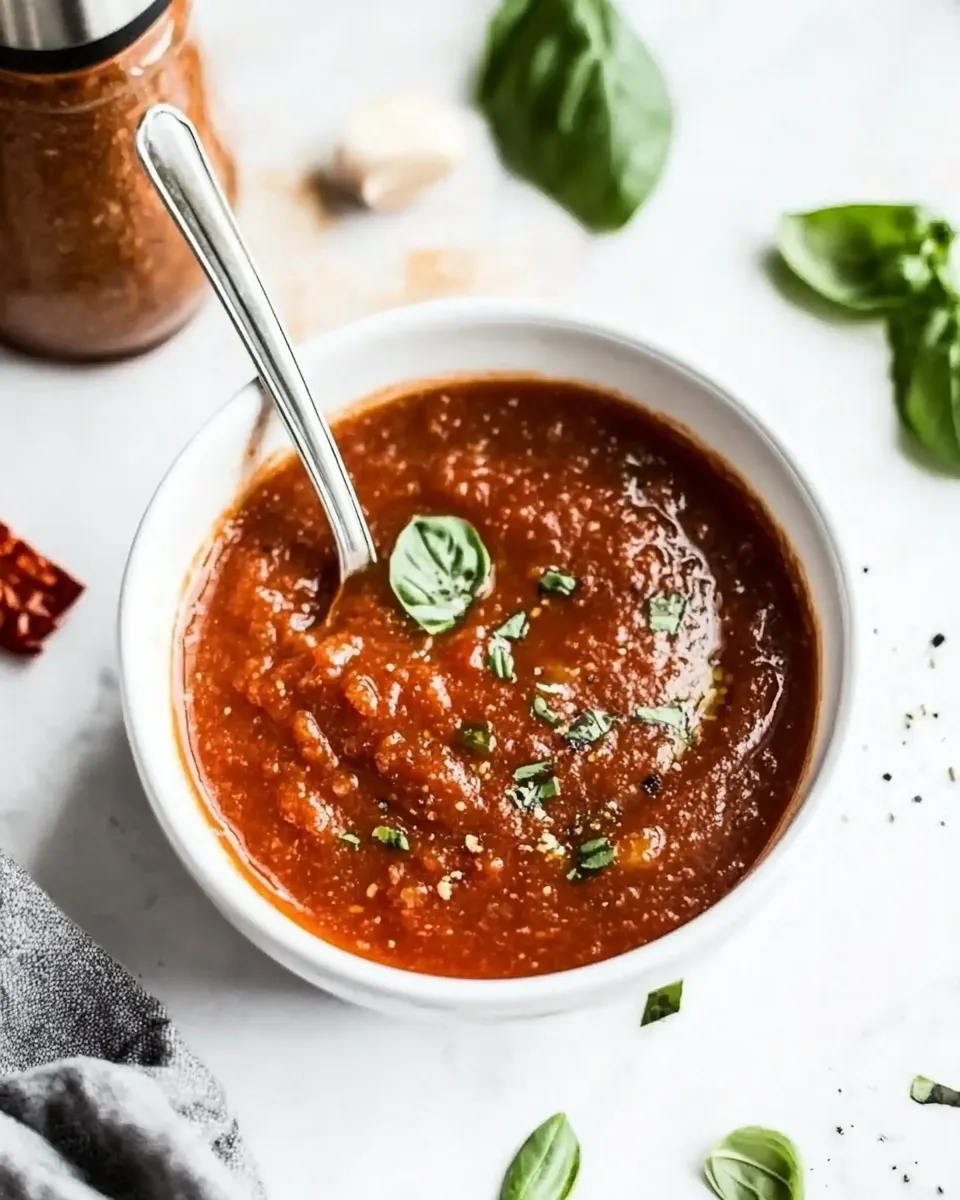
- 28ouncecan San Marzano tomatoes — the backbone of the sauce; San Marzano tomatoes are sweeter and less acidic than many other canned tomatoes, which gives the sauce a clean, bright base.
- 8-10roughly chiffonade fresh basil leaves — fresh basil adds a lift of herbal brightness; chiffonading keeps pieces small enough to distribute evenly without turning to mush.
- 1teaspoonsea salt — pulls all the flavors together; adjust after tasting if your canned tomatoes are noticeably sweet or tangy.
Pizza Sauce Made Stepwise
- Open the 28ouncecan of San Marzano tomatoes and pour the tomatoes and their juices into a food processor, blender, or a container for a food mill.
- If using a food processor or blender: pulse on high about 20–25 times, stopping when the tomatoes are smoother but still have some chunks. If using a food mill: pass the tomatoes through once using a medium or coarse disk to retain some texture.
- Remove any large stems from the basil leaves. Stack the 8–10 fresh basil leaves, roll them tightly, and slice across the roll to create a rough chiffonade.
- Transfer the processed tomatoes to a bowl if needed, add the chiffonaded basil and 1 teaspoon sea salt, and stir until evenly combined.
- Serve.
What Makes This Recipe Special
This sauce trusts two things: good tomatoes and restraint. There’s no sautéing, no added oils, and no long reduction. The result is a fresh-tasting, slightly chunky sauce that doesn’t overpower the dough or the toppings. Because you’re not cooking all the aromatics into the tomato, the basil and tomato maintain a bright, immediate flavor that translates beautifully under cheese.
Another advantage is speed. The total active time is minutes: open, pulse, chiffonade basil, combine. That speed makes it ideal for same-evening pizzas and for scaling up when you want multiple pies or to jar a batch for later. The texture is intentionally a little rustic — enough body to cling to a spoon and a pizza spatula without turning watery on the pie.
Ingredient Swaps & Substitutions
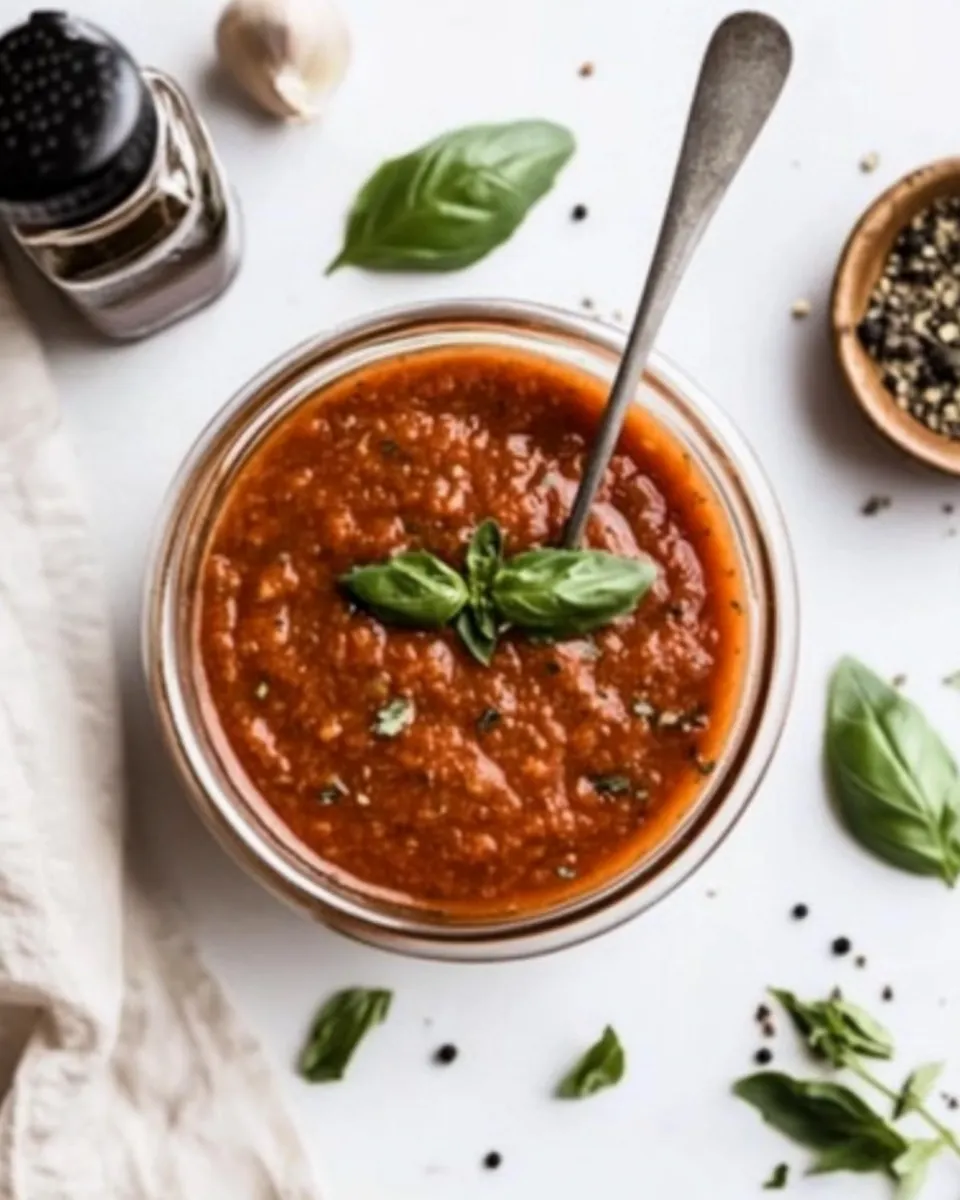
If you can’t find San Marzano tomatoes, look for other high-quality canned plum tomatoes labeled as whole peeled tomatoes. They won’t be identical, but they’ll stand in well. Avoid plain tomato sauce or crushed tomatoes for this approach; the whole tomatoes offer better texture control when you process them yourself.
For basil alternatives, a small handful of fresh oregano or a few torn parsley leaves will change the flavor profile in small, savory ways — use sparingly because fresh herbs can quickly dominate the tomato. If fresh basil isn’t available, a pinch (start with 1/8 teaspoon) of dried basil added to the processed tomatoes can work, though it won’t give the same bright, fresh lift.
Salt is essential for flavor balance. If you need to reduce sodium, start with 1/2 teaspoon and taste before adding more. If you’re using very sweet canned tomatoes, a small squeeze of lemon or a grind of black pepper can help brighten the sauce without adding salt, but add those sparingly and taste as you go.
Tools of the Trade
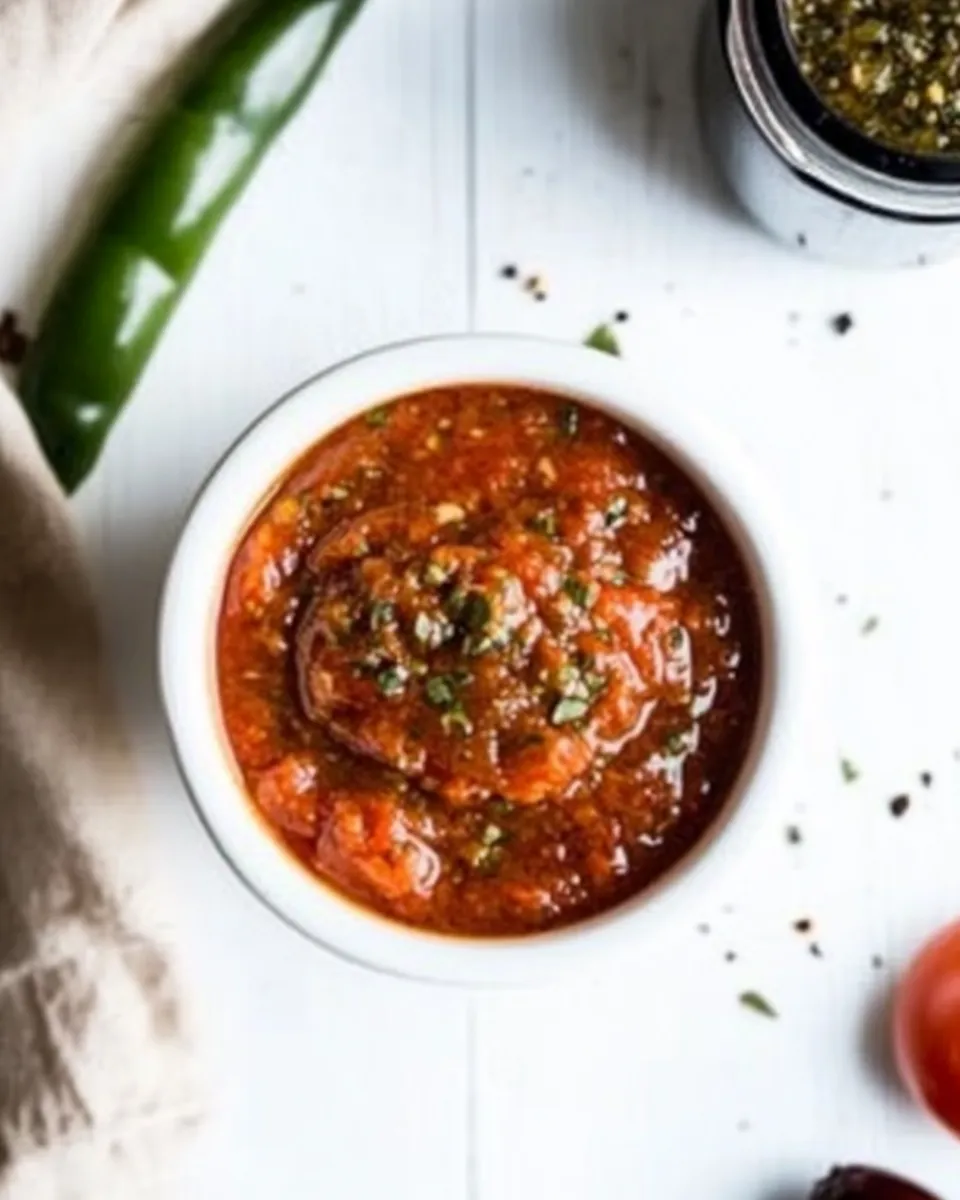
Simple tools are enough for this sauce:
- Food processor or blender — for quick pulsing to the desired texture.
- Food mill (optional) — for a slightly smoother but still textured result; choose a medium or coarse disk for this recipe.
- Sharp chef’s knife — for rolling and chiffonading the basil neatly.
- Mixing bowl and wooden spoon — for combining and tasting.
My practical picks
If you have a high-speed blender, use shorter pulses to avoid turning the tomatoes into a puree. If you use a food mill, you’ll want a bowl nearby to catch the processed tomatoes and the skins for composting. A small digital scale isn’t necessary for this recipe, but it’s helpful when you start scaling up for larger batches.
Errors to Dodge
1) Overblending. Pulse, don’t puree. Over-processing yields a watery, lifeless sauce that won’t cling well to pizza dough. Aim for a texture that still shows small bits of tomato.
2) Skipping the salt. Even high-quality canned tomatoes need salt to round out the flavor. Add the teaspoon of sea salt and taste; adjust only after tasting the completed sauce on a small spoon.
3) Using garden-fresh basil with bruised or wilted leaves. If the basil doesn’t smell fragrant, it won’t add the bright, green note the recipe relies on. Freshness matters more than quantity here.
4) Adding too many extras. This sauce is intentionally minimal. Herbs, garlic, or oil can be added at the pizza-building stage if you want them, but don’t overload the sauce itself—its simplicity is its strength.
Substitutions by Diet
Gluten-free, dairy-free, vegan: this sauce is naturally compatible. There are no dairy or gluten ingredients here, and the whole-canned tomato plus basil base is plant-based.
Low-sodium adjustments: start with 1/2 teaspoon sea salt, then finish the pizza and taste a small piece before deciding whether to add more. Salt behaves differently once baked and combined with cheese and crust.
Nightshade allergies: this is a tomato-based sauce, so it’s not suitable if you must avoid nightshades. For those needing a nightshade-free alternative, consider a pumpkin or roasted carrot-based spread, but note that changes the whole flavor profile and texture.
Little Things that Matter
Drain or don’t drain? For this recipe, you use the tomatoes and their juices together. The juices help carry flavor and make it easy to spread. If you’re working with a thinner dough or a very wet topping like fresh mozzarella, blot the cheese or par-bake the crust briefly to avoid sogginess.
Basil timing: chiffonade and mix the basil in at the end. If you cook the basil into the sauce, it loses its fresh character. The quick fold-in preserves aroma and brightens the final bite.
Texture preference: pulse fewer times for chunkier sauce; pulse more for a smooth but still slightly textured finish. Keep notes for the next time you make it so you can repeat the texture you preferred.
Prep Ahead & Store
Make this sauce up to 3 days ahead and keep it refrigerated in an airtight container. Because it’s uncooked, it stays fresh and bright in flavor for a short window. If you’d like to store it longer, you can freeze it: portion into freezer-safe containers or ice cube trays for single-pie portions. Freeze for up to 3 months.
When thawing, move the sauce to the refrigerator overnight and give it a good stir before using. If the texture looks a touch separated after freezing, a quick stir or a few short pulses in a food processor will bring it back together. Do not refreeze after thawing.
Quick Q&A
Q: Can I add garlic? A: Yes, but I recommend adding a thin layer of garlic-infused oil to the dough or a few very thin slices of fresh garlic on the pie rather than mixing raw garlic into the sauce. That keeps the sauce clean and lets the garlic toast on the crust.
Q: Should I cook the sauce before using? A: No. This recipe is meant to be used raw. It bakes on the pie and keeps a fresh tomato flavor. If you prefer a cooked sauce, you can simmer gently for 10–15 minutes, but it will change the flavor and reduce brightness.
Q: Can I use dried basil? A: Dried basil is a different flavor. If fresh basil isn’t available, use a small pinch of dried basil, but note it won’t replace the fresh herb’s aromatic lift.
Q: Is the salt negotiable? A: Start with the recommended 1 teaspoon and adjust to taste. If you’re limiting sodium, use 1/2 teaspoon and finish tasting after baking the pizza, since other toppings will add salt.
Q: Will this sauce make my pizza soggy? A: Not if you follow the texture guidance. Pulsing to retain some tomato chunks helps the sauce cling rather than pool. Also, consider the hydration of your dough and the moisture of your toppings — thicker slices of fresh mozzarella or wet vegetables can contribute to sogginess.
Ready, Set, Cook
With the sauce mixed, you’re one confident step away from a great pizza. Spread a thin, even layer across your stretched dough, add your cheese and toppings, and bake in a hot oven. The sauce will concentrate and mingle with the cheese as the crust browns, delivering straightforward tomato flavor and a fragrant hit of basil.
This is the kind of sauce I make when I want a reliable base that lets other elements shine. It’s quick, forgiving, and consistently satisfying. Make a batch, freeze half, and you’ll always have a shortcut to a home-baked pie that tastes like you put in a little love — without the long fuss.
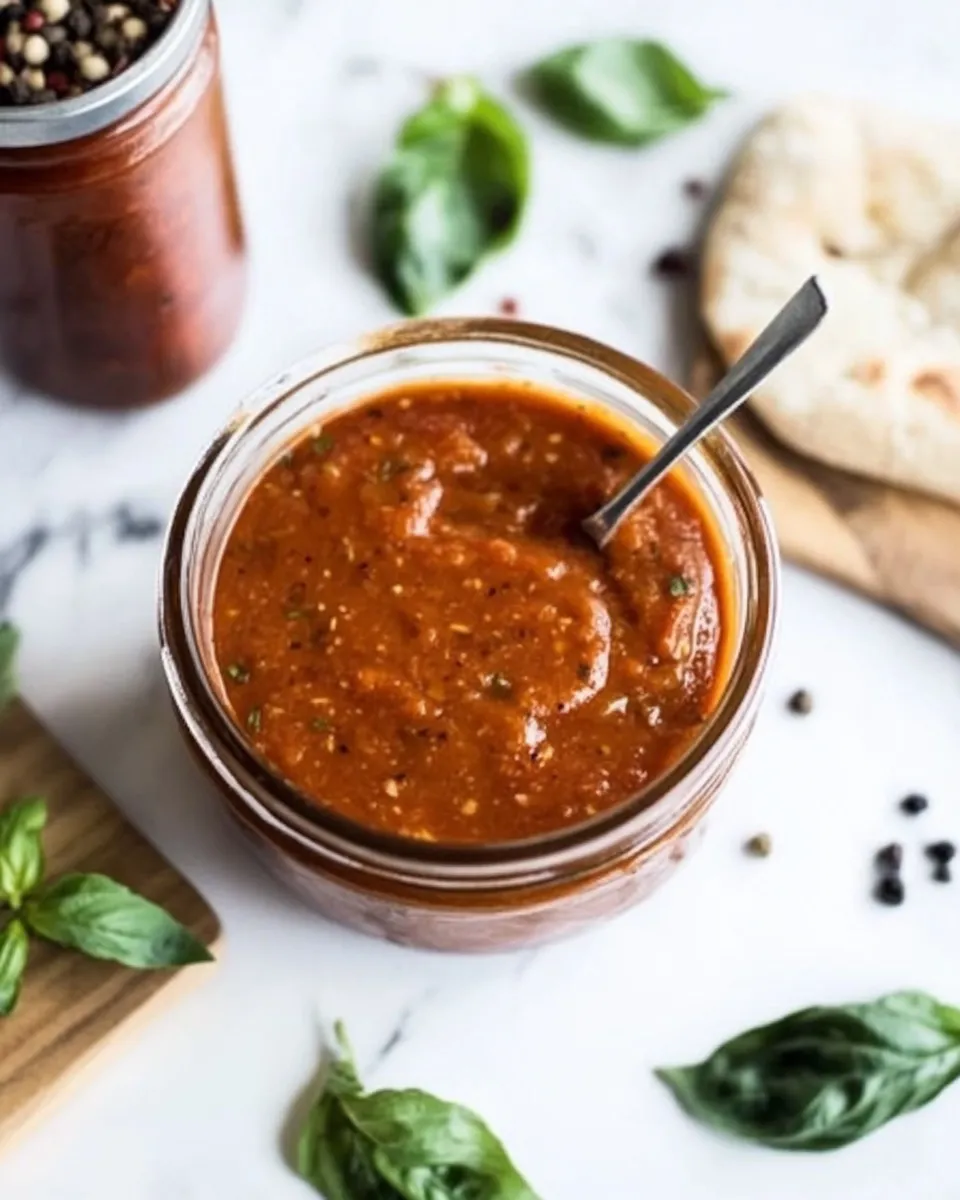
Homemade Pizza Sauce Recipe
Ingredients
Equipment
Method
- Open the 28ouncecan of San Marzano tomatoes and pour the tomatoes and their juices into a food processor, blender, or a container for a food mill.
- If using a food processor or blender: pulse on high about 20–25 times, stopping when the tomatoes are smoother but still have some chunks. If using a food mill: pass the tomatoes through once using a medium or coarse disk to retain some texture.
- Remove any large stems from the basil leaves. Stack the 8–10 fresh basil leaves, roll them tightly, and slice across the roll to create a rough chiffonade.
- Transfer the processed tomatoes to a bowl if needed, add the chiffonaded basil and 1 teaspoon sea salt, and stir until evenly combined.
- Serve.
Notes
How to Store:Cover and keep in the refrigerator for up to 6 days. Cover and freeze for up to 3 months. Thaw in the refrigerator for 1 day before using.
Having limited access tofresh san Marzano tomatoes in the states, I prefer to use canned.
If you want to use fresh Roma tomatoes or whole peeled canned tomatoes add a little sugar to them so that they can match the flavor of San Marzano tomatoes.