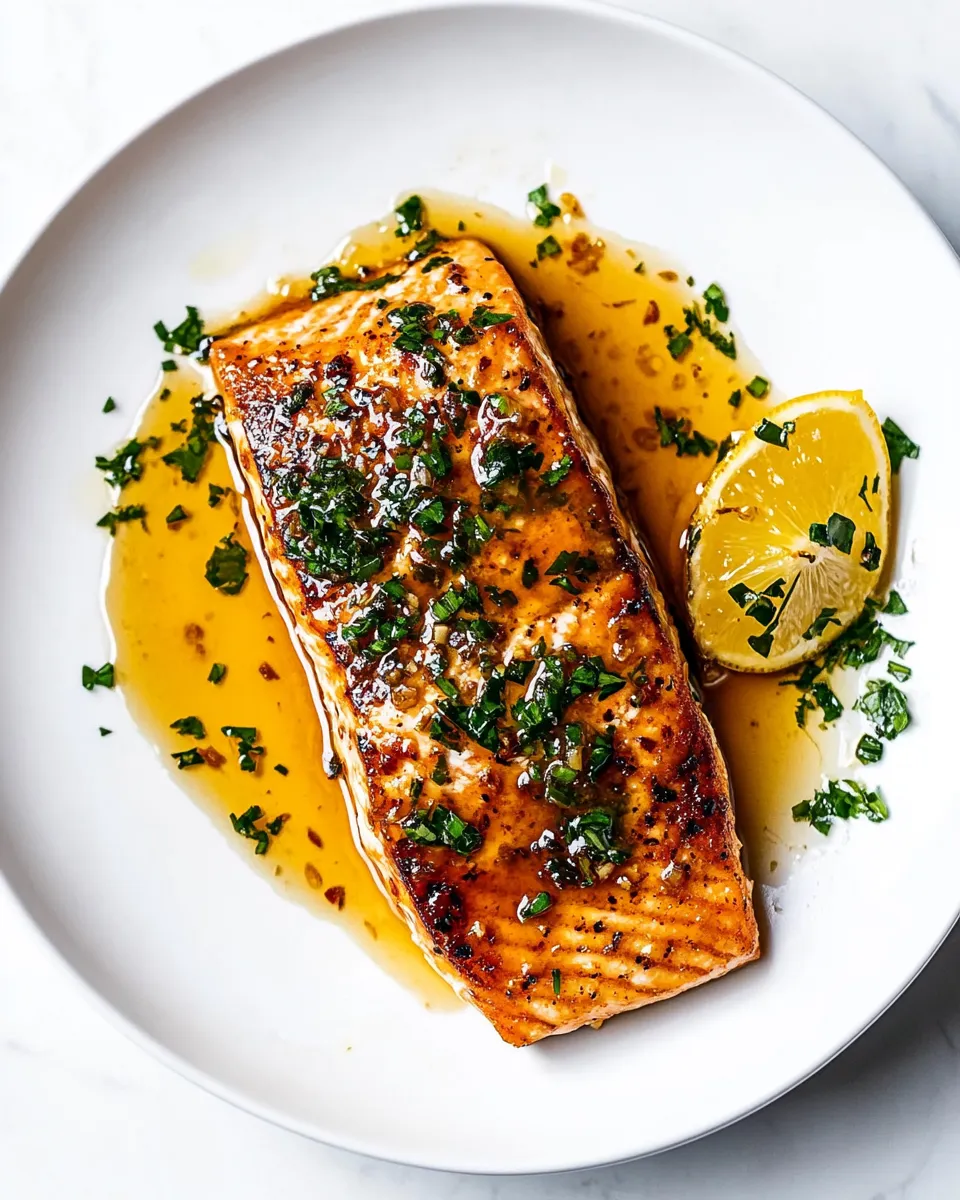
Honey Garlic Salmon Recipe
I make this honey garlic salmon on busy weeknights and on relaxed weekends alike. It comes together fast, uses one skillet, and hits that sweet-savory spot every time. The glaze clings to the salmon, giving a glossy finish and a little sticky bite that pairs beautifully with bright lemon juice and a hit of soy.
This recipe is forgiving. Even if your salmon fillets are slightly thicker or thinner than mine, the method adapts: a quick sear, a simple sauce, and a brief finish in the pan. You don’t need fancy equipment—just attention to timing and a hot skillet.
Below I’ll walk you through the ingredients, the exact step-by-step method, helpful swaps for allergies, tools I use, common mistakes to avoid, seasonal variations, and storage tips. Let’s get started — you’ll have a restaurant-worthy plate on the table in about 20 minutes.
What Goes In
- 1 pound fresh salmon — the star; use skin-on or skinless depending on preference.
- Salt & pepper to taste — basic seasoning to lift flavor; don’t skip.
- 1 tablespoon olive oil — for searing; high enough heat point to get a good crust.
- 1 tablespoon lemon juice — adds brightness and balances the honey.
- 1 tablespoon soy sauce — brings umami and salt to the glaze.
- 1/4 cup honey — sweet backbone of the sauce; thickens as it reduces.
- 3 cloves garlic minced — aromatic punch; mince finely so it cooks quickly and evenly.
- Chopped fresh parsley optional, to taste — bright garnish that freshens the finished dish.
Stepwise Method: Honey Garlic Salmon
- Cut the 1 pound fresh salmon into 4 pieces and season both sides with salt and pepper to taste.
- Add 1 tablespoon olive oil to a skillet and heat over medium-high until the oil shimmers.
- Place the salmon in the skillet, skin-side down if the pieces have skin. Cook undisturbed for 4–5 minutes. If the oil is splattering, reduce the heat slightly.
- Flip the salmon and cook the other side for 4–5 minutes, or until the salmon is just cooked through. Transfer the salmon to a plate.
- While the salmon cooks (or immediately after transferring it), combine 1 tablespoon lemon juice, 1 tablespoon soy sauce, 1/4 cup honey, and 3 cloves minced garlic in a small bowl and stir until blended.
- Pour the sauce mixture into the same skillet and cook over medium heat, letting it bubble and reduce slightly for about 2 minutes to cook the garlic and thicken the sauce.
- Return the salmon to the skillet and spoon the sauce over each piece, cooking for an additional 30–60 seconds to coat and reheat the fish.
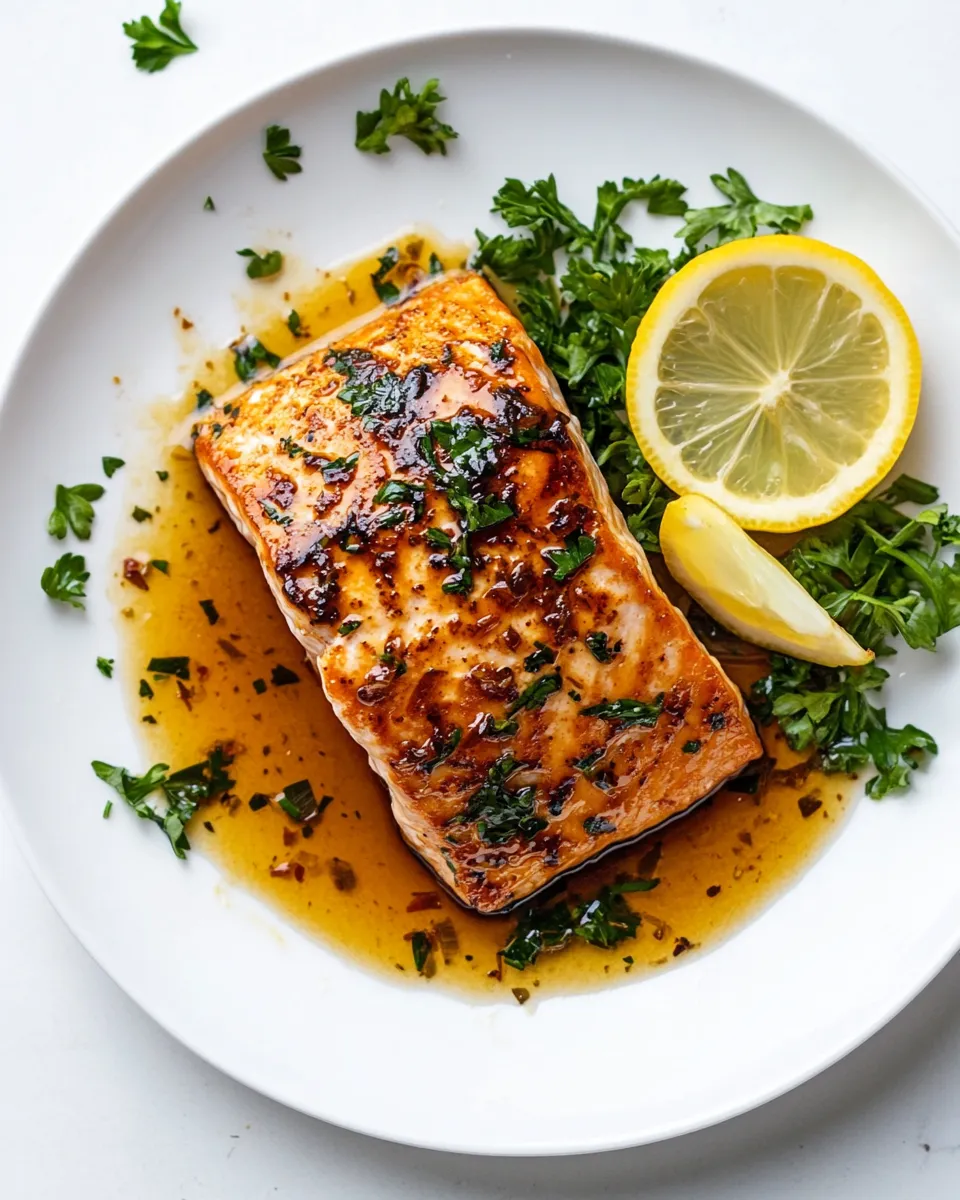
- Serve the salmon topped with chopped fresh parsley, if desired, to taste.
What You’ll Love About This Recipe
This dish balances speed, flavor, and texture. You get a crisped exterior and a tender, flaky interior without fuss. The sauce is quick to make, and it clings to the fish so each bite is glazed. There’s an immediate contrast — the sticky honey, the sharp garlic, the salty soy, and a bright squeeze of lemon — that keeps the dish interesting.
It’s flexible: plate it with rice for a comforting bowl, toss it onto a salad for a lighter meal, or serve it with steamed greens for a clean, elegant dinner. It looks polished, but it doesn’t require a lot of technique or time. That’s the real win.
Allergy-Friendly Substitutes
Need swaps for allergies or preferences? Here are reliable alternatives that keep the spirit of the dish.
- Soy sauce — substitute with coconut aminos for a gluten-free, soy-free option; it’s slightly sweeter, so taste and adjust.
- Honey — use maple syrup or agave for a vegan-friendly glaze; they won’t caramelize exactly the same but still provide sweetness and shine.
- Olive oil — swap for avocado oil or a neutral vegetable oil if you prefer a higher smoke point.
- Garlic — if garlic is a no-go, use a small amount of garlic-infused oil for flavor without the whole cloves.
- Salmon — if fish is the issue, firm tofu or tempeh can be pan-seared and finished with the same sauce for a plant-based version.
Toolbox for This Recipe
Keep this short list handy — nothing fancy is required.
- Heavy skillet (preferably nonstick or cast iron) — for an even sear and easy sauce reduction.
- Tongs or a fish spatula — to flip the salmon gently without breaking it.
- Small bowl and spoon — to mix the sauce ingredients before adding to the pan.
- Sharp knife and cutting board — to portion the salmon and mince the garlic.
- Measuring spoons and a 1/4-cup measure — to follow the recipe precisely.
Don’t Do This
Avoid a few common missteps that ruin texture or sauce.
- Don’t overcrowd the pan — cooking too many pieces at once lowers the pan temperature and prevents a good sear.
- Don’t move the salmon while it’s searing — flipping too early can tear the fillet and stop a proper crust from forming.
- Don’t turn the heat too high when adding the sauce — honey burns quickly; medium heat keeps the garlic from burning while the mixture reduces.
- Don’t skip resting briefly after cooking — transferring to a plate gives the juices a second to settle so the fish stays moist.
Variations by Season
Small seasonal twists keep this dish feeling fresh all year.
- Spring — serve with a salad of asparagus tips, radishes, and peas tossed in lemon vinaigrette; finish salmon with a few lemon zest shavings.
- Summer — swap parsley for chopped basil or mint and serve with grilled corn and tomatoes for a bright, casual plate.
- Fall — add a splash of apple cider vinegar to the glaze for tang and serve alongside roasted root vegetables.
- Winter — fold a teaspoon of grated ginger into the sauce for warmth and pair with steamed bok choy or wilted kale.
Method to the Madness
Why this order? Searing first locks in texture and flavor. The hot pan creates a Maillard crust on the fish. Transferring the salmon while you make the sauce prevents overcooking — fish cooks quickly and continues to carry heat after being removed from the pan.
Making the glaze in the same skillet does two things: it captures fond (those browned bits on the pan) which adds depth, and it uses residual heat to marry the flavors. Reducing the sauce concentrates the honey and cooks the garlic just enough so it loses raw sharpness but stays flavorful. Returning the salmon to the pan for a brief coat warms it without steaming or drying it out.
Store, Freeze & Reheat
Leftovers keep well if you follow a couple of rules.
- Refrigerate: Store cooled salmon in an airtight container for up to 3 days. Keep sauce and fish together to preserve moisture.
- Freeze: You can freeze cooked salmon for up to 1 month. Wrap tightly in plastic wrap and place in a freezer-safe bag. Texture will change slightly on thawing.
- Reheat: Gently reheat in a skillet over low heat with a splash of water or broth and cover briefly — this helps keep the fish moist. Microwave on low power in short bursts if you’re in a hurry, but watch carefully to avoid overcooking.
Your Questions, Answered
Q: How do I know when salmon is done?
A: It flakes easily with a fork and the center is just opaque. Overcooked salmon becomes dry; aim for a little translucency in the thickest part if you like medium doneness.
Q: Can I use frozen salmon?
A: Yes. Thaw completely, pat it dry, and proceed. Drying the surface well is important for a good sear.
Q: My sauce is too thin or too thick — how do I fix it?
A: If thin, simmer a little longer to reduce and thicken. If too thick, add a teaspoon of water or lemon juice to loosen it.
Q: Can I make the sauce ahead?
A: You can, but warm it gently before coating the salmon so the honey loosens and the garlic reactivates. Freshly reduced sauce will always cling better.
Ready, Set, Cook
Gather your salmon, season it, and heat the pan. Follow the simple steps above and watch the transformation: a quick sear, a bright sauce, a glossy finish. Plate with something green and a starch, or let it sit atop a bowl of rice for an effortless weeknight victory. Make a small batch of this glaze for other proteins — it’s just as lovely on chicken or roasted vegetables.
Cook confidently. Taste as you go. And if you try a variation, tell me which one you loved — I always want to know how you made it your own.
Honey Garlic Salmon Recipe
Ingredients
Equipment
Method
- Cut the 1 pound fresh salmon into 4 pieces and season both sides with salt and pepper to taste.
- Add 1 tablespoon olive oil to a skillet and heat over medium-high until the oil shimmers.
- Place the salmon in the skillet, skin-side down if the pieces have skin. Cook undisturbed for 4–5 minutes. If the oil is splattering, reduce the heat slightly.
- Flip the salmon and cook the other side for 4–5 minutes, or until the salmon is just cooked through. Transfer the salmon to a plate.
- While the salmon cooks (or immediately after transferring it), combine 1 tablespoon lemon juice, 1 tablespoon soy sauce, 1/4 cup honey, and 3 cloves minced garlic in a small bowl and stir until blended.
- Pour the sauce mixture into the same skillet and cook over medium heat, letting it bubble and reduce slightly for about 2 minutes to cook the garlic and thicken the sauce.
- Return the salmon to the skillet and spoon the sauce over each piece, cooking for an additional 30–60 seconds to coat and reheat the fish.
- Serve the salmon topped with chopped fresh parsley, if desired, to taste.