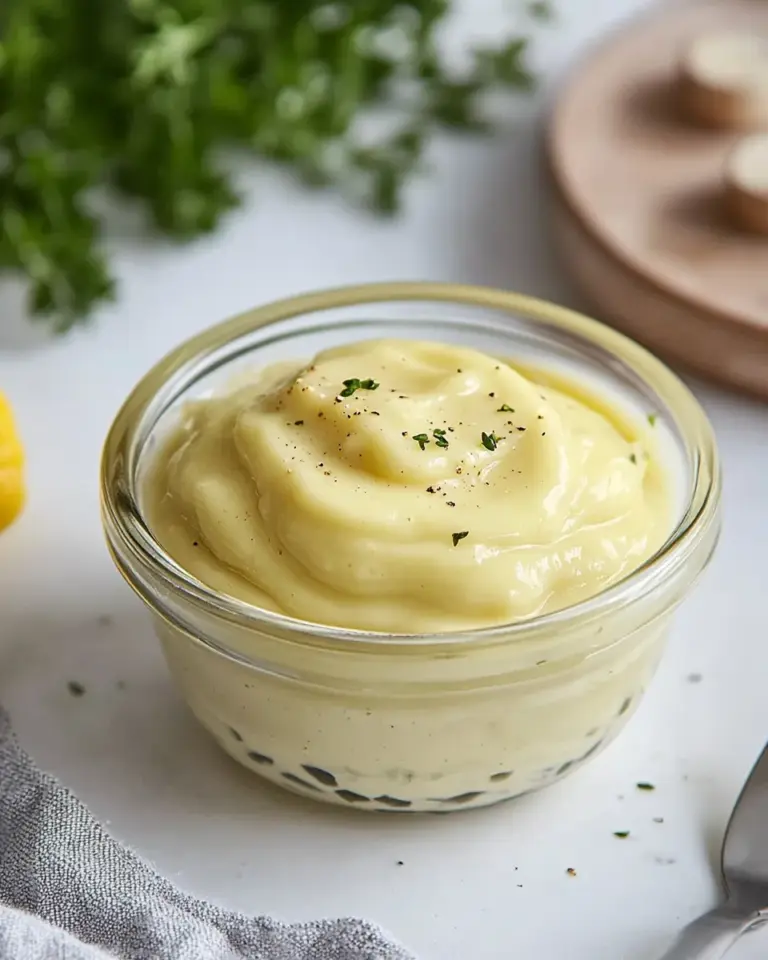
How to Make Harissa Paste
Harissa is that brilliant, sun-dried chile paste that wakes up everything it touches. It’s earthy, smoky, and fragrant from toasted seeds, and when you make it at home the flavors feel fresher and more alive than anything from a jar. This version is straightforward: dried chilies, three tiny piles of seeds, garlic, salt, and olive oil. That’s it.
I like to keep a jar of Harissa Paste in the fridge and reach for it like hot sauce — a spoonful in stews, mixed into yogurt, slathered on chicken, or stirred through roasted vegetables. The process is straightforward, and the results are durable: the paste improves after a day or two in the fridge and lasts long enough to pay back the effort.
Below you’ll find ingredient notes, the exact step-by-step method I use, safety and texture-friendly substitutions, troubleshooting tips, and storage guidance. Read the short ingredient list, follow the steps in order, and you’ll have a bright, balanced Harissa Paste that’s easy to adapt and use in a hundred ways.
Ingredient Notes
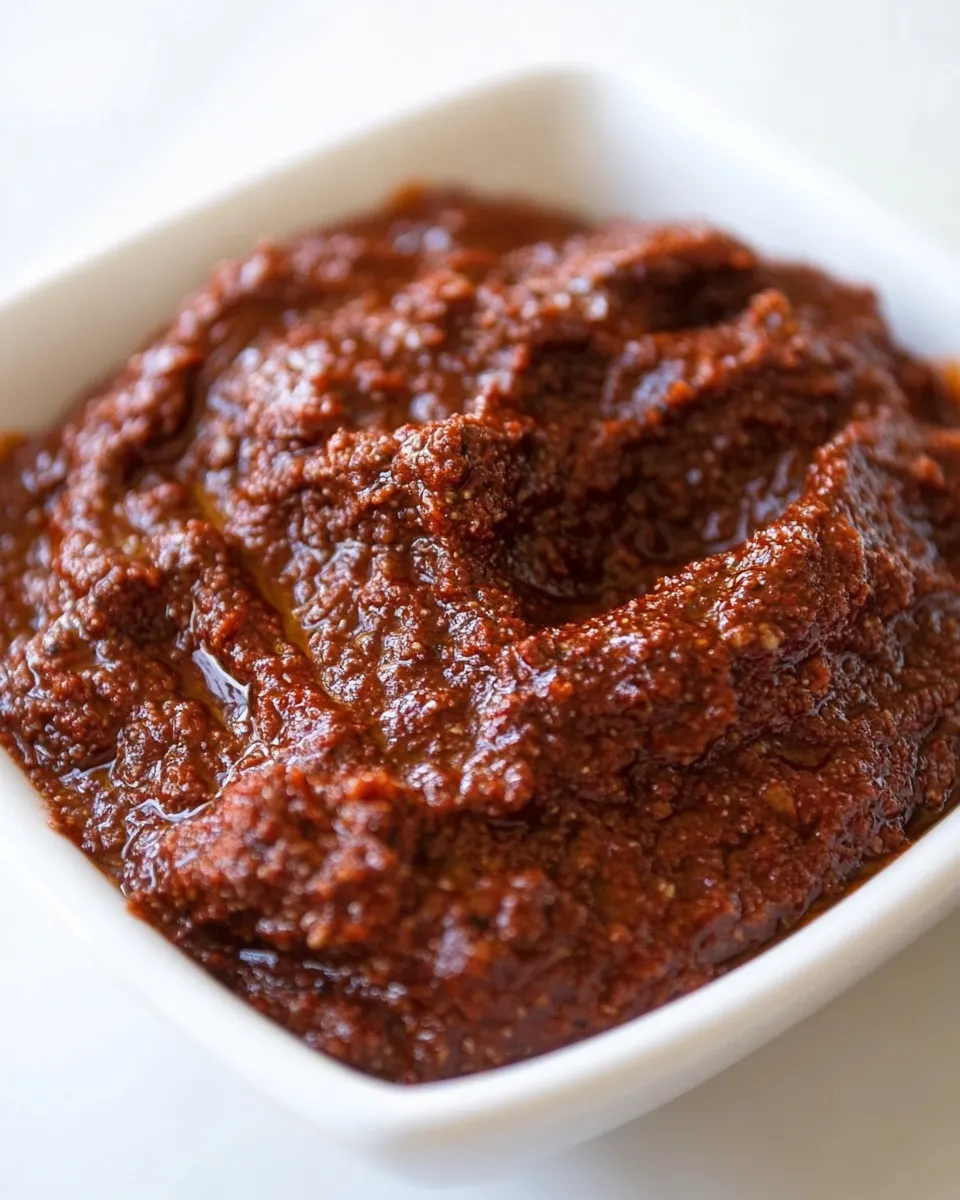
Before you start, a moment on the components. Each ingredient is doing a specific job: the dried chilies give the heat and color, the toasted spices provide depth and that toasty background, garlic adds bite and body, salt seasons, and olive oil binds everything into a spreadable paste. Use what the recipe lists — quantities matter for balance — and assemble everything before you begin so the process flows smoothly.
Ingredients
- 4 ounces dried chilies (stemmed and seeded) — the backbone: heat, color, and flavor; stem and seeds removed to control heat. (see note 1)
- 1/2 teaspoon caraway seeds — adds a sweet-anise, slightly nutty note; toast briefly to release oils.
- 1/2 teaspoon coriander seeds — citrusy, warm lift; toasting sharpens the aroma.
- 1/2 teaspoon cumin seeds — earthy, smoky base note; toasting brings out the deeper flavor.
- 4 cloves garlic (peeled) — gives the paste its punch and body; raw garlic mellows slightly with oil.
- 1 teaspoon Salt — essential for balance; start with the listed amount and adjust to taste.
- 3 tablespoons olive oil — binds and smooths the paste, rounds the edges; use a good, fruity oil for best results.
Stepwise Method: Harissa Paste
- Place 4 ounces dried chilies (stemmed and seeded) in a large heatproof bowl and pour in enough boiling water to fully cover them. If needed, weigh the chilies down with a plate so they stay submerged. Soak 10–15 minutes, until completely softened. Drain in a colander and press or pat the chilies to remove excess water.
- While the chilies soak, heat a small skillet over medium-low. Add 1/2 teaspoon caraway seeds, 1/2 teaspoon coriander seeds, and 1/2 teaspoon cumin seeds. Toast, stirring or shaking the pan frequently, until the seeds are fragrant and lightly darkened, about 5 minutes. Watch closely to avoid burning. Remove from heat and let cool briefly.
- Transfer the cooled toasted spices to a small spice grinder or a mortar and pestle and grind until very fine.
- Put the drained chilies, the ground spices, 4 peeled garlic cloves, and 1 teaspoon salt into a food processor. Pulse and then process until the mixture forms a thick paste, stopping to scrape down the bowl and blades as needed.
- With the processor running, slowly drizzle in 3 tablespoons olive oil until the paste is smooth and cohesive.
- Taste and add more salt if desired. Use the harissa paste immediately or store as you prefer.
Why I Love This Recipe
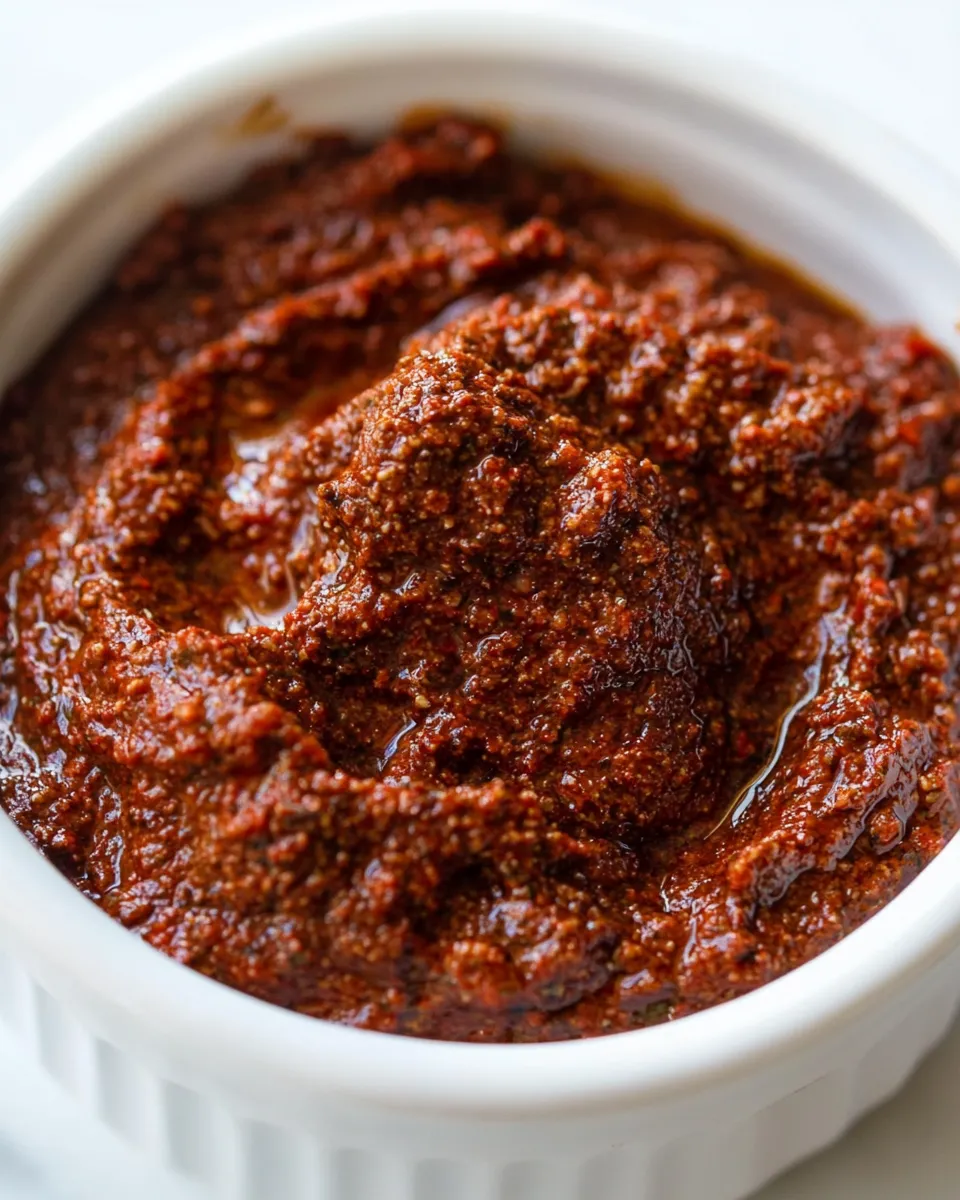
This Harissa Paste hits the balance I look for: heat without bluntness, savory depth from toasted seeds, and a smoothness that olive oil provides. It’s robust enough to anchor a stew and delicate enough to stir into mayonnaise. I love that the ingredients are pantry staples in many kitchens once you start buying dried chilies and whole seeds. The hands-on parts—soaking the chilies, toasting the seeds, grinding—are short and satisfying. You can taste and adjust at a few points, and the technique is forgiving.
Another part I love: customization. Subtle changes—switching the chilies for a slightly hotter or milder variety, or adding a smoked pepper—let you tailor the final paste without changing the method. The recipe gives you a reliable foundation and the freedom to make it your own.
Texture-Safe Substitutions
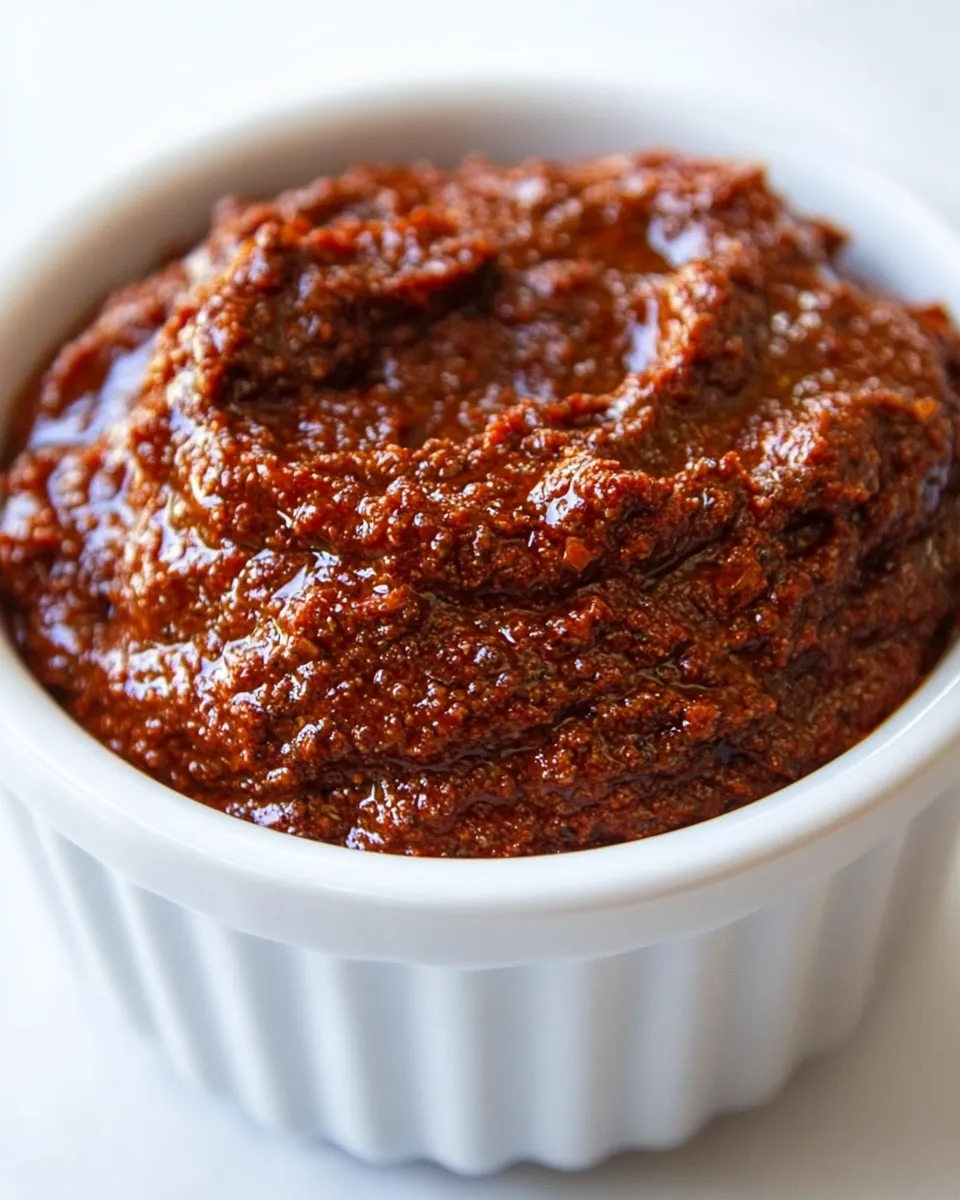
If you have dietary or textural needs, here are safe swaps that preserve the paste’s consistency:
- For a smoother paste without pieces: process longer and add an extra teaspoon of olive oil in the final step, one teaspoon at a time, until you reach the desired texture.
- If you cannot tolerate olive oil: use a neutral oil like avocado or light grapeseed oil in the same amount (3 tablespoons) to maintain spreadability and mouthfeel.
- To reduce the bite of raw garlic for very sensitive eaters: briefly pulse the garlic with the toasted spices before adding the chilies, or roast the garlic lightly for 10–15 minutes at 375°F and then use the roasted cloves in step 4. Roasting changes the flavor profile—sweeter and deeper—but keeps the texture similar.
Must-Have Equipment
Work with these basics and you’ll have clean results and minimal fuss:
- Large heatproof bowl — for soaking the chilies so they rehydrate evenly.
- Small skillet — to toast the seeds gently without burning.
- Small spice grinder or mortar and pestle — to make a fine powder from the toasted seeds.
- Food processor — the easiest way to turn softened chilies into a smooth, cohesive paste. A high-powered blender can work, but use caution with hot or warm ingredients.
- Fine-mesh colander or slotted spoon — for draining and pressing the chilies.
Avoid These Mistakes
Several small missteps can change the final paste. Watch out for these common ones:
- Don’t skip toasting the seeds. Untoasted seeds taste flat. Toasting for about 5 minutes releases oils and aroma; keep the heat medium-low and watch closely to prevent burning.
- Don’t leave chilies soaking too long. Over-soaking can make them waterlogged and dull the flavor. The step calls for 10–15 minutes; drain and press out excess water to keep the paste concentrated.
- Avoid dumping all the olive oil in at once. Drizzling it in while the processor runs gives a glossy, cohesive paste. Adding it too quickly can make it separated or greasy.
- Don’t undersalt. Harissa needs salt to open the flavors. Start with the recipe’s 1 teaspoon, then taste and adjust. Under-salted harissa will taste flat.
- Don’t burn the seeds. Burned seeds taste bitter and will ruin the paste. Toast until aromatic and lightly darkened, then remove from heat.
Smart Substitutions
Want to tweak flavor or make do with what you have? These swaps preserve the recipe’s intent while giving you options:
- Chilies: If you can’t find the exact dried chilies called for, use a mix of ancho, guajillo, or New Mexico chilies for medium heat and good color. For more heat, include a small number of arbol or pequin chilies, but keep the total at 4 ounces so balance remains.
- Oil: As noted, a neutral oil works if olive oil’s flavor is too assertive. Use the same volume — 3 tablespoons — to keep texture stable.
- Spice powder: If you don’t have caraway, coriander, or cumin seeds whole, ground spices can work in a pinch. Use the same measurements but start with slightly less (three-quarters of what’s listed) and adjust to taste, because pre-ground spices can be more intensely aromatic.
- Smokiness: If you want a smoky note without smoked chilies, add a small pinch (1/8 teaspoon) of smoked paprika to taste. Add it at the end so you control the level.
If You’re Curious
Questions often come up about heat levels, storage, and uses. Harissa is intensely flexible. Its perceived heat depends on the type of chilies you use and how thoroughly you remove seeds. The paste mellows with time and when used in fat-forward preparations like stews, where the heat distributes across the dish.
Flavor-wise, the toasted seeds are key. They create a backbone that makes harissa more than just chile paste: caraway lends a subtle sweetness, coriander brings brightness, and cumin gives a warm, earthy anchor. If you skip the seeds, you’ll still have chile paste, but it won’t have the same balance.
Keep-It-Fresh Plan
Store the paste in a clean jar with a tight-fitting lid. Pour a thin layer of olive oil over the top to keep air away from the surface; this helps preserve it and avoids discoloration. Refrigerated, the paste will keep for up to 3 weeks if you maintain the oil seal and use a clean spoon each time you scoop out some.
For longer storage, freeze in ice cube trays, then transfer the cubes to a sealed bag. That way you can thaw just what you need — a cube or two melts into soups, sauces, and marinades.
Your Questions, Answered
How hot will it be? Heat depends on the chilies. If you want a milder Harissa Paste, use more mild dried chilies and remove all the seeds. To increase the heat, add hotter chilies or leave a few seeds in.
Can I can it? I don’t recommend home canning for oil-rich, garlic-containing pastes. The acidity and preservation environment aren’t guaranteed without tested canning recipes. Refrigerate or freeze instead.
Can I skip the oil? Technically, yes, but the texture will be looser and less cohesive. Oil smooths the paste and carries flavor; for best spreadability and storage, keep the 3 tablespoons of oil as written.
Bring It Home
This Harissa Paste recipe is a compact, practical way to add a powerful, versatile condiment to your kitchen. Assemble the ingredients, respect the soak and toast times, and you’ll have a paste that lifts everything it touches. Make a batch, taste it over a day or two, and tweak salt or oil to suit your pantry and palate. Keep a jar in the fridge and you’ll find yourself reaching for it more than you expect.
Enjoy the process. The work is short and the payoff—vibrant heat and aromatic depth—is long lasting. Let Harissa Paste become one of your go-to flavor boosters.
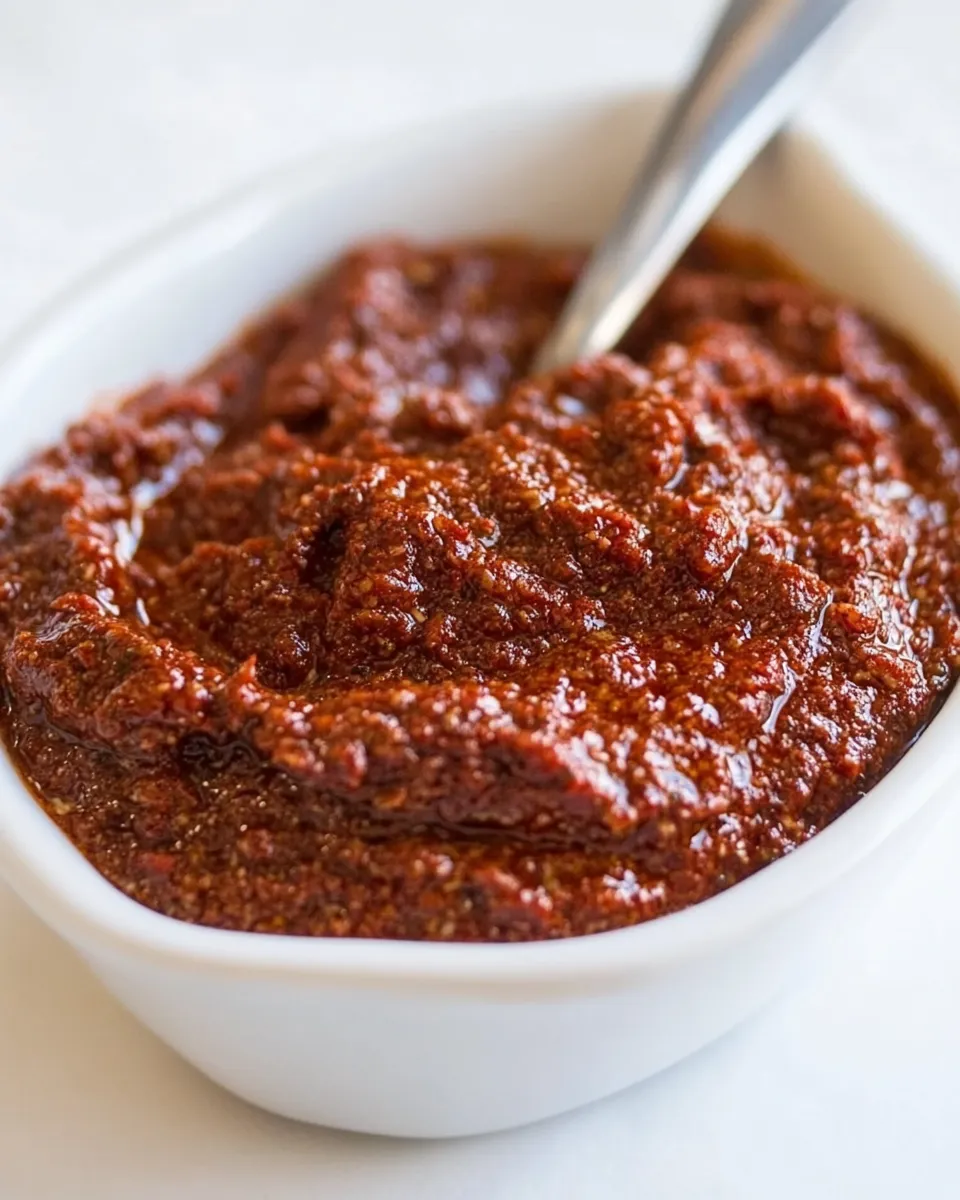
How to Make Harissa Paste
Ingredients
Equipment
Method
- Place 4 ounces dried chilies (stemmed and seeded) in a large heatproof bowl and pour in enough boiling water to fully cover them. If needed, weigh the chilies down with a plate so they stay submerged. Soak 10–15 minutes, until completely softened. Drain in a colander and press or pat the chilies to remove excess water.
- While the chilies soak, heat a small skillet over medium-low. Add 1/2 teaspoon caraway seeds, 1/2 teaspoon coriander seeds, and 1/2 teaspoon cumin seeds. Toast, stirring or shaking the pan frequently, until the seeds are fragrant and lightly darkened, about 5 minutes. Watch closely to avoid burning. Remove from heat and let cool briefly.
- Transfer the cooled toasted spices to a small spice grinder or a mortar and pestle and grind until very fine.
- Put the drained chilies, the ground spices, 4 peeled garlic cloves, and 1 teaspoon salt into a food processor. Pulse and then process until the mixture forms a thick paste, stopping to scrape down the bowl and blades as needed.
- With the processor running, slowly drizzle in 3 tablespoons olive oil until the paste is smooth and cohesive.
- Taste and add more salt if desired. Use the harissa paste immediately or store as you prefer.
Notes
Mild:Guajillo chiles, Ancho chiles
Medium:Puyo chiles, New Mexico (Hatch) chiles, Pasilla chiles
Spicy:Arbol chiles, Morita chiles, Chipotle chiles
Yield:This recipe makes 1 c. of harissa (about 16 Tbsp.).
Storage:Store covered in the refrigerator for up to 1 week.
Freezer:Freeze the paste in small portions for up to 3 months. Thaw overnight in the refrigerator or add directly to hot soups or sauces.