Italian Grilled Cheese Sandwich
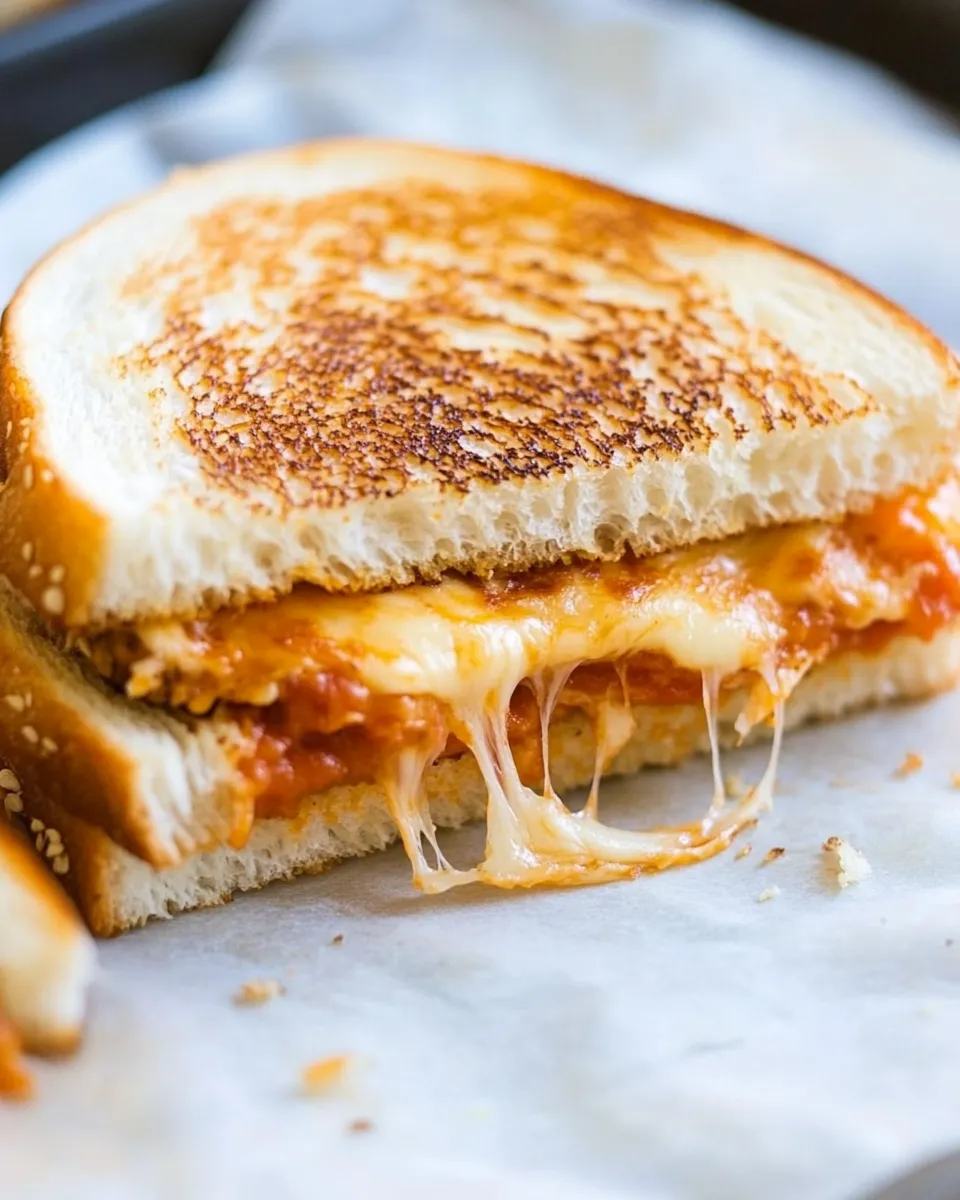
I make these sandwiches when I want something comforting but a little brighter than the usual grilled cheese. The tomato-forward marinara and the basil cut through the richness of the cheeses, and the crusty artisan bread gives texture you can hear before you taste it. It’s a simple idea executed properly: buttered outside, sauced inside, and plenty of heat to coax the cheeses into a gooey pull.
There’s nothing fancy here—no complicated prep, no strange ingredients. It behaves like a weeknight supper but looks and tastes like something you’d get at a neighborhood café. In under 20 minutes you can have four sandwiches that are crisp on the outside, melty on the inside, and bright with tomato and basil.
I’ll walk you through what to buy, the step-by-step method (no guesswork), ways to troubleshoot when things go off track, and a few variations if you need to adapt this to diet or pantry limits. Practical notes, quick equipment tips, and clear timelines follow so you can repeat this reliably.
What You’ll Need

Ingredients
- 8 slices crusty artisan bread — sturdy, with a firm crumb to hold up to sauce and heat without getting soggy.
- 8 thin slices mozzarella cheese (or about ⅓ cup shredded) — melts smoothly and gives that classic milky pull.
- 8 thin slices cheddar cheese — adds sharpness and structure to the melt.
- 1 cup marinara pasta sauce (store-bought or homemade) — provides tomato flavor and moisture; divide evenly among sandwiches.
- 4 Tablespoons fresh basil leaves, chopped (optional) — bright herb note; use if you have it for a classic Italian lift.
- butter (for spreading on bread) — browns the crust and creates the crisp exterior.
Cooking (Italian Grilled Cheese Sandwich): The Process
- Lay out the 8 slices of crusty artisan bread on your work surface.
- Spread butter on one side of each bread slice; the buttered side will be the outside of the sandwiches.
- On the unbuttered side of four slices, evenly spread the 1 cup marinara (divide the sauce among the four slices).
- Divide the 8 thin slices mozzarella (or about 1/3 cup shredded) and the 8 thin slices cheddar among the four sandwiches; on each sauced slice place 2 slices mozzarella and 2 slices cheddar.
- If using basil, evenly divide and sprinkle the 4 Tablespoons chopped basil over the cheese on each sandwich.
- Top each sandwich with the remaining bread slice, butter-side facing out, and press gently to flatten slightly.
- Preheat a griddle or large skillet over medium heat. Place the sandwiches on the hot surface and cook until the bottom is golden brown and the cheese begins to melt, about 3–4 minutes; flip once and cook the second side until golden and the cheese is fully melted.
- Remove the sandwiches from the griddle and serve immediately.
What You’ll Love About This Recipe
This sandwich is reliable. The composition—tomato, basil, mozzarella, cheddar, and buttered bread—works every time because each component plays a clear role. Marinara gives acidity and moisture; mozzarella provides the signature melt; cheddar adds flavor depth; basil gives freshness; and buttered artisan bread delivers crunch and color.
It’s also fast. From fridge to table in about 15–20 minutes if your marinara is ready. That makes it perfect for a quick lunch, a light dinner, or even a fancy snack when friends drop by. The texture contrast—crispy exterior and molten interior—makes every bite satisfying.
Finally, it’s forgiving. If you’re slightly off on heat or timing, the sandwich still works. The cheeses will compensate, and a quick re-toast will restore crispness. That’s why this is a dependable recipe to keep in rotation.
What to Use Instead

If you need swaps or pantry-friendly options, here are straightforward substitutions that keep the spirit of the sandwich without inventing new elements:
- Bread: Any sturdy loaf is fine—sourdough, country white, or a split baguette work. Avoid very soft sandwich bread; it’ll get soggy.
- Mozzarella: If you don’t have thin slices, use about 1/3 cup shredded mozzarella per sandwich as noted. Fresh mozzarella offers creaminess but may release a bit more moisture.
- Cheddar: Swap for any semi-hard cheese you like—Monterey Jack or Colby will melt similarly, though they’ll shift the flavor profile.
- Marinara: Store-bought is fine. If using a chunkier sauce, spoon and spread evenly to avoid puddles that can make the bread soggy.
- Basil: Omit if you don’t have it, or substitute with a small pinch of dried Italian seasoning—used sparingly to avoid dryness.
- Butter: If you prefer, use a light smear of olive oil for the exterior. Butter browns more predictably and adds richness.
Equipment at a Glance

Minimal gear required. A flat, evenly heated surface is the key to success.
- Large skillet or griddle — for even contact and consistent browning.
- Spatula — to flip the sandwiches without losing filling.
- Knife and chopping board — to slice bread and chop basil if using.
- Small spoon or offset spatula — to spread marinara evenly on the bread.
Mistakes Even Pros Make
Even experienced cooks can fumble this one. Here are the common slip-ups and how to avoid them:
- Too-high heat: The bread will brown before the cheese melts. Keep the heat at medium and be patient. If the skillet gets too hot, lower it and give the sandwich another minute per side.
- Over-saucing: Puddles of marinara will lead to soggy bread and uneven melting. Divide the cup of sauce evenly and spread thinly on the unbuttered side.
- Uneven butter: If the butter layer is patchy, the crust won’t brown uniformly. Spread an even layer on each outside face.
- Skipping the press: A gentle press helps bring the heat through to the cheese. But don’t over-press—you want the interior to remain slightly airy.
- Flipping too soon: Wait until the bottom is golden and the cheese starts to melt. Early flipping can give you a pale exterior and unmelted center.
Variations for Dietary Needs
Here are practical variations without changing the recipe’s intent. I focus on simple swaps so the sandwich stays close to the original texture and flavor.
- Lactose sensitivity or dairy-free: Use dairy-free mozzarella and cheddar-style slices designed to melt. Butter can be swapped for a plant-based spread formulated for high-heat cooking.
- Lower dairy: Reduce the cheddar to one slice per sandwich and increase mozzarella slightly; it’s milder and less sharp but still melts well.
- Gluten-free: Use a sturdy gluten-free artisan-style loaf. Watch for variance in crumb structure—press gently and keep sauce light to avoid sogginess.
- Vegetarian: This recipe is already vegetarian-friendly. For added protein, consider a thin layer of cooked white beans mashed into the marinara before spreading (optional and pantry-based).
Chef’s Notes
Small details matter. Here are precise habits that improve results every time.
Cheese layering
Place both mozzarella and cheddar directly on the sauce so the cheese touches the tomato; that helps the layers bind when melting. Two slices of each per sauced slice is the proportion used in the recipe and gives a balanced melt.
Heat control
Medium heat is your friend. If your skillet runs hot, reduce to medium-low after the first minute or two. The goal is a golden crust with fully melted cheese inside.
Serving
Serve immediately for best texture. Letting the sandwich sit for several minutes causes the crust to soften and the inside to cool, which dulls the experience.
Storing Tips & Timelines
If you have leftovers, store them properly and reheat with care:
- Fridge: Wrap sandwiches in foil or place in an airtight container and refrigerate for up to 2 days. The bread will soften over time but remains safe to eat.
- Freezer: I don’t recommend freezing fully assembled sandwiches; ice crystals from the sauce will make the bread soggy. If you must, freeze unbuttered, wrapped sandwiches for up to 1 month and toast from frozen, adding butter at cook time.
- Reheating: Re-crisp in a skillet over medium-low heat, covered briefly to help cheese re-melt. A toaster oven works too—wrap in foil for even reheating and remove the foil in the last 1–2 minutes to re-crisp the crust.
Common Questions
Q: Can I make more than four sandwiches at once?
A: Yes. Work in batches if your pan isn’t large enough. Keep cooked sandwiches warm in a low oven (about 200°F / 95°C) while you finish the rest.
Q: My bread burned before the cheese melted. What happened?
A: The heat was too high. Reduce to medium and allow more time for the interior to warm. If necessary, lower the heat and cover the pan for 30–60 seconds after flipping to trap heat and speed melting.
Q: Can I add meats or vegetables?
A: You can, but cook and drain any wet or high-moisture add-ins (like fresh tomatoes or sautéed mushrooms) before assembling. Excess moisture will cause sogginess and interfere with melting.
Final Bite
This Italian Grilled Cheese Sandwich is a dependable, quick, and delicious meal. It’s built from pantry-friendly components and rewards attention to a few simple details—moderate heat, even buttering, and measured sauce. When you follow the steps, you’ll get consistent results: crisp, golden bread and a molten, flavorful interior that’s satisfying without being fussy.
Make it tonight. Keep the marinara light, assemble with care, and listen for the satisfying sizzle when the sandwich hits the pan. It’s the small signs that tell you it’s done right.
Italian Grilled Cheese Sandwich
Ingredients
Equipment
Method
- Lay out the 8 slices of crusty artisan bread on your work surface.
- Spread butter on one side of each bread slice; the buttered side will be the outside of the sandwiches.
- On the unbuttered side of four slices, evenly spread the 1 cup marinara (divide the sauce among the four slices).
- Divide the 8 thin slices mozzarella (or about 1/3 cup shredded) and the 8 thin slices cheddar among the four sandwiches; on each sauced slice place 2 slices mozzarella and 2 slices cheddar.
- If using basil, evenly divide and sprinkle the 4 Tablespoons chopped basil over the cheese on each sandwich.
- Top each sandwich with the remaining bread slice, butter-side facing out, and press gently to flatten slightly.
- Preheat a griddle or large skillet over medium heat. Place the sandwiches on the hot surface and cook until the bottom is golden brown and the cheese begins to melt, about 3–4 minutes; flip once and cook the second side until golden and the cheese is fully melted.
- Remove the sandwiches from the griddle and serve immediately.
Notes
Easy homemade marinara sauce: http://cooking.nytimes.com/recipes/1015987-marinara-sauce