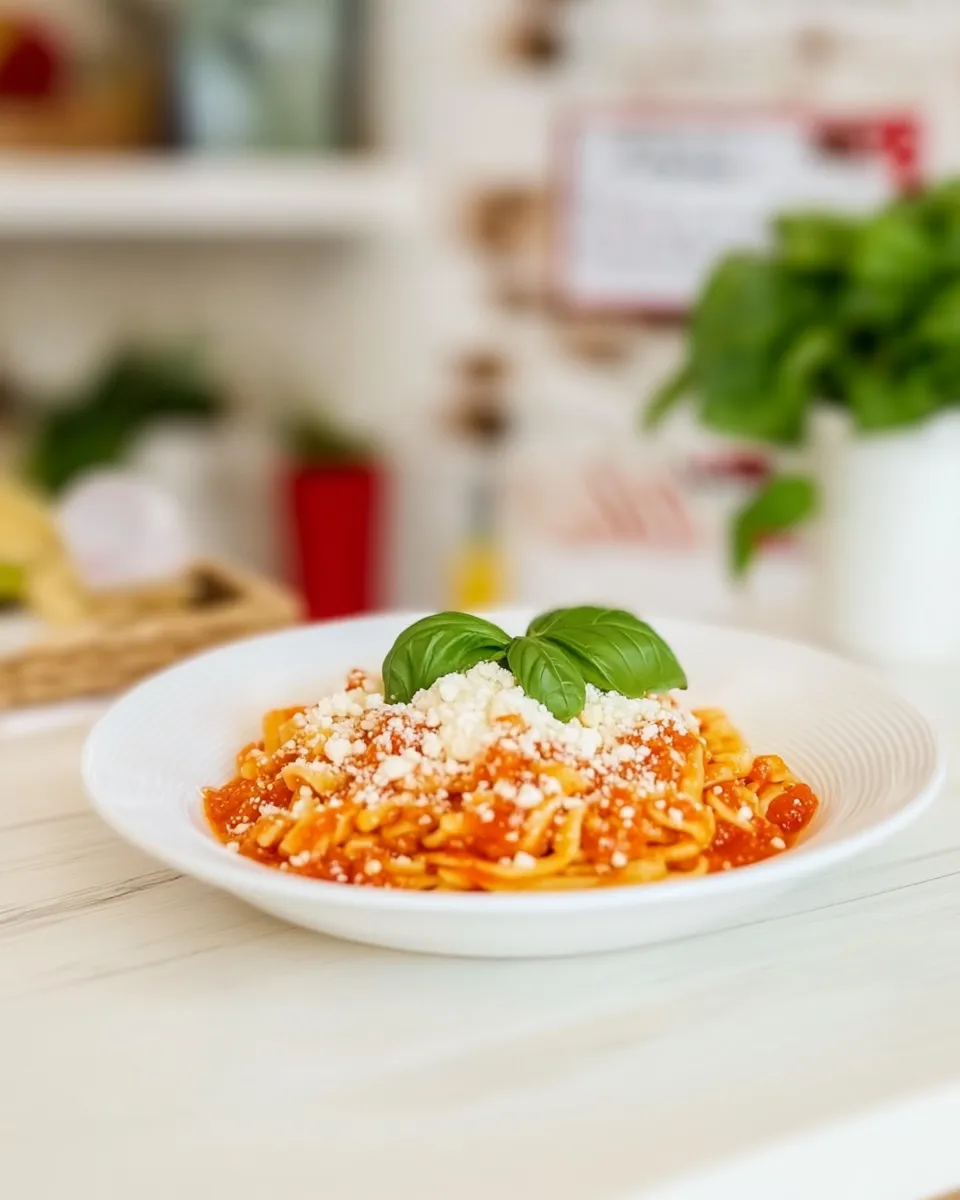
Mafaldine Pasta with Napoletana Sauce
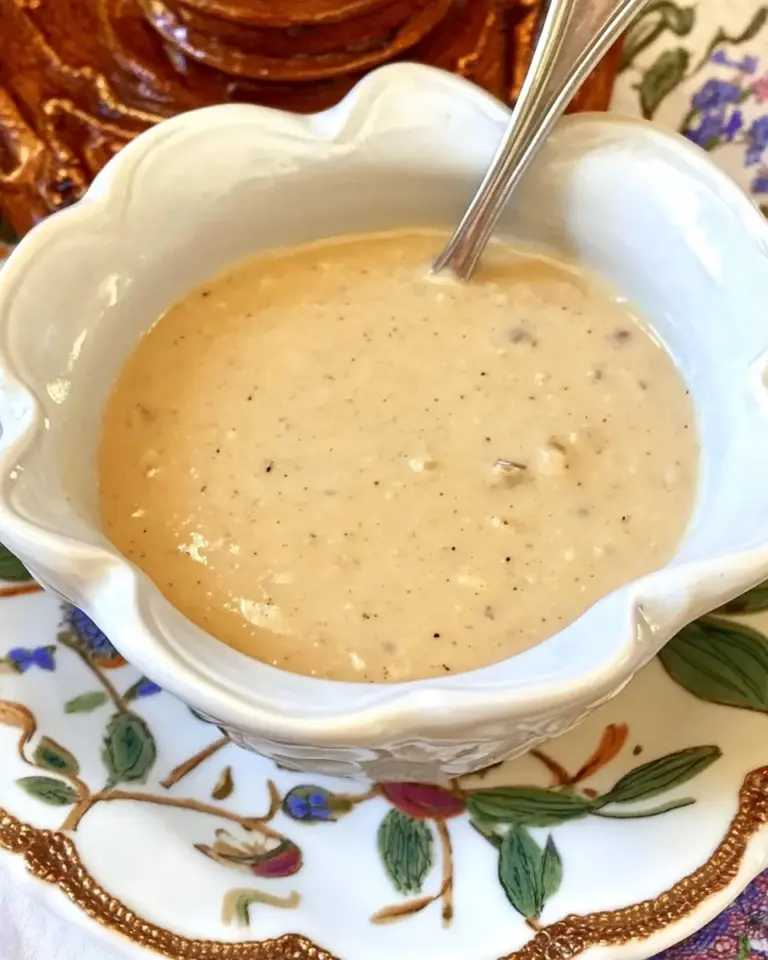
This is a simple, honest take on a classic Napoletana: whole plum tomatoes cooked gently with onion and basil, brightened with ricotta and twirled through ribbon-like mafaldine. It’s the kind of sauce that lives on the stove while you finish the pasta, and the result is fresh, slightly chunky, and quietly comforting.
I tested this version multiple times to keep the steps straightforward and the timing realistic for a weekday dinner. You don’t need fancy tools or dozens of ingredients — just attention when the sauce simmers and a light hand when folding the ricotta in so the texture stays creamy, not clumpy.
Below you’ll find notes about the ingredients, the exact cooking steps (kept as written so you can follow them reliably), swaps for special diets, common mistakes I see even among experienced cooks, and practical storage and reheating tips. Let’s get started.
Ingredient Notes
This recipe hinges on three things: the quality of the canned tomatoes, the texture of the ricotta, and the timing of the pasta. Whole plum tomatoes give you a thicker, sweeter base than diced; crushing them yourself controls the chunkiness. Ricotta is used to mellow the acidity and build a silky finish — if it’s too watery the sauce can thin out, so drain briefly if needed. Mafaldine’s gentle ruffles catch sauce beautifully, so it’s worth using this shape if you have it on hand.
Basil is added in two stages here: most goes in early to flavor the simmering sauce, and a little at the end to keep a fresh, herbal lift. Use sea salt and black pepper to taste — start light and adjust after the ricotta joins the sauce, because dairy can mute saltiness.
Ingredients
- 1medium-large onion,finely minced — provides the aromatic base; cook until translucent to release sweetness.
- 2canswhole plum tomatoes(15oz/400gr each),or canned datterini tomatoes — the backbone of the sauce; crush gently for texture.
- 2tablespoonextra-virgin olive oil — for sautéing and finishing; adds richness and sheen.
- 8fresh basil leaves — split the quantity: most go in while simmering, a couple added at the end for brightness.
- sea salt and black pepper to taste — seasoning to preference; adjust after ricotta is incorporated.
- 17.06ozmafalda pasta — the ridged ribbon shape holds sauce and provides satisfying bite.
- 8.8ozricotta cheese,approx 1 US cup — makes the sauce creamy; drain if watery for best texture.
Mafaldine Pasta with Napoletana Sauce Cooking Guide
Follow these steps exactly as laid out. I’ve kept the original directions intact so you can reproduce the result reliably.
- Heat 2 tablespoons extra-virgin olive oil in a large skillet over medium-low heat. Add the finely minced onion and cook, stirring occasionally, until translucent, about 4–5 minutes.
- Add both cans of whole plum tomatoes (with their juice) to the skillet and gently crush them with a wooden spoon or spatula. Add 6 fresh basil leaves (torn or roughly chopped), cover the skillet, and simmer on low heat for 15 minutes, stirring occasionally, until the sauce is creamy but still slightly chunky. Season with sea salt and black pepper to taste.
- While the sauce simmers, bring a large pot of lightly salted water to a rolling boil. Add the mafaldine pasta and cook according to the package directions; for al dente, cook 2–3 minutes less than the package time. Before draining, scoop out and reserve 2 tablespoons of the pasta cooking water, then drain the pasta.
- Remove the tomato sauce from the heat and add the remaining 2 fresh basil leaves (torn or chopped).
- If the ricotta cheese is watery, let it drain briefly in a fine-mesh sieve. Add the 8.8 oz ricotta to the sauce along with the reserved 2 tablespoons of pasta cooking water. Stir until the ricotta is incorporated and the sauce is creamy. Taste and adjust seasoning with salt and pepper as needed.
- Add the drained mafaldine pasta to the skillet and fold gently to coat the pasta evenly with the sauce. If the sauce seems too thick, add a little more of the reserved pasta water, a teaspoon at a time, until you reach the desired consistency.
- Drizzle any remaining olive oil from the skillet over the pasta (if present), give a final gentle toss, and serve immediately.
What You’ll Love About This Recipe
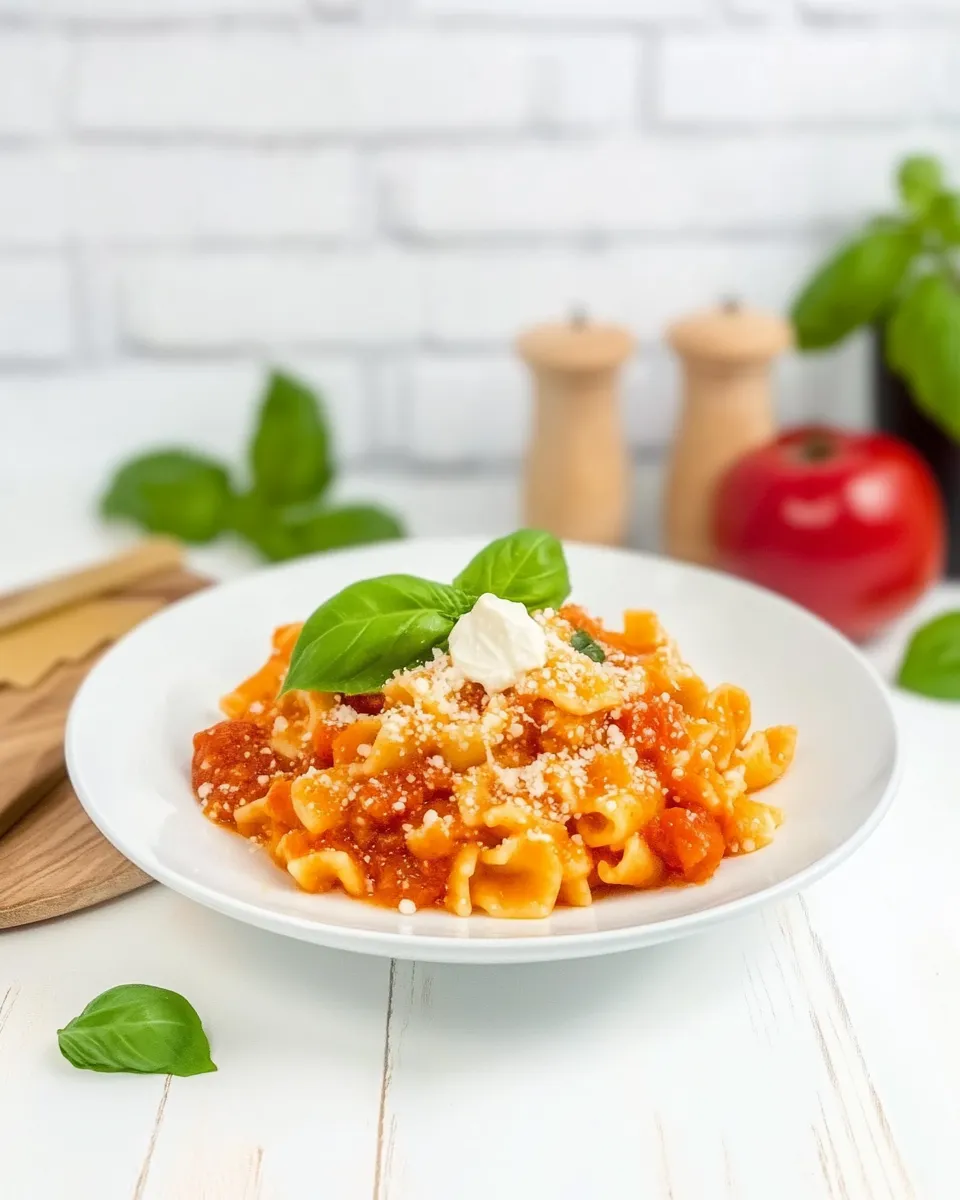
The flavor is straightforward and honest. Ripe canned tomatoes give you a concentrated tomato flavor without the fuss of peeling and seeding fresh tomatoes. Ricotta adds creaminess without the heaviness of cream or the sharpness of Parmesan, and mafaldine is a shape that feels special — it collects sauce along its edges and bites beautifully.
This dish comes together quickly: active hands-on time is mostly the onion and pasta, and the simmering step is hands-off. It’s adaptable to what you have in the pantry and forgiving on timing; the sauce can hold at low heat without breaking down, making it a practical weeknight winner.
Dairy-Free/Gluten-Free Swaps
For dairy-free: swap the ricotta for a plant-based ricotta or a thickened almond/soy-based spread that mimics ricotta’s texture. Drain it the same way if it’s watery. Taste and increase seasoning slightly — plant cheeses can be milder.
For gluten-free: use a gluten-free ribbon or mafaldine-style pasta. Cook according to the package instructions and reserve some cooking liquid the same way. The sauce technique remains identical.
If you need both dairy- and gluten-free, combine both swaps and treat the final sauce gently — some plant-based cheeses loosen more readily, so add reserved pasta water sparingly.
What You’ll Need (Gear)
- Large, heavy skillet or sauté pan with lid — wide enough to toss pasta and sauce gently.
- Large pot for boiling pasta — gives the pasta room to move and cook evenly.
- Wooden spoon or spatula — for crushing tomatoes and stirring without scratching pans.
- Fine-mesh sieve — to drain ricotta if it’s watery.
- Ladle or measuring spoon — to scoop and reserve pasta water.
Mistakes Even Pros Make
Overworking the ricotta is a common one. If you stir it too aggressively when adding to hot tomato sauce it can break and become grainy. Gently fold it in, and use a little pasta water to coax a smooth emulsion.
Another is under-seasoning at different stages. Season a little during the tomato simmer, then re-taste after the ricotta goes in: dairy will mute salt, so you’ll often need to add a touch more. Also, don’t skip reserving pasta water — that starchy liquid is the glue that brings sauce and pasta together.
Adaptations for Special Diets
Vegetarian: This recipe is already vegetarian. If you want more protein, add cooked white beans or serve alongside a simple grilled vegetable.
Vegan: Use a plant-based ricotta substitute and finish with a drizzle of extra-virgin olive oil. Increase basil for herbal lift and consider a sprinkle of nutritional yeast if you want a cheesy note.
Low-sodium: Use no-salt-added canned tomatoes and be conservative with added sea salt. Increase fresh basil and a splash of good olive oil to compensate for reduced saltiness.
What I Learned Testing
Small details changed the final plate more than I expected. The size you crush the plum tomatoes matters: too fine and the sauce loses texture; too chunky and it feels clumsy. A balance — where the sauce is mostly smooth with a few tomato pieces — is ideal. Simmering for exactly 15 minutes as written keeps acidity in check while concentrating flavor.
Ricotta behavior
Ricotta varies by brand and batch. Sometimes it’s fairly dry; sometimes it’s loose. Drain watery ricotta briefly in a sieve; this prevents the sauce from becoming too thin. When you add it to the warm sauce off the heat, it integrates into a silkier texture than when added while the pan is still aggressively simmering.
Finally, mafaldine’s ruffled edges mean you need to fold gently. Vigorous stirring rips the ribbons. A few slow turns get even coating and keep the pasta intact.
Storing, Freezing & Reheating
Refrigerate leftovers in an airtight container for up to 3 days. The sauce will thicken as it cools because the ricotta firms; loosen with a splash of water or milk when reheating. Reheat gently on the stovetop over low heat and fold in a teaspoon or two of water to restore creaminess.
Freezing is possible but not ideal for texture. If you must freeze, cool fully, portion into freezer-safe containers, and freeze for up to 2 months. Thaw overnight in the fridge and reheat gently; expect the ricotta to separate slightly, so whisk in a bit of reserved water or a splash of cream alternative to re-emulsify.
Reader Q&A
- Q: Can I use fresh tomatoes? A: Yes, but they require peeling and longer cooking to concentrate their flavor. Canned plum tomatoes deliver consistent sweetness and texture without extra work.
- Q: Do I have to use mafaldine? A: No. Any wide, ribbon-shaped pasta will work — mafaldine is recommended because its ruffles hold the sauce particularly well.
- Q: My ricotta is grainy after mixing. Help? A: Next time drain excess liquid first and fold gently off the heat. If it’s already grainy, whisk in a teaspoon of hot pasta water to smooth it out.
- Q: Can I make the sauce ahead? A: Yes. Make the sauce, cool, then refrigerate for up to 2 days. Reheat gently and add the ricotta and reserved water when warming so you preserve creaminess.
Time to Try It
Make this when you want something comforting but not heavy. Keep the steps near your stove, taste as you go, and don’t rush the simmer. The dish rewards small attention: gentle crushing of the tomatoes, a light hand with the ricotta, and the reserved pasta water to bring it all together. When you serve it, garnish with the torn basil leaves you reserved at the end and a drizzle of good olive oil. Sit down, and enjoy a relaxed, honest plate of pasta.
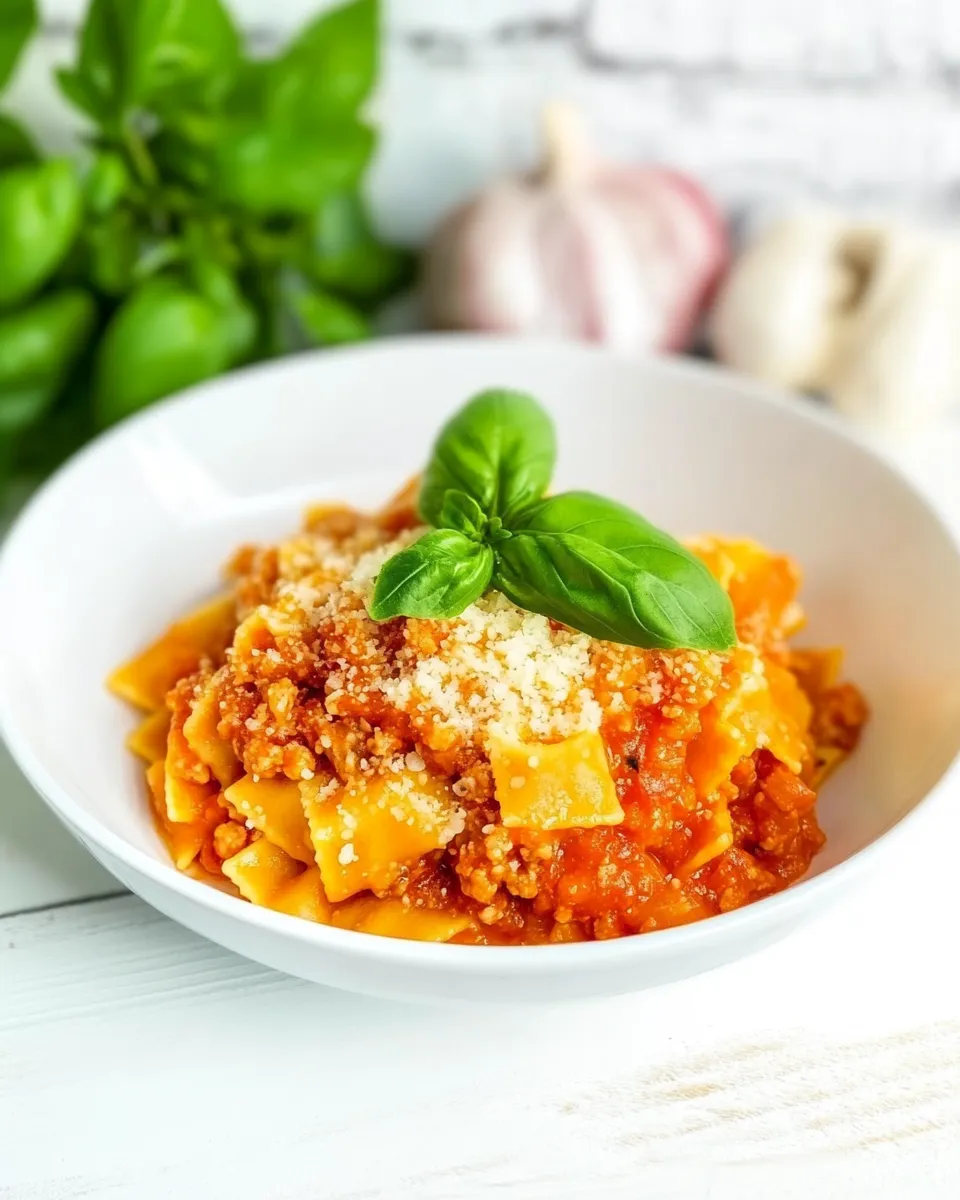
Mafaldine Pasta with Napoletana Sauce
Ingredients
Equipment
Method
- Heat 2 tablespoons extra-virgin olive oil in a large skillet over medium-low heat. Add the finely minced onion and cook, stirring occasionally, until translucent, about 4–5 minutes.
- Add both cans of whole plum tomatoes (with their juice) to the skillet and gently crush them with a wooden spoon or spatula. Add 6 fresh basil leaves (torn or roughly chopped), cover the skillet, and simmer on low heat for 15 minutes, stirring occasionally, until the sauce is creamy but still slightly chunky. Season with sea salt and black pepper to taste.
- While the sauce simmers, bring a large pot of lightly salted water to a rolling boil. Add the mafaldine pasta and cook according to the package directions; for al dente, cook 2–3 minutes less than the package time. Before draining, scoop out and reserve 2 tablespoons of the pasta cooking water, then drain the pasta.
- Remove the tomato sauce from the heat and add the remaining 2 fresh basil leaves (torn or chopped).
- If the ricotta cheese is watery, let it drain briefly in a fine-mesh sieve. Add the 8.8 oz ricotta to the sauce along with the reserved 2 tablespoons of pasta cooking water. Stir until the ricotta is incorporated and the sauce is creamy. Taste and adjust seasoning with salt and pepper as needed.
- Add the drained mafaldine pasta to the skillet and fold gently to coat the pasta evenly with the sauce. If the sauce seems too thick, add a little more of the reserved pasta water, a teaspoon at a time, until you reach the desired consistency.
- Drizzle any remaining olive oil from the skillet over the pasta (if present), give a final gentle toss, and serve immediately.
Notes
What if the tomato sauce is too bitter?
Sometimes the tomato seeds add bitterness to the sauce, so although it's optional, you can cut each whole canned tomato in half, remove the seeds then proceed with making the sauce.
What if the sauce is too acidic?
If you find the sauce is a bit sour, simply add a bay leaf whilst it cooks, or a pinch of sugar.