OLD Kung Pao Chicken Noodle Stir Fry
I fell for this recipe the first time because it delivers the three things I want from a weeknight meal: speed, bold flavor, and a single pan finale. The noodles carry the sauce, the peanuts give crunch, and the marinated chicken keeps every bite juicy. No flamboyant techniques, just straightforward steps that reward a little prep.
If you cook like I do—classically rushed but stubborn about good flavor—you’ll like how forgiving this stir-fry is. It uses pantry stalwarts and a short active cook time. The result is spicy-sweet, crisp-tender vegetables, and a glossy sauce that clings to both chicken and noodles.
Below you’ll find everything laid out: the ingredient list with quick notes, an exact step-by-step using the original directions, substitutes, tools, common mistakes, storage tips, and short answers to the questions readers usually ask. Read the notes, follow the steps, and you’ll have a dependable weeknight favorite. Let’s get into it.
What’s in the Bowl
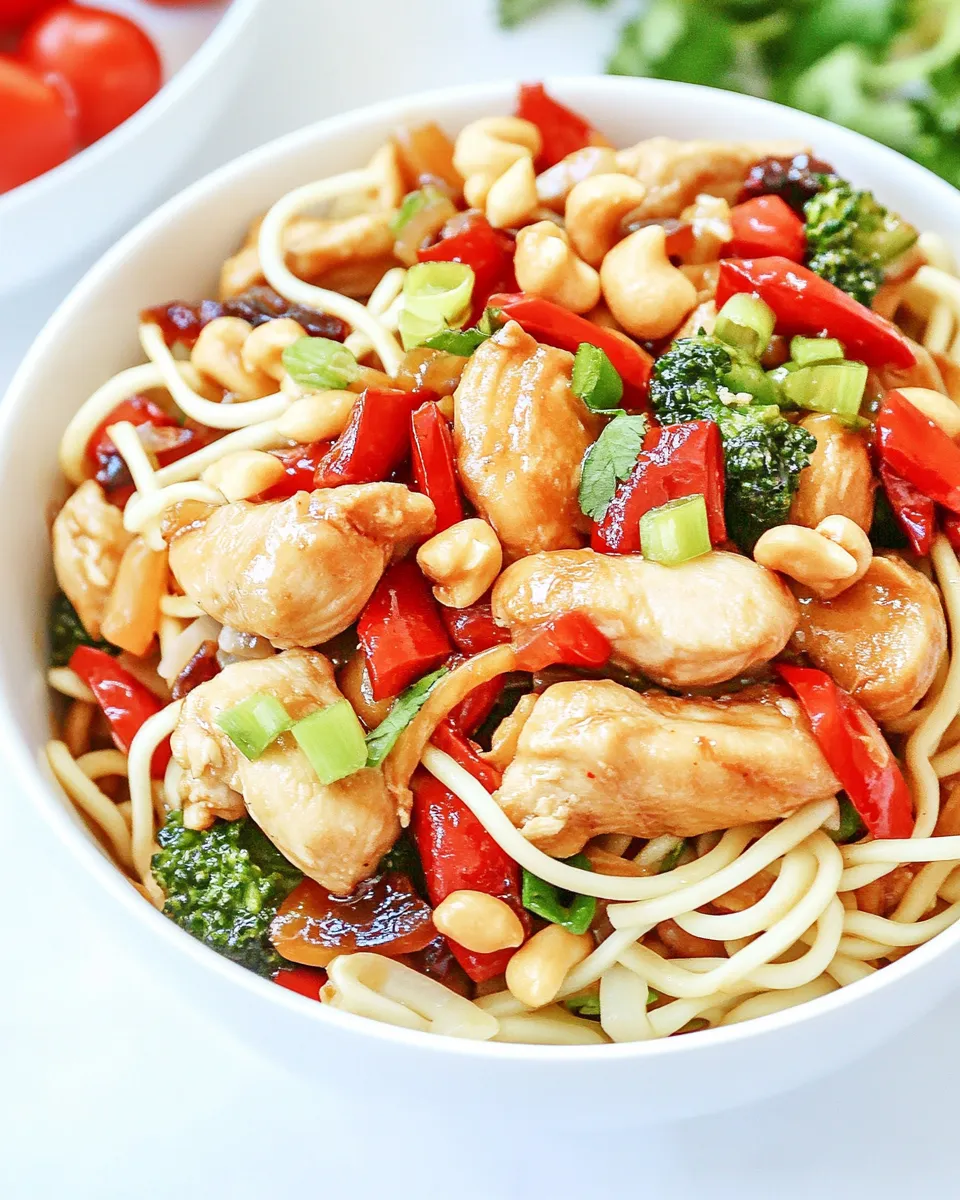
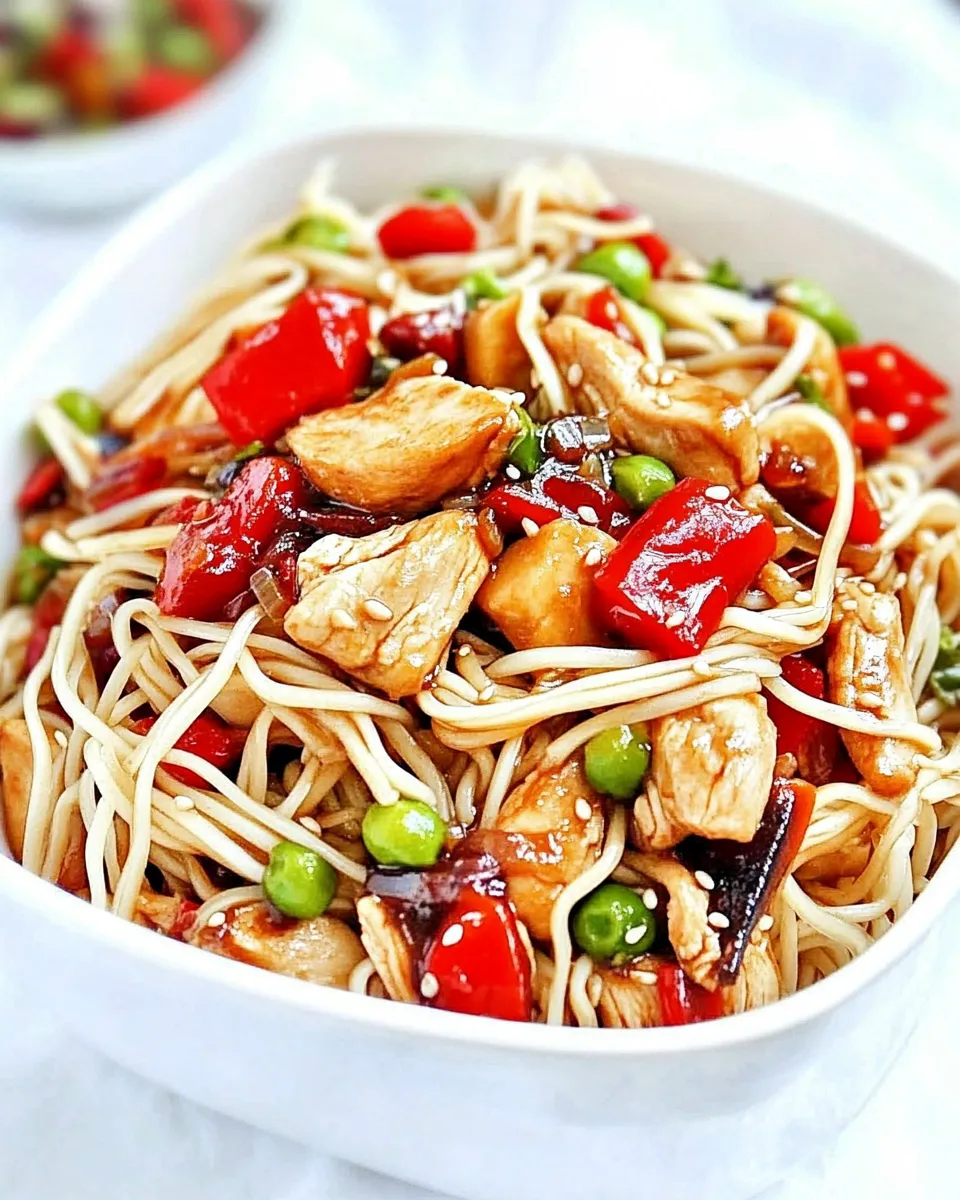
A quick snapshot: bold marinade, crunchy peanuts, crisp veggies, and slippery noodles all tossed in a glossy sauce. It’s a classic balance of textures and bright, slightly sweet umami. The recipe leans on rice vinegar, reduced-sodium soy, and a cornstarch-thickened sauce that ties everything together.
The star here is the marinade/sauce—it does double duty. Marinating the chicken briefly builds flavor and helps the cornstarch give a velvety finish when you return the sauce to the pan. Roast the peanuts and keep the noodles separate until the end; that keeps the final texture where it should be.
Ingredients
- 2 large chicken breasts cut into bite size pieces, 1 pound — the main protein; bite-size pieces cook quickly and brown evenly.
- 8 oz. vermicelli or thin spaghetti — the noodles that soak up the sauce; choose thin pasta so it mixes easily.
- 2 tablespoons cornstarch — thickens the sauce and helps it cling to chicken and noodles.
- 1/2 cup rice vinegar — brightens the sauce and balances the sugar.
- 1/2 cup reduced sodium soy sauce — provides the savory backbone without being overly salty.
- 1/4 cup sugar — rounds the acidity and creates a glossy finish.
- 1/4 teaspoon pepper — a baseline of heat; adjust later to taste.
- sesame oil — used for stir-frying and for an aromatic finish; a little goes a long way.
- 5 garlic cloves, minced — aromatic base; add with ginger for a fragrant sauté.
- 1 tablespoon freshly grated ginger — adds brightness and a warm bite that cuts the sweetness.
- 2-4 teaspoons red pepper flakes OR 8-12 dried red chilies *deseeded and cut into halves — determines the spice level; use the flakes for gentler heat.
- 18 oz. can sliced water chestnuts, drained — provides crunch and a neutral, crisp counterpoint.
- 2 stalks celery, chopped — more crunch and freshness; cuts richness.
- 1 red bell pepper, chopped — color and sweetness; thin pieces cook quickly.
- 2 cups snow peas, ends trimmed and cut in half — quick-cooking, crisp-green texture.
- 5 stalks green onion, chopped — finish for sharpness and color.
- Salt and pepper to taste — final seasoning adjustments; add sparingly because of soy sauce.
- 1 cup peanuts — roasted for crunch and toasty flavor; fold in at the end.
Step-by-Step: OLD Kung Pao Chicken Noodle Stir Fry
- In a medium bowl whisk together the sauce/marinade: 2 tablespoons cornstarch, 1/2 cup rice vinegar, 1/2 cup reduced-sodium soy sauce, 1/4 cup sugar, and 1/4 teaspoon pepper until the cornstarch and sugar are fully dissolved.
- Place the 1 pound chicken (cut into bite-size pieces) in a large freezer bag, add 1/4 cup of the prepared marinade to the bag, seal, and toss to coat the chicken. Refrigerate the bag and marinate the chicken for 30 minutes up to overnight. Reserve the remaining marinade in the refrigerator.
- Bring a large pot of generously salted water to a boil and cook 8 oz vermicelli or thin spaghetti until al dente according to package directions. Drain and set the noodles aside (toss briefly with a little sesame oil if you want to prevent sticking).
- While the pasta cooks, dry-roast 1 cup peanuts in a large wok or skillet over medium heat, tossing occasionally, until golden, about 3 minutes. Remove the peanuts from the pan and set aside.
- When ready to cook, heat sesame oil in a large nonstick skillet or wok over high heat. Add the marinated chicken (let excess marinade drip off) and cook, stirring occasionally, until the chicken is cooked through and lightly browned, about 3–5 minutes. Remove the cooked chicken to a plate.
- Reduce heat to medium. If the pan looks dry, add more sesame oil. Add 2–4 teaspoons red pepper flakes or 8–12 dried red chilies (deseeded and halved), 5 minced garlic cloves, and 1 tablespoon freshly grated ginger. Sauté about 30 seconds, until fragrant.
- Add the drained 18 oz can sliced water chestnuts, 2 chopped celery stalks, 1 chopped red bell pepper, and 2 cups snow peas (trimmed and halved). Sauté the vegetables about 1 minute, until crisp-tender.
- Return the cooked chicken to the pan. Whisk the reserved sauce (it may have settled) and pour it into the skillet. Bring to a boil, then simmer until the sauce thickens and coats the chicken and vegetables, about 30 seconds.
- Stir in the roasted peanuts, 5 chopped green onions, and the cooked noodles. Toss everything together and cook 1–2 minutes more, until heated through and well combined.
- Taste and adjust seasoning with salt, pepper, or extra red pepper flakes as desired. Serve immediately.
Why You’ll Keep Making It
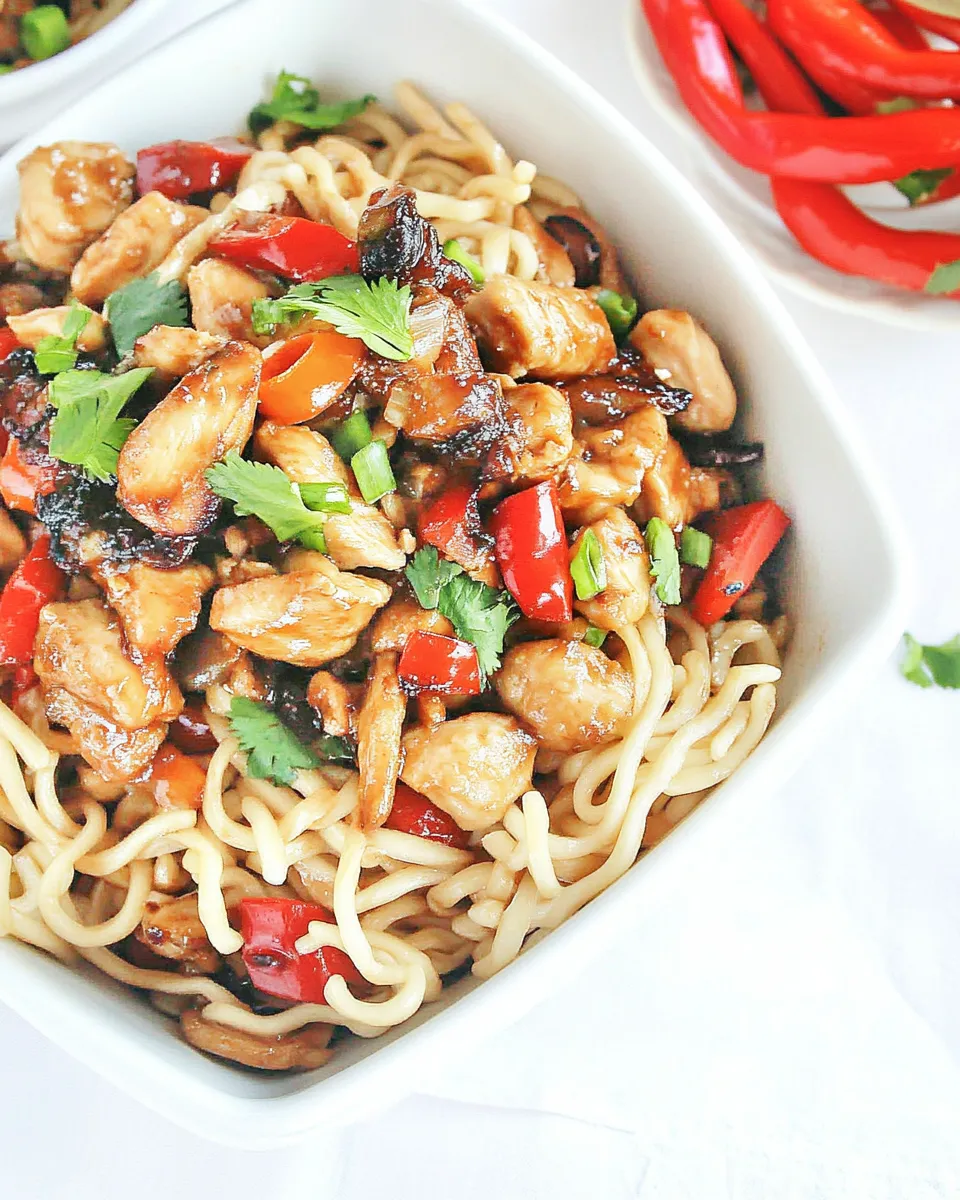
This recipe hits repeat-button criteria: quick turnaround, flexible pantry ingredients, and clear texture contrasts. It manages to taste layered without long simmering or complicated sauces. The cornstarch-thickened marinade makes each piece of chicken glossy and savory; that finish elevates simple ingredients.
It’s also forgiving. Marinate the chicken longer if you have time, or slice the veg a bit thicker if you prefer more chew. You get crunchy peanuts and crisp snow peas in the same bite as tender noodles—comfort with structure. Once you lock in basic technique, this becomes a dependable meal to riff on.
Quick Replacement Ideas
- Chicken: swap for an equal weight of firm tofu or thin-sliced beef if you want a different protein.
- Noodles: use rice noodles or wider spaghetti if that’s what you have—adjust cook time so they stay al dente.
- Peanuts: almonds or cashews work for crunch if someone has a peanut allergy (note: different flavor).
- Water chestnuts: extra celery or sliced jicama keeps the crunch if you can’t find them.
- Chilies: reduce red pepper flakes for milder spice or add a splash of chili oil for more depth.
Prep & Cook Tools
I keep the tool list short because this recipe rewards good technique more than fancy equipment:
- Large nonstick skillet or wok — for high-heat searing and quick stir-fry motion.
- Medium bowl — to whisk the sauce/marinade.
- Large pot — to cook noodles.
- Large freezer bag — for quick marinating with minimal mess.
- Spatula or tongs — to toss noodles and turn chicken.
If you have a cast-iron or carbon steel wok, great—the principle is the same: high heat, quick tosses.
Avoid These Mistakes
- Overcrowding the pan — too much chicken or veg in the pan lowers the temperature and prevents browning. Cook in batches if needed.
- Skipping the reserved marinade — you must whisk and add the reserved sauce at step 8 to thicken and glaze everything.
- Cooking noodles until soft — undercook slightly to avoid mush after the final toss.
- Using too much sesame oil at the start — it smokes easily. Add a little for cooking and a small finishing drizzle if you want aroma.
- Adding peanuts too early — they go soft if added while simmering. Fold them in at the end for crunch.
Make It Fit Your Plan
This dish adapts well to meal plans:
– For a low-carb night: skip the noodles and double the veg; use cauliflower rice as a substitute.
– For meal-prep: store sauce, noodles, and peanuts separately to avoid sogginess; reheat quickly in a skillet.
– For a family dinner: reduce red pepper flakes and serve chili flakes on the side for individual heat control.
– For gluten-free: use tamari or a gluten-free soy alternative and choose rice vermicelli.
What I Learned Testing
I tested this several times and learned that small changes make a big difference. Tossing just 1/4 cup of the marinade with the chicken is enough to season without over-salting. Dry-roasting the peanuts in the same pan first adds toasty oil that quietly flavors the dish. Also, the sauce thickens quickly—whisk it thoroughly before adding and watch it carefully; thirty seconds at a simmer is usually all it needs.
Timing matters. Get the noodles drained and ready before you start the final sear. When the chicken returns to the pan and you add the sauce, everything moves fast. Have your green onions and peanuts chopped and within reach.
Storage Pro Tips
- Short-term (3–4 days): store in an airtight container in the fridge. Keep noodles and peanuts together if you don’t mind slightly softer peanuts; otherwise store peanuts separately.
- Freezing: not ideal for the peanuts or snow peas (they go limp). If you must freeze, remove peanuts and add fresh when reheating.
- Reheating: use a hot skillet with a splash of water or a little sesame oil. Toss quickly over medium-high heat to revive texture. Microwave gently but expect softer veg.
- Make-ahead: cook everything except the noodles and toss just before serving for best texture.
Common Questions
Can I use pre-roasted peanuts?
Yes. If they’re already roasted, just warm them briefly in the pan to refresh the aroma. Don’t roast again or they may burn.
How long can the chicken marinate?
The recipe says 30 minutes up to overnight. Overnight gives more flavor but won’t change texture drastically. If marinating over 12 hours, check the texture—acid in the marinade can start to firm or slightly change it.
Can I make this milder or hotter?
Absolutely. Use 2 teaspoons red pepper flakes for mild heat. For more pronounced spice, go toward 4 teaspoons or add some of the dried chilies. You can also skip the chilies while cooking and let each person add heat at the table.
Do the noodles get soggy?
They won’t if you cook them al dente and toss them in at the final step. A brief toss with a little sesame oil after draining also helps keep them separate.
Is there a vegetarian version?
Swap the chicken for firm tofu pressed and cubed, or use a mix of mushrooms and tofu. Marinate the tofu similarly and pan-fry until golden before proceeding.
Hungry for More?
If you liked this straightforward, flavor-forward stir-fry, try pairing it with a simple cucumber salad or steamed greens to add freshness. For more weeknight main courses with big flavor and minimal fuss, check the blog’s stir-fry collection—there are templates that let you swap proteins and veg without losing the technique that makes this recipe work.
If you try it, tell me what you changed. I love hearing which swaps readers make and which version becomes their favorite weeknight hack.
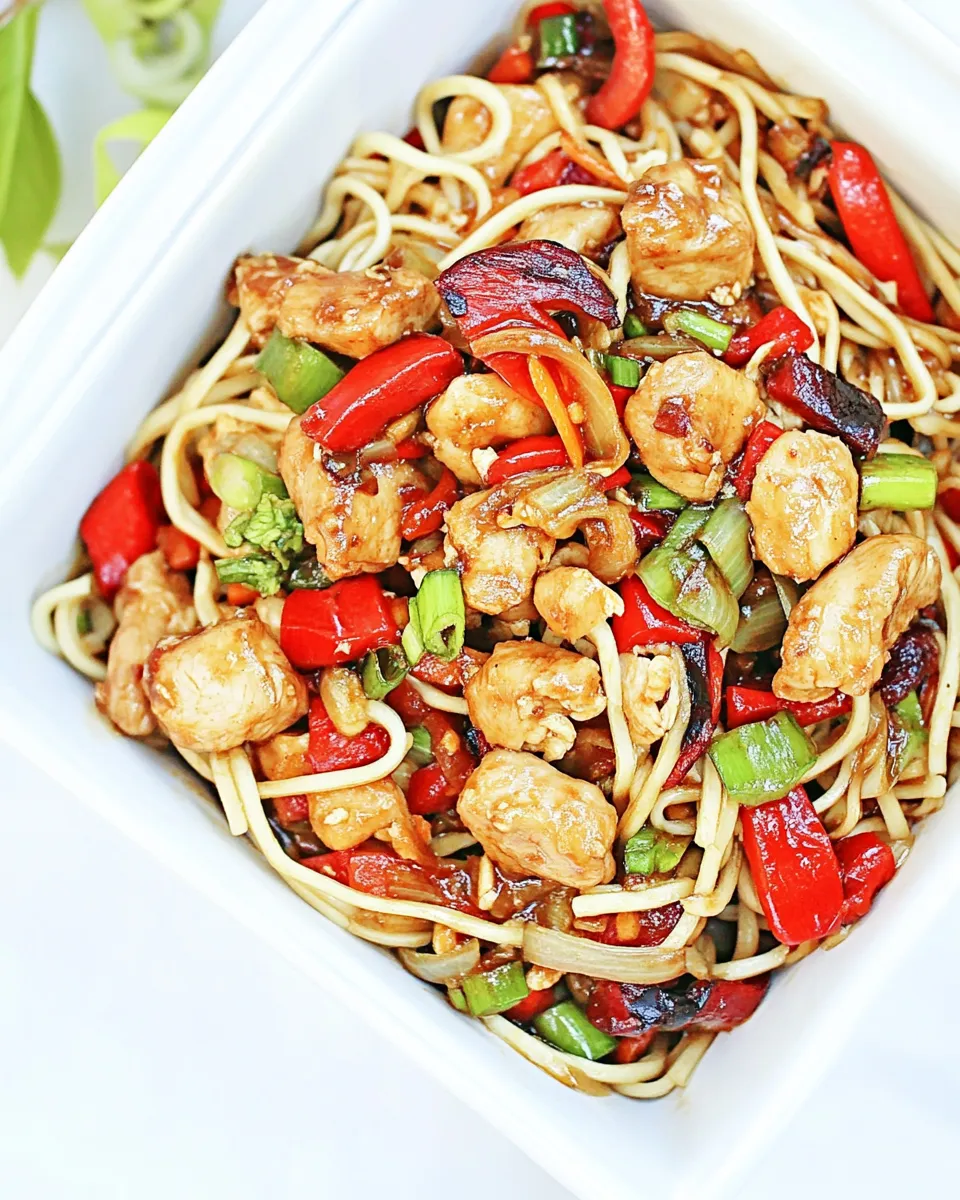
OLD Kung Pao Chicken Noodle Stir Fry
Ingredients
Equipment
Method
- In a medium bowl whisk together the sauce/marinade: 2 tablespoons cornstarch, 1/2 cup rice vinegar, 1/2 cup reduced-sodium soy sauce, 1/4 cup sugar, and 1/4 teaspoon pepper until the cornstarch and sugar are fully dissolved.
- Place the 1 pound chicken (cut into bite-size pieces) in a large freezer bag, add 1/4 cup of the prepared marinade to the bag, seal, and toss to coat the chicken. Refrigerate the bag and marinate the chicken for 30 minutes up to overnight. Reserve the remaining marinade in the refrigerator.
- Bring a large pot of generously salted water to a boil and cook 8 oz vermicelli or thin spaghetti until al dente according to package directions. Drain and set the noodles aside (toss briefly with a little sesame oil if you want to prevent sticking).
- While the pasta cooks, dry-roast 1 cup peanuts in a large wok or skillet over medium heat, tossing occasionally, until golden, about 3 minutes. Remove the peanuts from the pan and set aside.
- When ready to cook, heat sesame oil in a large nonstick skillet or wok over high heat. Add the marinated chicken (let excess marinade drip off) and cook, stirring occasionally, until the chicken is cooked through and lightly browned, about 3–5 minutes. Remove the cooked chicken to a plate.
- Reduce heat to medium. If the pan looks dry, add more sesame oil. Add 2–4 teaspoons red pepper flakes or 8–12 dried red chilies (deseeded and halved), 5 minced garlic cloves, and 1 tablespoon freshly grated ginger. Sauté about 30 seconds, until fragrant.
- Add the drained 18 oz can sliced water chestnuts, 2 chopped celery stalks, 1 chopped red bell pepper, and 2 cups snow peas (trimmed and halved). Sauté the vegetables about 1 minute, until crisp-tender.
- Return the cooked chicken to the pan. Whisk the reserved sauce (it may have settled) and pour it into the skillet. Bring to a boil, then simmer until the sauce thickens and coats the chicken and vegetables, about 30 seconds.
- Stir in the roasted peanuts, 5 chopped green onions, and the cooked noodles. Toss everything together and cook 1–2 minutes more, until heated through and well combined.
- Taste and adjust seasoning with salt, pepper, or extra red pepper flakes as desired. Serve immediately.
Notes
I recommend using red pepper flakes because they more evenly distribute the heat instead of having "pockets" of heat if you use the chili peppers