One Pan Beef Ramen Stir Fry
This is a weeknight recipe I reach for when time is short and everyone wants something warm, savory, and ready fast. It’s straightforward: tender beef, crisp-tender vegetables, springy ramen noodles, and a sticky-salty sauce that comes together in one skillet. Minimal cleanup, maximum comfort.
I like that it relies on pantry-friendly ingredients and a single skillet, so you can get dinner on the table in under 30 minutes without fuss. The flavors are balanced — salty soy, a touch of brown sugar for caramelization, a little heat if you want it, and sesame oil to finish. It’s forgiving, too: swap vegetables or add whatever you have on hand.
Below I’ll walk you through what each ingredient does, the exact step-by-step method, common slips to avoid, and options for swapping or prepping ahead. Practical, no-nonsense notes so your stir fry comes out right every time.
Ingredient Breakdown
Ingredients
- 1 pound lean ground beef — primary protein; lean helps keep the dish from getting greasy.
- 6 ounces ramen noodles, seasoning packets discarded (2 packages) — quick-cooking starch; discard packets and use the noodles for texture.
- 1 tablespoon sesame oil — flavor oil that adds toasty, nutty aroma; added to the pan for cooking the vegetables.
- 1 large onion, chopped — sweetness and body; slice or chop to your liking for texture.
- 1 red bell pepper, chopped — color and a mild, sweet crunch.
- 1/2 pound broccoli, cut into florets — green vegetable for bite and color; florets cook quickly when cut small.
- 1 cup shredded carrots — sweetness and quick-cooking color; shredded cooks evenly.
- 1/3 cup soy sauce — the salty backbone of the sauce; use regular or low-sodium as preferred.
- 1 tablespoon brown sugar — balances soy with caramel sweetness and helps the sauce glaze the noodles.
- 2 teaspoons sriracha, optional — adds heat; leave out or reduce if you prefer mild.
- 2 teaspoons minced garlic — aromatic backbone; adds depth when cooked briefly.
- 1 teaspoon minced ginger — bright, warm note that lifts the sauce.
- 1 tablespoon corn starch — thickener; creates a glossy sauce when dissolved with water.
- 2 tablespoons water — used to make the corn starch slurry.
- Sliced green onions — finishing garnish for freshness and mild onion flavor.
- Sesame seeds — finishing garnish for texture and visual appeal.
One Pan Beef Ramen Stir Fry: How It’s Done
- Bring a medium saucepan of water to a boil. Add the ramen noodles and cook until tender, about 2 minutes. Drain the noodles and set aside.
- In a bowl, whisk together 1/3 cup soy sauce, 1 tablespoon brown sugar, 2 teaspoons sriracha (optional), 2 teaspoons minced garlic, and 1 teaspoon minced ginger. In a small cup, stir 1 tablespoon corn starch with 2 tablespoons water until smooth, then whisk the slurry into the sauce. Set the sauce aside.
- Heat a large skillet over medium heat. Add 1 pound lean ground beef and cook, breaking it apart, until no longer pink, about 5–7 minutes. Drain any excess grease, transfer the beef to a bowl, and set aside.
- Return the skillet to medium heat and add 1 tablespoon sesame oil. Add 1 large chopped onion, 1 chopped red bell pepper, 1/2 pound broccoli florets, and 1 cup shredded carrots. Cook, stirring occasionally, until the vegetables are tender-crisp, about 6–8 minutes.
- Add the cooked ground beef and drained ramen noodles to the skillet with the vegetables and toss to combine.
- Pour the prepared sauce over the noodle, beef, and vegetable mixture. Stir and cook over medium heat until the sauce comes to a simmer and thickens, about 1–2 minutes, coating everything evenly.
- Remove from heat, garnish with sliced green onions and sesame seeds, and serve immediately.
Why This One Pan Beef Ramen Stir Fry Stands Out
It’s quick. Ramen noodles cook in about two minutes, and the whole pan finishes while the sauce thickens for a minute or two. That speed makes it perfect for busy evenings.
It’s balanced. You get savory umami from soy sauce, a hint of sweetness from brown sugar, and optional heat from sriracha. The sesame oil at the end lifts everything with a warm, nutty note. Texturally, the crunchy vegetables contrast with the soft noodles and tender beef, which keeps each bite interesting.
It’s flexible. The recipe is a template: swap proteins, change vegetables, adjust heat. But because the core technique focuses on managing moisture and timing, even swaps stay quick and satisfying.
Swap Guide
- Protein swaps — Use ground turkey, ground pork, or thinly sliced chicken breast instead of ground beef. Adjust cook time: ground poultry will cook in a similar timeframe, thin slices will take less time.
- Vegetable swaps — Snap peas, green beans, bok choy, mushrooms, or baby corn all work. Add dense vegetables (carrots, broccoli stems) earlier so they reach tender-crisp at the same time as softer ones.
- Noodle options — Fresh or dried lo mein, udon, or rice noodles can replace the ramen. Follow package cook times and drain well before adding to the skillet.
- Sauce variations — Swap sriracha for chili paste, or replace brown sugar with honey or maple syrup for a different sweetness profile. If you want a nuttier sauce, add 1–2 teaspoons of tahini or a splash of peanut butter (stir it into the sauce until smooth).
Must-Have Equipment
- Large skillet or sauté pan — Gives you surface area to brown the beef and stir everything without crowding.
- Medium saucepan — For quickly boiling the ramen noodles.
- Spatula or wooden spoon — For breaking up the beef and tossing the noodles with the vegetables.
- Small bowl and small cup — One for whisking the sauce, one for mixing the cornstarch slurry.
- Colander — For draining noodles after their quick boil.
Mistakes Even Pros Make
- Not draining the noodles well enough — Residual water thins the sauce and prevents it from glazing the noodles. Drain thoroughly.
- Overcrowding the pan — If you add too many vegetables at once or keep the skillet too full, things steam instead of sauté. Cook in stages or use a bigger pan.
- Skipping the slurry — The cornstarch slurry is what thickens the sauce quickly and helps it cling. Without it the sauce will be runny.
- Not draining excess beef grease — Too much fat in the pan dilutes flavor and makes the sauce slick rather than glossy.
- Adding delicate greens too early — Leafy vegetables wilting into mush is avoidable. Add them at the end so they stay bright and slightly crisp.
Warm & Cool Weather Spins
Warm weather: lighten the dish by swapping half the beef for extra vegetables like snap peas, zucchini ribbons, or baby bok choy. Finish with a squeeze of lime and extra sliced green onions for brightness. Serve with a side of cold cucumber salad.
Cool weather: make it heartier by keeping the full pound of beef and adding mushrooms or baby potatoes (parboiled first). A drizzle of toasted sesame oil and a dusting of toasted sesame seeds adds cozy depth. Serve straight from the skillet so it stays hot at the table.
Recipe Notes & Chef’s Commentary
Use lean ground beef so you can drain excess fat easily; this keeps the sauce from becoming greasy and allows it to cling to the noodles. When you whisk the cornstarch into water, make sure there are no lumps before adding to the sauce — a smooth slurry thickens evenly.
Sriracha is listed as optional. If you prefer no heat, omit it. If you want more complexity, swap some sriracha for a teaspoon of Chinese black vinegar or a splash of rice vinegar to add acidity. Adjust the brown sugar if your soy sauce is already very salty; taste and tweak before adding the slurry.
Timing matters: cook the vegetables until they’re tender-crisp. They should still have a bite when you toss everything together. The final simmer once the sauce is added is short — you want the sauce to thicken, not reduce away entirely.
Make-Ahead & Storage
Make-ahead: You can cook the beef and chop the vegetables up to a day ahead. Keep the cooked beef chilled in an airtight container and store prepped vegetables in a sealed bag with a paper towel to absorb moisture.
Storage: Leftovers keep in an airtight container in the refrigerator for up to 3–4 days. Reheat gently in a skillet over medium-low heat with a splash of water or a teaspoon of oil to revive the noodles and loosen the sauce. Microwaving works too; stir halfway through reheating so it warms evenly.
Freezing: Not ideal. Noodles tend to break down and change texture when frozen and thawed. If you must freeze, separate the components: freeze the cooked beef and sauce (without noodles) in a freezer-safe container for up to 2 months, then boil fresh noodles and toss together when ready to eat.
Common Questions
- Can I skip the cornstarch? — You can, but the sauce will be thinner and won’t cling as well. If you prefer a looser sauce, skip it, but expect less glaze.
- Can I use low-sodium soy sauce? — Yes. If you do, taste the sauce before adding the slurry and add a pinch more salt or a splash of soy to reach your preferred seasoning.
- What if the sauce is too thick? — Stir in a tablespoon of water at a time until you reach the desired consistency. Heat briefly to bring it back to a simmer so it blends.
- How do I keep the vegetables crisp-tender? — Cut them into even pieces and cook over medium heat, stirring occasionally. Remove from heat as soon as they reach tender-crisp.
Hungry for More?
If you liked this one-pan approach, try swapping the protein for ground turkey and adding a splash of orange juice for an easy orange-glazed noodle skillet. Or, make a vegetarian version using firm tofu, extra mushrooms, and a touch more soy to replace the beef’s savory depth.
Thanks for cooking with me. If you make this One Pan Beef Ramen Stir Fry, leave a note about swaps you tried — I love hearing how recipes evolve in real kitchens.
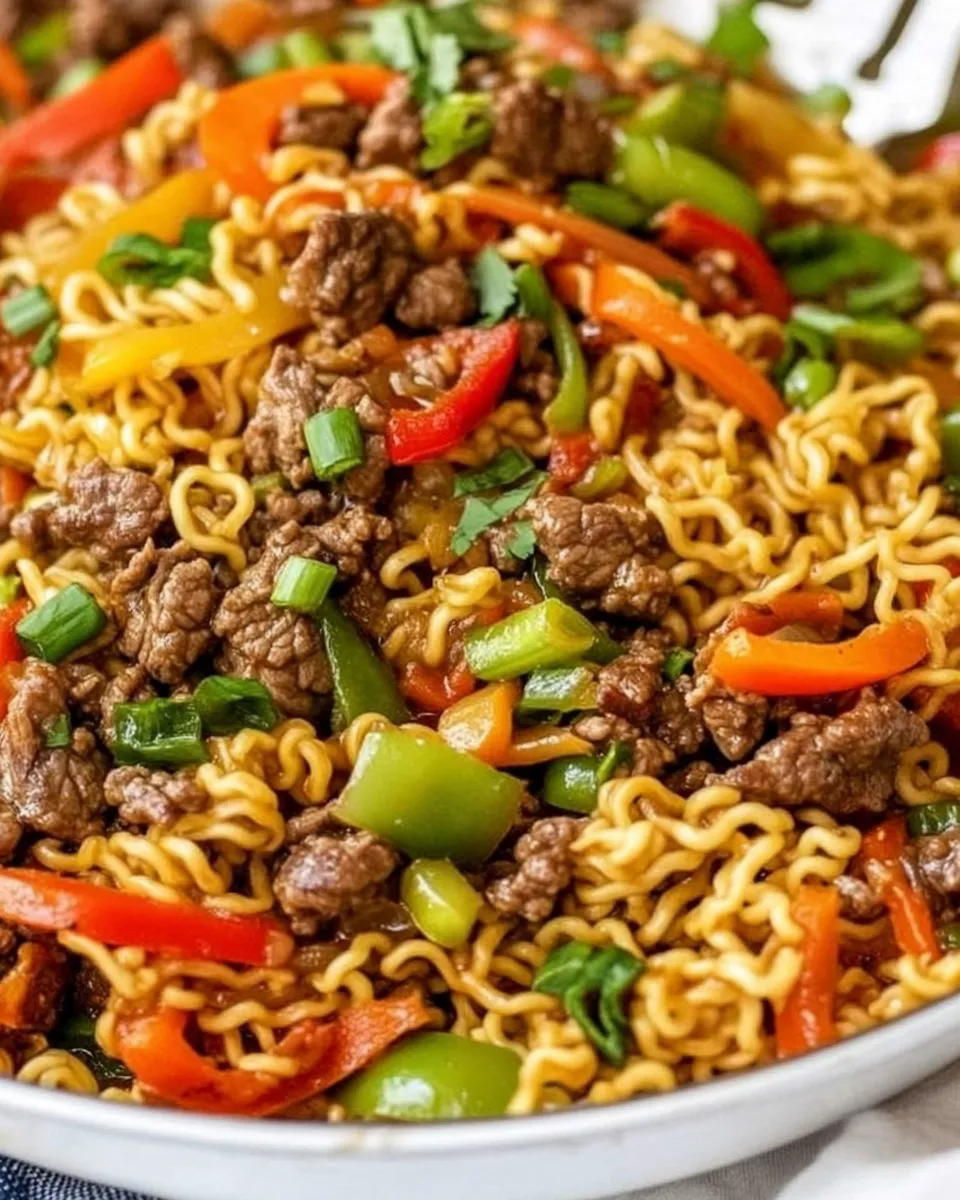
One Pan Beef Ramen Stir Fry
Ingredients
Equipment
Method
- Bring a medium saucepan of water to a boil. Add the ramen noodles and cook until tender, about 2 minutes. Drain the noodles and set aside.
- In a bowl, whisk together 1/3 cup soy sauce, 1 tablespoon brown sugar, 2 teaspoons sriracha (optional), 2 teaspoons minced garlic, and 1 teaspoon minced ginger. In a small cup, stir 1 tablespoon corn starch with 2 tablespoons water until smooth, then whisk the slurry into the sauce. Set the sauce aside.
- Heat a large skillet over medium heat. Add 1 pound lean ground beef and cook, breaking it apart, until no longer pink, about 5–7 minutes. Drain any excess grease, transfer the beef to a bowl, and set aside.
- Return the skillet to medium heat and add 1 tablespoon sesame oil. Add 1 large chopped onion, 1 chopped red bell pepper, 1/2 pound broccoli florets, and 1 cup shredded carrots. Cook, stirring occasionally, until the vegetables are tender-crisp, about 6–8 minutes.
- Add the cooked ground beef and drained ramen noodles to the skillet with the vegetables and toss to combine.
- Pour the prepared sauce over the noodle, beef, and vegetable mixture. Stir and cook over medium heat until the sauce comes to a simmer and thickens, about 1–2 minutes, coating everything evenly.
- Remove from heat, garnish with sliced green onions and sesame seeds, and serve immediately.