One Pot Salmon And Rice
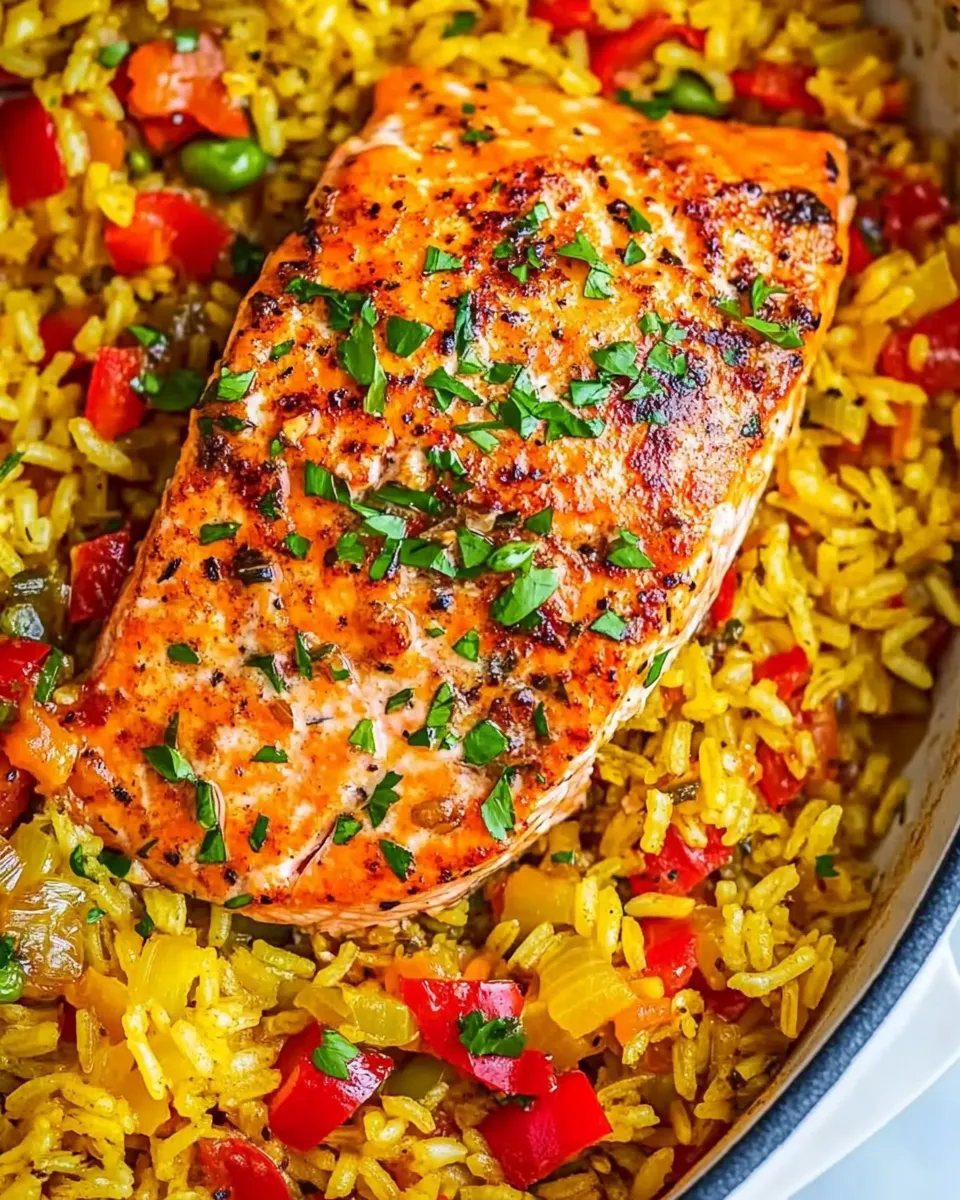
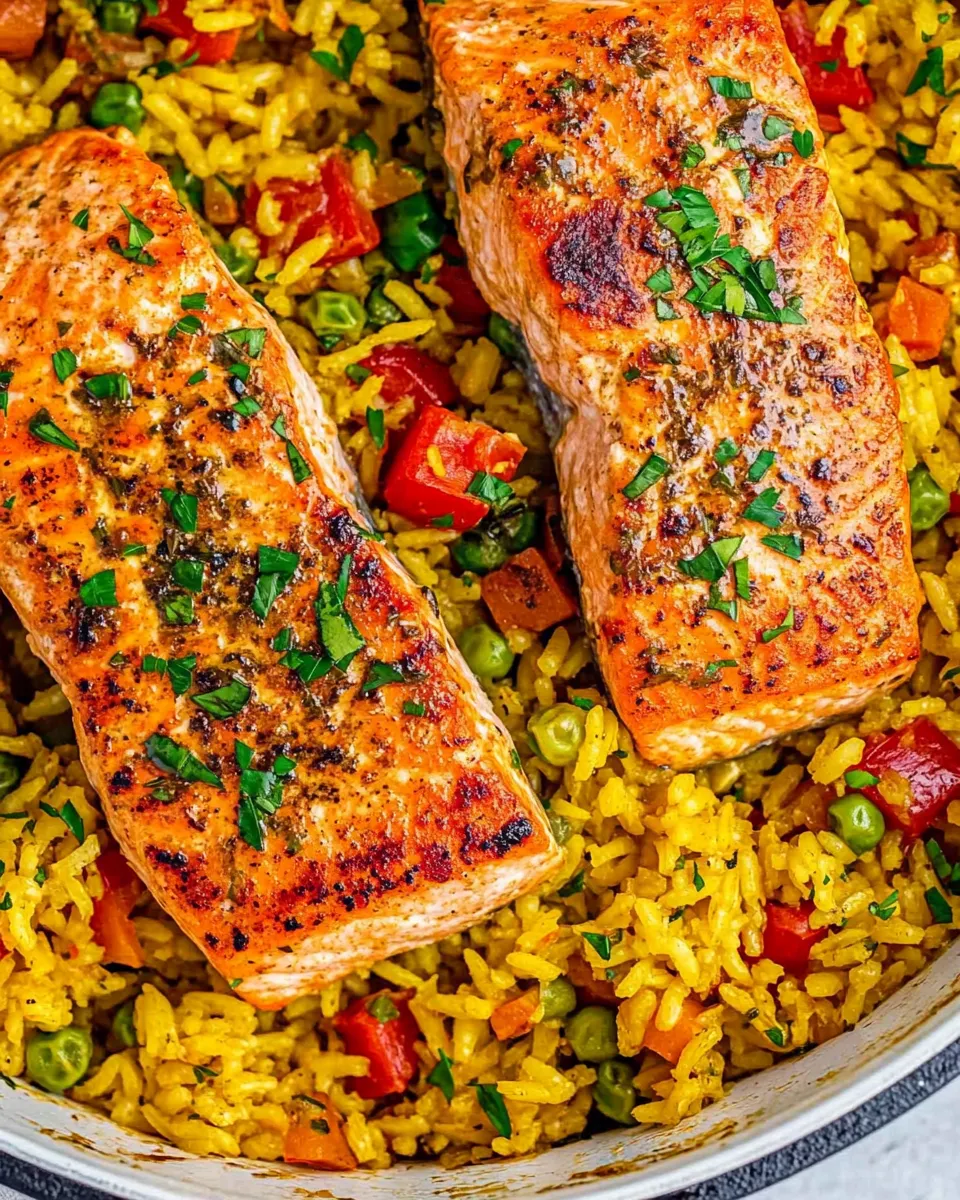
This one-pan salmon and rice is the kind of dinner I turn to when the week is busy and I still want a meal that feels thoughtful. It browns the salmon for texture, builds flavor in the pan, and finishes everything together so the rice absorbs the broth and aromatics. No juggling multiple pots — just a skillet and a little patience.
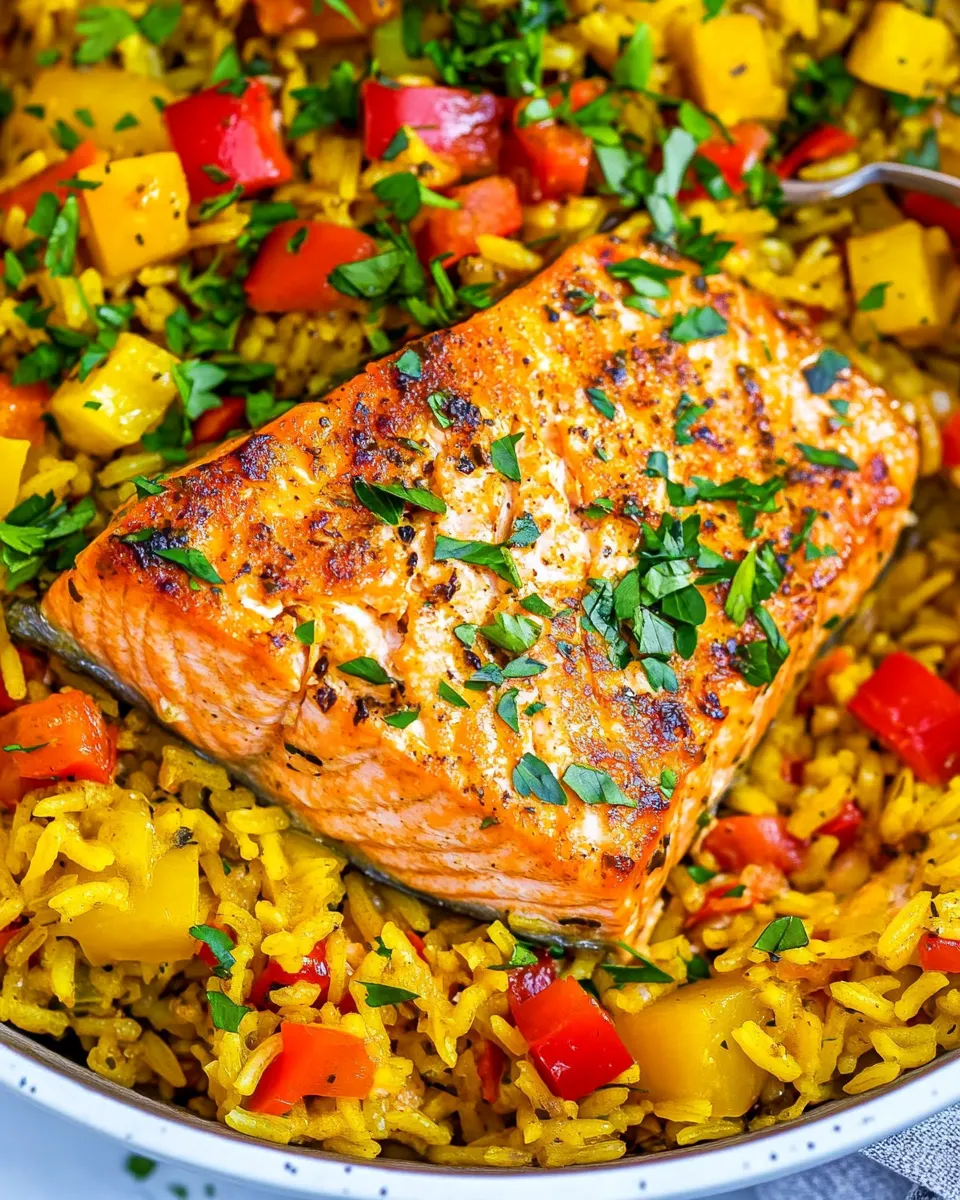
It’s forgiving, fast, and crowd-pleasing. The method gives you flaky, well-seasoned salmon and a fragrant bed of rice with bell peppers and onion. A squeeze of lemon at the end wakes it all up.
I write recipes I use on repeat, and this is one of them. Below you’ll find clear ingredient notes, the step-by-step directions exactly as I cook them, and practical tips from the prep to storage. Let’s get cooking.
Ingredient Notes
Before you start, a few quick notes about the ingredients so nothing surprises you mid-recipe. The recipe relies on simple pantry staples and a small handful of fresh items. The chicken bouillon cube and lemon are where a lot of the built-in flavor comes from; they’re small additions that make a noticeable difference.
Use skin-on salmon if you have it — searing skin-side down first helps protect the flesh and adds texture. Rinsing the rice removes extra surface starch so the grains cook more separately instead of becoming gluey. And take the extra minute to zest the lemon before juicing; the zest carries bright citrus oils that don’t come through with juice alone.
Ingredients
- 4 salmon fillets — main protein; pat dry so they sear nicely.
- 1 teaspoon seasoning salt — for immediate seasoning on both sides.
- 3 tablespoons olive oil (divided) — use a neutral-tasting oil for searing and sautéing; divided for control.
- 1 large onion (finely diced) — builds savory base and sweetness.
- 1 medium green bell pepper (finely diced) — adds color, crunch, and mild bitterness.
- 1 medium red bell pepper (finely diced) — balances the green with sweetness and color.
- 3 cloves garlic (minced) — aromatic; add after vegetables soften so it doesn’t burn.
- 1 cube chicken bouillon — concentrates savory flavor in the rice; dissolves into the broth.
- 1 teaspoon paprika — warmth and color; choose smoked paprika for smokier flavor.
- 1 teaspoon turmeric — adds subtle earthiness and a golden hue.
- salt and pepper (to taste) — adjust at the end as broth and bouillon will affect sodium.
- 1½ cups long-grain rice (rinsed) — rinsing prevents gummy rice; long-grain stays separate.
- 3 cups chicken broth (low sodium, or vegetable broth) — the cooking liquid; low-sodium lets you control salt.
- 1 lemon (zest and juice) — zest adds aromatic oils; juice brightens the finished dish.
- 1 tablespoon fresh parsley (for garnish) — fresh herb lift and color at the end.
Directions: One Pot Salmon And Rice
- Pat the 4 salmon fillets dry and season both sides with 1 teaspoon seasoning salt and pepper to taste.
- Heat a large skillet over medium-high heat and add 1 tablespoon olive oil.
- Place the salmon fillets in the skillet skin-side down if they have skin. Sear 2–3 minutes per side, until lightly browned. Remove the salmon from the skillet and set aside.
- Reduce heat to medium and add the remaining 2 tablespoons olive oil to the same skillet.
- Add the finely diced onion, green bell pepper, and red bell pepper. Cook, stirring occasionally, until the vegetables are translucent, about 3–4 minutes.
- Stir in the minced garlic and cook 1 minute, until fragrant.
- Add the rinsed 1½ cups long-grain rice, crumble in the 1 cube chicken bouillon, then add 1 teaspoon paprika, 1 teaspoon turmeric, and salt and pepper to taste. Stir for 1–2 minutes to coat and lightly toast the rice.
- Pour in 3 cups chicken broth and add the lemon zest. Stir once, then bring the mixture to a simmer.
- Reduce heat to low, gently nestle the seared salmon fillets on top of the rice, cover the skillet, and cook undisturbed for 18–20 minutes, until the rice is tender and the salmon flakes easily with a fork.
- Remove the lid, drizzle the juice of 1 lemon over the salmon and rice, taste and adjust seasoning if needed.
- Sprinkle 1 tablespoon fresh parsley over the dish for garnish and serve warm.
Small timing and finishing notes
When you add the salmon back to the skillet, place it gently so you don’t disturb the rice layers; the steam under the lid finishes the fish and the rice together. The 18–20 minute window should give you tender rice and fully cooked salmon; if your fillets are extra-thick, give a minute or two more, checking for doneness with a fork.
Why It Works Every Time
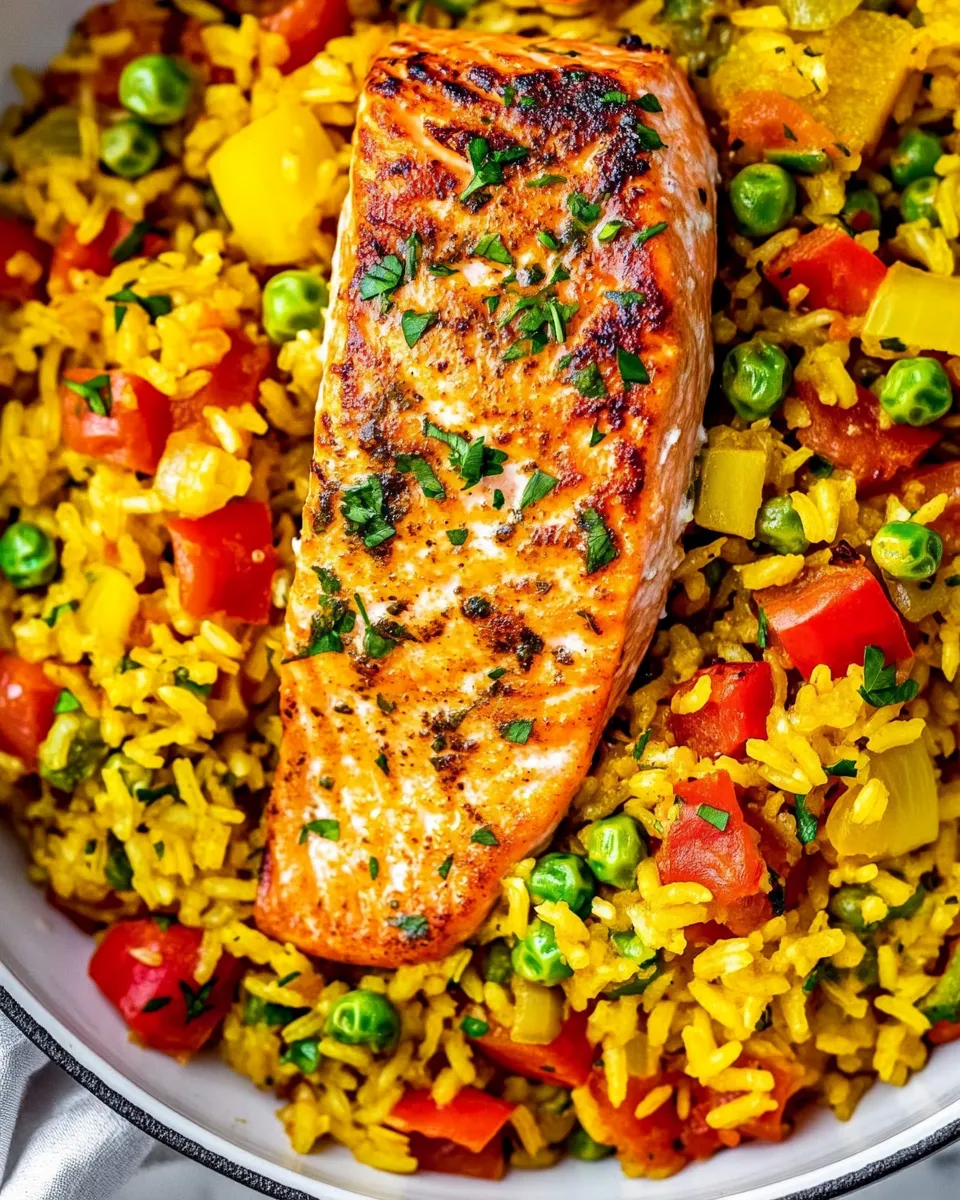
There are a few simple technique choices that give this dish consistent results. First, searing the salmon creates a lightly caramelized surface and helps the fish hold together during the final steam. That little bit of browning adds flavor you can’t get from steaming alone.
Second, toasting the rice briefly in the pan with the spices and bouillon helps coat each grain and intensifies the flavor. When you add the broth the rice begins to absorb those flavors immediately. Rinsing the rice beforehand removes excess starch so the cooked grains stay separate instead of turning gluey.
Finally, finishing the dish covered on low heat traps steam and cooks everything evenly without drying the salmon. The lemon zest and juice added at the end give bright, layered citrus notes that cut through the richness and keep the plate lively.
Dairy-Free/Gluten-Free Swaps
This recipe is naturally dairy-free; there are no dairy ingredients to swap. For a gluten-free version, check the chicken bouillon. Some bouillon cubes contain gluten or wheat-derived ingredients, so choose a labeled gluten-free chicken or vegetable bouillon cube or use a gluten-free bouillon powder. The rest of the ingredient list — salmon, rice, vegetables, herbs, and spices — is gluten-free by nature.
If you prefer a vegetarian version, substitute vegetable broth for the chicken broth and use a vegetable bouillon cube instead of chicken bouillon. The method remains the same and still delivers satisfying depth of flavor.
Must-Have Equipment
- Large skillet with a tight-fitting lid — keeps steam trapped for even cooking.
- Fish spatula or flexible turner — helps flip and transfer delicate fillets.
- Microplane or fine grater — for zesting the lemon cleanly.
- Sharp knife and cutting board — for even dicing of onion and peppers.
Learn from These Mistakes
- Overcrowding the pan when searing salmon — gives steam, not a sear. Leave space so edges brown.
- Skipping the rice rinse — can produce gummy rice that’s too sticky for this one-pot method.
- Removing the lid early during the final cook — loses steam and extends time; resist peeking until the minimum cook time.
- Not tasting before serving — broth and bouillon can vary in salt; adjust at the end with salt, pepper, or a splash of lemon.
Make It Diet-Friendly
To lower calories without losing satisfaction, keep the salmon portions and reduce the olive oil slightly — you can drop the searing oil to 1–2 tablespoons total by using a well-heated nonstick skillet and patting the salmon very dry. Swap white long-grain rice for long-grain brown rice, but note that brown rice requires more liquid and longer cooking time (about 40–45 minutes) so adjust accordingly. For a lower-carb option, serve the seared salmon over cauliflower rice cooked separately.
If you need to reduce sodium, use low-sodium or homemade broth and a low-sodium or reduced-salt bouillon cube. Increase lemon and fresh herbs to compensate for flavor.
Pro Perspective
As a cook who teaches technique, I focus on control: heat, timing, and seasoning. Sear on medium-high to induce Maillard reaction without burning. When you reduce heat before adding the vegetables and oil, you’re using the residual fond in the pan intentionally — it’s flavor waiting to be released into the onions and peppers.
Keep the aromatics timeline in mind: onions and peppers soften first, then garlic goes in for only a minute. Garlic gets bitter if it’s cooked too long at higher heat. The spices benefit from a quick toast with the rice to bloom their oils, which gives the finished rice depth rather than a flat, one-dimensional taste.
Keep It Fresh: Storage Guide
Cool leftovers quickly and store in an airtight container in the refrigerator for up to 3 days. To reheat, gently warm in a skillet over low-medium heat with a splash of broth or water to reintroduce steam — this prevents the rice from drying out and helps the salmon regain some moisture. Microwave reheating works too: add a teaspoon or two of water or broth, cover, and heat in short intervals until warm.
For freezing, separate rice and salmon if possible. Rice freezes well; cooked salmon loses some texture but is still fine for soups or salads after thawing. Freeze in airtight containers for up to 1 month. Thaw overnight in the fridge before reheating.
Quick Q&A
Q: Can I use frozen salmon? A: Yes. Thaw fully and pat dry before seasoning and searing; excess moisture prevents a good sear. If still slightly icy, increase sear time slightly and monitor doneness.
Q: My rice isn’t fully cooked after 20 minutes. What next? A: Add 1/4 cup more broth or water, cover, and continue cooking 3–5 minutes. Different rice brands and pan types change cook time slightly.
Q: Can I double the recipe? A: You can, but use a larger skillet or a shallow Dutch oven so the rice cooks evenly. Maintain the same ratios and monitor the liquid and cooking time; larger volumes sometimes need a few extra minutes.
Q: Can I swap rice for quinoa? A: Yes, but quinoa needs less liquid and cooks faster. Use the quinoa package instructions for liquid ratios and timing, and add the salmon during the final 8–10 minutes depending on quinoa doneness.
Time to Try It
Set aside about 35–40 minutes from start to finish: 10 minutes prep, 20 minutes cooking, and a few minutes for resting and finishing with lemon and parsley. This recipe is practical, bright, and satisfying — perfect for a weeknight or a simple weekend dinner. Put on a pot of tea, warm your skillet, and enjoy a full meal with minimal cleanup.
One Pot Salmon And Rice
Ingredients
Equipment
Method
- Pat the 4 salmon fillets dry and season both sides with 1 teaspoon seasoning salt and pepper to taste.
- Heat a large skillet over medium-high heat and add 1 tablespoon olive oil.
- Place the salmon fillets in the skillet skin-side down if they have skin. Sear 2–3 minutes per side, until lightly browned. Remove the salmon from the skillet and set aside.
- Reduce heat to medium and add the remaining 2 tablespoons olive oil to the same skillet.
- Add the finely diced onion, green bell pepper, and red bell pepper. Cook, stirring occasionally, until the vegetables are translucent, about 3–4 minutes.
- Stir in the minced garlic and cook 1 minute, until fragrant.
- Add the rinsed 1½ cups long-grain rice, crumble in the 1 cube chicken bouillon, then add 1 teaspoon paprika, 1 teaspoon turmeric, and salt and pepper to taste. Stir for 1–2 minutes to coat and lightly toast the rice.
- Pour in 3 cups chicken broth and add the lemon zest. Stir once, then bring the mixture to a simmer.
- Reduce heat to low, gently nestle the seared salmon fillets on top of the rice, cover the skillet, and cook undisturbed for 18–20 minutes, until the rice is tender and the salmon flakes easily with a fork.
- Remove the lid, drizzle the juice of 1 lemon over the salmon and rice, taste and adjust seasoning if needed.
- Sprinkle 1 tablespoon fresh parsley over the dish for garnish and serve warm.
Notes
Choosing the Right Rice:Stick to long grain rice for the best results. Short grain or instant rice may become too mushy in this cooking process.
Salmon Skin:If your salmon fillets have skin, you can leave it on for cooking; it helps keep the salmon moist. It easily peels off after cooking if you prefer not to eat it.
Vegetable Variations:This recipe is versatile. Add vegetables like peas, carrots, or spinach for extra nutrition and color.
Broth for Flavor:Use a good quality chicken or vegetable broth for more depth of flavor. Low sodium broth is a healthier option and lets you control the saltiness better.