Opera Cake
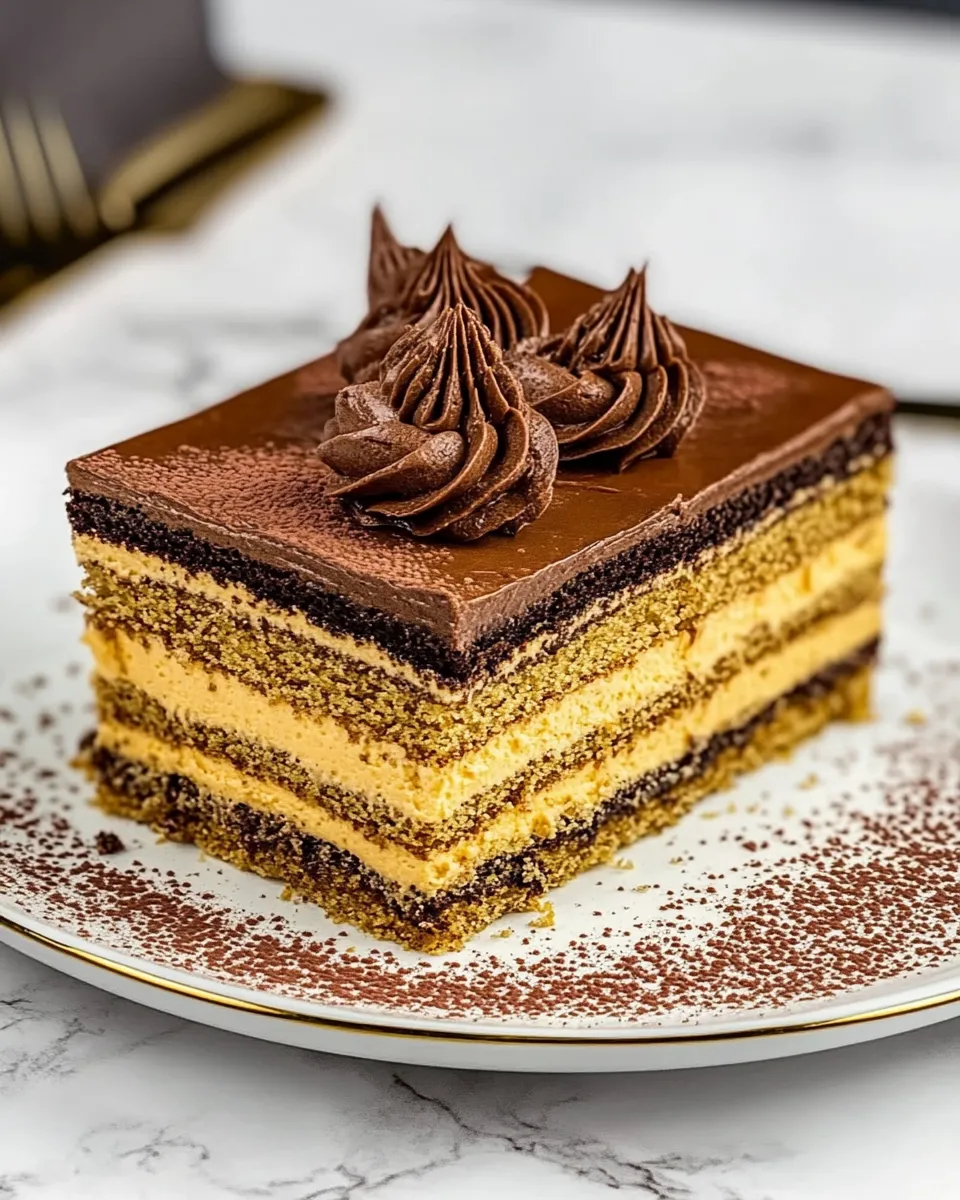
Opera Cake is one of those desserts that looks like a showstopper but rewards careful work with perfect layers and a restrained, elegant flavor. It’s built on thin almond sponge layers, a coffee-soaked crumb, coffee-flavored buttercream, and chocolate—classic Parisian technique with bright, focused flavors. You don’t need a pastry degree to get a beautiful result, just patience and attention at each stage.
I’ll walk you through what goes into the cake, the exact steps I follow every time, and practical notes so you can avoid common pitfalls. I test this recipe in a small kitchen and streamline the process to keep it manageable: do one stage at a time, chill when told, and use simple tools you probably already own.
Keep this post open while you work. Read the whole Step-by-Step Guide once before starting so you understand the flow: batter, quick bakes, syrups, ganache, buttercream, assembly, glaze. The rhythm is forgiving if you follow the order and give yourself a couple of hours total with cooling and refrigeration time included.
What Goes Into Opera Cake
Ingredients
- 1 1/4 cups almond flour — builds the nutty, tender sponge base; use finely ground for best texture.
- 1/4 cup all-purpose flour — adds structure so the thin layers hold together.
- 1 cup powdered sugar — sweetens the sponge; this is the sugar folded into the batter.
- 2 tablespoons butter, melted — keeps the sponge tender and adds flavor; fold in gently.
- 5 large eggs — the whole eggs form the body of the almond batter.
- 5 large egg whites — whipped separately to provide lift and an airy crumb.
- 1/4 teaspoon salt — enhances the overall flavor.
- 2 tablespoons sugar — added to the egg whites to stabilize and sweeten the meringue.
- 1 1/2 teaspoons espresso powder — dissolved for the buttercream to give a direct coffee note.
- 1 1/2 tablespoons milk, room temperature — helps dissolve the espresso and smooth the buttercream.
- 1 cup butter, softened — the base for the coffee buttercream; beat until fluffy.
- 3 1/2 cups powdered sugar — sweetens and stabilizes the buttercream (separate from the powdered sugar in the sponge).
- 2 teaspoons vanilla extract — adds warmth to the buttercream.
- 2/3 cup water — part of the coffee syrup that keeps the layers moist.
- 1/2 cup sugar — combined with water to make the syrup for soaking the layers.
- 3 teaspoons instant coffee — dissolved in the syrup for a clear coffee flavor.
- 1/4 cup Cointreau, optional — adds orange brightness to the syrup if you choose to use it.
- 1 cup chocolate, chopped — for the filling ganache; choose a good-quality chocolate you enjoy eating.
- 3/4 cup heavy cream — heated and poured over chocolate to make the ganache for the filling.
- 2/3 cup chocolate — for the final glaze; melt until smooth for a glossy finish.
- 2 tablespoons coconut oil — stirred into the glaze for shine and pourability.
Opera Cake: Step-by-Step Guide
- Preheat the oven to 400°F (200°C). Line three 8 x 8-inch cake pans with parchment paper and set aside.
- In a large bowl, whisk together 1 1/4 cups almond flour, 1 cup powdered sugar, and 1/4 cup all-purpose flour until evenly combined.
- Add the 5 whole eggs to the dry ingredients and mix gently until combined and smooth.
- In a separate clean bowl, add 5 egg whites and 1/4 teaspoon salt. Beat on medium speed until soft peaks form. With the mixer running, add 2 tablespoons sugar and continue beating until stiff, glossy peaks form.
- Fold the beaten egg whites into the almond-and-egg mixture in two additions, using a spatula and folding gently to keep the batter airy.
- Fold in 2 tablespoons melted butter until just incorporated. Divide the batter evenly between the three prepared pans and smooth the tops.
- Bake the cakes for 9–10 minutes, or until a skewer inserted in the center comes out clean. Remove from the oven and let the cakes cool completely in the pans. When cool, remove cakes from pans and peel off the parchment.
- Make the coffee syrup: in a small saucepan combine 2/3 cup water, 1/2 cup sugar, and 3 teaspoons instant coffee. Heat over low to medium heat, stirring until the sugar and coffee dissolve and the syrup just comes to a simmer. Remove from heat, stir in 1/4 cup Cointreau if using, and let the syrup cool to room temperature.
- Make the chocolate ganache for the filling: place 1 cup chopped chocolate in a heatproof bowl. Heat 3/4 cup heavy cream until it just begins to simmer, then pour the hot cream over the chopped chocolate. Let sit 1–2 minutes, then stir until smooth and glossy. Let the ganache cool to room temperature and thicken to a spreadable consistency.
- Prepare the coffee buttercream: dissolve 1 1/2 teaspoons espresso powder in 1 1/2 tablespoons room-temperature milk and set aside. In the bowl of a stand mixer, cream 1 cup softened butter on medium-high speed until light and fluffy. With the mixer on low, add 3 1/2 cups powdered sugar gradually until incorporated, then add 2 teaspoons vanilla extract. Add the espresso-milk mixture and beat on medium speed until the buttercream is smooth and fluffy.
- Assemble the cake: place one cake layer on a flat serving plate or board. Brush the top evenly with about one-quarter of the coffee syrup. Spread half of the coffee buttercream over that layer.
- Place the second cake layer on top and brush it evenly with another quarter of the coffee syrup. Spread the cooled chocolate ganache over the second layer.
- Place the third (top) cake layer on top, brush it with remaining coffee syrup, and spread the remaining coffee buttercream over the top and sides as desired. Cover the assembled cake and refrigerate for at least 2 hours to firm up.
- Make the chocolate glaze: melt 2/3 cup chocolate in short bursts in the microwave (or over a double boiler) until smooth. Stir in 2 tablespoons coconut oil until the glaze is glossy. Reserve a small amount of glaze for piping decorations if you want to draw a musical note.
- Place the chilled cake on a wire rack set over a sheet pan. Pour the remaining warm-but-not-hot glaze evenly over the top, letting some run down the sides. Refrigerate the cake until the glaze is set.
- If desired, put the reserved glaze into a piping bag and pipe a musical note or other decoration on the set glaze. Store the finished cake refrigerated.
Why This Recipe is a Keeper
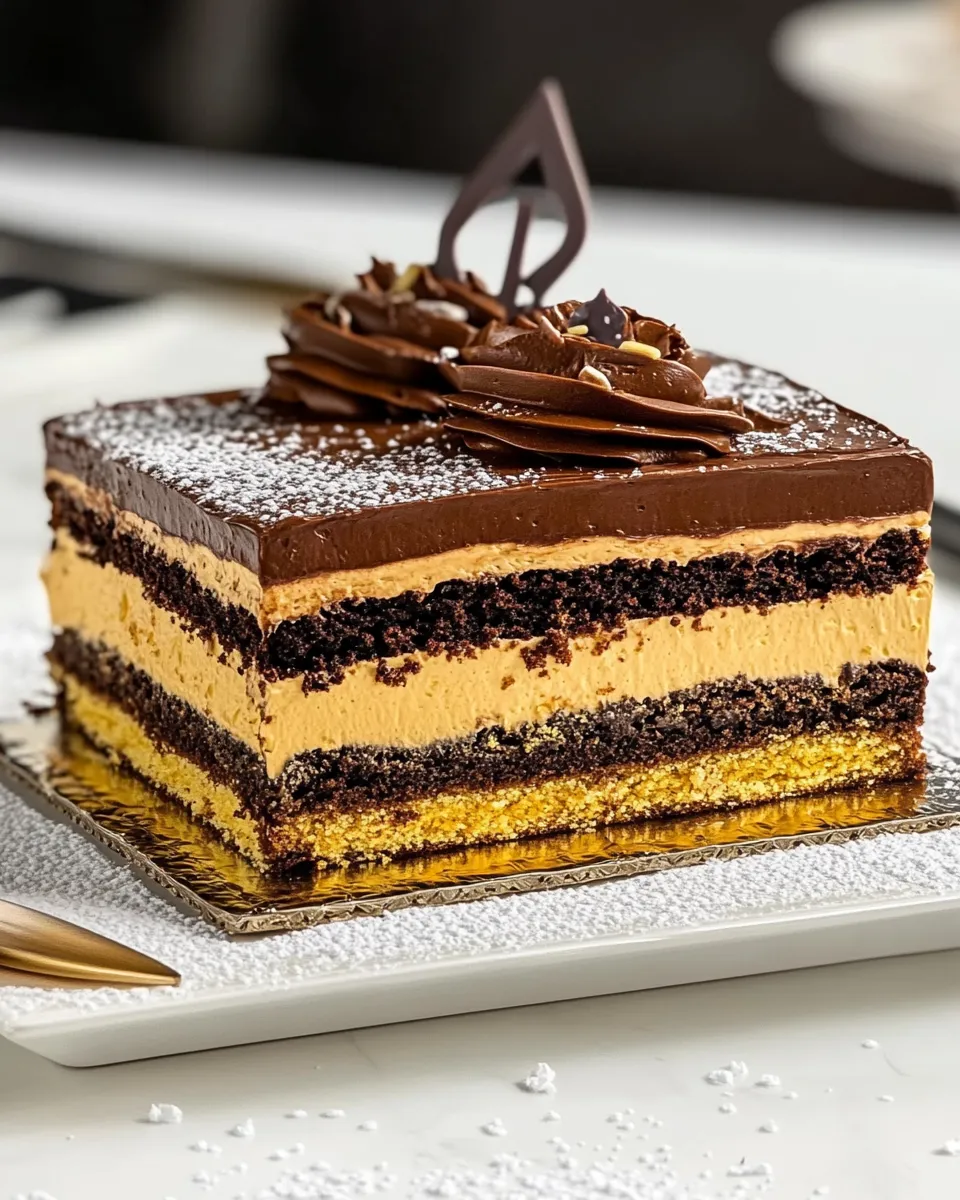
This recipe balances convenience with classic technique. The almond-based sponge is quick to assemble and bakes in thin, even layers—no trimming required if you line pans carefully. The coffee syrup is straightforward but essential: it seasons each layer so every bite tastes complete.
The combination of coffee buttercream and chocolate ganache is what makes an Opera Cake sing. The buttercream is stable and easy to spread after aeration; the ganache adds a silky counterpoint. Chilling between steps gives clean layers and a professional slice.
Ingredient Flex Options
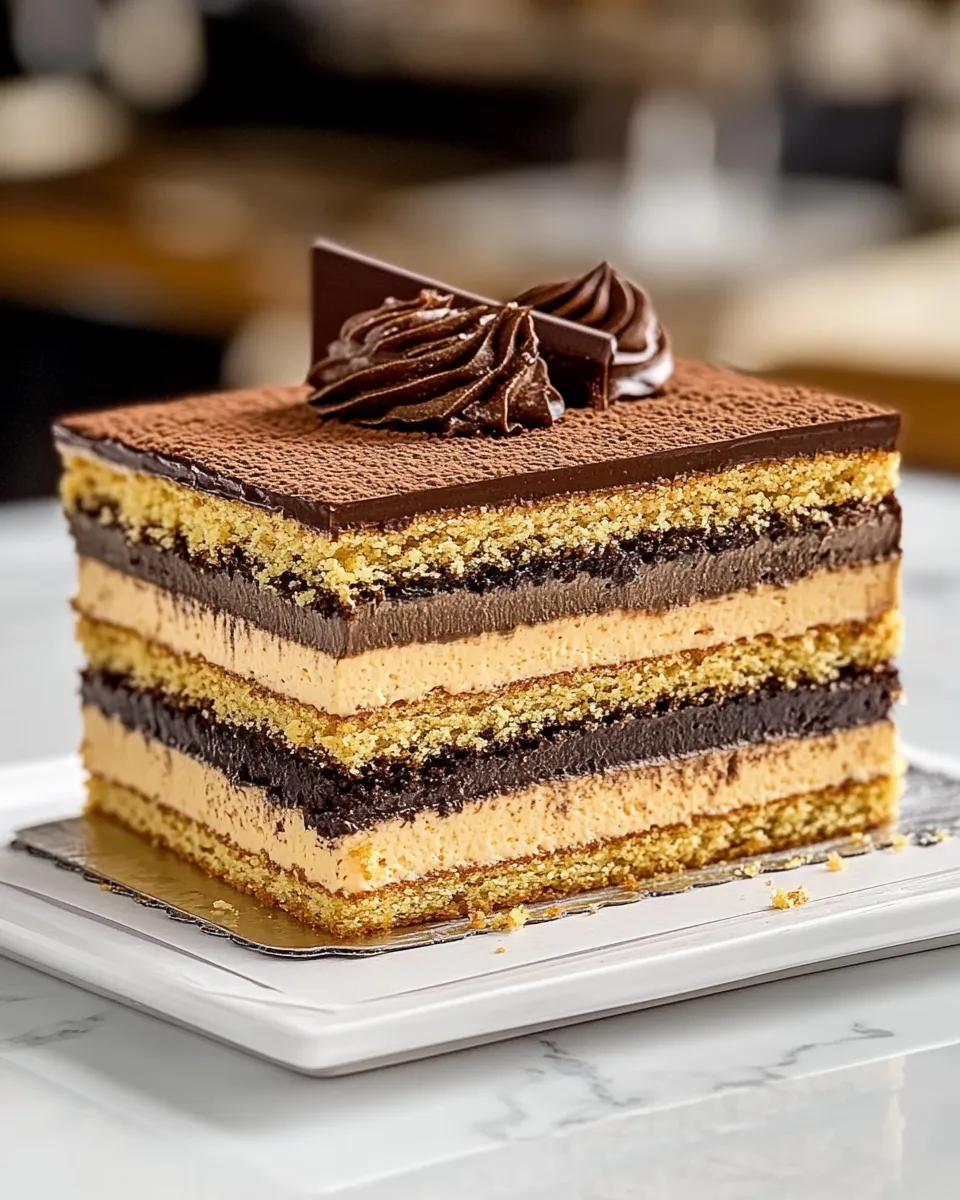
Small swaps can be made without upsetting structure. If you don’t keep almond flour, you can try another finely ground nut flour, but be aware the texture and flavor will change. If you’d rather not use Cointreau, omit it from the syrup—the cake remains excellent without the orange note.
For the chocolate elements, choose a chocolate you enjoy eating; darker chocolate will give a more intense finish, milk chocolate a sweeter, softer result. Espresso powder in the buttercream can be replaced with the instant coffee used for the syrup if you want a consistent coffee profile.
Gear Up: What to Grab
- Three 8 x 8-inch cake pans — for even, thin sponge layers.
- Parchment paper — lines the pans for easy removal.
- Stand mixer or hand mixer — for whipping whites and buttercream.
- Heatproof bowl — for ganache and melting chocolate.
- Wire rack and sheet pan — to catch glaze drips and set the cake.
- Offset spatula — helpful when spreading ganache and buttercream evenly.
- Piping bag — optional, for decorative glaze piping.
Steer Clear of These
Don’t overwhip the egg whites to dryness; they should be glossy and hold stiff peaks but not grainy. Overworking the batter after adding whites deflates it—fold gently. When making ganache, avoid overheating the cream or chocolate; that can cause the chocolate to seize and the texture to be grainy.
Also, don’t pour very hot glaze over a warm cake. The glaze should be warm-but-not-hot and the cake chilled so the glaze sets smoothly without running off entirely or melting the buttercream underneath.
In-Season Swaps
This cake doesn’t rely on seasonal produce, which makes it versatile year-round. If you want a seasonal twist, add a thin smear of raspberry jam between the buttercream and ganache in summer for a bright contrast—just a light layer so it doesn’t overwhelm the original profile.
For a winter variation, a tiny dash of orange zest in the syrup (if you omit Cointreau) complements chocolate and coffee well—add sparingly so the classic balance remains.
Pro Tips & Notes
Baking and Texture
Bake the sponges on the middle rack and time them carefully; 9–10 minutes is brief but sufficient. Thin layers will firm as they cool—wait until they’re fully cool before peeling the parchment to avoid tearing.
Assembly and Chilling
Brush syrup evenly and sparingly. It should moisten without turning the layers soggy. Chill the assembled cake at least 2 hours so the layers set; this makes glazing cleaner and slicing neater.
Finishing
When glazing, use a wire rack so excess glaze falls away and the sides get covered naturally. Return the cake to the fridge to finish setting before any final piped decoration.
Freezer-Friendly Notes
You can freeze the cake for longer storage. Wrap the fully chilled, glazed cake in plastic wrap and a layer of foil to protect the glaze. Thaw overnight in the refrigerator before serving. If you plan to freeze for longer than a week, consider freezing just the sponge layers or the buttercream separately to preserve texture, then assemble after thawing.
Your Top Questions
Can I make parts ahead? Yes. Bake the sponge layers a day or two ahead and store them wrapped in the fridge. Ganache and buttercream can be made and kept refrigerated for a couple of days; bring them to room temperature and rewhip the buttercream briefly before assembling.
How to get a mirror-like glaze? Use smooth, evenly melted chocolate and warm-but-not-hot glaze. The coconut oil helps the sheen and pourability. Pour from the center and let gravity do the work.
Why are my layers falling apart? Likely too much handling when the layers are warm or not enough chilling after assembly. Let sponges cool fully before removing parchment. After assembly, chill for at least two hours to firm the structure prior to glazing and slicing.
In Closing
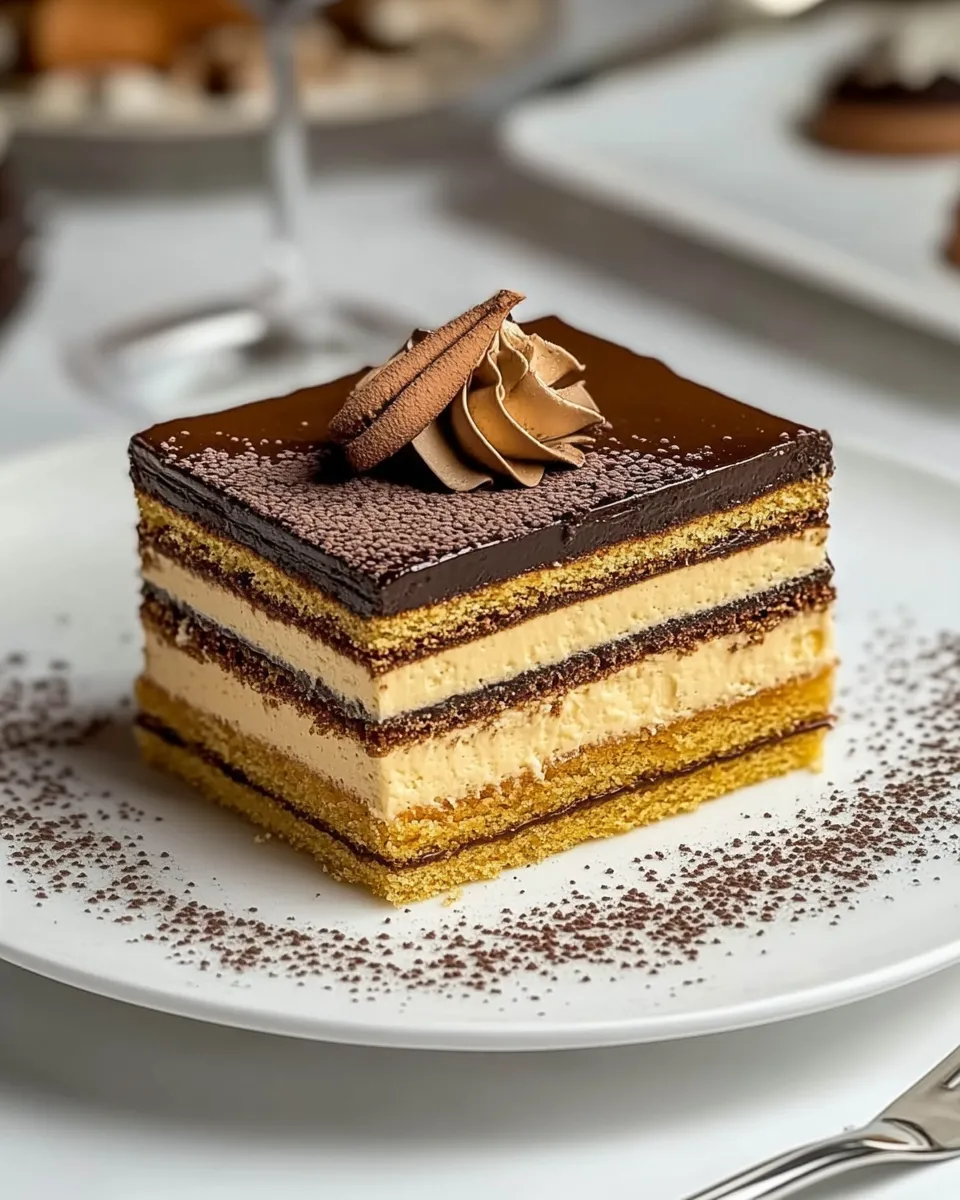
Opera Cake rewards the cook who takes it one step at a time. Follow the sequence, pay attention to temperatures, and don’t rush chilling times. The result is an impressive, balanced dessert with notes of almond, coffee, and chocolate that’s worth the effort.
If you try this at home, tell me how it went: which chocolate you chose, whether you used the Cointreau, and how your slices looked. Small changes can personalize the cake while honoring the classic structure.
Opera Cake
Ingredients
Equipment
Method
- Preheat the oven to 400°F (200°C). Line three 8 x 8-inch cake pans with parchment paper and set aside.
- In a large bowl, whisk together 1 1/4 cups almond flour, 1 cup powdered sugar, and 1/4 cup all-purpose flour until evenly combined.
- Add the 5 whole eggs to the dry ingredients and mix gently until combined and smooth.
- In a separate clean bowl, add 5 egg whites and 1/4 teaspoon salt. Beat on medium speed until soft peaks form. With the mixer running, add 2 tablespoons sugar and continue beating until stiff, glossy peaks form.
- Fold the beaten egg whites into the almond-and-egg mixture in two additions, using a spatula and folding gently to keep the batter airy.
- Fold in 2 tablespoons melted butter until just incorporated. Divide the batter evenly between the three prepared pans and smooth the tops.
- Bake the cakes for 9–10 minutes, or until a skewer inserted in the center comes out clean. Remove from the oven and let the cakes cool completely in the pans. When cool, remove cakes from pans and peel off the parchment.
- Make the coffee syrup: in a small saucepan combine 2/3 cup water, 1/2 cup sugar, and 3 teaspoons instant coffee. Heat over low to medium heat, stirring until the sugar and coffee dissolve and the syrup just comes to a simmer. Remove from heat, stir in 1/4 cup Cointreau if using, and let the syrup cool to room temperature.
- Make the chocolate ganache for the filling: place 1 cup chopped chocolate in a heatproof bowl. Heat 3/4 cup heavy cream until it just begins to simmer, then pour the hot cream over the chopped chocolate. Let sit 1–2 minutes, then stir until smooth and glossy. Let the ganache cool to room temperature and thicken to a spreadable consistency.
- Prepare the coffee buttercream: dissolve 1 1/2 teaspoons espresso powder in 1 1/2 tablespoons room-temperature milk and set aside. In the bowl of a stand mixer, cream 1 cup softened butter on medium-high speed until light and fluffy. With the mixer on low, add 3 1/2 cups powdered sugar gradually until incorporated, then add 2 teaspoons vanilla extract. Add the espresso-milk mixture and beat on medium speed until the buttercream is smooth and fluffy.
- Assemble the cake: place one cake layer on a flat serving plate or board. Brush the top evenly with about one-quarter of the coffee syrup. Spread half of the coffee buttercream over that layer.
- Place the second cake layer on top and brush it evenly with another quarter of the coffee syrup. Spread the cooled chocolate ganache over the second layer.
- Place the third (top) cake layer on top, brush it with remaining coffee syrup, and spread the remaining coffee buttercream over the top and sides as desired. Cover the assembled cake and refrigerate for at least 2 hours to firm up.
- Make the chocolate glaze: melt 2/3 cup chocolate in short bursts in the microwave (or over a double boiler) until smooth. Stir in 2 tablespoons coconut oil until the glaze is glossy. Reserve a small amount of glaze for piping decorations if you want to draw a musical note.
- Place the chilled cake on a wire rack set over a sheet pan. Pour the remaining warm-but-not-hot glaze evenly over the top, letting some run down the sides. Refrigerate the cake until the glaze is set.
- If desired, put the reserved glaze into a piping bag and pipe a musical note or other decoration on the set glaze. Store the finished cake refrigerated.
Notes
TO STORE
: Store leftovers in a cake keeper or in an airtight container. It will remain fresh in the fridge for 3 to 5 days.
TO FREEZE
: You can also freeze pieces of Opera cake for up to 3 months if wrapped tightly in food wrap and foil. It will keep well for up to 3 months.