Orange Chicken with an Olive Gremolata
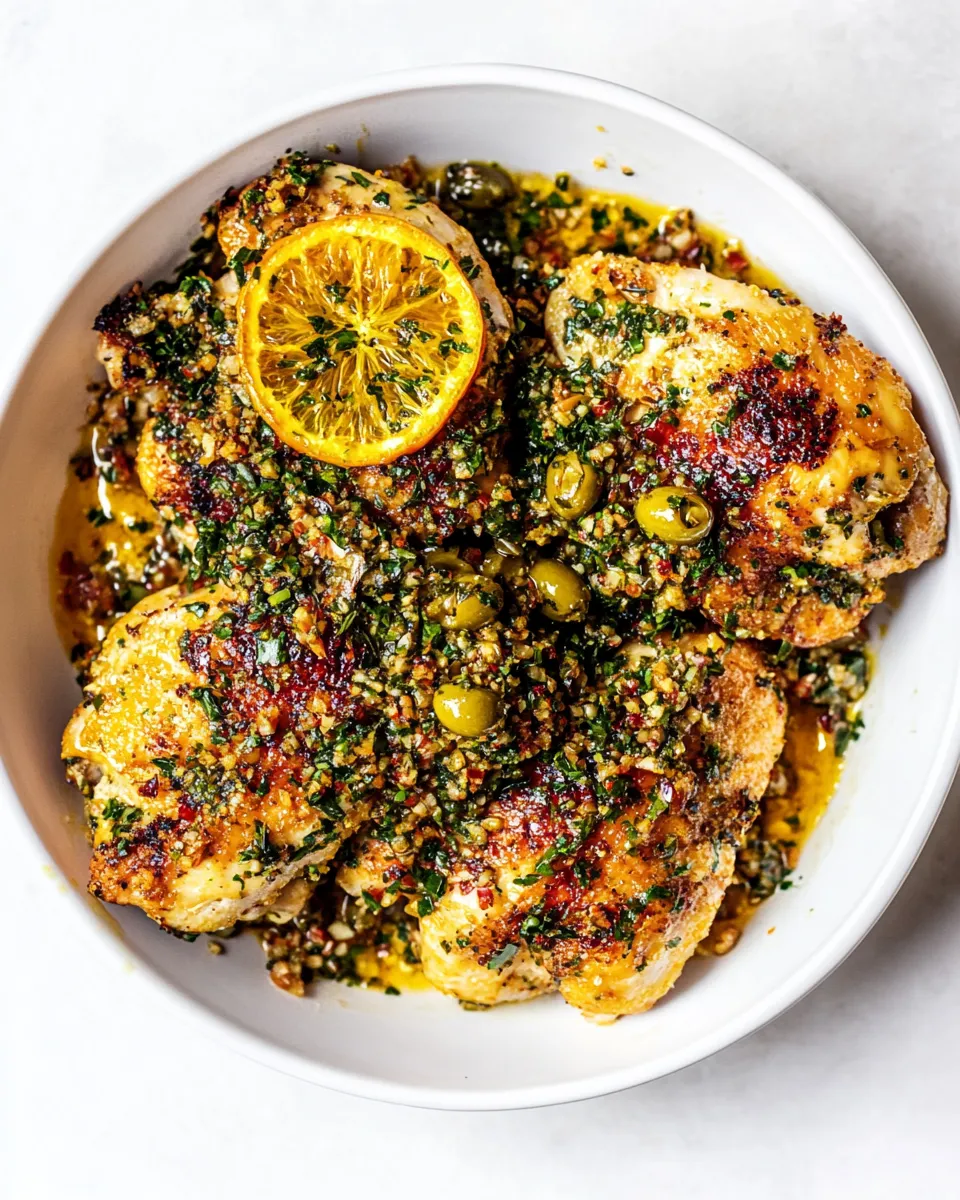
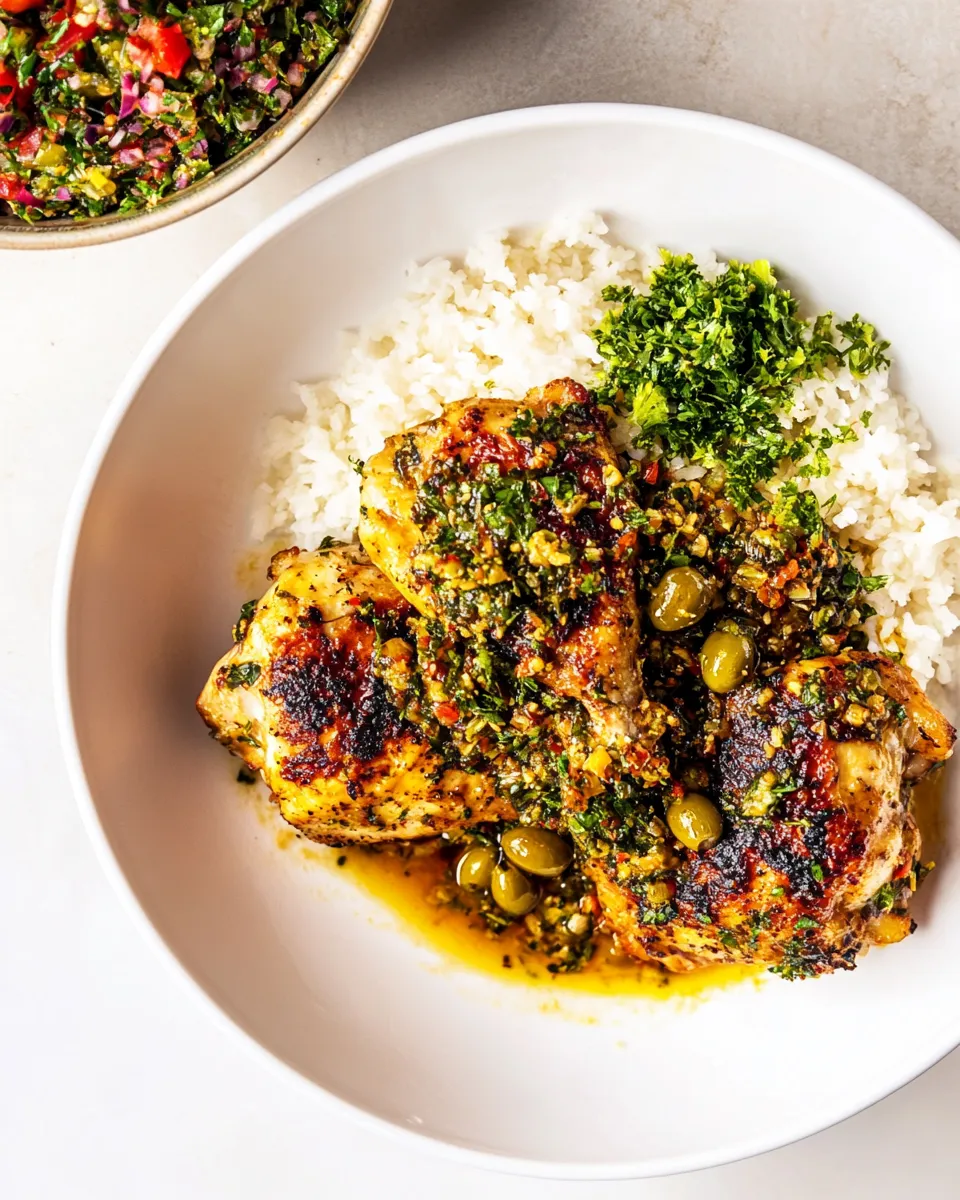
This is a straightforward roast chicken that leans bright and Mediterranean instead of heavy and sweet. The chicken marinates briefly in orange, garlic and parsley, then broils once to get a char and finishes in the oven. At the end you scatter a salty, herb-forward olive gremolata that cuts through the richness of the thighs.
I make this when I want a dinner that looks and tastes like effort but comes together with minimal hands-on time. The orange gives a gentle acid lift, the sugar helps the oranges caramelize under the broiler, and the olive gremolata—sharp garlic, briny chopped olives, lemon and more orange—turns every bite into a little flavor bomb.
Below you’ll find the ingredient rundown, the step-by-step method (followed exactly as written), and practical notes for substitutions, storage and troubleshooting. Read the method through once, then set a timer, and you’ll be serving this in under an hour if you aim for the three-hour marinade target.
Ingredient Rundown
- 8 chicken thighs (boneless and skinless or bone-in and skin-on) — the recipe works with either; boneless cooks faster, bone-in gives more depth of flavor.
- 1/4 cup parsley — bright herb for the marinade; contributes freshness and color.
- 6 garlic cloves, crushed — provides savory depth in the marinade.
- 1/2 cup fresh orange juice — the primary acid and orange flavor; use fresh for best brightness.
- zest of one orange — concentrates citrus oils for aroma and punch.
- 2 small oranges, thinly sliced — roasted beneath the chicken for caramelized orange flavor and to keep the chicken from sticking to the pan.
- 1/4 cup olive oil, divided use — emulsifies the marinade and later goes into the gremolata; use extra-virgin if you like a fruity note.
- 2 teaspoons granulated sugar — helps the orange slices and chicken develop a quick char under the broiler.
- 1/2 teaspoon kosher salt — seasons the marinade; adjust if you use table salt (less) or heavily salted olives later.
- 1/2 teaspoon fresh black pepper — basic seasoning in the marinade.
- 7 oz. olives (mix of green and black olives, pitted and finely chopped) — the base of the olive gremolata; adds brine and texture.
- 2 garlic cloves, minced — sharpness for the gremolata; use fresh for best bite.
- zest 1 orange — links the gremolata to the roasted oranges on the pan.
- 3 sprigs of parsley coarsely chopped — herb element in the gremolata for freshness and color.
- 1/3 cup olive oil — binds the gremolata and carries flavor across the chicken.
- 1 tablespoon orange juice — gives the gremolata a touch of sweet citrus lift.
- squeeze lemon juice — bright acid to balance the olives and oil in the gremolata.
Step-by-Step: Orange Chicken with an Olive Gremolata
- In a large bowl whisk together 1/4 cup parsley, 6 crushed garlic cloves, 1/2 cup fresh orange juice, the zest of one orange, 1/4 cup olive oil, 1/2 teaspoon kosher salt, and 1/2 teaspoon fresh black pepper to make the marinade.
- Add the 8 chicken thighs to the bowl and toss to coat thoroughly in the marinade. Cover the bowl with plastic wrap and refrigerate for at least 20 minutes and up to overnight (3 hours is a good target). When ready to cook, discard any leftover marinade.
- While the chicken marinates (or during the last 30 minutes of marinating), make the olive gremolata: finely chop 7 oz. olives and place them in a mixing bowl. Add 2 minced garlic cloves, the zest of 1 orange, and 3 sprigs of parsley coarsely chopped. Stir in 1/3 cup olive oil, 1 tablespoon orange juice, and a squeeze of lemon juice. Mix until combined and set aside at room temperature for the flavors to meld.
- Position an oven rack so the top of the chicken will be about 6 inches from the broiler element and heat the oven to broil on high.
- Arrange a few of the thin orange slices from the 2 small oranges in a single layer on the bottom of a rimmed baking pan or sheet. Remove the chicken from the marinade and, if it is very wet, pat the pieces lightly dry with paper towels. Lay the chicken pieces in a single layer on top of the orange slices and tuck the remaining orange slices between and around the pieces.
- Evenly sprinkle 2 teaspoons granulated sugar over the chicken and orange slices.
- Broil on high for about 2–3 minutes, watching closely, until the tops of the chicken pieces and orange slices begin to brown and char; rotate the pan as needed for even browning.
- Immediately reduce the oven temperature to 375°F. Transfer the pan to the middle rack and bake until the chicken is cooked through and an instant-read thermometer inserted into the thickest part of a thigh reads 165°F — about 15–20 minutes for boneless, skinless thighs. If using bone-in, skin-on thighs, total roast time may need to be extended to about 30 minutes or until the chicken reaches 165°F.
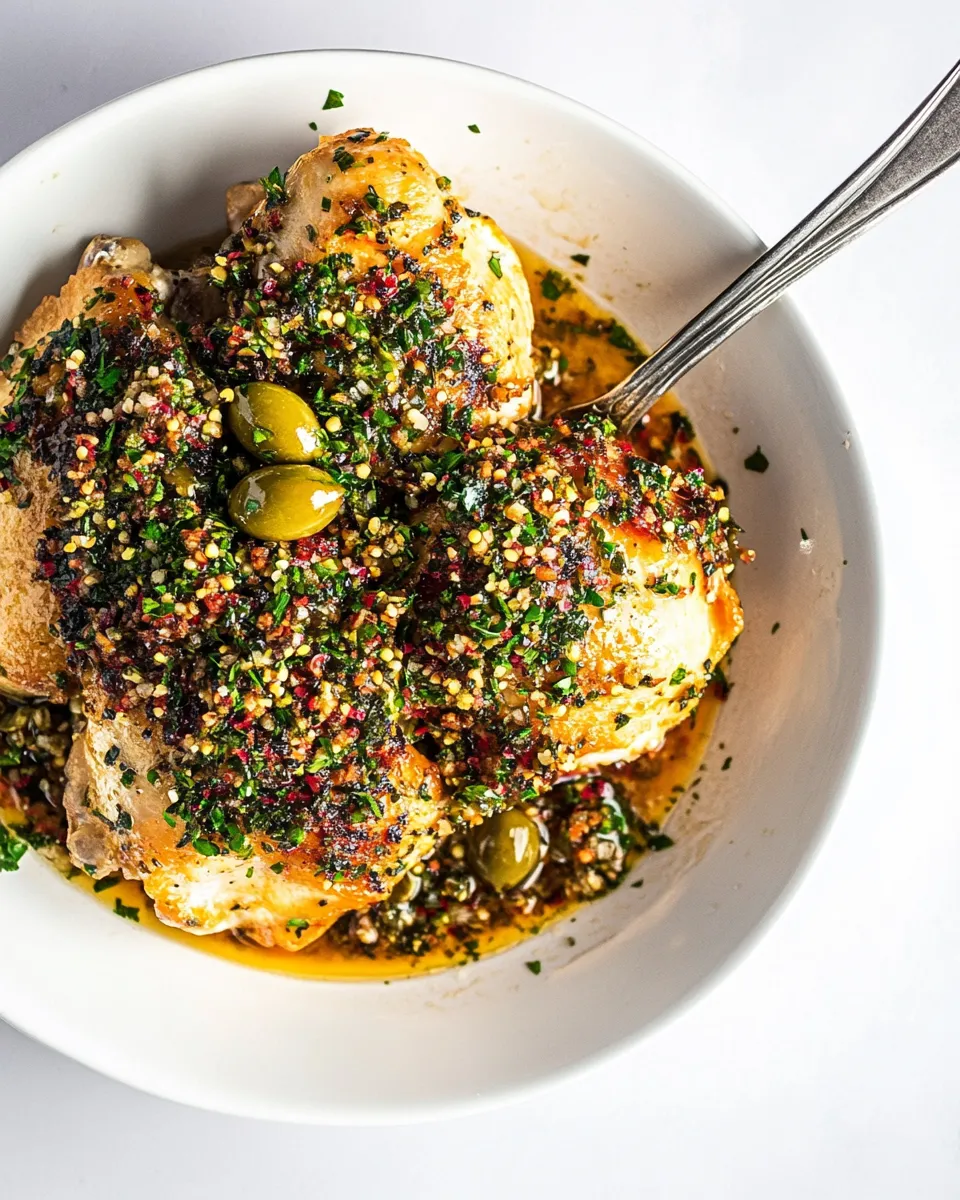
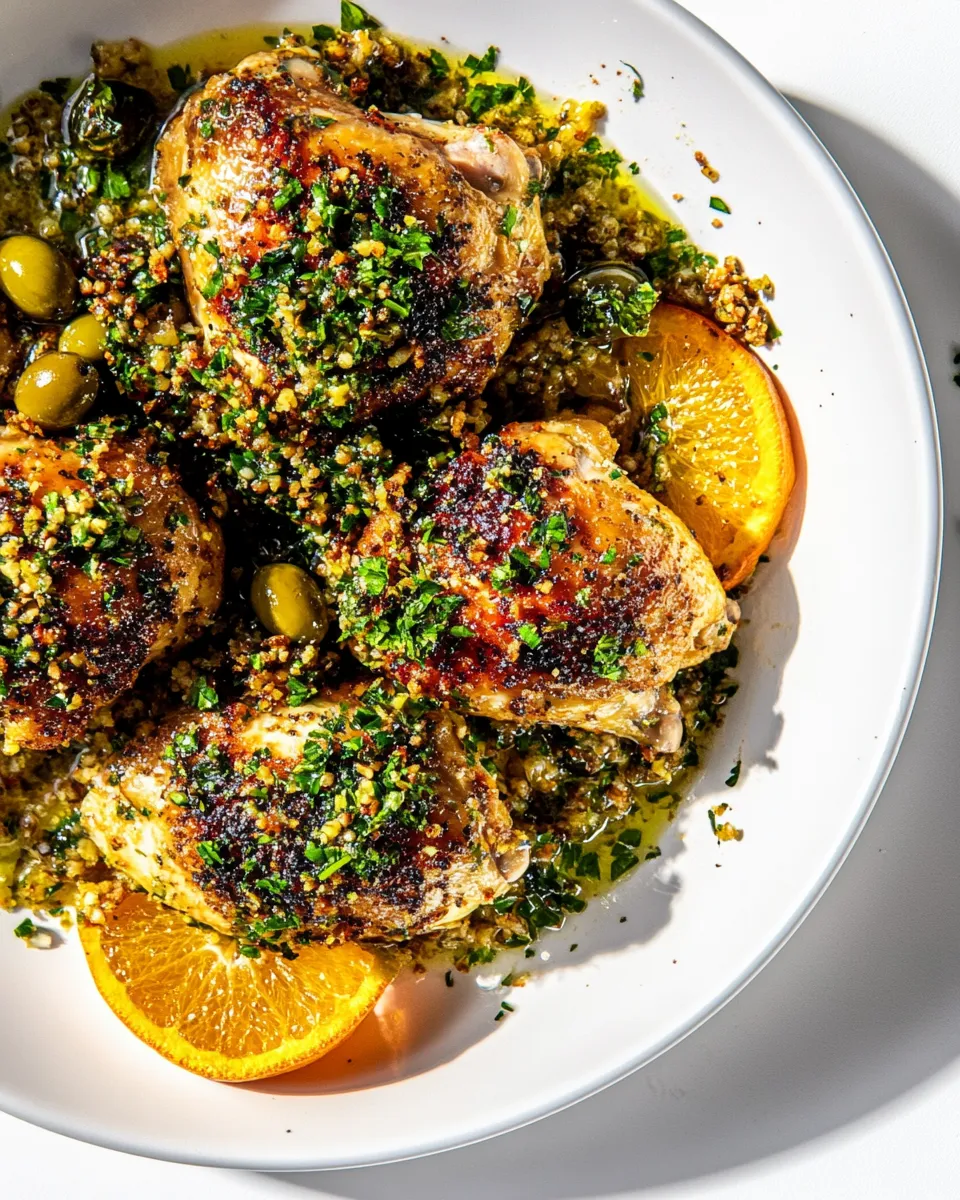
- Remove the chicken from the oven, scatter the prepared olive gremolata over the top, and serve immediately.
Why This Recipe is a Keeper
This dish hits a useful balance: bright citrus, savory garlic, and a salty olive finish that keeps every bite interesting. You get some caramelized char from the broiler, and the final bake ensures the thighs stay juicy. It’s an easy way to dress up weeknight chicken without deep frying, dredging or long braises.
The olive gremolata is the reason I keep making it. It’s quick to toss together, and it transforms roasted chicken into something you’d happily serve to guests. The components are pantry-friendly too—olives, garlic, oil, and citrus—so it’s an accessible recipe even when the fridge is low.
Healthier Substitutions
- Chicken thighs → Chicken breasts — swap in boneless, skinless breasts for lower fat; reduce baking time and watch temperature closely to avoid drying out.
- 1/4 cup olive oil (marinade) → light olive oil or reduce to 2 tbsp — cut a bit of fat from the marinade; the orange juice still provides moisture and flavor.
- 2 teaspoons granulated sugar → 1 teaspoon or honey — use less sugar or replace with a small drizzle of honey to retain browning but reduce refined sugar.
- Salt adjustment — because the gremolata uses briny olives, you can lower the kosher salt in the marinade or skip additional finishing salt.
Essential Tools for Success
- Rimmed baking pan or sheet — contains juices and lets the orange slices sit under the chicken.
- Instant-read thermometer — the safest way to know the chicken has reached 165°F without overcooking.
- Sharp knife and cutting board — for thin orange slices and finely chopping olives and parsley for the gremolata.
- Mixing bowls — one for the marinade and one for the gremolata; easy to toss and transfer.
- Microplane or fine grater — for zesting the oranges cleanly and quickly.
Common Errors (and Fixes)
- Chicken dries out — fix: use an instant-read thermometer and pull the breasts/boneless thighs a few degrees before 165°F; carryover heat will finish the rest. For bone-in thighs, expect a longer cook time but rely on temperature, not time alone.
- Gremolata tastes too salty — fix: rinse especially salty olives briefly and pat dry before chopping; omit any extra finishing salt on the chicken.
- Oranges burn under broiler — fix: watch closely during the 2–3 minute broil; rotate pan frequently and reduce broiler time if your oven runs hot.
- Marinade flavor is weak — fix: increase the zest or let the chicken marinate longer (up to overnight) to let the flavors penetrate.
Seasonal Spins
- Winter — swap the small oranges for blood oranges when available for a pretty color and slightly floral flavor.
- Spring — add a handful of chopped fresh mint to the gremolata for brightness.
- Summer — serve with grilled zucchini and a simple tomato salad dressed with lemon and olive oil.
- Fall — fold in a tablespoon of chopped roasted almonds into the gremolata for crunch and to echo autumnal textures.
Behind-the-Scenes Notes
I tested this with both boneless, skinless thighs and bone-in, skin-on thighs. Boneless cooks faster and is easier to eat; bone-in gives a little more flavor and stays juicier when you plan to reheat. The broiler step is short but essential: it gives you immediate color and caramelization on both the orange slices and the chicken surface before the slower oven finish.
When preparing the gremolata, keep the olive pieces finely chopped so they disperse across the chicken without overpowering any single bite. The gremolata can sit at room temperature for a bit; it only improves as the oil, citrus and aromatics marry.
Storing, Freezing & Reheating
To Store
- Refrigerate leftovers in an airtight container for up to 3–4 days. Keep the olive gremolata separate if possible; it’s fine tossed over the chicken but stores better in its own jar.
To Freeze
- Freeze cooked chicken (without the gremolata) in a freezer-safe container for up to 2 months. Thaw overnight in the fridge before reheating.
To Reheat
- Reheat gently in a 325°F oven until warmed through, about 10–15 minutes depending on portion size. This preserves juiciness better than a microwave. Add the gremolata only after reheating.
- If using a microwave for convenience, reheat in short bursts and cover loosely to retain moisture; finish with gremolata fresh to keep its texture.
Questions People Ask
- Can I use other citrus? — Yes. Lemons or limes will change the profile; lemons give a tarter edge, limes bring an herbaceous brightness. Keep the zest and juice proportions similar.
- Do I have to broil first? — The brief broil step is what gives you those charred notes on the oranges and chicken. If you skip it, expect a more uniformly roasted look and a milder caramel flavor.
- How salty will this be with olives? — The gremolata adds brine, so reduce added salt in the marinade if you’re sensitive. Taste a small spoonful of the gremolata before adding extra salt to the finished dish.
- Can I make the gremolata ahead? — Yes. Make it up to 24 hours in advance and keep refrigerated. Bring it to room temperature before serving so the oil is loose and flavors are pronounced.
Ready, Set, Cook
Set yourself up by prepping the orange slices, zesting, and measuring the olive oil before you start. Follow the method in order: whisk, marinate, make gremolata, broil, bake, and finish. Timing matters most at the broiler stage—watch it so you don’t overshoot the char you want.
This recipe is a reliable weeknight winner and also pretty enough for a small dinner party. The olive gremolata is key: make it confidently, scatter it over the just-out-of-the-oven chicken, and let the contrast of bright, salty and roasted carry the dish. Enjoy.
Orange Chicken with an Olive Gremolata
Ingredients
Equipment
Method
- In a large bowl whisk together 1/4 cup parsley, 6 crushed garlic cloves, 1/2 cup fresh orange juice, the zest of one orange, 1/4 cup olive oil, 1/2 teaspoon kosher salt, and 1/2 teaspoon fresh black pepper to make the marinade.
- Add the 8 chicken thighs to the bowl and toss to coat thoroughly in the marinade. Cover the bowl with plastic wrap and refrigerate for at least 20 minutes and up to overnight (3 hours is a good target). When ready to cook, discard any leftover marinade.
- While the chicken marinates (or during the last 30 minutes of marinating), make the olive gremolata: finely chop 7 oz. olives and place them in a mixing bowl. Add 2 minced garlic cloves, the zest of 1 orange, and 3 sprigs of parsley coarsely chopped. Stir in 1/3 cup olive oil, 1 tablespoon orange juice, and a squeeze of lemon juice. Mix until combined and set aside at room temperature for the flavors to meld.
- Position an oven rack so the top of the chicken will be about 6 inches from the broiler element and heat the oven to broil on high.
- Arrange a few of the thin orange slices from the 2 small oranges in a single layer on the bottom of a rimmed baking pan or sheet. Remove the chicken from the marinade and, if it is very wet, pat the pieces lightly dry with paper towels. Lay the chicken pieces in a single layer on top of the orange slices and tuck the remaining orange slices between and around the pieces.
- Evenly sprinkle 2 teaspoons granulated sugar over the chicken and orange slices.
- Broil on high for about 2–3 minutes, watching closely, until the tops of the chicken pieces and orange slices begin to brown and char; rotate the pan as needed for even browning.
- Immediately reduce the oven temperature to 375°F. Transfer the pan to the middle rack and bake until the chicken is cooked through and an instant-read thermometer inserted into the thickest part of a thigh reads 165°F — about 15–20 minutes for boneless, skinless thighs. If using bone-in, skin-on thighs, total roast time may need to be extended to about 30 minutes or until the chicken reaches 165°F.
- Remove the chicken from the oven, scatter the prepared olive gremolata over the top, and serve immediately.