Orange Pound Cake
This orange pound cake is my go-to when I want something simple, reliably tender, and bright with citrus. It doesn’t fuss with complicated techniques. The batter comes together in one bowl after you sift the dry ingredients, and the glaze brings a second wave of orange flavor that keeps each slice from feeling heavy.
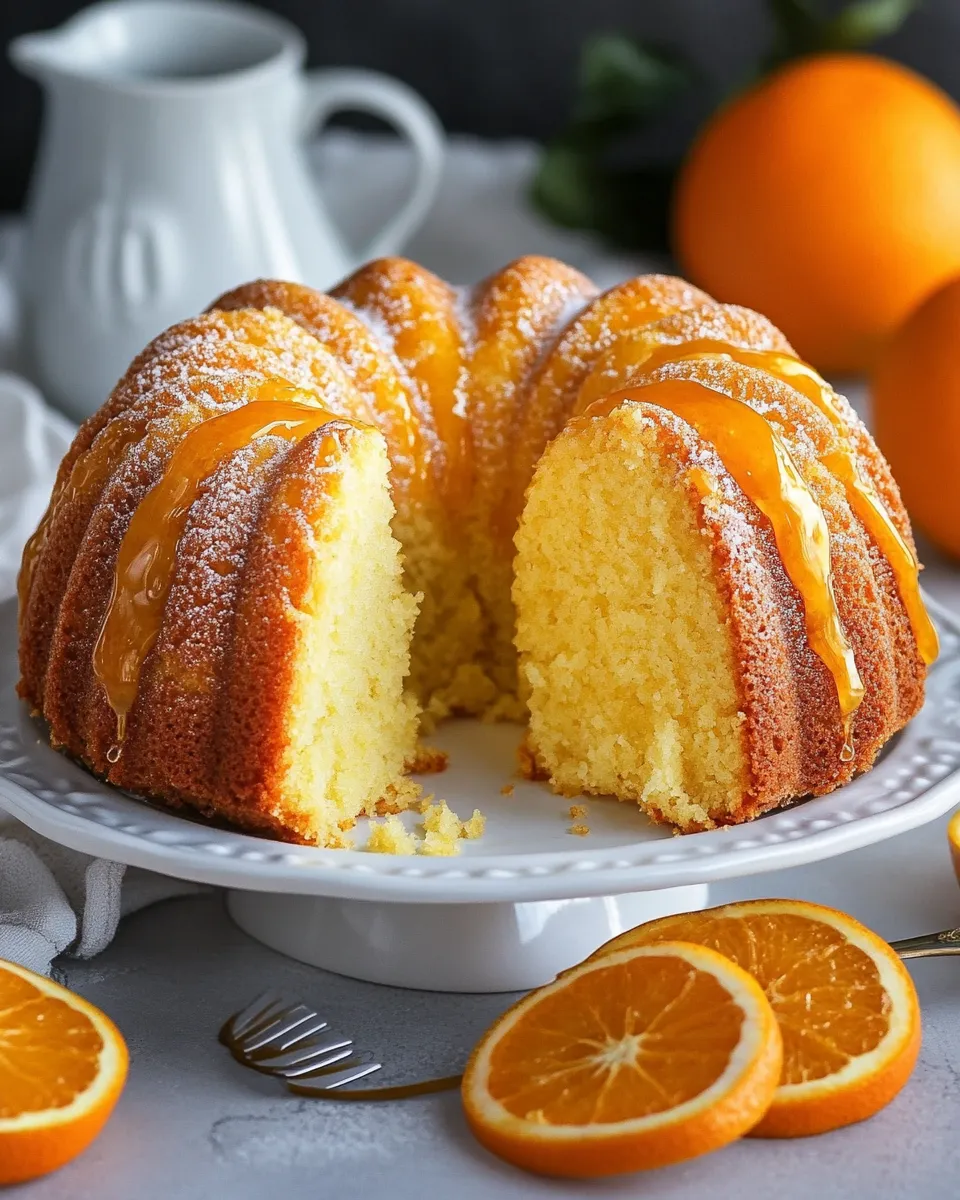
It bakes in a bundt pan for a fine crust and an attractive shape, but the cake inside stays dense in the right way—moist and buttery rather than dry. You can make it for a weekend breakfast with coffee or as a finish to a casual dinner; either way it holds up well at room temperature for a few days.
I tested the recipe several times to balance the orange intensity with the cake’s richness. The buttermilk and the technique of alternating dry and wet additions keep the crumb soft. The glazing steps are straightforward and worth the extra minute: a warm syrup first, then a powdered sugar drizzle once the cake is cool.
Ingredient Notes
Below I explain why each ingredient matters and how small choices change the result. Read this before you start so you can plan: room-temperature butter and eggs, fresh orange juice and zest, and a reliable bundt pan are the most important things for a consistent loaf.
If you want the most pronounced orange flavor, use freshly squeezed juice and zest at peak ripeness. If your oranges are underripe or very thick-skinned, the zest can be bitter—adjust the amount. Also, use a buttermilk with some tang; it keeps the crumb tender and balances sweetness.
Ingredients
- 3 cups (372 g) all-purpose flour — provides structure; measure by weight for accuracy.
- 1 teaspoon baking powder — gives a little lift so the pound cake isn’t overly dense.
- 1 teaspoon salt — balances sweetness and brightens the orange.
- 1 cup (226 g) unsalted butter, softened — the fat and flavor backbone; soften to room temperature for proper creaming.
- 2 cups (400 g) granulated sugar — sweetness and helps create a tender crumb when creamed with butter.
- 5 large eggs — add richness and structure; add them one at a time to keep the batter emulsified.
- ¾ cup (177 ml) buttermilk — adds acidity and moisture; it tenderizes the crumb.
- ⅓ cup (79 ml) fresh orange juice — delivers fresh citrus flavor; avoid concentrate for best brightness.
- 2 tablespoons orange zest (1–2 oranges) — concentrated orange oil; zest instead of using peel for clean, fresh flavor.
- 1 teaspoon vanilla — rounder flavor and depth; use pure vanilla if possible.
- ½ teaspoon orange extract, optional — use sparingly only if you want extra orange intensity.
- ¼ cup (50 g) granulated sugar — for the warm orange glaze; dissolves quickly in juice.
- ¼ cup (60 ml) fresh orange juice — mixed with sugar for a syrup that soaks slightly into the warm cake.
- 1 cup (113 g) powdered sugar — base for the final drizzle; gives a glossy, sweet finish.
- 1–2 tablespoons (15–30 ml) orange juice — thins the powdered sugar to a drizzle; add a little at a time to control consistency.
- 1 tablespoon orange zest — folded into the drizzle for a bright, textured final note.
Make Orange Pound Cake: A Simple Method
- Preheat the oven to 350°F (175°C). Spray a bundt pan thoroughly with nonstick cooking spray (use a spray that contains flour for best results).
- In a medium bowl, whisk together 3 cups (372 g) all-purpose flour, 1 teaspoon baking powder, and 1 teaspoon salt. Set aside.
- In a large bowl, use an electric mixer to cream 1 cup (226 g) softened unsalted butter and 2 cups (400 g) granulated sugar on medium speed until light and fluffy, about 3–5 minutes. Scrape down the bowl as needed.
- With the mixer on low, add 5 large eggs one at a time, beating well and scraping the bowl after each addition.
- In a measuring cup or small bowl, combine 3/4 cup (177 ml) buttermilk, 1/3 cup (79 ml) fresh orange juice, 2 tablespoons orange zest, 1 teaspoon vanilla, and 1/2 teaspoon orange extract (if using).
- With the mixer on low speed, add the flour mixture to the batter in three additions, alternating with the buttermilk mixture: flour — buttermilk — flour — buttermilk — flour. Begin and end with the flour. Mix only until each addition is just incorporated; do not overmix.
- Pour the batter into the prepared bundt pan and smooth the top with a spatula. Bake until a toothpick inserted into the center comes out clean or with a few moist crumbs, 45–55 minutes. Rotate the pan once halfway through baking if your oven has hot spots.
- While the cake bakes, make the warm orange glaze: combine 1/4 cup (50 g) granulated sugar and 1/4 cup (60 ml) fresh orange juice in a small saucepan. Heat over low, stirring until the sugar dissolves and the mixture comes to a gentle simmer. Remove from heat and set aside to cool slightly; it will thicken as it cools.
- When the cake is done, remove it from the oven and let it cool in the pan for 10 minutes.
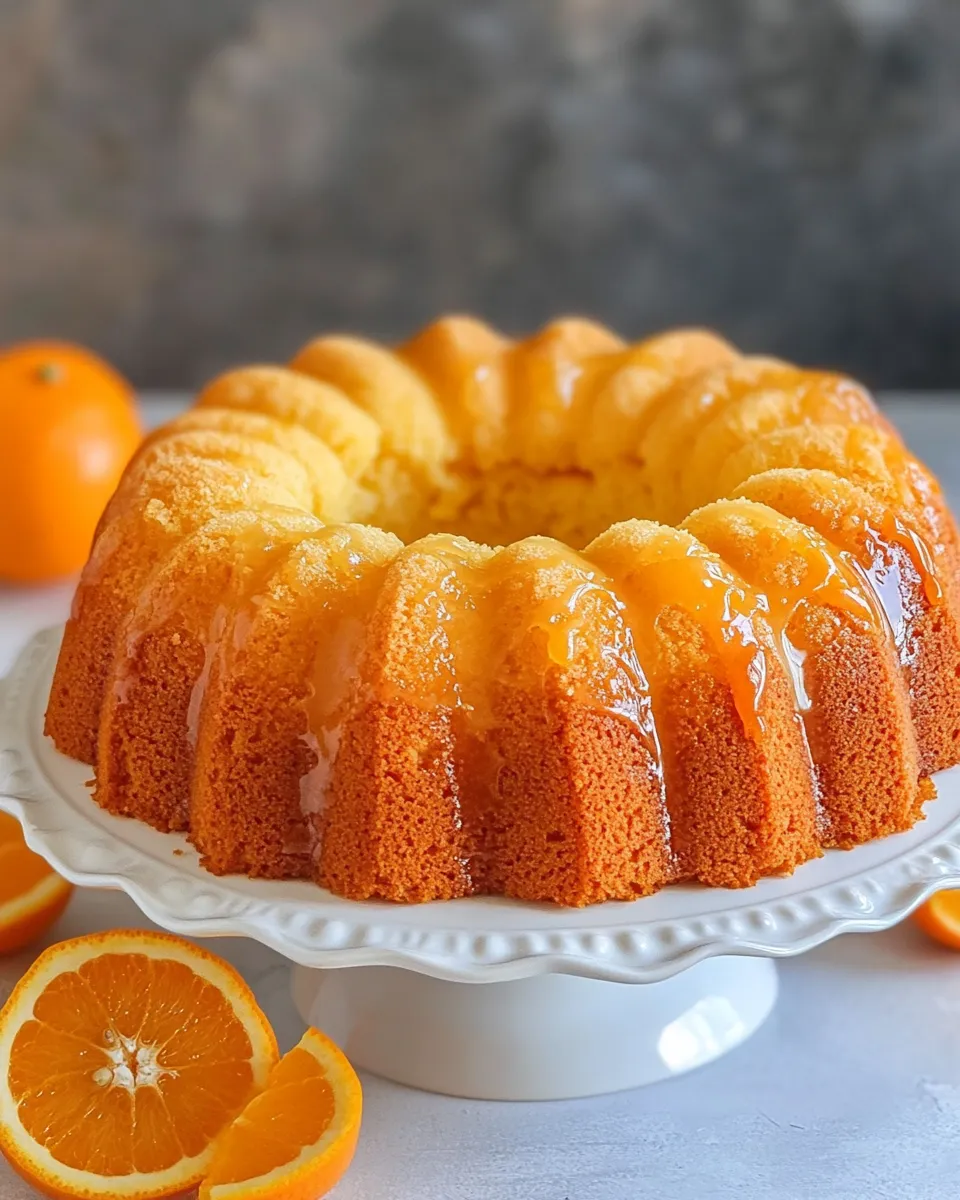
- After 10 minutes, invert the cake onto a wire rack set over a sheet pan or tray to catch drips. Use a pastry brush to brush the warm orange glaze evenly over the top and sides of the warm cake. Allow the glazed cake to cool completely on the rack before adding the drizzle.
- Make the powdered sugar drizzle: in a small bowl, whisk 1 cup (113 g) powdered sugar with 1–2 tablespoons (15–30 ml) fresh orange juice (start with 1 tablespoon and add up to 2 for desired consistency) and 1 tablespoon orange zest until smooth. The drizzle should be thick but pourable.
- Place the cake back on the wire rack and drizzle the powdered sugar mixture over the cooled, glazed cake. Let the drizzle set and dry, about 30 minutes.
- Carefully transfer the cake to a serving plate. Store loosely covered at room temperature for up to 3 days.
Why This Recipe Works
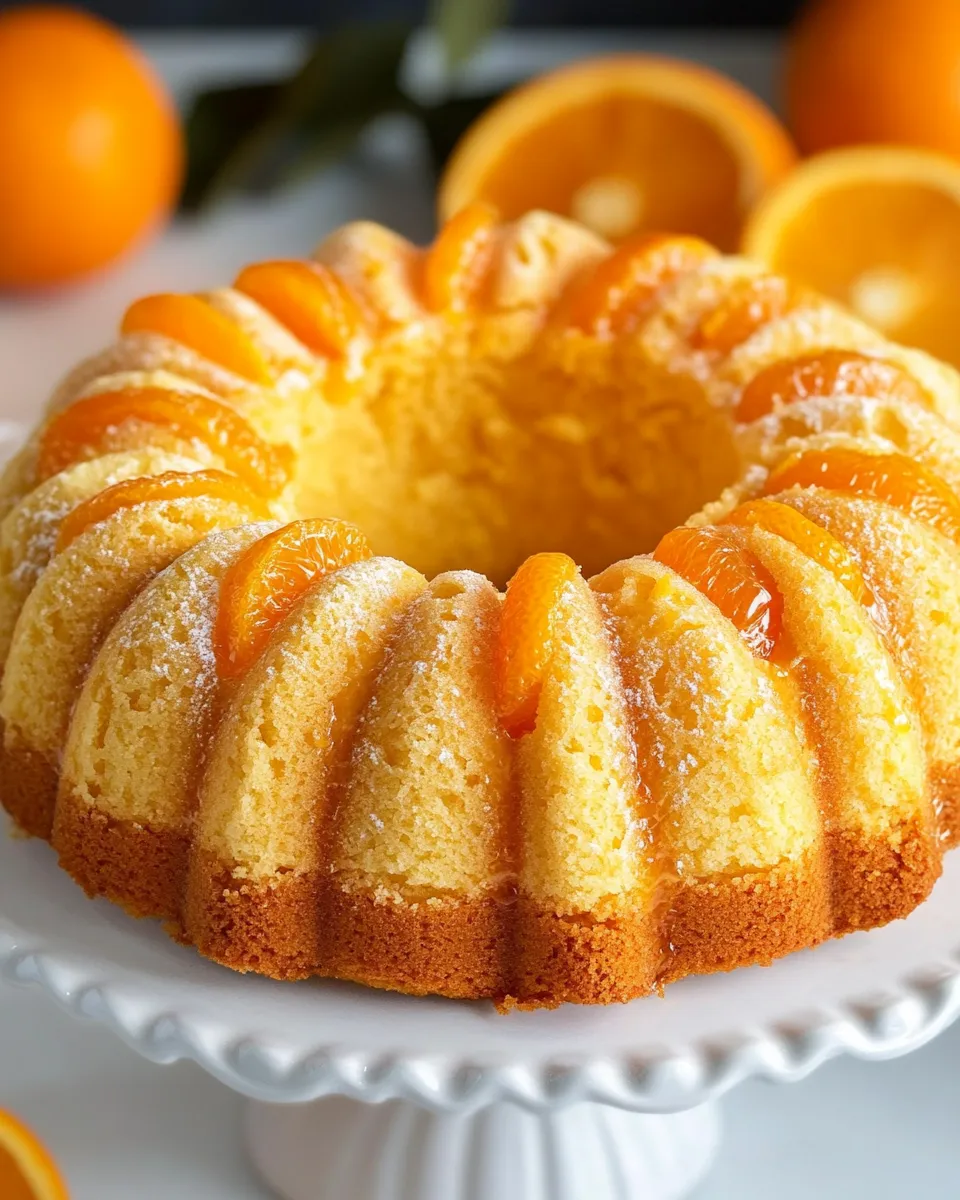
It’s simple chemistry and technique. The creamed butter and sugar trap tiny air pockets. When you add eggs one at a time, you keep an even emulsion so the batter rises uniformly instead of collapsing. Alternating the dry ingredients with the buttermilk preserves the batter’s structure; adding everything at once can overwork the gluten and yield a tougher crumb.
Flavor balance
Buttermilk adds moisture and a subtle tang that cuts through the butter’s richness. Fresh orange juice and zest provide volatile oils and acid that brighten the profile. The warm sugar-orange glaze lets a little syrup sink into the surface, keeping the first bites especially tender. Finally, the powdered sugar drizzle with extra zest layers on a clean orange finish without making the cake cloying.
Low-Carb/Keto Alternatives
If you need to lower carbs, this recipe will change significantly. Using low-carb flours like almond or coconut will produce a denser cake with a different texture and will require careful adjustment of liquids and eggs. Sugar replacements designed for baking can work, but their bulk and how they brown differs from granulated sugar, so expect a different crust and crumb color.
My practical advice: if you want a low-carb version, treat the original as a template rather than a direct swap. Replace flours and sugars in test batches and take notes. Baking times and oven temperature may need tweaking, and a smaller loaf or loaf pan often performs better with alternative flours.
Prep & Cook Tools
- Bundt pan (nonstick or well-greased)
- Electric mixer (hand or stand) for creaming butter and eggs
- Medium mixing bowl for dry ingredients
- Measuring cups and spoons and a kitchen scale if possible
- Spatula for folding and smoothing the batter
- Wire rack and sheet pan or tray to catch glaze drips
- Small saucepan for the warm orange glaze
- Pastry brush to apply the glaze
- Small bowl and whisk for the powdered sugar drizzle
Avoid These Mistakes
Don’t skip the step of softening butter. Too-cold butter won’t cream properly and gives a dense result. Conversely, overly soft or melted butter won’t trap air.
Don’t overmix after adding the flour. Mixing only until just combined keeps the crumb tender. If you beat the batter aggressively once the flour is in, you develop gluten and the cake rigidifies.
Avoid using bottled orange juice for the zest-dependent elements. The juice loses aroma, and bottled juice often lacks the bright oil notes fresh oranges provide. Also, don’t glaze while the cake is piping hot; the warm glaze should be applied during the vented, ten-minute window after unmolding so it absorbs without running off immediately.
Tailor It to Your Diet
To reduce sugar slightly, you can cut the 2 cups of granulated sugar in the batter by up to 20% and still have a good texture, but do this incrementally and keep testing. If you reduce too much you’ll notice changes in texture and crust color.
If you need dairy-free options, use a milk alternative with a bit of vinegar or lemon to mimic buttermilk’s acidity. Substitute a plant-based butter that performs similarly in creaming, but note that flavor and crumb will differ slightly.
For a more citrus-forward cake, increase the orange zest in the batter and the drizzle but keep fresh juice measured as written so the batter’s hydration stays consistent.
What I Learned Testing
Hands-on testing taught me that the bundt pan matters. A thin-walled, well-greased pan gives a better crust and releases cleaner. Also, I found that rotating the pan halfway through baking compensated for subtle oven hot spots and produced an even rise.
I experimented with orange extract; a little goes a long way. If you rely on extract, use only half the specified amount to avoid artificial notes. Fresh zest is more forgiving and flavorful than extract alone.
Lastly, timing the glaze matters. Brushing the warm syrup right after the cake rests in the pan for ten minutes is the sweet spot: the cake is warm enough to absorb some syrup but cool enough not to fall apart when inverted.
Save It for Later
Store this cake loosely covered at room temperature for up to three days. For longer storage, wrap the cooled, unglazed cake tightly in plastic and freeze for up to three months. Thaw in the refrigerator overnight, warm to room temperature, then reapply the powdered sugar drizzle or make a fresh one.
To refresh slightly stale slices, tent them with foil and warm at 300°F (150°C) for 8–10 minutes. The heat restores some of the butter’s suppleness and makes the crumb pleasantly soft again.
Ask the Chef
Q: Can I bake this in a loaf pan instead of a bundt?
A: Yes. Reduce the baking time and check for doneness earlier; a standard loaf pan may need 45–55 minutes but start checking at 35–40 minutes. The texture will be similar but the crust-to-crumb ratio changes.
Q: My cake sank in the middle—why?
A: Common causes are underbaking, opening the oven door too early, or adding too much liquid. Also, too much leavening for the batter’s volume can cause a rise and collapse; stick to the recipe’s measurements.
Bring It Home
This Orange Pound Cake is straightforward, reliable, and full of clean citrus flavor. Follow the steps, pay attention to butter temperature and mixing technique, and you’ll have a dense-but-tender cake that holds up on the counter for days. Make the glaze while it bakes, brush it on warm, and finish with the powdered sugar drizzle. Serve plain, or pair it with lightly whipped cream and fresh orange segments for a simple, bright dessert.
When you try it, note any small changes you make—different oranges, a slightly reduced sugar amount, or a different pan—and write them down. Those notes turn a good recipe into your best recipe.
Orange Pound Cake
Ingredients
Equipment
Method
- Preheat the oven to 350°F (175°C). Spray a bundt pan thoroughly with nonstick cooking spray (use a spray that contains flour for best results).
- In a medium bowl, whisk together 3 cups (372 g) all-purpose flour, 1 teaspoon baking powder, and 1 teaspoon salt. Set aside.
- In a large bowl, use an electric mixer to cream 1 cup (226 g) softened unsalted butter and 2 cups (400 g) granulated sugar on medium speed until light and fluffy, about 3–5 minutes. Scrape down the bowl as needed.
- With the mixer on low, add 5 large eggs one at a time, beating well and scraping the bowl after each addition.
- In a measuring cup or small bowl, combine 3/4 cup (177 ml) buttermilk, 1/3 cup (79 ml) fresh orange juice, 2 tablespoons orange zest, 1 teaspoon vanilla, and 1/2 teaspoon orange extract (if using).
- With the mixer on low speed, add the flour mixture to the batter in three additions, alternating with the buttermilk mixture: flour — buttermilk — flour — buttermilk — flour. Begin and end with the flour. Mix only until each addition is just incorporated; do not overmix.
- Pour the batter into the prepared bundt pan and smooth the top with a spatula. Bake until a toothpick inserted into the center comes out clean or with a few moist crumbs, 45–55 minutes. Rotate the pan once halfway through baking if your oven has hot spots.
- While the cake bakes, make the warm orange glaze: combine 1/4 cup (50 g) granulated sugar and 1/4 cup (60 ml) fresh orange juice in a small saucepan. Heat over low, stirring until the sugar dissolves and the mixture comes to a gentle simmer. Remove from heat and set aside to cool slightly; it will thicken as it cools.
- When the cake is done, remove it from the oven and let it cool in the pan for 10 minutes.
- After 10 minutes, invert the cake onto a wire rack set over a sheet pan or tray to catch drips. Use a pastry brush to brush the warm orange glaze evenly over the top and sides of the warm cake. Allow the glazed cake to cool completely on the rack before adding the drizzle.
- Make the powdered sugar drizzle: in a small bowl, whisk 1 cup (113 g) powdered sugar with 1–2 tablespoons (15–30 ml) fresh orange juice (start with 1 tablespoon and add up to 2 for desired consistency) and 1 tablespoon orange zest until smooth. The drizzle should be thick but pourable.
- Place the cake back on the wire rack and drizzle the powdered sugar mixture over the cooled, glazed cake. Let the drizzle set and dry, about 30 minutes.
- Carefully transfer the cake to a serving plate. Store loosely covered at room temperature for up to 3 days.
Notes
If you want even more orange flavor, add some orange extract.
Use just the orange part of the zest, not the white. The white is bitter.
I used mandarin oranges but you can use naval oranges or any kind you like.
You can also bake this in two 8.5×4-inch or two 9×5-inch loaf pans. Baking time will be between 35-50 minutes.Be sure to remove the cake while it’s still warm – it will come out of the pan easier.
Store the cake loosely covered at room temperature for up to 3 days or freeze it for up to 3 months.