Pancit
Pancit is the kind of dish that settles into your weeknight rotation and then quietly becomes the thing everyone asks for at family gatherings. It’s simple, forgiving, and built on a few clear techniques: soak the noodles until pliable, brown the protein, soften the vegetables, and finish everything together so the noodles pick up the sauce. That straightforwardness is why I reach for this recipe when I want something fast that still feels like a proper meal.
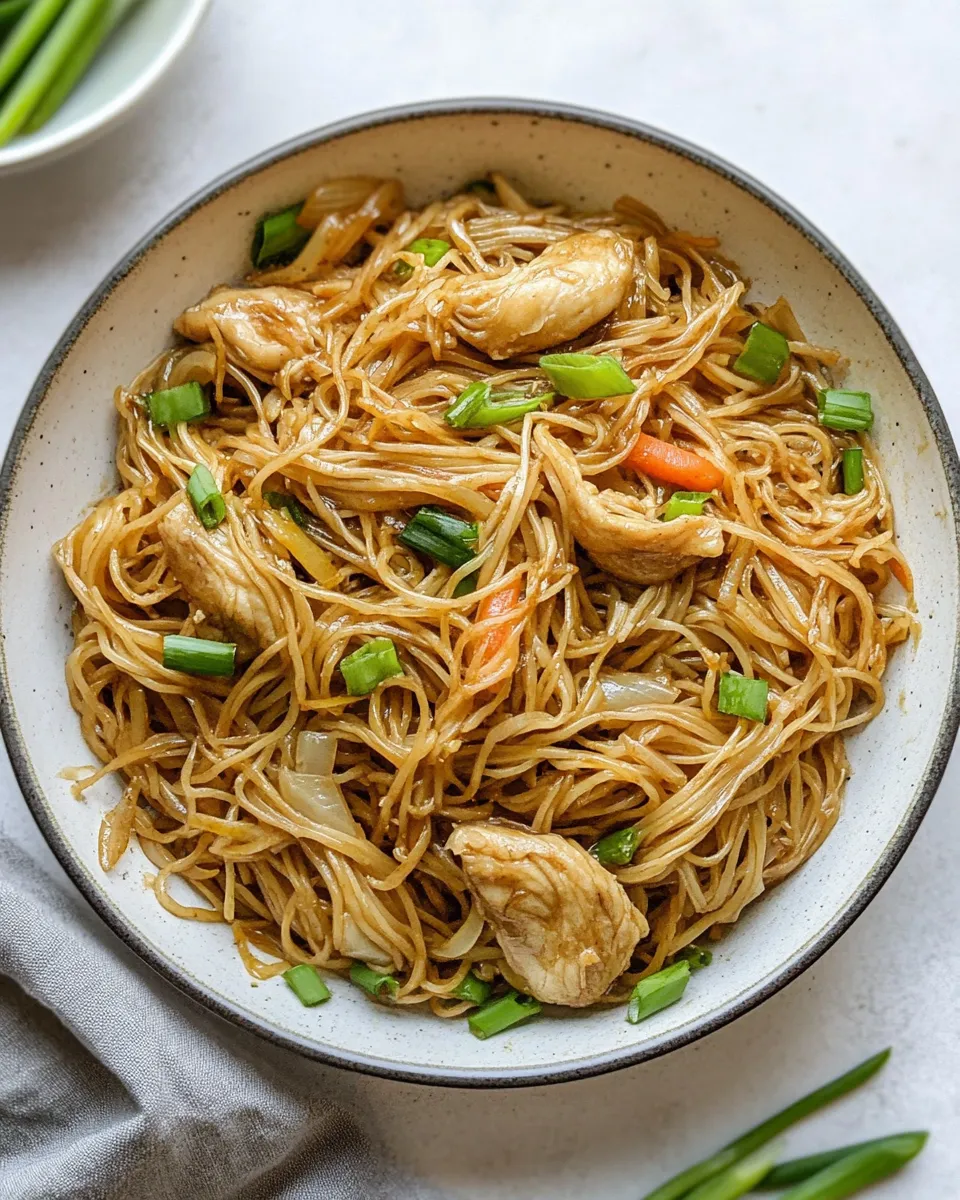
In my kitchen Pancit is a mood lifter—bright green onion, tender shredded cabbage, and slivers of carrot give it color and texture, while a chicken-and-bouillon base keeps it soulful and umami-forward. It’s also economical: rice noodles stretch, and the recipe adapts well to what’s in the fridge. Make a double batch and you’ll have lunch for a couple of days.
Below you’ll find the exact ingredient list and step-by-step method I use, plus practical tips from testing: what to watch for, the best swaps, and how to reheat without ending up with a soggy plate. No fuss, just clear steps that get you to a satisfying bowl of Pancit.
What You’ll Need
- 8 ounces pancit bihon noodles (Filipino rice noodles) or Thai Vermicelli rice noodles — The base of the dish; soak until pliable per package instructions.
- 2 tablespoons canola oil — Neutral oil for browning the chicken and carrying flavor.
- 1 pound boneless skinless chicken breasts sliced into thin bite-sized pieces — Slicing thin helps the chicken cook quickly and stay tender.
- 1/2 yellow onion diced — Adds sweetness and a touch of texture when cooked through.
- 3 cloves garlic minced — Aromatics are small but essential; garlic flavors the oil and the whole pan.
- 2 tablespoons soy sauce — Saltiness and color for the noodles; add to taste if your soy is particularly salty.
- 1 cup water — Used to make the bouillon mixture that becomes your sauce.
- 1 1/2 teaspoons chicken bouillon, powder or paste — Concentrated savory base; dissolves in the water to season the noodles.
- 2 cups cabbage shredded — Cabbage holds up well in the pan and adds bulk and crunch.
- 1/2 cup carrots sliced — For color and a slight sweetness; slice thin so they soften quickly.
- 1/4 cup green onion chopped — Finish for freshness and a mild onion note.
- Kosher salt and cracked pepper to taste — Final seasoning; adjust at the end once everything has come together.
Method: Pancit
- Soak the pancit bihon noodles according to the package instructions until pliable; drain well and set aside.
- Heat 2 tablespoons canola oil in a wok or large sauté pan over medium-high heat.
- Add the sliced chicken, diced yellow onion, and minced garlic. Cook, stirring occasionally, about 5–7 minutes or until the chicken is browned and cooked through and the onion is translucent.
- In a small bowl, whisk together 1 cup water and 1 1/2 teaspoons chicken bouillon (powder or paste).
- Pour the water–bouillon mixture into the pan along with 2 tablespoons soy sauce; stir to combine and scrape up any browned bits from the bottom of the pan.
- Add 2 cups shredded cabbage, 1/2 cup sliced carrots, and 1/4 cup chopped green onion. Cook, stirring, 3–5 minutes or until the vegetables have softened.
- Add the drained noodles to the pan and toss thoroughly to combine, cooking until the noodles are heated through and coated with the sauce (about 1–2 minutes).
- Season with kosher salt and cracked pepper to taste, then serve warm.
Why Pancit is Worth Your Time
Pancit rewards minimal effort with maximum payoff. You can be in and out of the kitchen in under 30 minutes if your mise en place is ready. The texture contrast—soft, slippery rice noodles against tender chicken and crisped vegetables—keeps every bite interesting. It’s also highly adaptable, so once you understand the rhythm of the recipe you can scale it up for a crowd or strip it back for a quick solo meal.
Beyond speed and texture, this Pancit hits comfort-food notes without leaning on heavy sauces. The soy + bouillon combo gives you savory depth without masking the fresh brightness of the vegetables. It’s a plate that feels like care without demanding a lot of time or special skills.
Substitutions by Category
- Noodles: If you don’t have pancit bihon, use thin rice vermicelli. If avoiding rice, thin wheat noodles like angel hair can work but change the texture.
- Protein: Swap chicken for thinly sliced pork, shrimp, or tofu; adjust cooking time so the protein cooks through but doesn’t dry out.
- Vegetables: Use bell pepper, bean sprouts, snow peas, or bok choy in place of or alongside the cabbage and carrots.
- Oil: Canola oil is neutral; use vegetable oil or another neutral oil you prefer for high-heat cooking.
- Seasoning: If you prefer less sodium, reduce the soy sauce and bouillon and finish with a touch of acid like a squeeze of calamansi or lemon for brightness.
Tools & Equipment Needed
- Wok or large sauté pan — a wide surface helps you toss noodles and vegetables without crowding.
- Large bowl for soaking noodles — gives space for the noodles to hydrate fully.
- Small bowl or measuring cup for dissolving bouillon — makes it easy to pour evenly into the pan.
- Spatula or tongs — useful for tossing the noodles and lifting ingredients without breaking them.
- Chef’s knife and cutting board — for quick, even slicing of chicken and vegetables.
Frequent Missteps to Avoid
- Skipping the soak: If the noodles are under-soaked they’ll break and clump; follow package instructions for pliability.
- Overcrowding the pan: Cook the chicken in a single layer when possible so it browns rather than steams.
- Adding noodles too early: The noodles only need a minute or two with the sauce; adding them before the vegetables are softened can leave them dull and clumpy.
- Over-salting early: The bouillon and soy add concentrated salt—season at the end so you don’t overshoot.
- Cooking at too low heat: Medium-high heat helps you brown the chicken and wilt the vegetables quickly without becoming soggy.
Variations by Season
- Spring: Add blanched snap peas, thin asparagus ribbons, or a handful of fresh herbs (cilantro or Thai basil) tossed in at the end for freshness.
- Summer: Keep it light: use more crunchy vegetables like bell pepper and thinly sliced zucchini, and finish with a squeeze of citrus to lift the dish.
- Fall: Incorporate heartier veg like shredded Brussels sprouts or thinly sliced kabocha squash; they offer texture and a mellow sweetness.
- Winter: Make the dish more substantial with extra protein (more chicken or a mix of chicken and tofu) and deeper seasonings—consider a splash of oyster sauce or a teaspoon of toasted sesame oil at the end for warmth.
What I Learned Testing
Testing this Pancit multiple times taught me that noodle handling is the pivot point for success. Soak until pliable, then drain very well—excess water dilutes your sauce and makes the noodles clump. I also found that slicing the chicken thinly and into similar-sized pieces ensures everything cooks evenly in the limited time the recipe allows.
Another consistent lesson: build flavor in layers. Browning the chicken creates fond on the pan, and dissolving the bouillon into water distributes savory flavor more evenly than sprinkling granules into the pan. Scraping the browned bits when you add the bouillon+water is small but noticeable. Finally, don’t overdo the final toss; you want the noodles coated but not broken down.
Refrigerate, Freeze, Reheat
Refrigerate
Store Pancit in an airtight container in the refrigerator within two hours of cooking. It will keep well for 3–4 days. The vegetables will soften over time, so expect a change in texture after the first day.
Freeze
Freezing is possible but not ideal for texture. Rice noodles can become fragile and more waterlogged after freezing and thawing. If you must freeze, portion into airtight, freezer-safe containers and use within 1–2 months. Thaw overnight in the refrigerator before reheating.
Reheat
Reheat gently on the stovetop in a skillet with a splash of water or oil over medium heat. Toss until heated through; this helps refresh the noodles and prevents them from drying. Microwaving works in a pinch—cover and heat in short intervals, stirring between bursts to distribute heat evenly.
FAQ
- Can I use dried pasta instead of rice noodles? Yes, very thin wheat pasta can be substituted, but cook it very briefly to avoid an overly soft texture; the dish will have a different profile.
- Is there a vegetarian version? Replace chicken with firm tofu or extra vegetables, and use vegetable bouillon in place of chicken bouillon.
- Can I make this gluten-free? Use gluten-free soy sauce (tamari) and ensure your bouillon is certified gluten-free; rice noodles are naturally gluten-free.
- How do I prevent clumped noodles? Drain soaked noodles thoroughly, work on higher heat when tossing, and add them only after the vegetables have softened.
Serve & Enjoy
Serve Pancit warm straight from the pan. Garnish with extra chopped green onion, a wedge of lemon or calamansi if you have it, and a light sprinkle of cracked pepper. This dish pairs well with a simple side of pickled vegetables or a green salad for contrast. It’s modest, satisfying, and built to be eaten with your hands occasionally—because sometimes the best food is the easiest to eat.
Pancit
Ingredients
Equipment
Method
- Soak the pancit bihon noodles according to the package instructions until pliable; drain well and set aside.
- Heat 2 tablespoons canola oil in a wok or large sauté pan over medium-high heat.
- Add the sliced chicken, diced yellow onion, and minced garlic. Cook, stirring occasionally, about 5–7 minutes or until the chicken is browned and cooked through and the onion is translucent.
- In a small bowl, whisk together 1 cup water and 1 1/2 teaspoons chicken bouillon (powder or paste).
- Pour the water–bouillon mixture into the pan along with 2 tablespoons soy sauce; stir to combine and scrape up any browned bits from the bottom of the pan.
- Add 2 cups shredded cabbage, 1/2 cup sliced carrots, and 1/4 cup chopped green onion. Cook, stirring, 3–5 minutes or until the vegetables have softened.
- Add the drained noodles to the pan and toss thoroughly to combine, cooking until the noodles are heated through and coated with the sauce (about 1–2 minutes).
- Season with kosher salt and cracked pepper to taste, then serve warm.