Peanut Butter and Jelly Doughnuts
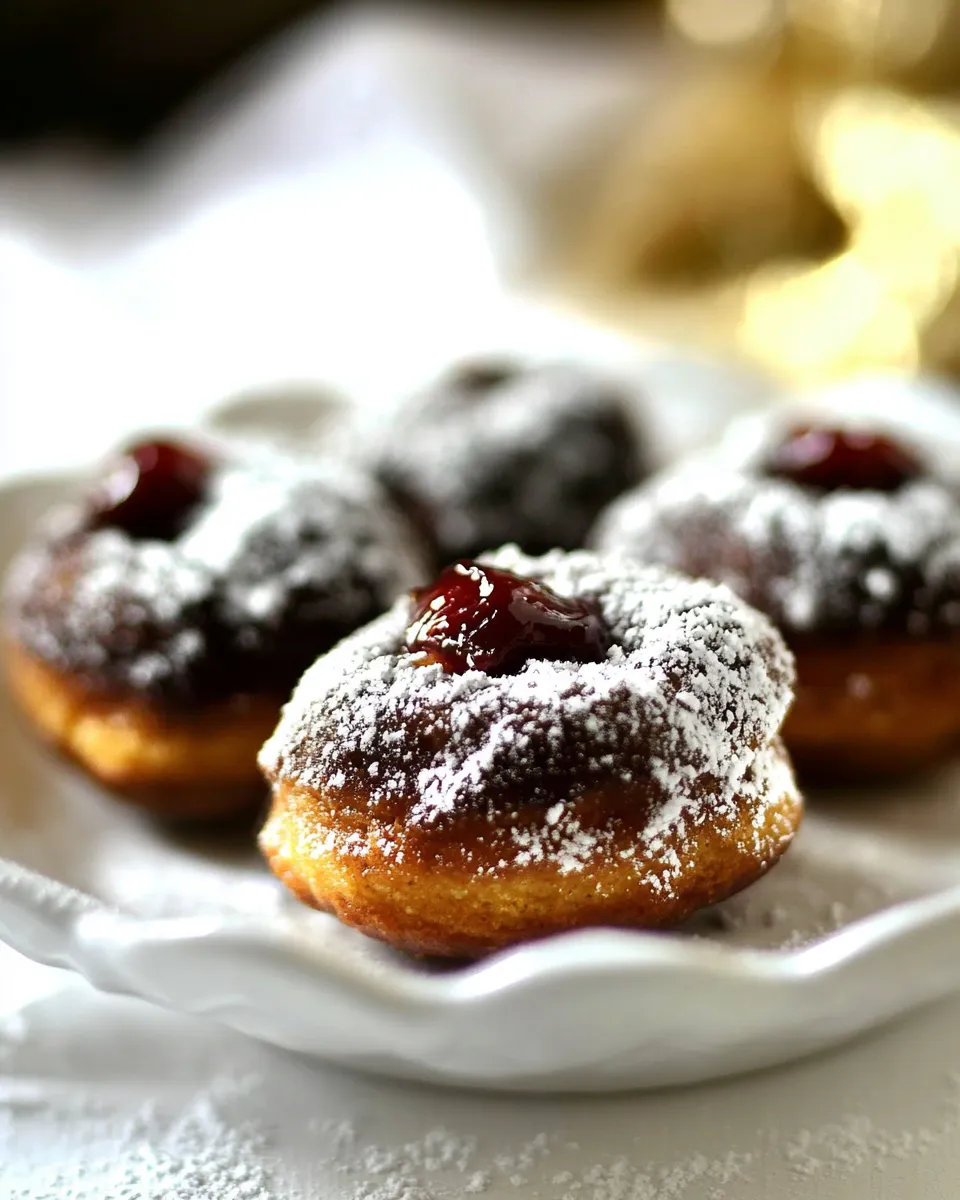
These doughnuts are the childhood sandwich upgraded to a warm, pillowy pastry. Think soft yeast dough enriched with milk and peanut butter, fried until golden, then injected with glossy blackberry jelly. They’re indulgent but straightforward—comfort food that keeps well and disappears fast at breakfast or as a weekend treat.
I test and tweak recipes so you don’t have to. This one balances the savory depth of peanut butter with the bright sweetness of seedless blackberry jelly. The dough is forgiving: it’s slightly tacky until fully kneaded, and the frying is the only step that asks for attention. Work in batches, keep a thermometer handy, and you’ll end up with evenly browned doughnuts that are light inside.
Below you’ll find the ingredient list with quick tips, exact step-by-step instructions from start to finish, and practical notes on swaps, tools, storage, and common mistakes. If you want to make these for guests or meal prep, read the storing and reheating section so they stay as good as possible.
Ingredients at a Glance
- 1/2 cup whole milk — warms and hydrates the dough while adding richness.
- 1/2 cup smooth peanut butter — both flavor and fat for tender dough.
- 2 teaspoons active dry yeast — the leavening agent to get soft, airy doughnuts.
- 1/4 cup warm water — activates the yeast; should be warm, not hot.
- 2-1/2 cups all-purpose flour — the structure; measure by spooning into the cup and leveling.
- 1/2 teaspoon kosher salt — enhances flavor and balances the sweetness.
- 1/4 cup sugar — feeds the yeast and sweetens the dough lightly.
- 1 large egg, beaten — binds and enriches the dough for tenderness.
- Vegetable oil for frying — neutral-flavored oil with a high smoke point.
- 3/4 cup seedless blackberry jelly, stirred — the filling; stir until smooth for easy piping.
- Powdered sugar, for topping — a light dusting finishes the doughnuts and adds visual contrast.
Peanut Butter and Jelly Doughnuts: How It’s Done
- In a small pot, combine 1/2 cup whole milk and 1/2 cup smooth peanut butter. Heat over low heat, stirring until smooth. Remove from heat and let the mixture cool to lukewarm before using.
- In a small bowl, stir 2 teaspoons active dry yeast into 1/4 cup warm water. Let sit about 5 minutes, until foamy.
- In the bowl of an electric mixer, whisk together 2-1/2 cups all-purpose flour, 1/2 teaspoon kosher salt, and 1/4 cup sugar.
- Add the foamy yeast mixture, the cooled peanut butter–milk mixture, and 1 large beaten egg to the dry ingredients. Mix until combined, then switch to the dough hook.
- With the dough hook, knead the dough about 8–10 minutes, until the dough is smooth and pulls away from the sides of the bowl.
- Lightly oil a clean bowl, transfer the dough to the bowl, and turn it once to coat with oil. Cover the bowl with oiled plastic wrap and place in a warm area. Let the dough rise 1–2 hours, until doubled in size.
- After the first rise, gently deflate the dough and transfer it to a lightly floured surface. Pat or roll the dough to about 1 inch thickness.
- Using a large round biscuit cutter (about 3 inches), cut out doughnuts. You should get about 8 doughnuts. Re-shape scraps as needed and cut additional pieces.
- Place the cut doughnuts on a parchment- or silpat-lined baking sheet. Cover loosely with oiled plastic wrap and let rest about 1 hour, until they have puffed and nearly doubled in size.
- Pour vegetable oil into a wide, heavy pot to a depth of about 3 inches. Heat the oil to 365°F (use a thermometer). Fry the doughnuts in batches without overcrowding the pot. Carefully lower each doughnut into the oil and fry until the underside is golden brown, then flip and fry the other side until golden.
- Use a slotted spoon to transfer fried doughnuts to a paper towel–lined plate to drain. Continue frying remaining doughnuts, monitoring the oil temperature so it stays near 365°F and the doughnuts do not burn. Let the doughnuts cool a few minutes until safe to handle.
- While the doughnuts cool slightly, stir 3/4 cup seedless blackberry jelly until smooth and transfer it to a squeeze bottle or piping bag.
- Using a long wooden skewer, poke a hole into each doughnut from one side toward the center. Insert the squeeze-bottle nozzle into the hole and gently squeeze in jelly, pulling the nozzle back slightly as you fill until a little jelly begins to come out the hole. Repeat on the opposite side if desired.
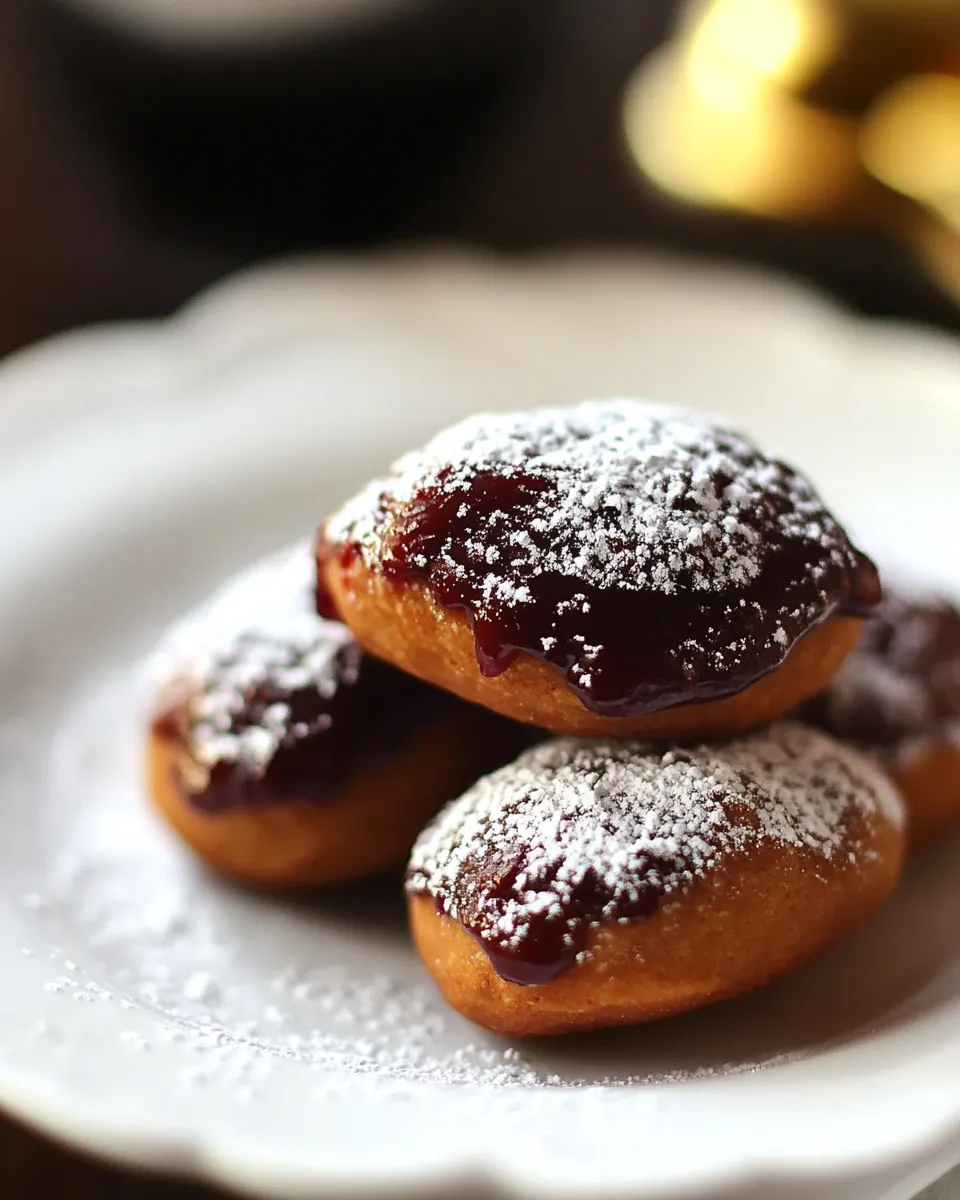
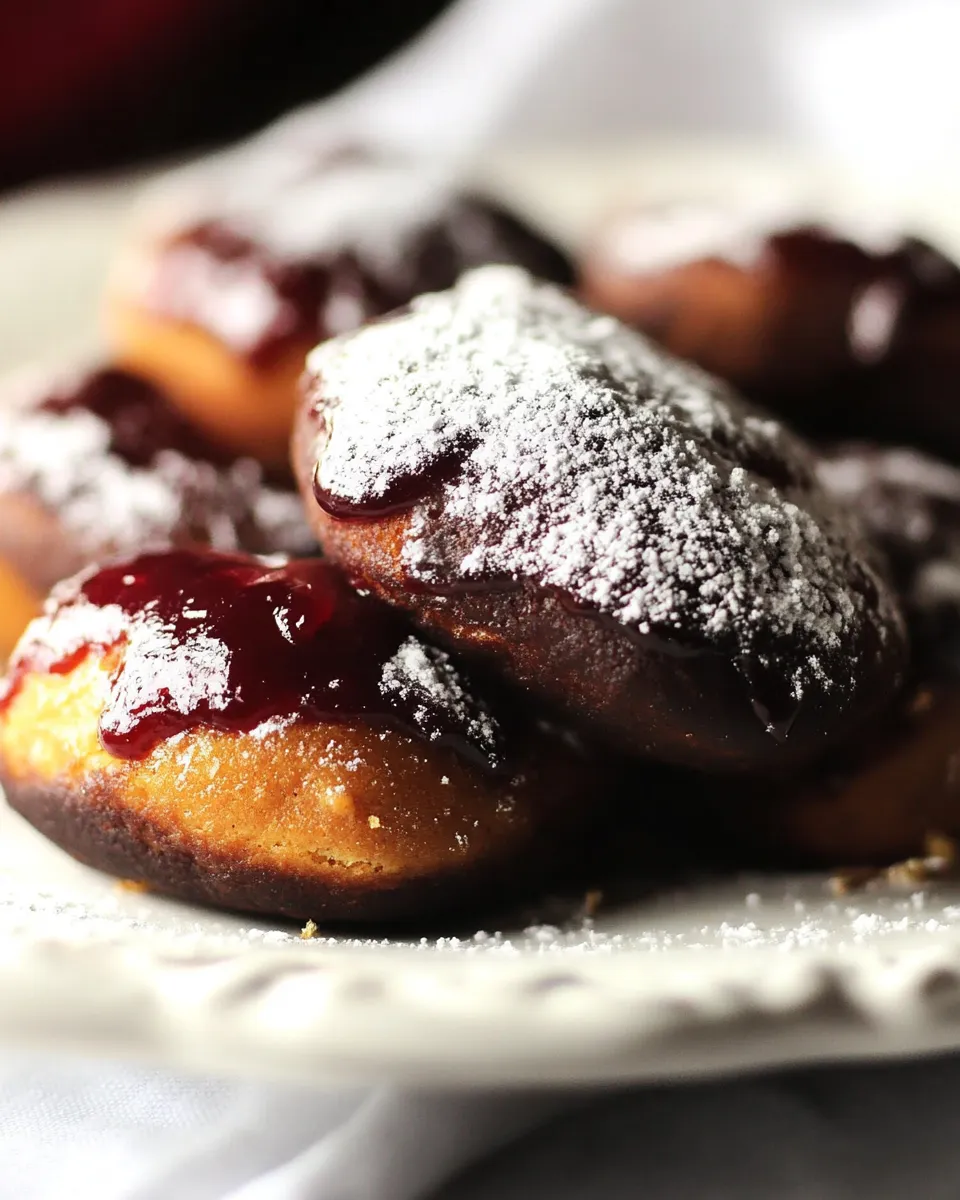
- Sprinkle filled doughnuts with powdered sugar and serve.
What Makes This Recipe Special
There are two simple choices that set these doughnuts apart: peanut butter in the dough, and seedless blackberry jelly for the filling. The peanut butter contributes both fat and a toasty, nutty flavor, which keeps the dough rich without being overly sweet. That fattiness also produces a tender crumb that withstands frying without becoming greasy.
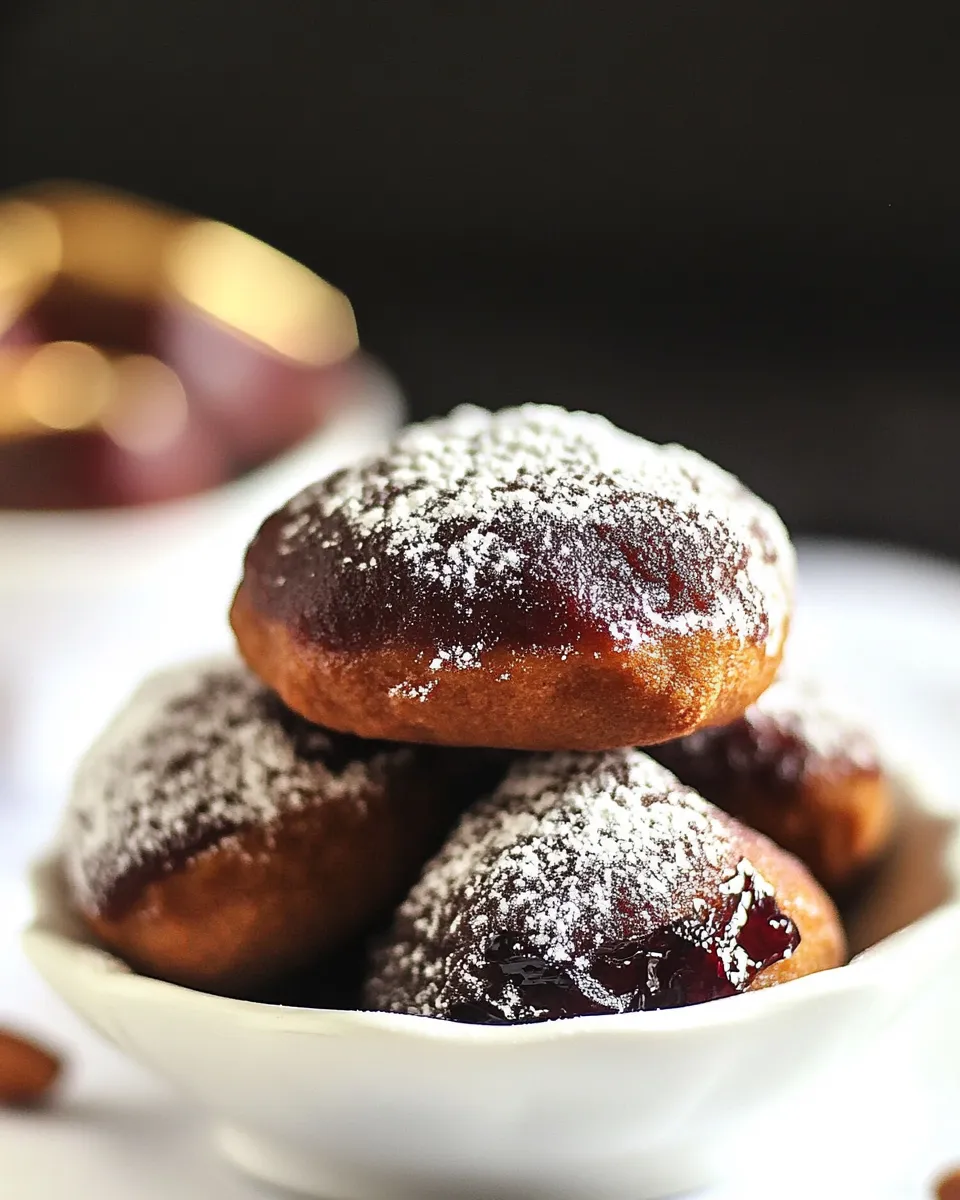
The seedless blackberry jelly adds a bright, tart counterpoint. It’s easy to pipe cleanly and doesn’t water down into the dough. Because the filling is added after frying, you get a crisp exterior with a soft interior and an immediate burst of flavor when you bite in.
Swap Guide
Want to vary the flavor? Here are safe, practical swaps that keep the recipe structure intact without changing quantities.
- For the peanut butter: you can use a natural-style peanut butter as long as it’s smooth; it may change texture slightly, so stir it before warming.
- For the jelly: any smooth jam or jelly will work as the filling—thicker preserves are easiest to pipe cleanly.
- For frying oil: any neutral oil with a high smoke point is appropriate—keep the frying temperature steady for best results.
Notes on texture
If you swap to a higher-fat or salted peanut butter, the dough will still behave similarly, but taste and salt balance will shift. Taste the dough lightly (uncooked) for salt level when you’re forming it; small adjustments are possible in the dough stage, but the original recipe is calibrated for the listed ingredients.
Equipment & Tools
- Electric mixer with a dough hook — saves time and gives a consistent knead.
- Small pot — to warm the milk and peanut butter mixture.
- Small bowl — to bloom the yeast.
- Large round biscuit cutter (~3 inches) — for uniform doughnuts.
- Wide, heavy pot and a candy/frying thermometer — maintain oil at 365°F for even frying.
- Slotted spoon or spider — to lift doughnuts cleanly from hot oil.
- Parchment- or silpat-lined baking sheet — for resting the cut dough before frying.
- Squeeze bottle or piping bag with a nozzle — for neat, consistent jelly filling.
Slip-Ups to Skip
- Overheating the milk and peanut butter — if it’s too hot when added to yeast, it can kill the yeast. Cool to lukewarm.
- Using cold yeast water — yeast needs warmth to foam; make sure the 1/4 cup warm water is comfortably warm, not hot.
- Under-kneading — the dough should be smooth and pull away from the bowl after 8–10 minutes with a hook; under-kneaded dough won’t rise properly.
- Overcrowding the fryer — frying too many doughnuts at once drops oil temperature and produces greasy, unevenly browned doughnuts.
- Neglecting oil temperature — keep the oil near 365°F; if it dips, doughnuts absorb oil, if it’s too hot they brown too fast and stay raw inside.
- Poking holes too large for filling nozzle — use a skewer and a narrow nozzle to avoid tearing the doughnut shell.
Customize for Your Needs
Scaling: the current yield is about 8 doughnuts. If you need more, multiply all ingredients proportionally. Work in batches for frying and resting to preserve dough handling quality.
Dietary notes: this recipe uses whole milk, smooth peanut butter, and an egg. If you need to change any of those for dietary reasons, be aware substitutions can affect texture and rise. For example, replacing milk with a non-dairy alternative changes hydration and flavor; if you try that, adjust rise times and expect a slightly different crumb.
Hosting tip: make the dough up through the first rise the day before, chill the dough briefly, then let it come to room temperature and finish shaping the next day. This gives you more control on a busy breakfast or party morning.
Cook’s Commentary
I love that this recipe bridges nostalgia and technique. There’s something satisfying about making a familiar sandwich into a warm, hand-held pastry. The peanut butter–milk step is the key: warm it gently so it blends into a glossy emulsion. That step is what gives the dough its rich flavor and helps the finished doughnut hold its shape during frying.
When frying, watch the color rather than the clock. A well-heated pan creates a thin, golden shell quickly; a cooler pan lets oil soak in. Keep a small plate nearby to test a single doughnut when you begin frying a batch so you can calibrate your stove and pot.
Storing, Freezing & Reheating
Short-term storage: place cooled, filled doughnuts in an airtight container with a layer of parchment between layers to prevent sticking. They’re best eaten within 24 hours for texture and flavor.
Freezing: freeze cooled, unfilled doughnuts on a baking sheet until solid, then transfer to a freezer bag. Freeze up to one month. Thaw at room temperature, then reheat gently before filling to restore softness.
Reheating: warm doughnuts in a 300°F oven for 5–7 minutes to refresh the exterior and soften the interior. Avoid microwaving for more than a few seconds; it makes them gummy. Fill with jelly after reheating for best results.
Common Qs About Peanut Butter and Jelly Doughnuts
- Can I make the dough ahead? Yes. After the first rise, refrigerate the dough tightly wrapped for up to 24 hours. Bring it back to room temperature before rolling and cutting.
- Why did my doughnuts absorb oil? The oil was likely too cool or you overcrowded the pot. Maintain the 365°F target and fry in small batches.
- How do I know when oil is the right temperature? Use a reliable thermometer and test with a small scrap of dough—if it browns evenly in about 30–45 seconds, you’re in range.
- Can I bake these instead of frying? Baking will change the texture and won’t give the same crisp shell, but you can brush with oil and bake at a high temperature as an alternative. Expect a different result.
- My dough rose too quickly or didn’t rise—what now? Rapid rise often means a very warm environment. Slow rise can mean cold dough or inactive yeast. For inactive yeast, start over with fresh yeast; for temperature issues, try warmer spot or longer time.
Serve & Enjoy
Serve these doughnuts warm, dusted with powdered sugar for a classic look. A napkin or small plate is all you need—these are delightfully messy to eat and best enjoyed with coffee, milk, or tea. If you’re serving a crowd, set the jelly in a squeeze bottle for quick refills and keep a tray of paper towels handy.
Leftovers are still lovely the next day if reheated lightly. But honestly, they’re best on the first morning: warm, with that glossy ribbon of blackberry jelly bursting in the center. Make them for a slow weekend, a brunch, or a special treat—people will notice the difference that a little peanut butter in the dough makes.
Peanut Butter and Jelly Doughnuts
Ingredients
Equipment
Method
- In a small pot, combine 1/2 cup whole milk and 1/2 cup smooth peanut butter. Heat over low heat, stirring until smooth. Remove from heat and let the mixture cool to lukewarm before using.
- In a small bowl, stir 2 teaspoons active dry yeast into 1/4 cup warm water. Let sit about 5 minutes, until foamy.
- In the bowl of an electric mixer, whisk together 2-1/2 cups all-purpose flour, 1/2 teaspoon kosher salt, and 1/4 cup sugar.
- Add the foamy yeast mixture, the cooled peanut butter–milk mixture, and 1 large beaten egg to the dry ingredients. Mix until combined, then switch to the dough hook.
- With the dough hook, knead the dough about 8–10 minutes, until the dough is smooth and pulls away from the sides of the bowl.
- Lightly oil a clean bowl, transfer the dough to the bowl, and turn it once to coat with oil. Cover the bowl with oiled plastic wrap and place in a warm area. Let the dough rise 1–2 hours, until doubled in size.
- After the first rise, gently deflate the dough and transfer it to a lightly floured surface. Pat or roll the dough to about 1 inch thickness.
- Using a large round biscuit cutter (about 3 inches), cut out doughnuts. You should get about 8 doughnuts. Re-shape scraps as needed and cut additional pieces.
- Place the cut doughnuts on a parchment- or silpat-lined baking sheet. Cover loosely with oiled plastic wrap and let rest about 1 hour, until they have puffed and nearly doubled in size.
- Pour vegetable oil into a wide, heavy pot to a depth of about 3 inches. Heat the oil to 365°F (use a thermometer). Fry the doughnuts in batches without overcrowding the pot. Carefully lower each doughnut into the oil and fry until the underside is golden brown, then flip and fry the other side until golden.
- Use a slotted spoon to transfer fried doughnuts to a paper towel–lined plate to drain. Continue frying remaining doughnuts, monitoring the oil temperature so it stays near 365°F and the doughnuts do not burn. Let the doughnuts cool a few minutes until safe to handle.
- While the doughnuts cool slightly, stir 3/4 cup seedless blackberry jelly until smooth and transfer it to a squeeze bottle or piping bag.
- Using a long wooden skewer, poke a hole into each doughnut from one side toward the center. Insert the squeeze-bottle nozzle into the hole and gently squeeze in jelly, pulling the nozzle back slightly as you fill until a little jelly begins to come out the hole. Repeat on the opposite side if desired.
- Sprinkle filled doughnuts with powdered sugar and serve.