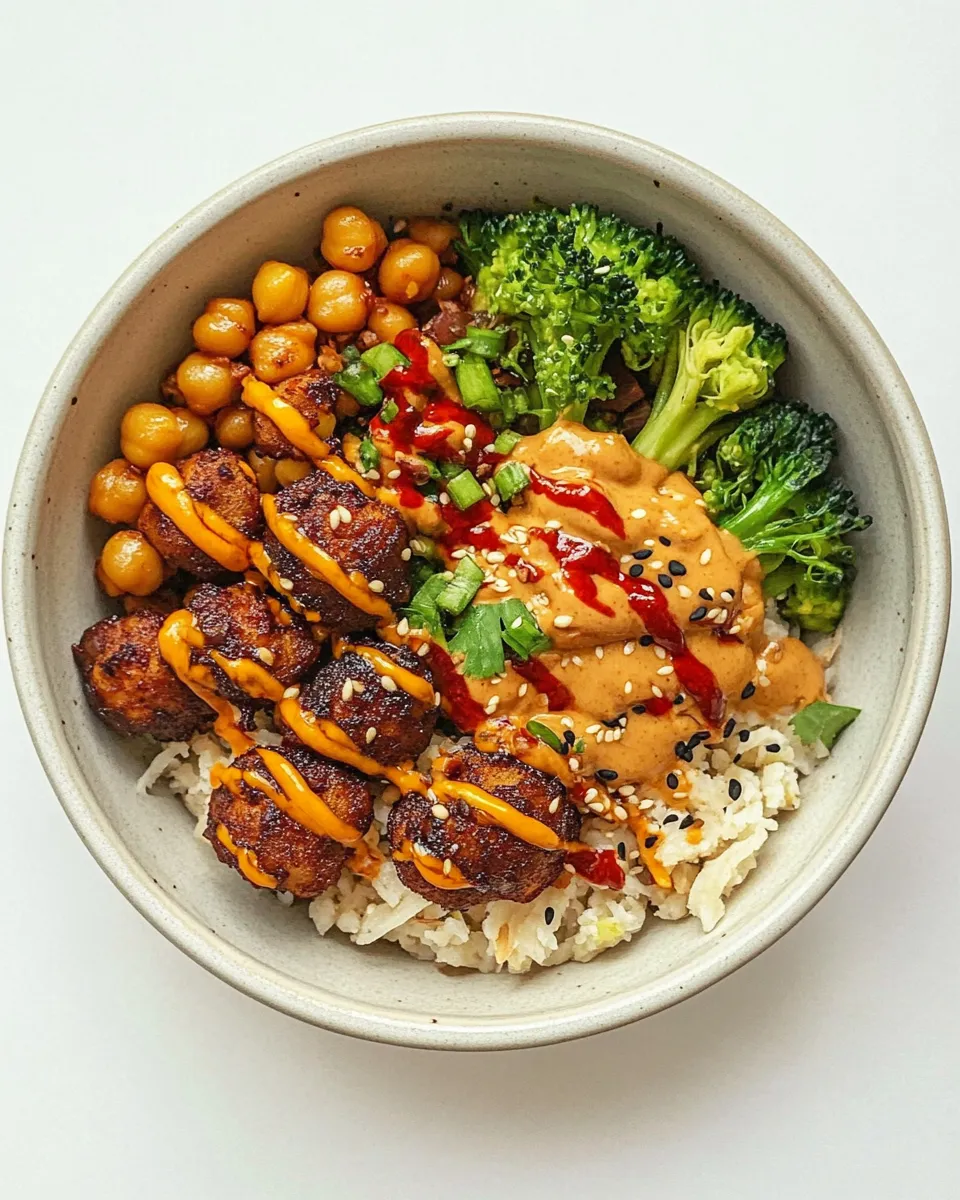
Peanut Chickpea Buddha Bowl
This bowl is one of my favorite weeknight formulas: roasted vegetables, crisp chickpeas, nutty brown rice, bright greens, and a thick peanut sauce that ties everything together. It’s comforting without feeling heavy, and it comes together mostly in the oven and the food processor — low effort, big payoff.
I cook the veggies and chickpeas on separate sheet pans so both get the texture I want: the carrots soften and caramelize, broccoli keeps some bite, and the chickpeas roast until slightly crisp but still tender inside. The peanut sauce is bold and creamy; a little is used to coat the vegetables and chickpeas, and a reserved splash finishes the bowls at the table.
Below you’ll find the exact ingredient list and step-by-step directions I use every time, plus practical notes on timing, texture tweaks, and storage so you can make this reliably and adapt it to your goals.
Ingredients at a Glance
- 1 cup carrots, diced (large) — roast until soft and beginning to char to concentrate sweetness.
- 2 cups broccoli florets — trim small florets so they roast evenly with the carrots.
- 2 teaspoons sesame oil, divided — split between the vegetables and the chickpeas for toasty flavor.
- 1/2 teaspoon kosher salt, divided — helps season both veg and chickpeas; divide as directed for balance.
- 1/2 teaspoon ground black pepper, divided — fresh grind if you have it; divide as directed.
- 14 ounces garbanzo beans (can), drained and rinsed (chickpeas) — pat dry for better roasting.
- 2 tablespoons toasted sesame oil — used in the sauce for deep sesame notes.
- 1/4 cup soy sauce, low-sodium — provides the salty backbone of the sauce.
- 1/4 cup honey — balances the savory elements with sweetness.
- 2 garlic cloves, minced — brightens the sauce; mince finely so it blends smoothly.
- 1 teaspoon crushed red pepper — adds a subtle heat; adjust to taste.
- 1/4 cup peanut butter, creamy, no sugar added — the sauce’s base; choose a natural-style creamy peanut butter.
- 1/4 cup roasted unsalted peanuts — folded into the sauce for crunch and texture contrast.
- 2 cups brown rice, cooked — base of the bowls; cook to separate, tender grains.
- 2 cups spinach — fresh greens add color and a soft textural contrast.
- 1 cup bean sprouts — bright, crunchy topping that keeps the bowl lively.
Peanut Chickpea Buddha Bowl in Steps
- Preheat oven to 400°F (200°C).
- In a bowl, toss 1 cup diced carrots and 2 cups broccoli florets with 1 teaspoon sesame oil, 1/4 teaspoon kosher salt, and 1/4 teaspoon ground black pepper. Spread in a single layer on a baking sheet and roast 20–25 minutes, until carrots are soft and begin to char. Remove from oven and set aside.
- Pat 14 ounces garbanzo beans (drained and rinsed) dry with paper towels. Toss the chickpeas with the remaining 1 teaspoon sesame oil, remaining 1/4 teaspoon kosher salt, and remaining 1/4 teaspoon ground black pepper. Spread in a single layer on a baking sheet and bake 10–15 minutes at 400°F, until they begin to roast but are still slightly soft. Remove and let cool briefly.
- In a food processor combine 2 tablespoons toasted sesame oil, 1/4 cup low-sodium soy sauce, 1/4 cup honey, 2 minced garlic cloves, 1 teaspoon crushed red pepper, and 1/4 cup creamy peanut butter. Process until smooth.
- Remove the blade and stir in 1/4 cup roasted unsalted peanuts. Reserve about 1/4 cup of this peanut sauce mixture in a small bowl for drizzling.
- Pour the remaining peanut sauce over the roasted vegetables and roasted chickpeas. Gently toss to coat evenly.
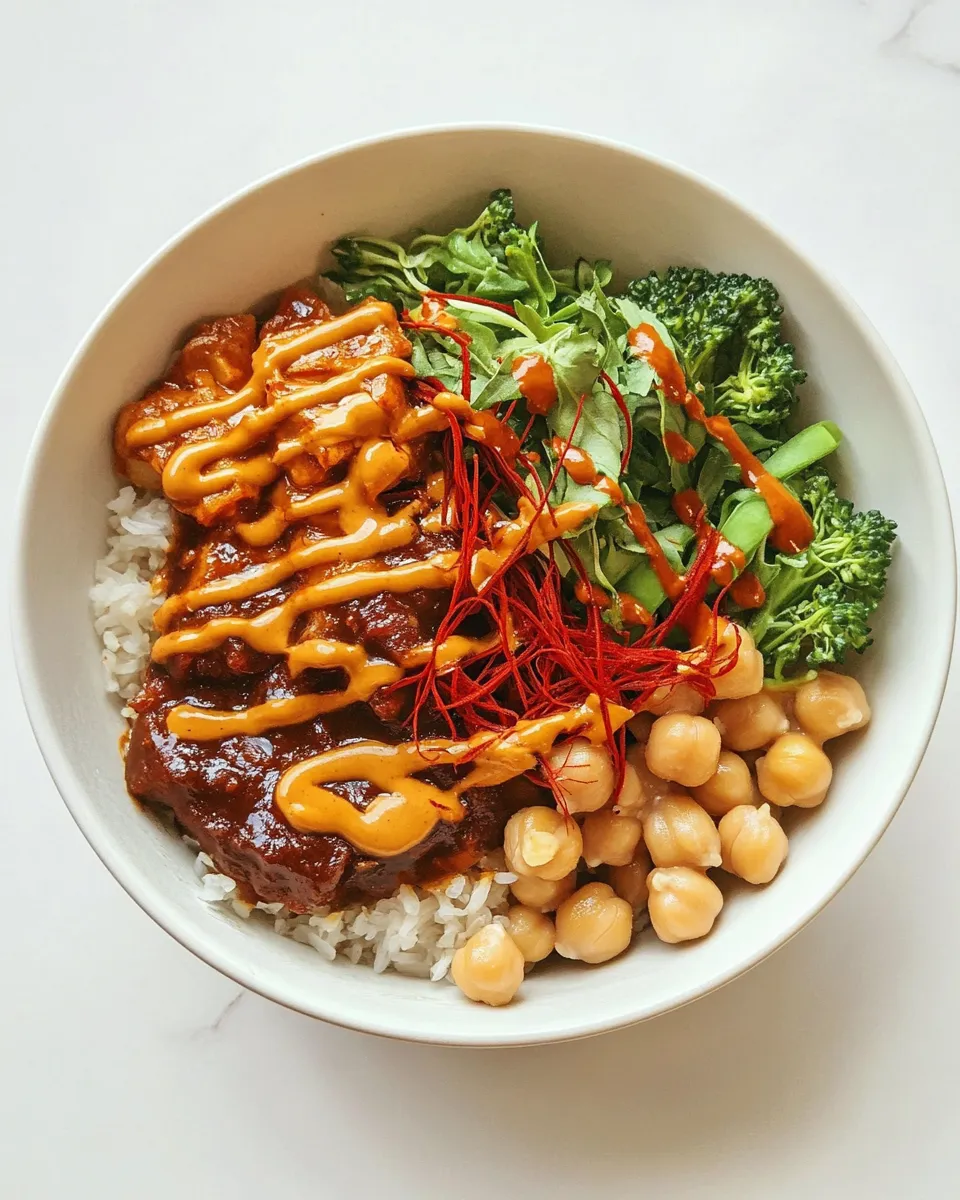
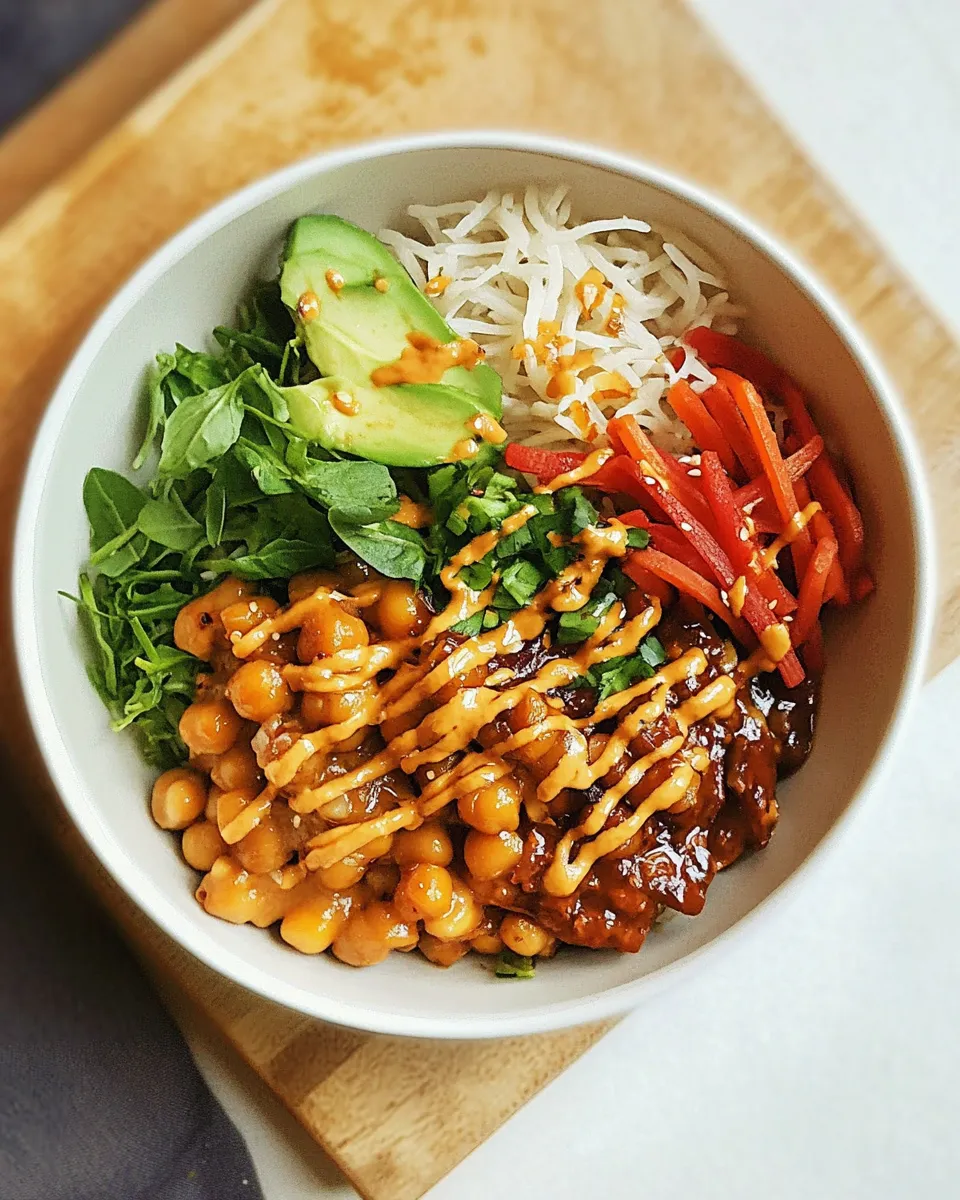
- Divide 2 cups cooked brown rice evenly among six bowls. In each bowl place approximately 1/3 of the rice surface with spinach (from the 2 cups spinach total), 1/3 with bean sprouts (from the 1 cup bean sprouts total), and fill the remaining 1/3 with the sauced chickpea-and-vegetable mixture.
- Drizzle the reserved 1/4 cup peanut sauce over the assembled bowls. Serve immediately.
Why This Recipe Belongs in Your Rotation
This bowl hits several practical marks: it’s fast, balanced, and forgiving. The hands-on time is short — most of the work is oven time and a quick blitz in the food processor. You can roast the veg and chickpeas while the rice finishes or use leftover rice. The flavors are layered: sweet from roasted carrots and honey, salty and savory from soy, nuttiness from sesame oil and peanut butter, and a fresh contrast from spinach and bean sprouts.
It’s also adaptable. The components travel well for lunch: store the sauce separately and reheat or serve chilled depending on preference. The structure — grain, vegetable, protein, sauce — makes it easy to scale, double, or prep ahead.
Texture-Safe Substitutions
Rather than introducing new ingredients, here are texture-focused swaps and adjustments using what’s already in the recipe:
- Chickpea texture: Smash half the roasted chickpeas slightly with the back of a spoon before tossing with sauce for a creamier, hummus-like element while keeping some whole for crunch.
- Peanut sauce thickness: If the sauce is too thick for your taste, thin it with a teaspoon or two of warm water until it reaches desired consistency. If it’s too thin, add a touch more peanut butter and pulse to emulsify.
- Vegetable bite: Cut carrots thinner for faster roasting or larger for more chew. Chop broccoli smaller if you prefer it more integrated with the rice.
- Crunch level: Fold in more of the 1/4 cup roasted peanuts whole for extra crunch, or roughly chop them to scatter through the bowls.
- Greens presentation: Use the spinach whole for soft leaves, or chop coarsely if you prefer smaller bites that mix through the rice.
Kitchen Gear Checklist

- Baking sheet (or two) — for roasting vegetables and chickpeas.
- Mixing bowls — at least one for tossing veg and one for chickpeas.
- Food processor — for emulsifying the peanut sauce; a blender can work in a pinch.
- Measuring spoons and cups — for accurate seasoning and sauce ratios.
- Paper towels — to pat the chickpeas dry for better roasting.
- Small bowl or ramekin — to reserve the 1/4 cup sauce for drizzling.
- Spoon or spatula — for stirring and folding the sauced components.
Common Errors (and Fixes)
- Chickpeas steam instead of roast: If chickpeas come out soft and soggy, they were likely not dry enough or were crowded. Pat them very dry and spread in a single layer with space around each bean.
- Vegetables burn at edges: If your carrots char too quickly, rotate the pan halfway through roasting or cut carrots smaller so they cook more evenly with broccoli.
- Sauce is grainy or separated: Over-processing a cold sauce or adding too much peanut butter without enough liquid can make it clumpy. Pulse until smooth and add a teaspoon of warm water as needed to bring it together.
- Bowl tastes flat: This usually means it needs acid or salt. A quick squeeze of citrus or a sprinkle more soy sauce (within reason) brightens flavors; taste the sauce before coating everything.
- Rice clumps: Fluffy rice matters here. If your cooked brown rice sticks together, fluff it with a fork and warm briefly with a splash of water to loosen the grains.
Fit It to Your Goals
Balanced nutrition: This bowl already offers a good mix of complex carbs (brown rice), plant protein and fiber (chickpeas), healthy fats (peanut butter and sesame oil), and micronutrients (spinach, broccoli, carrots). To lower calories without changing ingredients, reduce the rice portion and increase the spinach portion. To up protein using the same components, increase the chickpea quantity if you have extra cans on hand or add another rounded scoop of peanut butter to the sauce (keep in mind the added fat).
Meal prep and portion control: The recipe divides into six bowls, so it’s natural for weekly meal prep. Keep the peanut sauce reserved separately for each portion to avoid soggy vegetables over time. If your goal is smaller portions for weight control, split the components into more bowls or use less rice and more spinach at assembly.
Allergy and diet notes (practical): This recipe relies on peanut butter and peanuts. If you need to avoid peanuts, you’ll want a different base for the sauce; the technique still applies but will require a different ingredient.
Cook’s Commentary
I make this bowl on repeat because it’s forgiving. Timing is the beauty here: you can roast the bulk of the meal while you finish the rice and blitz the sauce. I usually start the rice first, prep and roast the veg, then roast the chickpeas while the veg rests. Tossing the sauce on warm vegetables allows it to cling and slightly melt into the chickpeas, delivering more cohesive bites.
When I want sharper contrast I reserve a larger amount of the peanut sauce for drizzling and serve some extra roasted peanuts on the side. Little touches like evenly sized veg pieces and drying chickpeas well before roasting turn a good bowl into a great one.
Storage Pro Tips
Short-term (3–4 days)
Store components separately: keep roasted vegetables and chickpeas in one airtight container, rice in another, and peanut sauce in a third. Assemble within three days. Reheat the veg and chickpeas briefly in a 350°F oven or in a skillet to reclaim crispness before tossing with sauce.
Make-ahead for busy weeks
Roast a double batch of vegetables and chickpeas and portion into containers with cooked rice. Store sauce in a small jar. When ready to eat, reheat solids and add sauce just before serving. Avoid storing fully assembled bowls more than a day; the sauce softens textures over time.
Freezing
Freezing the assembled bowls isn’t ideal because the spinach and bean sprouts lose texture, and the sauce can change slightly. If needed, freeze the roasted chickpeas only; thaw and re-crisp in a hot oven before assembling.
Helpful Q&A
- Can I make this nut-free? The recipe centers on peanut butter and peanuts; removing them changes the character of the sauce. The technique remains, but a different base will be necessary.
- Can I use white rice instead of brown? Yes. Use the same quantity (2 cups cooked) and adjust cooking times for white rice. The bowl will be a bit lighter in fiber but still tasty.
- How do I re-crisp chickpeas? Spread them on a baking sheet and warm at 400°F for 5–8 minutes until they regain some crunch. Watch carefully to prevent burning.
- Is this spicy? The recipe includes 1 teaspoon crushed red pepper in the sauce, which gives a mild kick. Reduce to 1/2 teaspoon or omit for less heat.
- Can I double the recipe? Absolutely. Use two sheet pans and roast veggies and chickpeas in batches if needed. The sauce scales easily in the food processor.
In Closing
This Peanut Chickpea Buddha Bowl is dependable, simple to execute, and packed with flavor. It’s a great template for healthy, make-ahead meals that feel intentionally composed rather than thrown together. Follow the timing for roasting and drying chickpeas, keep the sauce texture you prefer, and assemble just before serving for the best mouthfeel. Try it once as written, then adjust the crunch, heat, and rice-to-greens ratio until it becomes your go-to bowl.
Peanut Chickpea Buddha Bowl
Ingredients
Equipment
Method
- Preheat oven to 400°F (200°C).
- In a bowl, toss 1 cup diced carrots and 2 cups broccoli florets with 1 teaspoon sesame oil, 1/4 teaspoon kosher salt, and 1/4 teaspoon ground black pepper. Spread in a single layer on a baking sheet and roast 20–25 minutes, until carrots are soft and begin to char. Remove from oven and set aside.
- Pat 14 ounces garbanzo beans (drained and rinsed) dry with paper towels. Toss the chickpeas with the remaining 1 teaspoon sesame oil, remaining 1/4 teaspoon kosher salt, and remaining 1/4 teaspoon ground black pepper. Spread in a single layer on a baking sheet and bake 10–15 minutes at 400°F, until they begin to roast but are still slightly soft. Remove and let cool briefly.
- In a food processor combine 2 tablespoons toasted sesame oil, 1/4 cup low-sodium soy sauce, 1/4 cup honey, 2 minced garlic cloves, 1 teaspoon crushed red pepper, and 1/4 cup creamy peanut butter. Process until smooth.
- Remove the blade and stir in 1/4 cup roasted unsalted peanuts. Reserve about 1/4 cup of this peanut sauce mixture in a small bowl for drizzling.
- Pour the remaining peanut sauce over the roasted vegetables and roasted chickpeas. Gently toss to coat evenly.
- Divide 2 cups cooked brown rice evenly among six bowls. In each bowl place approximately 1/3 of the rice surface with spinach (from the 2 cups spinach total), 1/3 with bean sprouts (from the 1 cup bean sprouts total), and fill the remaining 1/3 with the sauced chickpea-and-vegetable mixture.
- Drizzle the reserved 1/4 cup peanut sauce over the assembled bowls. Serve immediately.