Perfectly Pretty Lemon Bars
Bright, tart lemon bars are one of those desserts that look like effort and taste like sunshine. I’ve kept this version straightforward so you get a crisp, buttery shortbread base and a tangy, silky lemon layer every time. No fancy techniques, just reliable steps and a tidy pan of bars that slice clean.
I test this recipe for texture first: a compact, golden crust that holds together, and a filling that sets firm but keeps a slight wobble when hot. Timing matters — and I’ll tell you exactly where to watch the clock and the oven door. You’ll finish with glossy, pale-yellow squares, and an optional dusting of powdered sugar to make them perfectly pretty.
Follow this recipe as written for dependable results. Small tweaks are fine and I include swaps and seasonal ideas below, but if you want that classic balance of buttery crust and bright lemon, stick to the steps and measurements here.
What’s in the Bowl

- 1/2 cup (4 oz) cold butter, cut into 1-inch chunks — provides the rich, flaky shortbread base; keep it cold for a tender crust.
- 1 cup (140 g) all-purpose flour — the structure for the crust; measure by spooning into the cup and leveling for accuracy.
- 1/4 cup (30 g) powdered sugar — sweetens and tenderizes the crust; optional extra for dusting after cooling.
- 1 cup (200 g) granulated sugar — primary sweetener for the lemon filling; helps the filling set.
- 2 large eggs — bind and give the filling its custardy texture; use room temperature for best incorporation.
- 1/4 cup freshly-squeezed lemon juice (1–2 medium lemons) — the bright, acidic component; use fresh juice only for true lemon flavor.
- 1 1/2 teaspoon lemon zest (about 1/2 lemon) — adds concentrated lemon aroma and depth to the filling.
Stepwise Method: Perfectly Pretty Lemon Bars
- Preheat oven to 350°F. Spray an 8×8-inch baking pan very well with cooking spray.
- In a food processor, combine 1/2 cup (4 oz) cold butter (cut into 1-inch chunks), 1 cup (140 g) all-purpose flour, and 1/4 cup (30 g) powdered sugar. Pulse until the mixture begins to clump and can be pressed together.
- Dump the dough into the prepared pan and press it evenly into the bottom and up to the edges to form a compact crust.
- Bake the crust for 15–20 minutes, until it is lightly golden. Keep the oven on.
- While the crust bakes, whisk together 1 cup (200 g) granulated sugar, 2 large eggs, 1/4 cup freshly squeezed lemon juice, and 1 1/2 teaspoons lemon zest until smooth and well combined.
- When the crust is lightly golden, carefully open the oven and pour the lemon mixture over the hot crust in the pan.
- Return the pan to the oven and bake 20–25 minutes more, until the filling is set (no loose liquid in the center; a slight jiggle is fine).
- Remove the pan and allow the lemon bars to cool completely before dusting lightly with additional powdered sugar (if desired) and cutting into squares.
Reasons to Love Perfectly Pretty Lemon Bars
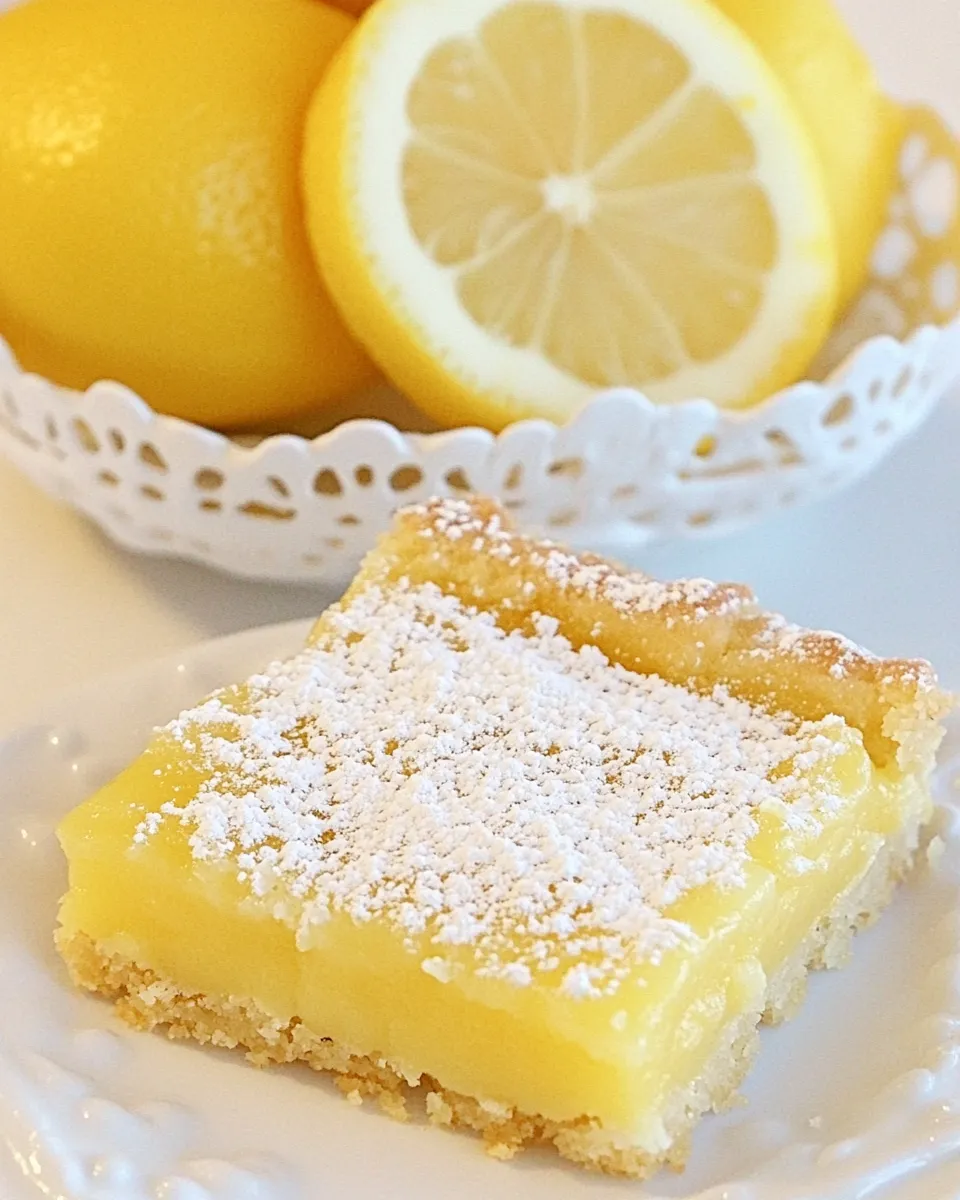
They balance bright acidity with buttery richness in a single bite. The shortbread base gives structure and a tender crumb while the lemon filling cuts through with clean citrus flavor. These bars are deceptively simple to make: no tempering, no water bath, no fuss.
They also travel well and keep their shape when sliced, which makes them great for potlucks, picnics, or as a make-ahead dessert for a dinner party. Finally, the recipe is forgiving — small timing differences won’t ruin the result, so it’s a reliable go-to.
Vegan & Vegetarian Swaps
Vegetarian: this recipe is already vegetarian as written (eggs and dairy are used but no meat products).
Vegan: to make a vegan version, replace the butter with a firm vegan butter (use a 1:1 swap by volume) and use a vegan egg replacer designed for baking or a silken tofu purée as a binder. Note that swapping eggs can change texture and set time; the filling may be slightly softer and require a longer bake to firm.
Cook’s Kit
- 8×8-inch baking pan (metal yields crisper edges; glass works too)
- Food processor (for quick, even crust mixing)
- Small whisk or fork for the lemon filling
- Citrus zester and juicer or reamer
- Spatula for pressing the crust
- Cooling rack
- Sharp knife for clean slicing
Problems & Prevention
Crust too crumbly or falling apart
Cause: butter either too warm or not worked into the flour enough. Prevention: keep the butter cold and pulse just until the mixture clumps. Press the crust firmly into the pan so it bakes compact.
Filling runny after baking
Cause: underbaking or too much liquid from fresh-squeezed lemons. Prevention: bake until the center shows no loose liquid; a slight jiggle is okay. If lemons are exceptionally juicy, allow the filling an extra 3–5 minutes and test again.
Cracking surface
Cause: overbaking or oven heat too high. Prevention: stay within the recommended bake window and remove as soon as set. A slight jiggle indicates doneness without overcooking.
Crust browns unevenly
Cause: hot spots in the oven or an unevenly pressed crust. Prevention: press the crust level and rotate the pan halfway through the first bake if your oven runs hot or has uneven heating.
Seasonal Twists
- Spring: stir in a tablespoon of finely chopped fresh thyme into the crust for an herbal note that pairs nicely with lemon.
- Summer: add 1–2 tablespoons of pureed raspberries to the lemon mixture for a pink swirl and bright berry contrast; reduce sugar by a tablespoon if berries are very sweet.
- Autumn/Winter: swap half the lemon zest for orange zest to mellow the tartness and introduce a warm citrus profile.
- Nutty variation: sprinkle 2 tablespoons of finely chopped toasted pistachios over the bars right after baking for texture and color.
Chef’s Notes
Use room-temperature eggs for a smoother filling. Cold eggs can cause the filling to be uneven when mixed. Zest before juicing the lemons to avoid the bitter pith and to capture maximum aroma. If you don’t have a food processor, you can cut the cold butter into the flour and powdered sugar by hand with a pastry cutter until it resembles coarse crumbs and holds together when pressed.
Let the bars cool completely in the pan on a rack before dusting or cutting. Cooling allows the filling to finish setting and gives cleaner slices. For neat squares, chill the pan for 30–60 minutes after cooling, then use a sharp knife wiped between cuts.
Storing, Freezing & Reheating
Storing: keep cut lemon bars in an airtight container in the refrigerator for up to 4 days. Place parchment between layers to prevent sticking. Lemon bars actually often taste better after a day as the flavors meld.
Freezing: freeze uncut bars in a single layer on a baking sheet until firm, then wrap tightly in plastic and foil or place in a freezer-safe container for up to 2 months. Thaw in the refrigerator overnight before cutting.
Reheating: if you prefer warm bars, reheat individual squares for 8–12 seconds in the microwave until just warmed (times will vary by appliance). Avoid overheating, which can make the filling rubbery. For a lightly warmed surface without much melting, bring to room temperature and then place on a low oven rack at 300°F for 5–7 minutes.
Questions People Ask
- Can I use bottled lemon juice? — Fresh lemon juice gives a brighter, fresher flavor and is recommended, but bottled juice will work in a pinch; expect slightly muted flavor.
- Why did my filling separate? — Overmixing or extreme temperature differences can cause separation. Whisk just until smooth and bake promptly.
- How do I get clean slices? — Chill the pan to firm the filling, then run a sharp knife under hot water, dry it, and slice in one smooth motion, wiping the blade between cuts.
- Can I double the recipe? — Yes, double into a 9×13 pan and watch the baking time: the crust and filling will likely need longer in the oven. Check for set center as your doneness cue.
The Takeaway
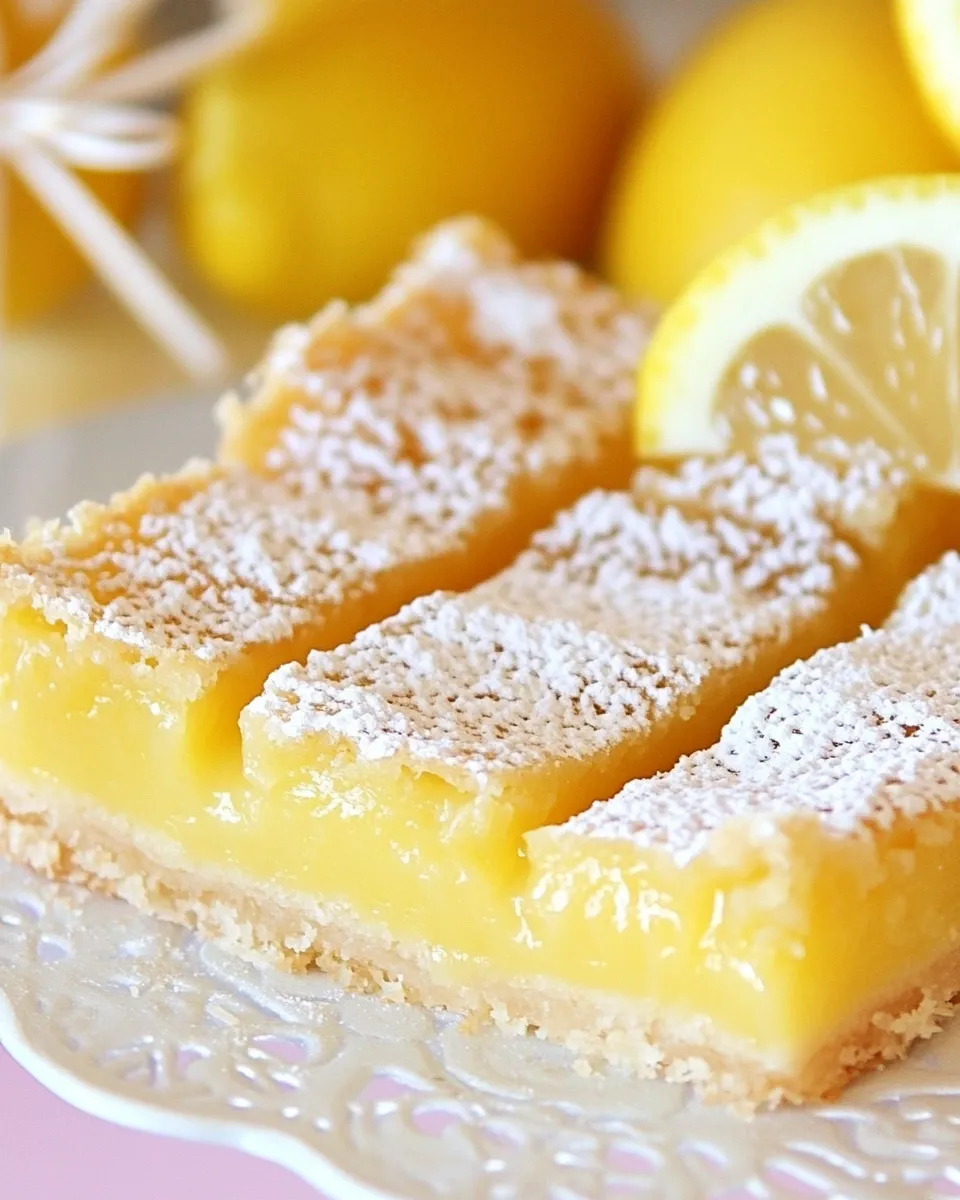
These lemon bars deliver a reliable contrast of buttery crust and tangy, custard-like lemon filling with straightforward steps and predictable results. Keep the butter cold for the crust, bake the crust until lightly golden, and watch the filling for a set center. Let them cool fully before cutting for clean squares, and don’t be afraid to dust lightly with powdered sugar to finish. With minimal equipment and common pantry ingredients, you’ll have a tray of perfectly pretty lemon bars ready to impress.
Perfectly Pretty Lemon Bars
Ingredients
Equipment
Method
- Preheat oven to 350°F. Spray an 8x8-inch baking pan very well with cooking spray.
- In a food processor, combine 1/2 cup (4 oz) cold butter (cut into 1-inch chunks), 1 cup (140 g) all-purpose flour, and 1/4 cup (30 g) powdered sugar. Pulse until the mixture begins to clump and can be pressed together.
- Dump the dough into the prepared pan and press it evenly into the bottom and up to the edges to form a compact crust.
- Bake the crust for 15–20 minutes, until it is lightly golden. Keep the oven on.
- While the crust bakes, whisk together 1 cup (200 g) granulated sugar, 2 large eggs, 1/4 cup freshly squeezed lemon juice, and 1 1/2 teaspoons lemon zest until smooth and well combined.
- When the crust is lightly golden, carefully open the oven and pour the lemon mixture over the hot crust in the pan.
- Return the pan to the oven and bake 20–25 minutes more, until the filling is set (no loose liquid in the center; a slight jiggle is fine).
- Remove the pan and allow the lemon bars to cool completely before dusting lightly with additional powdered sugar (if desired) and cutting into squares.
Notes
To make designs on the tops of your bars, you can cut shapes from parchment paper and lay over the top of your custard before dusting with powdered sugar. Because these are so moist, they will absorb some of the sugar (mine started to look a little sparse after about an hour) so if serving to guests, dust shortly before serving or apply a heavier layer of sugar at the start.