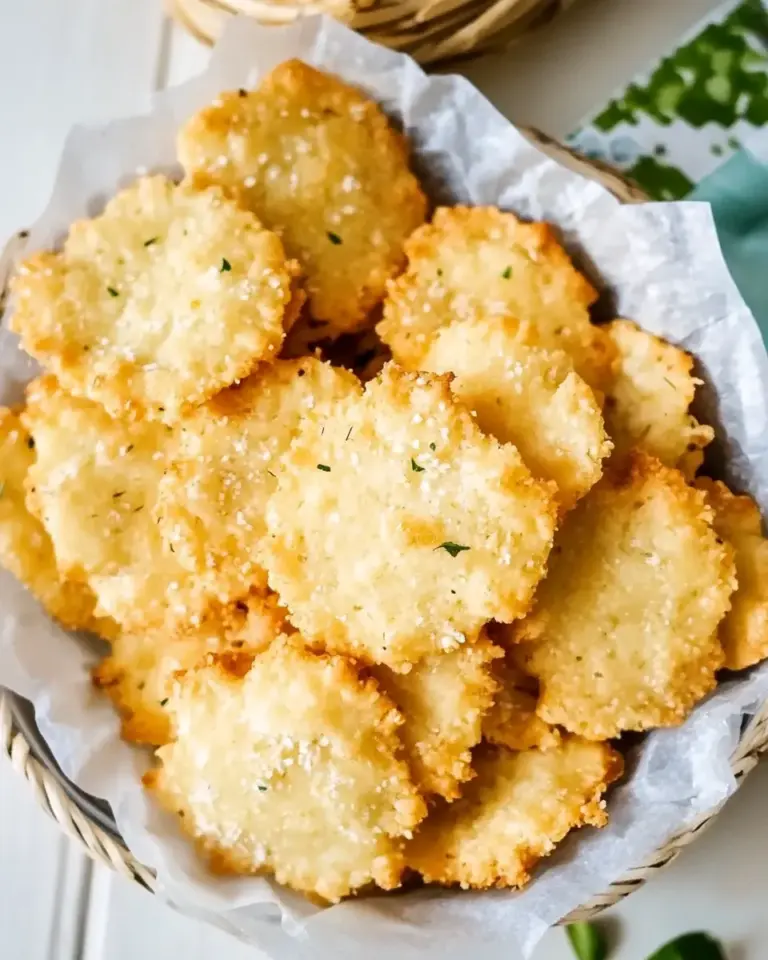
Pesto Parmesan Cheese Straws
These Pesto Parmesan Cheese Straws are one of those reliably charming snacks that look like effort but come together in under 30 minutes. Crispy, buttery puff pastry wrapped around bright basil pesto and salty Parmesan — they’re perfect for a last-minute appetizer, a picnic, or a crunchy addition to a soup or salad. I make them when I want something impressive that doesn’t require babysitting.
The recipe is straightforward and forgiving, which is exactly what I look for on busy evenings or when I’m hosting and need something I can bake off at the last minute. The twists puff up and caramelize, and the Parmesan melts into the flaky layers so each bite is savory and satisfying. A quick egg wash gives them a glossy finish and helps the extra Parmesan stick where it belongs.
Below you’ll find a clear ingredients list with notes, step-by-step instructions that follow the method I use every time, and tips to avoid the small mistakes that can turn these from great to merely good. If you want variations, storage tips, or the equipment I use, I’ll cover all of that too so you can walk into the kitchen confident and ready.
Ingredients
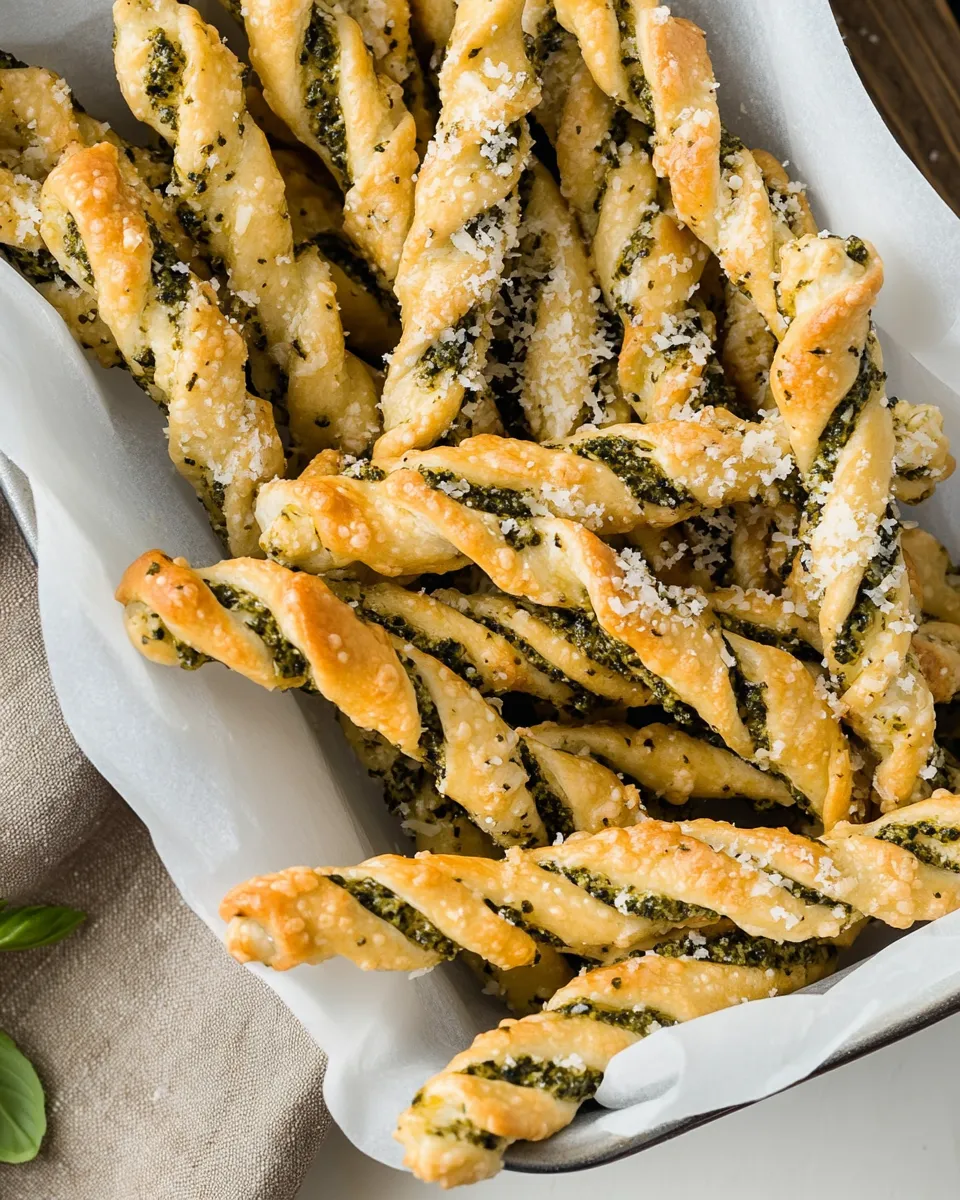
- 2sheets puff pastry,thawed — the flaky, buttery layers that give these straws their lift; keep chilled until you’re ready to work.
- 3tablespoonspesto — the flavorful spread that seasons the pastry; spread evenly for consistent flavor in every twist.
- 1/3cupgrated Parmesan cheese, plus 3 tablespoons,divided — 1/3 cup is layered over the pesto; the extra 3 tablespoons are reserved for sprinkling on top before baking.
- 1egg — beaten for an egg wash to promote browning and help the reserved Parmesan adhere.
- 1tablespoonwater — mixed with the egg to make the egg wash a touch more fluid and easier to brush.
- Garnish: Extra Parmesan cheese — optional finishing touch for more savory punch and visual appeal.
Shopping List
- 2sheets puff pastry,thawed — buy good-quality puff pastry from the refrigerated section; many brands work well as long as it’s fully thawed but still cool.
- 3tablespoonspesto — choose your preferred pesto (store-bought or homemade) and check salt level; it will affect the overall seasoning.
- 1/3cupgrated Parmesan cheese, plus 3 tablespoons,divided — buy pre-grated for convenience or grate fresh for a brighter, creamier finish.
- 1egg — one large egg is enough for the wash; you can use a little extra if you want a deeper sheen.
- 1tablespoonwater — plain tap water is fine for the wash.
- Garnish: Extra Parmesan cheese — optional but recommended if you like a stronger cheese presence.
From Start to Finish: Pesto Parmesan Cheese Straws
- Preheat the oven to 400°F (200°C). Line two baking sheets with parchment paper and set aside.
- Unfold both thawed puff pastry sheets onto a large piece of parchment or wax paper so each sheet lies flat.
- Cut each pastry sheet into 4 equal long rectangles (cut each sheet into quarters along its longer side). You will have 8 rectangles total.
- Spread the 3 tablespoons pesto evenly over 4 of the rectangles (one quarter of each sheet).
- Sprinkle the 1/3 cup grated Parmesan evenly over the pesto-covered rectangles.
- Place the remaining 4 plain rectangles directly on top of the pesto-and-Parmesan rectangles, aligning edges, and gently press around the edges to seal.
- Using a sharp knife or pizza cutter, cut each stacked rectangle into 4 long strips lengthwise so you end up with 16 two-layer strips.
- Hold each strip at both ends and twist in opposite directions several times to make a spiral straw; transfer the twisted straws to the prepared baking sheets, spacing them so they are not touching.
- In a small bowl, beat the egg with the 1 tablespoon water. Lightly brush the tops of the pastry straws with the egg wash.
- Sprinkle the reserved 3 tablespoons Parmesan evenly over the egg-washed straws.
- Bake for 12 to 15 minutes, rotating the pans halfway through baking, until the straws are puffed and golden brown.
- Remove from the oven and let the straws cool on the baking sheets. Transfer to a platter and garnish with extra Parmesan cheese, if desired. Serve.
Why This Recipe Works
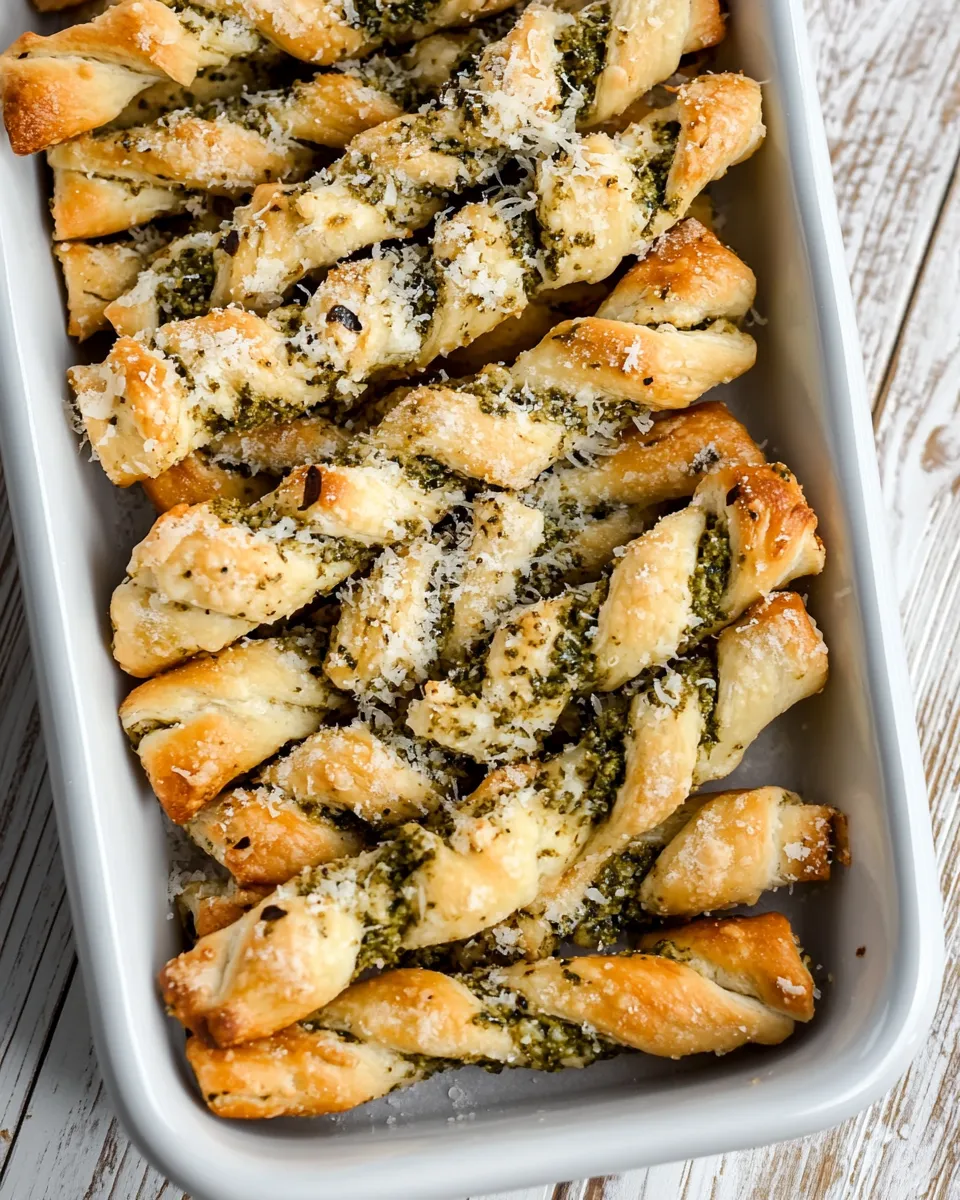
This recipe succeeds because it keeps the technique simple and uses a small number of strong flavors. Puff pastry brings irresistible lift and texture without the time commitment of laminated dough. Pesto provides concentrated herbal and nutty flavor, while Parmesan contributes saltiness and a crisp, toasty finish when it bakes. The egg wash promotes even golden color and helps the top layer of cheese adhere, creating a crisp surface that contrasts with the tender layers beneath.
The method of stacking a pesto-covered sheet with a plain sheet creates a built-in pocket for flavor without making the pastry soggy. Cutting the sandwiches into long strips and twisting them exposes more pastry surface to heat, which encourages maximum flakiness and crunch. Baking at 400°F (200°C) gives a quick burst of heat so the layers puff before the exterior becomes too dark.
International Equivalents
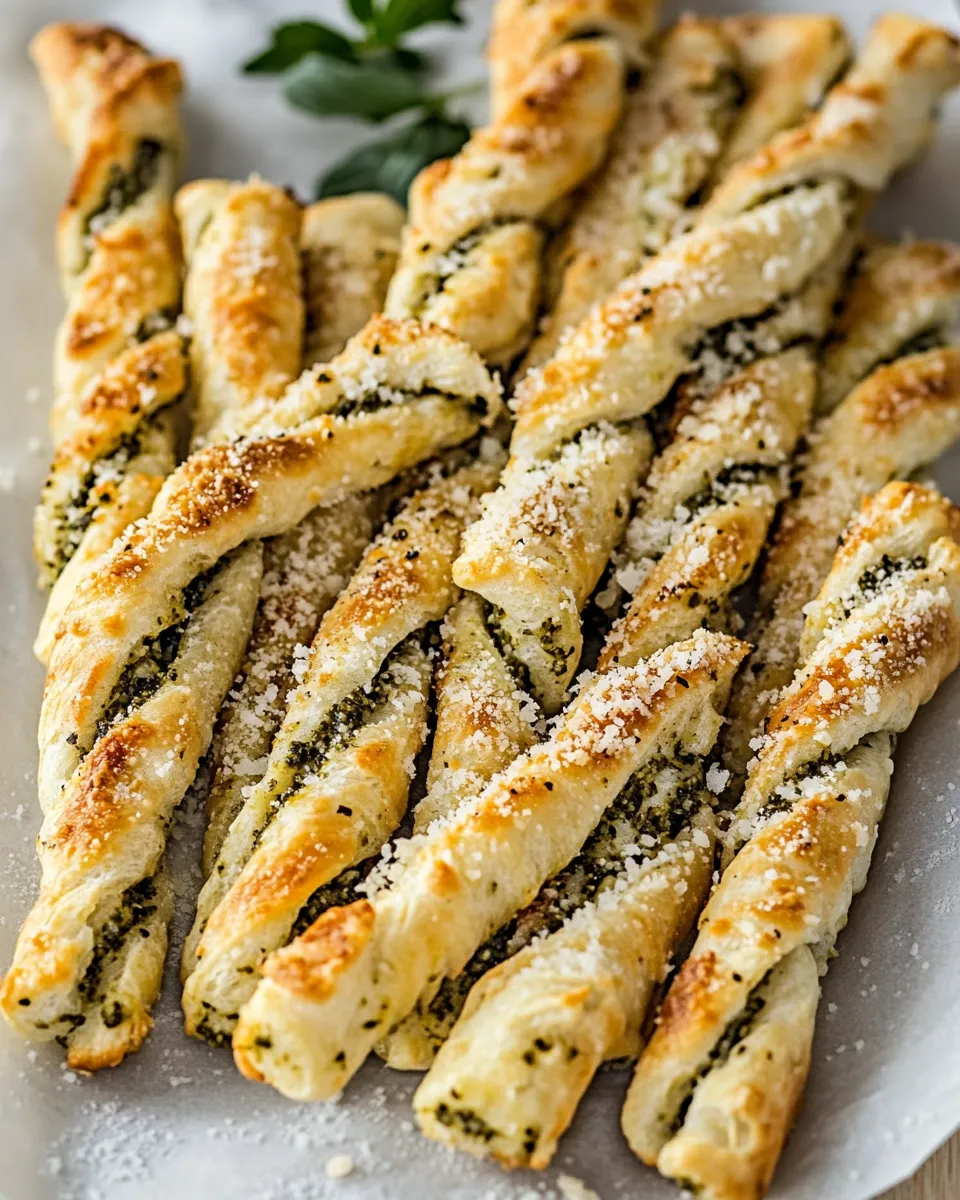
These straws are essentially a pastry snack that plays well across culinary traditions because the core elements—laminated dough, an emulsified green sauce, and a hard, salty cheese—translate easily.
- In Italy: think of them as a riff on grissini crossed with filled pastry; the pesto and Parmesan are already classic Italian pairings.
- In France: you can imagine these as a quicker cousin to savory mille-feuille bites—puff pastry and cheese are familiar territory in patisseries and bistros.
- Across the Mediterranean: basil pesto’s herbaceous profile pairs well with the bright, olive-forward flavors typical of that region; the format is universally snackable.
Kitchen Gear Checklist
Essentials
- Two baking sheets — for even heat distribution and to fit all the straws without crowding.
- Parchment paper — prevents sticking and makes cleanup effortless.
- Sharp knife or pizza cutter — for clean, even strips (a dull blade squashes the pastry).
- Small bowl and pastry brush — to mix and apply the egg wash cleanly.
Helpful but optional
- Ruler or bench scraper — to help divide the pastry into precise quarters if you like uniform strips.
- Cooling rack — useful for moving the finished straws off the hot baking sheet so they stay crisp.
Frequent Missteps to Avoid
- Working with warm pastry — puff pastry needs to be cold. If it warms too much, it becomes sticky and won’t puff properly; chill briefly before cutting if it softens.
- Overloading with pesto — too much filling can make the centers damp and prevent puffing. The specified 3 tablespoons spread across four rectangles keeps it balanced.
- Uneven thickness when cutting — press gently when aligning the two sheets so the layers seal evenly; uneven edges can open and leak filling during baking.
- Skipping the egg wash — it’s tempting, but without it the reserved Parmesan won’t stick well and the straws won’t color as nicely.
- Crowding the pan — give the straws room. If they touch, they can stick together or bake unevenly.
Make It Fit Your Plan
Need these for a party? Assemble the twisted straws ahead of time and keep them refrigerated on the baking sheet, covered, for up to a few hours before baking; pull straight from the fridge to the oven. Feeding a crowd? Double the recipe and bake on multiple racks, rotating pans halfway through as directed.
Want to save time? Use store-bought pesto and pre-grated Parmesan. Prefer a milder finish? Reduce the extra Parmesan garnish — the 1/3 cup layered inside already provides a solid backbone of flavor. If you want a visual flourish without changing the recipe, grate a little extra Parmesan over the twists just as they come out of the oven so it melts slightly on the hot surface.
Cook’s Commentary
I love how this recipe delivers a lot of return on minimal effort. The first time I made them I assumed the pesto would risk making the pastry soggy. But the sandwiching technique keeps things tidy and concentrates flavor. Twisting by hand feels a little theatrical, but it’s worth it for the spiraled bite — each twist crisps differently, so you get a satisfying mix of flakiness and cheesy crunch in every bite.
Small, practical notes: always keep a light touch when sealing the edges so you don’t press out all the air between layers. If you have a favorite pesto—homemade or jarred—trust it. The recipe is forgiving enough that different pestos will simply add different flavor notes without breaking the structure.
Shelf Life & Storage
These straws are best the day they’re made: the contrast between crisp exterior and flaky interior is at its peak. Leftovers can be stored at room temperature in an airtight container for up to 24 hours and retain decent texture. If you need to keep them longer, refrigerate in an airtight container for up to 3 days, then re-crisp in a 350°F (175°C) oven for 5–7 minutes.
Freezing is possible but not ideal for long-term texture preservation. If you must freeze, flash-freeze the baked straws on a tray until solid, then transfer to a sealed bag for up to one month; reheat from frozen at 350°F (175°C) until warm and crisp.
Reader Questions
Q: Can I make these ahead and bake later?
A: Yes. After assembling and twisting, place them on the lined baking sheet, cover loosely with plastic wrap, and refrigerate for a few hours. Bake straight from the fridge, adding a minute or two to the bake time if needed.
Q: My pesto is salty; should I reduce the Parmesan?
A: Taste your pesto first. If it’s very salty, you can slightly reduce the reserved Parmesan garnish, but the 1/3 cup inside is important for texture and flavor balance. Adjust the final sprinkle if needed.
Q: Can I brush with milk instead of an egg wash?
A: Milk will brown less and won’t help the cheese stick as well. If you cannot use egg, try milk or cream, but expect a paler finish and possibly less adherence of the powdered cheese.
Bring It Home
These Pesto Parmesan Cheese Straws are one of those small recipes that deliver big satisfaction with minimal fuss. Use the exact ingredient list and steps above for predictable results: cold pastry, a measured spread of pesto, a sprinkle of Parmesan inside and on top, and a quick egg wash for color. They make an elegant appetizer, a party-ready snack, or a crunchy companion for soup or salad. Keep the process relaxed, don’t overwork the pastry, and you’ll have a flaky, savory bite that disappears fast.
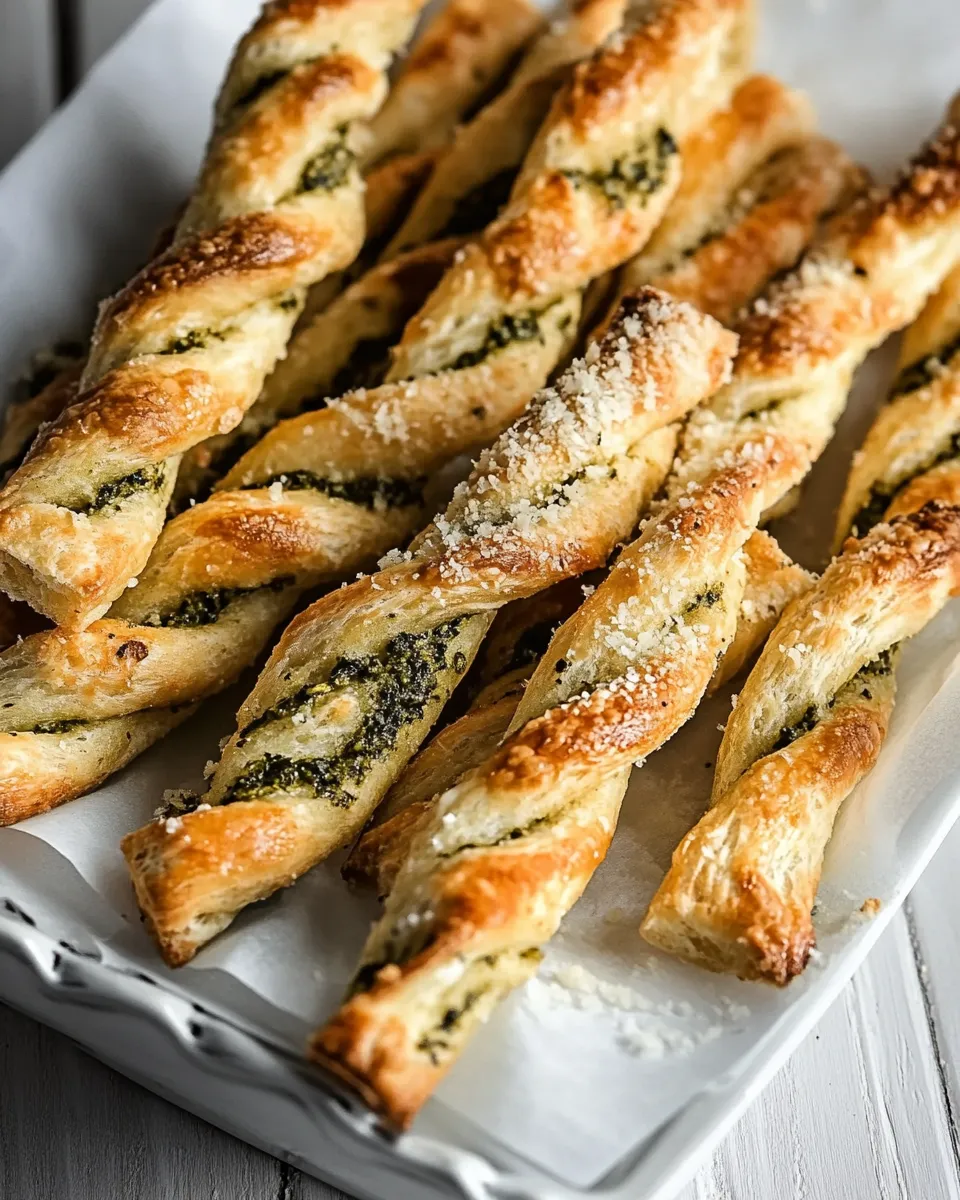
Pesto Parmesan Cheese Straws
Ingredients
Equipment
Method
- Preheat the oven to 400°F (200°C). Line two baking sheets with parchment paper and set aside.
- Unfold both thawed puff pastry sheets onto a large piece of parchment or wax paper so each sheet lies flat.
- Cut each pastry sheet into 4 equal long rectangles (cut each sheet into quarters along its longer side). You will have 8 rectangles total.
- Spread the 3 tablespoons pesto evenly over 4 of the rectangles (one quarter of each sheet).
- Sprinkle the 1/3 cup grated Parmesan evenly over the pesto-covered rectangles.
- Place the remaining 4 plain rectangles directly on top of the pesto-and-Parmesan rectangles, aligning edges, and gently press around the edges to seal.
- Using a sharp knife or pizza cutter, cut each stacked rectangle into 4 long strips lengthwise so you end up with 16 two-layer strips.
- Hold each strip at both ends and twist in opposite directions several times to make a spiral straw; transfer the twisted straws to the prepared baking sheets, spacing them so they are not touching.
- In a small bowl, beat the egg with the 1 tablespoon water. Lightly brush the tops of the pastry straws with the egg wash.
- Sprinkle the reserved 3 tablespoons Parmesan evenly over the egg-washed straws.
- Bake for 12 to 15 minutes, rotating the pans halfway through baking, until the straws are puffed and golden brown.
- Remove from the oven and let the straws cool on the baking sheets. Transfer to a platter and garnish with extra Parmesan cheese, if desired. Serve.
Notes
to thaw the puff pastry, follow the instructions on the back of the box. The pastry sheets should unfold easily but still be cold. If the pastry cracks, you can sprinkle the cracks with a little water and press the edges to seal.
You can use
homemade basil pesto
or store-bought pesto. For store-bought, we like Private Selection brand.