Pesto Vegetables
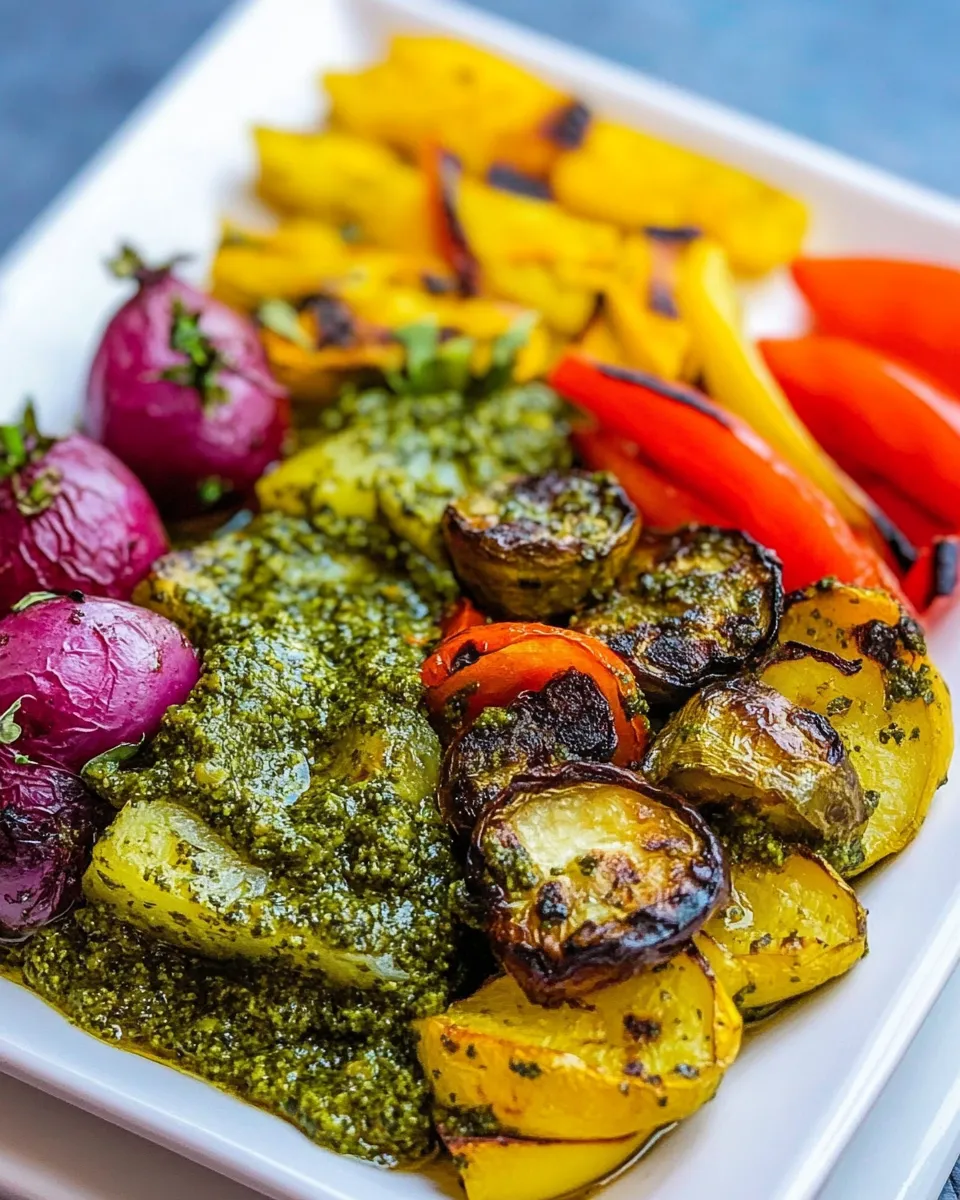
I love recipes that feel like good company: simple, honest, and reliably delicious. This Pesto Vegetables dish is one of those—vibrant roasted vegetables tossed in pesto, finished with a little char. It’s the kind of thing I make when I want a quick centerpiece for a weeknight dinner or an easy side that travels well to a potluck.
The method is straightforward: prep, coat, roast. There’s room to be precise (cut the vegetables so they roast evenly) and room to be loose (use store-bought pesto or a jar you already love). The result is savory, herby, and texturally interesting—soft beets and potatoes, sweet roasted carrots, and broccoli with crisped edges.
Below I walk you through the ingredients, the exact steps, practical swaps, common mistakes and fixes, and how to store and reheat leftovers so nothing goes to waste. Read through once, then get cooking—this one comes together fast and keeps well.
Ingredient Rundown
Ingredients
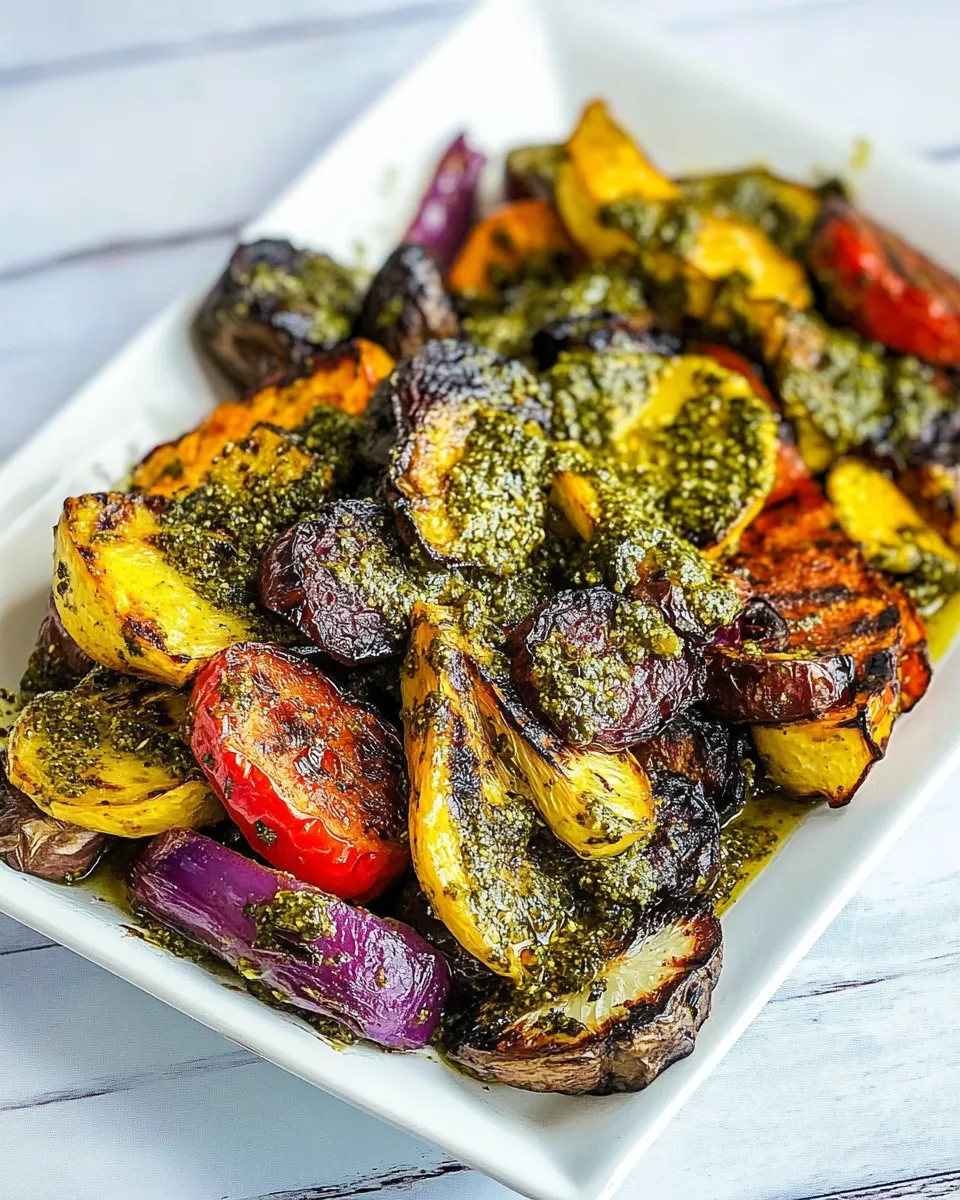
- 6oz Pesto — Provides the primary herby, garlicky flavor and acts as the roast coating; if thick, it can be thinned slightly.
- 1 Red bell pepper — Adds sweetness and color, cooks quickly so cut into same-sized pieces as other vegetables.
- 6oz Carrots (medium) — Offer sweetness and bite; cut to match the beet slices so they finish at the same time.
- 10oz Beet (medium) — Earthy sweetness and great color; peel and slice for even roasting.
- 10oz Potatoes — Provide starchy, tender contrast; cut into wedges so they roast through without burning.
- 10oz Broccoli — Adds green color and a nice contrast in texture; use larger florets so they don’t over-char before the center is done.
- 1 Red onion — Brings sweetness and a little bite when roasted; discard the outer skin after peeling.
- 2Tbsp Olive oil — Used only if the pesto needs thinning to evenly coat the vegetables; helps with roasting and browning.
- ½tsp Salt — Light seasoning to enhance flavors without overpowering the pesto.
- ¼tsp Black pepper — Adds gentle heat and seasoning balance.
Pesto Vegetables Made Stepwise
- Preheat the oven to 400°F (200°C). Line a sheet pan with parchment paper and set aside.
- Peel the beet, potatoes, carrots, and red onion. Discard onion outer skin after peeling.
- Cut the vegetables: slice the beet; cut the potatoes into wedges; cut the carrots into pieces roughly the same thickness as the beet slices; quarter the red onion; cut the broccoli into larger florets; core and seed the red bell pepper, then cut it into squares.
- Place 6 oz pesto in a large bowl. If the pesto is too thick to coat the vegetables, stir in up to 2 Tbsp olive oil until it reaches a coating consistency.
- Add all prepared vegetables to the bowl with the pesto and toss until every piece is evenly coated.
- Spread the coated vegetables in a single layer on the prepared sheet pan. Sprinkle evenly with 1/2 tsp salt and 1/4 tsp black pepper and toss gently on the pan to distribute the seasoning.
- Roast in the preheated oven for 30–35 minutes, stirring or flipping the vegetables once about halfway through. Begin checking doneness and browning at 20–25 minutes.
- If you want more charred color, switch the oven to broil for the last 5 minutes—move the pan to the upper oven rack and watch closely to prevent burning. Remove from oven and let rest a few minutes before serving.
Why This Pesto Vegetables Stands Out
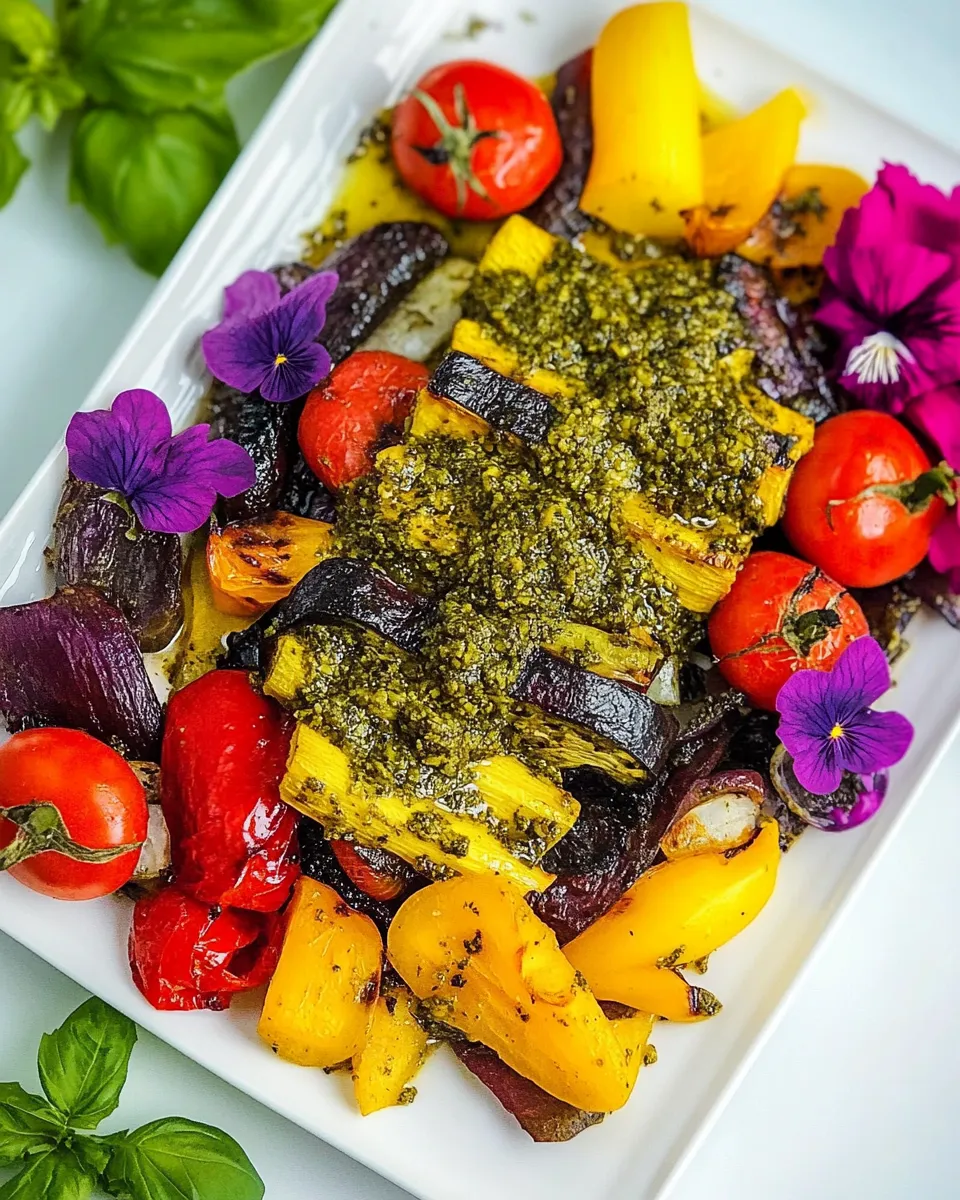
This recipe is all about harmony between strong herbal flavor and roasted vegetable sweetness. Pesto acts as both seasoning and oil, so every piece carries flavor without needing a separate sauce. Roasting concentrates the natural sugars in the beet, carrot, and bell pepper, while potatoes and broccoli bring texture contrast—creamy centers and crisped edges.
The technique—coating with pesto and roasting in a single layer—keeps cooking efficient and clean. Using a single sheet pan lets the vegetables roast directly in the herb oil, developing caramelized spots that amplify flavor. The short broil at the end is an optional flourish: it intensifies color and delivers the kind of char that signals “roasted” even to someone speeding through dinner prep.
Swap Guide
If you want to change textures or balance the meal without introducing new ingredients beyond what’s already here, consider these adjustments that use components from this recipe:
- Love more green? Increase the broccoli portion and reduce the potatoes slightly for a lighter, crisper tray.
- Prefer sweeter bites? Add more carrot slices in place of a portion of the beet if you want to soften the earthier beet flavor.
- Need more starch? Add a few extra potato wedges and reduce broccoli so everything finishes evenly.
- If your pesto is very thick, follow the step to thin with olive oil rather than diluting flavors with additional liquids.
Hardware & Gadgets
Nothing fancy is required: a stable oven, a sheet pan, parchment paper, and a large mixing bowl cover the essentials. Here are the specific items that make the process smooth:
- Sheet pan — wide, shallow pans give vegetables room so they roast instead of steam.
- Parchment paper — easy cleanup and prevents sticking of pesto-coated vegetables.
- Large bowl — for tossing the vegetables with pesto without making a mess.
- Sharp knife and cutting board — even cuts are key to even cooking.
- Spatula or tongs — for turning the vegetables halfway through roasting.
Common Errors (and Fixes)
When roasted vegetable dishes go wrong, it’s usually one of a few predictable problems. Here’s how to fix them:
- Vegetables steaming instead of roasting — Cause: overcrowded pan. Fix: use a single layer with space between pieces; use two pans if necessary.
- Uneven doneness — Cause: pieces cut to different sizes. Fix: match thicknesses (slice beets and carrots to the same thickness; make potato wedges similar in size).
- Pesto not coating — Cause: too thick. Fix: stir in up to the 2 Tbsp olive oil mentioned in the steps until the pesto can coat evenly.
- Burned edges, raw centers — Cause: broiling or high heat without monitoring. Fix: pull the pan sooner, flip pieces earlier, and reserve broiling for the last 3–5 minutes while watching closely.
Adaptations for Special Diets
Because this recipe centers on vegetables and pesto, it adapts easily to common dietary needs with small swaps or mindful ingredient choices:
- Lower sodium — use less than the listed ½ tsp salt, or omit and finish with a light sprinkle of salt to taste after roasting.
- Dairy-free or vegan — check the pesto for cheese; if it contains Parmesan, choose a dairy-free pesto option or a jar labeled vegan.
- Oil-conscious — use the pesto as-is without thinning if it’s already loose; the olive oil used to thin is optional and only for coating consistency.
Behind-the-Scenes Notes
Why peel some vegetables and not others? Beets and potatoes are peeled to remove the tougher or earthier exterior; carrots and onions are peeled for smooth texture and even seasoning. Broccoli is kept in larger florets so it holds up during roasting and develops satisfying crisp edges without turning to mush.
Timing matters: the recommended 30–35 minutes at 400°F is a balance that allows root vegetables and potatoes to soften while keeping more delicate items from overcooking. Checking at 20–25 minutes gives you a chance to adjust the roast time for your oven and pan. Remember that ovens vary—learn the spots in yours that run hot or cool.
Cooling, Storing & Rewarming
Let the roasted vegetables cool briefly on the pan, then transfer to an airtight container. Stored in the refrigerator, they keep well for 3–4 days. If you plan to use them as a packed lunch or cold side, they’re delicious chilled or at room temperature.
To reheat, spread leftovers on a sheet pan and warm in a 375°F (190°C) oven for 8–12 minutes until heated through and re-crisped at the edges. Alternatively, reheat in a skillet over medium heat with a small splash of water or a teaspoon of oil to refresh the texture. Avoid microwaving if you want to maintain crispness—microwaves will soften everything.
Troubleshooting Q&A
Q: My pesto groups in clumps and won’t coat the vegetables. A: Add olive oil slowly up to the 2 Tbsp recommended until the pesto thins and spreads. Toss thoroughly in a large bowl to ensure even coverage.
Q: The potatoes take longer to cook than the other vegetables. A: Cut the potato wedges a touch smaller so their roast time matches the beet and carrot slices. You can also start roasting the potatoes for 5–10 minutes before adding quicker-cooking items.
Q: The vegetables look oily after roasting. A: If the pesto is very oily or if you added the full 2 Tbsp olive oil and prefer less, blot gently with paper towels after roasting. Next time, use less oil for thinning—only what’s necessary to coat.
In Closing
Pesto Vegetables is one of the easiest path-to-happy-dinner recipes I keep in rotation. It’s flexible, flavorful, and forgiving. Whether you’re serving it as a mains-side for a simple grain bowl, adding it to pasta the next day, or bringing it to a gathering, it performs well. Follow the straightforward steps above for reliable roasting and use the swap and storage tips to make it work for your week.
Make a double batch if you like leftovers—this keeps beautifully and often tastes even better the next day as flavors settle. Enjoy the balance of bright herbiness and roasted sweetness; a simple technique that yields satisfying results every time.
Pesto Vegetables
Ingredients
Equipment
Method
- Preheat the oven to 400°F (200°C). Line a sheet pan with parchment paper and set aside.
- Peel the beet, potatoes, carrots, and red onion. Discard onion outer skin after peeling.
- Cut the vegetables: slice the beet; cut the potatoes into wedges; cut the carrots into pieces roughly the same thickness as the beet slices; quarter the red onion; cut the broccoli into larger florets; core and seed the red bell pepper, then cut it into squares.
- Place 6 oz pesto in a large bowl. If the pesto is too thick to coat the vegetables, stir in up to 2 Tbsp olive oil until it reaches a coating consistency.
- Add all prepared vegetables to the bowl with the pesto and toss until every piece is evenly coated.
- Spread the coated vegetables in a single layer on the prepared sheet pan. Sprinkle evenly with 1/2 tsp salt and 1/4 tsp black pepper and toss gently on the pan to distribute the seasoning.
- Roast in the preheated oven for 30–35 minutes, stirring or flipping the vegetables once about halfway through. Begin checking doneness and browning at 20–25 minutes.
- If you want more charred color, switch the oven to broil for the last 5 minutes—move the pan to the upper oven rack and watch closely to prevent burning. Remove from oven and let rest a few minutes before serving.