Potato Chickpea Coconut Curry
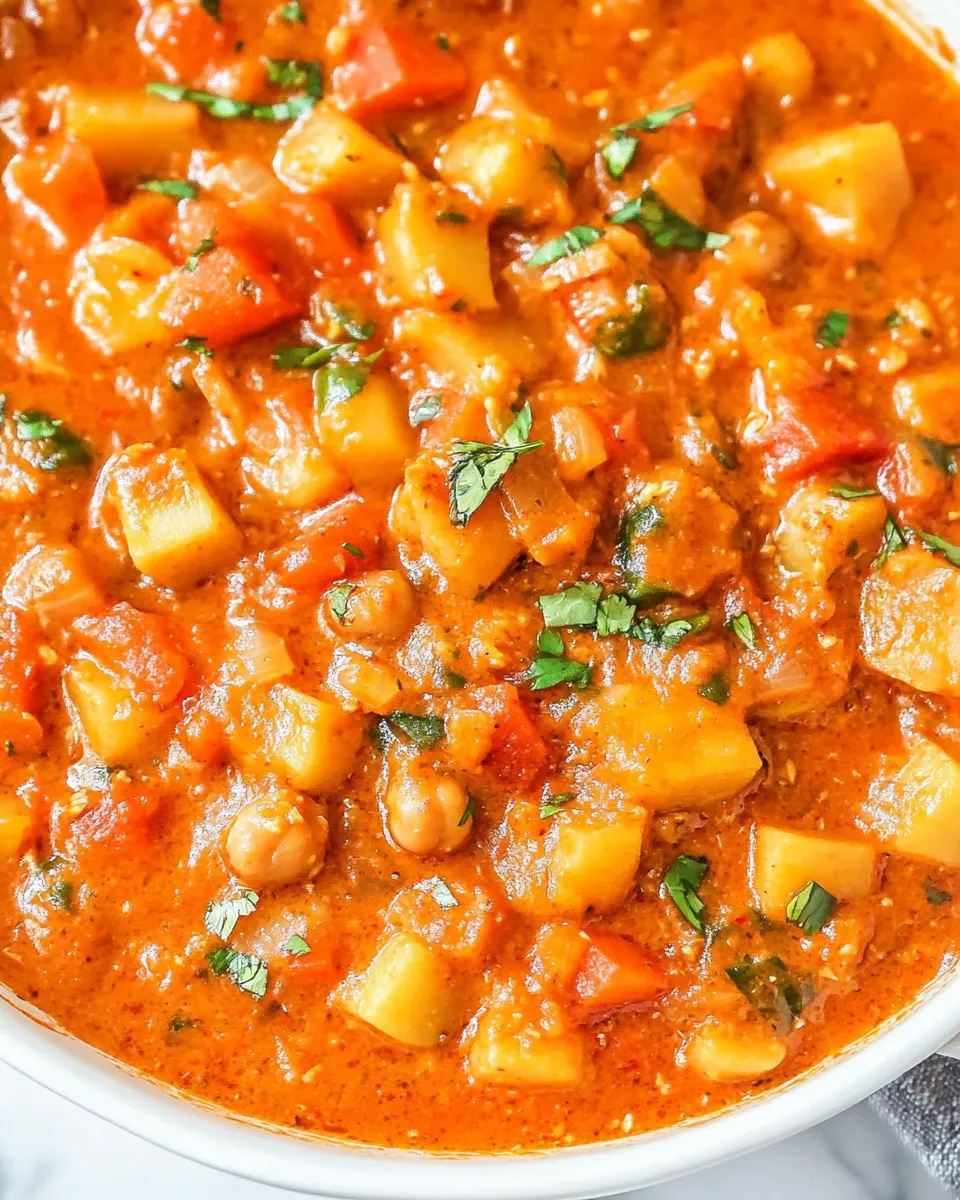
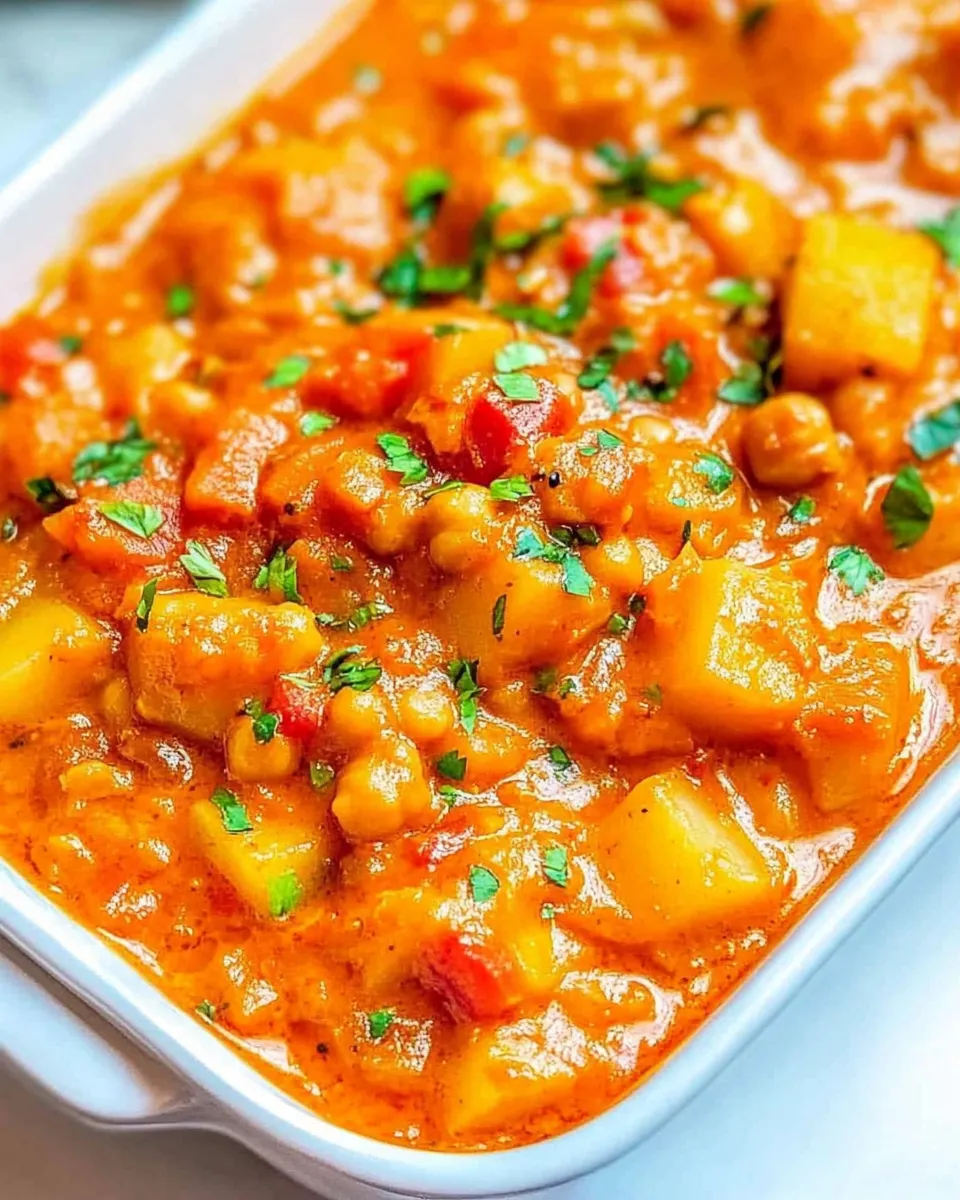
I make this Potato Chickpea Coconut Curry on rotation when I want something comforting, fast, and reliably flavorful. It’s the kind of weeknight meal that smells like a hug: warm coconut, a hit of curry paste, bright lime at the end to lift the richness. The texture—soft potato, tender chickpeas, and little pops of zucchini—keeps every bite interesting.
There’s no heavy chopping, and most of the work is a short sauté and a simmer. If you follow the order below, the curry comes together with predictable timing, which is perfect for cooking while getting other things done. I’ll walk you through the ingredients and the method exactly as written, then share swaps, storage tips, and the small tricks that make it shine.
Ingredient Breakdown
Ingredients
- 3 tablespoons coconut oil, olive oil may be substituted — fat for sautéing; coconut oil adds a subtle tropical aroma, olive oil is fine if you prefer.
- 1 medium/large sweet Vidalia or yellow onion, diced small — base flavor and sweetness; dice small so it softens quickly.
- 1 pound Yukon gold potatoes, diced into 1/2-inch chunks (I did not peel) — body and creaminess; 1/2-inch ensures even cooking in the simmer time below.
- 1 red bell pepper, seeded and diced small — color and a touch of sweet crunch.
- 3 to 4 cloves garlic, finely minced or pressed — aromatic backbone; adjust to taste.
- 2 to 3 teaspoons ground ginger or 1 tablespoon fresh ginger, finely chopped; or to taste — warmth and brightness; fresh is punchier, ground is convenient.
- 2 to 3 teaspoons ground coriander, or to taste — citrusy, earthy spice that complements the curry paste.
- ½ teaspoon cayenne pepper, optional and to taste — for heat; skip if you’re sensitive to spice.
- two 14-ounce cans coconut milk, use full-fat for a richer/thicker result but lite may be substituted — the creamy sauce; full-fat gives a velvety finish.
- 1 medium zucchini, diced into bite-sized pieces — softens in the simmer and adds freshness.
- one 15-ounce can chickpeas, drained and rinsed (I used no-salt added) — protein and texture; rinse to remove canning liquid.
- one 4-ounce jar Thai red curry paste, or to taste (I used the whole jar for this recipe, but prefer bolder flavors; start with 1 to 2 tablespoons, taste and work up from there) — the concentrated flavor driver; add gradually until you reach the heat and depth you like.
- 4-ounce can tomato paste — adds depth, acidity, and thickens the sauce slightly.
- 1 teaspoon kosher salt, or to taste — seasons the dish; adjust at the end if needed.
- ½ teaspoon freshly ground black pepper, or to taste — balancing peppery note.
- 2 to 4 tablespoons lime juice — bright acidity to finish; start with 2 tablespoons and add up to 4 to taste.
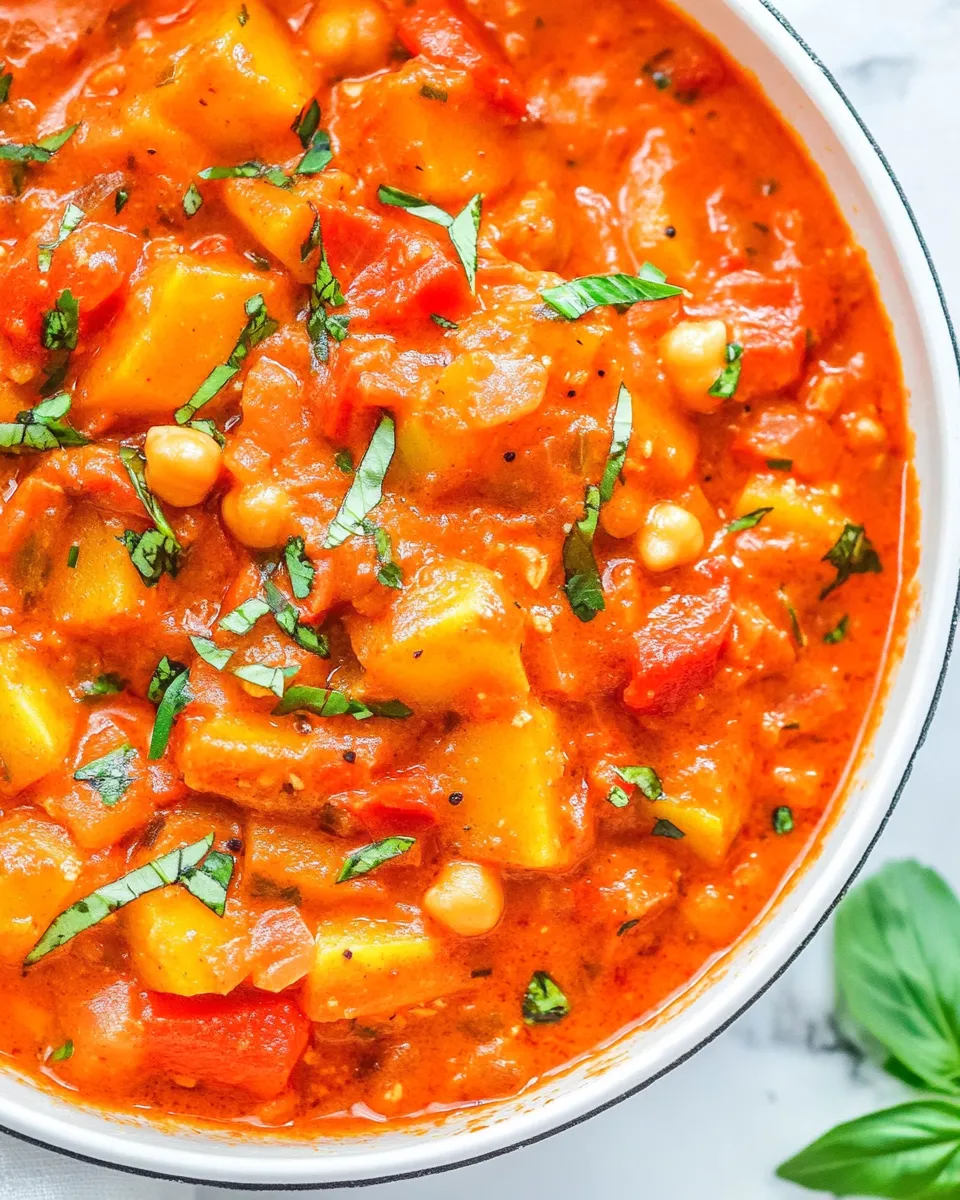
- ¼ to ⅓ cup fresh cilantro or to taste, finely chopped for garnishing (basil may be substituted) — fresh herb lift; cilantro is classic but basil works if you prefer.
- 1 to 2 tablespoons light brown sugar, packed; optional and to taste — optional sweetener to balance acidity and spice.
Step-by-Step: Potato Chickpea Coconut Curry
- Drain and rinse the one 15-ounce can of chickpeas; dice the potato into 1/2-inch chunks, dice the onion and red bell pepper small, and dice the zucchini into bite-sized pieces. Mince or press 3 to 4 cloves garlic. Measure your ginger choice (2–3 teaspoons ground OR 1 tablespoon fresh, finely chopped), 2–3 teaspoons ground coriander, and optional 1/2 teaspoon cayenne.
- Heat 3 tablespoons coconut oil (or olive oil) in a large skillet over medium-high heat until shimmering.
- Add the diced onion and diced potatoes to the hot oil. Sauté, stirring intermittently, until the onions and potatoes begin to soften and the edges of the potatoes turn lightly golden, about 8 minutes.
- Add the diced red bell pepper, garlic, ginger (ground or fresh), ground coriander, and the optional cayenne (if using). Cook, stirring nearly constantly, until fragrant, about 1 minute.
- Pour in the two 14-ounce cans of coconut milk. Add the diced zucchini, the drained and rinsed chickpeas, the one 4-ounce jar of Thai red curry paste (use the amount you prefer from the jar — you can start with 1–2 tablespoons and add more to taste, or use the whole jar), and the 4-ounce can of tomato paste. Stir thoroughly to combine.
- Add 1 teaspoon kosher salt and 1/2 teaspoon freshly ground black pepper. Stir, then increase heat just until the mixture comes to a fairly rapid boil.
- Reduce heat to medium, cover the skillet loosely with a lid leaving a small gap for steam to escape, and cook until the potatoes are cooked through and tender, about 15 minutes. Stir once or twice while cooking to prevent sticking.
- Remove the lid, add 2 tablespoons lime juice (add up to 4 tablespoons total to taste), and stir. Taste and, if desired, adjust seasoning by adding up to 1–2 tablespoons packed light brown sugar (optional), additional curry paste, salt, pepper, or cayenne to reach your preferred balance.
- Remove from heat and garnish with 1/4 to 1/3 cup finely chopped fresh cilantro (or basil) to taste. Serve.
- Store leftovers airtight in the refrigerator for up to 5 days or freeze for up to 4 months.
Top Reasons to Make Potato Chickpea Coconut Curry
- Speed: Minimal prep and a single-skillet finish so dinner comes together in under an hour.
- Balanced comfort: Potatoes add heft, chickpeas give staying power, and coconut milk makes it comforting without being heavy.
- Flexible heat and flavor: The curry paste is the control point — add it slowly and taste as you go.
- Make-ahead friendly: It tastes as good or better the next day, and it freezes cleanly.
- Plant-forward and satisfying: A great vegetarian main that doesn’t feel like it’s missing anything.
International Equivalents
Measurements in the recipe are straightforward. If you prefer metric: 1 pound potatoes ≈ 450 g, 1 tablespoon ≈ 15 ml, 1 teaspoon ≈ 5 ml. Two 14-ounce cans of coconut milk is about 800 ml total. A 15-ounce can of chickpeas is roughly 425 g drained. A 4-ounce jar of curry paste is about 115 g, and a 4-ounce can of tomato paste is also roughly 115 g.
Flavor-wise, this sits comfortably in the Southeast Asian curry family thanks to the Thai red curry paste and coconut milk. If you want a more Indian-leaning profile, keep the coconut milk and swap the curry paste for a masala blend—though that is a different recipe direction and outside the exact ingredients here.
Before You Start: Equipment
- Large, heavy skillet with a lid — gives even heat and enough surface area for sautéing and simmering.
- Sharp chef’s knife and a cutting board — for neat, evenly sized dice on potatoes and veg.
- Measuring spoons and a tablespoon — for precise spice and oil amounts.
- Spoon or spatula for stirring — a heatproof one works best in coconut milk.
- Can opener and a sieve or colander — to drain and rinse the chickpeas.
Steer Clear of These
- Do not add the zucchini too early. It gets soft fast and can turn mushy if cooked the whole time.
- Avoid skipping the final lime juice step. The acidity brightens the curry and prevents it from tasting flat.
- Don’t over-salt at the start. The curry paste and canned items can carry sodium; taste before adding more salt.
- Don’t rush the potato stage. If the potato isn’t tender after the covered simmer, increase the simmer time rather than cranking the heat, which can break down the coconut milk texture.
Better Choices & Swaps
- Oil: The recipe lists coconut oil, and olive oil may be substituted. Use coconut oil for a rounder coconut aroma; use olive oil if you prefer a neutral base or don’t have coconut oil on hand.
- Ginger: If you have fresh ginger, use 1 tablespoon finely chopped for a brighter, fresher bite. Ground ginger (2–3 teaspoons) is fine when fresh isn’t available.
- Curry paste intensity: The jar is listed at 4 ounces. Start with 1–2 tablespoons and work up — or use the whole jar if you want bold heat and flavor. Taste as you go.
- Herbs: The recipe suggests cilantro for garnish; basil is listed as an acceptable substitute if you prefer its sweeter, anise-like notes.
- Coconut milk: Full-fat will give you the richest sauce; lite coconut milk makes a thinner, lower-calorie gravy but still tasty.
Pro Tips & Notes
Taste while you cook
Because the curry paste and canned items can vary in salt and heat, taste at the seasoning adjustment step and add more curry paste, salt, lime, or brown sugar in small increments until you hit the balance you like.
Texture control
Dice your potatoes into 1/2-inch chunks as directed so they cook evenly in the roughly 15 minutes of simmer time. If the potatoes are larger, they’ll need more time; if smaller, they’ll hold together less.
Heat management
When you add the coconut milk, bring the mixture to a fairly rapid boil, then immediately reduce to medium and cover loosely. A gentle, steady simmer cooks the potatoes through without separating the coconut milk.
Meal Prep & Storage Notes
Leftovers keep well. Store airtight in the refrigerator for up to 5 days. Reheat gently on the stove over low-medium heat so the coconut milk recombines smoothly; add a splash of water if the sauce tightens too much.
For longer storage, freeze in meal-sized portions for up to 4 months. Thaw overnight in the fridge before reheating. The texture of the potatoes softens slightly after freezing, but the curry remains flavorful and convenient for quick meals.
Helpful Q&A
- Can I make this spicier? Yes. Increase the curry paste amount or add the optional cayenne. Add a little at a time and taste.
- Can I use dried chickpeas? The recipe uses one 15-ounce can chickpeas for convenience. If you cook dried chickpeas, measure the cooked weight to match roughly one drained can and proceed the same way.
- What if my sauce is too thin? Simmer uncovered for a few minutes to reduce and thicken, or stir in a small extra spoonful of tomato paste.
- Is this vegan? Yes, if you stick to the listed ingredients (no animal products are included).
Hungry for More?
If you liked this curry, try repeating the technique with different vegetables or curry pastes while keeping the liquid and simmering method the same. The approach here—sauté, fragrant spices, coconut milk, gentle simmer, bright acid at the end—works beautifully across many vegetable-forward curries. Keep a jar of curry paste and cans of coconut milk in your pantry; they’re the quickest way to delicious weeknight meals.
Enjoy this Potato Chickpea Coconut Curry as written, and tweak the heat and herb garnish to make it yours. It’s dependable, forgiving, and a favorite when you want something warm and satisfying without a lot of fuss.
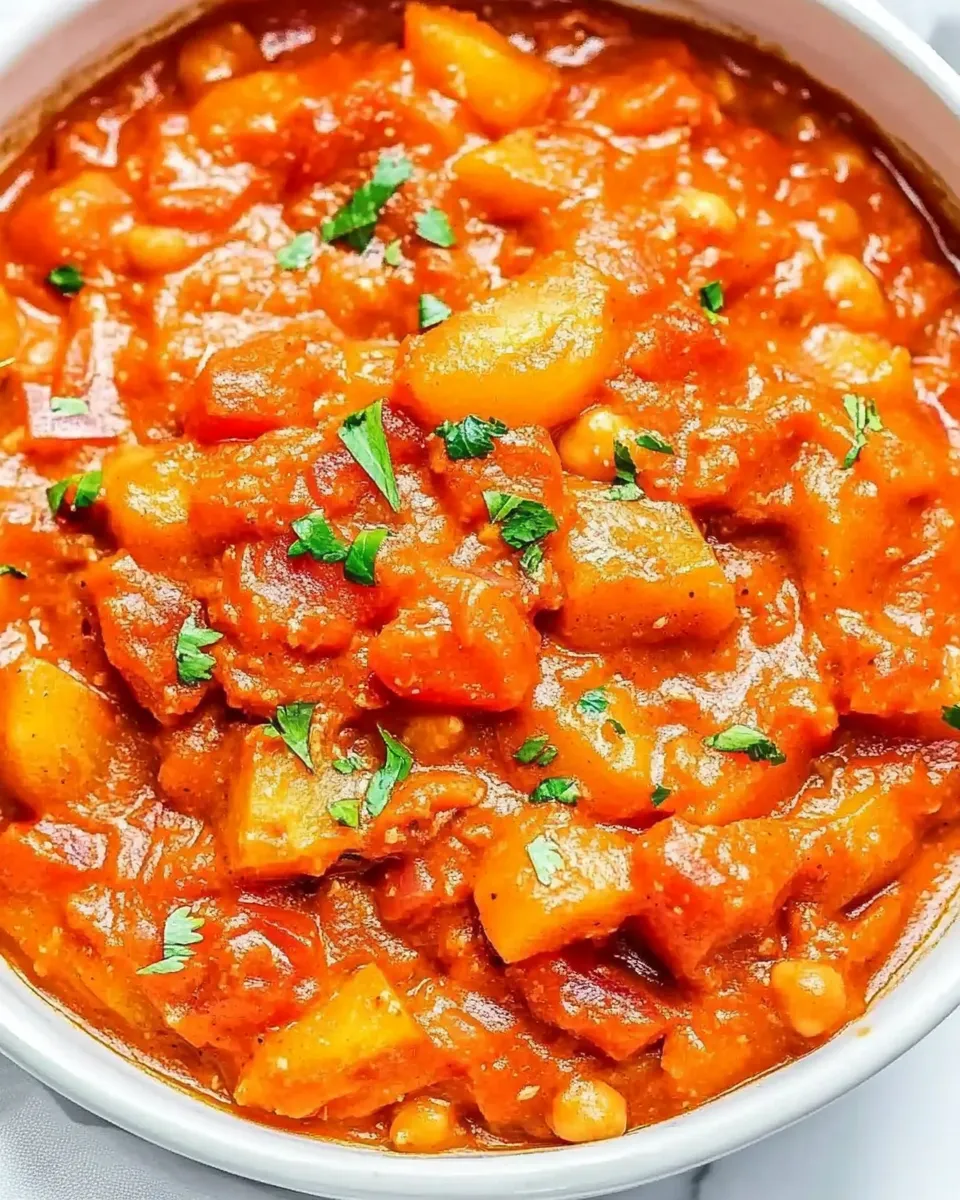
Potato Chickpea Coconut Curry
Ingredients
Equipment
Method
- Drain and rinse the one 15-ounce can of chickpeas; dice the potato into 1/2-inch chunks, dice the onion and red bell pepper small, and dice the zucchini into bite-sized pieces. Mince or press 3 to 4 cloves garlic. Measure your ginger choice (2–3 teaspoons ground OR 1 tablespoon fresh, finely chopped), 2–3 teaspoons ground coriander, and optional 1/2 teaspoon cayenne.
- Heat 3 tablespoons coconut oil (or olive oil) in a large skillet over medium-high heat until shimmering.
- Add the diced onion and diced potatoes to the hot oil. Sauté, stirring intermittently, until the onions and potatoes begin to soften and the edges of the potatoes turn lightly golden, about 8 minutes.
- Add the diced red bell pepper, garlic, ginger (ground or fresh), ground coriander, and the optional cayenne (if using). Cook, stirring nearly constantly, until fragrant, about 1 minute.
- Pour in the two 14-ounce cans of coconut milk. Add the diced zucchini, the drained and rinsed chickpeas, the one 4-ounce jar of Thai red curry paste (use the amount you prefer from the jar — you can start with 1–2 tablespoons and add more to taste, or use the whole jar), and the 4-ounce can of tomato paste. Stir thoroughly to combine.
- Add 1 teaspoon kosher salt and 1/2 teaspoon freshly ground black pepper. Stir, then increase heat just until the mixture comes to a fairly rapid boil.
- Reduce heat to medium, cover the skillet loosely with a lid leaving a small gap for steam to escape, and cook until the potatoes are cooked through and tender, about 15 minutes. Stir once or twice while cooking to prevent sticking.
- Remove the lid, add 2 tablespoons lime juice (add up to 4 tablespoons total to taste), and stir. Taste and, if desired, adjust seasoning by adding up to 1–2 tablespoons packed light brown sugar (optional), additional curry paste, salt, pepper, or cayenne to reach your preferred balance.
- Remove from heat and garnish with 1/4 to 1/3 cup finely chopped fresh cilantro (or basil) to taste. Serve.
- Store leftovers airtight in the refrigerator for up to 5 days or freeze for up to 4 months.
Notes
Tip
– Although there are a fair amount of ingredients to chop, while one stage is sautéing, boiling, simmering, etc. it is advised that you work ahead and are chopping and prepping the next ingredients you’ll need to add.
The smaller you cut your potatoes, the faster this dish will cook through. I found 1/2-inch chunks to work best so that the simmering/boiling time in step 3 stays at around 15 minutes.
Storage:
Leftovers will keep airtight in the fridge for up to 5 days and in the freezer for up to 3 months. Reheat in the microwave for about 30 seconds, or as needed.
Adapted from
Sweet Potato Chickpea Coconut Curry