Raspberry Cheesecake
I love a dessert that feels special but doesn’t demand a week of planning. Raspberry cheesecake hits that balance — creamy, tangy, and finished with a bright berry topping. It’s the kind of cake I bring to potlucks because it travels well and disappears fast.
This recipe uses a ready-made graham cracker pie crust and a straightforward, low-temperature bake to keep the texture silky without cracking. The raspberry topping is cooked and cooled, so it’s glossy and spoonable, not runny.
Below you’ll find the ingredient checklist, step-by-step instructions exactly as I follow them, troubleshooting tips, and practical storage notes. No fluff — just what you need to make this reliably every time.
Ingredient Checklist
Ingredients
- 1 Graham cracker pie crust* — shortcut base; a store-bought crust keeps prep quick and consistent.
- 4 cups cream cheese softened — the cheesecake’s body; bring to room temperature so the batter is lump-free.
- 1 cup sour cream — adds tang and smoothness to the filling.
- 1 1/3 cups sugar — sweetens the filling; measured precisely for balance.
- 1 teaspoon vanilla extract — rounds flavors; use a quality vanilla for best aroma.
- 4 large eggs whisked — bind the filling; whisk before adding for even mixing.
- 22 ounces raspberries divided — fruit for the sauce; part is pureed and part folded in whole to add texture.
- 2 tablespoons cornstarch — thickener for the raspberry purée so it sets on the cake.
- 1 cup sugar — sweetens the raspberry sauce; combined with cooked purée for a glossy finish.
Raspberry Cheesecake: How It’s Done
- Preheat the oven to 150°C (300°F). Place the graham cracker pie crust on a flat baking sheet or oven rack.
- In a large mixing bowl, beat the 4 cups softened cream cheese until smooth and free of lumps.
- Add the 1 cup sour cream and 1 1/3 cups sugar to the cream cheese and beat until smooth. Add the 1 teaspoon vanilla extract and mix briefly to combine, scraping down the bowl as needed.
- Gradually add the 4 whisked large eggs, folding them in gently until the batter is uniform and just combined.
- Pour the cheesecake batter into the prepared graham cracker crust and smooth the top. Bake for 60–70 minutes, until the edges are set and the center is still slightly jiggly.
- Remove the cheesecake from the oven and let it cool completely at room temperature.
- While the cheesecake cools, divide the 22 ounces of raspberries into two portions. Place one portion in a food processor or blender with the 2 tablespoons cornstarch and blend until smooth. Transfer the purée to a small saucepan, add the 1 cup sugar, and cook over medium heat, stirring frequently, for about 15 minutes or until the mixture thickens.
- Remove the saucepan from the heat and stir in the remaining raspberries. Let the raspberry sauce cool completely, stirring occasionally to prevent skin from forming.
- Once both the cheesecake and the raspberry sauce are completely cool, spread the sauce evenly over the top of the cheesecake.
- Refrigerate the assembled cheesecake overnight before serving.
Top Reasons to Make Raspberry Cheesecake
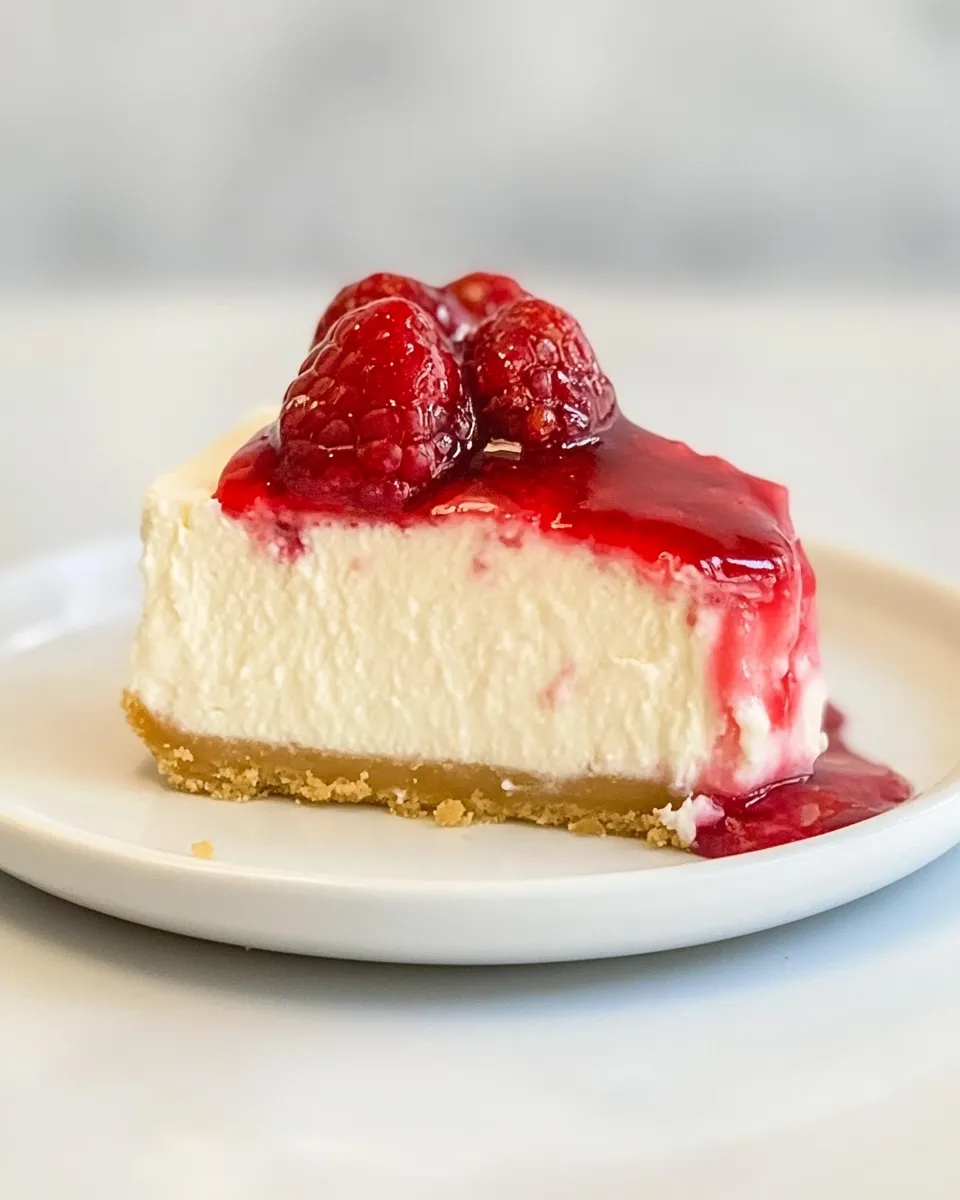
- Flavor balance: creamy, lightly sweet filling with a bright, slightly tart raspberry topping — it’s satisfying without being cloying.
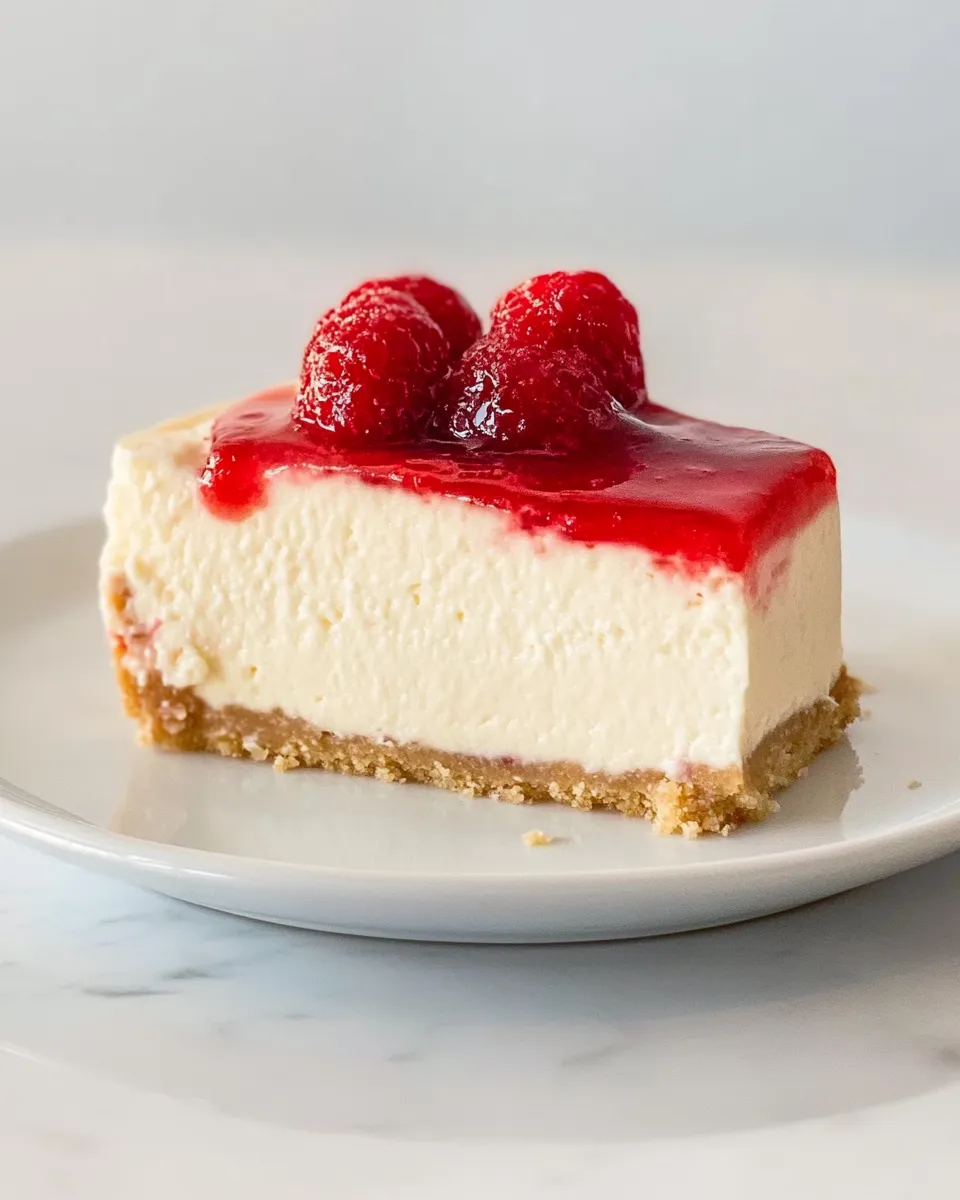
- Visual impact: the deep-pink sauce over a pale cheesecake makes for an elegant presentation with minimal effort.
- Make-ahead friendly: this recipe improves after chilling, so you can bake ahead and save time on the day you serve.
- Minimal hands-on time: using a ready crust and a simple purée keeps things efficient for busy cooks.
- Great for gatherings: slices hold their shape, travel well, and are easy to plate for a crowd.
If You’re Out Of…
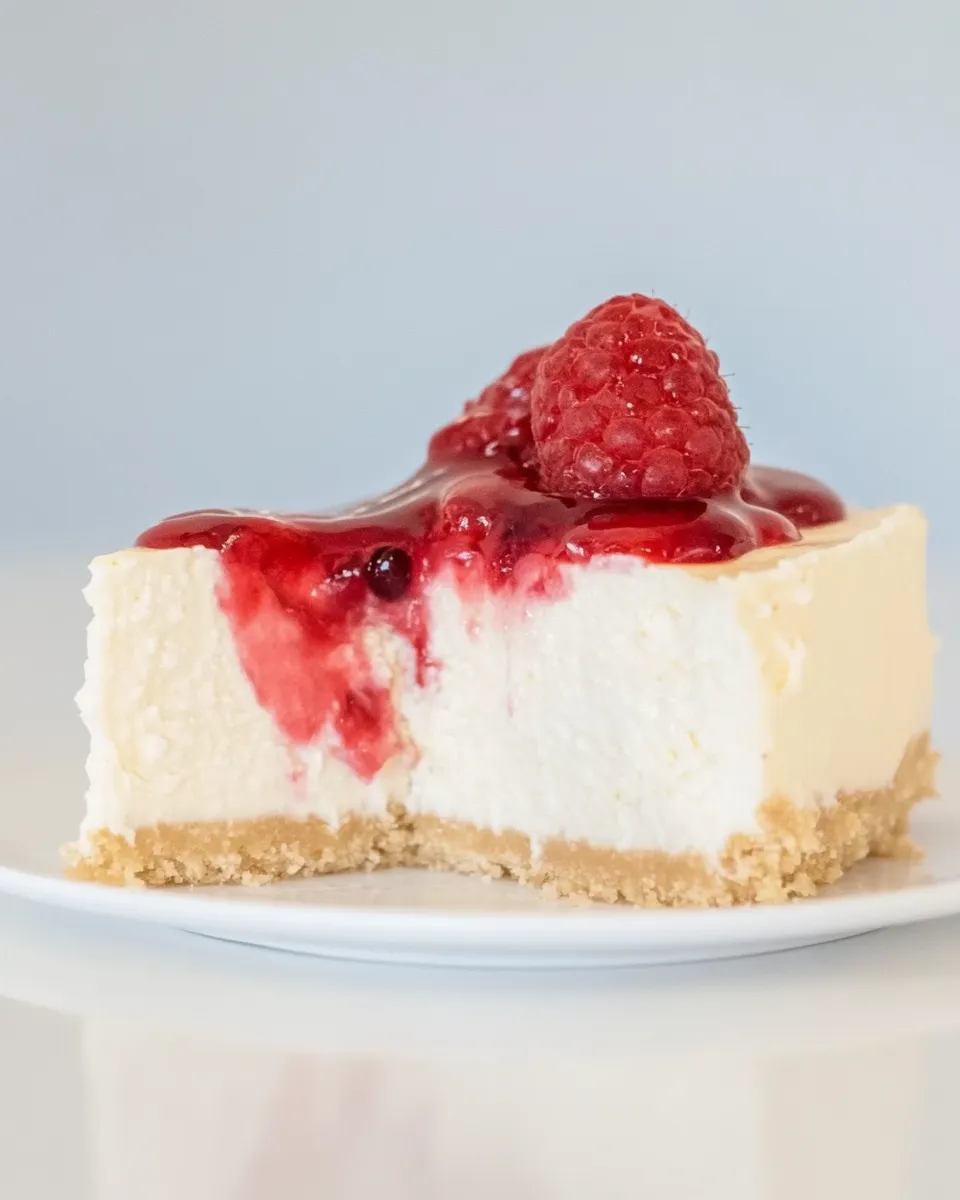
- Raspberries — Use frozen raspberries (thaw and drain briefly) or another berry like strawberries or blackberries; cooking time and texture will be comparable.
- Graham cracker crust — A digestive biscuit crust or shortbread crust works similarly; press crumbs into a pie pan if you’re making your own.
- Sour cream — Plain Greek yogurt can be used as a tangy substitute, but expect a slightly firmer texture.
- Cornstarch — You can use a small amount of arrowroot as a thickener; it behaves similarly when heated with fruit purée.
- Granulated sugar for the topping — Superfine sugar dissolves quickly; if using larger crystals, stir a bit longer as the purée cooks.
Appliances & Accessories
- Stand mixer or hand mixer — for smoothing the cream cheese and combining the filling without lumps.
- Food processor or blender — to purée the raspberries and incorporate the cornstarch evenly.
- 9–10 inch springform pan or the size of your graham cracker crust — though this recipe uses a ready-made pie crust, confirm that your crust fits a standard size.
- Baking sheet — to place the crust on for stable transfer in and out of the oven.
- Small saucepan and wooden spoon or heatproof spatula — to cook the berry purée and prevent sticking.
- Fine mesh sieve (optional) — if you prefer a seed-free sauce, pass the cooked purée through the sieve before adding whole berries.
- Refrigerator space — you’ll need room to chill the assembled cheesecake overnight.
Watch Outs & How to Fix
- Cracked top — often caused by overbeating or high oven temperature. This recipe’s low 150°C (300°F) bake reduces cracking. If a small crack appears, cover it with the raspberry sauce when cool.
- Soggy crust — placing the crust on a flat baking sheet before filling and baking helps. If the crust feels soft after chilling, slice and serve with a spatula, or brush the base with a thin layer of melted chocolate before filling next time to create a moisture barrier.
- Runny topping — if your raspberry sauce is too loose, return it to the heat and cook a few more minutes until it thickens. Cool completely before spreading.
- Grainy filling — caused by cold cream cheese. Always soften cream cheese to room temperature and beat until smooth before adding other ingredients.
- Center sinks — underbaking or cooling too fast can cause sinking. Bake until edges are set and center is slightly jiggly, then cool gradually at room temperature before refrigerating.
- Fruit skin or skin layer on sauce — stir the sauce occasionally while cooling and press it through a sieve if you prefer a uniformly smooth finish.
Adaptations for Special Diets
- Gluten-free — use a certified gluten-free graham crust or make a crust from gluten-free cookies blended with butter; the filling and topping are naturally gluten-free.
- Lower-sugar topping — reduce the topping sugar slightly and taste as it cooks. Because the sauce is cooked and thickened, it still sets with less sugar, though shelf life may be shorter.
- Dairy-free — replace cream cheese and sour cream with firm plant-based cream cheese and a thick nondairy yogurt; texture will be slightly different but still rich. Chill thoroughly to help it firm up.
- Nut-free — this recipe is nut-free as written; if you substitute crusts, check labels for cross-contamination.
Cook’s Commentary
I rely on this method because it’s forgiving: the low-temperature bake minimizes cracking, and the cooked raspberry topping hides small imperfections while adding brightness. The division of raspberries — purée plus whole berries — creates a sauce that’s both smooth and textured, which I prefer over a fully strained coulis.
Two practical notes from repeated bakes: first, let the cream cheese warm up on the counter for at least an hour if your kitchen is cool. Second, while an overnight chill is called for, I usually let it rest at least 8 hours; the flavors round out and slices cut cleaner the next day.
Storage & Reheat Guide
- Refrigeration — store the whole cheesecake covered or in a cake carrier in the fridge for up to 4 days. Tightly wrap slices in plastic wrap for individual storage.
- Freezing — you can freeze slices (without the sauce) for up to 1 month. Thaw overnight in the refrigerator and add fresh or thawed topping before serving. Freezing the assembled cake with topping can change texture.
- Serving from fridge — remove the cheesecake about 15–20 minutes before slicing to take the chill off; it slices cleaner if slightly softened but still cool.
- Reheating — cheesecake is best served chilled. If you prefer a warm topping, gently heat a small portion of the raspberry sauce and spoon it over chilled slices just before serving.
Quick Q&A
- Q: Can I use frozen raspberries? — Yes. Thaw them and drain excess liquid before using, or expect a slightly looser sauce and cook it a bit longer to thicken.
- Q: Why do we cook the raspberries? — Cooking with cornstarch activates the thickener and concentrates the flavor, giving a glossy set topping that won’t weep across the plate.
- Q: Can I make the crust from scratch? — Absolutely. Use crushed graham crackers mixed with melted butter, press into a pan, and bake briefly before filling if you like a firmer base.
- Q: How do I know the cheesecake is done? — The edges should be set and the center slightly jiggly when you gently shake the pan. It will continue to firm as it cools.
See You at the Table
Make this raspberry cheesecake a day ahead and you’ll be rewarded with cleaner slices and rounded flavors. It travels well and suits celebrations or a quiet Sunday dessert. If something doesn’t go perfectly, remember the raspberry topping is forgiving — it hides a lot and elevates the whole cake.
When you try it, slice a modest piece, serve with coffee or a late-afternoon tea, and enjoy the payoff of a dessert that looks impressive and is straightforward to make.
Raspberry Cheesecake
Ingredients
Equipment
Method
- Preheat the oven to 150°C (300°F). Place the graham cracker pie crust on a flat baking sheet or oven rack.
- In a large mixing bowl, beat the 4 cups softened cream cheese until smooth and free of lumps.
- Add the 1 cup sour cream and 1 1/3 cups sugar to the cream cheese and beat until smooth. Add the 1 teaspoon vanilla extract and mix briefly to combine, scraping down the bowl as needed.
- Gradually add the 4 whisked large eggs, folding them in gently until the batter is uniform and just combined.
- Pour the cheesecake batter into the prepared graham cracker crust and smooth the top. Bake for 60–70 minutes, until the edges are set and the center is still slightly jiggly.
- Remove the cheesecake from the oven and let it cool completely at room temperature.
- While the cheesecake cools, divide the 22 ounces of raspberries into two portions. Place one portion in a food processor or blender with the 2 tablespoons cornstarch and blend until smooth. Transfer the purée to a small saucepan, add the 1 cup sugar, and cook over medium heat, stirring frequently, for about 15 minutes or until the mixture thickens.
- Remove the saucepan from the heat and stir in the remaining raspberries. Let the raspberry sauce cool completely, stirring occasionally to prevent skin from forming.
- Once both the cheesecake and the raspberry sauce are completely cool, spread the sauce evenly over the top of the cheesecake.
- Refrigerate the assembled cheesecake overnight before serving.
Notes
I used a store-bought crust, but you can make one from scratch. Combine 1 1/2 cups crushed graham crackers, five tablespoons sugar, and six tablespoons melted butter. Transfer to a lightly greased 9-inch pie dish.
TO STORE
: Cover the baked cheesecake or individual slices with plastic wrap and store in the fridge for up to 5 days.
TO FREEZE
: Store the individual slices in airtight containers, then freeze for up to 6 months.