Roasted Broccoli and Cauliflower Recipe
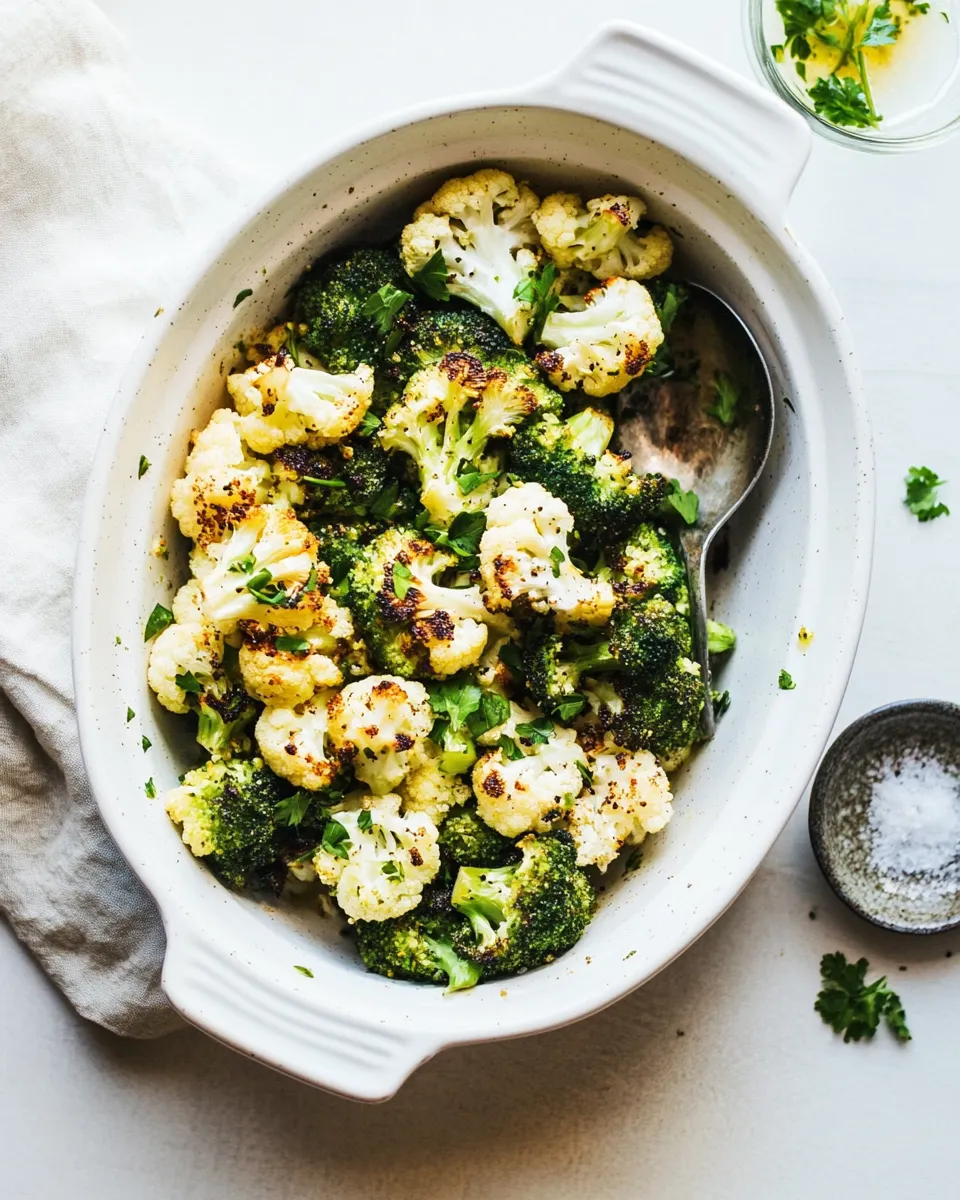
I cook vegetables the way I cook memories: simply, honestly, and with a little patience. This roast is one of those dishes that looks and tastes like you fussed, but really requires only a few clear steps and good timing. The result is crisped edges, tender insides, and bright lemon and Parmesan to finish.
It’s a weekday staple for me. I roast a big sheet pan and use leftovers to top bowls, toss with pasta, or pile onto toast. The garlic and red pepper give a gentle bite, while lemon and Parmesan lift the whole thing so it feels finished, not plain.
This post gives you the exact ingredient list and step-by-step method, then walks through why it works, common mistakes, smart swaps, and storage tips. Read it once, then make it your go-to vegetable side.
What to Buy
Make a short shopping list and stick to it: fresh broccoli and cauliflower, lemons, a good olive oil, Parmesan, and fresh parsley. Buy heads with tight florets and bright green stems—avoid any yellowing or soft spots. If you can, choose a lemon that feels heavy for its size; it will be juicier.
For Parmesan, real Parmigiano-Reggiano is best but a good aged-grana padano-style cheese will work. Get garlic bulbs with firm cloves and dry skins. If you prefer a milder heat, skip the red pepper flakes or buy a mild crushed pepper.
Ingredients
- 1 ½ pounds broccoli and cauliflower florets — mixed florets; cut to similar sizes for even roasting.
- 3 tablespoons olive oil — coats the vegetables and helps them brown; use extra-virgin for flavor.
- 2 garlic cloves, thinly sliced — will mellow and crisp slightly during roasting; slice thin for even distribution.
- ½ teaspoon crushed red pepper flakes — adds a subtle heat; adjust to taste or omit for no spice.
- Kosher salt — essential for seasoning during and after roasting; use a couple pinches initially, then taste and adjust.
- ¾ teaspoon lemon zest — brightens the finished dish; zest before juicing the lemon.
- 2 teaspoons lemon juice, plus more to taste — adds acidity to balance richness from oil and Parmesan.
- 3 tablespoons grated Parmesan — salty, savory finish that melts slightly on the warm florets.
- Chopped Italian parsley, for sprinkling — fresh herb note and color; add right before serving.
Roasted Broccoli and Cauliflower: From Prep to Plate
- Preheat the oven to 425°F. Line a baking sheet with parchment paper.
- Spread 1 ½ pounds broccoli and cauliflower florets on the prepared sheet. Drizzle with 3 tablespoons olive oil, add 2 garlic cloves (thinly sliced) and ½ teaspoon crushed red pepper flakes, and sprinkle a couple pinches of kosher salt. Toss the florets on the sheet so everything is evenly coated.
- Roast in the preheated oven for 20–25 minutes, tossing once or twice during cooking, until the florets are tender and golden.
- Transfer the roasted broccoli and cauliflower to a large bowl. Add ¾ teaspoon lemon zest, 2 teaspoons lemon juice, and 3 tablespoons grated Parmesan. Toss gently to combine.
- Taste and season with additional kosher salt and more lemon juice if desired.
- Finish with a sprinkling of chopped Italian parsley and serve.
Why This Recipe Works
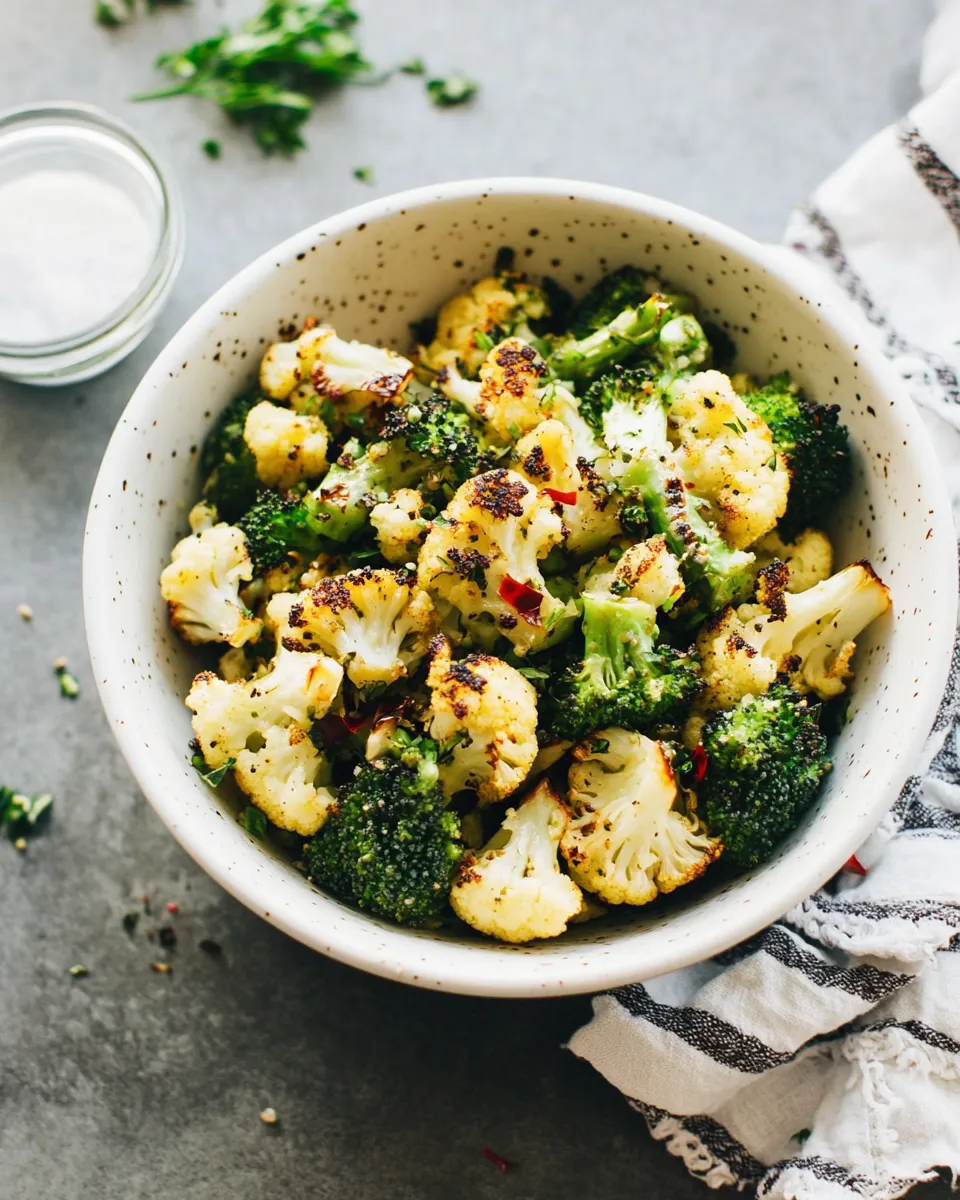
The oven temperature and oil amount are calibrated to create Maillard browning without drying the florets. At 425°F, the edges caramelize while the interior stays tender. The olive oil conducts heat, encourages browning, and carries the garlic and red pepper flavors across the pan.
Thinly sliced garlic softens and toasts rather than burning when spread across the sheet and roasted at this temperature. Tossing once or twice ensures even contact with the hot sheet and avoids steaming. Lemon zest and juice restore brightness after roasting, and Parmesan adds savory depth and a pleasant melt that clings to the vegetables.
What to Use Instead
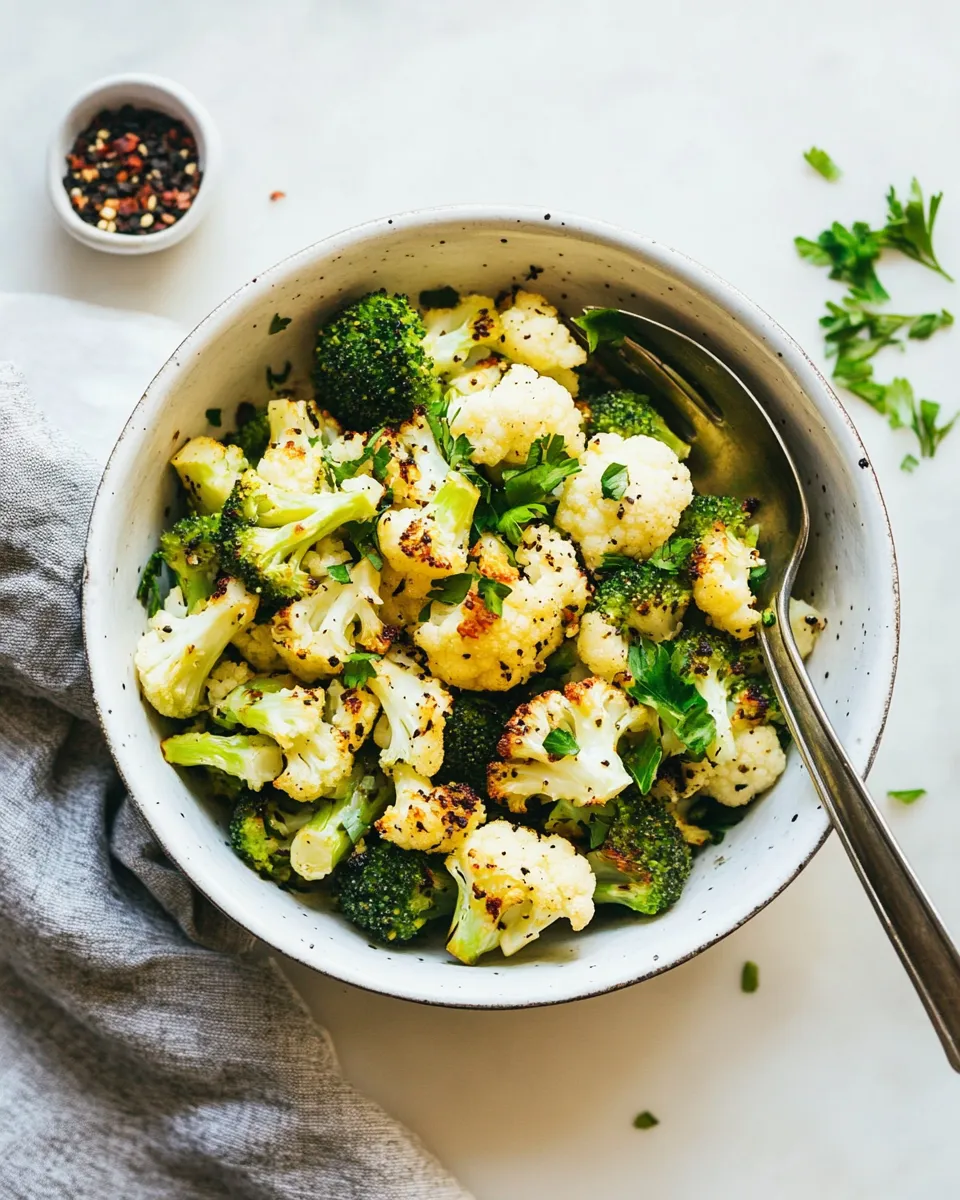
If you don’t have both vegetables, roast one alone. Use all broccoli or all cauliflower; cook time stays roughly the same but check for doneness a few minutes earlier or later depending on floret size. For oil, avocado or light olive oil are acceptable substitutes if you want a higher smoke point. If you avoid dairy, skip the Parmesan and finish with toasted breadcrumbs or a drizzle of tahini for richness.
Garlic can be replaced with shallots sliced thinly for a sweeter finish. If you prefer a smoky kick, swap crushed red pepper flakes for a light dusting of smoked paprika after roasting. Fresh herbs can vary—cilantro, chives, or basil each bring a different profile.
Toolbox for This Recipe
- Baking sheet — use a rimmed sheet for easy tossing and to catch any oil.
- Parchment paper — keeps the sheet clean and prevents sticking; allows easy tosses.
- Sharp knife and cutting board — for trimming and cutting florets to similar sizes.
- Microplane or fine grater — for lemon zest and fresh-grating Parmesan.
- Large mixing bowl — for the final toss with lemon and cheese.
- Tongs or spatula — for tossing during roasting and transferring to the bowl.
Mistakes That Ruin Roasted Broccoli and Cauliflower
There are a few easy missteps that turn this from crisp and bright to limp or bitter:
- Overcrowding the pan — too many florets steam instead of roast. Give them a single layer with room to brown.
- Using too little oil — oil promotes browning and flavor; skimping leads to dry and bland vegetables.
- Slicing florets unevenly — small pieces will burn while large ones remain undercooked. Aim for uniform pieces.
- Adding lemon or cheese too early — acids and cheese lose brightness and texture in the oven. Add them off-heat.
- High heat with thin garlic slices — if slices are too thin or crowded near direct heat they may burn; spread them across the pan.
Fresh Takes Through the Year
Spring: Add blanched asparagus tips with the florets in the last 8–10 minutes of roasting and finish with lemon and grated pecorino. Summer: Toss in cherry tomatoes for the last 10 minutes— they burst and form a sweet counterpoint. Fall: Sprinkle with toasted walnuts or pumpkin seeds and a drizzle of maple for a cozy touch. Winter: Roast with root vegetables—carrots and parsnips pair well—and finish with rosemary instead of parsley.
Switch herbs and finishes depending on seasonality: fresh basil in summer, dill in spring, or a squeeze of orange juice in winter for a different citrus profile.
Cook’s Commentary
I make this dish at least twice a week when the season leans on crucifers. It holds well and is forgiving. The key habit I’ve developed is tasting at two moments: after the first toss in the oven to check browning, and after the lemon and Parmesan—so I can adjust salt and acid. Don’t skip the lemon zest; its oil contains concentrated citrus flavor that lifts the entire dish.
When entertaining, I roast on two sheet pans and keep one in a low oven. Right before serving, I toss both together in a large bowl with lemon and cheese so everything tastes cohesive and freshly finished.
Refrigerate, Freeze, Reheat
Refrigerate leftover roasted florets in an airtight container for up to 4 days. They lose their crispness but stay flavorful. To reheat, spread on a baking sheet and warm at 400°F for 8–10 minutes to revive some texture, or reheat in a skillet over medium heat with a splash of olive oil.
Freezing is possible but not ideal; the texture degrades. If you must freeze, flash-cool the roasted vegetables, spread them on a tray until solid, then transfer to a freezer bag for up to 2 months. Thaw in the refrigerator and re-crisp in a hot pan or oven.
Frequently Asked Questions
- Can I roast frozen broccoli and cauliflower? — You can, but frozen florets release more water and won’t brown as well. Thaw and pat dry first for better results.
- Do I need to peel cauliflower stems? — No need to peel completely; trim any tough ends and slice the stems so they cook at the same rate as florets.
- Can I make this oil-free? — Roasting without oil is possible but will reduce browning and mouthfeel. Consider a light spray of cooking oil or a finishing drizzle of good olive oil after roasting.
- How do I prevent garlic from burning? — Slice garlic thinly and spread evenly. If you’re worried, add the slices halfway through roasting so they toast but don’t turn bitter.
- Is this suitable for meal prep? — Yes. Use roasted vegetables in grain bowls, salads, pastas, or as a side across several days.
In Closing
This Roasted Broccoli and Cauliflower recipe is straightforward, reliable, and adaptable. Follow the simple steps, pay attention to pan space and even cutting, and finish with bright lemon and salty Parmesan. It’s the kind of side that makes weeknight dinners feel a little more thoughtful without extra work.
Make a double batch. Use leftovers creatively. And when you plate it, take a moment to add parsley last—fresh herbs make a small difference that tastes like care.
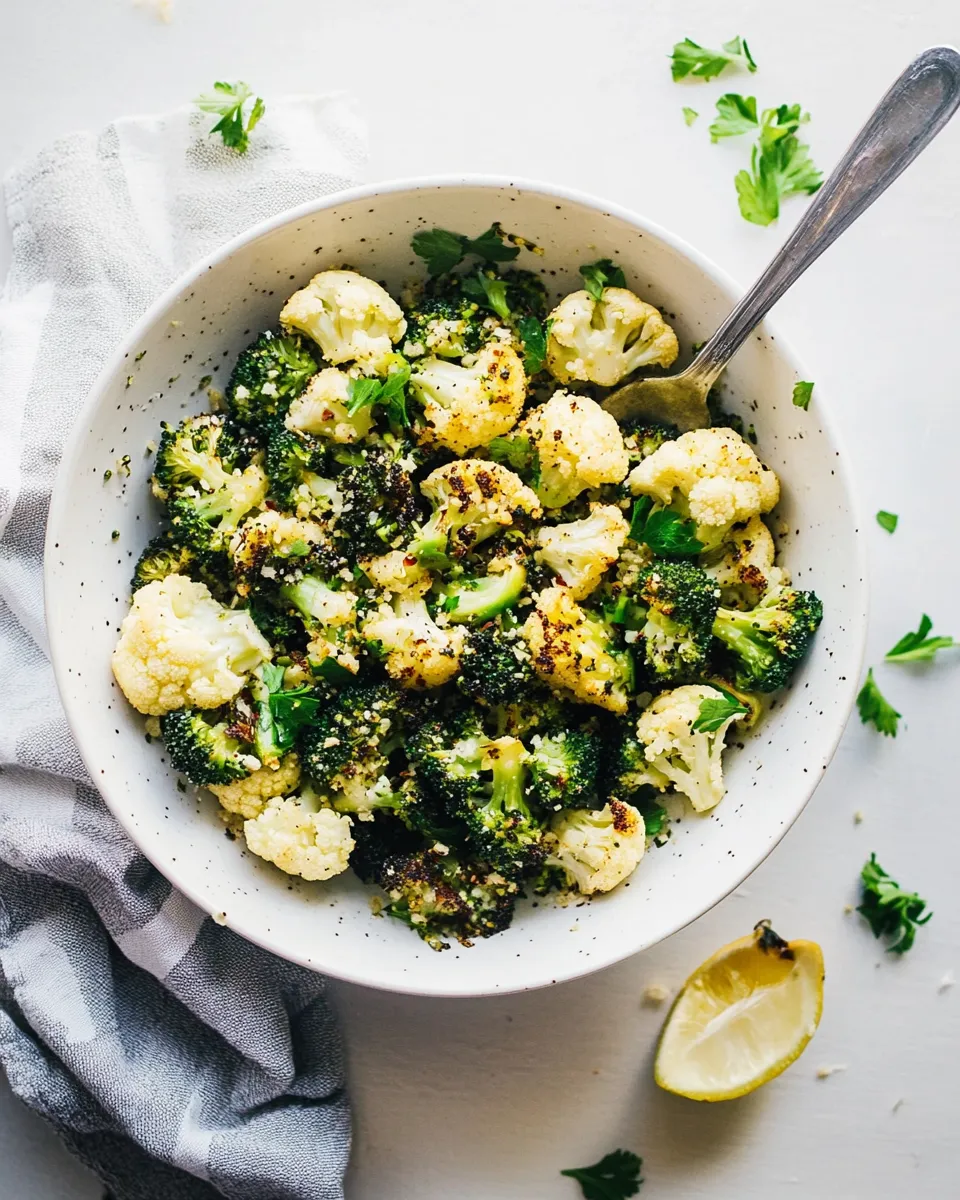
Roasted Broccoli and Cauliflower Recipe
Ingredients
Equipment
Method
- Preheat the oven to 425°F. Line a baking sheet with parchment paper.
- Spread 1 ½ pounds broccoli and cauliflower florets on the prepared sheet. Drizzle with 3 tablespoons olive oil, add 2 garlic cloves (thinly sliced) and ½ teaspoon crushed red pepper flakes, and sprinkle a couple pinches of kosher salt. Toss the florets on the sheet so everything is evenly coated.
- Roast in the preheated oven for 20–25 minutes, tossing once or twice during cooking, until the florets are tender and golden.
- Transfer the roasted broccoli and cauliflower to a large bowl. Add ¾ teaspoon lemon zest, 2 teaspoons lemon juice, and 3 tablespoons grated Parmesan. Toss gently to combine.
- Taste and season with additional kosher salt and more lemon juice if desired.
- Finish with a sprinkling of chopped Italian parsley and serve.