Roasted Chicken Thighs with Garlic
There’s something deeply satisfying about a simple, confident roast. A hot pan, a little patience at the stove, and the oven finishing the job — that’s the rhythm behind these Roasted Chicken Thighs with Garlic. The skin crisps, the garlic softens and turns sweet, and the pan sauce ties everything together with a quick flourish. No complicated steps, just clear technique that yields dependable results.
I cook this when I want something that feels special but doesn’t require babysitting. It’s a weekday hero that doubles for guests without panic. The aromatics are honest: olive oil and butter for fat, fresh herbs for perfume, garlic for depth, and a squeeze of lemon to brighten the finished sauce.
Read through once, gather the few tools you need, and follow the stepwise directions. I’ll walk through why each choice matters, what to do if you don’t have something, and the small tests I used until the skin was reliably crisp and the sauce silky. Let’s get to it.
Ingredient Rundown
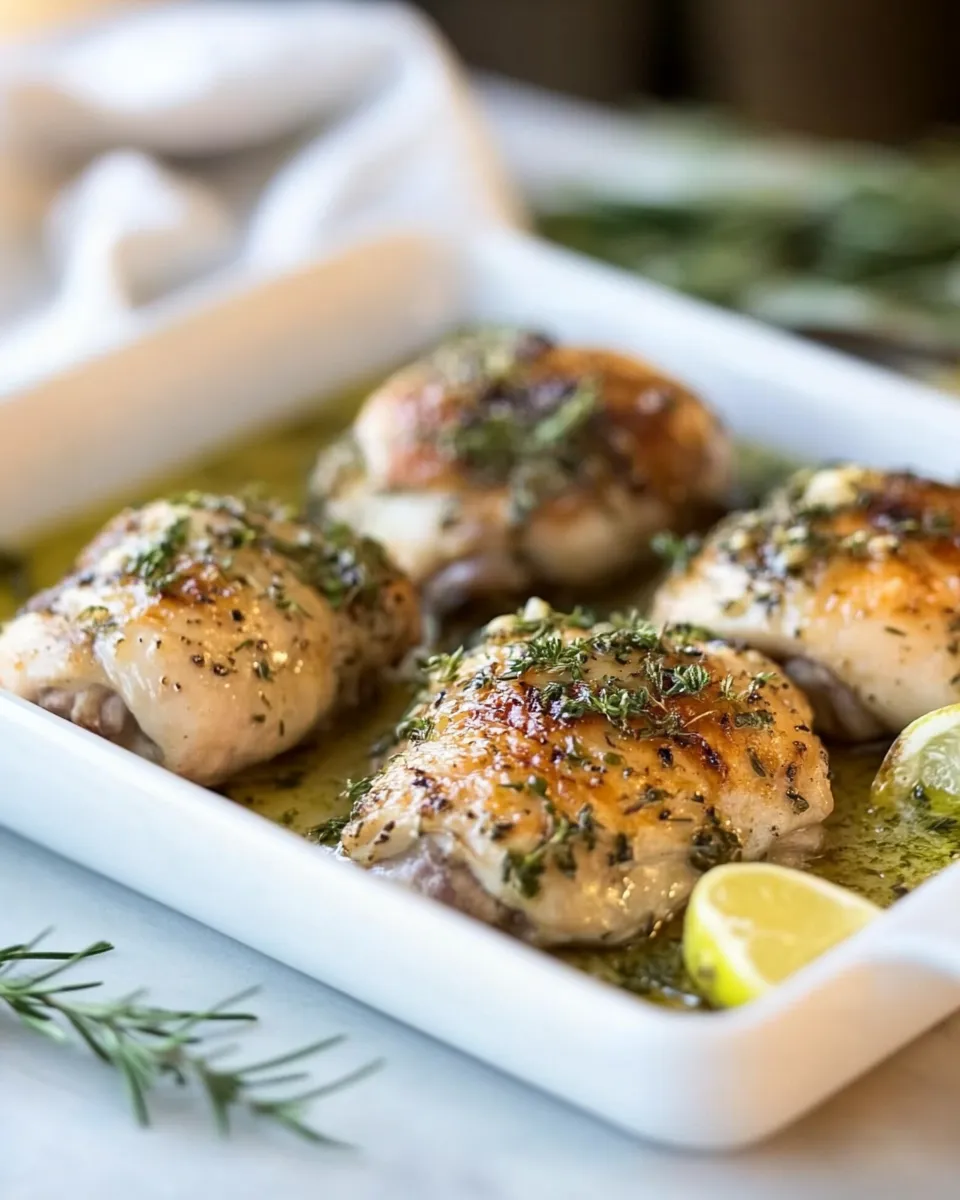
- olive oil — provides a high-smoke-point cooking fat and helps crisp the skin.
- butter — adds richness and helps the pan juices brown; combine with oil to prevent burning.
- garlic — whole cloves roast to a mellow, sweet finish and flavor the pan sauce.
- salt and pepper — essential seasoning; salt draws flavor out and helps the skin brown.
- bone-in, skin-on chicken thighs — the star ingredient; bone and skin give flavor and keep meat moist.
- fresh rosemary, fresh thyme, and fresh parsley — rosemary and thyme add aromatic depth during roasting; parsley finishes the dish with a fresh lift.
- cornstarch — thickens the pan sauce quickly without clouding it.
- chicken broth — the liquid base for the pan sauce; it pulls up the fond and rounds the flavor.
- lemon — brightens the sauce at the end; a little acidity balances the fat.
Roasted Chicken Thighs with Garlic Made Stepwise
- Preheat the oven to 400°F. Place a large oven-proof skillet or sauté pan over medium heat and add the olive oil and butter; heat until the butter is melted and the fat is shimmering.
- Add the garlic cloves to the pan and cook, turning occasionally, until lightly browned, about 3–5 minutes. Transfer the browned garlic to a plate, leaving the oil and butter in the pan.
- Pat the chicken thighs very dry with paper towels. Season both sides of the thighs with salt and pepper.
- Increase the burner to medium-high. If you have a splatter screen, use it. Place the chicken thighs in the skillet skin-side down and cook without moving until the skin is browned and crisp, about 5–6 minutes. Remove the skillet from the heat.
- Strip the leaves from the rosemary and thyme stems and sprinkle the fresh herbs over both sides of the chicken. Flip the thighs so the skin side is facing up, and scatter the reserved browned garlic cloves around the chicken.
- Transfer the skillet to the preheated oven and roast until the skin is crispy and the internal temperature of the chicken reaches 165°F, about 20 minutes.
- While the chicken roasts, whisk the chicken broth and cornstarch together in a small bowl until smooth.
- When the chicken is done, remove the skillet from the oven. Transfer the chicken and garlic to a plate and keep warm. Place the skillet with the pan drippings over medium heat and bring to a simmer.
- Whisk the broth–cornstarch mixture again, then pour it into the skillet. Cook, whisking constantly, until the sauce thickens, about 1 minute. Remove from the heat and stir in lemon juice to taste.
- Spoon some pan sauce onto plates, top with a roasted chicken thigh and several of the roasted garlic cloves, and finish by sprinkling with fresh parsley.
Why This Recipe Is Reliable
This recipe leans on three reliable principles: dry skin, hot fat, and finishing in the oven. Patting the thighs very dry removes surface moisture that would steam the skin instead of crisping it. A mix of olive oil and butter gives you flavor and a higher tolerance for heat so you can brown without burning. Searing skin-side down first builds a golden crust and releases flavorful fond; the oven then cooks the thighs through gently so they stay moist.
The method also separates roasting the garlic from searing the chicken, which prevents the garlic from burning while still capturing its roasted sweetness. The quick cornstarch-thickened pan sauce is fast and consistent — it picks up the browned bits from the pan and becomes glossy in seconds. Little moves like finishing with lemon and parsley balance richness and add lift, so the dish never feels heavy.
If You’re Out Of…
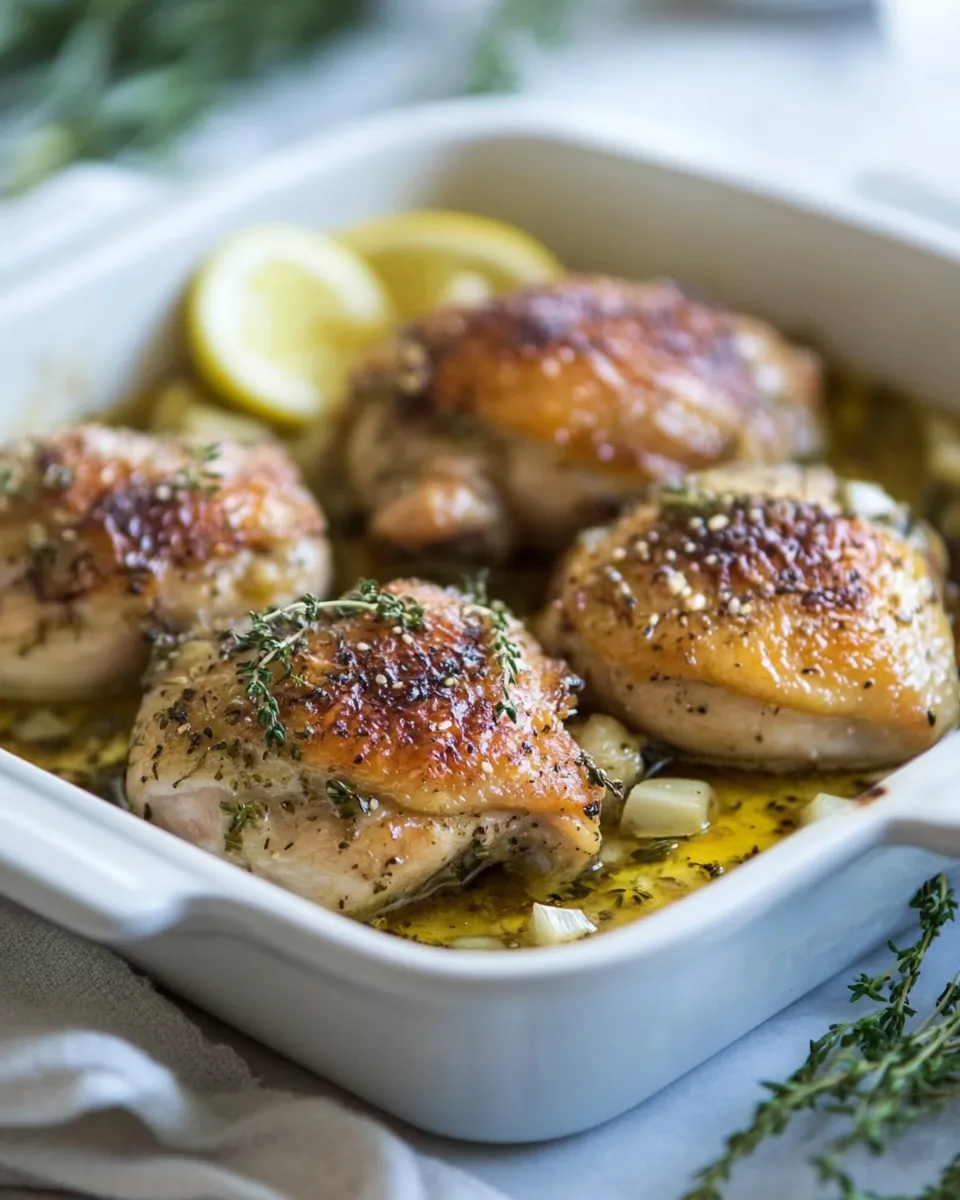
Here are practical swaps and adjustments if your pantry or produce drawer is light.
- No butter? Add a touch more olive oil and keep an eye on the heat so nothing scorches.
- No fresh herbs? Use the leaves you have; if only one is available, use it — rosemary or thyme alone will still give good aroma.
- No chicken broth? Use water and taste the sauce carefully, adjusting salt and lemon to compensate for the lack of savory stock.
- No cornstarch? You can reduce the sauce by simmering a bit longer to thicken it naturally, watching it closely to avoid burning.
Equipment Breakdown
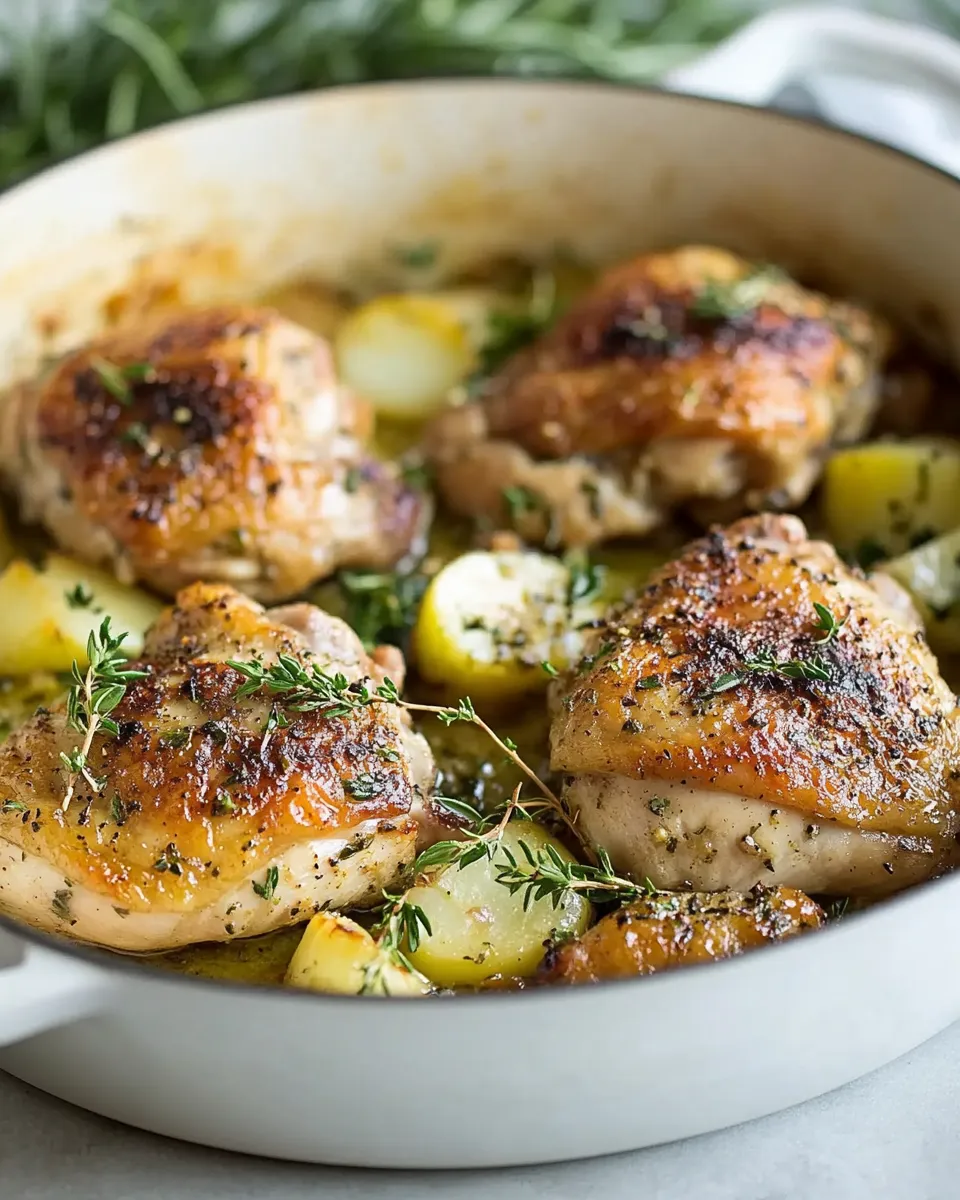
A few good tools make this easier and more consistent.
- Large oven-proof skillet or sauté pan — essential because you sear on the stove and finish in the oven in the same pan. Cast iron or stainless steel both work well.
- Instant-read thermometer — the quickest, most reliable way to confirm the thighs reach 165°F without overcooking.
- Paper towels — for patting the chicken dry; do not skip this step if you want crisp skin.
- Whisk and small bowl — for dissolving the cornstarch into the broth so you don’t get lumps in the sauce.
- Splatter screen (optional) — helpful when searing at higher heat to keep the stovetop cleaner and reduce burns from hot oil.
Troubleshooting Tips
Skin not crisping
Most often this comes from moisture. Pat the skin very dry and avoid overcrowding the pan. If the pan is crowded the thighs will steam instead of sear; cook in batches if necessary.
Garlic burning
If the garlic browns too quickly, you likely had the pan too hot during that initial step. Move the cloves to a cooler corner of the pan as you sear the chicken, or reduce the burner slightly. The recipe separates the garlic out during searing for this reason.
Sauce too thin or lumpy
If the sauce is thin, let it simmer a little longer; corn-starch thickens quickly but needs heat to activate. If it’s lumpy, you either added cornstarch dry or didn’t whisk it into the broth fully — in future whisk until smooth before pouring.
Dry chicken
Dry meat is usually overcooking. Rely on an instant-read thermometer and remove the thighs once they hit 165°F. Keep them warm while you finish the sauce rather than keeping them in the hot pan or oven.
Variations for Dietary Needs
This recipe is straightforward to adapt.
- Lower sodium — reduce the initial salt on the thighs and adjust after the sauce is made so you control the final seasoning.
- Dairy-free — omit the butter and use olive oil only; the method still produces crisp skin and a good pan sauce.
- Grain-free — cornstarch is grain-free and works well; if avoiding it, reduce the sauce gently to concentrate it instead.
These swaps keep the technique intact while accommodating dietary constraints without altering the cooking steps.
What I Learned Testing
In testing, timing and temperature were the two biggest levers. When the pan is truly hot and the thighs are dry, 5–6 minutes skin-side down reliably gives deep color without burning. I also learned that rescuing those browned garlic cloves before the high-heat sear keeps them sweet and soft instead of acrid.
Another small revelation: letting the pan sauce simmer for just a minute after adding the broth–cornstarch slurry produced a glossy, clingy sauce. Too long and it tightens too much; too short and it stays watery. That one-minute window is forgiving but worth watching.
Store, Freeze & Reheat
Cool cooked chicken within two hours and refrigerate in a shallow container for up to 3–4 days. Store the sauce separately if you can to preserve texture.
To freeze, wrap cooled thighs tightly and freeze for up to 3 months. Thaw overnight in the refrigerator before reheating.
Reheat gently: warm the thighs in a 325°F oven until heated through, 10–15 minutes depending on size, or briefly in a skillet skin-side up to refresh the crust. Reheat the sauce over low heat, adding a splash of broth or water if it’s too thick.
Ask & Learn
If you try this recipe and something goes sideways, tell me what happened: did the skin fail to brown, did the sauce not thicken, or did the garlic taste bitter? Include what equipment you used and any ingredient swaps. Small details — oven type, pan material, how wet the chicken was — make a big difference and help diagnose the issue quickly.
Favorite follow-up questions I get: “Can I use breasts instead?” (Yes, but reduce oven time and watch temperature.) “Can I double the recipe?” (Yes, but use two pans or work in batches so you don’t crowd the pan.)
Bring It Home
This Roasted Chicken Thighs with Garlic method is about control: dry skin, hot fat, and finishing in the oven. It pairs well with simple starches that soak up the sauce — roasted potatoes, a bed of rice, or a crisp green salad. The dish is forgiving, fast to pull together, and scales easily.
Make it once exactly as written to learn the rhythm, then tinker: more lemon if you want brightness, more parsley for fresh green notes, or extra garlic if you like it mellow and sweet. Keep these steps in your rotation and you’ll have a go-to roast chicken that’s both weeknight-friendly and ready for company.
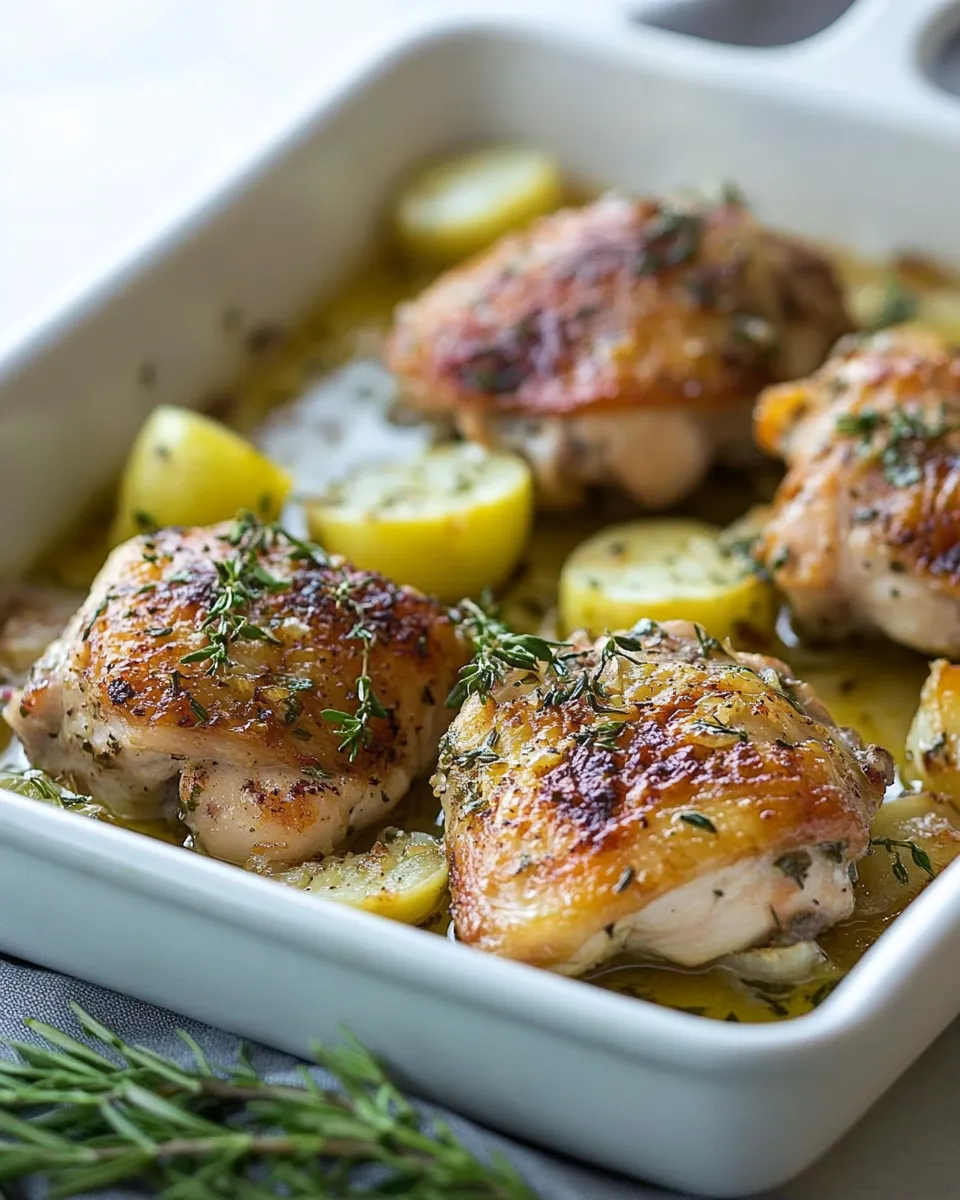
Roasted Chicken Thighs with Garlic
Ingredients
Equipment
Method
- Preheat the oven to 400°F. Place a large oven-proof skillet or sauté pan over medium heat and add the olive oil and butter; heat until the butter is melted and the fat is shimmering.
- Add the garlic cloves to the pan and cook, turning occasionally, until lightly browned, about 3–5 minutes. Transfer the browned garlic to a plate, leaving the oil and butter in the pan.
- Pat the chicken thighs very dry with paper towels. Season both sides of the thighs with salt and pepper.
- Increase the burner to medium-high. If you have a splatter screen, use it. Place the chicken thighs in the skillet skin-side down and cook without moving until the skin is browned and crisp, about 5–6 minutes. Remove the skillet from the heat.
- Strip the leaves from the rosemary and thyme stems and sprinkle the fresh herbs over both sides of the chicken. Flip the thighs so the skin side is facing up, and scatter the reserved browned garlic cloves around the chicken.
- Transfer the skillet to the preheated oven and roast until the skin is crispy and the internal temperature of the chicken reaches 165°F, about 20 minutes.
- While the chicken roasts, whisk the chicken broth and cornstarch together in a small bowl until smooth.
- When the chicken is done, remove the skillet from the oven. Transfer the chicken and garlic to a plate and keep warm. Place the skillet with the pan drippings over medium heat and bring to a simmer.
- Whisk the broth–cornstarch mixture again, then pour it into the skillet. Cook, whisking constantly, until the sauce thickens, about 1 minute. Remove from the heat and stir in lemon juice to taste.
- Spoon some pan sauce onto plates, top with a roasted chicken thigh and several of the roasted garlic cloves, and finish by sprinkling with fresh parsley.