Rosemary Shortbread Cookies
These rosemary shortbread cookies are the kind of small, confident baking that rewards a little patience and attention. They come together with just a handful of ingredients, wedge into a classic buttery shortbread texture, and pick up a savory-scented lift from fresh rosemary. I make them when I want something simple to serve with tea or to tuck into a gift tin.
The dough is forgiving: it presses and chills easily, and the cookies hold their shape during baking while getting a fine crumb and just a whisper of crisp at the edges. If you like shortbread but want a twist that’s not overly sweet, the rosemary does exactly that — aromatic, slightly resinous, and surprisingly complementary to the butter and powdered sugar.
Below you’ll find a tidy shopping list and a clear, step-by-step bake guide using the exact recipe directions. I’ll also share practical gear, troubleshooting points, and storage notes so you can replicate these consistently. No fluff — just the honest, useful tips that make a small batch of cookies turn out reliably well.
Shopping List
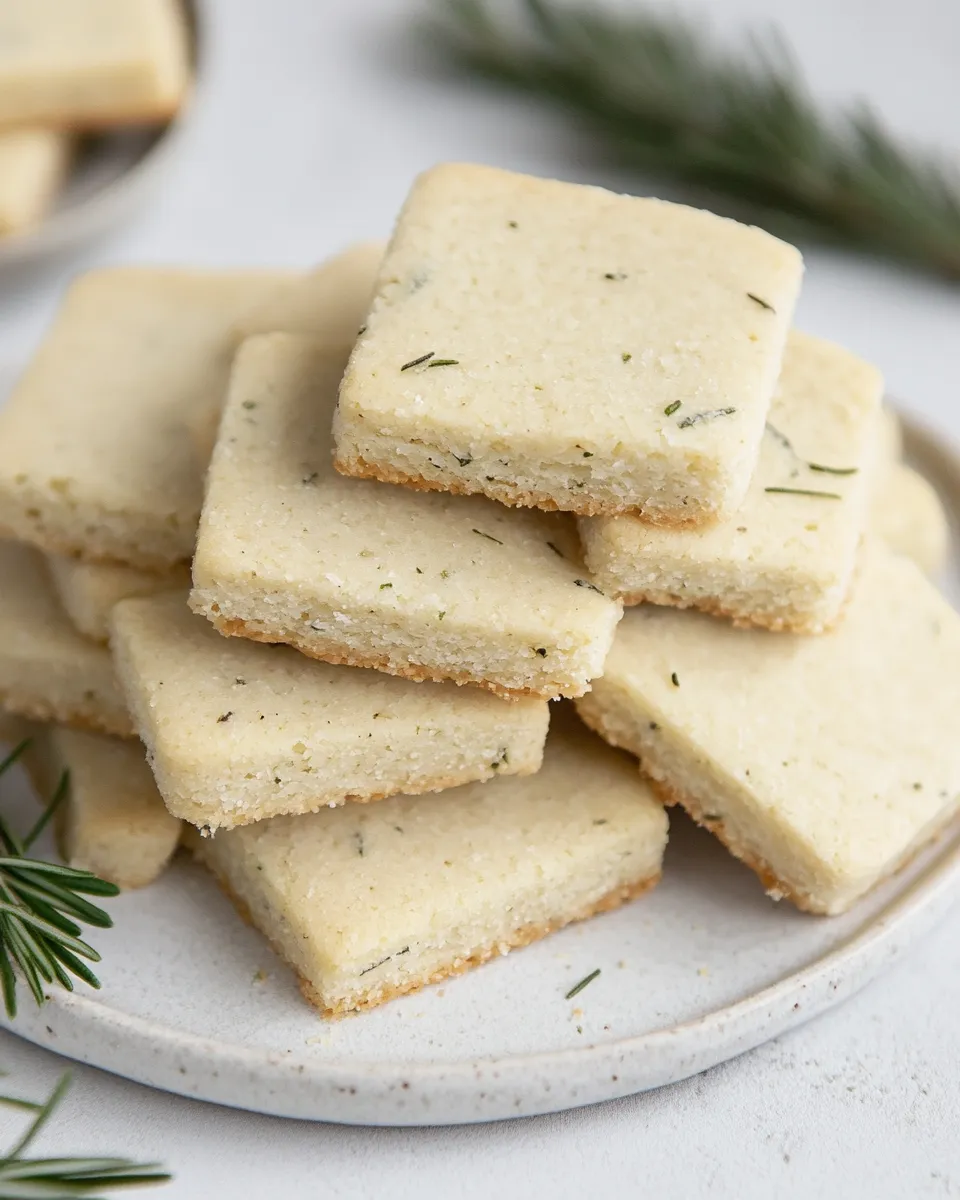
Everything you need is straightforward and easy to find. Fresh rosemary is the only perishable that really matters here — its fragrance makes the cookie special, so choose sprigs that smell bright and green.
Ingredients
- ½ cup (1 stick) butter, softened — the backbone of the shortbread; softened to room temperature for easy creaming.
- ⅓ cup sifted powdered sugar — gives the cookies delicate sweetness and a tender crumb; sifting removes lumps for a smooth dough.
- 1½ cups all purpose flour — provides structure; measure by spooning into the cup and leveling for accuracy.
- 2 tablespoons chopped fresh rosemary — bright, aromatic herb that flavors the dough; chop finely so it distributes evenly.
Rosemary Shortbread Cookies: From Prep to Plate
- Preheat the oven to 325°F. Line baking sheets with parchment paper or lightly grease them.
- In a medium bowl, beat the softened butter at medium speed with an electric mixer until creamy.
- Gradually add the sifted powdered sugar to the butter, beating until well combined.
- Reduce mixer speed to low and gradually add the all-purpose flour, mixing just until blended.
- Gently stir in the chopped fresh rosemary until evenly distributed.
- Use your hands to press and gather the dough into a smooth ball. If the dough is too soft to roll, chill it in the refrigerator for 10–15 minutes.
- Lightly flour a work surface and a rolling pin. Roll the dough to a 1/4-inch thickness.
- Cut the dough with a 2-inch cookie cutter. Transfer the cut cookies to the prepared baking sheets, spacing them about 1 inch apart.
- Bake for 16 to 18 minutes, or until the edges are lightly browned.
- Let the cookies cool on the baking sheet for a few minutes, then transfer them to wire racks to cool completely.
Why It Works Every Time
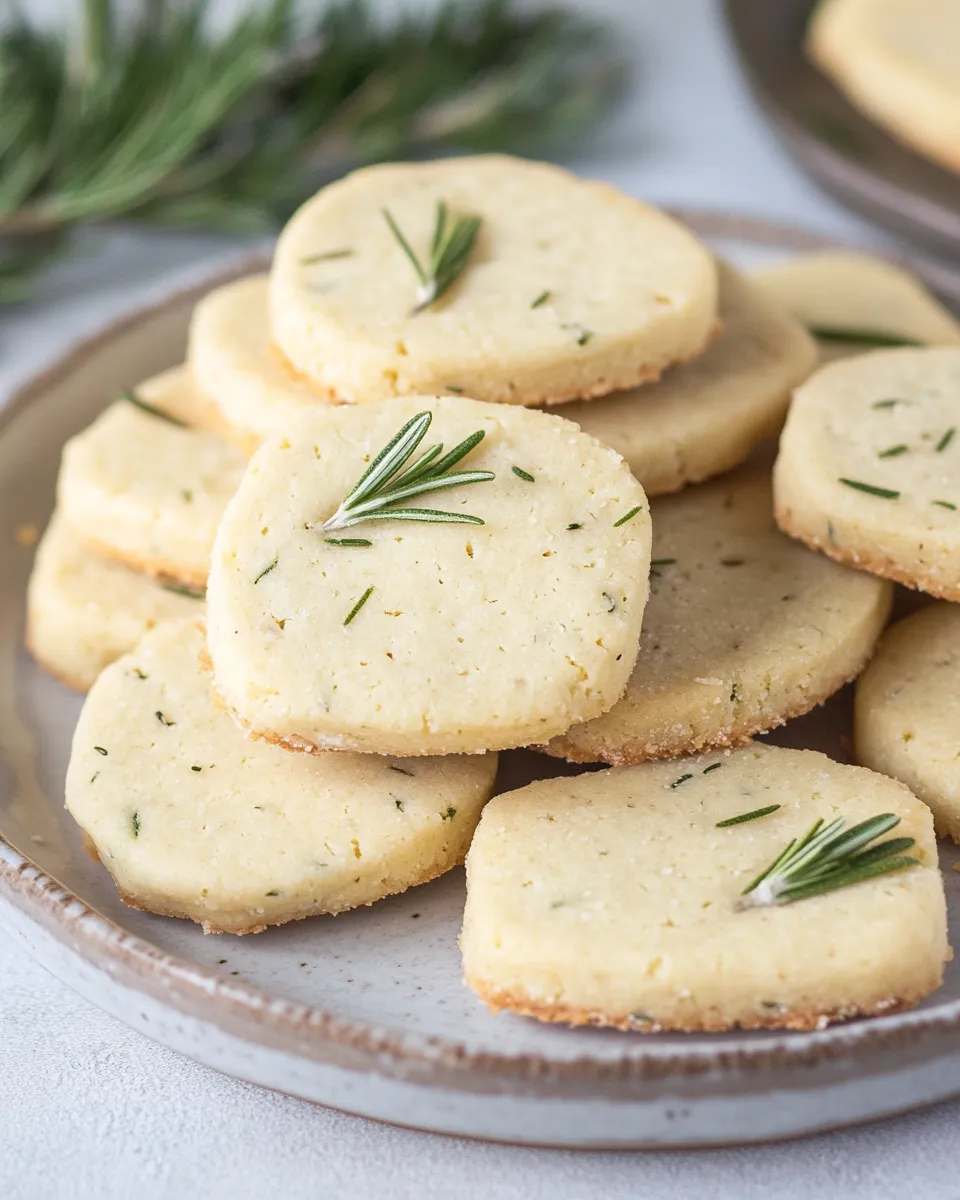
Shortbread is a simple formula: fat, sugar, and flour. This recipe keeps ratios classic so the result is tender and melt-in-your-mouth rather than cakey. Using softened butter allows you to cream it with the powdered sugar so air is incorporated; that light aeration helps the cookie keep a delicate texture without rising too much.
Sifted powdered sugar is essential here. Powdered sugar contains a bit of cornstarch which helps create a fine, tender crumb. The low oven temperature — 325°F — cooks the cookies slowly so they set through without overbrowning, producing that pale, sandy look of a good shortbread. Finally, adding rosemary at the end of mixing keeps those little aromatic flecks intact and well dispersed; chopping the herb fine prevents single aggressive bursts of flavor and keeps the mouthfeel smooth.
Low-Carb/Keto Alternatives
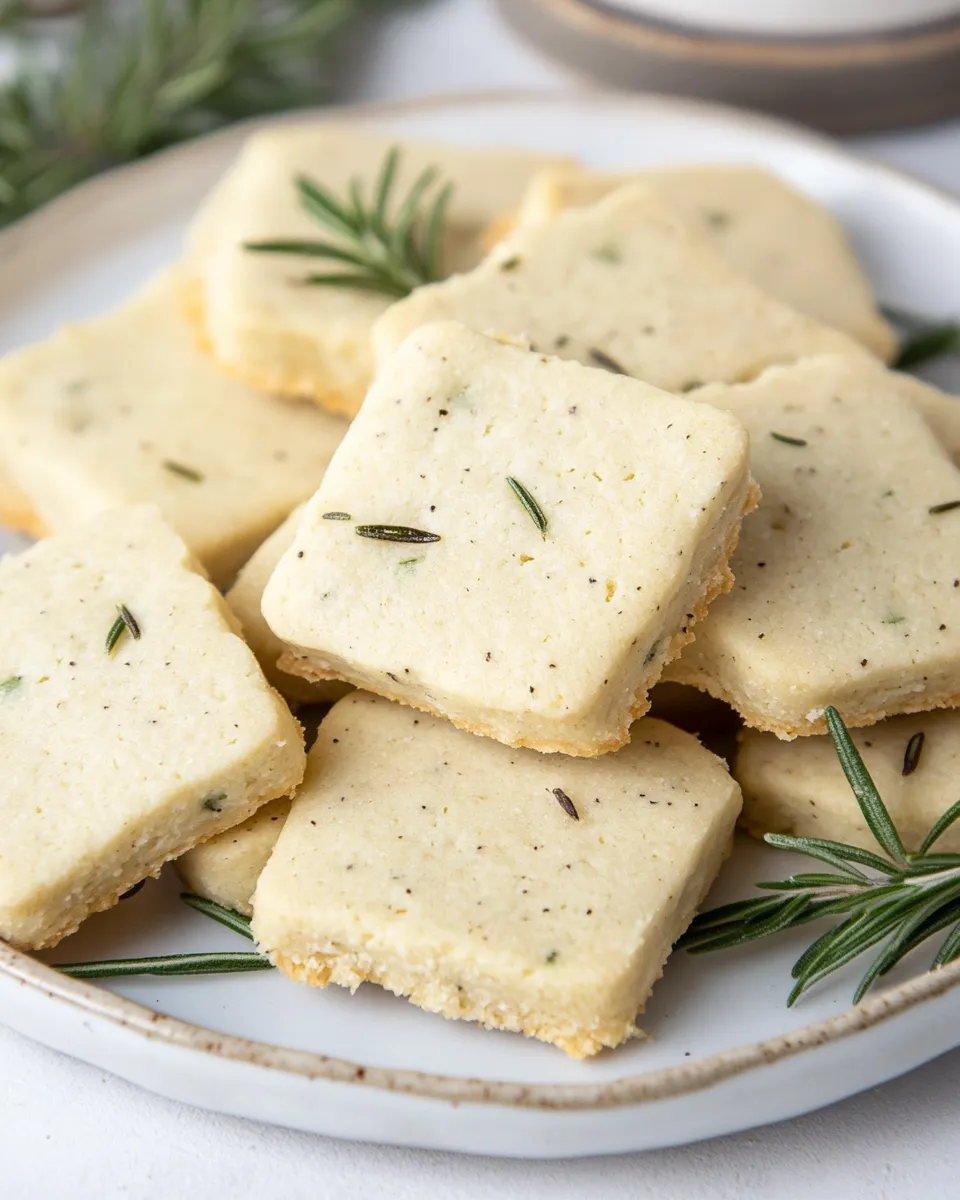
Shortbread relies on all-purpose flour for its structure, so switching to a low-carb flour will change texture and behavior. If you need a keto-friendly option, almond flour blends can work but they produce a denser, more fragile cookie. Here are two practical adjustments if you want to experiment:
- Replace some or all of the all-purpose flour with a superfine almond flour and add 1–2 tablespoons of coconut flour to help absorb moisture; reduce baking time and check color early.
- Use powdered erythritol in place of sifted powdered sugar, but expect a different mouthfeel — erythritol can be more crystalline, so pulse it in a small processor to get finer texture before folding into butter.
Note: I haven’t supplied exact low-carb measurements because the original recipe must remain unchanged. If you try substitutions, test a small batch first and expect different spread and browning behavior.
What You’ll Need (Gear)
- Electric mixer (hand or stand) — for creaming butter and sugar until smooth.
- Medium mixing bowl — for combining the dough.
- Parchment paper or a nonstick baking sheet coating — prevents sticking and eases cleanup.
- Rolling pin and 2-inch cookie cutter — for uniform cookie thickness and shape.
- Wire cooling rack — cools cookies evenly and stops residual cooking from the hot pan.
- Measuring cups and spoons (or kitchen scale) — accurate measures matter for consistent texture.
Steer Clear of These
- Do not overmix once you add the flour — overworking creates gluten and makes the cookies tough.
- Avoid using dried rosemary without adjusting amount — dried herbs are more concentrated and can be patchy in texture.
- Don’t skip chilling if the dough feels too soft — warm dough spreads more and loses its crisp edge.
- Don’t bake at too high a temperature to chase color — shortbread should be pale with lightly browned edges, not deeply brown.
Seasonal Adaptations
Rosemary shortbread is wonderfully adaptable with seasonal accents. In winter, a sprinkle of finely grated lemon zest brightens the herb and lifts the flavor. Add the zest at the same time you fold in the rosemary so it distributes evenly.
In autumn, stir in a small pinch of ground cardamom or cinnamon for warmth; use sparingly so the rosemary continues to be the star. In spring, swap part of the rosemary for finely chopped lemon thyme for a subtler herbaceous lift. Keep adjustments light — the cookie’s simplicity is its strength, and a little goes a long way.
Little Things that Matter
Butter temperature
Softened butter should yield easily to a finger but not be greasy or melting. Too cold and it won’t cream; too warm and the dough becomes greasy and hard to shape. If your butter is marginally warm, chill the bowl for a few minutes before adding flour.
Chopping rosemary
Chop the rosemary leaves as finely as you can without turning them into a puree. Tiny bits integrate better and prevent chewy pockets of herb. If you find the bits are still large, chop a bit more or run them quickly through a mini food processor.
Rolling and cutting
Work quickly once the dough is chilled. Keep a dusting of flour on the surface and rolling pin, but not too much — excess flour dries the dough and changes texture. For uniform baking, try to keep every cookie as close to 1/4-inch thickness as possible.
Store, Freeze & Reheat
Store cooled cookies in an airtight container at room temperature for up to 5 days. If you prefer them a little crisper, layer parchment between them to avoid trapped moisture.
To freeze: place cut, unbaked cookies on a tray and freeze until firm, then transfer to a sealed container or freezer bag for up to 3 months. Bake straight from frozen but add a minute or two to the baking time and watch for the same light edge coloring. For baked cookies, freeze in a single layer until firm, then stack with parchment and store in a sealed container for up to 2 months.
To refresh slightly soft cookies, pop them in a 300°F oven for 3–4 minutes to re-crisp the edges. Let them cool a bit before eating.
Frequently Asked Questions
- Can I use dried rosemary? — You can, but use about half the amount and crush it between your fingers to release oils; dried rosemary is more concentrated and can feel coarse.
- Why is my dough crumbly? — It may need a bit more pressing with your hands to bring the dough together, or the butter might have been too cold. Warm slightly and press to bind, then chill if it becomes too soft.
- Can I make the dough ahead? — Yes. Wrap and refrigerate up to 24 hours or freeze for a month. Bring to workable temperature before rolling.
- Do I need to sift the powdered sugar? — The recipe calls for sifted powdered sugar; sifting ensures a smoother texture and avoids lumps in the creamed butter.
- How thin should I roll the dough? — Roll to 1/4-inch thickness. Thinner cookies will be crisper and bake faster; thicker cookies will be softer and take longer.
The Takeaway
These Rosemary Shortbread Cookies are an easy, elegant bake that rewards a small attention to technique: properly softened butter, sifted powdered sugar, finely chopped fresh rosemary, and gentle handling once flour is introduced. The recipe uses minimal ingredients and a simple oven temperature to produce a consistently tender shortbread with a bright herbal note.
Make a test batch first if you’re adjusting herbs or trying low-carb swaps. Otherwise follow the steps in order, keep an eye on the edges while baking, and enjoy the calm confidence that comes from a reliable small-batch cookie. They’re perfect with tea, as a hostess gift, or whenever you want a buttery, slightly savory cookie that feels a touch special.
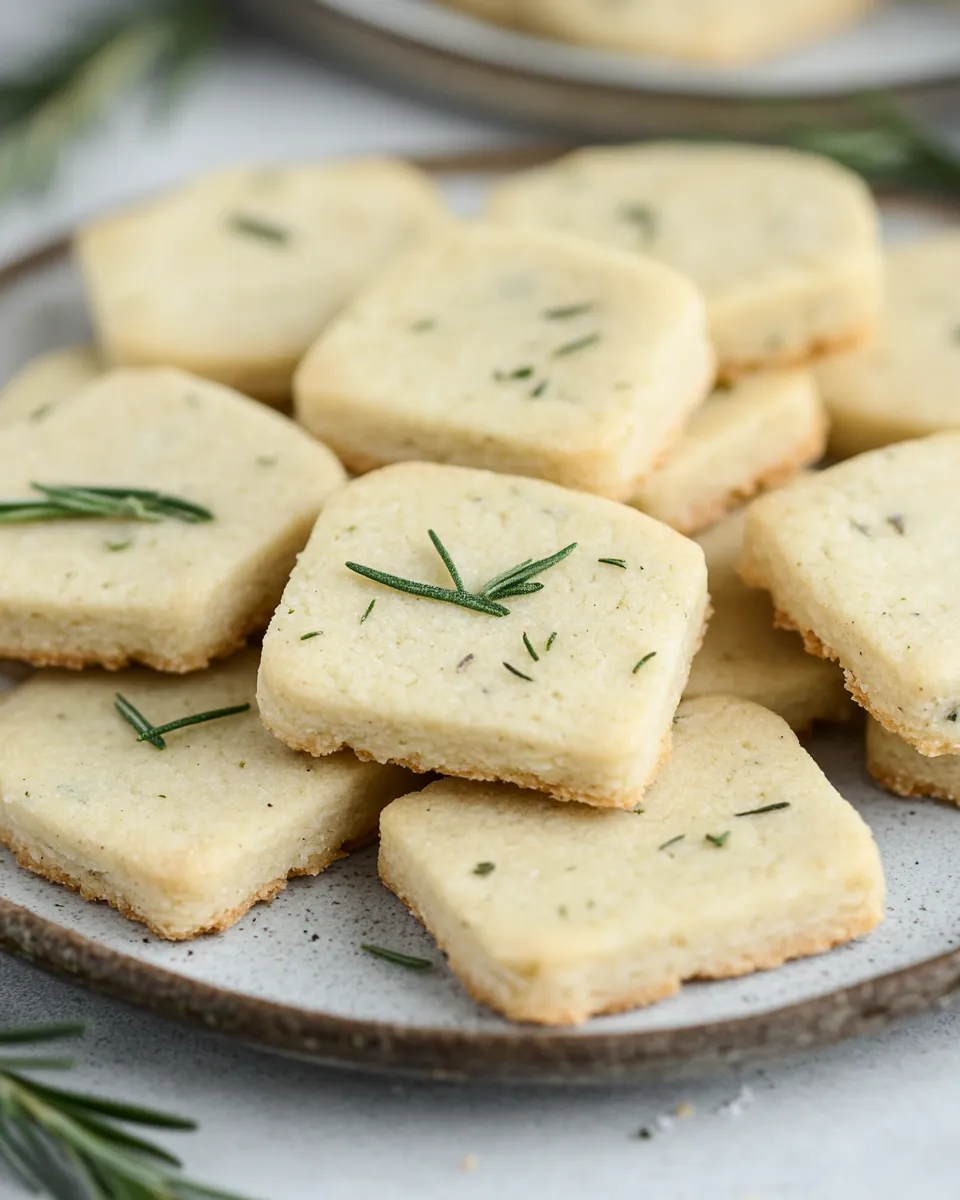
Rosemary Shortbread Cookies
Ingredients
Equipment
Method
- Preheat the oven to 325°F. Line baking sheets with parchment paper or lightly grease them.
- In a medium bowl, beat the softened butter at medium speed with an electric mixer until creamy.
- Gradually add the sifted powdered sugar to the butter, beating until well combined.
- Reduce mixer speed to low and gradually add the all-purpose flour, mixing just until blended.
- Gently stir in the chopped fresh rosemary until evenly distributed.
- Use your hands to press and gather the dough into a smooth ball. If the dough is too soft to roll, chill it in the refrigerator for 10–15 minutes.
- Lightly flour a work surface and a rolling pin. Roll the dough to a 1/4-inch thickness.
- Cut the dough with a 2-inch cookie cutter. Transfer the cut cookies to the prepared baking sheets, spacing them about 1 inch apart.
- Bake for 16 to 18 minutes, or until the edges are lightly browned.
- Let the cookies cool on the baking sheet for a few minutes, then transfer them to wire racks to cool completely.