Salmon Coconut Curry (Thai Inspired)
This salmon coconut curry is the kind of weeknight dinner that looks like effort but comes together quickly. It balances rich coconut milk and red curry paste with bright lime, fresh herbs, and crisp vegetables, so every bite feels layered without a fuss. I like it because it’s forgiving — the curry sauce is sturdy and salmon cooks fast, which means dinner is both fast and satisfying.
Follow the steps below and you’ll have a saucy skillet meal that works over rice, noodles, or on its own with a spoon. The recipe keeps the salmon as the star while the curry builds flavor around it: sautéed onion and garlic, a hit of fish sauce if you choose, carrots and broccolini for texture, and fresh basil and cilantro at the end for lift.
As you read, you’ll find practical tips on timing, substitutions, and common mistakes so you can finish the dish confidently. No heavy technique required — just sensible timing and tasting.
Gather These Ingredients
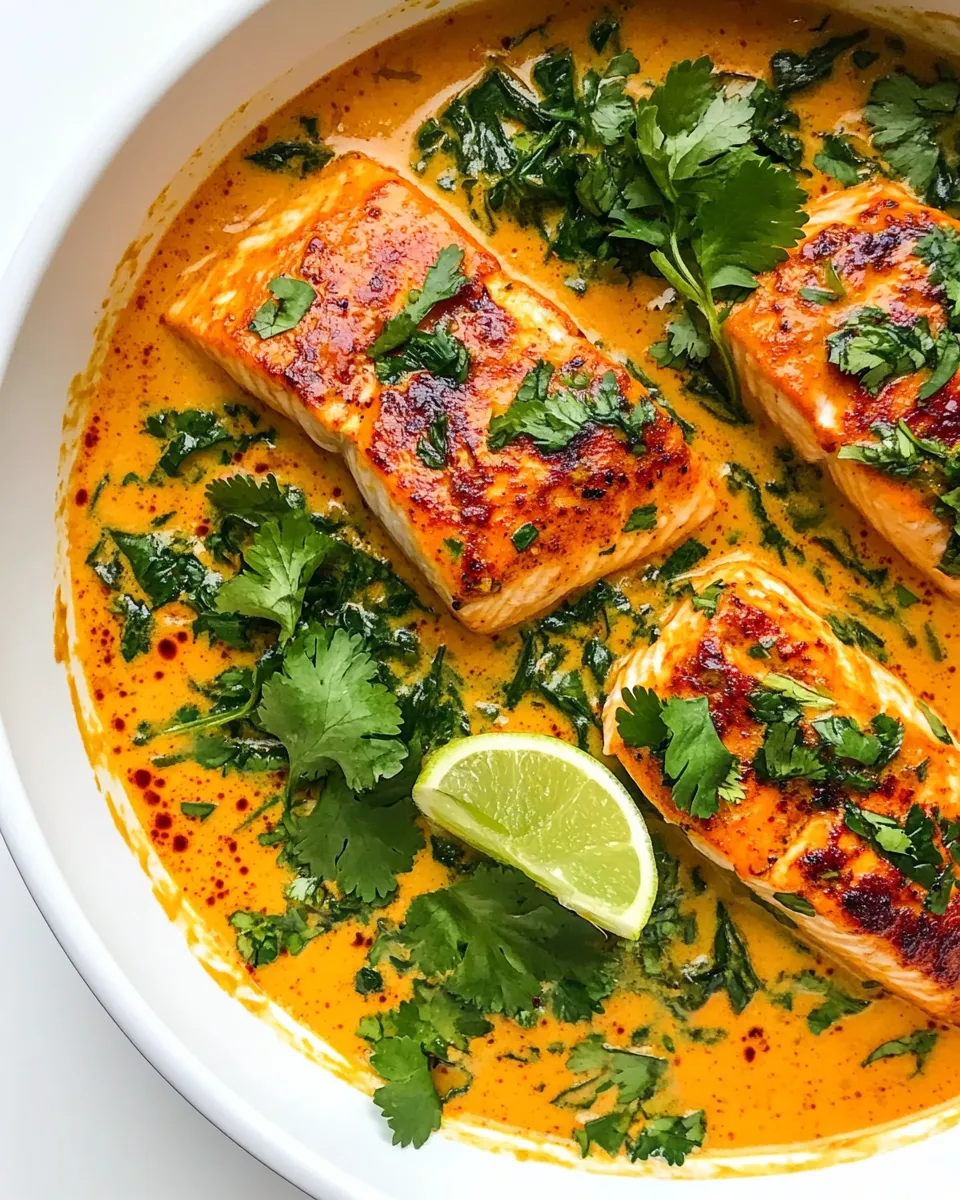
- 1 pound fresh salmon — the main protein; cut into four pieces so they cook evenly.
- Salt & pepper to taste — essential for seasoning the fish and adjusting the final sauce.
- 1 tablespoon olive oil — for pan-searing the salmon; helps prevent sticking and adds flavor.
- 1 tablespoon butter — adds richness to the pan and helps brown the salmon.
- 1/2 medium onion, chopped — builds the aromatic base when softened and lightly browned.
- 2 cloves garlic, minced — quick aromatic that deepens the curry flavor when cooked briefly.
- 2 heaping tablespoons Thai red curry paste — the concentrated flavor and heat of the sauce; adjust to taste.
- 1/2 teaspoon fish sauce (optional but recommended, see note) — a small amount brings umami and authentic depth; use sparingly.
- 1 (13.5 ounce) can full-fat coconut milk — the creamy body of the curry; full-fat yields the best texture.
- 1/2 teaspoon brown sugar — a tiny counterpoint to the curry paste and acid, smoothing the edge of heat.
- 1/2 cup matchstick-cut carrots — provide crunch and color; cut thin so they cook quickly.
- 1 heaping cup chopped broccolini — tender-crisp green and visual contrast; cuts down to bite-size pieces.
- 1 teaspoon lime juice — brightens the finished sauce and balances richness.
- 2 tablespoons torn/chopped fresh basil — added at the end for sweet, peppery herb note.
- 2 tablespoons chopped fresh cilantro — fresh, citrusy finish; adds brightness and aroma.
Step-by-Step: Salmon Coconut Curry (Thai Inspired)
- Cut the 1 pound fresh salmon into 4 equal pieces. Pat both sides dry with paper towels and season both sides with salt & pepper.
- Heat a skillet over medium-high heat. Add 1 tablespoon olive oil and 1 tablespoon butter and let the butter melt and the pan heat until the fat shimmers.
- Place the salmon in the skillet skin-side down. Cook without moving for 5 minutes. Flip the salmon and cook an additional 2–3 minutes; the fish should be almost done. If the salmon sticks to the pan, give it another 30–60 seconds so it releases naturally.
- Transfer the salmon to a plate. If you prefer not to eat the skin, slide the skin off now before proceeding.
- Spoon out excess fat from the skillet so about 1 tablespoon of fat remains.
- Add 1/2 medium chopped onion to the skillet and sauté about 3 minutes, until the onion is softened and beginning to brown.
- Stir in 2 cloves minced garlic and 2 heaping tablespoons Thai red curry paste. Cook, stirring, for 1 minute.
- Add 1/2 teaspoon fish sauce (optional), 1 (13.5 ounce) can full-fat coconut milk, 1/2 teaspoon brown sugar, 1/2 cup matchstick-cut carrots, and 1 heaping cup chopped broccolini. Stir to combine and bring to a gentle simmer.
- Let the curry gently bubble for about 5 minutes, until the vegetables are tender-crisp (cook longer if you prefer softer vegetables).
- Stir in 1 teaspoon lime juice.
- Return the salmon to the skillet, spooning sauce over the pieces, and let them warm through for 2 minutes.
- Taste and adjust seasoning with more salt & pepper if needed. Sprinkle with 2 tablespoons torn/chopped fresh basil and 2 tablespoons chopped fresh cilantro and serve immediately.
Why This Recipe Is Reliable
This recipe succeeds because it separates the two tasks that often trip up quick fish dinners: getting a good sear on the salmon, and building a stable, flavorful sauce. Searing the salmon first locks in texture and flavor; finishing it in the sauce prevents overcooking. The instructions tell you to remove most of the fat but keep a tablespoon — that’s deliberate. A little fond (browned bits and fat) carries flavor into the onions and curry paste.
The curry paste and coconut milk form a forgiving base. Red curry paste is concentrated, so two heaping tablespoons give you a clear curry presence without an overly spicy result for most people. If you taste as you go, the adjustments are straightforward: lime brightens, fish sauce deepens, and brown sugar softens sharp edges. The recipe times are conservative for a moist salmon and crisp vegetables; follow them and you’ll avoid mushy veg or dry fish.
Substitutions by Category
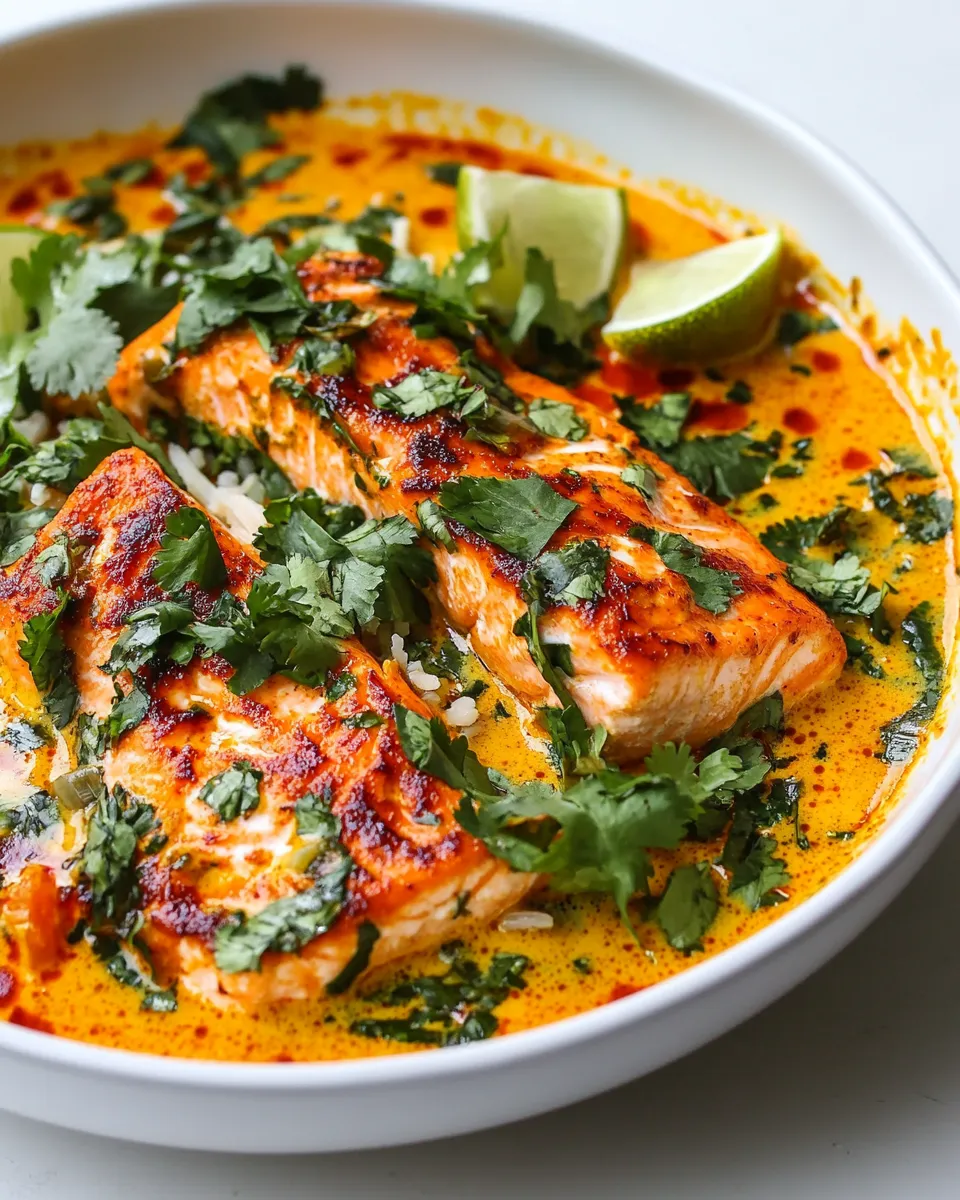
Protein
- Salmon — any firm, thick fillet like trout or steelhead can be used. If using a lean white fish, reduce sear time slightly to avoid drying out.
Dairy & Fat
- Butter & olive oil — swap butter for ghee or use a neutral oil (canola, vegetable) if you prefer; butter adds flavor while oil raises smoke point.
Curry & Seasoning
- Thai red curry paste — if unavailable, yellow or green curry paste will change the flavor profile but still work; start with less and add to taste.
- Fish sauce — you can omit it, but consider a small splash of soy sauce for saltiness if you must avoid fish-based products.
Veggies
- Matchstick carrots & broccolini — substitute thinly sliced bell peppers, green beans, or regular broccoli florets; cut vegetable sizes smaller for quicker cooking.
Coconut Milk
- Full-fat coconut milk — light coconut milk can be used for a lower-fat option but expect a thinner sauce and less richness.
Tools of the Trade
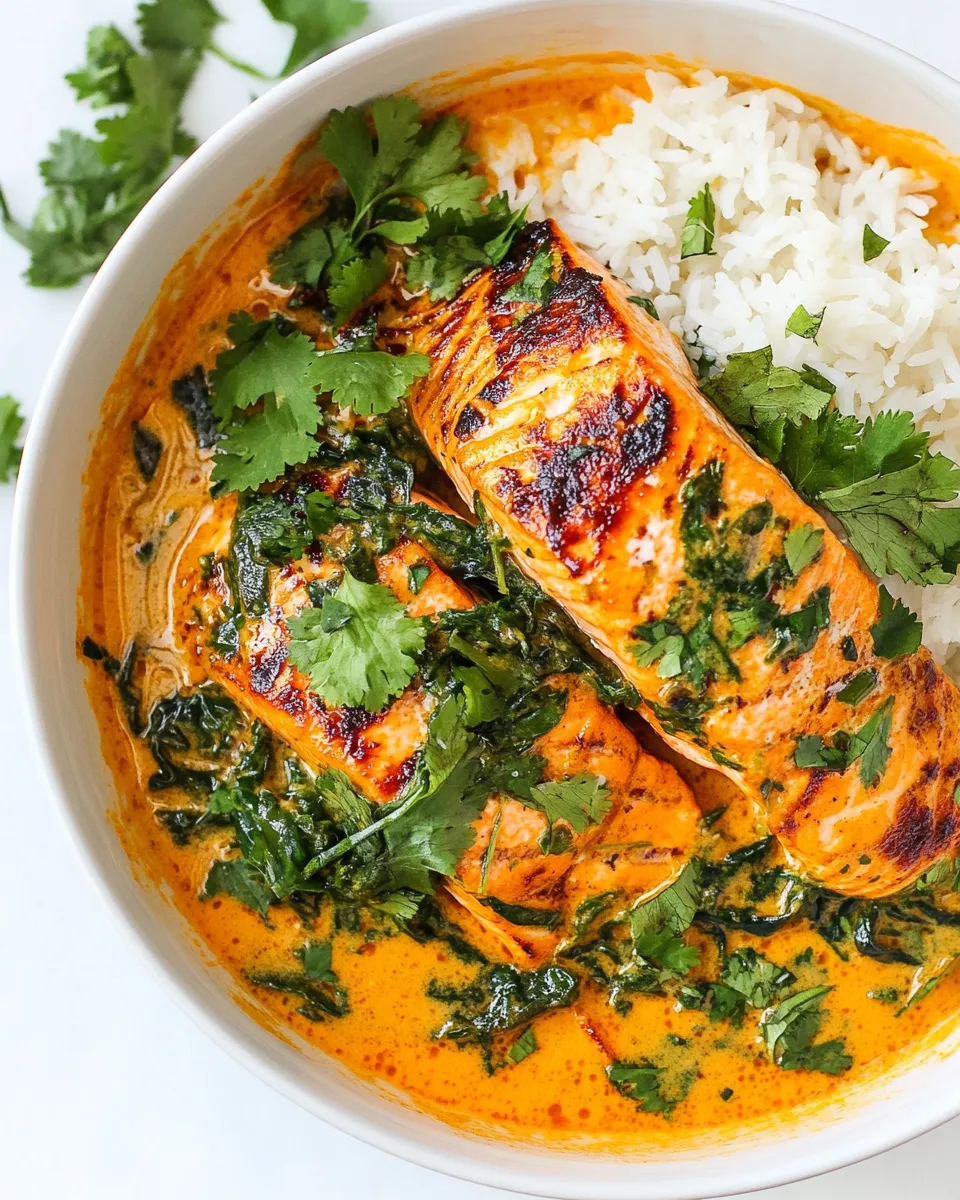
A few practical tools make this dish easier. Use a heavy-bottomed skillet (carbon steel, stainless steel, or cast iron) for even heat and a reliable sear. A fish spatula is very helpful for flipping and handling the salmon gently, but a wide metal spatula works fine. Keep paper towels on hand to pat the fish dry — moisture is the enemy of a good sear. A sharp chef’s knife and a cutting board make quick work of the carrots and broccolini so they cook uniformly.
Common Errors (and Fixes)
Salmon sticks to the pan
If the salmon sticks when you try to flip it, it likely needs more time. Don’t force it — give it 30–60 extra seconds and it will release naturally once the crust has formed. Ensure the pan and fat were hot before adding the fish and that the fillets were dry.
Vegetables become mushy
Overcooking turns crisp-tender vegetables limp. Matchstick carrots and chopped broccolini are designed to cook quickly — the recipe’s 5-minute gentle simmer targets tender-crisp. If you prefer softer veg, cook longer, but watch the salmon so it doesn’t overcook while waiting.
Too spicy or too flat
If the dish is too spicy, add a splash more coconut milk or a pinch more brown sugar to mellow the heat. If it tastes flat, a teaspoon of lime juice or a few drops of fish sauce will add acidity and umami to brighten and balance the flavors.
Health-Conscious Tweaks
Want to lean this dish down? Swap full-fat coconut milk for light coconut milk or a 50/50 mix with low-sodium chicken or vegetable broth. Use olive oil only and skip the butter—this lowers saturated fat. Increase the vegetable ratio (more broccolini, snap peas, or zucchini) to boost fiber and volume without adding many calories.
If sodium is a concern, hold the fish sauce and salt the dish sparingly; finish with a squeeze of lime for perceived brightness instead. For a lower-carb meal, serve this over cauliflower rice or steamed greens instead of jasmine rice.
Recipe Notes & Chef’s Commentary
Timing is the dish’s anchor. The salmon’s skin-side-first sear for 5 minutes gives a predictable result for 1-inch-thick pieces; adjust if your fillets are thicker or thinner. The instruction to remove excess fat but leave about 1 tablespoon is small but important — it keeps flavor while preventing the sauce from becoming greasy.
Two heaping tablespoons of curry paste is deliberate; “heaping” matters because paste density varies. If your paste is particularly potent or salty, start with slightly less and add more after the coconut milk goes in. Adding the herbs at the end preserves their fresh aroma; don’t cook them into the sauce.
How to Store & Reheat
Cool leftovers to room temperature (no more than two hours at room temp), then store in an airtight container in the refrigerator for up to 2 days. The sauce will thicken as it chills because coconut fat solidifies; this is normal.
To reheat, use a low-to-medium skillet and warm gently, adding a splash of water or coconut milk to loosen the sauce. Reheat just until the salmon is warmed through — a minute or two — to avoid drying it. Microwaving works in a pinch: cover loosely and heat in 30-second bursts, stirring the sauce between bursts and checking the fish frequently.
Troubleshooting Q&A
Q: My sauce split — how do I fix it?
A: If the coconut milk looks curdled or separated, lower the heat and whisk in a tablespoon of warm water slowly to bring it back together. Gentle heat and stirring usually re-emulsify the sauce. Avoid boiling coconut milk hard.
Q: The curry isn’t flavorful enough. What should I add?
A: Start by tasting for salt and acidity. Add a pinch more salt or a tiny splash of fish sauce for umami, and a bit more lime juice for brightness. If it still needs depth, a small extra teaspoon of curry paste will boost flavor.
Q: Can I make this ahead?
A: You can prep components ahead — chop vegetables, measure curry paste, and portion herbs — but cook the salmon near serving time for best texture. The sauce can be made ahead and gently reheated; warm the sauce first, then add salmon to heat through.
The Last Word
This Salmon Coconut Curry (Thai Inspired) is straightforward, fast, and built to be adaptable. It rewards simple technique — a good sear and mindful seasoning — and finishes with bright herbs so it never feels heavy. Use the timing and tips here to make it your go-to salmon dinner: elegant enough for guests, but easy enough for a busy weeknight.

Salmon Coconut Curry (Thai Inspired)
Ingredients
Equipment
Method
- Cut the 1 pound fresh salmon into 4 equal pieces. Pat both sides dry with paper towels and season both sides with salt & pepper.
- Heat a skillet over medium-high heat. Add 1 tablespoon olive oil and 1 tablespoon butter and let the butter melt and the pan heat until the fat shimmers.
- Place the salmon in the skillet skin-side down. Cook without moving for 5 minutes. Flip the salmon and cook an additional 2–3 minutes; the fish should be almost done. If the salmon sticks to the pan, give it another 30–60 seconds so it releases naturally.
- Transfer the salmon to a plate. If you prefer not to eat the skin, slide the skin off now before proceeding.
- Spoon out excess fat from the skillet so about 1 tablespoon of fat remains.
- Add 1/2 medium chopped onion to the skillet and sauté about 3 minutes, until the onion is softened and beginning to brown.
- Stir in 2 cloves minced garlic and 2 heaping tablespoons Thai red curry paste. Cook, stirring, for 1 minute.
- Add 1/2 teaspoon fish sauce (optional), 1 (13.5 ounce) can full-fat coconut milk, 1/2 teaspoon brown sugar, 1/2 cup matchstick-cut carrots, and 1 heaping cup chopped broccolini. Stir to combine and bring to a gentle simmer.
- Let the curry gently bubble for about 5 minutes, until the vegetables are tender-crisp (cook longer if you prefer softer vegetables).
- Stir in 1 teaspoon lime juice.
- Return the salmon to the skillet, spooning sauce over the pieces, and let them warm through for 2 minutes.
- Taste and adjust seasoning with more salt & pepper if needed. Sprinkle with 2 tablespoons torn/chopped fresh basil and 2 tablespoons chopped fresh cilantro and serve immediately.
Notes
If you don’t want to buy fish sauce just for this recipe, you can swap with soy sauce, but it won’t have quite the same effect. I always keep some in my fridge… it really enhances Asian-inspired cooking!
You can chop (julienne) your own carrots vs. using the pre-cut kind that I did and use broccoli instead of broccolini… just be sure to cut everything very small.
This recipe is also in chapter 4 of theSalt & Lavender: Everyday Essentialscookbook.