Sambal Eggplant
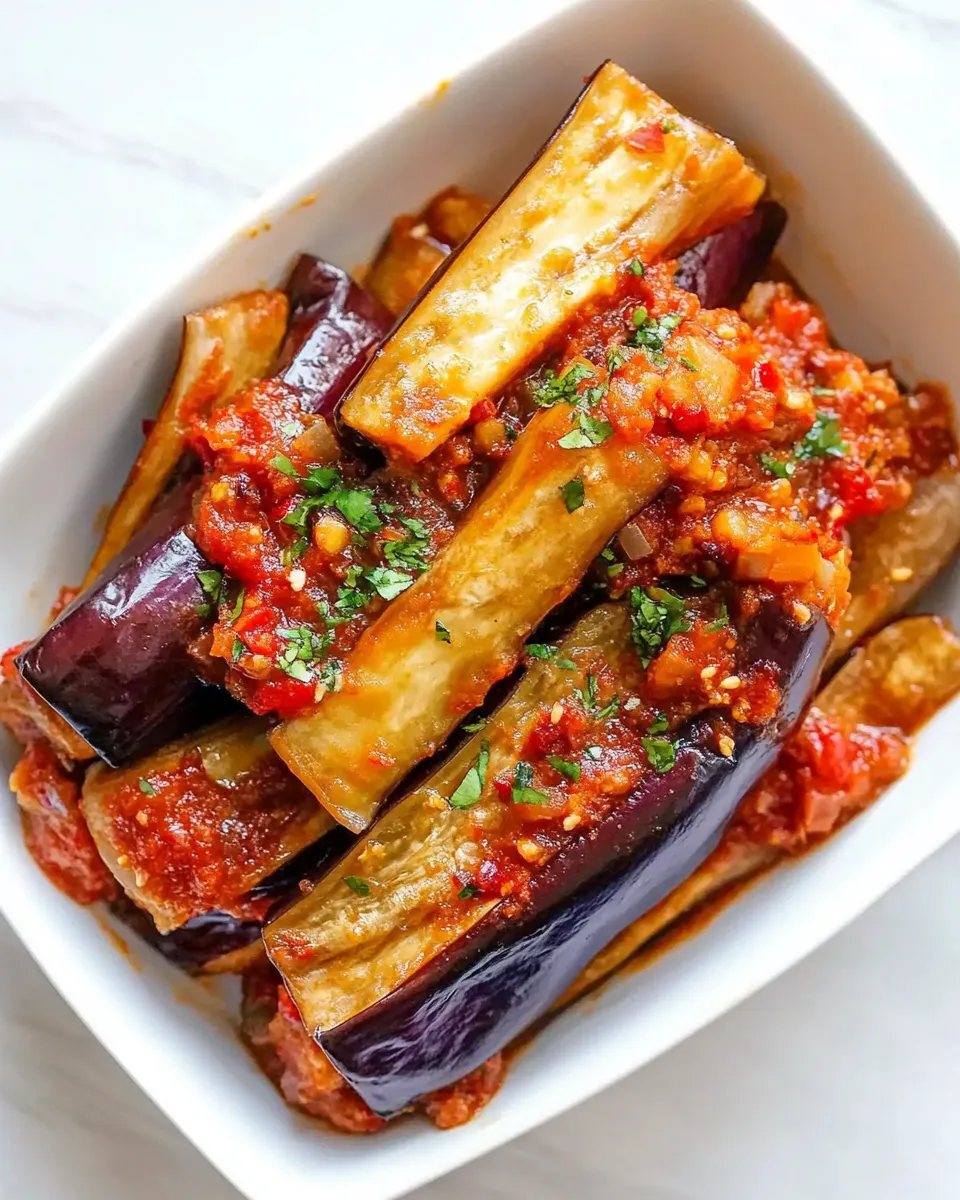
This is my favourite quick weekday side that feels like more than the sum of its parts: tender eggplant strips tossed in an assertive sambal and brightened with a little sugar and fish sauce. It hits salty, spicy, savory, and just enough sweet to keep it balanced. It cooks fast and plates beautifully — perfect alongside rice or as part of a larger spread.
There’s a simple choreography to the dish: build flavor with the dried shrimp in hot oil, bloom the sambal so its aroma loosens, then bring in the eggplant to soak up those flavors. Little adjustments — how long you soak the dried shrimp, how thin you slice the eggplant, whether you use 1 1/2 or 2 tablespoons of sambal — change the final tone. That makes this recipe fun to dial in to your taste.
I’ll walk you through the exact ingredient list and the step-by-step process I used while developing this version. I’ll also share testing notes, common mistakes to avoid, storage tips, and quick answers to FAQs so you can make a great batch the first time.
The Ingredient Lineup
Ingredients
- 2 tablespoons oil — for frying and carrying the sambal’s flavor; choose a neutral oil with a high smoke point.
- 1 1/2 tablespoons dried shrimp, soaked in warm water and drained — concentrated umami and a savory backbone; soaking softens them and mellows the saltiness.
- 1 1/2 – 2 tablespoons Sambal (refer to Sambal Asparagus recipe) — the primary heat and chili-fermented flavor; use less for milder heat, more for a bolder kick.
- 7 oz (200 g) eggplant, cut into rounds, cut into long strips — the main ingredient; sliced into long strips so it cooks quickly and holds texture.
- 1/2 teaspoon sugar or to taste — rounds out the sambal’s heat and balances saltiness; start with 1/2 teaspoon and adjust if needed.
- 1 teaspoon fish sauce or to taste — finishes the dish with salty, savory depth; add cautiously and adjust to your preference.
Cooking (Sambal Eggplant): The Process
- Ensure the 1 1/2 tablespoons dried shrimp are soaked in warm water and drained. Cut the 7 oz (200 g) eggplant into rounds, then slice the rounds into long strips. Measure the Sambal (1 1/2–2 tablespoons), sugar (1/2 teaspoon), and fish sauce (1 teaspoon).
- Heat a wok or large skillet over medium-high heat. Add 2 tablespoons oil and heat until shimmering.
- Add the drained dried shrimp and stir continuously until fragrant, about 30–60 seconds. Do not let them burn.
- Add the 1 1/2–2 tablespoons Sambal to the wok and stir-fry with the dried shrimp for 1–2 minutes, until the sambal is fragrant and the oil begins to separate.
- Immediately add the eggplant strips. Stir to combine so the eggplant is coated with the sambal, then continue to cook, stirring frequently, until the eggplant is tender but not mushy.
- Add 1/2 teaspoon sugar and 1 teaspoon fish sauce, stir to combine, and taste. Adjust sugar or fish sauce to taste if needed.
- Remove from heat and transfer to a serving dish. Serve immediately.
Why This Sambal Eggplant Stands Out
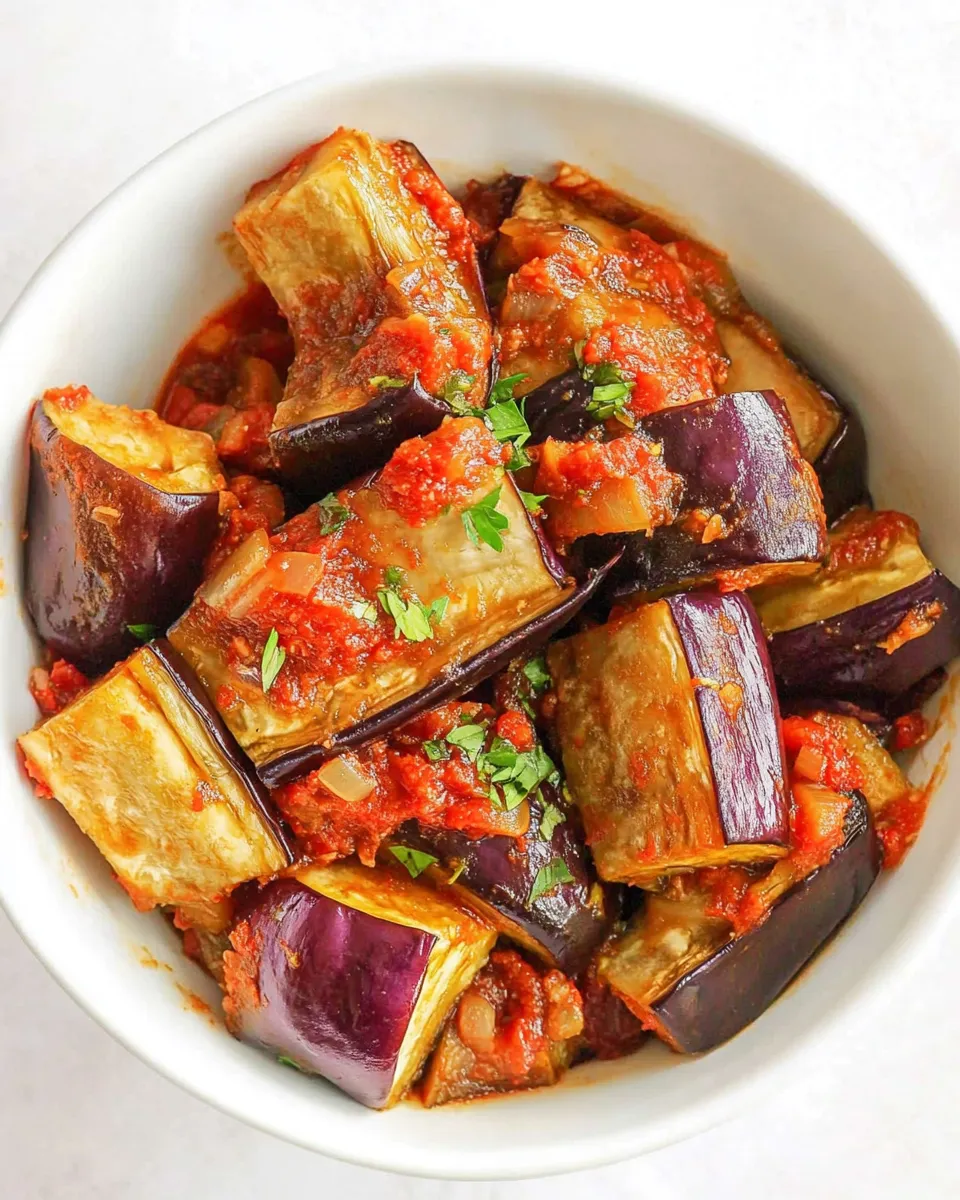
This version is direct and focused: it leverages a few purposeful ingredients to deliver layered flavor. The dried shrimp give concentrated umami early in the cook so every eggplant strip absorbs savory depth. Blooming the sambal in hot oil releases its aromatic oils and lets it coat the eggplant evenly. The sugar and fish sauce at the end are finishing touches, not primary flavors — they nudge the balance into a place where the heat is lively but not one-dimensional.
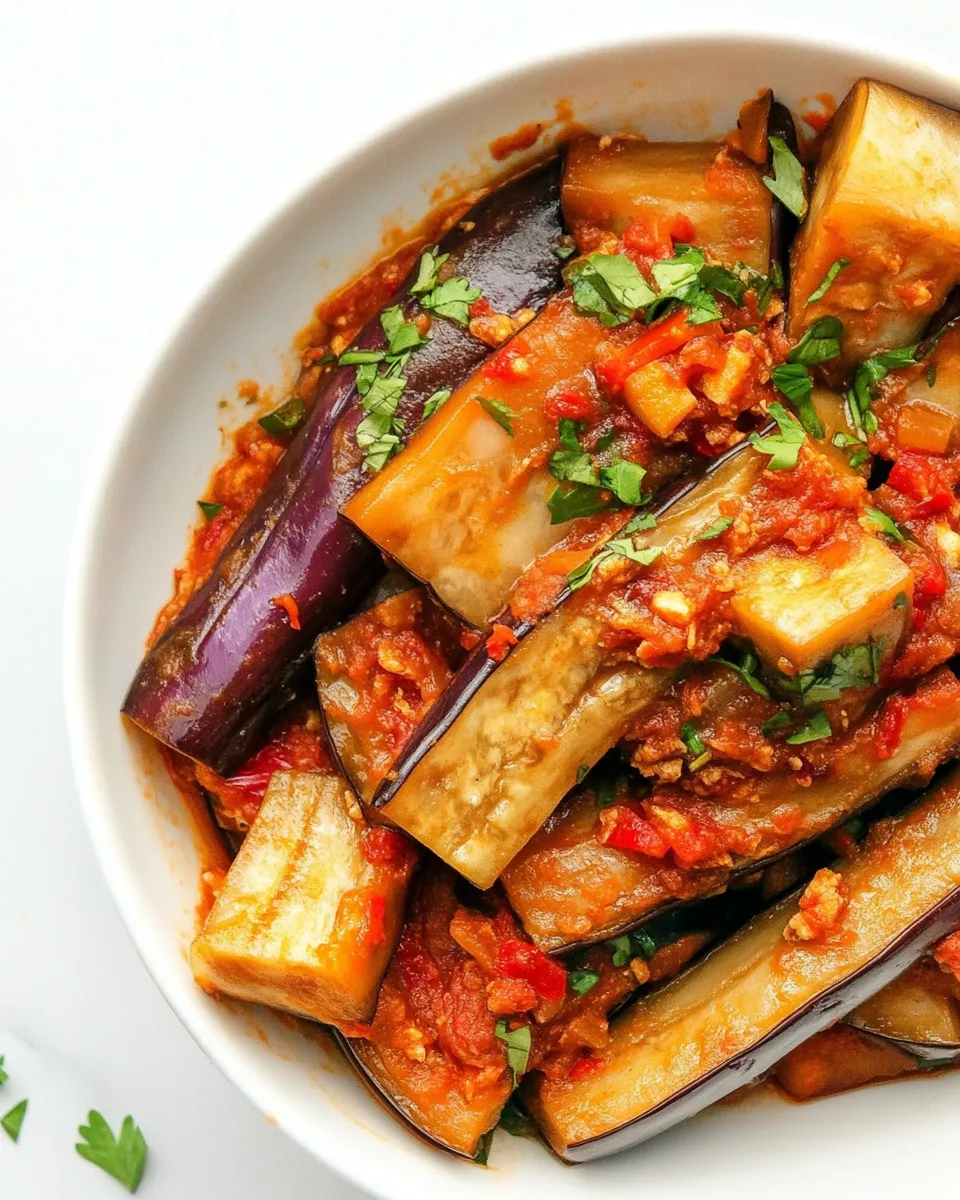
Texture matters here. Slicing the eggplant into long strips keeps pieces intact and lets them develop a silky interior without turning to mush. Because it cooks quickly, the dish keeps a slight tooth and a glossy finish from the oil and sambal.
No-Store Runs Needed
Most households that cook Asian food regularly will have these items on hand: neutral oil, a jar of sambal, sugar, and fish sauce. If you don’t have dried shrimp, you can skip them — the dish will lose some umami but still be tasty; consider adding a tiny extra pinch of salt when you taste. If sambal is the missing element, a pre-made chili paste can work in a pinch, but the characteristic sambal aroma is worth seeking out for the authentic profile.
You don’t need specialized equipment or obscure pantry items. With the basics above, you can pull this together in 10–15 minutes once your eggplant is prepped.
Equipment Breakdown
- Wok or large skillet — provides a hot, even surface and space to stir-fry without crowding.
- Sharp knife and cutting board — for clean, even eggplant strips; uniformity means even cooking.
- Small bowl — to soak and drain the dried shrimp.
- Measuring spoons — for precise sambal, sugar, and fish sauce amounts; you can taste and adjust, but start with the recipe quantities.
- Spatula or wooden spoon — for continuous stirring and scraping up the flavorful bits from the pan.
- Serving dish — something shallow so the eggplant cools slightly and stays glossy.
What Not to Do
- Do not burn the dried shrimp. They turn bitter quickly; stir them constantly and remove the heat if they darken.
- Do not overcrowd the pan. Eggplant steams instead of browns if the wok is crowded. Cook in a single layer when possible or stir frequently to prevent sogginess.
- Do not add sambal too late. Bloom it early with the dried shrimp so its oil releases and flavors the whole dish, rather than just sitting on the surface.
- Do not overcook the eggplant. Aim for tender but not mushy; eggplant continues to soften off heat.
- Do not add too much fish sauce at once. It’s potent — add the teaspoon, taste, then increase only if needed.
Seasonal Adaptations
In summer, when eggplants are at their best, choose smaller specimens — they tend to be sweeter and less seedy. The cooking time will be slightly shorter for young, tender eggplant. In cooler months, use firm, medium eggplants and allow a little more time in the pan to reach tenderness.
You can also adapt the texture: if you prefer a smokier note, briefly char the eggplant over a grill or under a broiler before slicing and stir-frying with the sambal. If eggplants are especially watery, salt them lightly and let them sit for 10–15 minutes, then pat dry to reduce excess moisture; this concentrates flavour and shortens frying time.
What I Learned Testing
Across multiple cooks I learned a few things that changed the dish from “good” to “reliable”:
- Soak the dried shrimp. A quick warm soak softens them and tames the initial briny hit. Skipping that step makes the shrimp dominate the dish.
- Bloom the sambal in hot oil. I used both raw-stir and bloom methods; blooming releases the sambal’s essential oils and gives a smoother, deeper flavor that clings to the eggplant.
- Watch the timing when adding sugar and fish sauce. Add them near the end so you can taste and fine-tune. The tiny sugar measure makes a big difference in rounding the heat.
- Texture prefers restraint. Slightly undercooking the eggplant — so it’s tender but still holds its shape — gives the best mouthfeel. Overcooking quickly makes it pasty.
Best Ways to Store
Store leftovers in an airtight container in the refrigerator for up to 2–3 days. The eggplant will continue to soften in the fridge and flavors may intensify. Reheat gently over medium-low heat in a skillet; add a splash of water or oil if it seems dry. Microwave reheating works, but the texture will be softer.
For longer storage, you can freeze, but know that thawed eggplant will be much softer and best used in stews or mixed dishes rather than served as a fresh side. I recommend making only what you’ll eat within a couple of days for the best texture.
FAQ
Q: How spicy will this be?
It depends on the sambal you use and whether you use 1 1/2 or 2 tablespoons. Start at 1 1/2 tablespoons if you prefer mild-to-moderate heat and increase to 2 tablespoons for a more pronounced kick. Always taste and adjust.
Q: Can I make this vegetarian?
Yes. Omitting the dried shrimp and fish sauce removes the umami layer they provide, so the dish will be lighter. If you skip them, taste carefully and add a little extra salt or another umami source you already have on hand to round it out.
Q: My eggplant turned mushy — what went wrong?
Most likely it was overcooked or the pan was overcrowded. Use a hot pan, stir frequently, and stop cooking as soon as the pieces are tender but still hold together.
Q: Can I prep this ahead?
You can cut the eggplant and soak the dried shrimp in advance. Keep them refrigerated and proceed with the quick stir-fry when you’re ready to serve. The final dish is best served immediately for texture and gloss.
Ready, Set, Cook
Prep your eggplant and dried shrimp, pull out your sambal, and have the measuring spoons ready. Heat the pan until the oil shimmers, bloom the sambal with the shrimp, toss in the eggplant, finish with sugar and fish sauce, and serve while it’s hot and glossy. This is a fast, flavor-forward side that rewards small attention to timing and seasoning. Go ahead — make it tonight and tweak the sambal level until it’s just right for you.
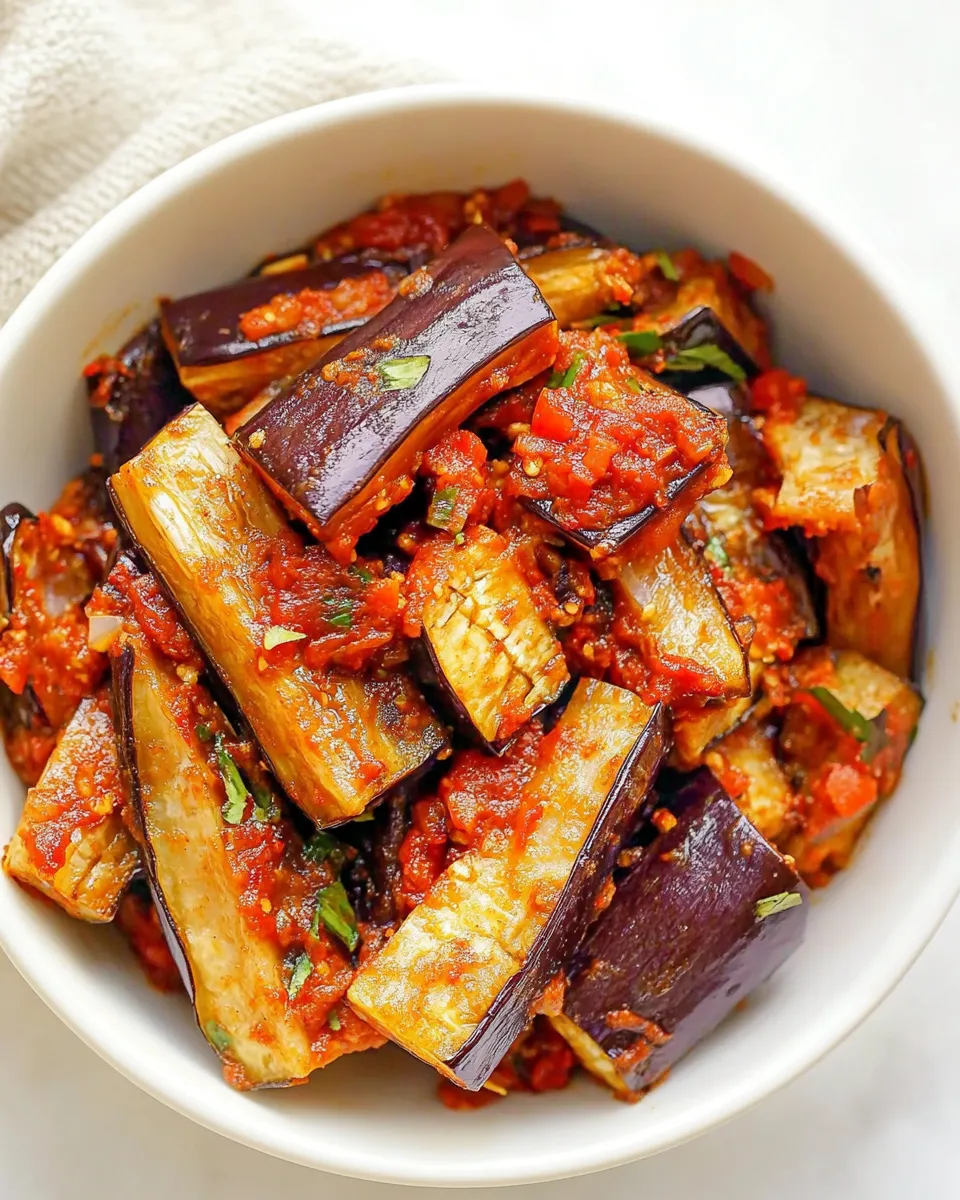
Sambal Eggplant
Ingredients
Equipment
Method
- Ensure the 1 1/2 tablespoons dried shrimp are soaked in warm water and drained. Cut the 7 oz (200 g) eggplant into rounds, then slice the rounds into long strips. Measure the Sambal (1 1/2–2 tablespoons), sugar (1/2 teaspoon), and fish sauce (1 teaspoon).
- Heat a wok or large skillet over medium-high heat. Add 2 tablespoons oil and heat until shimmering.
- Add the drained dried shrimp and stir continuously until fragrant, about 30–60 seconds. Do not let them burn.
- Add the 1 1/2–2 tablespoons Sambal to the wok and stir-fry with the dried shrimp for 1–2 minutes, until the sambal is fragrant and the oil begins to separate.
- Immediately add the eggplant strips. Stir to combine so the eggplant is coated with the sambal, then continue to cook, stirring frequently, until the eggplant is tender but not mushy.
- Add 1/2 teaspoon sugar and 1 teaspoon fish sauce, stir to combine, and taste. Adjust sugar or fish sauce to taste if needed.
- Remove from heat and transfer to a serving dish. Serve immediately.
Notes
You can also use fresh shrimp, or a combination of both fresh and dried shrimp for the best results.
For the variety of eggplant, you can use what is available in your market.
Do not overcook the eggplant. The texture should be tender and soft, but not mushy.
If you want your sambal eggplant to be spicier, use 2 tablespoons sambal.